

2015 Fall/Winter Archive
"Monterey Bay," Fall/Winter 2015
This archive preserves previously published materials that document stories, initiatives and community impact over time. Content reflects the context, priorities and perspectives at the time of publication.
Materials in this archive are provided for reference purposes only and may not reflect current programs, policies or organizational updates.
Explore the collection to gain insight into past work, evolving priorities and the broader impact of these efforts over time.
Contents
CSUMB in an Instant
Students use Instagram to share their experiences
By Jeffrey Lewis ’13
University students everywhere are increasingly turning to social media to memorialize their college experience, flooding digital communities like Instagram with pictures of pep rallies and co-curricular excursions. CSUMB students are no different. Whether it’s a Monterey Bay sunset or great campus architecture, our students help craft a beautiful visual narrative of life at Cal State Monterey Bay.
Collected here is merely a small sample of the photographs students have shared on Instagram, using the hashtag “#CSUMB.”
Elevating Innovation
CSUMB takes convergence of business and technology to the next level
Describe a relationship between the business and technology programs at most major universities. One word usually comes to mind: siloed. Another word is disconnected. On many campuses, they operate in two different universes.
Business students who develop marketing plans are often challenged trying to overcome the technological obstacles when gathering the data. Technology majors don’t usually work on group projects with fellow students who plan to start a business.
Not at CSUMB.
Thanks to the opening of the new Business and Information Technology (BIT) building, the College of Business and the School of Computing and Design are starting a new era of collaboration. The two programs are now housed in a gleaming 58,000-square-foot structure, allowing students to work side-by-side in multidisciplinary teams.
This approach is straight out of the business world, providing students with real-world skills and practical knowledge when they enter the job market.
Valuable perspective
Eric Tao, a professor in the School of Computing and Design and the director of the Institute for Innovation and Economic Development, was a driving force behind the conception and development of the BIT building. For his students, working closely with business students provides valuable perspective on the limits of technology. “A student can have an idea that looks fabulous on paper – but there could be no market for it,” he said. “You need to establish there’s a need for your product.”
For business students, who are often focused on profit margins and management, the technological knowledge to implement a product launch is invaluable, according to Shyam Kamath, dean of the College of Business.
“We are changing the way we teach. We are changing the way we research. The skills needed by students for the job market today are very different from yesterday,” said Kamath. “You need human skills in management and also need to be digitally knowledgeable, using critical thinking and learning quickly to keep pace with technology. This facility allows us to work together. The labs represent that potential.”
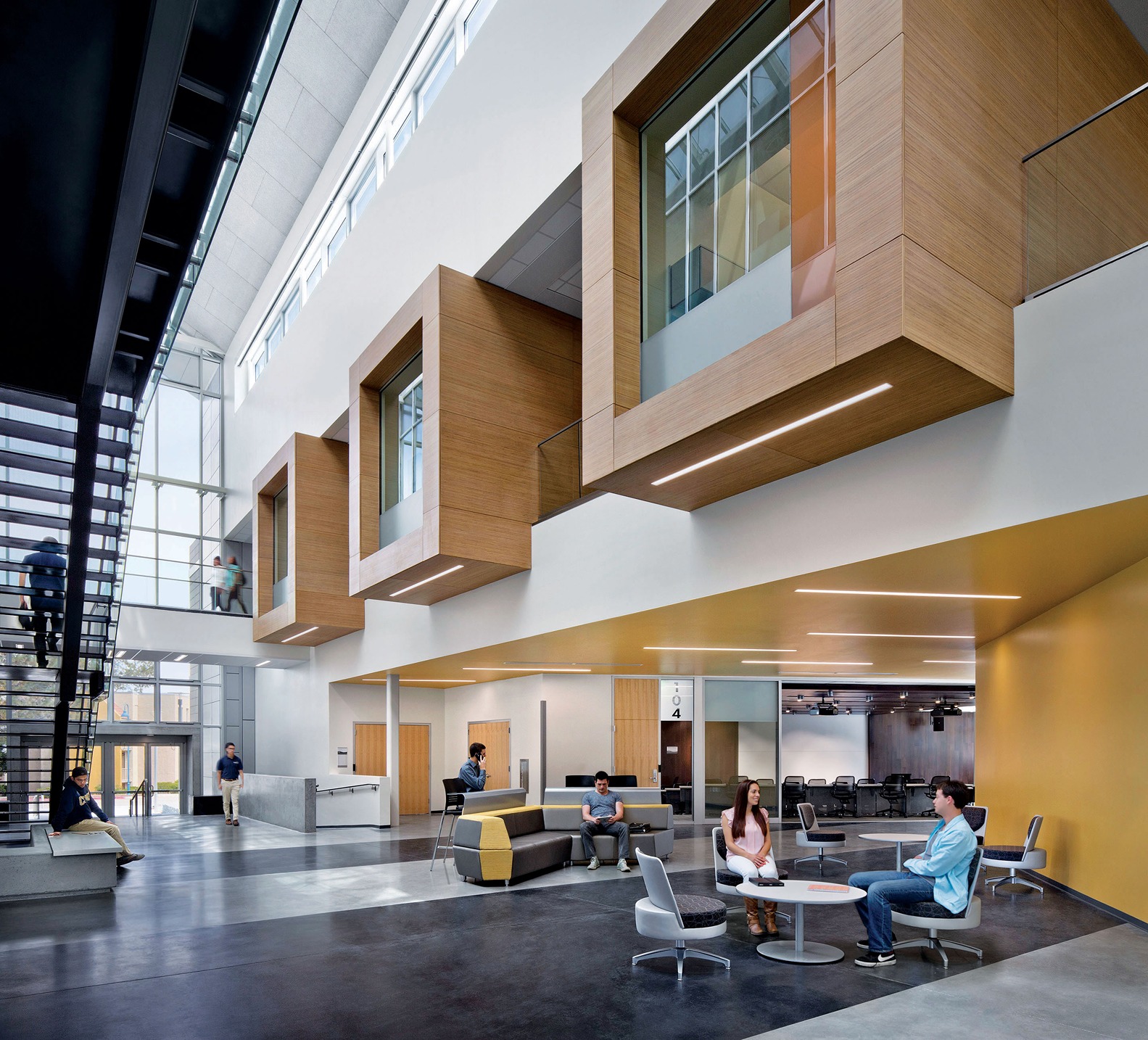
The BIT building has 12 laboratories, all of them shared by the College of Business and the School of Computing and Design. One lab focuses on entrepreneurial skills and product design. Another focuses on data used in financial products, commodities and services trading. Other labs are devoted to website design and behavioral research.
In other words, business and technology can conceptualize a product together. Business can determine if the product is financially viable and there’s a market for it. Technology can develop and market the product by determining consumer behavior.
Kamath’s goal is to bring industry partners into the BIT building and have them work directly with students on product design. One lab will house media production equipment such as large format printers, animation rendering systems, 3-D printers and open work spaces. Once equipped, the lab will allow students to produce product prototypes, concept designs, drawings and online media for external clients.
Both Tao and Kamath are enthusiastic about the collaboration between their respective colleges. Tao notes the philosophy of transparency that was incorporated into the BIT building’s design and how that’s reflected in the facility’s physical space.
Innovative
“Most of this building is glass – there’s a feeling of openness,” he said. “When we were planning the layout of the building, we wanted transparency to be felt in the physical space to reflect the academic philosophy. Many buildings in academia are closed with small windows. There’s a feeling of isolation. Not here.”
According to Tao, nearly every room of the BIT building can accommodate events for the outside community, including Chamber of Commerce meetings, technology showcases and research symposiums. Tao envisions having a community event here at least once a month. “This integrates our campus with the outside word – and breaks down the ‘ivory tower’ perception of academia,” he said.
The new collaboration between the College of Business and School of Computing and Design is just the beginning. The new facility is an innovative place. It’s a community place.
“We are truly tapping into CSUMB’s interdisciplinary vision,” said Kamath. “This brings it all together.”
Editor’s note: for more information on features and sustainability strategies for the new Business and Information Technology building, along with additional images, go online to csumb.edu/bit.
Campus Shields
CSUMB police educate and protect a vibrant academic community
A CSUMB police cruiser drives west on the darkened campus, a spotlight occasionally streaming out from the vehicle’s side and scanning the shrubbery along the road. It drives past the main quad area, where groups of students are milling around, and heads to a parking spot popular with those headed to the beach. It is an unseasonably warm night, perfect for a walk.
Assistance
CSUMB Sergeant David Ham slowly pulls up to a cluster of vehicles near the trailhead to the beach. Officer Heather Murphy (SBS ’15) joins him. Both casually examine the vehicles with flashlights and sure enough, one student has left her wallet, keys and ID in plain sight on the front seat. The road is dark and deserted – a prime opportunity for theft.
“It’s not uncommon” said Ham with a smile. “Students sometimes don’t think about the consequences.” Nodding in agreement, Murphy reads the student’s name off the exposed ID, looks up the student’s phone number and attempts to contact her. In the dark, a group of students walk past as Murphy tries calling. They are coming back from the beach. None is the student the officers are trying to locate. Friendly hellos are exchanged.
This example of assistance – and dozens like it in a typical semester – is an excellent example of what makes the CSUMB University Police Department unique, according to Police Chief Earl Lawson.
“Our officers have the power and authority of state police officers – yet consider themselves mentors, counselors and a resource,” Lawson said.
Extensive operations
The University Police Department (UPD) is a fully equipped police agency, consisting of more than a dozen state police officers, 17 community service/student officers, three parking officers and six staff members. The UPD oversees emergency management and preparation, occupational health and safety, fire contracts and fire service agreements, parking services, and traditional law enforcement and police services.
The department serves an area of just under 10 square miles encompassing the 1,400 acre CSUMB campus. Since CSUMB is a residential school, and many students, faculty and staff live on campus, this area is home to more than 7,500 people when school is in session – nearly twice the population of Carmel.
Chief Lawson directs UPD’s extensive operations and is a well-known figure on the CSUMB campus. For nearly 20 years, he has been a part of the university’s police force, becoming chief in 2010. He frequently attends campus events and is often seen talking to students, staff and faculty.
Many officers live in staff and faculty housing, making the campus a place that is truly called home. Others are alums. “Our officer-alums can especially engage well with our students from the shared experiences,” Lawson said.
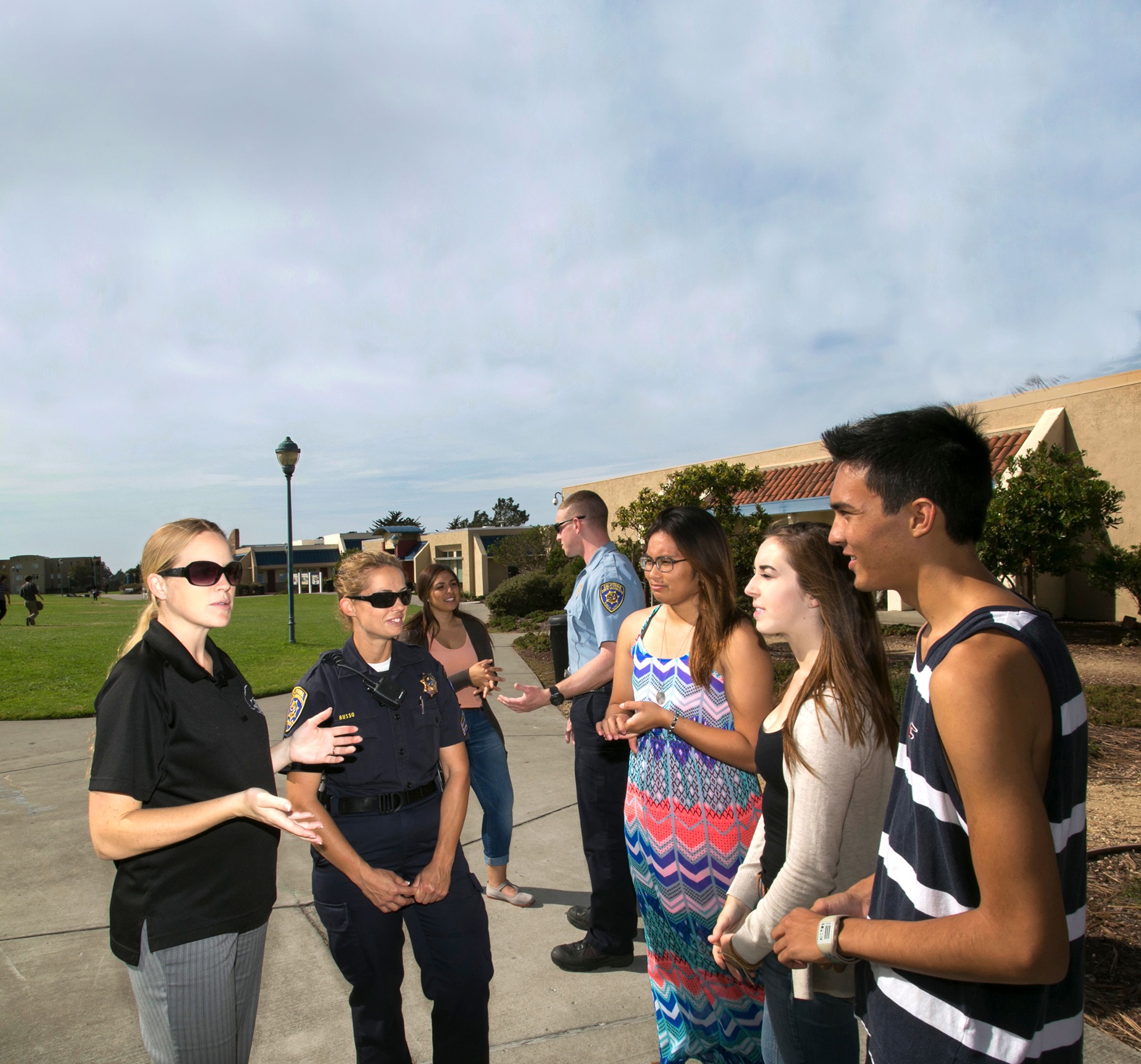
Corporal Carolyn Mcintyre (LS, ’12) was serving as an officer with the Monterey Police Department before coming to CSUMB and completing her education. “I was attracted to the supportive environment. The department is very family-oriented and puts their officers first,” she said. Sergeant Stacie Russo (LS, ’04) agrees and enjoys interacting with students, staff, faculty and visitors. Every day is different. “You feel very connected to the campus community,” Russo said.
Building trust
This sense of community at CSUMB is one significant factor that drives Lawson’s philosophy – earn respect, build trust, be a resource, keep the lines of communication open, establish a strong visual presence.
Lawson outlines the strong relationship between University Police and the departments that provide counseling to students. “Students come to this campus from all different backgrounds, socio-economic situations and neighborhoods. Many have a very adversarial relationship with the police back home,” he said.“We strive to change that.”
The first approach
One critical partnership on-campus is with the counseling center. If a student is a non-violent offender, or is having issues with substance abuse causing disciplinary action, the first approach is to help, not prosecute. A “CARE” team, comprised of UPD, staff members from the counseling and health centers, Judicial Affairs, Student Affairs and Residential Life meets weekly to evaluate students with difficulties or in a crisis on a case-by-case basis. Intervention on this level goes hand-in-hand with UPD’s core emphasis on safety. It prevents bad choices by students that result in harm to themselves or their classmates.
Safety is top priority on all levels of operation. Lawson points out the window from his office. “Look at the trees and vegetation. See how they’re trimmed from the ground up? It eliminates hiding places and discourages criminal behavior,” he said. “As a community member, you have a clear line of sight. Safety is a priority in every aspect of the university, it’s even a consideration as to how we landscape.”
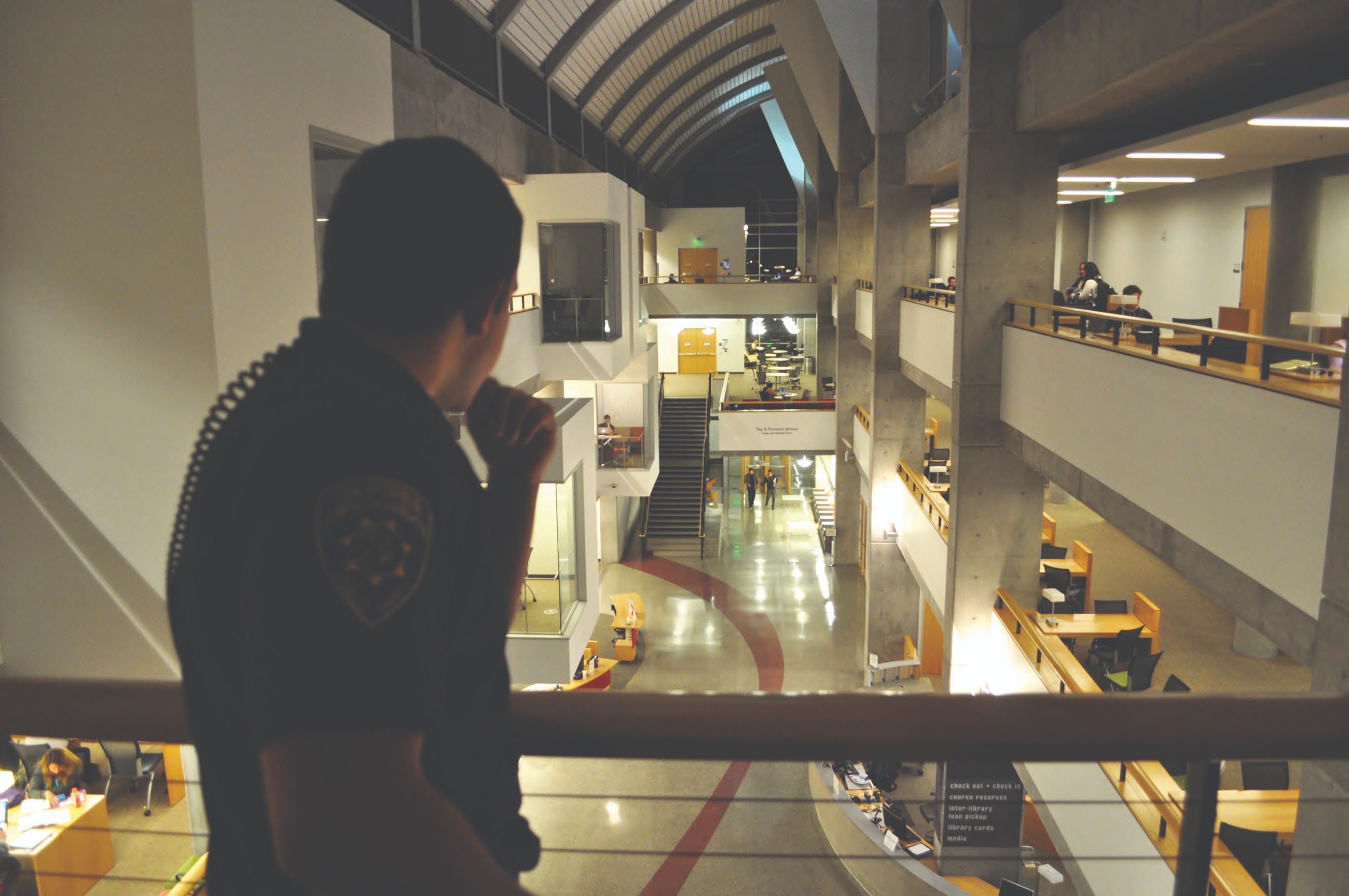
That’s just the beginning. UPD is home to a full-time Regional Emergency Operations Center (REOC), which coordinates evacuation and response plans in such incidents as an earthquake or fire. The REOC is managed through a direct partnership with the cities of Seaside and Marina and also serves those communities in event of a disaster.
Otter alert
Another tool is the aptly named “Otter Alert System,” providing UPD the ability to send text notifications and web notifications campus-wide instantly from almost any location. More than 14,000 cell-phone users are subscribed. If the CSUMB website goes down, a “mirror-server” – often located hundreds of miles away at another CSU campus – will take over.
For other worse-case scenarios, UPD is a member of the Monterey Peninsula Special Response Unit, SWAT and Crisis Negotiation Team. Lawson was the team founder and commander before taking the job as chief in 2010. This relationship allows UPD to quickly mobilize officers from surrounding agencies during a crisis response.
Student safety is the first priority."— Chief Lawson
“We have robust resources due to inter-agency relationships, allowing us to train together and resource-share,” Lawson said. “We take this very seriously. Student safety is the first priority. It’s our neighborhood. It’s our community. It’s not just a place where we work.”
Sergeant Ham and Officer Murphy agree with this sentiment wholeheartedly. After alerting the student to her exposed ID, the night’s patrol continued. Tickets were written. Doors were knocked on. Music was turned down. And people went home safely.
Ham reflects while driving away from the beach trail in the warm night. Ham is a former Army Ranger, stationed at Fort Ord before starting an extensive career in law enforcement. He came back seven years ago. “The students are what keep you coming back, building those relationships, and seeing them mature and grow. It’s a great feeling.”
Marsha Moroh
Published in the Fall/Winter 2015 CSUMB Magazine, prior to Moroh's retirement.
A CSUMB founder continues her journey
Riding the Monterey Bay Coastal Rec Trail, with the Pacific’s majestic blue expanse at her side, Marsha Moroh is enjoying another commute to her office. The dean of CSUMB’s College of Science bikes often on this path, an eight-mile trek from Monterey to campus that provides stunning coastal views and plenty of time to think and reflect. There’s plenty to remember – Moroh was one of the founding faculty at CSUMB more than 20 years ago. She is retiring this year.
Some paths are more challenging than others. Moroh is a trailblazer. After becoming the first woman ever to earn a Ph.D. in computer science at the Polytechnic Institute of New York, and after serving for 25 years as a professor in the City University of New York (CUNY) system, Moroh and her family came west to help found this California State University campus. Ferry rides past the Statue of Liberty, her daily commute in New York, were replaced by the serenity and rustic military history of the decommissioned Fort Ord. Moroh was thrilled.
“The CUNY system was horribly bureaucratic. I was intrigued by the idea of starting a university from scratch and applying best practices,” she said.
What really pulled her in was the vision of CSUMB – people teaching and learning from one another in mutual respect; a residential family community in a university; the concept of service learning. It seemed almost utopian, according to Moroh.
Then reality hit. The workload was stunning for CSUMB’s 13 founding faculty members during the first year. There were no courses, no labs or equipment, and little infrastructure. Moroh and her colleagues would work all day and at night, and read resumes to hire additional faculty. They reached out to the community on a regular basis to meet people. Yet, the campus ethos was being a creative hub with little restriction. Faculty came up with innovative curriculum. They were audacious and thinking big. “We felt like we were really building something,” Moroh recalls fondly.
Along with assisting in the founding, Moroh was hired at CSUMB to teach computer science. On the first day of class during that first year, there was only one problem – the computers were still in their boxes.Thus Moroh’s first teaching assignment to her computer science students: unpack the computers and set them up.
Experiences like these made a tightly-knit campus community. But things began to change. A major step was the opening of the three-story, 68,000 square-foot Chapman Science Academic Center in fall 2003. The first new building on the CSUMB campus, the center has 13 science labs, five designated for capstone and student-faculty research projects. Until then, the science department utilized a former Fort Ord blood bank for lab space.
Moroh oversaw the design and construction of the Chapman Building but gives the real credit to Science and Environmental Policy Professor Bill Head, who recently retired. “If it wasn’t for Bill, we probably wouldn’t have a science building,” said Moroh. “He developed a strategic plan for the College of Science and wrote grants to fund the Undergraduate Research Opportunities Center (UROC), one of the best undergraduate research support programs in the country.”
Moroh hired virtually every faculty member at the College of Science. She credits those faculty for its growth and success. “My greatest accomplishment is the faculty that I hired.”
Much of the research equipment at the College of Science, including the boats and diving equipment, were purchased through grants written by the faculty said Moroh. Last year, close to 200 students were paid researchers from faculty grants, doing cutting-edge research, and often publishing their work with faculty. In the CSUMB student population itself, approximately a third of the students are STEM (Science, Technology, Engineering and Math) majors.

Marsha Moroh (at far left) at the groundbreaking ceremony for the Chapman Science Academic Center in 2001.
The success of the CSUMB College of Science is a fitting tribute to Moroh’s outstanding academic career – a career that spans both sides of the country and almost a half-century. For the last 20 years, Moroh has been a visionary, innovator and scholar at CSUMB. The College of Science is strong, and will continue to innovate and expand research opportunities due to her leadership.
What’s next after retirement? Her husband, Ken, is a retired CSUMB computer science faculty member. They plan to travel to Italy together, and she will spend more time with their two grown daughters and Moroh’s mother, who is 96 years old. A skilled pianist, Moroh will have more time to indulge in her passion for music. Gardening is also on the agenda, as is volunteer work, and probably occasional consulting (she has extensive international education experience, in settings as diverse as Dubai and Pakistan).
Whatever path Moroh takes from CSUMB, perhaps you could say it’s going to be smooth, probably with a great view. Maybe you could say the wind will be at her back. Regardless, she’s not leaving CSUMB completely behind. She was a mentor and friend to many in the CSUMB community and always will be.
“I’m certainly going to be a part of CSUMB in some way, contributing where I can. And I’m sure I will take a few OLLI classes and keep learning,” she said. “Life-long learning: that’s what CSUMB is all about.”
There's No Wrong Number
Accounting major Yolanda Rosebraugh returns to school for a new career
By Liz MacDonald
If Yolanda Rosebraugh’s experience has taught her anything, it’s that there is more than one way to do college. Many students do it right after high school, but that didn’t work so well for her. “I wasn’t ready. I didn’t want to. And I was a terrible student,” she said.
So she dropped out of UCSC, and pursued other directions with her life – working as a naturalist at the Monterey County Outdoor School and working in various office jobs. When she and her husband had children, Rosebraugh stayed home with them.
Once the kids got a little older, Rosebraugh returned to school to earn her early childhood education credential at Cabrillo College. After that, she became involved in her children’s schools, first as a preschool teacher, and later by working in the school office.
Over the years, Rosebraugh went on to earn five associate’s degrees at Cabrillo. After the early childhood program, she took coursework in business, accounting, Spanish, and liberal arts/ sociology.
Confidence
It was the accounting class that truly altered Rosebraugh’s course. “My professor told me, ‘You’re good at this. Ever thought about being an accountant?’” Rosebraugh said. “I told him never. It hadn’t even crossed my mind. I didn’t have the confidence to consider myself eligible. “But I kept thinking about it.”
Eventually Rosebraugh realized this was the path she wanted to pursue. She transferred to CSU Monterey Bay as a full-time student to complete her bachelor’s degree and prepare for the CPA exam.
At first she worried about her ability to keep up. But she found her professors encouraging and her classmates receptive. In the evenings, homework time became a family activity. “[My kids] are very encouraging to me.They say I work harder than they thought possible,” she said. Rosebraugh’s daughter, now 19 and attending college, and her son, 16 and completing high school, gained a better idea of what to expect from college, and that it’s never too late to learn.
Outside of class, Rosebraugh is active in the business club and accounting society, and participated in the VITA United Way tax assistance program, volunteering to prepare tax returns for low-income families in the local area. She also hopes to become more involved in the Black Students United club.
“There aren’t many women or people of color in accounting. I’d like to see that change,” she said. “I’m going to be doing a job I like and providing for my family. I hope more students of color and women consider this career.”
Next semester, Rosebraugh looks forward to completing an internship with Ryan & McDonald, an accounting firm based in Salinas.
“I’m glad to be living in a time where I have another chance. To know what I want to study, what career I want, and be able to comeback and do it now. I’m a better student, and I’m ready to do the work.”
Advocate for a Fresh Perspective
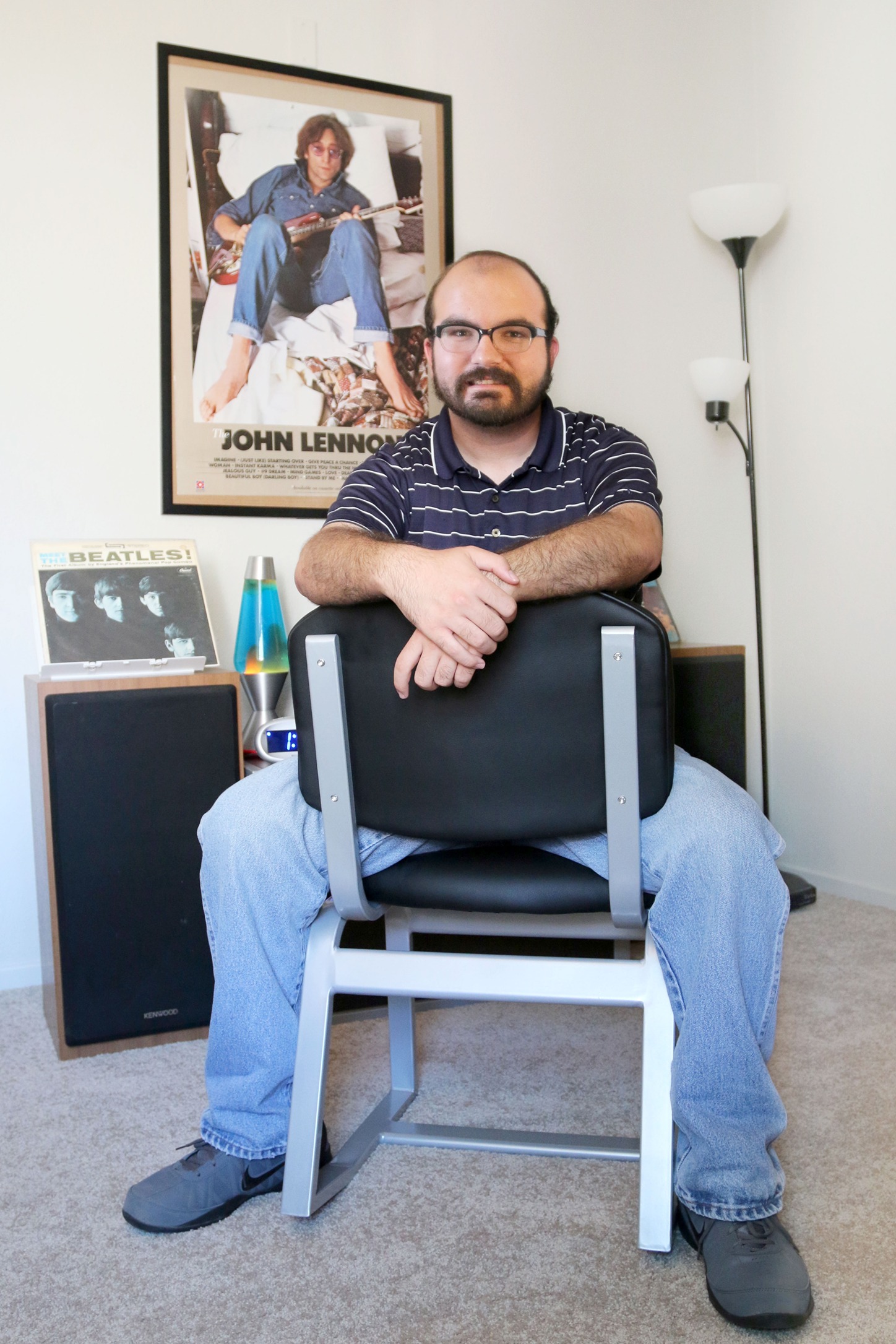
Like many of us, Justin Frago was horrified to hear about the massacre at Sandy Hook Elementary School. But his horror also resonated on another level when he learned that the shooter, Adam Lanza, shared Frago’s diagnosis of Asperger’s syndrome. “I was so mortified. A lot of people know me and that I have a disability. I didn’t want them to think I would do the same thing,” Frago said.
So he posted something to that effect on Facebook. One of his former teachers from The Met Sacramento High School saw the post, and invited Frago to co-write an op-ed piece about living with Asperger’s syndrome that eventually appeared on the Huffington Post.
“Mental health and disabilities are stigmatized and marginalized subjects,” he said. “It’s so important to understand that Autism is a spectrum and everyone is different.”
Advocate and empower
As an advocate for people on the Autism spectrum and people with disabilities, Frago shares his story as a way to better understand himself, educate those who may be unfamiliar with Autism, and empower others who face similar challenges.
For example, he doesn’t like hugging when he first meets someone. He’s sensitive to pressure, so a bear hug can feel suffocating. Some loud noises or angry voices can bother him, making him want to leave those situations. Sometimes humor and sarcasm are difficult for him to discern because he approaches things from a literal standpoint. But he’s learned to communicate how he operates to friends, classmates and instructors, and found that people accept him and appreciate what he has to offer.
He is an advocate for students at CSUMB, where he leads the Student Awareness for Disability Empowerment Club and works as a student access assistant in Student Disability and Accessibility Center (SDAC). He helped launch the first ever affinity graduation celebration for students with disabilities, and is a co-presenter at Student Disability and Accessibility Center (SDAC)’ new student orientation.
“I’m involved on campus. People are able to see that even though I have a disability, I can still perform well and fully participate,” Frago said.
In addition, Frago's broad understanding of, and connections with young adults with disabilities has been recognized in the non-profit community. Frago was recently voted onto the board of directors for the Central Coast Center for Independent Living (CCCIL).
“Throughout my life, people have told me I can’t do this or that because of my disability. But at my high school and at CSUMB, I’ve found people who help me succeed at school. They let you make a mistake, work through it, and move on.”
It's ok to be different
Frago counts Cinematic Arts & Technology professor Karen Davis among his top supporters. For the past year he’s worked as the teaching assistant for her class on rock n’ roll and film – a good fit because Frago considers himself a “hardcore rock n’ roll junkie, as well as a vinyl record collector.”
“Karen helped me understand and recognize that it is OK to be different. She also taught me a lot about social action and social justice,and that you have to stand up for what you believe in,” he said. Manager of Student Disability and Accessibility Center (SDAC) Margaret Keith and SDR adviser Ruthann Daniel-Harteis also taught him to celebrate his differences, and to take up the work necessary to make the changes he wants to see.
Plans for the future
Frago is a first generation college student majoring in Human Communication with a concentration in . He will graduate next spring, after which he plans to earn his special education teaching credential and eventually work in a school in Salinas. He hopes that by drawing on his past experiences, he can help his students recognize their own dreams and potential to succeed.
“I understand where they are coming from, the headaches and frustrations.” he said. “How can I help them learn how they learn? How can I help personalize learning and spark their curiosity? How can I find what they are interested in and passionate about? Similar to how I discovered my passion for the disability issues realm.” These are all questions that he hopes to explore with his future students.
Game On
Courtside matrimony brings out the best for CSUMB alums
Along with their Cal State Monterey Bay degrees and, of course, their three young children, Lisa and Craig Fortier share one big thing.
Both think they are married to a darned good basketball coach.
Award-winning
Gonzaga basketball fans agree. In her first year as head coach of the Bulldogs’ women’s team, Lisa Fortier earned the Maggie Dixon Division I Rookie Coach of the Year Award. With Craig serving as Lisa’s assistant, Gonzaga compiled a 26-8 record and fought their way to the Sweet Sixteen of the NCAA Tournament.
“This award is a great acknowledgment of the tremendous success Lisa had this year,” Gonzaga Athletic Director Mike Roth said. “It’s also an acknowledgement made by her peers on a national level. All of us here at GU are so proud of her, her staff and her team.”
The award represented an impressive step on a coaching journey for both Lisa and Craig, who worked their way up through the coaching ranks after earning Human Communication degrees at CSUMB.
A place to play
“I rave about my experience at CSUMB whenever anyone asks me,” said Lisa, who was Lisa Mispley when she starred for the women’s basketball team and was named CSUMB’s Female Scholar-Athlete of the Year in 2004.
“When I got to CSUMB, I was really just looking for a place to play. The program wasn’t having great success at that point, but it was a tremendous opportunity for me.
“I loved basketball, and I became team captain. I was sort of a liaison between the coach and the players. The coach (Amber Magner) really trusted me as a player, and I appreciated that. I think I learned a lot from her about how to trust your players,” Lisa said.
Lisa said that CSUMB’s emphasis on diversity and inclusion proved invaluable to her as both a recruiter and a coach.
Meanwhile, Craig was a stalwart for the CSUMB’s men’s basketball squad, and was named the team’s most inspirational player before graduating in 2003. They married in 2004.
Huge contributions
While at CSUMB, the pair worked with Bobbie Bonace, CSUMB’s first athletic director who helped develop a coaching minor in what was then known as Human Performance and Wellness.
“I just fell in love with those two kids. They are really treasures,” Bonace said. “Both Craig and Lisa made huge contributions to our basketball program. It wasn’t just their skill level, but also their dedication to the game, their understanding of strategy and how to motivate their teammates.”
“I have always been impressed by the mutual respect they have for one another, both as athletes and coaches.”
The Fortiers with their growing family – two sons, Marcus (2010) and Calvin (2012), and a daughter, Quincy (2014) – ended up in Spokane, Wash., where Lisa was an assistant at Gonzaga and Craig worked down the road in Cheney as an assistant men’s coach at Eastern Washington University. Both earned master’s degrees at Gonzaga.
Head coach
When the Zags’ head women’s coach Kelly Graves moved onto the University of Oregon, the Fortiers dealt with some unsettled times.
“We didn’t really know what we were facing,” Lisa said. One possibility was to join Graves at UO, but “we have two coaches in the family, so we really have to look at everything from that perspective.”
Then, Lisa was offered the Zags’ head coaching position. Which led to another decision, about Craig joining Lisa’s staff.
“There definitely were a lot of moving parts in making that decision. We were just getting to the point at Eastern (Washington) where we were enjoying the benefits of all the hard work we had put in there,” Craig said. “But I knew the (Gonzaga) team really well, and I was supportive of what Lisa was doing there, so I really was interested in being a part of that.”
With Craig coaching the defense, the Zags won their conference championship and, as a No. 11 seed, scored two upsets to advance to the Sweet Sixteen.
Since most of her players are returning, to be joined by a strong recruiting class, Lisa sees the potential for another successful season ahead.
One thing, for sure, it will be a hectic one.
“Having three little kids is a challenge enough. We are always taking one or the other of them here or there. You just try to take it one day at a time,” Lisa said. “It really helps that Gonzaga is such a family-oriented place. And we love Spokane.”
And Gonzaga fans have come to feel the same way about the Fortiers.
Golden State of Mind
The Golden State Warriors basketball championship in June 2015 made one alumnus $1,000 richer.
Along with other employees, Michael Leslie, the team’s videographer, received the bonus from coach Steve Kerr after the team won its first title in 40 years.
“Steve’s an awesome guy,” Leslie said. “He’s the real deal.”
Leslie (TAT ’08) was hired as a production assistant in 2010, following several unpaid internships with the team. “I busted my butt and the right people in the organization saw it,” he said. “When a position opened up, I got the call.”
He helped to compile sound bites from players and worked on video production, skills he learned in the Teledramatic Arts and Technology program. His videos were mostly for the team’s website, but sometimes they were played in Oracle Arena. “It’s pretty cool to see 19,000 people view your work,” he said.
Last season, he was promoted to videographer/editor. “I film games as a documentary filmmaker for the team” he said, telling the stories of players and their family members.
He was lucky enough to travel with the team throughout the National Basketball Association playoffs – to New Orleans, Memphis, Houston and Cleveland – documenting the entire post season experience. “I shared meals with the team and grew relationships with the players and their families.
“The players nicknamed me ‘Mini Steve Kerr,’ ” he said.
He may have brought that on himself, the result of showing up to work last Halloween dressed in replicas of Kerr’s Chicago Bulls jersey and shorts that he had purchased on eBay. The resemblance was uncanny, except for the Adidas shoes – Kerr wore Nikes during his playing days. The outfit easily won him the $100 prize for the best costume.
The championship run “was the best experience I have ever been part of,” Leslie said. “To call it ‘work’ amazes me.” He added that expectations are higher now, and there are more requests from the league and the media.
Will the Warriors win another championship?
“We’ll see. It’s really hard to win back-to-back titles in the NBA,” he said, “but we’re going to give it our best shot.”
One Click at a Time
Teaching digitally connected youth
By Estella Porras
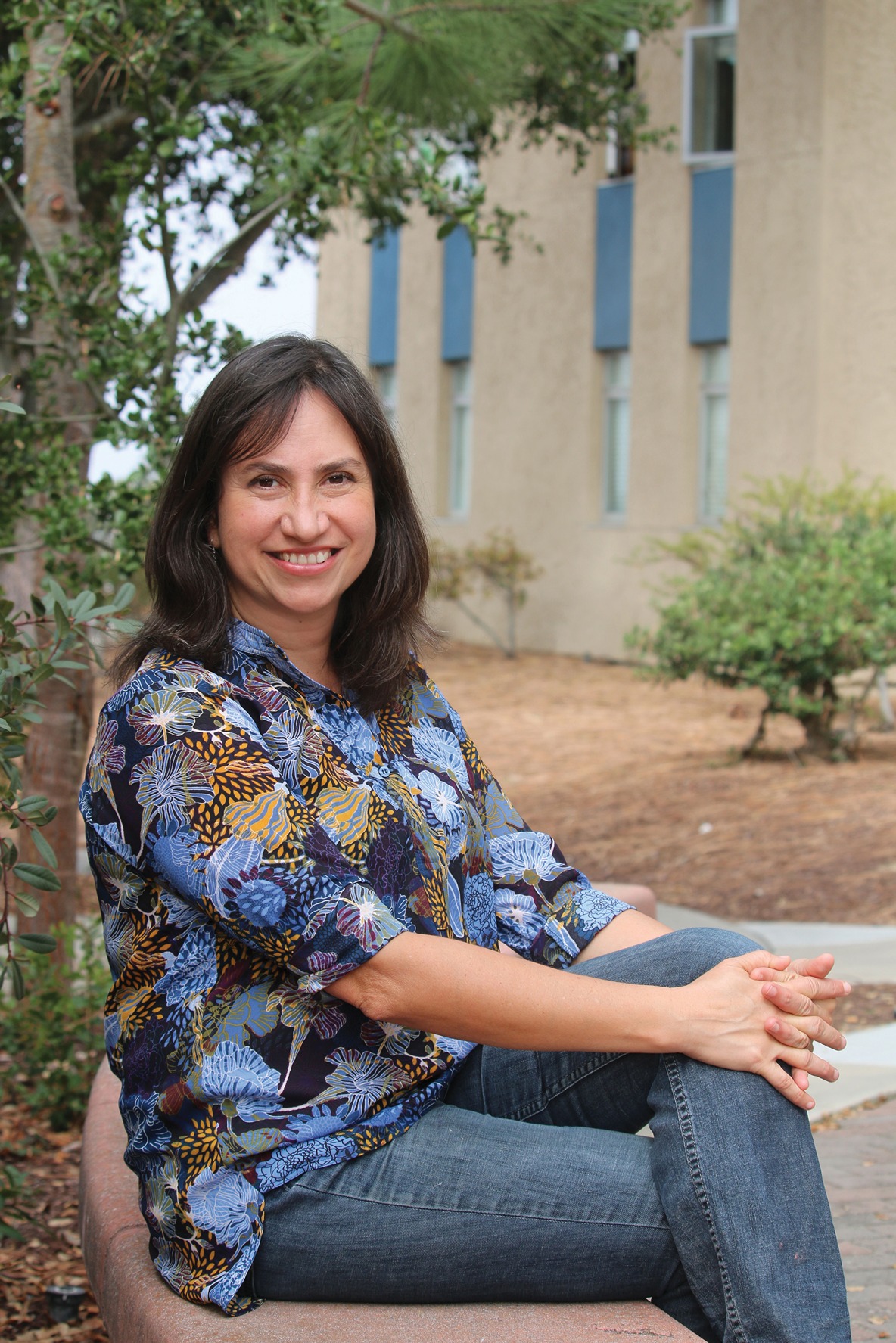
Estella Porras
This is what I see every day walking into my classroom: Rows of students with their necks bended over glowing screens while their fingers type, tap, scroll and swipe sending uncountable bytes of LOLs, emoji, photos, and status updates to the world.
Teaching in the midst of omnipresent digital devices and the unprecedented exchange of information represents a huge challenge for educators. Many of us wonder how to respond to the digital experience of the so-called millennials. How do we engage digitally distracted students? How does the curriculum meaningfully integrate the reality of online lives?
Last fall semester I asked my HCOM 307 class to monitor one week of their media consumption. In average students said they spent 37 hours a week with digital media (including social media, mobile and all computer use). In their reflection, most of them were surprised by the amount of time spent in front of screens, and some said that they wanted to scale back. In general, most of them didn’t express much concern about privacy issues.
It’s not news that most millennials are permanently connected. In a 2015 study by the American Press Institute, “51 percent of millennials say they are mostly or almost always online or connected while 39 percent say their lives are a mix of online and offline.” However, being “almost always” connected does not necessarily mean that youth are educated about the use of the internet and digital media.
The assumption that young people are automatically savvy in terms of digital media is problematic. Professor Eszter Hargittai, an internet researcher from Northwestern University, urges us to unpack the myth of “digital natives,” the assumption that growing up with the internet means that youth inherently understand its inner working. That’s not the case, she says, as they need to learn things such online privacy, how to manage an online persona, and I would add, how to ethically respond to trolling and abusive mediated communication.
Scholars have coined the term “digital media literacy,” suggesting that beyond learning to use digital tools to chat, play and consume, youth should also learn to become critical and selective users of technology, to engage as responsible citizens,to share, collaborate, and create content in a safe and respectful manner.
In her book “It’s complicated: The Digital Lives of Teenagers,” author Danah Boyd describes how teens form their identities, gain information and reflect about politics and future in their social networks. The emergence of hashtag movements like#BlackLivesMatter or #YesAllWomen highlights the fact that today’s civic engagement of youth happens online, and that educators need to support a digitally empowered generation to make sense of this reality.
However, this networked experience is not the same for everyone. Social and economic status plays a role in the way people engage with digital media. For instance, low-income, rural, and Spanish speakers in Californian lag behind other groups in terms of online access and digital skills. Disparities have narrowed in the last years but still persist, according to a 2014 paper titled “California’s Digital Divide”by the Public Policy Institute of California. This data is consistent with a report on Teens and Technology published this year by the Pew Research Center. One finding from the report is that Black and Latino youth use mobile phones more often than other groups, but at the same time are less likely than other groups to have a connected computer at home,which ultimately limits richer engagement.
Census data shows that the digital media landscape reflects inequality and privilege and, as Boyd writes in her blog, online experiences are diverse: “Teens use of social media is significantly shaped by race and class, geography, and cultural background.”
Besides demystifying the digital native trope, and recognizing digital disparities, another piece of reflection for educators —and perhaps the most important one, is about the quality of human communication that happens in mediated environments. Is it possible, despite the frenzy of sound bites, blips, and clicks, that youth be attentive, empathetic, and able to listen to others deeply?
Educating today’s youth requires us to not only look at the opportunities of the digital tools at hand but also to the quality of the communication that they enable. We need to examine our own fears, habits, obsessions, privileges and assumptions regarding youth and technology. Then, patiently, we can encourage our students to deeply and meaningfully listen to others and engage, slow down to preserve sanity, and connect to the sea of data one click at a time.
The Memory Doesn’t Remain
CSUMB Professor Researches Downfalls of Eyewitness Accounts
Seeing is believing. Or is it?
Jill Yamashita, associate professor of psychology at Cal State Monterey Bay, will tell you that sometimes what we see – and, more important, how we remember what we see – can lead us astray.
“Memory is not like a recorder. It doesn’t record things exactly as they happened,” Yamashita said. “Memory is very personal. Whatever you are interested in, whatever you think is important, that is what you tend to remember. What is interesting to another person, then is what they are going to remember.
“That is why you can have 10 people view the same exact event and have completely different eyewitness accounts of the event.”
Small details
Juries love eyewitness testimony, but Yamashita said that jurors should view that testimony with far more skepticism. In fact, she said, some studies have shown that up to 80 percent of eyewitnesses actually have picked the wrong face.
“The brain loves shortcuts. The brain loves to fill in details, it does it all the time. When we don’t know all the information, our memory will fill in the blanks with what it thinks is appropriate information. And sometimes it is wrong,” Yamashita said.
She said that each time you recollect a certain memory, it is likely to be slightly different from the last. Some small details may have changed; you may have incorporated bits of information from other people or sources.
In normal conversation, that is not a problem. But when police are trying to get to the bottom of a criminal case, it makes their job more difficult.
“It is frustrating, I am sure, for the police, because they are getting all these different stories about the same event,” she said.
Yamashita became interested in this field when she was in graduate school at the University of Nevada - Reno. First she worked in a lab studying facial perception; then she worked in a lab studying false memories. She saw how she could combine the two interests in looking at eyewitness testimony.
She teaches courses in psychological statistics and human memory at CSUMB.
Weapon focus
Several factors can add to the unreliability of a witness to a criminal event, according to Yamashita.
Studies have shown that memories are the most accurate when people are engaged and interested in an event, but not when they are over-emotional.
Adding to the problem is the issue of weapon focus.
“If you have all your attention on a gun or a knife, you are not going to remember what a perpetrator’s height or build is, sometimes you won’t even remember nationality. Because you are so focused on that one thing. It is a survival instinct,” she said.
Yamashita also has studied how the “other race effect” can undermine eyewitness identification.
“Studies have shown that a person is unable to identify a person of another race as well as a person of their own race,” she said. “We have greater sensitivity to faces we are used to, faces of our own race, as opposed to faces of another race.”
Yamashita said the dangers of relying too heavily on eyewitness identification is highlighted by the book “Picking Cotton,” which was co-written by Jennifer Thompson, a rape victim, and Ronald Cotton, whom Thompson positively identified as her rapist. Even though he had an alibi witness, Cotton was convicted and sent to prison.
Meanwhile, another convict bragged about committing the crime, but, when Thompson saw his picture, she continued to maintain her original identification.
“Her memory constantly had Cotton’s face in her mind, so she said, no, that (other convict) is not the guy who raped me,” Yamashita said.
Finally, DNA tests showed Cotton was not guilty and he was released after more than a decade.
“We have to realize, if we get this wrong, we are going to send the wrong person to prison,” Yamashita said.
News Briefs
A framework for the future
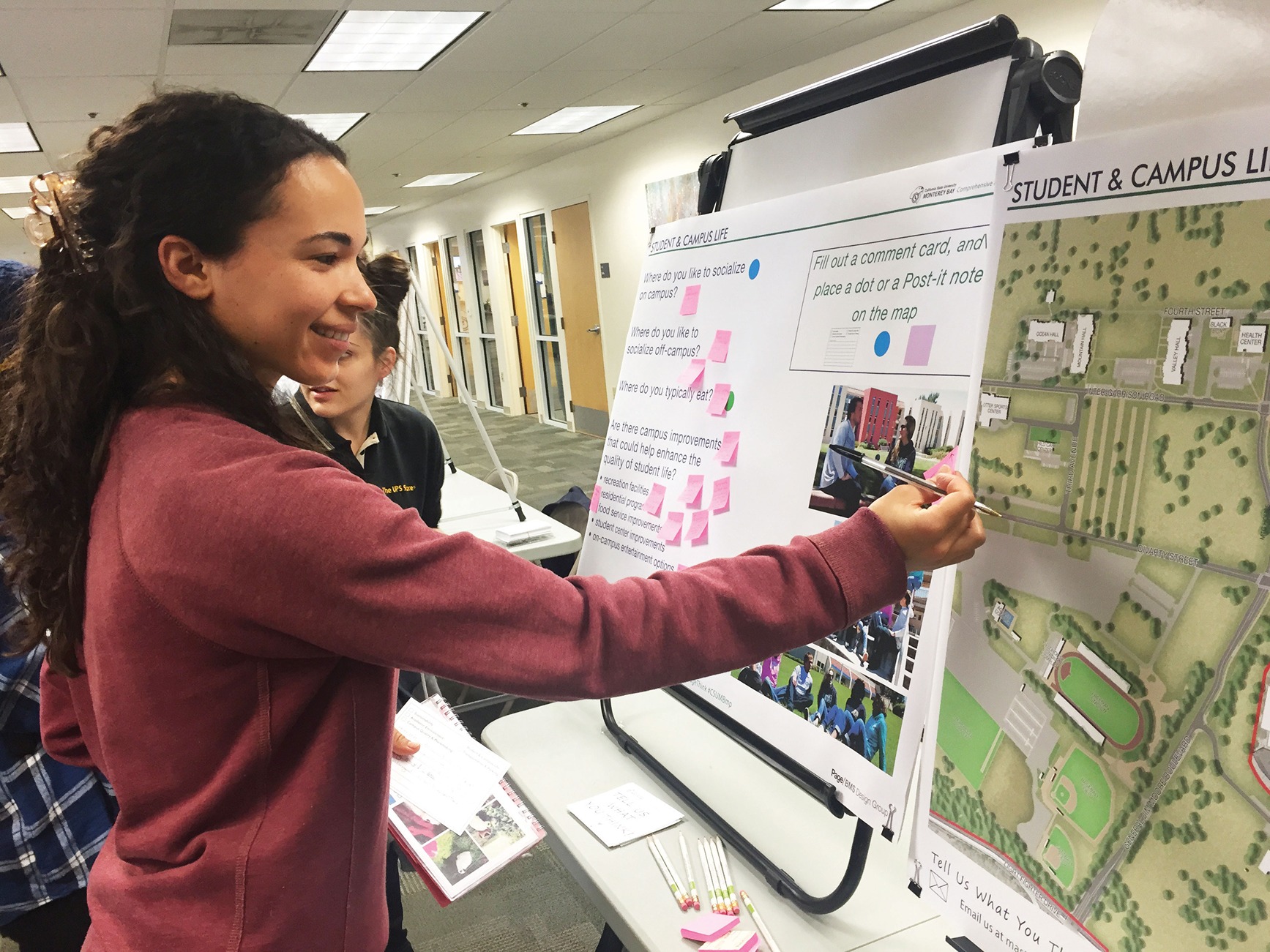
Since the university opened in 1995, the campus has grown from 650 students in repurposed buildings on a former Army base to a 21st century institution for teaching, research and innovation.
To accommodate the expected growth to 12,000 students by 2024, the campus master plan is being updated. The master plan provides a road map for growth and renewal of the campus. It includes academic needs such as classrooms and labs; student and residential life, such as a student union, recreation center and housing; infrastructure; sustainability; transportation; and connections with neighboring communities. The draft is expected to be completed by the end of the year.
After a series of meetings with campus groups to start the process, it became clear that there is an interest in making the campus more pedestrian- and bike-friendly.
Page/BMS Design Group of San Francisco has been hired to lead the process.
Marina, university team up on student housing project
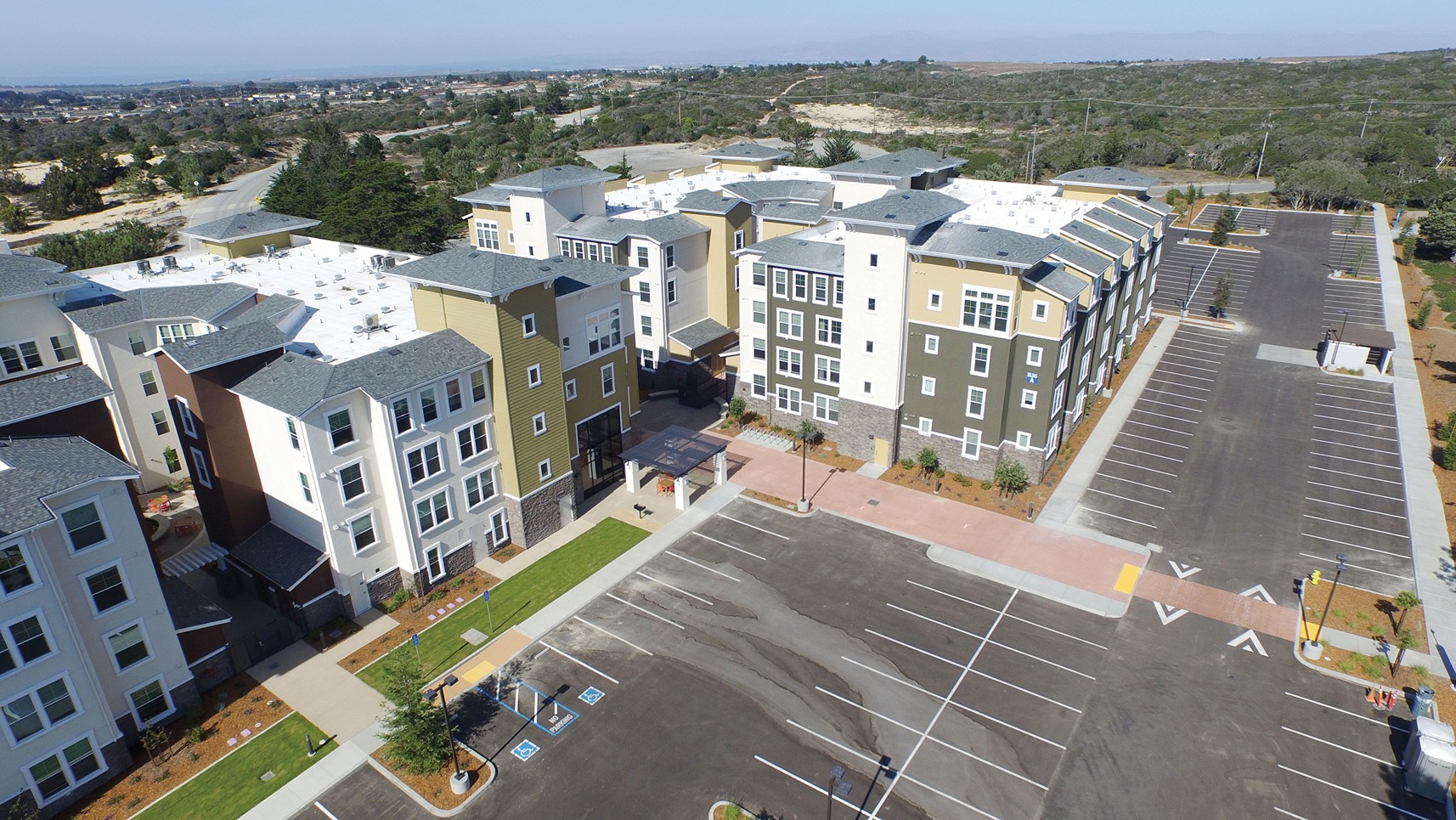
It’s about as far as you can get from dormitory life. The Promontory, a student housing complex just north of campus in Marina, opened in August. It’s the first new housing to come online since 2004. The project consists of three 150,000-square-foot, four-story buildings, with a total of 174 units and 579 beds. All units — which range from one to four bedrooms —come with a microwave, stove/range, dishwasher and washer and dryer.
The development has plenty of perks that have proven popular with students: a two-level fitness center, a game room with pool table, study rooms, a cyber café with kitchen, and a theater. Each of the buildings has an interior courtyard.
The project was built to LEED silver standards. It is the first joint housing venture between the city of Marina and CSUMB.
CSUMB acquires National Steinbeck Center
California State University, Monterey Bay and the National Steinbeck Center have completed a deal that will bring the university to the city of Salinas.
Under terms of the deal, negotiated among the university, the Steinbeck Center and the city of Salinas, CSUMB’s corporation purchased the building for $3 million. In addition, CSUMB paid the city $100,000 for the land beneath the building.
The Steinbeck Center will remain as a tenant, with an 80-year lease.
“This is our front door to Salinas and we’re going to use this as a way to connect to the community and respond to their needs,” said CSUMB President Eduardo Ochoa.
The University Corporation at Monterey Bay is a non-profit 501(c)(3) auxiliary organization that operates as the business arm of the university. It provides direct support for a number of university programs and activities.
The university is considering how to use the space. Possibilities include cultural and educational programming and outreach by staff members from CSUMB’s admissions and financial aid offices. In addition, the space will continue to be available as a resource for the community.
“We are planning on engaging the campus and our partners in Salinas in discussions of how we might best advance the mission of the university and meet community needs,” said CSUMB Provost Bonnie Irwin.
Art donations bring campus to life
Walk into the library and look around. Many of the walls have color and character thanks to the multiple pieces of beautiful art that decorate the walls. These pieces, along with pieces displayed throughout campus, are made possible by the University Art Committee – and more is on the way.
The University Art Committee, comprised of Holly Ochoa, administrators, faculty, staff and students, is a recommending body to the President that facilitates the acquisition and placement of donated art throughout campus. Many pieces are possible thanks to the generosity of an anonymous donor.
The artists represented among the works that CSUMB has been gifted include Eleen Auvil (the copper panel piece at the library stairwell), Susan Manchester, Barry Masteller, Amy Ellingson, Chris Winfield, Charles Eckart, Lucas Bloc, Cynthia Ona Innis, Susan Parker, Rick Arnitz, and Jamie Brunson. In the library reference area, the Cornwell mural is displayed on loan from the Monterey Museum of Art.
In addition, a three piece work by Vern Trindade, recently exhibited at the Triton Museum in San Jose, will be mounted in the near future at the library. For more information or to inquire about making art donations, contact the committee chair, Ilene Feinman, dean of the College of Arts, Humanities and Social Sciences, at ifeinman@csumb.edu.
Bethany Mayer — A technology leader comes to CSUMB
Be open. Be curious. In the technology industry, it’s a glass maze for women in leadership roles. Learn to navigate it.
Excellent advice from Bethany Mayer (EMBA ‘11) the president and CEO of Ixia, a globally-traded, public company with more than 1,700 employees worldwide. The firm specializes in computer networking and security with clients that include Cisco and Verizon. Total revenue for the company in 2014 was nearly a half-billion dollars.
Mayer, who serves on the CSUMB Business Advisory Council, has been on the forefront of technology her entire career. The Bay Area native got her start at Lockheed Martin working on classified projects developing stealth technology for fighter aircraft. From there, Mayer moved on to Apple in the early ‘90s, serving in operations as the company built its first laptop computer. Several years later, she moved on to Cisco Systems as the Internet rapidly expanded for common use. For the last three decades, Mayer has personally driven the development and marketing of technology that has transformed our lives.
More career highlights followed. She served in lead marketing positions at several firms before ending up as vice president of marketing for the $30 billion server, storage and networking business unit at Hewett Packard. Then came CSUMB.
“I am a life-long learner and really wanted to get my master’s degree. I found that getting an MBA online through a state school with a strong reputation was ideal for my circumstances,” she said. “Professor Marylou Shockley, the College of Business chair, is smart and an out-of-box thinker. I met people from all over in my cohort. It was fun and hard work, with many weekends and nights.”
After graduating from CSUMB, Mayer’s career moved away from marketing and into general management. She served as the senior vice president and general manager of Hewlett-Packard Networking, a $2.5 billion business unit, before her current position as president and CEO of Ixia. She was recently named one of the “2015 Top 50 Most Powerful Women in Technology” by the National Diversity Council.
It’s been an impressive career. A mother of five, Mayer said her professional experience, while positive, was the exception rather than the norm. “There are not enough women in leadership roles in the tech industry,”she said. “Early in my career, I was the only female in the office that wasn’t an admin. Yet, this generation, my children’s generation, is different. I have faith in millennials. It will change.”
Mayer went from manufacturing, to product development, to marketing and then made the leap into management. Technology evolves rapidly. Perceptions and options should do the same.
“I didn’t say no to non-obvious choices,” Mayer said. “CSUMB was one. It was an excellent experience.”
Class Notes & Remembering Dana Lookadoo
1997
Mary O. Lesher (B.A. Liberal Studies) is a retired educator, author, singer and songwriter. She used her master’s work from 2008 to author a book called “Return to the Soul of Your Child,” a No. 1 best seller in March 2014. Lesher retired from teaching in 2010. Lesher created a musical program called “Happy Sounds” and sings in various venues.
1998
Josh Evans (B.S. Earth Systems Science and Policy) received his RN license from Merced College in 2010 and currently works as an inpatient wound care supervisor at Mercy Medical Center.
2000
Katwyn T. (Miller) DeLaRosa (B.A. Social and Behavioral Sciences) was made a partner at the Bennett and Sharpe Law Firm where she specializes in employment law. Her husband Robert DeLaRosa (B.A. Human Communication) is finishing up his master’s in instructional design and technology at West Texas A & M. He is also assisting Breaking The Chains, a non-profit that builds safe houses for victims of human trafficking.
2001
Jason Bergman (B.A. Teledramatic Arts and Technology) began working for Disney right after graduation in 2001 and has been there since. He has screen credits in all feature animation movies for the last 14 years (including Frozen!). Bergman has been married for 10 years and has a 7-year old daughter.
Patricia ‘Tricia’ (Mynster) Dutcher (B.S. Earth Systems Science and Policy) earned a Master of Science and Ph.D. in environmental science after graduating CSUMB. She is now married and has a son. She also lived 13 years in Las Vegas, playing rugby and working extensively with public land management agencies. She focused on climate change and energy issues while teaching as a graduate student at UNLV.
2002
Zac Rempe (B.S. Management & International Entrepreneurship) is currently the general manager at Rempe Construction, a company started by his father in 1978. He credits CSUMB with refining his business skills. Rempe has continued his education in construction specific certifications through the National Association of the Remodeling Industry (NARI) and is now a NARI certified project manager. He is a member of the Marin Young Professionals Network and a charter member of 100 Who Care Marin County. Rempe married Melanie Taylor (B.A. Human Communication ’02), has two children, two cats (Clover & Sabrina), a dog (Wicket) and a fish (Ariel). An avid cyclist and runner, Rempe ran his first half marathon in April, 2015, and finished in one hour, 49 minutes.
2005
Heather Hatlo Porter (B.A. Teledramatic Arts and Technology) currently works as the vice president for marketing at Chegg, and also serves as the president of the board of directors for the Chegg Foundation.
Kyle Petty (B.A. Human Communication) earned a secondary teaching credential and a Master of Arts in composition from CSU Sacramento. Petty’s last trip to CSUMB coincided with his participation in the 2014 “Boston 2 Big Sur Challenge,” which included running the Boston Marathon, followed by the Big Sur Marathon held just six days later. Petty currently teaches English at Valley High School in Sacramento, where he lives with his wife and son.
2006
Tom Melville (B.A. Liberal Studies) works at his own real estate company, Tom Melville Properties. Melville helps sellers and buyers with listing and selling real estate in Carmel by the Sea, Monterey and Santa Cruz.
Kristin Theobald (B.A. Human Communication & Teaching Credential) taught English for Monterey Peninsula Unified School District, grades 6-12, for seven years right after receiving her teaching credential. She is now a founding teacher at a new charter school in Tacoma, Wash. Theobald is currently in an online master’s program through CSU Bakersfield. She loved going to CSUMB and reflects fondly on her college years as “some of the best of my life!”
Matthew Morey (B.A. Teledramatic Arts and Technology) is working for Visit Temecula Valley as their digital marketing manager, promoting tourism to Temecula through graphic and video advertising. He married his wife Dana (B.S. Earth Systems Science and Policy ‘07) last year.
Jessica (Hannibal) Bawdon (B.A. Human Communication) has worked in the Office of the Registrar at CSUMB as a graduation counselor for the past six years. She is currently in the interim position of graduation coordinator. In that position, Bawdon is working on several projects to transition to paperless processes and improve productivity while making it easier for students to check their graduation status. She is married with two children.
Nancy Martinsen (B.A. Human Communication) is currently working on her Ed.D. at San Francisco State University.
2007
Miranda (Chatigny) Henley (B.S. Earth Systems Science and Policy) completed CalStateTEACH, and now has been teaching for the past seven years. She is happily married to her husband Scott and enjoys living with her two pit bulls and 17 year-old stepson. They plan to move to Louisiana in the near future.
Margo Mullen (B.A. Visual and Public Art with a minor in Communication Design) is attending Otis College of Art and Design for a Master of Fine Arts in public practice (one of eight people to get in this year). What is even more amazing is that Suzanne Lacy, one of the founders of CSUMB’s Visual and Public Art Department, is the department chair of the Graduate Public Practice program at Otis College. Prior to this, Mullen was the creative arts director at the Boys and Girls Club of Santa Cruz.
2008
David Calloway (B.A. Human Communication) returned to school to earn his Ph.D. at the University of Alberta in Edmonton, Canada. He had been teaching at CSUMB in Collaborative Health and Human Services since fall 2010. He started teaching at CSUMB immediately after receiving his Master of Arts from San Diego State University.
Neil Lindberg (B.S. Telecommunications, Multimedia and Applied Computing) finally bought the Novara XL frame bike he always wanted from REI while at CSUMB. Lindberg’s software team has won the quarterly team award twice now. He enjoys spending time with his eight gorgeous nieces and nephews in St. Louis.
Maria Ceja (B.A. Human Communication) earned a master’s degree in Mexican American Studies at San Jose State. She married fellow Otter Efrem Valentin (B.S. Telecommunications, Multimedia and Applied Computing ‘06), traveled to Puerto Rico and purchased their first home. She is also the president of the CSUMB Alumni Association, Board of Directors.
2009
Gregory Cannon (B.S. Information Technology and Communication Design) is a resident physician at San Joaquin General Hospital in the internal medicine department.
Kyle Stoner (B.S. Environmental Science Technology & Policy) works as an environment scientist for the Calif. Department of Fish and Wildlife.
Omar Mendoza (B.A. World Languages &Cultures) is finishing a Master of Arts degree in Granada, Spain.
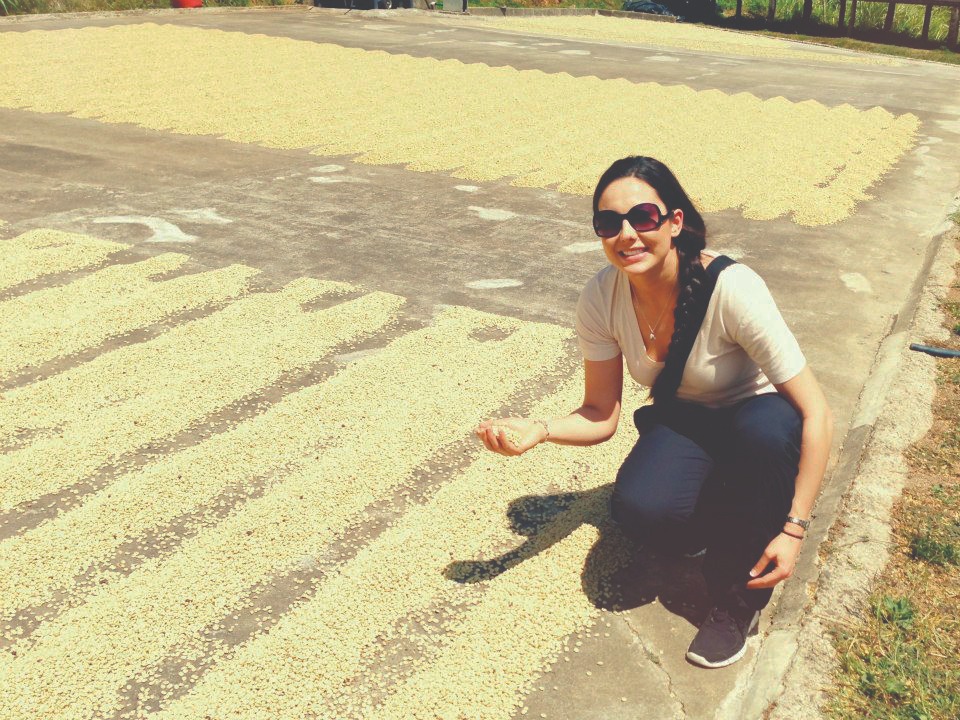
Dana Andrews (B.S. Business Administration) moved to the Bay Area to intern with the GS Warriors Youth Basketball program after graduating from CSUMB. It was a great transition from a lifestyle of a CSUMB student athlete to the working world. After a year, she landed her “dream job to drink coffee all day.” As a green coffee commodities trader, Andrews works with co-op’s and farms from across the world to import, buy and sell green coffee to roasters such as Peets, Blue Bottle and Stumptown. That job took her to San Diego where she currently “lives, plays, and breathes the ocean breeze!”
2010
Adam Flynn (B.S. Business Administration) is working “to bring the exciting Run for Your Lives zombie-themed mud run to locations across the country and overseas.” Married in 2014 in Las Vegas, Flynn also works with the world’s largest wholesale distributor of tabletop games and supplies.
Denise Simpson (B.A. Integrated Studies) works for Joullian Vineyards in Carmel Valley after working in broadcast media for approximately 10 years.
Ruben Martinez Jr. (B.A. Global Studies) attended the Pepperdine University School of Law and received a J.D. in 2014. While there, Martinez interned with the U.S. Department of Justice, Office of Immigration Litigation, in Washington D.C. for six months. He then passed the Calif. Bar Exam, and now has an immigration law practice in Pasadena.
Hillary Williamson Perez (B.A. Integrated Studies with a minor in Creative Writing and Social Action), celebrated her CSUMB graduation with a trip to the United Kingdom, where she participated in an archaeological dig outside Canterbury with her best friend. After volunteering onsite for a week, Perez rented a car with friends and proceeded to spend the next four weeks driving to Scotland up the west coast of Great Britain and back via the east coast. In fall 2011, Perez began graduate work at Pacifica Graduate Institute in the Mythological Studies department. After two years of intense study, she was awarded a Master of Arts in 2014, and was simultaneously approved for candidacy in Pacifica’s Ph.D. course in the same program. She married this year. After she graduates from the Ph.D. program, she hopes to“return to CSUMB to teach in the humanities department, where hopefully I can bring new interest to the mythology courses that so prepared me for my graduate work, and say thank you to my most beloved alma mater.”
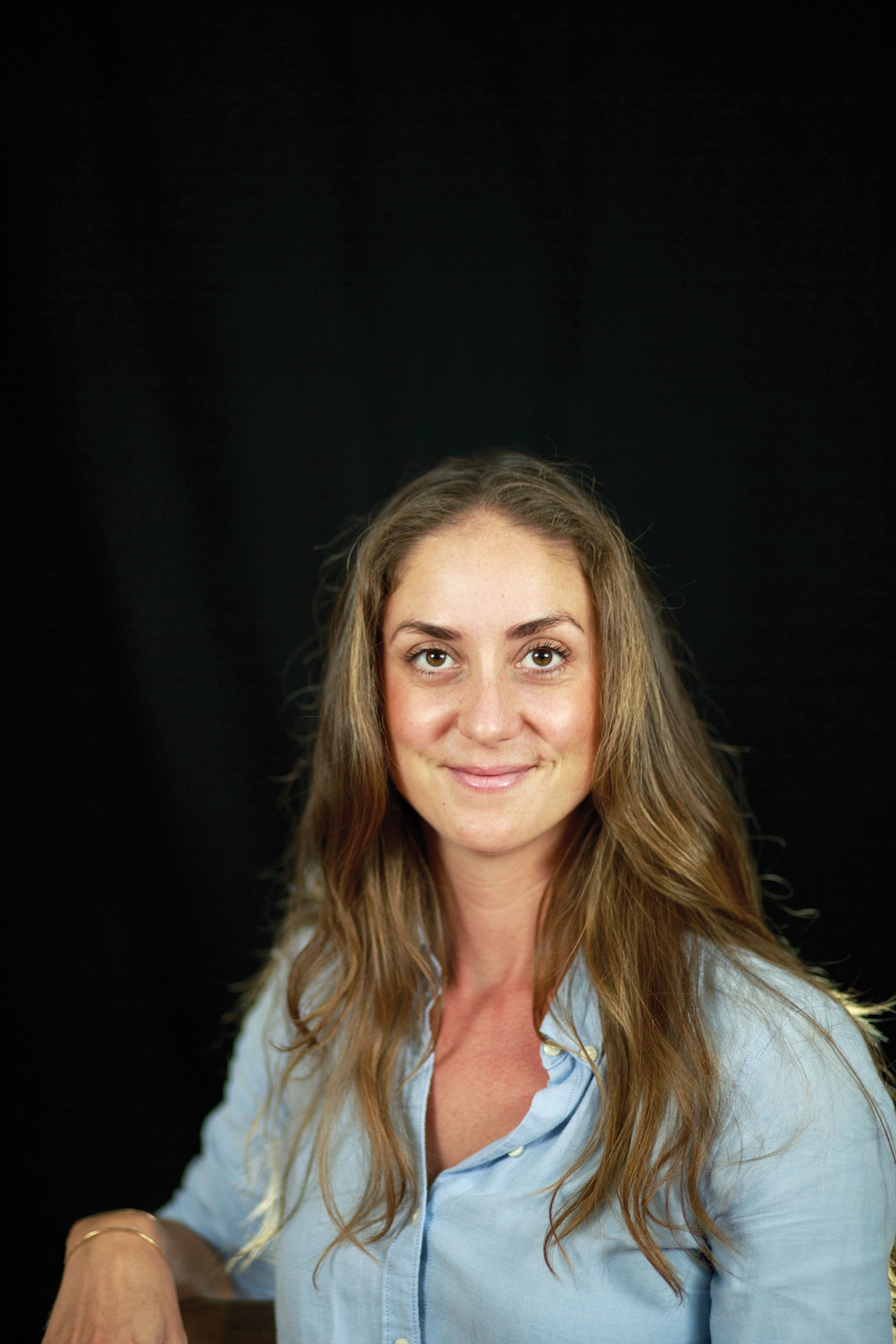
Lauren Rolland (B.A. Human Communication) has been living on Oahu since 2012. She returned home to get married in 2013. Rolland and her husband now live on the North Shore, enjoying “a very outdoorsy lifestyle in and around the ocean.” They traveled to France for the honeymoon and since then have island-hopped in Hawaii and traveled to California on a regular basis. Rolland works at Freesurf Magazine, Hawaii’s No. 1 surf publication, working her way up to editor while learning the magazine publishing industry, which she loves. Rolland is also working with the World Surf League (WSL), as a media manager, allowing her to be on the pulse of regional Hawaii pro surfing and in the mix with all the athletes, directors, organizers, VIP and industry members.Rolland and her husband are enjoying owning their first home as well. “Aloha Otters!”
2011
Samuel Messina (B.S. Business Administration)took an internship at C.H. Robinson Worldwide, a logistics company with a produce transportation office in Monterey. Messina was then offered a full-time job when he graduated and began a career as a produce transportation sales representative. Messina then took a job as a web developer with Akamai Innovations Inc., a small tech startup located in downtown Monterey. Messina is one of several CSUMB alumni working for Akamai Innovations. They have hired two interns from the CSUMB College of Business since he’s been there. In addition, he passed the California real estate sales agent exam and “plans to put his license to good use in the near future.” Messina recently celebrated his three-year anniversary with his wife, Carrie.
Hilary O’Neil-Johnson (B.S. Kinesiology) applied to several accelerated-second degree nursing programs and ended up at University of Pennsylvania in Philadelphia. “My kinesiology degree helped me work as a personal trainer part-time while in nursing school.” O’Neil-Johnson completed her bachelor’s in nursing and became a registered nurse in 2013. She then started working part-time in a primary care clinic while beginning her master’s degree in the Family Nurse Practitioner program at Penn with a focus in primary care and women’s health. She loves Philadelphia and plans to stay in the area to practice. O’Neil-Johnson had an article published in the Monterey County Herald about HPV vaccination last spring. “I’ll never forget my time in Monterey.”
Allison Shorr (B.S. Business Administration) got accepted into the UCLA extension paralegal training program and earned a certificate in 2012. Shorr now works at Strausser Sherman, a law firm which handles workers compensation cases with an emphasis on representing public safety members and their families.
Jorge Martinez (B.S. Business Administration) was recruited by a Big 4 accounting firm. After two summer internships while at CSUMB and two and a half years of professional experience, Martinez changed companies and began the next phase of his career at BlackLine Systems. Martinez’s degree emphasis was in accounting and IT. In 2014, Martinez got engaged to a CSUMB alumna, Elizabeth Coria (B.S. Business Administration ‘09) in Lisbon, Portugal. They both studied in Spain while at CSUMB in 2007-2008. Martinez also founded the CSUMB Accounting Society and has returned for annual presentations since graduating. “I will be involved with my alma mater through the accounting society and in any other way possible.”
Noemi Gomez (B.S. Kinesiology) went to physical therapy school at Duke University School of Medicine and graduated May 2015 with a Doctorate of Physical Therapy. Gomez recently returned to the Monterey Peninsula to practice at an orthopedic/sports clinic.
Frank McEntire (B.S. Computer Science and Information Technology with a minor in Mathematics) got married, had a son, still lives in the Monterey area and landed a good career job. “We just brought on CSUMB interns through the Monterey Bay Regional Academy of Computing and Education (MBRACE) program. Still supporting Otters!”
2012
Valerie Hulburt (B.A. Human Communications) served as the catering/ sales coordinator for Sodexo at CSUMB for more than two years.Afterwards, she was offered the job of catering manager for Sodexo’s account at Vandenberg Air Force Base in Santa Barbara County. Hulburt has been “able to directly serve our country’s troops and experience what life on an ‘active’military base consists of.” She also developed the base’s first wedding guide to be used at the Officers Club.
Michelle Arcos (B.A. Human Communication), is a marketing associate for Women’s Center-Youth & Family Services, a non-profit organization that is San Joaquin County’s only provider of free, confidential services and shelter for homeless youth and victims of domestic violence,sexual assault and human trafficking. At Women’s Center-YFS, Arcos is responsible for planning fundraising events, managing the agencies social media accounts and website and coordinate the marketing, public and media relations efforts for the agency.
Jurija Metovic (B.A. Human Communication) has traveled to Australia, New Zealand, Tahiti, Vanuatu, New Caledonia, Puerto Rico, Mexico, and the U.S. Virgin Islands. Metovic moved to Hawaii and started working with a startup business. She is currently with GoLeanSixSigma.com as the client experience manager. “I get to meet new people every day and improve the world one step at a time.”
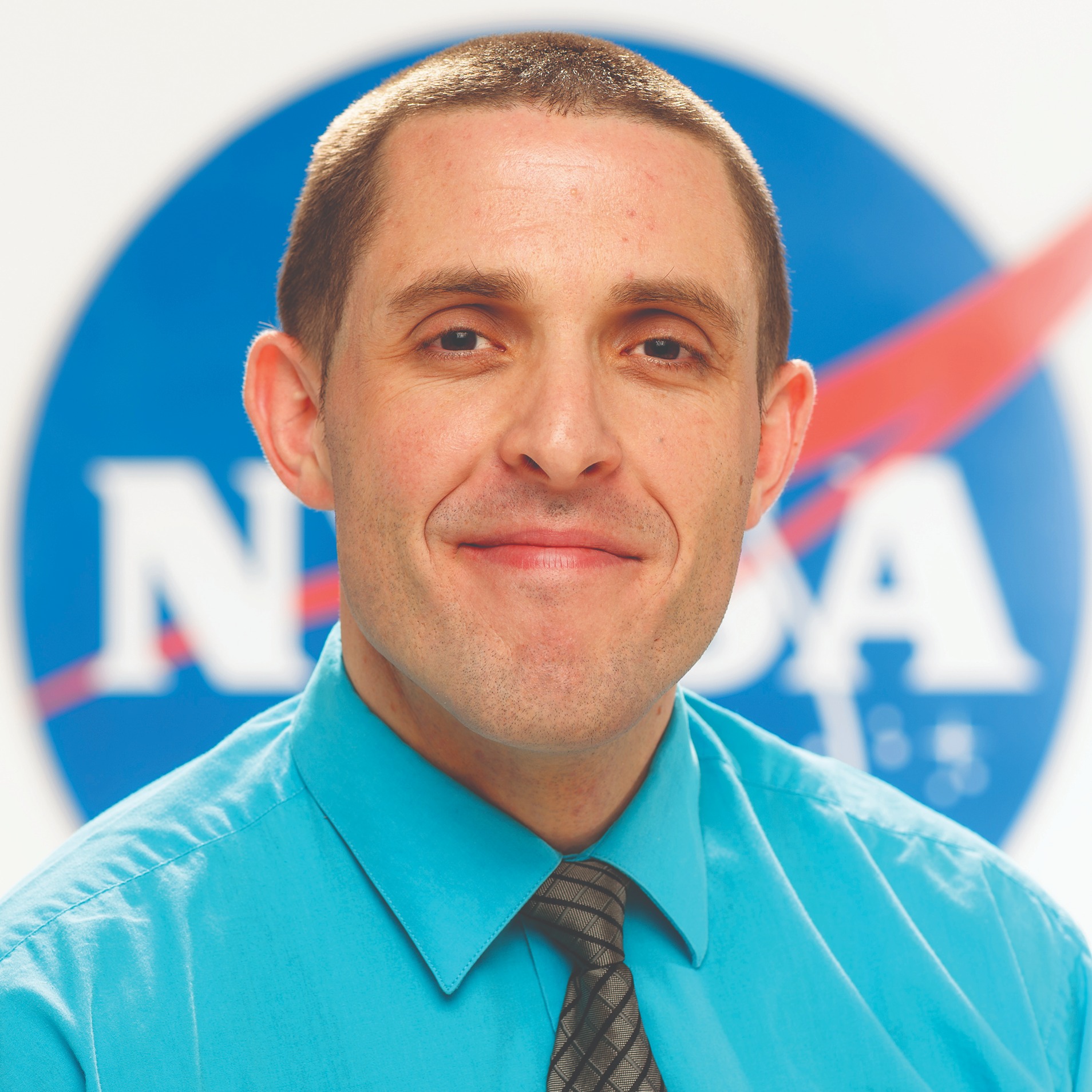
Ryan T. Scott
2013
Ryan T. Scott (B.S. Kinesiology) is a laboratory instructor of human anatomy in the biology department, and is a graduate research student in the kinesiology department, both at San José State University. The research for his master’s degree is being conducted at the NASA Ames Research Center, Space Biosciences, within the bone and signaling laboratory. As a research associate there, Scott’s work is investigating the effects of simulated microgravity on hind-limb mouse bone structure, strength, and osteoclast activity in the presence of the antiresorptive drug, zoledronate. Scott was honored to be named a California State University, 2015-16 Pre-Doctoral Sally Casanova Scholar.
Kendra Haugh (B.A. Global Studies with a minor in Business) completed a master’s degree in international trade, investment, and development at the Middlebury Institute of International Studies at Monterey (MIIS). There, Haugh found her passion for anti-corruption efforts, anti-money laundering,trade sanctions, and anti-terrorism financing studies. During her last semester of the master’s program, she wanted to do more than be in the classroom. Haugh applied for a professional service semester and began working the Financial Crimes Enforcement Network at the U.S. Department of the Treasury.
Ian Bowers (B.S. Computer Science and Information Technology) was hired at Microsoft through the MACH program (Microsoft Academy of College Hires.) A two-year rotational program, Bowers has been able to work in three different organizations within Microsoft, in order to gain the breadth of experience to decide which org/team and type of work is the best fit. This came after a summer internship that Bowers completed at Microsoft while attending CSUMB, which he obtained with “the awesome help of the CSIT MBraceprogram.”
Lauren Robbins (B.A. Human Communication with a minor in Business) is pursuing a Master in Business Administration with an emphasis in global business. She is scheduled to graduate in April 2016.
Andrew Rose (B.A. Psychology) works as an assistant brewer at the Alvarado Street Brewery in Monterey.
2014
Alisa Rodriguez (B.A. Human Communication), works in Career Pathways at John Muir Charter School.
Priscilla Vidal (B.A. Liberal Studies) works for a company called Play-Well TEKnologies, which teaches kids engineering skills with Legos. Vidal started off as an instructor and is now the after school and outreach coordinator. She works with all of Santa Clara, Monterey, and Santa Cruz areas. The program “brings creativity, critical thinking, and imagination to a classroom! Best job ever!”
In memory
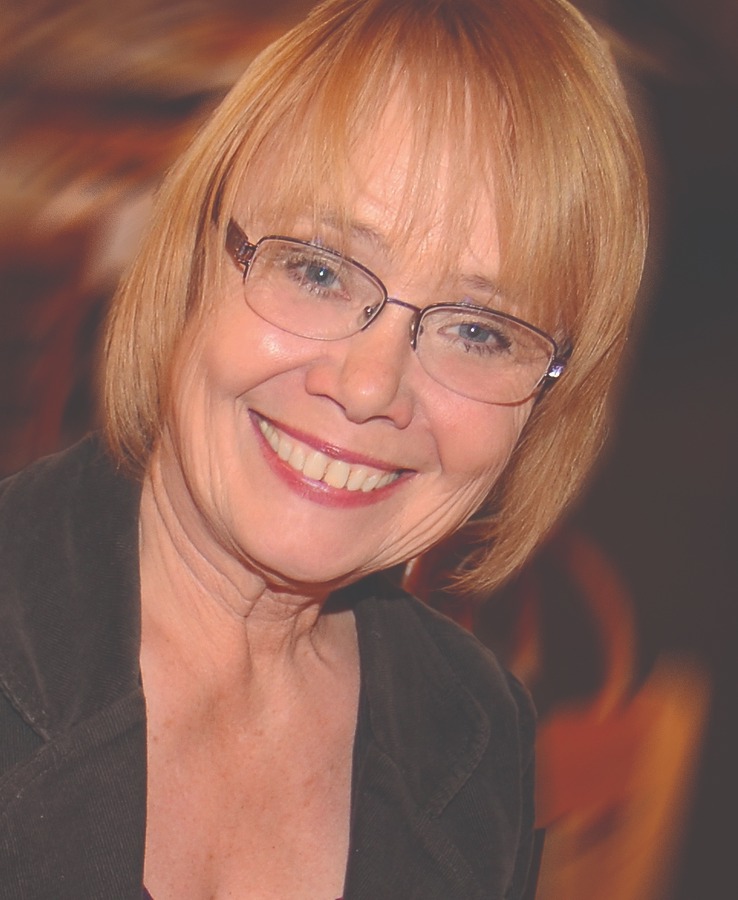
Dana Lookadoo (B.S. Telecommunications, Multimedia and Applied Computing ’99)
Communicate, educate, engage and optimize – Dana Lookadoo embraced these principles and touched hundreds if not thousands of lives during her career. Lookadoo graduated magna cum laude from CSUMB in 1999, and was one of 12 Service Learning Award winners at her graduation. That was just the beginning. As the founder of Yo! Yo! SEO, Lookadoo was passionate about utilizing Search Engine Optimization (SEO), social media marketing and web usability for her clients’ success. She developed corporate training classes and technology curriculum for multiple companies and institutions, including Sun Microsystems and the Monterey Institute of International Studies. She became an adjunct professor and taught computer courses at CSUMB.
Lookadoo was a mentor, a trainer, an author and an avid cyclist. She was also a friend to countless students and colleagues, a wife who called her husband “the light of my life,”and a daughter who considered her mother her best friend. A serious cycling accident in November 2013 damaged her spinal cord and left traumatic injuries throughout her body. Lookadoo fought to recover. Last April, “Ride 4 Dana”allowed thousands of riders to raise more than $19,000 toward her medical care.In September 2015, Lookadoo succumbed to her injuries. She was a cherished member of the Otter community.