

2017 Spring/Summer Archive
"Monterey Bay," Spring/Summer 2017
This archive preserves previously published materials that document stories, initiatives and community impact over time. Content reflects the context, priorities and perspectives at the time of publication.
Materials in this archive are provided for reference purposes only and may not reflect current programs, policies or organizational updates.
Explore the collection to gain insight into past work, evolving priorities and the broader impact of these efforts over time.
Contents
Journeys
In the past, a common motivation for traveling and living thousands of miles from home came from legends or stories, many focused on having a better life in a distant land. Perhaps it was fleeing persecution. Or perhaps the motivation was simply curiosity when looking at the horizon.
Now, especially for students, it’s still the promise of a better future, but with the knowledge of a cultural experience and the formation of invaluable connections – something carried for the rest of their lives. It can be said the journey never stops for these students, regardless if they permanently return home.
CSUMB International Programs knows this – and is actively recruiting students from across the world to be a part of the campus community. It’s a win-win for not only the international students, but the local students as well, many of them first-generation. Many develop close friendships with the international students, working on class projects together. Others become roommates.
Growth
Before 2013, International Programs had a very limited role on campus, simply working with the California State University International Programs (CSUIP) at the Chancellor’s Office on a limited number of study abroad programs. By spring of 2014, CSUMB International Programs had moved toward becoming an office with full responsibilities.
Growth has been rapid. CSUMB International Programs now hosts more than 700 students, up from 59 during the 2012-2013 academic year. Of these current students, just under 120 are earning degrees at CSUMB. Business is the most popular major, with 77 international students. The program has 109 university partners scattered throughout Asia, Western Europe and South America.
The program is only expected to grow according to Ida Mansourian, associate dean of International Programs and Services. A strategic plan for the International Program is being finalized this year. The plan calls for increasing international students at CSUMB, both degree-seeking and exchange students, to 10 percent of the student body by 2022.
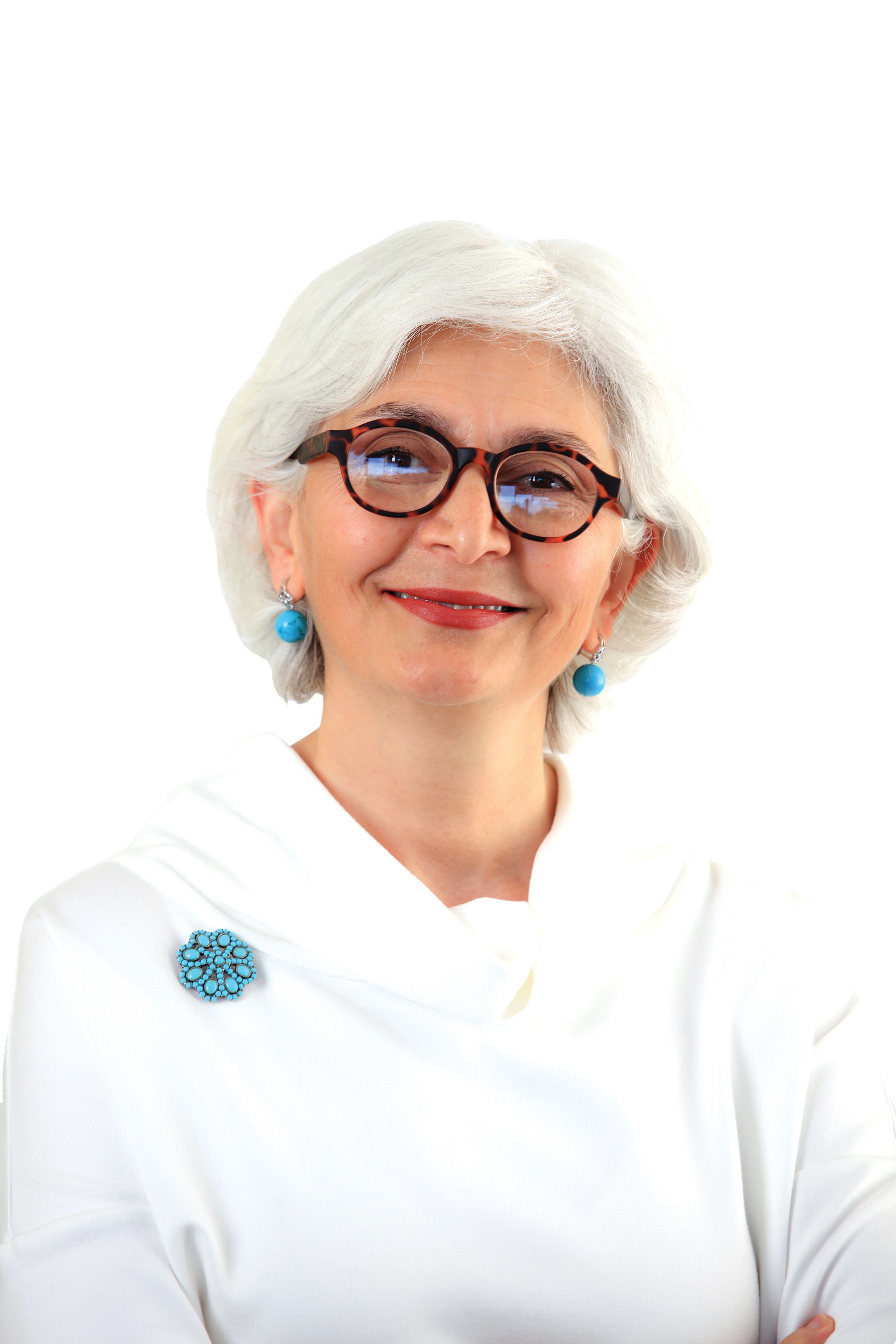
Ida Mansourian
Like many universities, CSUMB is becoming more prominent on the global map. “CSUMB is not only attractive because of its programs, such as business, but its location. We also provide housing,” said Mansourian. “The program has grown by five times in the last five years.”
This growth has contributed tremendously to not only CSUMB’s campus culture but to the local economy. According to the Association of International Educators, in California’s 20th Congressional District, which includes Monterey County and southern Santa Cruz County, there are more than 1,000 international students. These students have an economic impact of more than $37 million, and directly and indirectly create more than 400 jobs locally.
In addition, the strategic plan calls for increasing the number of CSUMB students participating in education abroad programs from 4.5 percent in 2016 to 10 percent in 2022, making special efforts to include under-represented and first-generation students.
One goal of the International Program’s strategic plan is developing major-specific pathways for CSUMB students that include an education abroad component. By spring 2018, education abroad would be included in the global studies and business majors. By 2022, an education abroad component would be included in a total of eight degree programs at CSUMB.
“As international students continue to come to our campus, we want to enhance the global experience for all students,” said Mansourian. “The first step for domestic students is expanding language courses at CSUMB, such as Arabic, French, German, Korean and Mandarin.”
Future
That cultural experience and those special connections will continue to strengthen on campus as the International Program continues to expand. Yet, growth has its challenges.
More services are needed, such as grocery shopping, a bank on campus, a post office, transportation and more dietary options. “It’s a tremendous opportunity for the outside community to get involved with the university – the need is there,” said Mansourian.
In the future, CSUMB will have a significant base of alumni who are international. Images of their alma mater, along with the stories and memories, will be shared world-wide. CSUMB students will travel and bring home their own experiences from countries that many international students call home. The journey, once it begins, never really stops.
“We want to strengthen the bond between incoming international students, outgoing education abroad students and CSUMB academic programs,” said Mansourian. “That synergy will truly make for a diverse and exciting campus community.”
The Students

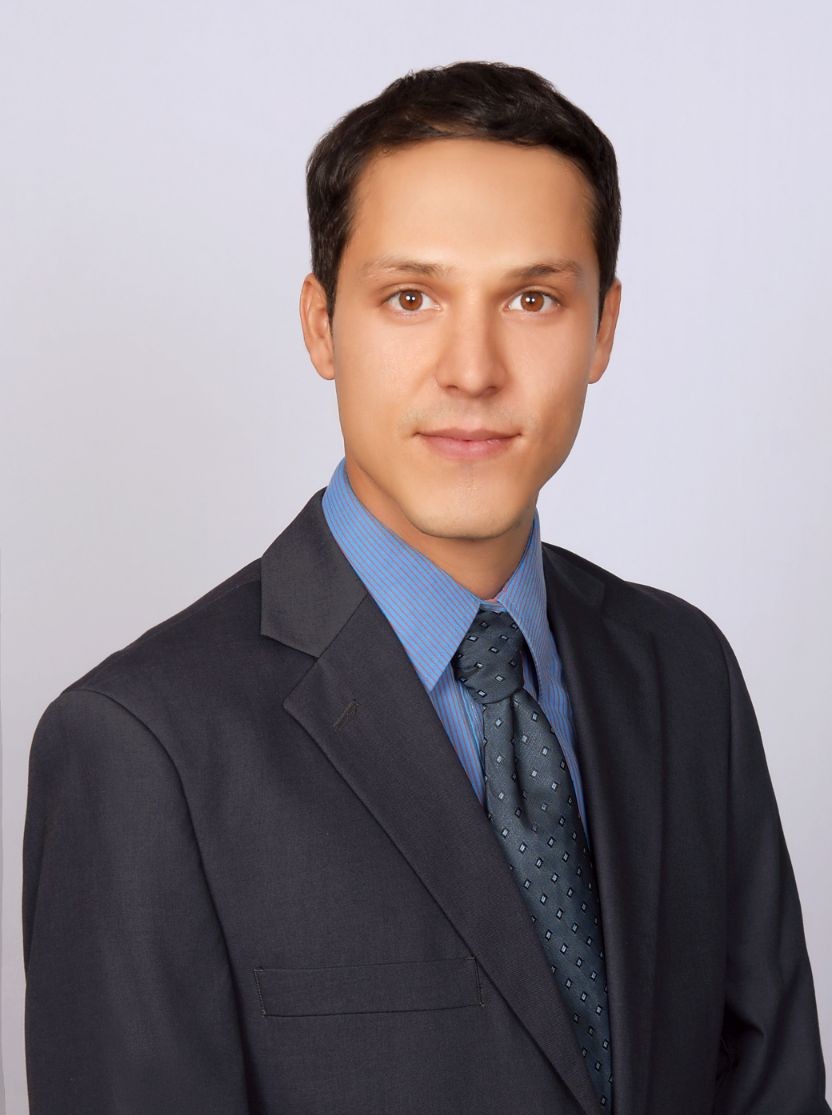
Royins Solano Rodriguez
Instructional Technology (Master’s Program)
San Jose, Costa Rica
The journey: I came to the U.S. last year to study Instructional Science and Technology at CSUMB. I am passionate about learning and development, and technology. This type of degree is not available in my country.
Likes: The master’s degree I’m working on is a good fit for my previous experience. For my capstone project I am creating training for workers of a landscaping company to learn about irrigation. It was a practical application of my education.
Challenges: Monterey was too cold! It was quite an adjustment – so I moved farther inland. The workload for the master’s program is very time consuming. Ryan Eller in the School of Computing and Design was very helpful.
Future plans: My goal is to continue developing my skills as instructional designer and seek a position in an organization requiring the development and implementation of instructional solutions.
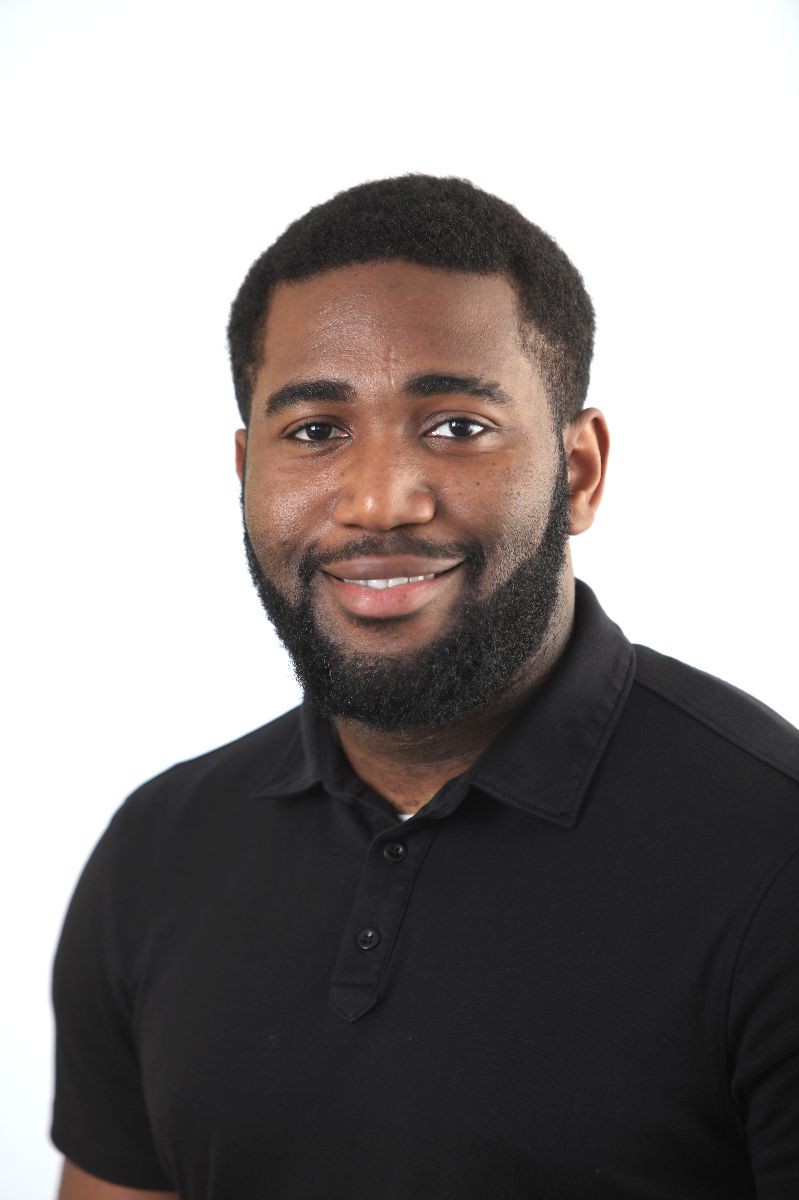
David Igbokwe
Global Studies, Minor in Business
Lagos, Nigeria
The journey: I’ve been in the U.S. for three years. I went to school in the United Kingdom for three years before that.
Likes: I like the small campus. It’s easier to create bonds with people. My sister also attends CSUMB. My cousin works here. Having family here is a huge plus.
Challenges: Having things to do. Monterey is very quiet. If you’re an international student, it doesn’t give you a sense of what California is. If you get used to the area, you find something to do. I run the soccer club on campus. I do make music and just released an album, “Focused” by Delos Edira.
Future plans: After graduation, go into business. I will continue to make music and go into the technology or financial industries. I will explore options here - but eventually return to Nigeria.
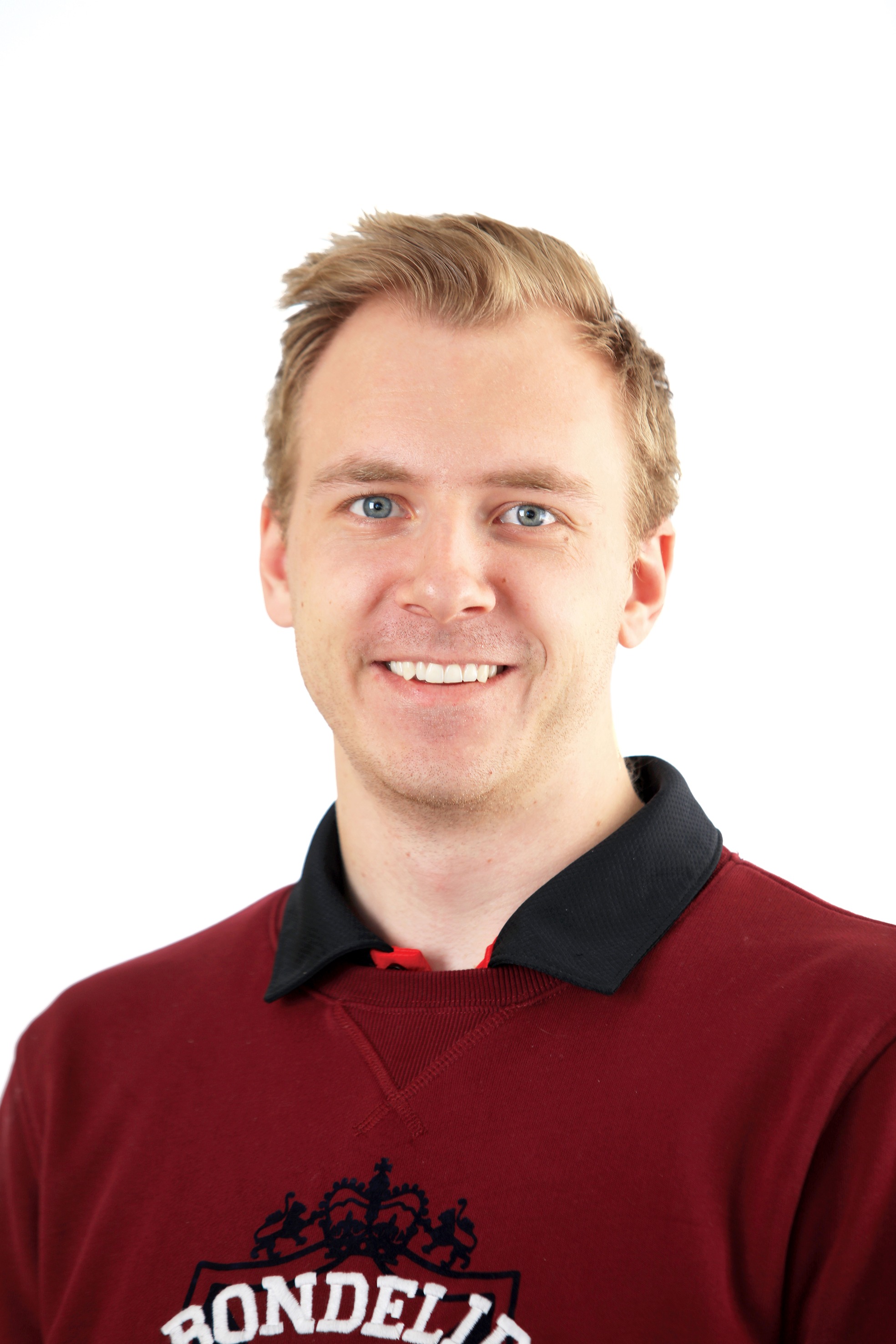
Charles Palmer Hagenfeldt
International Business
Stockholm, Sweden
The journey: I moved from Sweden and attended Santa Barbara City College. After two years, I decided to come here. It’s like home. I’m from outside Stockholm. It’s a relaxed environment here. I play golf.
Likes: The people, but not at first. It was hard in the beginning. But eventually, I fell in love with the Monterey area. Everyone is friendly and kind. It’s easier to connect with teachers here. America celebrates innovation. In Sweden, people don’t like you to be different. Failure is accepted here. It’s seen as a learning process.
Challenges: Transportation and getting around. It was hard to reach out to the community. I joined a lot of clubs on campus.
Future plans: After graduation, look for jobs with golf companies. In the U.S., if you get a job using your degree, you can stay for a year. After a year, you can apply for a work visa. Eventually, I see myself going back to Sweden to teach a younger generation.
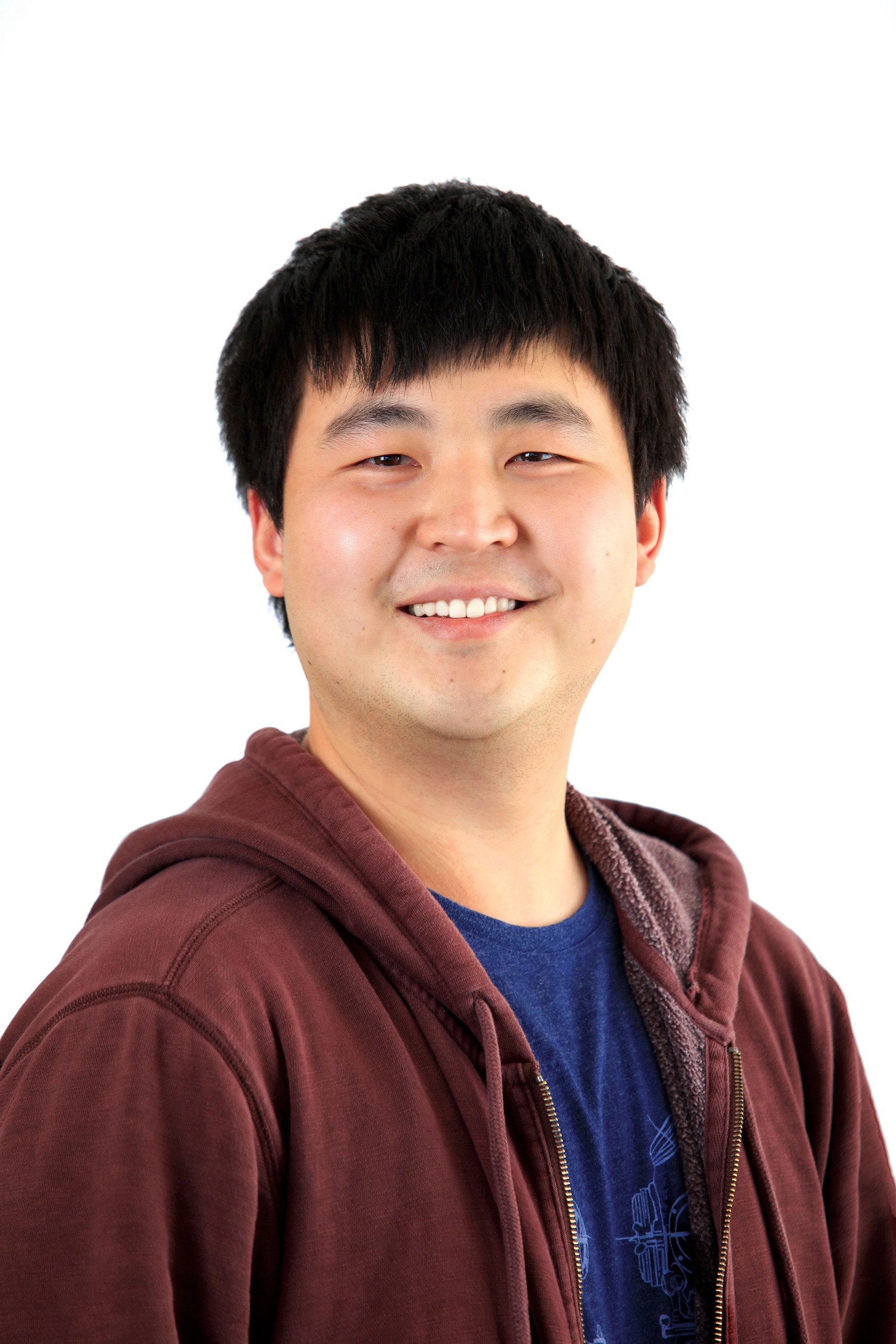
Yang Jing
Computer Science
Chengdu, China
The journey: I’ve been in the U.S. for six years and started college in Ohio. I wanted to go to a smaller city.
Likes: The variety of professors in my major here, along with the outside environment, especially the weather and the ocean. Also, the cultural experience. My roommates are a good example. One is from Fresno, the other is from Merced. One likes to fish, one likes to surf. One of the most exciting things about America is that a lot of different cultures live together in close proximity. You don’t have that in China.
Challenges: Transportation, if I wanted to buy groceries, it was a challenge at first. The language barrier also was a challenge.
Future plans: After graduation, I want to find a job in the U.S. and stay here. If not, return to China and find a job in computer science.
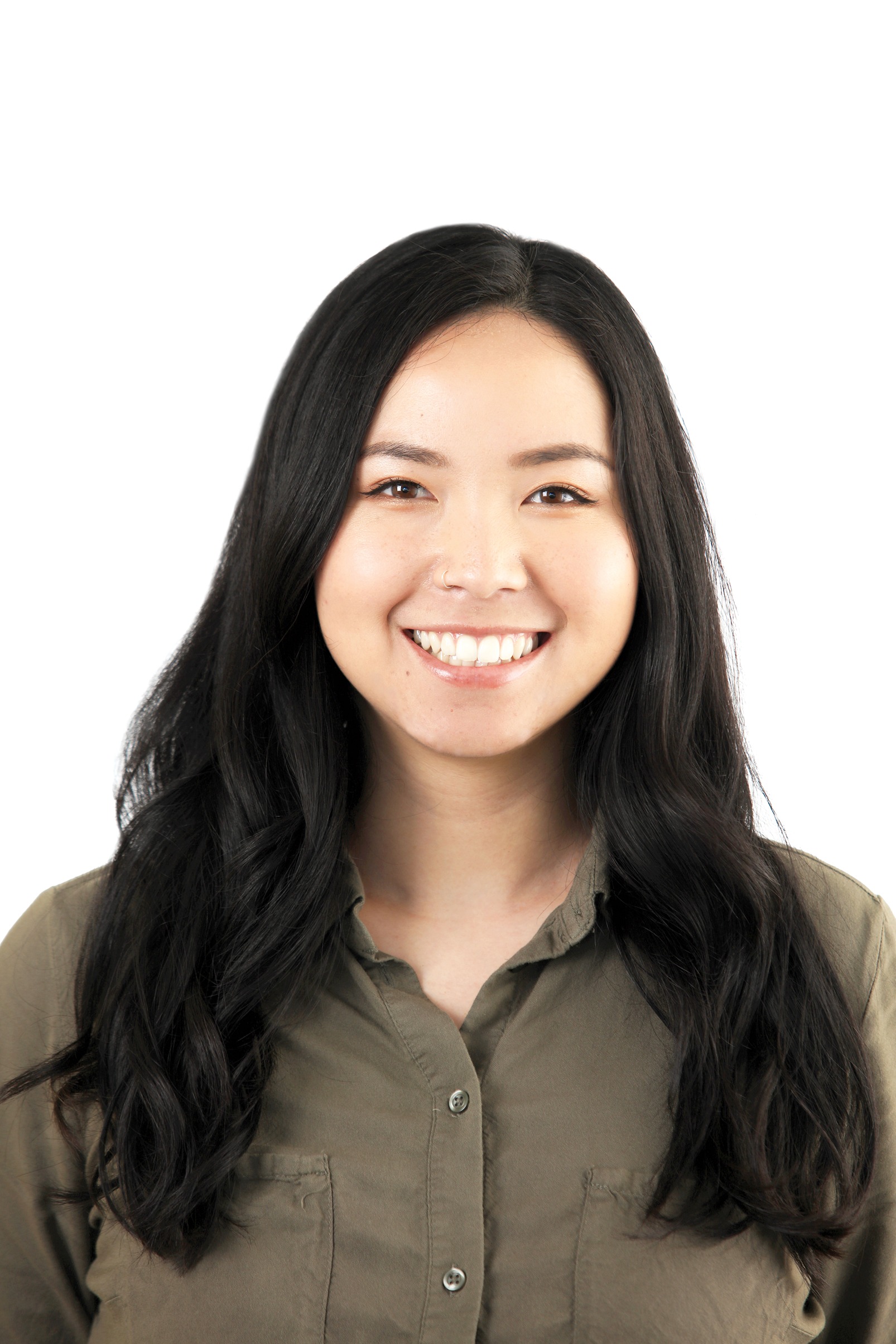
Aki Kurosawa
Aki Kurosawa (HCOM ’16)
Tokyo, Japan
The journey: I came to the U.S. and started in Chico at a community college, then transferred to CSUMB after two years.
Likes: CSUMB is calm and serene. I’m not into the party scene. I love outdoor sports and was on the rugby team. I was always exposed to English culture thanks to family. The university culture is very different in Japan. You take exams and get grades. Here, it’s more about personal enrichment – not just academics.
Challenges: When I first transferred to CSUMB, there were few degree-seeking students. It’s sometimes hard for international students to take classes – we don’t get priority. Courses are limited.
Future plans: I graduated! Now I’m working in the International Programs office. Grad school is next, to major in sociology, gender and sexuality. My goal is to be a professor in America and teach in Japan, helping develop their higher education system. I want to change the culture of just passing exams.
Illustrated Inspiration
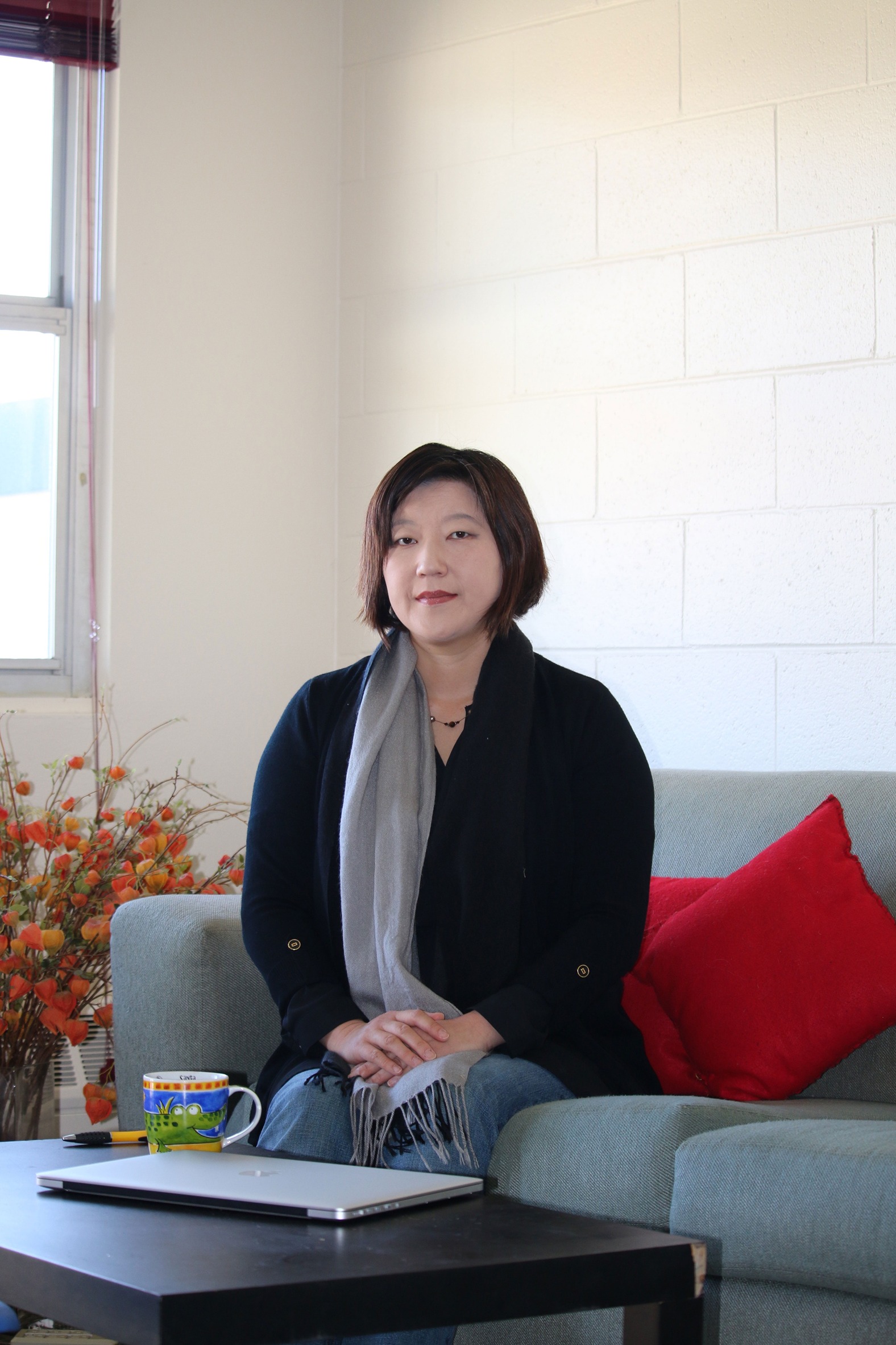
Soyeon Kim brings her work in animation and imagery to CSUMB

Browse the work of Soyeon Kim and you will see the color, imagery and playful, whimsical characters that tell a story. It’s an impressive portfolio. What you don’t see is her creative process that shapes these images, a process that she reinforces to her students in the Cinematic Arts & Technology Department at CSUMB.
Kim, a filmmaker and illustrator whose credits include feature films like “Cloudy with a Chance of Meatballs” and short films of her own, has been screened in over 500 film festivals worldwide. Her award-winning work has been featured on television and seen in numerous publications.
The Seoul, Korea, native came to CSUMB in 2013 and teaches animation, art production, Capstone and Service Learning courses. Kim was attracted to the interdisciplinary nature of the program.
“Most institutions keep animation and live action filming separate,” Kim said. “Here at CSUMB, they are combined, beginning with a cinematic arts foundation. Then, an in-depth study of animation follows.”
Her favorite part of teaching is doing group projects with students. Kim calls them peers and provides an environment that is more than a classroom. The students can bring a fresher perspective and are exposed to all possibilities.
“It’s not just about making art – it’s about understanding the artists themselves,” Kim said. “They need to understand where the inspiration comes from. I would rather have a student have an unsuccessful result and learn from the process instead of putting little effort into ‘something shiny’ to get attention.”
“An essential part of being an artist is the challenge you set for yourself – and having the unexpected results.”
One aspect of animation is how therapeutic it can be. Kim points out that her students can use animation to con- vey some kind of trauma that the artist experienced.

“One short film a student did was about domestic abuse – and it didn’t reveal identities because it was done in an abstract style,” said Kim. “Something as simple as a line streaking across the screen can convey being physically struck by an abuser. It’s very helpful for an artist to use this medium and process their experience.”
Kim didn’t start with animation. She discovered a love for drawing when she was younger and went on to major in painting as an undergraduate in Korea. However, it was limiting. Kim wanted her art to be more approachable.
Yet, she encourages her students to start with drawing before moving on to other things. An issue with younger students is many lack the fundamentals, according to Kim. However, many do have great technical skills – and they need to keep those fresh.
“Don’t get too caught up in the creativity. Learn the industry, don’t shy away from commercial work and anticipate changes,” said Kim. “In the 90s, many Disney animators found themselves out of a job when Disney went to Computer Graphic Images (CGI). Always be willing to learn. Learn to network. Get involved in your community.”
Kim’s involvement with her local community is in the form of the Monterey Bay Art and Film Festival for Youth, which she began in 2016. The three-day event, held at locations in Salinas, Watsonville and the CSUMB campus, is geared toward local children and adolescents. The interdisciplinary event combines and embraces all forms of arts, including fine arts, music, performance and films.
“Artistic expression – and the process involved – is fundamentally important in a diverse society,” Kim said. “It’s very beneficial for children to be exposed early on.”
Editor’s note: Soyeon Kim’s portfolio can be found at soyeonkimart.com.
Kick-start their Hearts
CSUMB alum creates opportunities for community, confidence and college through soccer

For his senior Capstone project, Anthony Velasquez, ’13, developed a plan to create the Salinas Fútbol Academy for kids. His mission was to provide opportunities for community youth and families to enhance their lives through academic success and the game of soccer. His primary goal was for every academy member to pursue higher education and receive the needed academic, personal, and community support.
During his research, Velasquez learned, via the Economic Policy Institute, that Salinas has the second- lowest percentage of high school diploma holders in the country. Determined to change that, he saw soccer as a way up and out.
Velasquez played soccer with passion, finding strength and stamina on the field, plus a sense of self and a solid determination to succeed. He went on to CSU Monterey Bay, playing before breaking his leg. He stepped aside from the game but not from what it taught him.
During his junior year, Velasquez’s Service Learning class paid a visit to various sites where organizations were doing good work in the community. Among them was the César Chávez Library in East Salinas. Before he ever noticed the books inside, he saw kids idly kicking a soccer ball around. He learned several boys and girls were interested in playing soccer.
Velasquez arranged to invest his Service Learning work in the kids at César Chávez Library.
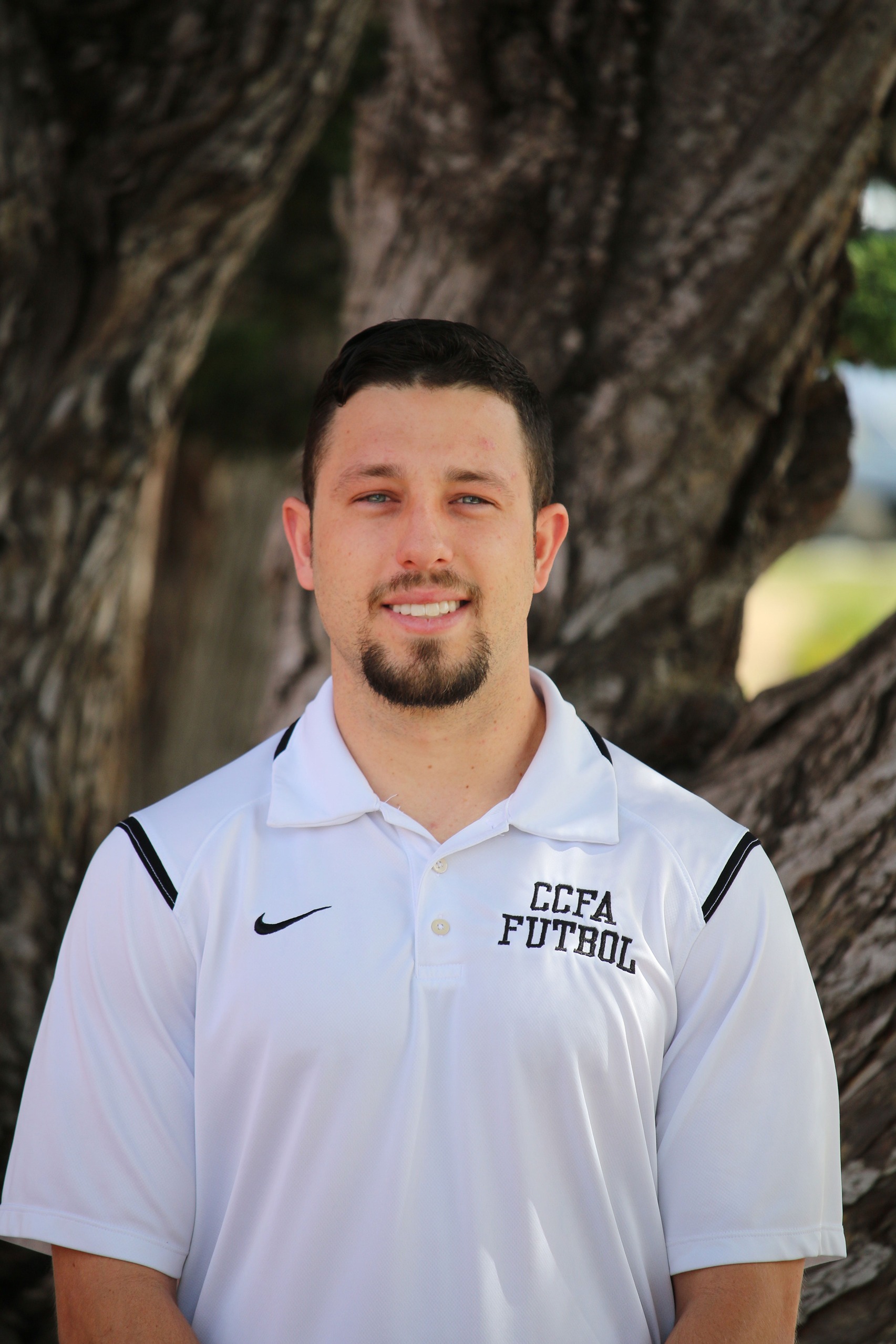
He started by running soccer drills after school and teaching basic moves to about five kids on a small patch of grass outside the library.
“Pretty soon, we were getting kids who weren’t from the library but just wanted to come play soccer,” Velasquez says. “Once we got to 50 or 60 kids, we truly understood the demand for soccer, the need for kids to have a safe place to kick a ball, a uniform that says they belong, and a way to get some structure in their lives.”
Beyond service learning
Velasquez and his classmate Craig Sterling moved their soccer clinic over to nearby César Chávez Park. Well past their Service Learning commitment, they continued to work with the kids, twice a week.
“We found joy in playing with these kids, in showing up for them to help make a difference in their day,” says Velasquez.
When Velasquez created his senior Capstone project, through which he designed the Salinas Fútbol Academy, Velasquez knew he should put things into play and continue.
“I wrote a few grant applications, connected with the Action Council of Monterey County, and gained 501c3 status,” Velasquez says. “I changed the name to the César Chávez Fútbol Academy and, after grant awards, we’ve been sustainable since 2011.”
Community
Velasquez graduated from CSUMB in 2013, with a degree in human communication, and a minor in business. He went on to achieve a master’s degree in sport management from the University of San Francisco.
Today, the academy works with 90 kids, ages 4 to 17. They have five competitive soccer teams and also serve 425 families through soccer clinics and academic tutoring.
“We serve a community aspect and a competitive aspect,” Velasquez says. “We don’t turn down kids for grades or skill or competitive edge. It’s about community, learning, team- work, and access to resources. On the academic side, all of our players get required tutoring every week, just like study hall in college. On the competitive side, our teams are playing at the top level in the country and are getting in front of collegiate coaches.”
Velasquez doesn’t get paid for running the academy or taking his teams all over the country to compete in soccer tournaments. Instead, he works two other jobs, while working to sustain and promote the kids in his academy.
“There’s a whole world of colleges out there,” he says, “and these kids are on track to get there. I’m excited to see how many of them will get academic scholarships, go to college and play soccer. It all started with Service Learning at CSUMB.”
Gateways Do Not Come Easy
Congressman Sam Farr’s extraordinary service and the founding of CSUMB
Medellín, Colombia, is thousands of miles from the Salinas Valley. Yet, to a young Sam Farr, there were disturbing similarities.
Serving in Colombia with the Peace Corps during the 1960s, Farr lived in a barrio outside of Medellín, witnessing firsthand what he calls “the culture of poverty” – a vicious, sustaining cycle that can only be broken with access to education and opportunity. Upon returning and speaking with farmworkers in the Salinas Valley, Farr realized this toxic culture was alive and well close to home. An idea was planted in his mind. There needed to be a gateway, an opportunity for higher education in the local community.
When the closure of Fort Ord was announced, it shocked local residents. Farr was serving in the state assembly and saw an opportunity. And then the conversation with the colonel happened.
“I was standing over at Martinez Hall, talking to a colonel, and he said ‘you have a lot to learn – there will never be a university here.’” Farr recalled. “He dismissed the idea right there. That’s when I knew we had our work cut out for us.”
Assemblyman Farr reached out to the late State Senator Henry Mello, who was proposing a bill, SB 899, to create the Fort Ord Reuse Authority (FORA), a multi- governmental organization that would act as a go-between for any development or land transfers of old Fort Ord. FORA was composed of elected officials at local, state and federal levels.

But first, some very important words had to be included in that bill.
“I called Henry and asked him to include language in the FORA bill that would identify the CSU and UC systems as redevelopment authorities,” said Farr. “That way, the land could be directly conveyed from the federal government to the CSU and UC. If Mello had not introduced a bill to create FORA, and that language had not been included, most likely CSUMB would not exist today.”
Interestingly, the cities of Seaside and Marina were not happy, and fought Mello’s bill and the establishment of FORA. If FORA had not been created, the land would have gone to the cities. They didn’t want a university on their doorstep. They wanted the land for development and tax revenue.
Motivated, Farr ran for Congress in 1993, winning a special election after then-Congressman Leon Panetta was appointed as budget director for President Clinton. “One of the main reasons I ran for Congress was to ensure a university would be established here,” he said.
Then-Governor Pete Wilson signed SB 899 into law. During that time, Farr worked with Senator Mark Pryor on an Economic Development Conveyance (EDC) amendment for properties affected by Base Realignment and Closure (BRAC). This amendment created a mechanism for the base property to be transferred.
SB 899, and the language that Farr asked Mello to include, allowed the CSU and UC to directly accept property once part of Fort Ord. The first parcel of land, approximately 630 acres, was transferred to the CSU in July 1994 by then-Defense Secretary William Perry (CSUMB now has just under 1,400 acres). UC Santa Cruz was transferred 500 acres near the Marina airport for a research center.
CSUMB was a reality. An enormous piece of property with infrastructure didn’t cost a dime.
According to Farr, economic advisors told the cities the best thing would be to have a campus here, but Seaside and Marina still fought it. “It was hard politics. Most people won’t go against the wishes of their local community. In this case, Mello and I did,” Farr said.
Hardball
Athletics and kinesiology treat injuries that are not always physical
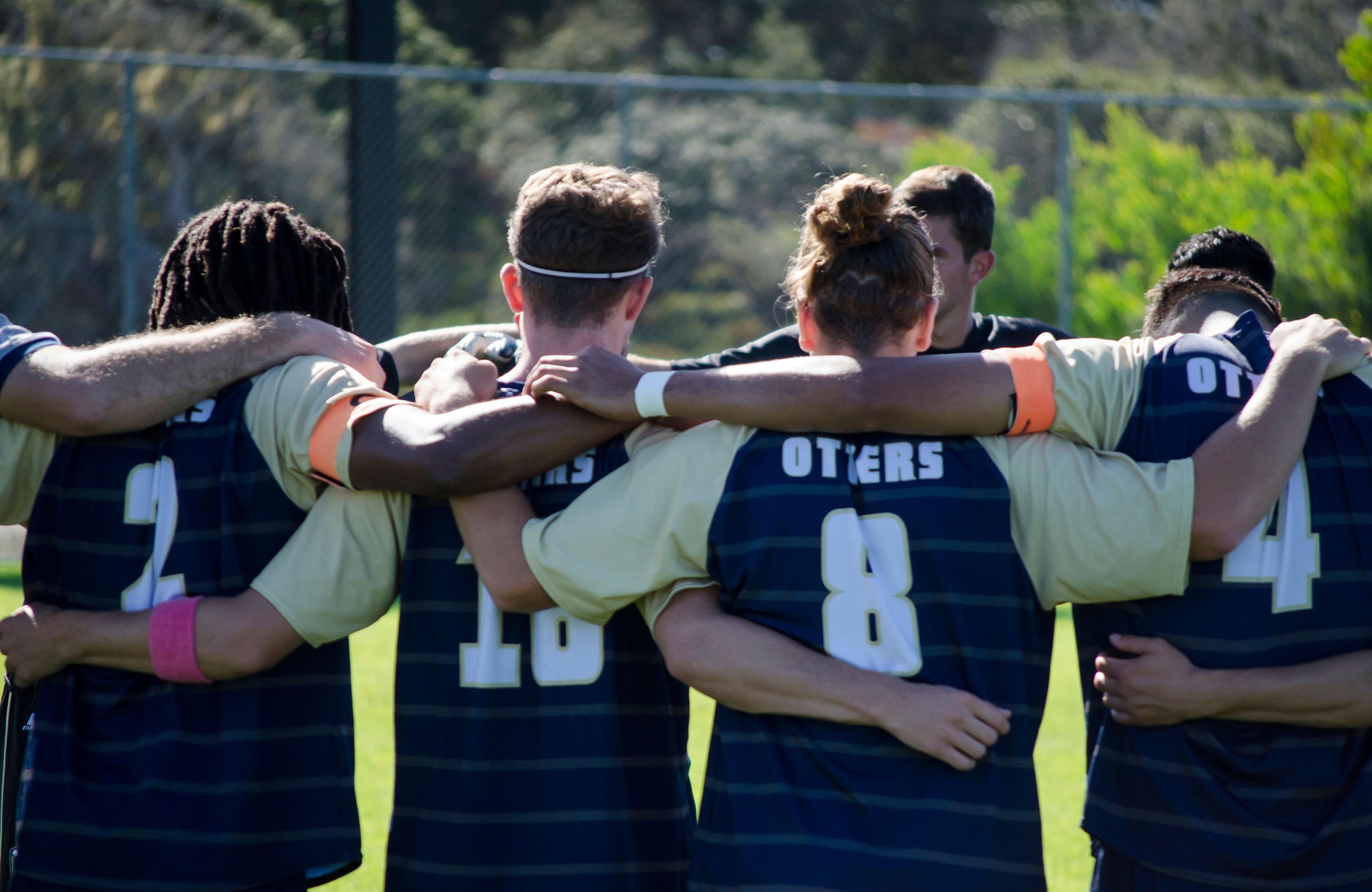
When most fans think about how stress affects athletes, they focus on the big moment – the game-tying free throw, the decisive penalty kick, the downhill five-foot putt to take the lead.
But what about the sprained ankle, the jammed shoulder, the blown-out knee? Are those affected by stress as well?
“The research indicates that the best psychological predictor for physical injury is stress,” said Joanna Morrissey, an assistant professor in kinesiology at Cal State Monterey Bay. She said that stress activates the flight-or-fight response, which leads to increased muscular tension, loss of peripheral vision and slower information processing, all of which can make an athlete more prone to injury.
Joining forces
So CSUMB is building on the existing relationship between the Athletic Department and the Kinesiology Department, which have joined forces on the physical training of student-athletes, to explore the mental aspects of the games more fully as well.
CSUMB Athletic Director Kirby Garry appeared on a panel discussing athletes’ health issues at the 2017 NCAA convention in Nashville. “We have limited resources to deal with this,” Garry said. “But we are really fortunate to have faculty members who have gone above and beyond.”
While Division I athletic programs have plenty of budget and personnel to explore all aspects of their sports, a Division II program like CSUMB needs to be more creative. Fortunately, the university has a thriving kinesiology program, whose faculty members and athletic training staff study and teach the science of sport and human performance.
Mike Paddack, CSUMB’s head athletic trainer, calls the relationship between athletics and kinesiology “a total marriage.”
“I haven’t been any place where people are so willing to work together, with so much respect for professional strengths that each person has,” Paddack said.
“We all have the same goal, making it a great experience for the students.”— Mike Paddack
Expanded role
Morrissey, who specializes in sport and exercise psychology, began working with athletes who suffered season-ending injuries. She helped them handle logistics – mobility issues around campus, residence hall accessibility and the like – as well as offering them an opportunity to work through their feelings about being sidelined.
“We did that for about a year, and the overwhelming response from the students was that it was helpful,” Paddack said.
This academic year, Morrissey’s role expanded. If stress is a major predictor for injury, she reasoned, perhaps lowering stress levels could lower injury rates as well.
Morrissey worked with athletics to come up with a baseline test for athletes to determine the levels of stress they feel in their everyday lives.
To combat the problem of concussions in recent years, athletes have been given tests to determine their baseline level of cognitive functioning. If they suffer a concussion, their activity is restricted until they get back to their baseline level. Now, the NCAA urges similar testing for mental health issues.
Baseline test
According to Paddack, by checking in on the athletes periodically, “we can say, here is how you were handling stress at the beginning of the season, here is how you are handling stress now.”
The baseline test indicated that about one-in-five student-athletes thought they needed help with stress and anxiety issues, similar to the findings for the entire student body.
Paddack said the test did not show any real difference in stress levels by sport. “Regardless of what sport it is, they are invested in it 100 percent, so outside factors that get in the way of that are going to cause a problem.”
The results of the baseline test allowed Morrissey to meet with student-athletes who requested help as the school year was getting under way. That alleviated some of the demand on the CSUMB Personal Growth and Counseling Center, which provides services for the entire student body.
She said that if student-athletes come to her with a clinical diagnosis of anxiety, depression or an eating disorder, she refers them to a specialist. Usually, however, the issue is less severe.
“Sometimes there are issues about performance in their sport – they might be in a slump or their team is losing games,” Morrissey said. “But more often, it is regular student issues – time management, goal-setting, and relationship issues – that are the problem.”
“I tell them, I’m not here to diagnose you. I’m not here to psychoanalyze you. I’m just here to help you with issues you are facing,” she said. “We don’t talk about it in terms of mental health. We talk about dealing with psychological stressors. Because sometimes, there’s still a stigma about trying to get help with mental health issues.”
According to Morrissey, she has met with a number of student-athletes who have stopped by her office a few times to talk. She has several athletes she meets with on a regular basis.
It is too early to tell whether this program had any impact on the number of injuries among Otter athletes. But Paddack said there is some positive anecdotal evidence. And both the academic and athletic sides of the relationship seem eager to see where it leads.
“We are just building this as we go along,” Morrissey said, as they learn about the needs of their student-athletes.
NCAA Video
Below is a NCAA video from May 2017 that features Morrissey and Paddack.
https://www.youtube.com/watch?v=IvPhn4FZhxg&ab_channel=NCAA
Agent of Empowerment
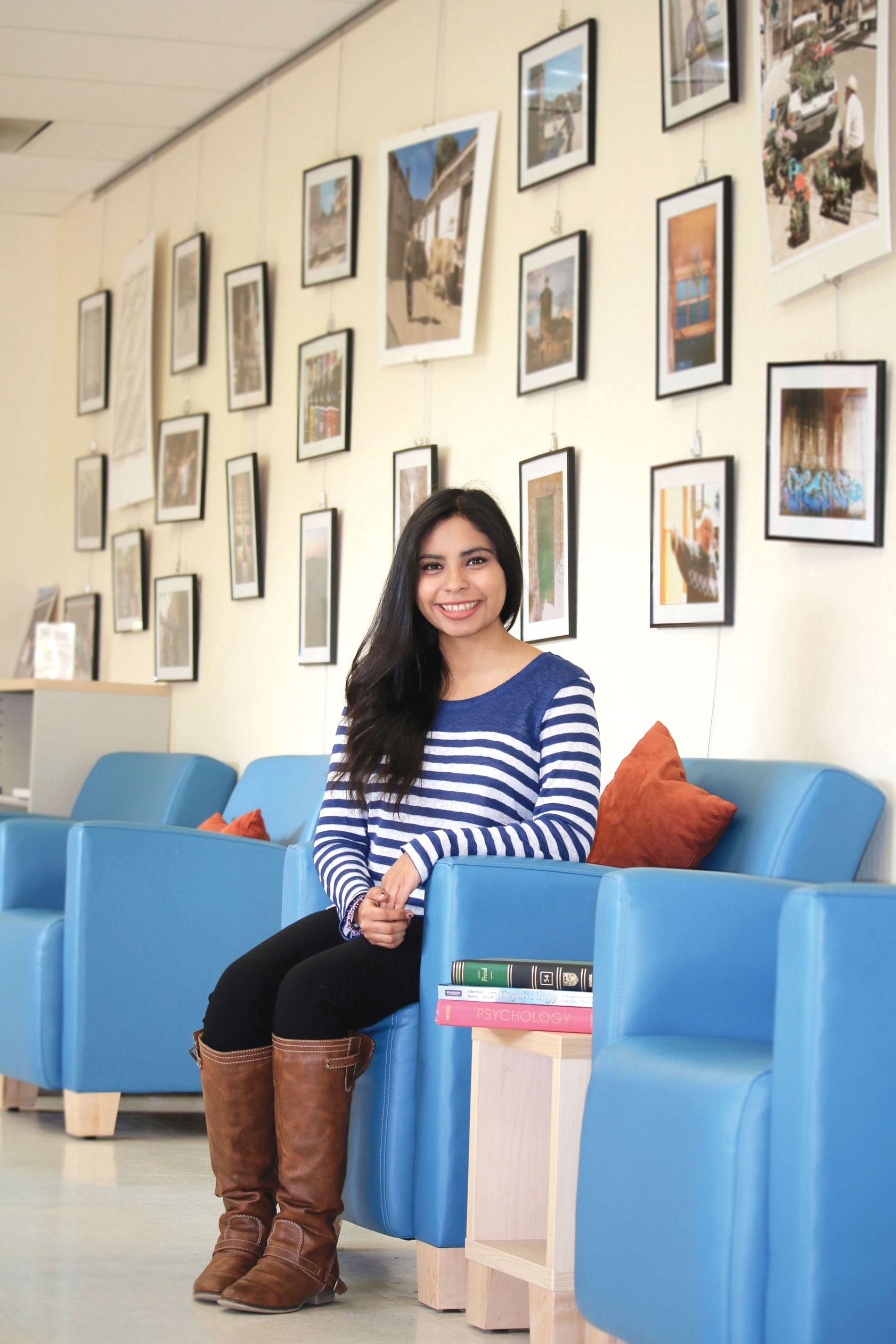
“I don’t just want a job, I want a career,” says Christina Lemus, a first-generation college student who has set her sights on working for the FBI as a special agent.
She’s laying the groundwork now, as a psychology major with a minor in pre-law. She’s also actively involved on campus, especially around raising awareness of sexual assault and domestic violence.
Her sorority, Theta Alpha Sigma, has focused their community service and philanthropy around women’s empowerment, and Lemus has taken a leadership role in organizing events on campus, such as Take Back the Night – a march against sexual violence – and Denim Day, an educational event that emphasizes that assault is never the victim’s fault, no matter what she is wearing.
Lemus’s activism extends beyond campus – she works directly with survivors as an advocate with the Monterey County Rape Crisis Center and volunteers with her sorority sisters at Dorothy’s Place, a women’s shelter in Salinas. She’s also worked with the MCRCC’s campus advocate to organize a series of events for April, Sexual Assault Awareness Month, and bring more of that organization’s resources onto campus.
“We want to make people feel they are in a safe space, but also to be aware and not turn away from these issues,” Lemus said. “And we always provide resources for people who may feel triggered.”
Understanding trauma is also a focus of Lemus’ academic life. In addition to her 19-unit course load, she’s working with Professor Christine Valdez in the Psychology Department to conduct a study on trauma and recovery.
“We are surveying students to learn more about traumas they have experienced – anything from car accidents to rape or assault,” Lemus said. Depending on the results of those initial surveys, they will select a demographic to continue working with and conduct a range of physiological tests, such as electroencephalograms (EEGs) to see how their bodies react in different situations. “We hope to publish a paper or present this research at a conference,” she said.
Lemus hopes these activities will help her land a competitive internship with the FBI next summer. Ultimately, she wants to pursue a graduate education – she’s looking at the Ph.D. program at the University of Colorado Springs where she can continue her research with trauma patients.
As the youngest of six children and the first in her family to attend college, she’s concerned about the costs of continuing her education, but refuses to let those worries deter her from her goals.
The Pomona native has a clear sense of her mission: “I want to make a change in the world.”
Research that Grows
CSUMB research on plant diseases is a health check for local crops and vineyards
When Jesse Yamagata came to Cal State Monterey Bay, she wanted to study plants. But, as she acknowledges now, didn’t really know what she was getting into.
“As it turned out, I really had no idea what plant pathology was. Through plant pathology, you study the organisms that inter- act with plants. You look at plants from an entirely different perspective,” Yamagata said.
“Tim really opened my eyes to plant research. And it was more interesting than I had ever imagined. Tim was really the gateway, the door, to let me into plant pathology.”
Tim is Timothy Miles, an assistant professor in the School of Natural Sciences, who in two years as a CSUMB faculty member has sparked the interest of a number of students in the study of plant diseases.
Now the university, located in the midst of one of the nation’s most fertile agricultural areas, is looking to build its programs in crop and soil sciences from the ground up.
Andrew Lawson, the dean of the College of Science at CSUMB, said the university is developing a new degree in plant and soil sciences. Lawson said college leaders are meeting with local industry partners to build the curriculum. If the necessary approvals are obtained, the program could begin admitting students in fall 2018.
Miles, who earned his Ph.D. from Michigan State University, one of the nation’s leading agricultural land- grant schools, was working with the U.S. Agricultural Research Service station in Salinas, when he was hired at CSUMB.
“The reason why they wanted me here, I think, was to bridge the connection between CSUMB and the USDA in Salinas, kind of what we have with (marine science and) the Moss Landing Marine Lab,” Miles said.
Miles has been building on the successes of Carolee Bull, a former USDA scientist and CSUMB adjunct instructor, who mentored a number of students before moving in 2015 to Pennsylvania State University to head its Department of Plant Pathology and Environmental Microbiology.
The growth of plant pathology studies at CSUMB is somewhat surprising because, at this point, CSUMB does not have a plant pathology major. Students who work in Miles’ lab typically earn a degree in biology. But they are earning scholarships at major universities to study for doctoral degrees in plant-related fields.
CSUMB has an outstanding pro- gram to help develop those scholars, the Undergraduate Research Opportunity Center (UROC) whose students consistently earn some of the nation’s most prestigious graduate scholarships.
Miles said he frequently visits introductory science classes on campus to let prospective students know about research opportunities in his and other labs around campus.
“Over the years, a lot of CSUMB students have had excellent research experiences working in plants in some way. A lot of the reason is UROC. They identify good students and, when they were working with Carolee and now with me, sending them to us,” Miles said. “It is a collaborative effort.”
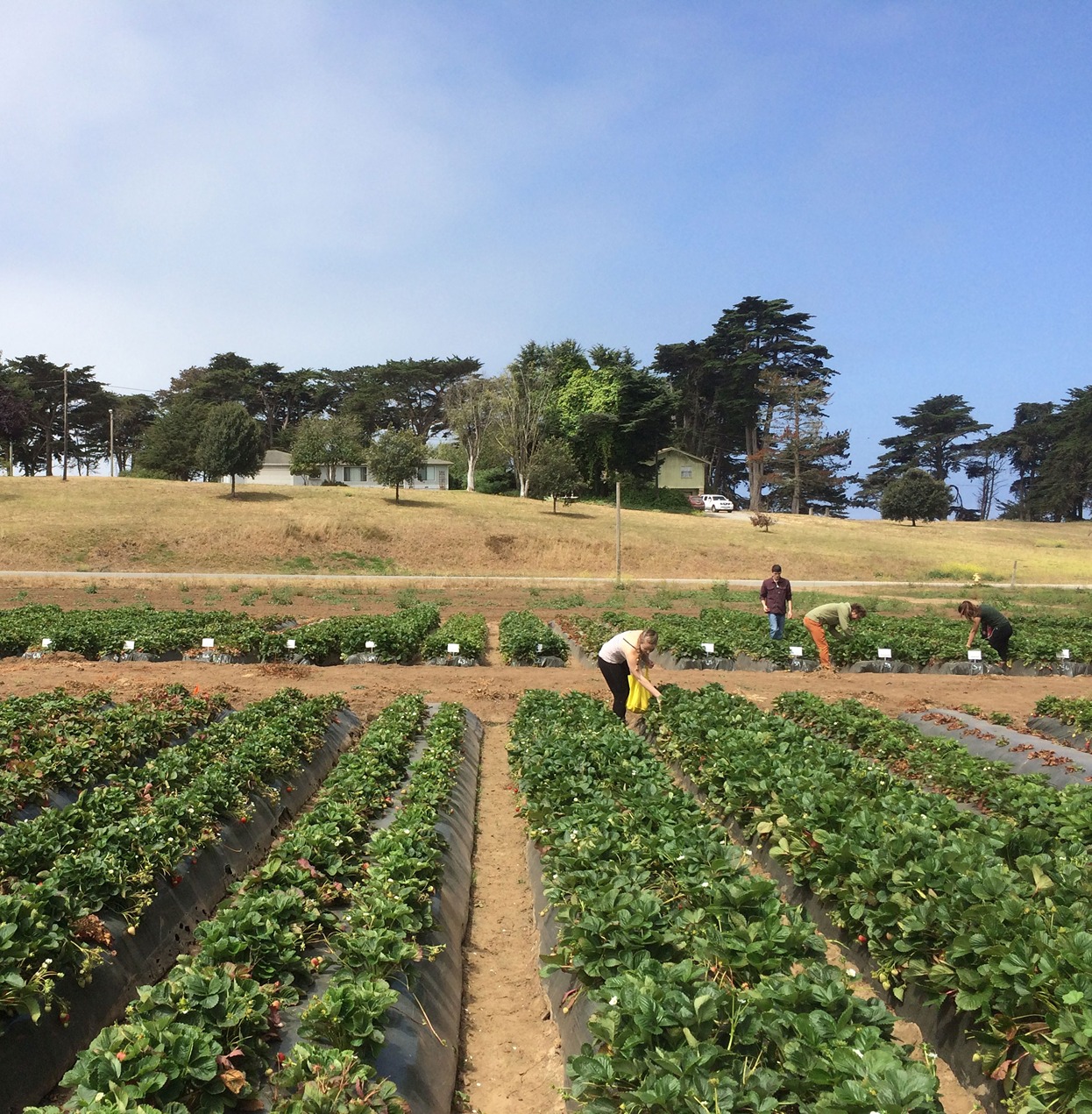
The students working with Miles focus largely on independent laboratory research in molecular diagnostics, as opposed to field research. His wish list includes a campus greenhouse and a teaching headhouse that would help facilitate more hands-on plant science studies. He also has built relationships with grower cooperatives in the area – including the San Luis Obispo-based Vineyard Team, which promotes environmentally and economically sustainable vineyard practices, and the California Strawberry Association – to provide other research opportunities.
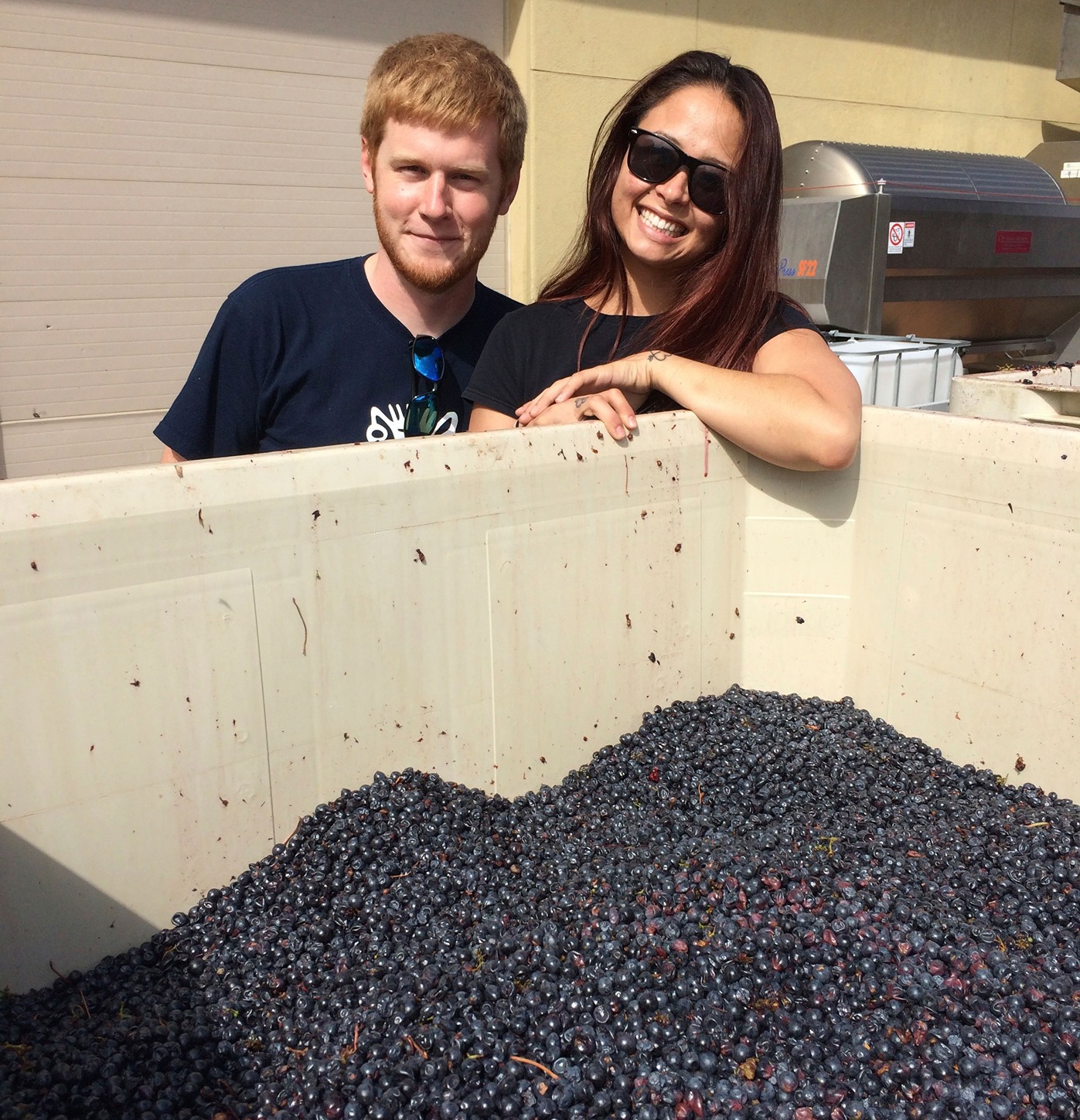
Yamagata’s research focuses on detecting fungicide resistance in a fungus that attacks grapevines. Another of Miles’ students, Aidan Shands, does similar research on a downy mildew that affects cucumbers. Both Yamagata and Shands pursued their research in summer internships at North Carolina State University and returned to Miles’ laboratory to continue their research this fall.
Yamagata and Shands will graduate from CSUMB in the spring. Yamagata is considering graduate schools; Shands is headed to UC Riverside, where he received a full scholarship for five years to study for his Ph.D. in plant pathology. Philip Engelgau, another of Miles’ students, graduated in December and has been accepted to the Ph.D. program in plant physiology at the University of Florida.
Juan Cerda, another student of Miles’, became one of the first two students at CSUMB to receive a Barry Goldwater Scholarship, will graduate from CSUMB in the spring and has accepted a full scholarship to study for his Ph.D. at Penn State.
To produce those results, you need outstanding students who are willing to be nudged in the right direction.
“It is a little tricky to get students to do what you want,” Dr. Miles said, smiling. “You need to explain why it is interesting, explain the background research. Once they get into it, they are creative and take it in different directions.”
Noah Luecke came to CSUMB as a transfer student with “a lack of focus. There was so much out there and so many different options, I didn’t know what I really wanted to do.”
Luecke worked with the Return of the Natives environmental education and habitat restoration program at a time when plant nursery programs were dealing with a pathogen that at- tacked the sticky monkey flower. That perennial plant is an important part of the native California habitat.
Luecke said he reached out to Miles and they began to work together on the research on how to better detect the pathogen.
“He took me in despite being aware that I wasn’t a perfect straight-A student. Our interests aligned and I think he recognized that I might have the skill set you need – the broad level of interest and a lot of dedication– to be a successful scientist,” Luecke said.
Luecke graduated from CSUMB with his degree in biology in May 2016. Since then, he has been working with the USDA in Salinas. In the fall, he will be heading to the University of Houston on full scholarship to study for his Ph.D. In other words, that “lack of focus” doesn’t seem to be an issue any more.
Sustainability with a Smile
Monterey Bay is at the forefront of Sustainable Hospitality thanks to CSUMB
A few years ago the hospitality management concentration in the College of Business began a rebirth. It added one very important word to its name and mission: sustainable; thus becoming the only program of its kind in the country.
“I always knew that I wanted to go into hospitality and knew this was a great area,” says Emily Lewin, the assistant guest services manager at the Inn at Spanish Bay.
Lewin was finishing her time at CSUMB when a hard-nosed New Yorker, with a can-do attitude, stepped on campus to revamp the program. According to Executive Director John Avella, of the roughly 400 other hospitality programs nationwide, there is no other like the bachelors of science in Sustainable Hospitality Management at CSUMB. It is the first to integrate sustainability in every class geared toward the hospitality industry.
Given the Monterey Bay is literally in CSUMB’s backyard, it makes sense. “We need to be conscious of what we’re doing to preserve the planet so our grandkids have something left.”
Avella is in his 70s and has worked in the hospitality industry his entire life. He personally went knocking on local business leaders’ doors asking for support as he began to overhaul the program.
In fact Avella said, those business partnerships are the whole crux to making the vision, well, sustainable. Now more than 20 of the “movers and shakers” in Monterey Bay business make up a very active Advisory Council. “The essence of the program is to give our students hands-on experience. We want our pipeline to be fed directly into the Monterey Bay region. That’s where the internships are, that’s where the jobs are, and that’s where the money is.”
When she graduated, Lewin’s first job was waiting for her as a team leader in the Pebble Beach Company’s manager training program. She knows keeping a connection to CSUMB now is crucial to hiring great talent. Especially when it comes to eco- friendly policies, “I trust the students that are graduating are going to be successful. I trust that the professors are preparing them for the job.”
Avella says nationally, 60 percent of students who graduate with a hotel or restaurant degree leave the industry after two years. As a result, the Sustainable Hospitality Management students at CSUMB are required to work two or three events per semester and do an internship. “We’re becoming more vigilant about the kind of experience our students get in the summer. We want them to know the industry. Do they really want to do this? If so, they will already have great experience on their resume when they graduate.”

One of Lewin’s internships was at L’Auberge Carmel. The boutique hotel had her doing everything from working the front desk, concierge, and valet to food and drink service. “It was a small hotel and we were expected to do a lot, which I loved because I was very hands on with everything,” she said.
Although the program is still in its infancy, those business partnerships and in-field experiences are already paying off. By the time they graduated, all eight students in the Spring 2016 class had job offers in the industry, some with multiple opportunities; Monterey Plaza Hotel created a special training program for one particular student.
With the help of the business community and seasoned industry experts at its helm, the Sustainable Hospitality Management Program is poised to not only last but also thrive.
In February, the College of Business and the Sustainable Hospitality Management Program held a first of its kind, one-day symposium on developing this budding industry. The Sustainable Hospitality Management Development Symposium brought the president of Costa Rica and several other industry leaders from Costa Rica and Monterey Bay to the InterContinental The Clement on Cannery Row.
The goal: to share ideas and grow eco-tourism responsibly with public-private partnerships and sustainable investment in the Monterey Bay region.
“Here’s this little university, 7,000 students…most universities connect with other universities, we’re connected with the president of Costa Rica,” Avella said.
College of Business Dean Shyam Kamath recently announced because of the success of the symposium, plans to launch an institute were fast-tracked.
“The Center for Sustainable Hospitality Management will provide advice to the hospitality, ecotourism and eco-recreation industry on the latest developments and trends in the hospitality industry, as well as conduct cutting-edge industry-based research…it will work closely with local, regional and national firms on consulting projects to help establish best practices in these areas,” said Kamath.

More immediately, the Sustainable Hospitality Management Advisory Board is looking to create a mentorship program for undergraduate students. The beta test will start in April with about three student/mentor groups; Mentors will come from the advisory council, but the idea would be to expand outward to other local and regional businesses as the mentorship program grows. These relationships will center around things like coursework and practical advice.
“There’s nothing like building relationships,” says Avella as he thinks about the program in its second year of a five-year pilot status with approximately 65 degree-seeking students. “I want to see 500 students. I am 75 years old, but that doesn’t matter…I think I’ll still be going strong until at least 85.”
Now, being on the other side of things, Emily Lewin knows firsthand that vision is possible.
“It’s all about who you know in the industry…part of the reason students come to this area is for the scenery, hiking and extracurricular activities – but I think at the end of it, they want a good job, advance their career and find a place to work after graduation. And we can do that. Keeping a connection to CSUMB is so crucial to finding good employees.”
Roots and Wings
NASA Engineer Ryan T. Scott falls in love with science at CSUMB

Ryan T. Scott (2013, Kinesiology) hails from a lineage of aviators, but he never would have predicted a career path so intimately involved with flight, not to mention one leading spaceflight research for NASA.
“When I graduated high school, I had very little desire, or even considered a career involving flight or the Air Force. I wanted to pursue a different path than my father and grandfather,” Scott said.
I learned how to be a vital link in the ongoing chain of discovery – I learned how to pass it on to future generations.
Scott’s father and grandfather both served in the U.S. Air Force and his parents met while his father was stationed at Fort Ord in the late 1970s. Growing up in a military family, Scott lived all over the world – from Alabama to Japan – but his roots are here, in Monterey.
“The Monterey area was the one area we always seemed to return to, that’s one of the reasons I ended up at CSUMB. And my parents now live in Carmel, so I will always have a place here,” he said.
While at CSUMB, Scott was not initially interested in physiological or engineering sciences but credits professors Kent Adams, chair of the Kinesiology Department, and Trish Sevene, his human anatomy and physiology professor, for inspiring him to pursue a career of scientific exploration.
“Their enthusiasm and genuine excitement for science led me to pursue my dreams and a career in scientific research. Through their classes, I not only developed a love for science, but also learned how to be a vital link in the ongoing chain of discovery – I learned how to pass it on to future generations.”
Despite Scott’s initial admonitions toward a career in flight, here he is, following in the steps of his father and grandfather; conducting spaceflight research for NASA and passing his knowledge on to students at San José State University (SJSU), where he teaches human anatomy as a lecturer professor.
Research and public speaking
Scott specifically noted the collaborative work climate at NASA’s Ames Research Center. “Right off the bat I was struck by the humility of everyone there. You have some of the smartest people from all over the world, yet everyone maintains such a humble demeanor,” Scott said. “Overall it’s an amazing team effort and an honor to be a part of the interdisciplinary nature of the research taking place at Ames.”
Scott’s research focuses on the affects of microgravity and radiation on the human body during space travel. Simply put, his research helps to better understand what happens to the human body on the molecular, cellular and systemic level during space travel, and to provide potential solutions for preventing and mitigating the associated risks.
I had very little desire, or even considered a career involving flight...
In addition to his research and teaching at SJSU, Scott is also a member of the NASA Ames Research Center’s Speakers Bureau. This entails speaking, presenting and representing NASA throughout the community from elementary schools, to international visitors, to colleges, to every corner of the public.
It is evident that Scott leaves a positive mark on every person, place and thing he touches. While at CSUMB, he was a leading figure in reestablishing the CSUMB rugby club, and to this day remains a stalwart alumni supporter of both the women’s and men’s rugby clubs. Scott’s efforts in growing the popularity of the CSUMB rugby clubs were essential to the eventual construction of the student activities rugby field that stands today in North campus.
Scott is an inspiration, a role model and living proof that anything is possible if you follow your dreams. “And it all started at CSUMB as an undergrad – when I fell in love with science,” he said.
Scott graduated from CSUMB in 2013 with a bachelor’s in kinesiology with a concentration in exercise science. He completed his master’s in kinesiology at SJSU in 2016 with a concentration in exercise physiology.
News Briefs
Published Dec. 20, 2019
Otter Athletics inducts inaugural Hall of Fame members
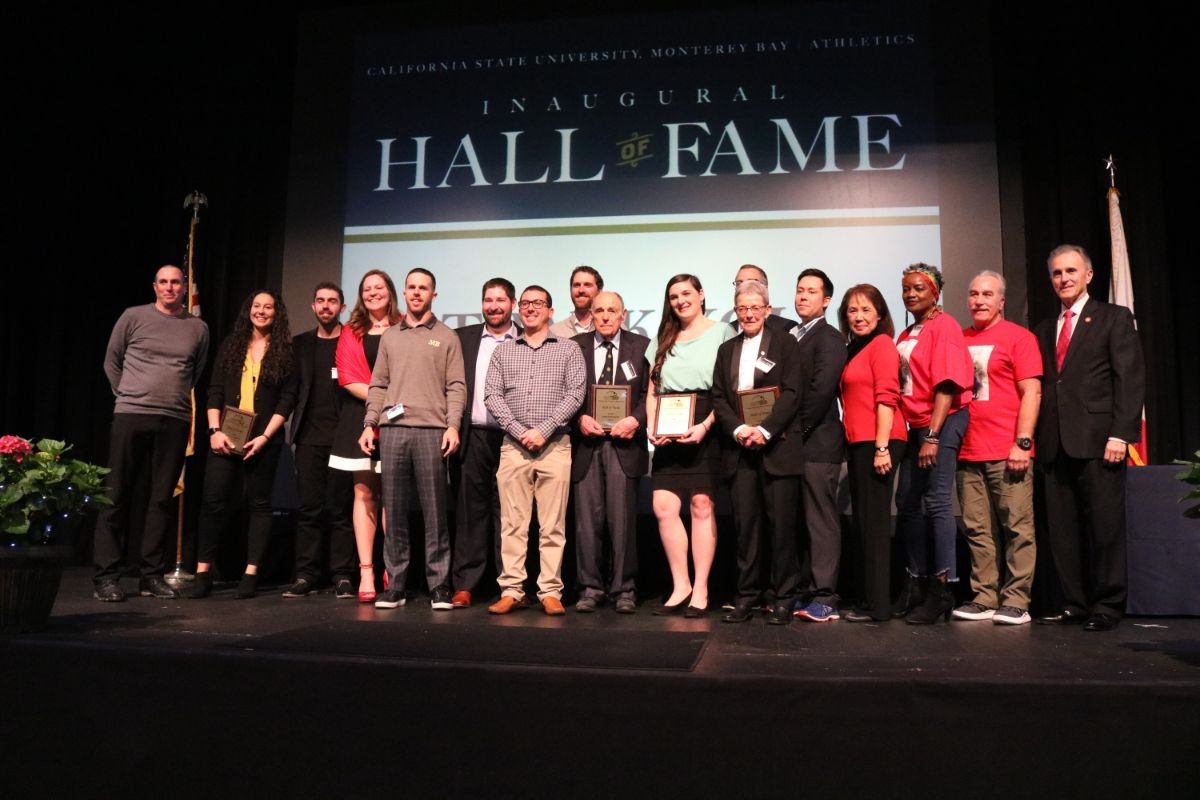
California State University, Monterey Bay, announced its inaugural Athletics Hall of Fame class this year. The first honorees — including eight student-athletes, two coaches and one national championship team — were inducted on Feb. 16, 2019, at the University Center.
“Our Hall of Fame allows us to recognize individuals who have shaped our identity and contributed significantly to the growth of our university and athletics programs,” Director of Athletics Kirby Garry said. “(We) look forward to building on this new tradition in future years.”
In alphabetical order, the inductees were: Dana Andrews – Women’s Basketball (2006-09), all–time leading scorer; Bobbi Bonace – Administrator/Coach (1996-2007), first director of intercollegiate athletics; Cicillia Chudivan – Women’s Golf (2007-10), All-American, all-time winningest golfer; Rheann Fall – Volleyball (2008-11), All-American, career kills leader; Brian Haggett – Baseball (2012-13), first Academic All-American; Bob Johnson – Community supporter, passionate backer of Otter Athletics and CSUMB; Devougn Lamont – Men’s Basketball (2005-06), first player to average 20 points per game; Chealsea (Laning) Brown – Water Polo (2005-08), career record holder for goals and points; Ashlee Trotter – Softball (2006–09), captain of first California Collegiate Athletic Association (CCAA) championship team; Bill Trumbo – Administrator/Coach (2000-06), led CSUMB to NCAA Division II membership; Erik Uppman – Cross Country (1998-2001), captain of first conference championship team (California Pacific Conference); Team of Distinction – 2011 Men’s Golf Team, CSUMB’s first national championship team.
CSUMB launches innovative Responsible Business MBA
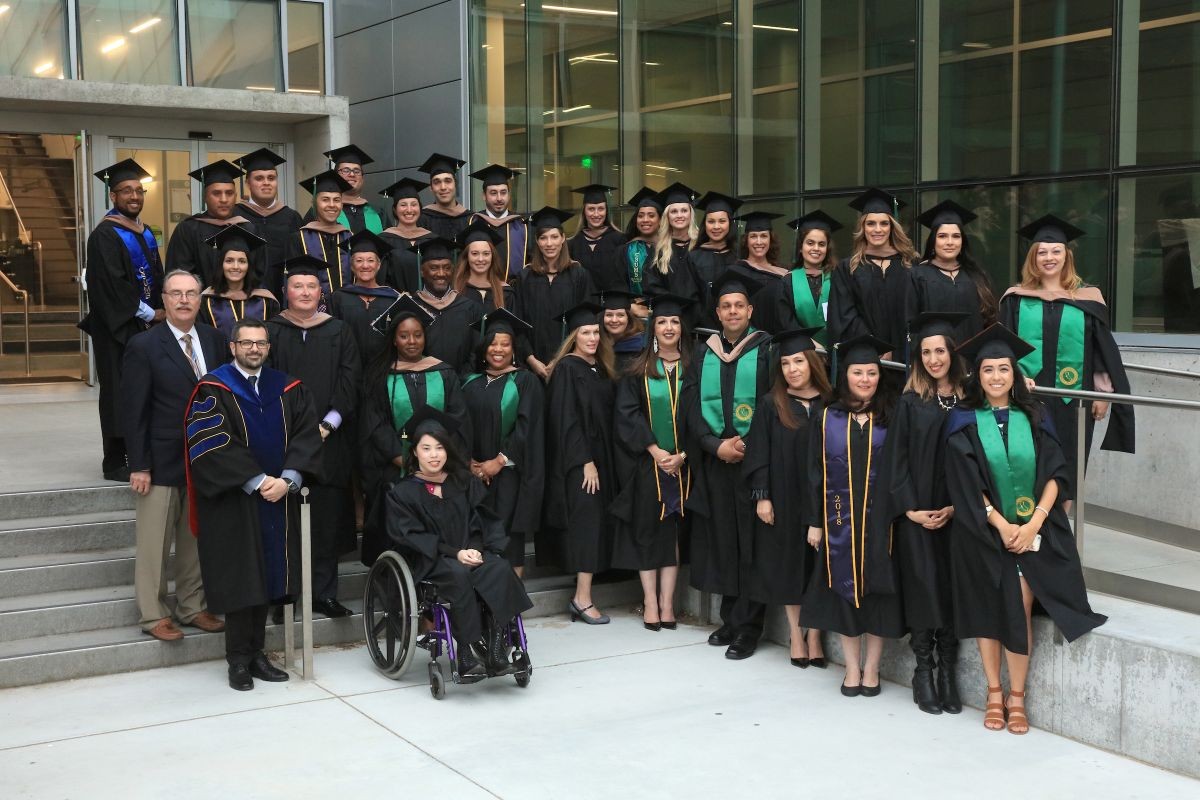
The College of Business at CSUMB launched the world’s first Responsible Business Master of Business Administration (MBA) degree program in fall 2019. The entirely new curriculum is designed around the theme of “Innovation, Responsibility, Impact,” with a quintuple bottom line adding “Ethics” and “Equity” to the traditional triple bottom line of “People, Planet, Profit.”
“We’re emphasizing critical systems thinking, continuous improvement, integrated communications, and creative problem solving — in an expanded quintuple bottom line context — to develop the Responsible Business mindset and toolkit,” Dean Shyam Kamath said.
Responsible Business goes beyond the triple bottom line to educate business leaders to develop and transform organizations into 21st-century business models. The quintuple bottom line enables businesses to achieve financial success while taking care of valuable human and environmental resources, Kamath said.
With busy working professionals and executives in mind, the program is 100% online to offer maximum flexibility. The curriculum consists of 38 units delivered in sequence across 14 individual courses. The online MBA degree can be earned in as few as 18 months. “The faculty have thoughtfully created a unique education experience,” said Nicolas Dahan, program director. “It builds on the university’s tradition of concern for community, ethical leadership, social justice, and environmental stewardship.”
Go online to mba.csumb.edu to learn more.
WASC grants accreditation for 10 more years
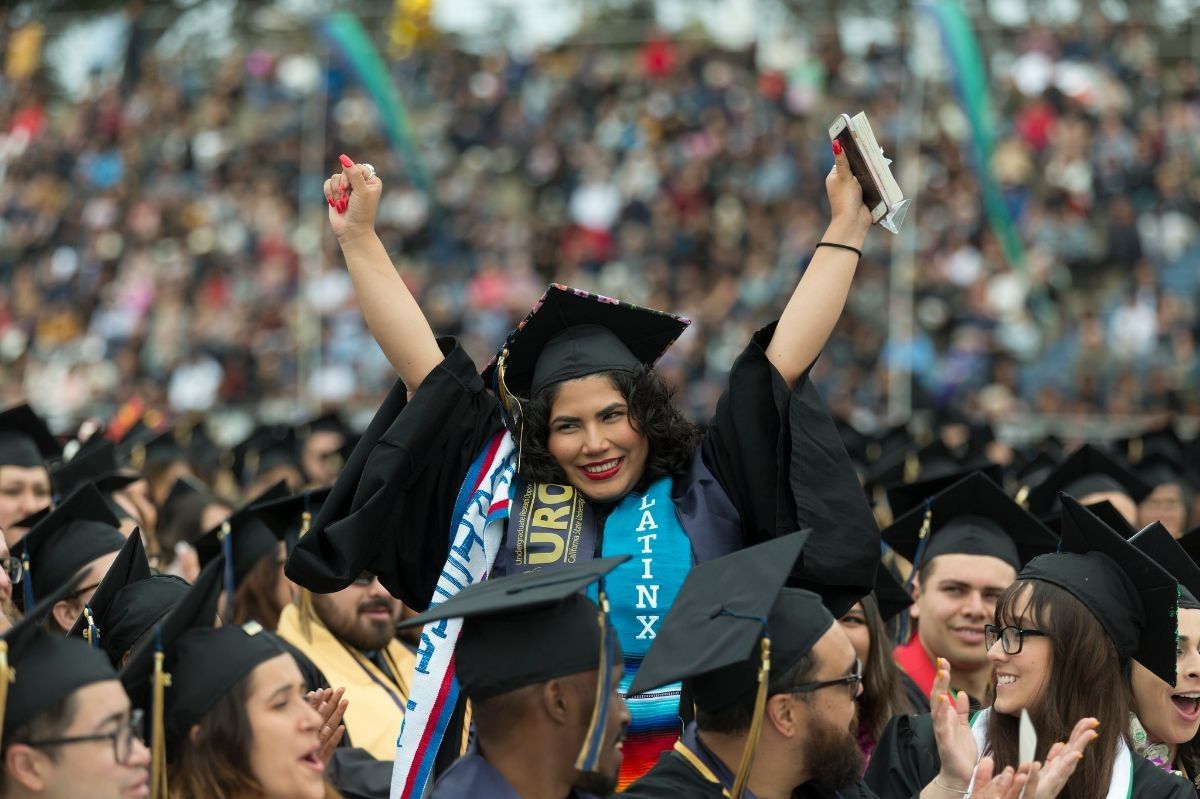
California State University, Monterey Bay (CSUMB) achieved reaffirmation of its accreditation from the Western Association of Schools and Colleges (WASC) in July 2019. The reaffirmation is for 10 years, the longest achievable period of accreditation.
The WASC Senior College and University Commission (WSCUC) commended CSUMB in a number of areas, particularly the increase in graduation rates since 2011. A recent Chronicle of Higher Education publication recognized CSUMB as one of three public universities in the U.S. with the greatest improvements in graduation rates. The Commission also praised the university for its commitment to the whole student, a culture of innovation and strong regional stewardship.
“I would like to thank all the many faculty, staff and administrators who made this achievement possible through their on-going and lasting commitment to reflection and improvement which was visible throughout the Institutional Report submitted to WSCUC as part of the reaccreditation effort,” President Eduardo M. Ochoa said.
Accreditation aids institutions in developing and sustaining effective educational programs and assures the educational community, the general public, and other organizations that an accredited institution has met high standards of quality and effectiveness.
CSUMB professor, researchers decode white shark genome
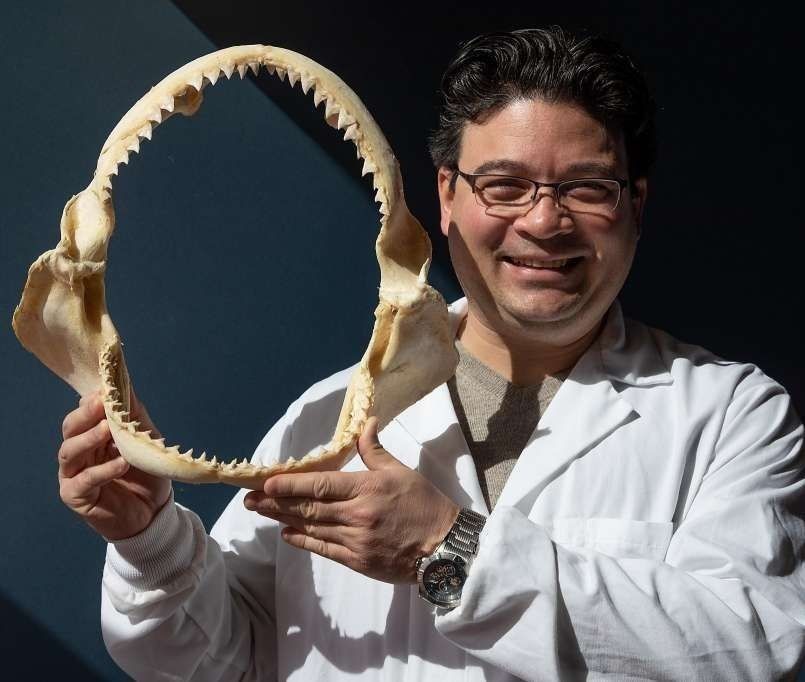
Assistant Professor Nate Jue with the School of Natural Sciences at Cal State Monterey Bay collaborated with an international team of researchers to decode the entire genome of the white shark. The results of their study were announced in March 2019 and marked a major scientific breakthrough which could assist in cancer prevention in humans.
The findings were published in the scientific journal “Proceedings of the National Academy of Sciences.” Through comparisons with other species, genetic adaptations in the white sharks can help scientists better understand how important processes like the repair of damaged DNA may function in other organisms including humans.
The researchers discovered unique blood-clotting and cancer-protection genes within the white shark genome. Further studies may assist medical researchers in their efforts to prevent cancer, treat age-related ailments and heal injuries in humans.
In addition, researchers were shocked to discover the size of the white shark genome measured approximately one-and-a-half times the size of the human genetic code. Decoding the white shark genome may also assist with the conservation of this often feared, yet vulnerable species by providing information about white shark population dynamics.
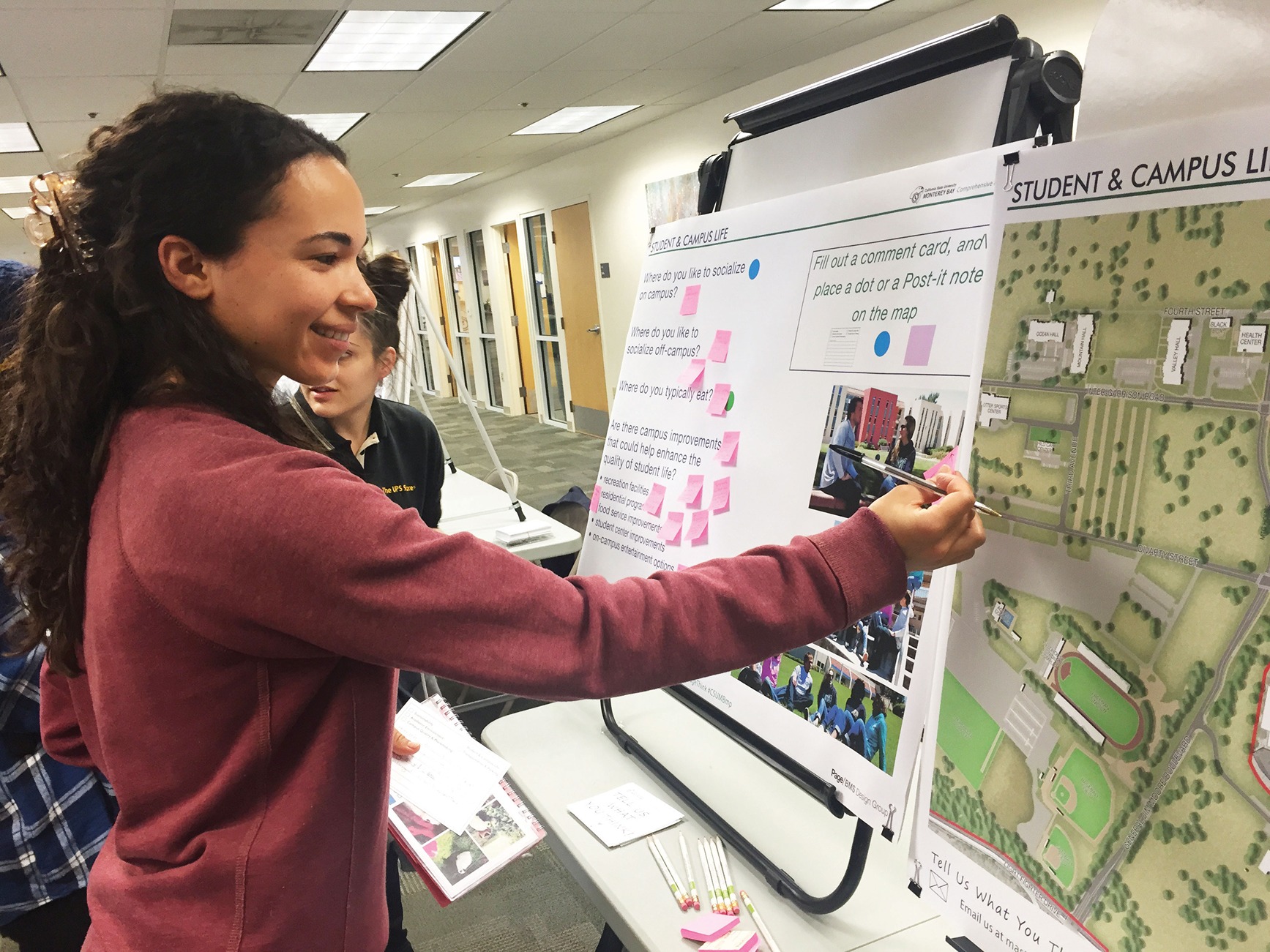
Since the university opened in 1995, the campus has grown from 650 students in repurposed buildings on a former Army base to a 21st century institution for teaching, research and innovation.
To accommodate the expected growth to 12,000 students by 2024, the campus master plan is being updated. The master plan provides a road map for growth and renewal of the campus. It includes academic needs such as classrooms and labs; student and residential life, such as a student union, recreation center and housing; infrastructure; sustainability; transportation; and connections with neighboring communities. The draft is expected to be completed by the end of the year.
After a series of meetings with campus groups to start the process, it became clear that there is an interest in making the campus more pedestrian- and bike-friendly.
Page/BMS Design Group of San Francisco has been hired to lead the process.
Marina, university team up on student housing project
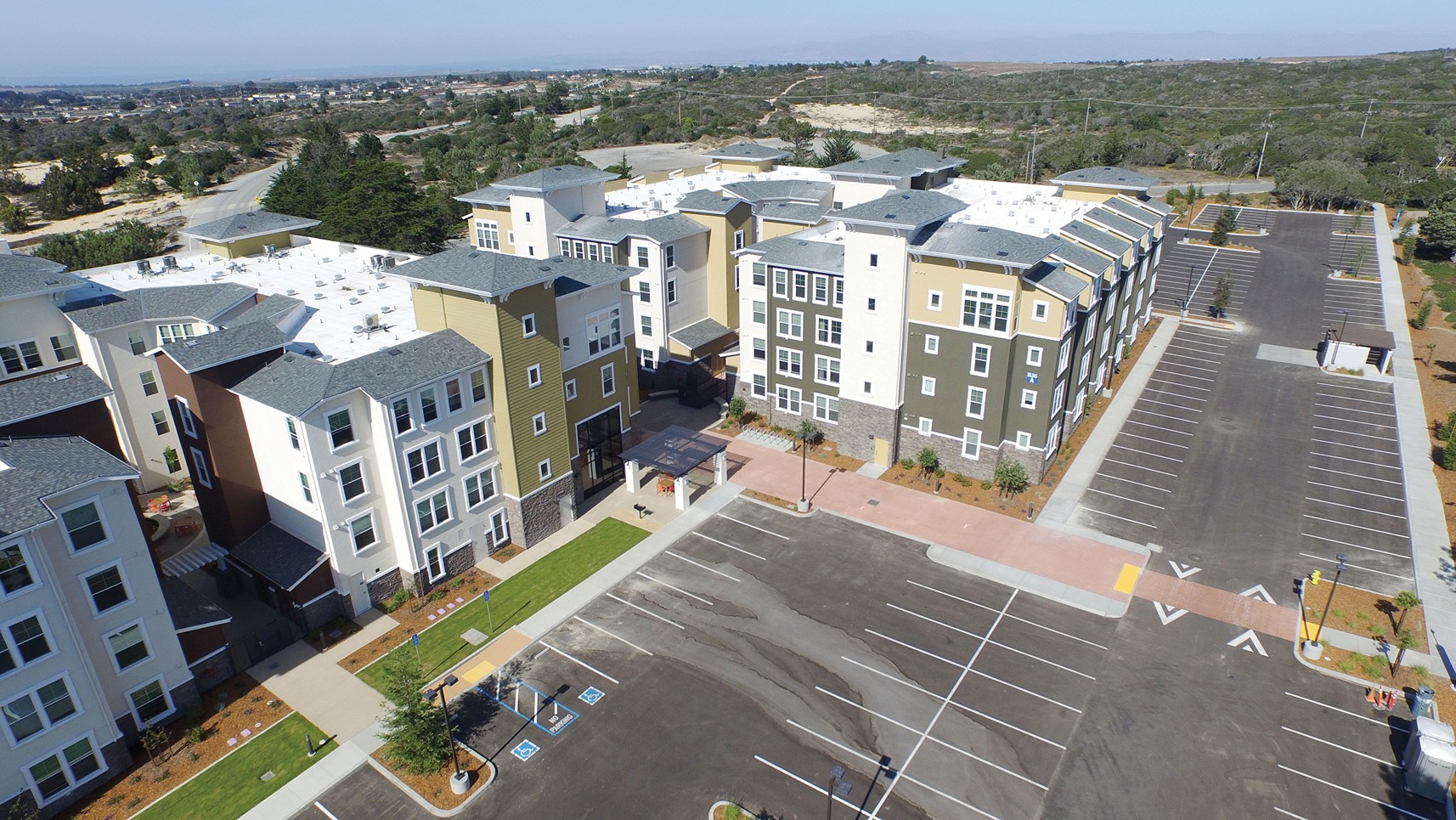
It’s about as far as you can get from dormitory life. The Promontory, a student housing complex just north of campus in Marina, opened in August. It’s the first new housing to come online since 2004. The project consists of three 150,000-square-foot, four-story buildings, with a total of 174 units and 579 beds. All units — which range from one to four bedrooms —come with a microwave, stove/range, dishwasher and washer and dryer.
The development has plenty of perks that have proven popular with students: a two-level fitness center, a game room with pool table, study rooms, a cyber café with kitchen, and a theater. Each of the buildings has an interior courtyard.
The project was built to LEED silver standards. It is the first joint housing venture between the city of Marina and CSUMB.
CSUMB acquires National Steinbeck Center

California State University, Monterey Bay and the National Steinbeck Center have completed a deal that will bring the university to the city of Salinas.
Under terms of the deal, negotiated among the university, the Steinbeck Center and the city of Salinas, CSUMB’s corporation purchased the building for $3 million. In addition, CSUMB paid the city $100,000 for the land beneath the building.
The Steinbeck Center will remain as a tenant, with an 80-year lease.
“This is our front door to Salinas and we’re going to use this as a way to connect to the community and respond to their needs,” said CSUMB President Eduardo Ochoa.
The University Corporation at Monterey Bay is a non-profit 501(c)(3) auxiliary organization that operates as the business arm of the university. It provides direct support for a number of university programs and activities.
The university is considering how to use the space. Possibilities include cultural and educational programming and outreach by staff members from CSUMB’s admissions and financial aid offices. In addition, the space will continue to be available as a resource for the community.
“We are planning on engaging the campus and our partners in Salinas in discussions of how we might best advance the mission of the university and meet community needs,” said CSUMB Provost Bonnie Irwin.
Art donations bring campus to life

Walk into the library and look around. Many of the walls have color and character thanks to the multiple pieces of beautiful art that decorate the walls. These pieces, along with pieces displayed throughout campus, are made possible by the University Art Committee – and more is on the way.
The University Art Committee, comprised of Holly Ochoa, administrators, faculty, staff and students, is a recommending body to the President that facilitates the acquisition and placement of donated art throughout campus. Many pieces are possible thanks to the generosity of an anonymous donor.
The artists represented among the works that CSUMB has been gifted include Eleen Auvil (the copper panel piece at the library stairwell), Susan Manchester, Barry Masteller, Amy Ellingson, Chris Winfield, Charles Eckart, Lucas Bloc, Cynthia Ona Innis, Susan Parker, Rick Arnitz, and Jamie Brunson. In the library reference area, the Cornwell mural is displayed on loan from the Monterey Museum of Art.
In addition, a three piece work by Vern Trindade, recently exhibited at the Triton Museum in San Jose, will be mounted in the near future at the library. For more information or to inquire about making art donations, contact the committee chair, Ilene Feinman, dean of the College of Arts, Humanities and Social Sciences, at ifeinman@csumb.edu.
Published Feb. 2, 2019
Salinas Center for Arts & Culture celebrates one-year anniversary
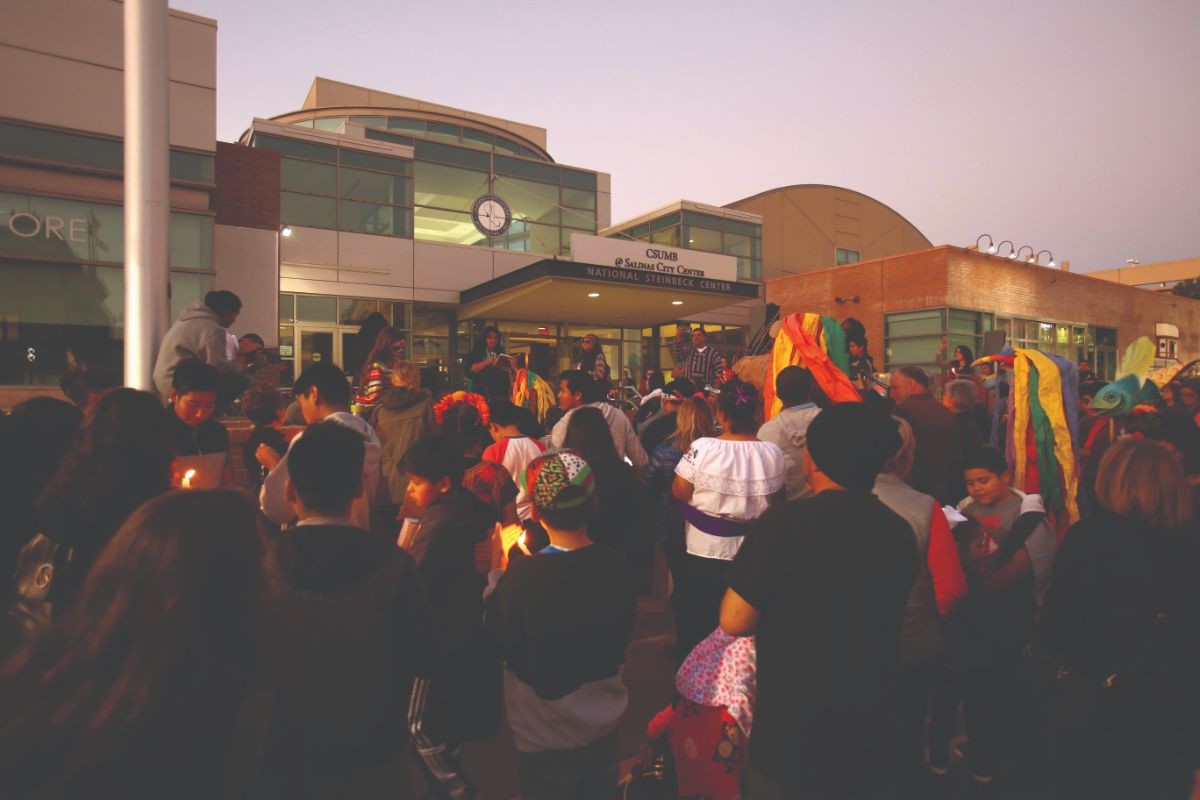
California State University, Monterey Bay’s Salinas Center For Arts and Culture officially celebrated its first anniversary with a series of Dias de Muertos events on Friday, Nov. 2, 2018. The center is housed within CSUMB @ Salinas City Center and strives to create a community of artists and a culture of activism in Salinas.
Over the past 12 months, the center has hosted a wide range of events, all free and open to the public, to include monthly First Friday events. Along with community-centered events encouraging local residents to visit, the center has held countless exhibitions featuring artwork from local artists and CSUMB students.
The center serves as a pivotal piece in extending CSUMB’s impact into the Salinas community and upholding the mission and vision of CSUMB. Hosting open community events is in keeping with CSUMB’s role as a community resource, providing forums for provocative discussions that can impact thought and action on issues important to our community.
Director Enid Ryce said the center serves as a boon for students as well, with “opportunities to create exhibitions, work in collaboration with community partners, and be in conversation with national figures in arts and humanities.”
Grant supports continued growth of Teacher Pathway Program
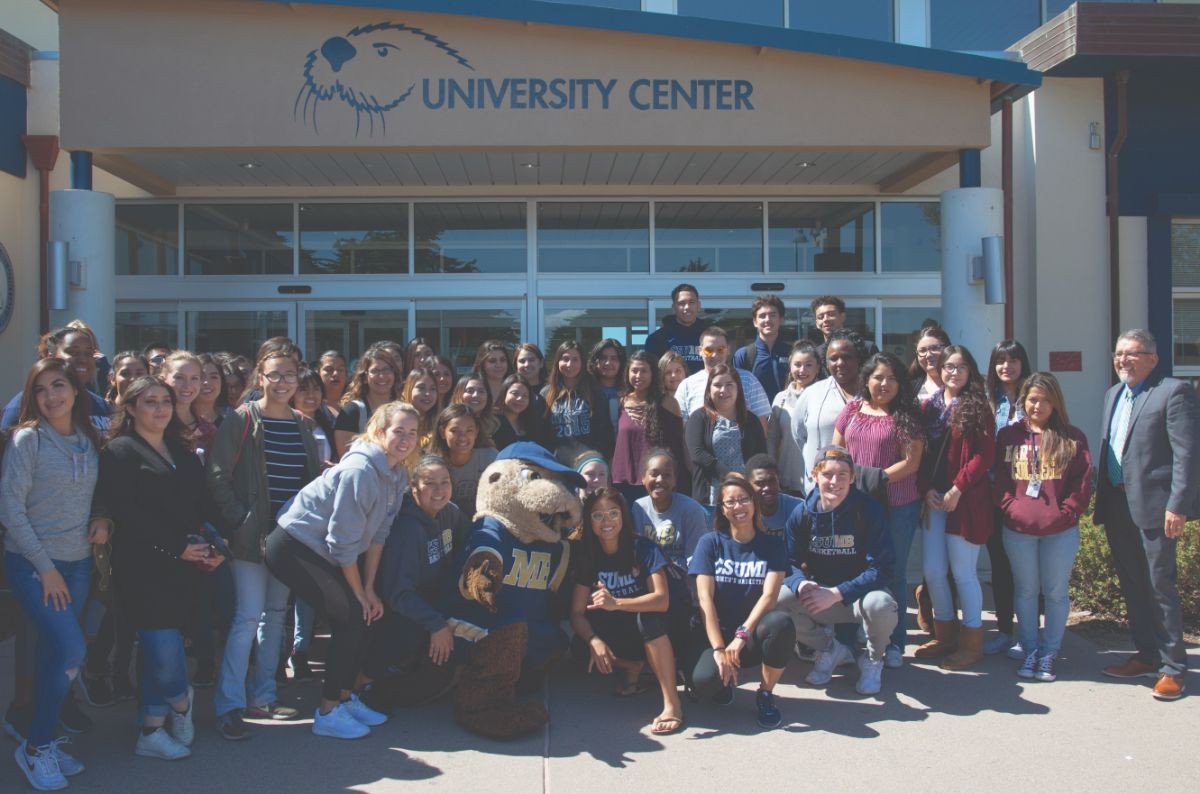
Hartnell College and California State University, Monterey Bay’s joint Teacher Pathway Program received a $335,000 grant from The Claire Giannini Fund last Fall that will help ensure the program’s continued growth and success. The program prepares fully-qualified elementary and special education teachers for Monterey County communities, with an eye towards sustainability.
The first cohort of the program, which began in fall 2016, has entered its third year. Students have achieved an 86 percent graduation rate — a much higher graduation rate than students enrolled in a traditional program — and earned their associate’s degree for transfer in two years. The first cohort is now working to earn their bachelor’s degrees in liberal studies and teaching credentials at CSUMB.
The Teacher Pathway Program is a collaborative “grow-our-own” solution to addressing the regional teacher shortage, said CSUMB College of Education Dean Jose Luis Alvarado.
The unique partnership, along with the streamlined program design, reduces the time it takes to transfer, thereby reducing costs to the participants.
The success of the program has resulted in expansion to new locations in South Monterey County and Salinas, and an enrollment increase of 80 percent with 28, 38 and 42 students in each cohort over the last three years.
Congressman Panetta introduces bill supporting veteran students
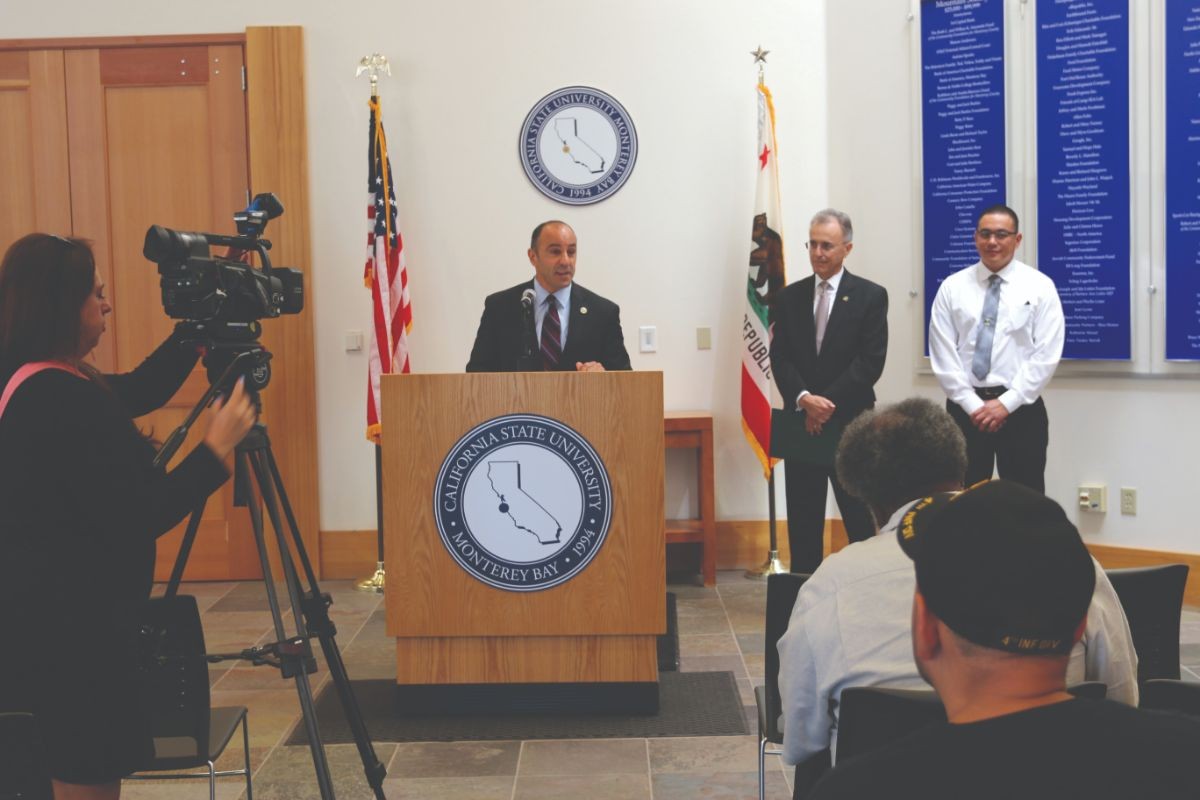
Congressman Jimmy Panetta, D-Carmel Valley, introduced the Veterans Resource Center Act during a press conference last fall at CSUMB. The legislation would authorize the Department of Veterans Affairs to provide federal grants to public universities to establish, maintain, and provide services at Veterans Resource Centers on campuses. It also incentivizes priority registration for veteran and military-connected students.
The legislation, co-sponsored by Nebraska Congressman Don Bacon, empowers universities to establish support centers modeled after the proven success of the California State University system’s Veteran Success Centers. CSUMB currently has more than 50 veteran students and a Veteran Student Services center that provides information on campus resources, veteran benefits, veteran service organizations, and social and study opportunities.
“Federal tuition support under the Post-9/11 G.I. Bill expires after three years, pressuring veteran students to complete their degrees early,” Panetta said.
“This bill will help our veterans choose classes that fit their personal needs, allowing them to graduate on time, while simultaneously providing them social and educational support. While these support resources are utilized throughout the California State University system, including here at home at CSUMB, I look forward to expanding this service to universities and veterans across the country.”
CSUMB business students attend West Point ethics conference
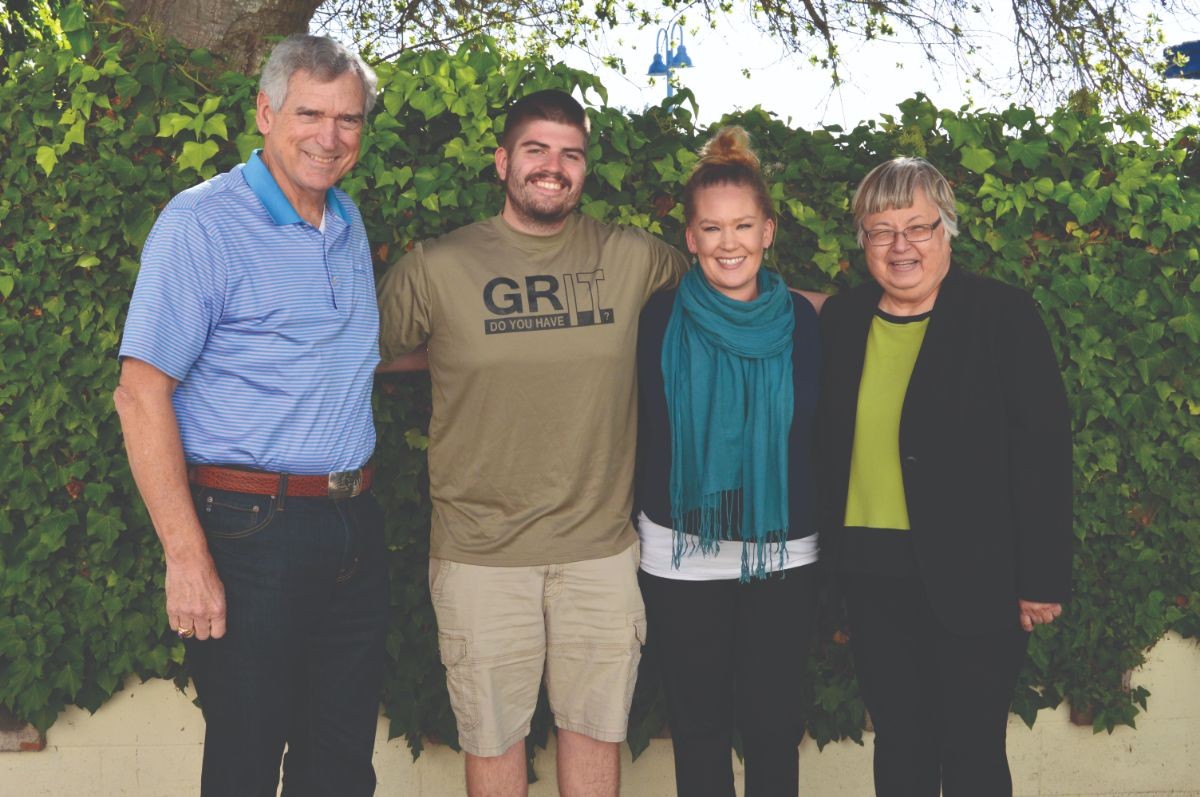
Two CSUMB College of Business students participated in the 34th annual National Conference on Ethics in America (NCEA) at the United States Military Academy (USMA) in West Point, N.Y, in October. The two-day conference is part of the USMA Cadet Character Education Program, and outstanding civilian students from universities across the country are invited to attend.
Brandon Baughn, a business administration and marketing major, and Alice Oaks, who is studying business administration and accounting, were able to attend thanks to the generous support of a sponsor.
This year’s conference theme was “Grit: The Unyielding Determination to Prevail.” It aimed to inspire and challenge attendees to overcome obstacles to achieve their goals, as well as find innovative solutions for pressing problems.
Keynote speaker Shilo Harris, a retired U.S. Army Cavalry Scout, survived devastating injuries after his armored vehicle was struck by an improvised explosive device (IED) in Iraq. Other speakers included Karl Meltzer, an ultramarathon record holder; Capt. Shaye Haver, the first female Army Ranger; and Adrianne Haslet, the Boston Marathon bombing survivor who won ballroom dance competitions and ran Boston twice after losing a leg.
Applications soar for fall enrollment
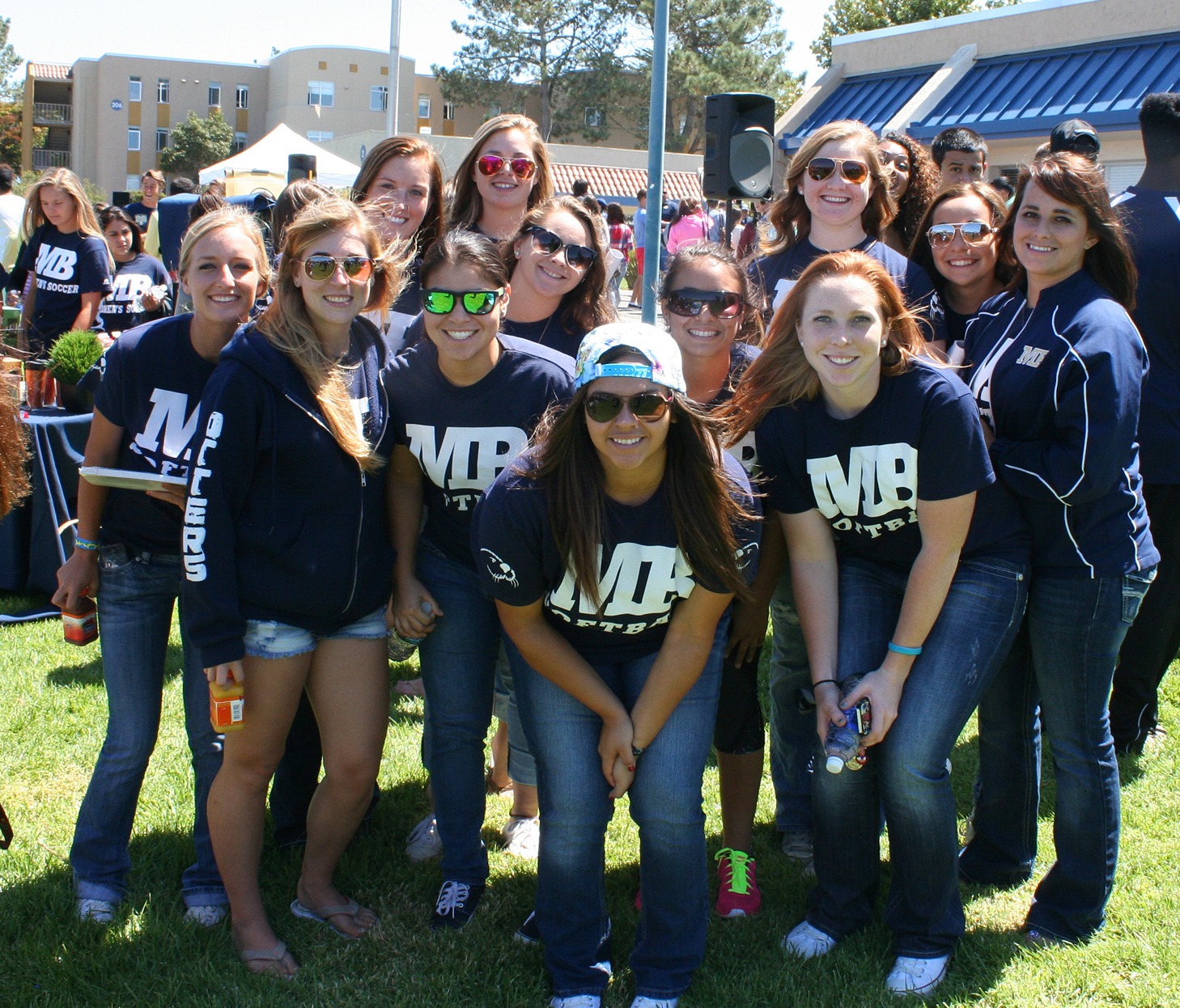
A record number of students applied to attend Cal State Monterey Bay for the Fall 2016 semester.
The university received 16,208 freshmen applications by the Nov. 30 deadline to apply. That’s up almost 5 percent from the previous year. The number of transfer students applying to attend CSUMB increased 15 percent to 4,124.
“We are slowing our enrollment growth to match available resources for Fall 2016,” said Dr. Ronnie Higgs, vice president for student affairs and enrollment services. “We anticipate the enrollment to be just under 7,000 students.”
The entire California State University system received a record number of applications for Fall, with more than 830,000 submitted by prospective students, marking a 4.8 percent increase and more than 40,000 applications over last year’s total.
“CSUMB is a first-choice institution,” Dr. Higgs said. “Students from the region, California and beyond know that CSUMB will prepare them for success.”
CSUMB expands its presence in Salinas
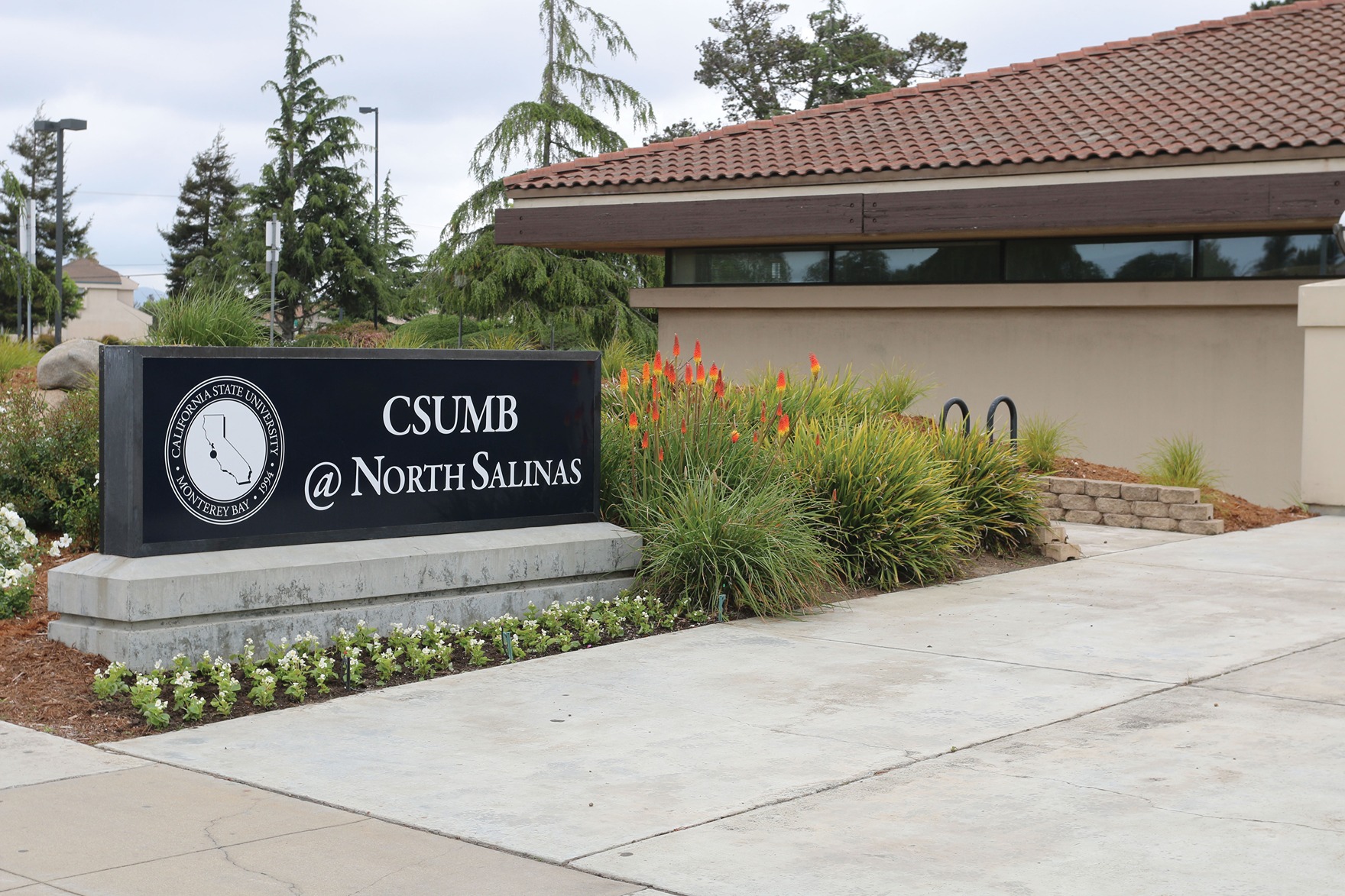
Cal State Monterey Bay has leased the main building vacated by last year’s closure of Heald College in Salinas and will begin offering classes in that facility later this year.
The lease, which went into effect Feb. 1, is for a 25,000-square-foot building located on North Main Street off Alvin Drive. The building includes 11 classrooms, several of which can serve as labs, and a number of offices. The facility will be known as CSUMB @ North Salinas.
“Leasing the building previously occupied by Heald College will allow us to increase our outreach and our course offerings to Salinas and the Salinas Valley,” said CSUMB President Eduardo Ochoa. “With the space crunch on our main campus, and the need to expand higher education opportunities in Salinas, this seemed to provide an ideal opportunity.”
The building has been vacant since April 2015, when the for-profit college’s parent company, Corinthian Colleges, Inc., closed its remaining campuses.
CSUMB first established a presence in Salinas last year, when the University Corporation purchased the National Steinbeck Center’s building in Oldtown.
Renovations are continuing on the building, to be known as CSUMB @ Salinas City Center. The National Steinbeck Center remains the name of the non-profit organization that manages the Steinbeck museum, which continues to occupy about half of the downtown structure.
$1 million grant creates data science program

Starting next fall, CSU Monterey will train students in the field of biomedical data science, thanks to a $1 million grant from the National Institutes of Health.
Biomedical data science is the application of statistics and computer science to biomedical problems. It has hundreds of applications, from tracking disease outbreaks to providing personalized medical care.
CSUMB will partner with UC Santa Cruz’s Center for Big Data in Translational Genomics over the five-year project.
“The emphasis for the program is really on the students and on preparing them for careers,” said Dr. Judith Canner, a CSUMB statistics professor and the principle investigator on the grant. The funding will enable CSUMB to create data science classes, train faculty, and fund student research - one of CSUMB’s strengths.
CSUMB professors will develop interdisciplinary coursework in data science, using classes offered at UCSC as a model. “UCSC is serving as a mentor institution,” Dr. Canner said. “They have a lot of courses and programs in this area, and we are just in the beginning stages of development.”
The ultimate goal of the grant is to enhance diversity in biomedical data science by opening up opportunities for CSUMB students who might not otherwise have access to such advanced training.
Students help with one city’s sustainability efforts
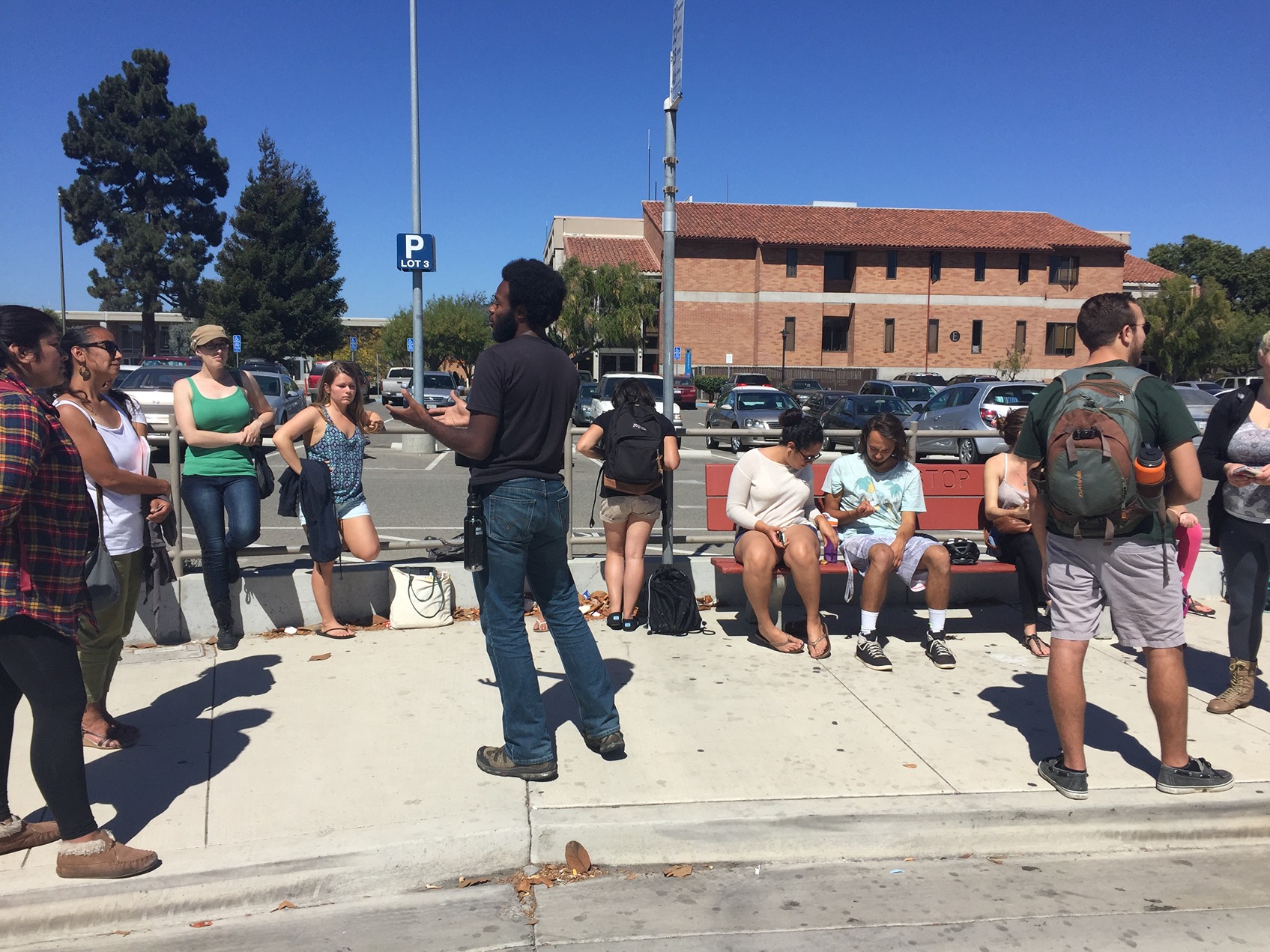
CSUMB has partnered with the city of Salinas as part of the Sustainable City Year Program. Dr. Dan Fernandez, professor of Science and Environmental Policy, is coordinating the effort.
The Sustainable City Year Program (SCYP) is a one-year partnership between the campus and an interested city partner. Regional cities often have projects that have some element of sustainability (mixed-use development, water conservation, improved signage, and increased access to bike or walkways, etc.) that they would like to undertake, but lack sufficient staff time or resources.
Through the program, CSUMB students have the opportunity to work on real-world problems, while the city benefits from the university’s expertise as it provides fresh perspectives on familiar issues.
Last fall, CSUMB completed its first semester of running this program. Three classes worked with Salinas on projects related to road design for West Alisal Street, analyzing the wealth of GIS data the city collects related to parking and infrastructure, and looking at parent-child interactions within public spaces. More classes are working with the city this semester.
Through this program, CSUMB has become a member of the Educational Partnerships for Innovation in Communities Network, including more than two dozen institutions across the country. CSUMB is the second school in the state of California to initiate this program.

When graduates cross the stage at commencement next May, they will join not only the Class of 2015, but also The Class of 3 Million – three million graduates of the California State University system.
It’s one of the largest alumni networks in the world.
To mark this milestone, 2015 graduates as well as alumni from all 23 CSU campuses are invited to “sign” The Class of 3 Million Yearbook. The online yearbook is a way for CSU alums to connect and build relationships with one another.
Everyone who signs the yearbook will be entered to win one of three $10,000 scholarships for a current or future student. All 2015 grads will receive Class of 3 Million silicone wristbands in time for commencement ceremonies.
Sign the yearbook at Classof3Million.calstate.edu.
Professor, grad student work to protect Big Sur River
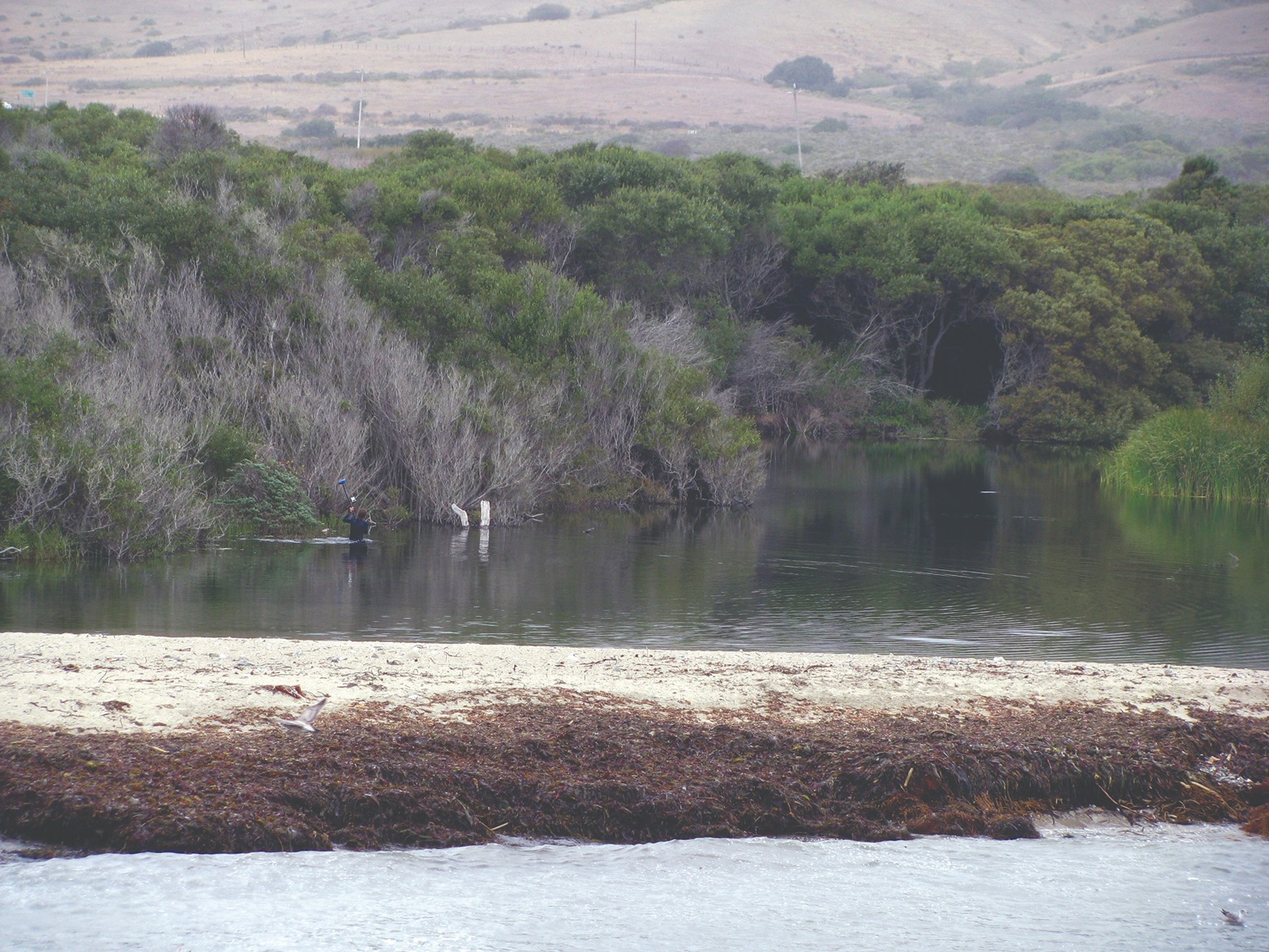
Cal State Monterey Bay Professor Doug Smith and graduate student Sam Phillips are collaborating with federal and state resource agencies to develop the Big Sur River Watershed Management Plan. The plan summarizes the environmental condition of the watershed and details the steps that residents and resource managers can take to sustain the local salmon population.
The Big Sur River and other ecologically critical streams and wetlands are constantly threatened by human activities that alter how water flows over and through the landscape. Urbanization and agricultural impacts are the leading cause of declining salmon populations along California’s Central Coast. While some impacts are inevitable, they can be markedly reduced or avoided through thoughtful and well-considered planning.
Resource managers can use the Big Sur management plan to apply for state and federal funding to make improvements that will help this important species thrive far into the future. Phillips used a wide range of cutting-edge tools in the project. The internship experience helped him land a position as a Fish Habitat Specialist with Eco Logical Research, Inc.
Study could yield changes in fishing behavior
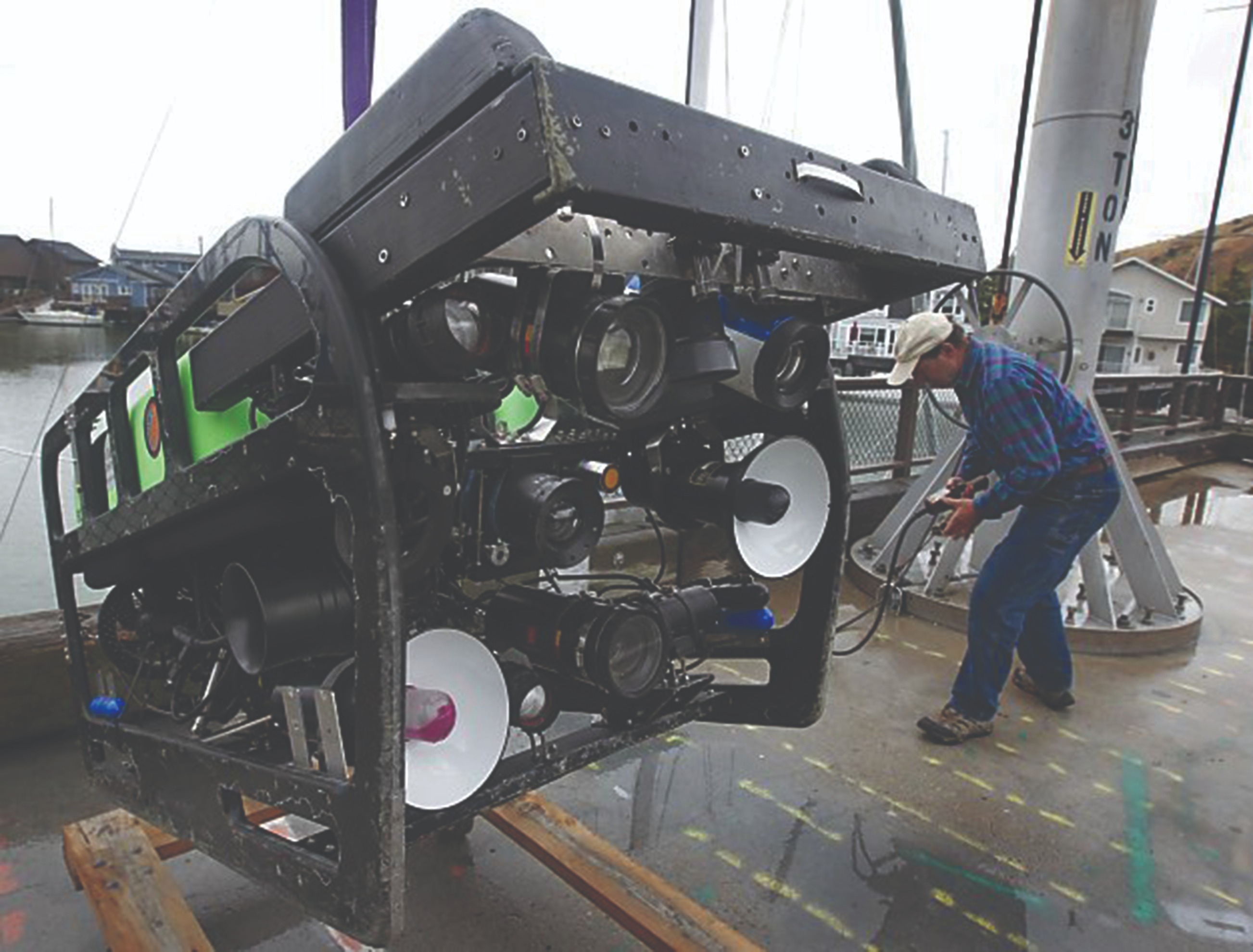
With a $320,000 grant from the National Oceanic and Atmospheric Administration and help from several partners, Professor James Lindholm will study how the impact of traditional trawling on the seafloor may be reduced by using modified gear.
In traditional bottom trawling, large nets are dragged across the seafloor, altering fish habitats that occur there. Dr. Lindholm’s study will compare the impacts of traditional gear to newly modified gear that significantly reduces contact with the seafloor.
The project will start next summer off Half Moon Bay. “We hope the study will yield insights that result in changes in fishing behavior,” Dr. Lindholm said.The project is a collaborative effort among CSUMB, the Environmental Defense Fund, the Monterey Bay National Marine Sanctuary and fisherman Giovanni Pennisi.
Catch CSUMB on tv

In partnership with KCBA Fox 35, the university is producing a weekly television program, “Campus to Community.” It’s part of CSUMB’s commitment to serving as a catalyst for positive change – through education, outreach and public service.
The show highlights speakers and issues of interest to the Central Coast. Students, alumni, faculty and staff are involved in the production of the program. Some installments feature one speaker, others are a magazine format with short segments highlighting various programs and professors.
The hour-long show started in early October and airs every Sunday at 8 a.m.
KCBA can be found on channel 3 on Comcast and on channel 35.1 on the campus cable system.
Cinematic Arts Professor Luis Camara pens successful film screenplay
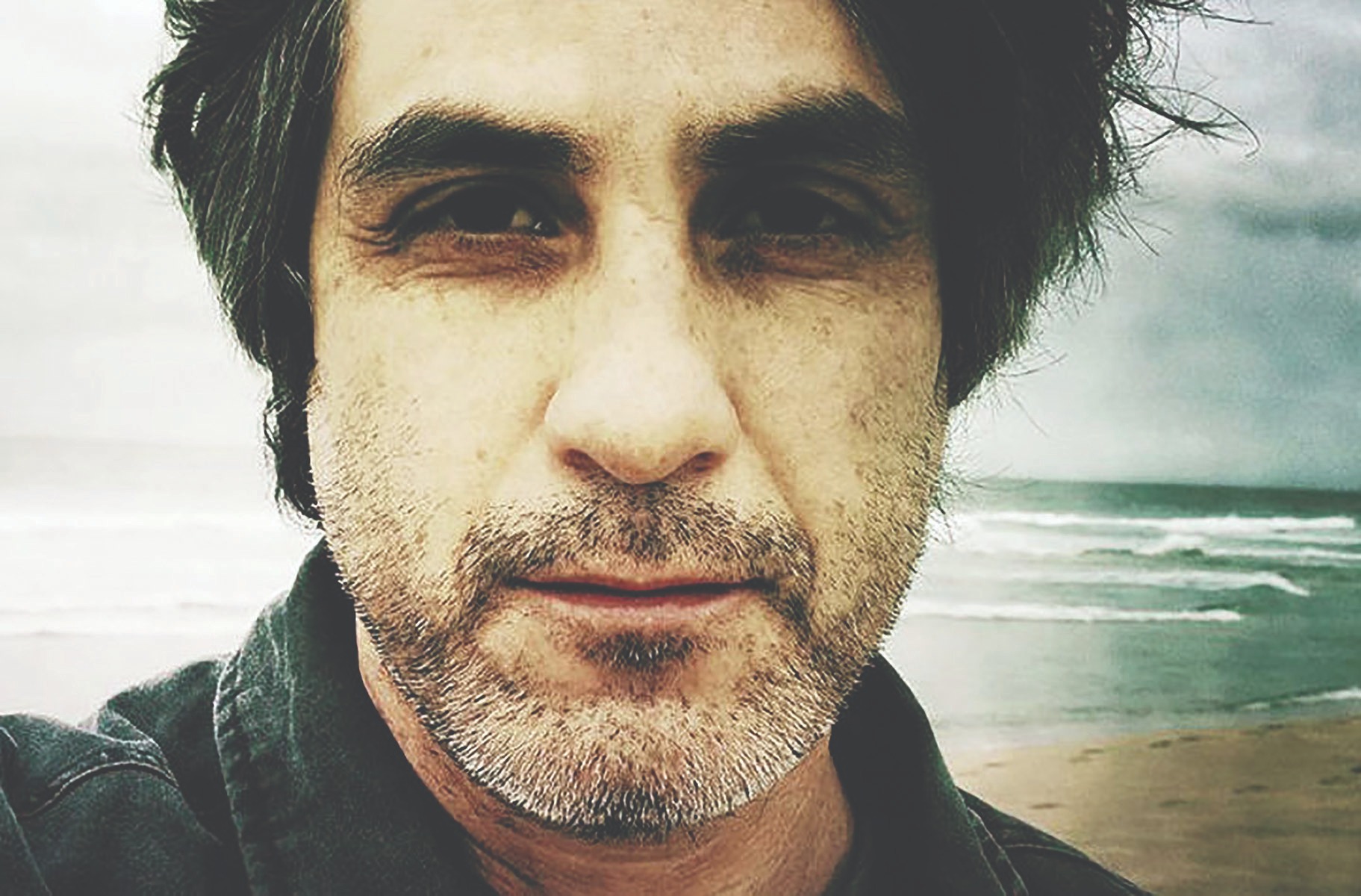
Luis Camara has added another accomplishment to an impressive cinematic career. This year, the longtime CSUMB Cinematic Arts professor wrote a screenplay for a comedy that became a box office success in Mexico.
The film “Me estás matando Susana,” (you’re killing me Susana) is based on a novel by the prominent Mexican author José Agustin. It stars Gael Garcia Bernal and Verónica Echegui and opened on 600 screens in Mexico, coming in 7th at the box office on opening week. Reviews have been positive, with major newspapers such as El Norte, Reforma and Exelsior praising the film and screenplay.
In a video review, critics for El Norte called Camara’s screenplay “a solid script” and that the “well executed film” captures “the essence of the Mexican Onda literary movement, while actualizing it to the present day.”
Originally from Mexico City, Camara is a graduate of the American Film Institute. He has directed the award-winning short films “Endgame” and “Ex Voto,” and the feature films “Steel Trap” and “Silencio,” winner of the best feature award at the Los Angeles Fear and Fantasy Film Festival and best cinematography award at the Queens International Film Festival.
CSUMB students, local researchers to benefit from NOAA Grant

CSUMB is one of six universities across the nation that will benefit from a new five-year, $15.5-million National Oceanic and Atmospheric Administration (NOAA) Center for Coastal and Marine Ecosystems. NOAA has approved a total of $3 million to be awarded this year for the first phase of the new NOAA Cooperative Science Center.
“With CSUMB’s portion of the funding, we will be able to support between six and eight students per year on our campus,” said CSUMB School of Natural Sciences Associate Professor Corey Garza.
Graduate students will be eligible for two years of funding; including a yearly stipend of $20,000 and the full cost of tuition. Graduate students also receive a $10,000 scholarship to support research and summer funding up to $5,000 to support research activities at a NOAA facility.
Undergraduates funded through the center will receive one year of stipend support up to $12,000 and a research account of $1,000. Faculty who mentor students through the center will have access to funding to support the purchase of supplies and non-capital equipment for their respective groups. Access to NOAA vessel time and post-doctoral funding will also be available.
Research topics include: fisheries, eco-forecasting, terrestrial impacts on coastal systems, climate change, ocean acidification and ocean engineering.
Bachelor of Science in Nursing program at CSUMB receives CCNE accreditation
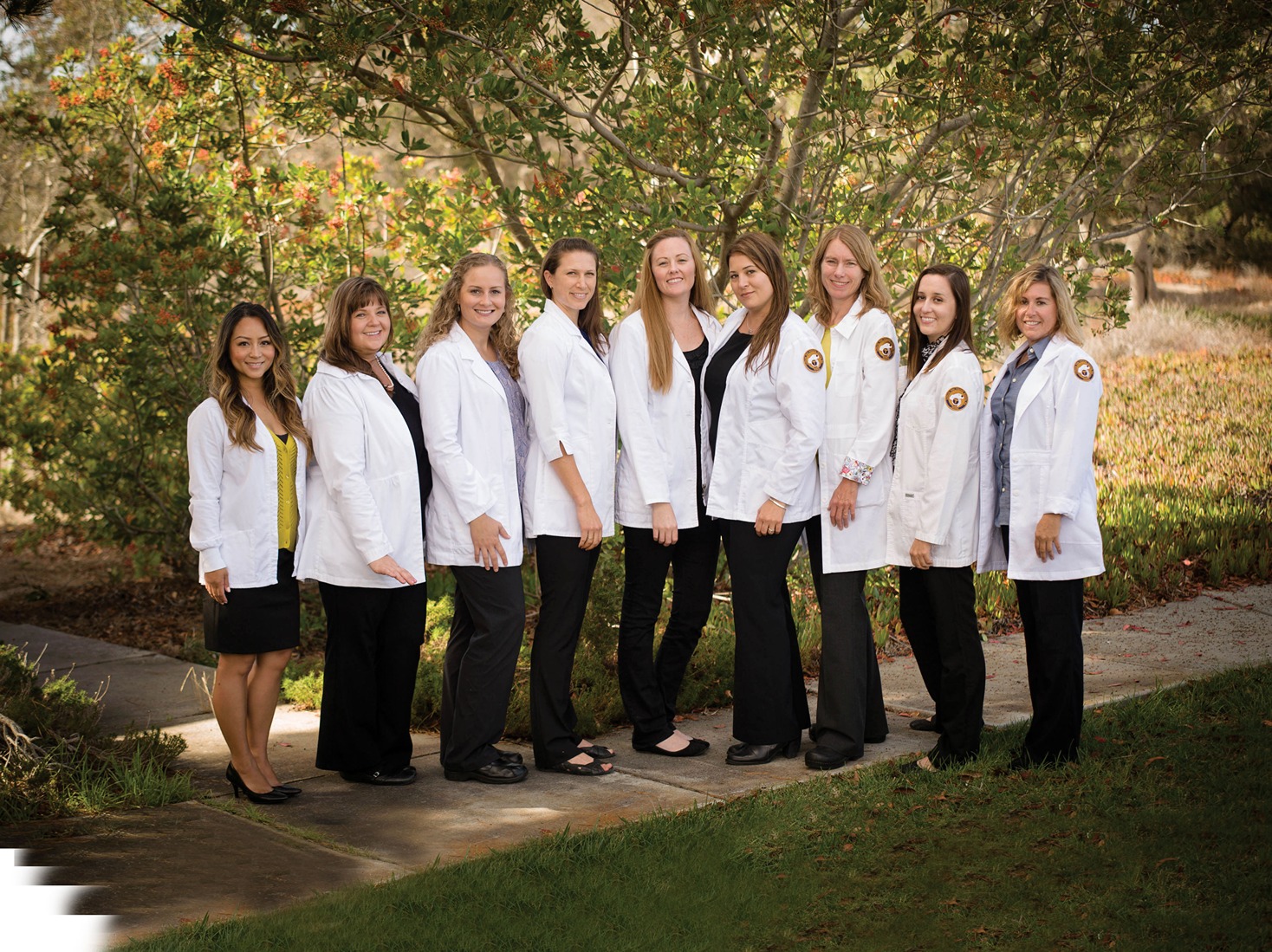
CSU Monterey Bay’s Bachelor of Science in Nursing (BSN) is now the only Commission on Collegiate Nursing Education (CCNE) accredited program in the tri-county region.
Bachelor-prepared registered nurses (RNs) advance the nursing profession and qualify RNs for advanced professional career opportunities in a wider array of healthcare settings.
“BSN graduates are prepared with an increased knowledge of the theoretical practice of nursing and in turn are able to provide a broader spectrum of healthcare to our community,” said CSUMB Department of Nursing Director, Savitri Singh-Carlson, who has a doctorate in nursing. “This program will help address a critical healthcare gap in the region by increasing the number of bachelor-prepared RNs.”
While there is no direct entry BSN program at CSUMB, partnerships and pathway programs with local community colleges facilitate a seamless transition from associate degree in nursing (ADN) and RN programs to the CSUMB BSN program. By earning a BSN, RNs are also prepared to pursue a master of science in nursing (MSN).
According to Singh-Carlson, the CSUMB Department of Nursing hopes to submit a proposal for a MSN degree in 2017 with hopes that the degree could be offered in 2018.
CSUMB Science and Environmental Policy is now the School of Natural Sciences

The CSUMB Science and Environmental Policy Division has a new identity. The division has changed its name to the School of Natural Sciences (SNS), and will continue to be a part of the College of Science, together with the School of Computing & Design and the Mathematics & Statistics Department.
The SNS is the home for an array of academic degree programs, research laboratories, and community outreach programs. All SNS programs provide outstanding opportunities for over 1,300 students to learn how to use interdisciplinary science, technology and communication skills to serve community needs.
The SNS places a heavy emphasis on preparing students for rewarding careers and more advanced academic study in fields related to environmental resource assessment, management, and policy. The faculty provides particular strengths in marine and terrestrial biology and ecology, watershed science, marine science, molecular biology and genetics, environmental education, and advanced technologies for geospatial data collection, analysis and visualization.
Enid Baxter Ryce’s Film Recognized

CSUMB professor and experimental filmmaker Enid Baxter Ryce had her Fort Ord feature film “A Land for War” highlighted in March by The Library of Congress’s Veterans History Project in Washington D.C.
The film was also screened, along with a collection of her students’ documentaries in “Fort Ord: A Sense of Place,” at the National Gallery of Art as a part of the D.C. Environmental Film Festival.
In “A Land for War,” Ryce documents the lands and ruins of the historic Fort Ord and portrays the impact of the military base on the terrain and people. The film’s original musical score is by CSUMB Music Instructor Lanier Sammons.
The student film program, “Fort Ord: A Sense of Place,” is a compilation of the university students’ documentary and experimental shorts focused on the ecology, community and history of the base. The films also feature oral histories collected for the Library of Congress Veterans History Project.
Congress created the Veterans History Project in 2000 to collect, preserve and make accessible the first-hand remembrances of America’s war veterans from WWI through current conflicts, so that future generations may hear directly from veterans and understand the realities of war.
Student Supports Immigrants with Scholarship Program

Daisy Leon Melendrez, a CSUMB service learning student leader, has been selected as a Principal Community Scholar for her community project to provide information to immigrant communities about their constitutional rights.
Melendrez is among 20 college students from Iowa and California selected for the first class of the new program.
The project addresses fears and anxieties of those in immigrant communities about impending changes to immigration policy. The recipients were selected by Principal, Iowa Campus Compact and California Campus Compact after being nominated by faculty or staff from their college or university. They underwent a rigorous review process.
Melendrez is a collaborative health & human services major. She has been the liaison to the Central Coast Citizenship Project in East Salinas.
“We are excited that Daisy has been selected as a Principal Community Scholar for her community project to provide information to immigrant communities about their constitutional rights,” said Pamela Motoike, professor at the CSUMB Service Learning Institute and program adviser.
CSUMB Signs Partnership with Universidad de León, Spain
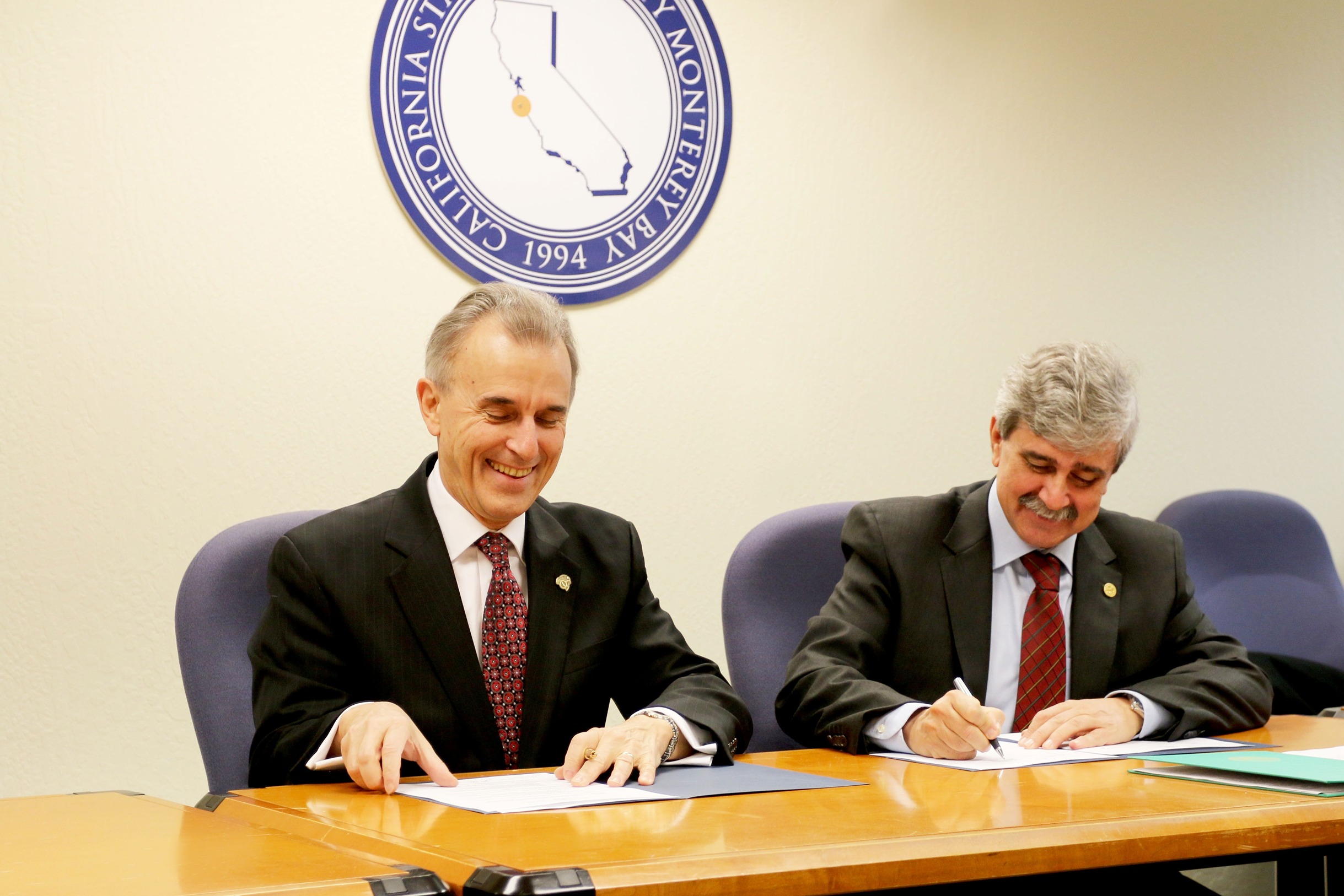
California State University Monterey Bay and Universidad de León, Spain signed a memorandum of understanding recently, creating an international partnership that opens great possibilities for exchange of students, professors and educational resources.
Universidad de León delegates President Juan Francisco Garcia Marin, Professor Oscar Fernandez and Professor Eduardo Compadre toured the CSUMB campus, and met with students, faculty and staff for an official welcoming and signing ceremony to commemorate the new international partnership between the two universities.
The new alliance will allow the exchange of undergraduate students between both universities during certain academic periods. In addition, the alliance will facilitate the opportunity to help each other learn a second language, study a new culture through personal interaction and share best teaching practices in a variety of subject areas.
CSUMB Renovates Veterans Resource Center
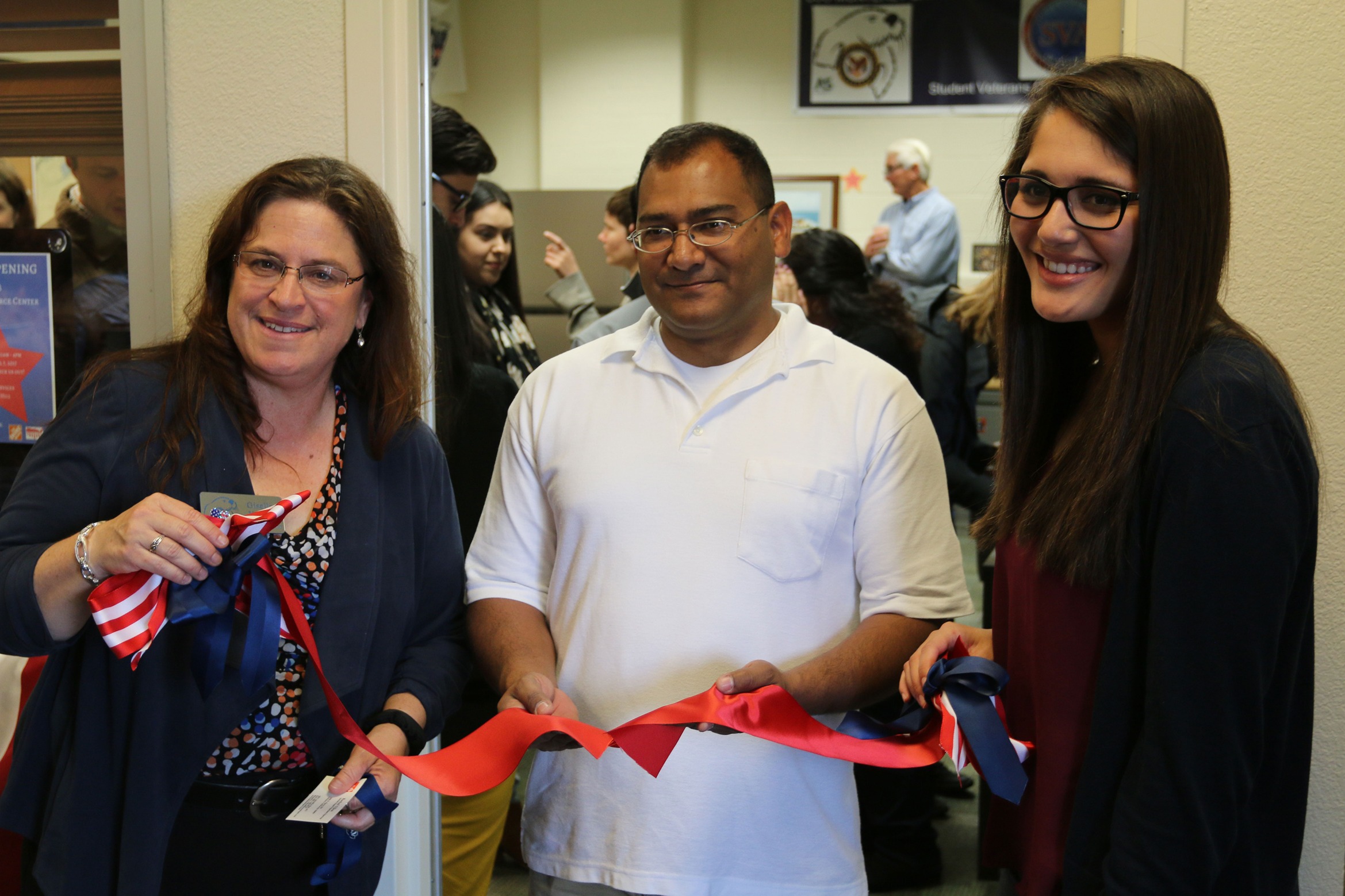
CSUMB recently celebrated the renovation of its Veterans Resource Center, thanks to a generous donation of $6,000 by The Home Depot Foundation (THDF).
The renovations, which include new carpeting and furnishings, were received from THDF in partnership with the Student Veterans of America (SVA). The new and improved Veterans Resource Center offers an inviting atmosphere, allowing veterans to seek assistance with benefits, gain access to support services and build social support networks to motivate each other to stay in college.
“The veteran students on campus finally have a fully furnished space where they can study, relax and connect with each other when not in class,” said CSUMB Veteran Services Coordinator Giselle Young.
CSUMB Student Veterans Organization President, business major and Army veteran Gilbert Bernabe says the Veterans Resource Center has become a home away from home. He utilizes the center more now than during his first semester. “That is all thanks to the work of Giselle, and the sponsors, for making the resource center feel welcoming,” said Bernabe.
“We were very lucky to have received the generous financial support from The Home Depot Foundation,” said Young.
A New Reality
CSUMB’s Game Research Lab Joins Technology with Practical Research
Walk into the Game Research Lab at CSUMB and look around. The tables of electronics and circuits only hint at the research being conducted.
Things get more interesting upon further examination, with prosthetic arms placed inconspicuously on shelves. In another room, virtual reality goggles lie next to sensors on tripods. A large whiteboard, resembling an air hockey table, is placed in the corner. A row of computers border a wall, joysticks sitting next to keyboards.
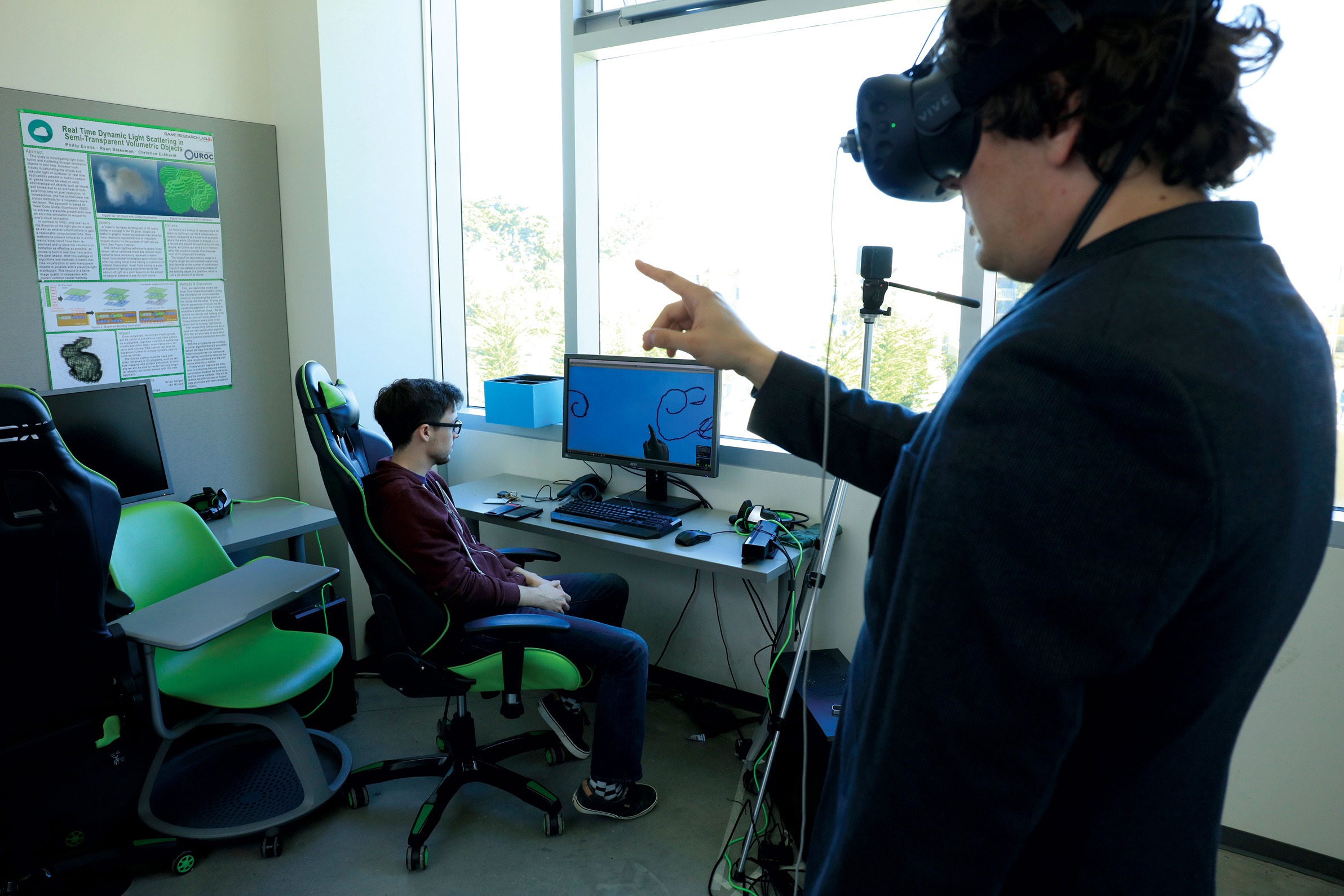
It looks like every kid’s ideal game room. But the research projects here could be an indicator of technology that will transform lives and the world.
Krzysztof Pietroszek, an assistant professor in the CSUMB School of Computing & Design, is the director of the Game Research Lab, which he founded last year. Pietroszek and a fellow colleague Christian Eckhardt oversee daily activities of the lab, utilized by many students for Capstone projects. Others come to tinker and explore. Being a part of the lab is not a for-credit class. Rather, it’s a resource for students that want to push boundaries and explore potential technological breakthroughs.
To Pietroszek, it’s more than experimenting. His main interest is utilizing technology to assist people with disabilities in practical, cost-effective ways. In addition, technology like virtual reality (VR) can make education widely accessible regardless of geographic location – and can serve as a training tool for fields such as medicine and architecture.
One of the more intriguing projects at the game design lab is the development of a low-cost prosthetic arm. The arm is 3D printable, meaning it’s created with successive layers of hard plastic material under computer control, sourced from data out of a digital model.
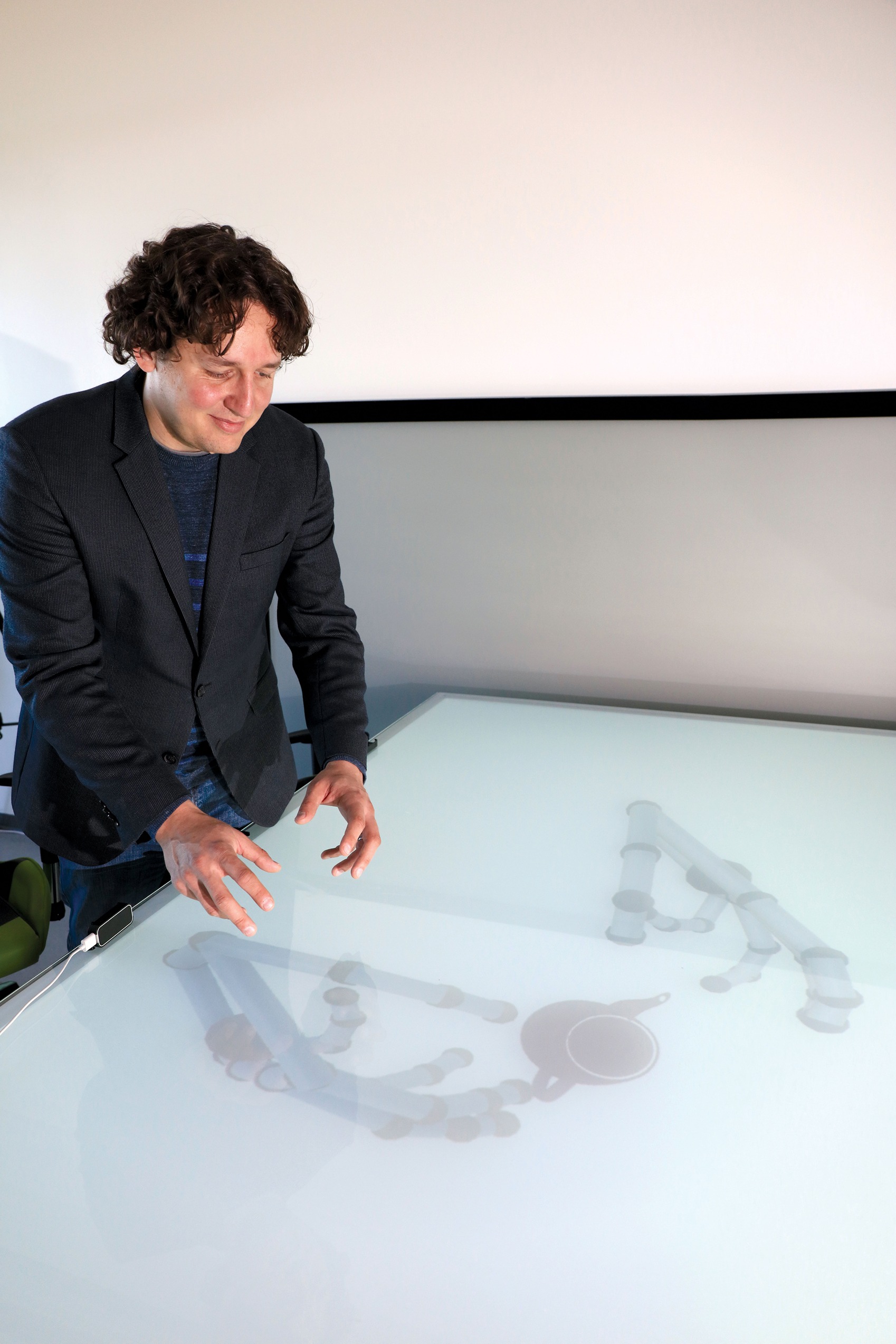
Krzysztof Pietroszek, assistant professor in the School of Computing & Design, uses a holographic table in the Game Research Lab.
The arm is controlled by flex sensors that are attached to the patient. It’s been tested by CSUMB student Morgan Juran, a computer science major, who was born missing the lower part of her left arm right below the elbow. In the lab, Eckhardt and his students attach the prosthetic arm via sensors to the end of Juran’s missing limb. She can then move the “fingers” of the robotic hand secured at the end of the prosthetic arm by using muscle movements in her left arm.
“Across the world, the number of amputees who have access to robotic prosthetics is minimal, especially in the developing countries due to the cost,” said Pietroszek. “The ultimate goal of a project like this would be a prosthetic arm designed as an open-source, free-to-print project. It could be distributed worldwide with the assistance of charity organizations.”
Pietroszek puts on VR goggles and demonstrates the classroom concept. By using his hand, he can “write” on a board in his virtual world, and what he’s writing will be seen on a physical whiteboard in an actual classroom by students. Students themselves can interact the same way. Again, distance is no object. The students could be on the other side of the planet. But the interactions are real time.
“We believe that ‘mixed reality participation’ may result in better learning outcomes than traditional online learning,” said Pietroszek. “It supports social interactions. It supports non-verbal communication. Effective modes of learning, such as peer-learning and active learning, are possible in VR experiences.”
And then there’s the whiteboard, placed in the corner. Turn it on and it’s a holographic table, straight out of a science fiction movie like “Minority Report.” Place your hand above it and a holographic image of your own hand floats in the board, mimicking your every movement. It’s an ideal tool for teaching simple medical procedures – or for creating virtual design when an architect is conceptualizing a building.
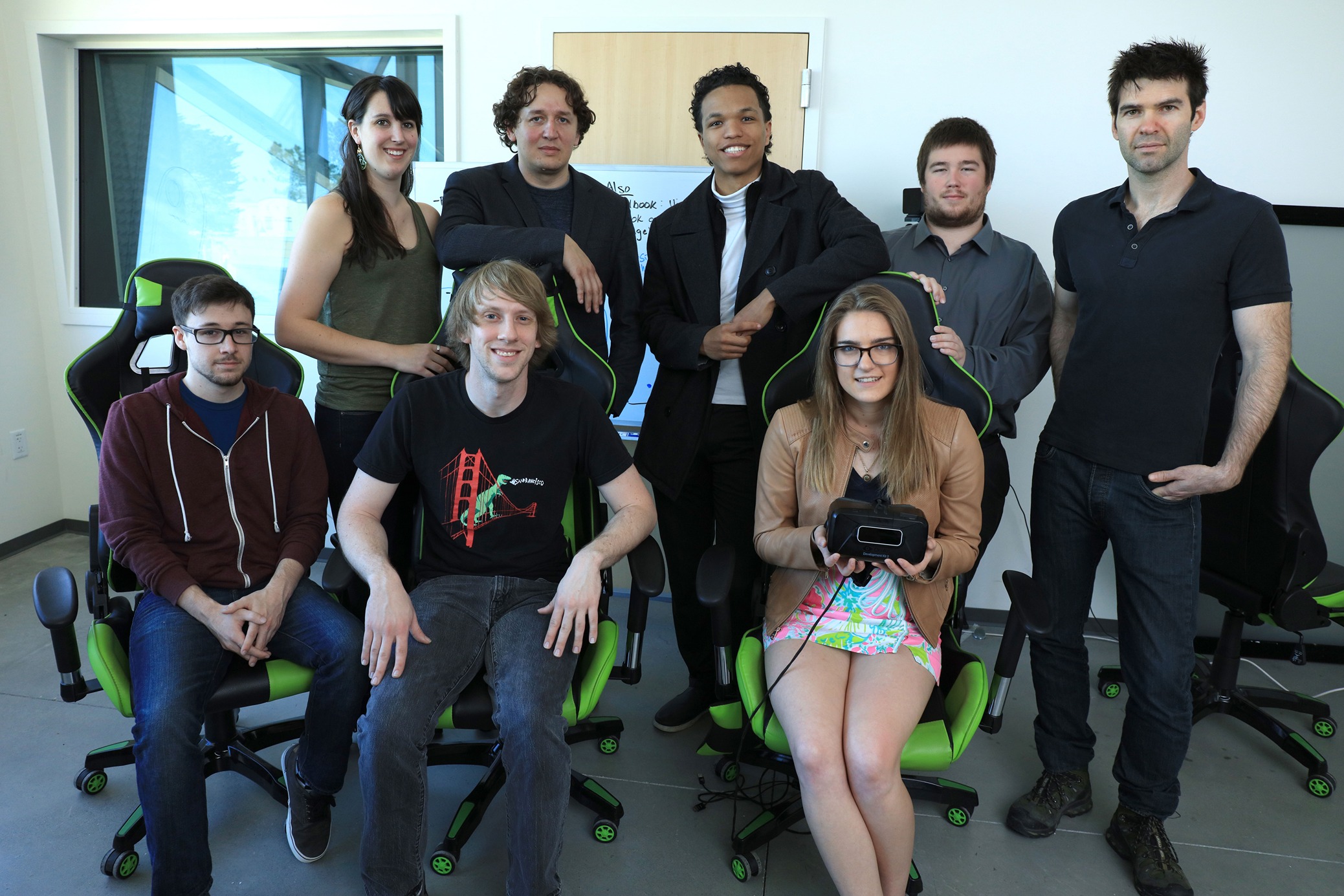
Architecture is tied into the Capstone project of Brian Geiger, a computer science major and regular at the Game Research Lab. Geiger created a virtual reality “tour” of the Gambord Business and Information Technology Building. Put on a pair of VR goggles and you’re walking around the interior of the Gambord Building, examining the classrooms and overall floorplan. It’s an almost surreal experience – and an ideal tool for architects and real estate developers.
Applications also go beyond the physical structure of a building itself. One of Eckhardt’s projects focuses on simulating sunlight in interior spaces. If you want to know, before building a house or building, what the lighting will look like in any particular room, put in the time-of-year and time-of-day. The sunlight for that moment and location comes through the windows of the digital interior, which is represented on the computer screen. Other applications focus on “virtual landscaping,” allowing developers to see what types of vegetation look like around the exterior.
The possibilities are numerous. The lab is still new and is supported by the Undergraduate Research and Opportunities Center (UROC), Cryteck’s VR First Initiative, Faceware Technologies, the School of Computing and Design and Pietroszek himself.
“Many people don’t realize the power of these new technologies – and how it can improve the quality of life,” Pietroszek said. “We are hoping to change that.”
Class Notes

1997
David McKeever (B.A. Liberal Studies) started a real estate career in 2008. In 2010, he started a brokerage firm, McKeever Real Estate. The company has grown into a “boutique” brokerage with McKeever and 10 other professional realtors, focusing mainly in the San Joaquin and Sacramento counties. McKeever has been recognized by the Central Valley Realtors Association as one of the top realtors in that region for the past three years based upon sales volume and dollar amount.
2000
Amanda Greenvoss (B.S. Earth Systems Science & Policy) is currently running the partner program for Oregon Zoo’s new Education Center. Last year, Greenvoss played an important role in getting non-profit organizations to partner with the center.
2001
Brenda Lewis (Teacher Education Credential) enrolled in Pepperdine University to pursue a master’s in educational technology after earning a teaching credential from CSUMB. Afterwards, Lewis decided to become an expert in educational assessment and accepted a position in the program management department at CTB/McGraw-Hill. In 2010, she committed to community activism, and campaigned for an elected position as the division 1 (residential Seaside) director, capturing every Seaside precinct and winning by a 65 percent to 35 percent margin. She was re-elected in 2013. For the past six years, she has worked to promote restoration of the Carmel River and the recharging of the Seaside Aquifer, along with “Pure Water Monterey” (which provides potable water for the Monterey Peninsula).

2007
Michelle (Dodd) Horwege (B.S. Human Performance and Wellness) went on to get a master’s degree in healthcare administration and now works at El Camino Hospital in Mountain View. Horwege is “married with a beautiful little girl who turned one in November. I continue to take courses locally to enhance my education.”
Gerardo (Gaytan) Lewis (B.A. Human Communication) currently works as an elementary school teacher. Prior to that, Lewis worked as a high school history teacher. He earned a master of education in curriculum and instruction. Lewis is currently studying for an Ed.D. in educational leadership, with a concentration in Higher Education. He got married last year and is headed to New York.
2009
Elizabeth (Gracie) Conrad (B.A. Human Communication) has been married for seven years and had her first child, a son in November 2016. Conrad volunteers with multiple dog rescue groups and Big Brothers, Big Sisters where she’s been matched with a little brother for three years. She works as a police corporal with the Leander Police Department, assigned as a patrol supervisor, with auxiliary duties as a member of the honor guard, a mental health peace officer, a hostage negotiator on the regional SWAT team, a recruiter, a background investigator, an instructor, and a mentor for youth who are interested in future law enforcement careers. Conrad has received many awards and recognitions for implementing programs aimed at improving police community relations.

2010
Kellsy Panno (B.S. Business Administration) graduated from CSUMB and went on to get her master’s degree in economics from San Jose State. After graduation from SJSU in 2013, she moved back to Monterey to work at Kagan Worldwide Media. Kagan was acquired by S&P Global in 2016, and Panno was promoted to direct mobile economic research for Western Europe. When not traveling around the world on business, she spends much of her time racing sailboats for the Monterey Peninsula Yacht Club, reading, climbing and playing golf.
Alan Rosemberg (B.S. Business Administration) lives in Redondo Beach and was recently promoted to vice president executive planning consultant at Fidelity Investments.
David Reay (B.A. Human Communication) is the lead ride operator at Six Flags Discovery Kingdom, helping turn around underperforming areas. As a volunteer at the Vallejo Naval and Historical Museum, Reay recently opened an exhibit on the Lincoln Highway in Vallejo. It was his first solo exhibit. Reay recently got back from his first-ever trip to spring training, watching the San Francisco Giants play a few games. When not working, Reay enjoys traveling and photography.

2012
Veronica Miramontes (B.A. Human Communication) recently attended San Quentin for the Restorative Justice Symposium. “It was an amazing experience inside the prison! Thank you ‘insiders’ (the language used) for hosting us ‘outsiders.’ Our collaborative efforts and dialogue today is a step forward to reshaping our justice system and our everyday life on the outside when faced with conflict.”
Trevor Fournier (B.S. Marine Science) is a research technician, and has developed a variety of instruments to assist in deep-sea research. Through his career, Fournier has participated in six research cruises. He had “the pleasure of diving” in the Human Occupied Vehicle (submarine) Alvin, the same submarine used to discover the Titanic. Fournier’s team also developed a local summer camp, giving kids an opportunity to learn about exploring the ocean seafloor and marine technologies available to scientists to facilitate their research.

2013
Phyllis Grillo (B.S. Business Administration) received a master’s degree in hospitality, recreation and tourism from CSU East Bay in 2015. Grillo joined the CSUMB College of Business as an adjunct professor in the Sustainable Hospitality Management Program in January 2016, teaching the program’s introductory class. To meet the expectation of providing a realistic perspective to a career in hospitality, Grillo draws on more than 30 years of hospitality experience.
2014
Jessica (George) Howser (B.A. Psychology) moved to Southern California after graduation, landing her first job in the psychology field. Howser began working for Sovereign Health, a drug and alcohol rehabilitation center. A couple months later, Howser met the man who is now her husband. He is in the Marine Corps and received orders to Okinawa. They got married and Howser moved with him. “We have been in Okinawa now for about a year and a half. I do not currently work, taking time so we can travel throughout Asia. Life has been a blast since graduating from CSUMB!”
President's Message
Dear friends of Cal State Monterey Bay,
Since its founding, Cal State Monterey Bay has been dedicated to providing access to higher education to the broadest range of qualified students.
Of course, having access to a university is only a first step toward a degree. The CSU’s Graduation Initiative 2025 is focused on making sure that more of our students graduate on-time with the tools they need to succeed.
For many of our students, the path from their first CSUMB class to commencement is a long and winding one. Life has a way of intervening. But at CSUMB, and throughout the CSU, we are undertaking a comprehensive effort to eliminate any unnecessary hurdles.
We are looking at ways we can ease a student’s transition into college life – through orientation, our award-winning developmental math program, our Stretch written and oral communication program, and our learning communities, which allow students to live and study with fellow students in their majors.
It is a fact of academic life that many students change majors. So we want to align courses in similar majors to make those transitions easier. And we are adopting Smart Planner, which allows students to plot their path to a degree online and helps us know how many sections of classes we will need to offer.
We have added to our advising staff and are instituting mandated visits to advisers at critical junctures in our students’ academic careers to be sure they are on the right track. We are examining basic classes with high failure rates to see how we can teach those classes better.
We are guided by two principles. We want to make sure that the improvements in student performance are reflected across our entire student body. And we will not sacrifice quality; our students still must have a rigorous educational experience.
Our graduation numbers show we have made impressive progress. And we still have a ways to go.
The non-partisan Public Policy Institute of California has predicted that our state faces a shortage of roughly one million college-educated workers by 2030. CSUMB is determined to help close that gap, by both recruiting a diverse group of students and, in a timely fashion, turning them into a diverse group of college graduates.
Sincerely,
Eduardo M. Ochoa, President
Dear friends of Cal State Monterey Bay,
Two decades ago, President Bill Clinton came to Cal State Monterey Bay to help dedicate the CSU’s 21st campus for the 21st century.
While the dreams and goals that guided the founding of our campus were many, one aspect of our mission has always been to serve as a living laboratory of innovative ideas in education.
We have remained true to that direction. So when Gov. Jerry Brown spearheaded a $50 million Innovation Competition, open to campuses from all three public higher education systems in our state, we were eager to take part.
Awards were given to projects that offered creative, cost-effective ways to encourage timely graduation. Organizers received 58 applications. Fourteen awards were made in three award tiers. Cal State Monterey Bay was the only university to receive two awards, amounting to 16 percent of the total pool. That is why I have taken to referring to us as the most innovative public university in California.
Our CS-in-3 program, a year-round, three-year bachelor’s degree in computer science and information technology delivered in partnership with Hartnell College, received a Tier 1, $5 million award.
The program draws students primarily from the migrant worker communities in the Salinas Valley; nearly half of its enrolled students are women. The program has received support from the National Science Foundation and from the Matsui Foundation, which provides generous scholarships to all the enrolled students.
The second program, Math Huge, received a Tier 2, $3 million award. This developmental math program achieves phenomenal results, with its students graduating at higher rates than the overall student body. Half of its participants become math majors.
The grants we received will help us scale up these innovative programs so they can be shared and adapted by other campuses.
Even in an improving fiscal environment, public higher education must continue to seek innovative ways to serve the needs of more students.
You can be assured that Cal State Monterey Bay will continue to bring new thinking to the issues facing higher education, just as we have been doing for two decades.
Sincerely,
Eduardo M. Ochoa, President
Dear friends of Cal state Monterey Bay,
The beginning of a new academic year is always a hectic time on a college campus. Last fall, the activity here at Cal State Monterey Bay was particularly intense, as we welcomed an unprecedented number of new students.
Our total enrollment passed the 6,600 mark, driven by 1,336 new freshmen (up 61 percent from last fall) and 883 transfer students (up 18 percent).
While we have been projecting solid growth for this and succeeding years, fall enrollment exceeded original projections. The numbers reflect the strong demand for a CSUMB education, as well as the fact that, as a “non-impacted”campus, we were expected to accept all students who met CSU enrollment standards.
Universities are often criticized for being slow to adjust to new circumstances. I am proud that CSUMB faculty,staff and administration were up to this challenge.
Issues did arise, particularly in on-campus housing. Even by taking several steps to increase capacity, we could not offer space to all new students who applied later in the enrollment process.
Next fall, we will have a new student housing complex available.We also have taken the steps to declare impaction, which allows us to impose additional entrance requirements on applicants from outside our service area and provides an additional tool to manage future enrollments.
Those steps prepare us well to accommodate more applicants in the years ahead.
The appeal of many of our outstanding programs – in marine science, business, film, kinesiology and other areas– is becoming stronger. And our location remains one of the world’s greatest spots for a college campus.
When you put that all together with a campus culture that adjusts quickly to changing circumstances, one that sees a challenge and meets it, you have an unbeatable combination.
Sincerely,
Eduardo M. Ochoa, President