

2016 Spring/Summer Archive
"Monterey Bay," Spring/Summer 2016
This archive preserves previously published materials that document stories, initiatives and community impact over time. Content reflects the context, priorities and perspectives at the time of publication.
Materials in this archive are provided for reference purposes only and may not reflect current programs, policies or organizational updates.
Explore the collection to gain insight into past work, evolving priorities and the broader impact of these efforts over time.
Contents
Otters with Vision
Here are five Cal State Monterey Bay alumni entrepreneurs – Juan Perez, Mac Clemmens, Chelsea Bell, Vincent Suich and Rafael Zamora – who took valuable skill sets learned at CSUMB and charted their own course. The businesses are successful, each with a unique impact on their communities.
They are a small sample of successful Otter entrepreneurs. Many more are on their way.
Juan Perez (ESTP '09) - J&P Organics

Juan Perez enjoys the feel of soil and sun, working the land and seeing first-hand the literal fruits of one’s labor. He is the owner and operator of J&P Organics, a farm that grows a variety of produce without the use of pesticides or genetically engineered seeds. All of the weeding and picking is done by hand. The produce is sold directly to customers via home delivery. Running a farm is a great fit for Perez. He’s content.
It’s not something he was expecting.
Perez came to CSUMB after growing up working on a farm. As a child, Perez, a first-generation American, watched his father grow flowers and raspberries in Watsonville, often using chemicals and sprays in the process. His father offered him a job on the farm when Perez became an adult. He refused, deciding that livelihood wasn’t for him. Once at CSUMB, Perez explored liberal studies, business and computer science. Then came a physical science class. And a paid summer internship on an organic farm in Salinas, arranged by CSUMB Professor Bill Head. Perez learned about the effects of pesticides and chemicals that were commonly sprayed on produce. He learned the benefits of organic growing and harvesting. That was it. He had found his calling.
“I went to CSUMB to get a better job and came back to what I love … farming,” Perez said.
Perez founded J&P Organics with his family in 2006. The business is truly a family affair. His father and brother manage the day-to-day operations. His sister manages the bookkeeping and accounting. They started with one acre. J&P Organics now has 10 acres, and grows a variety of produce, including strawberries, lettuce, potatoes, zucchini, squash and onions.

“I love everything about it. It’s been tremendous,” Perez said. “We grow, pack and deliver it. No stores at all. Our produce goes directly to our customers.”
J&P Organics distributes their produce through a “farm box,” a package ordered by customers online allowing them to pick their delivery based on what’s available and in season. After customizing their order, customers can decide if they want weekly, bi-weekly or monthly deliveries. No commitment is required.
Business is booming – but Perez would like to come back to CSUMB at some point and pursue a master’s degree. He credits Bill Head, now retired, for opening the door and allowing him to do what he loves. “Before Bill Head got me that internship on the organic farm, I didn’t know what I wanted to do, I didn’t have a lot of direction,” said Perez. “That opportunity brought me to this. Thanks to what I learned in the College of Science, I can farm in a healthier and more efficient way. I use that knowledge every day.”
Mac Clemmens (TMAC '05) - Digital Deployment
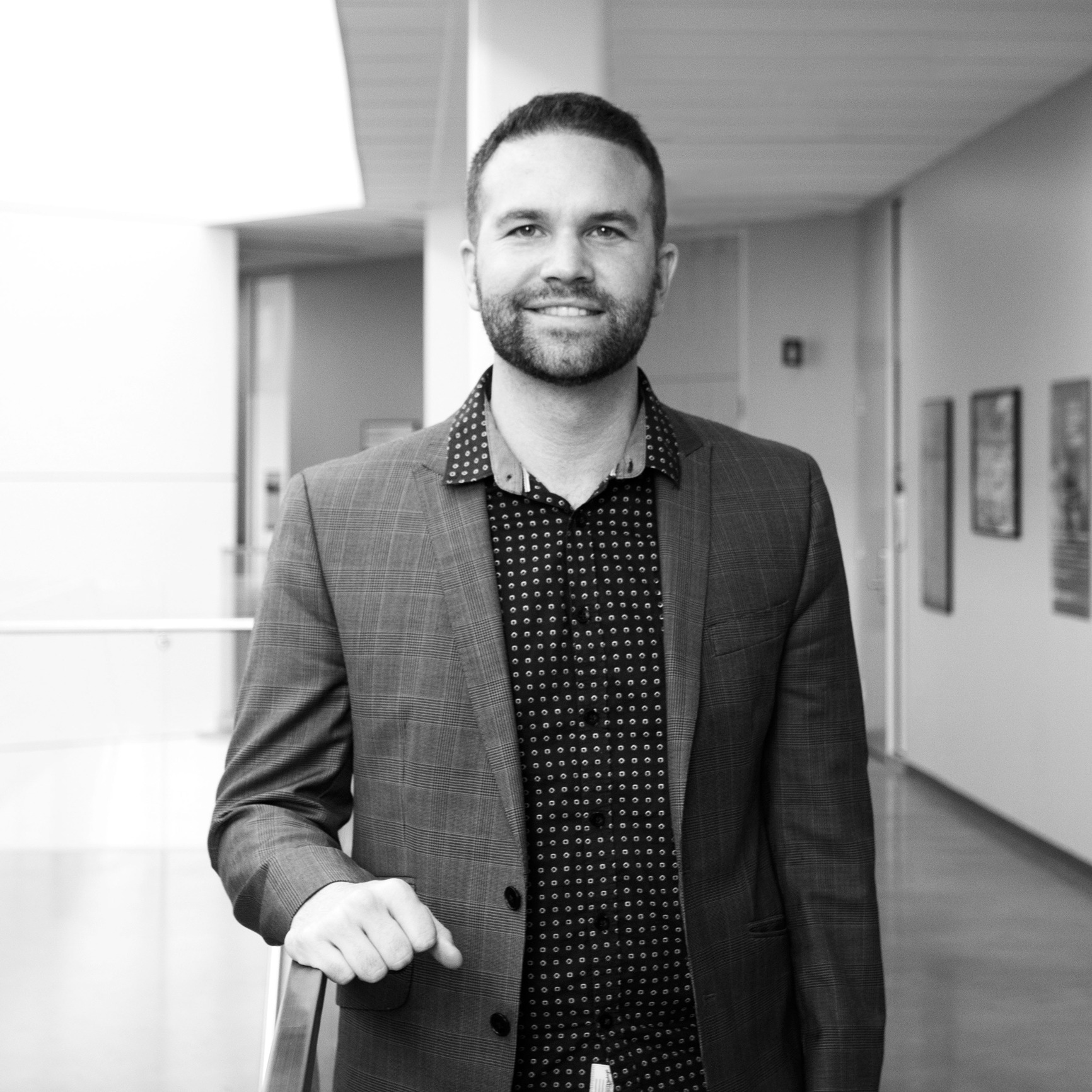
If you need to pay your way through school, start a business.
Mac Clemmens founded Digital Deployment, a web development company, “out of necessity”in the summer of 2004 between his junior and senior years at CSUMB. Revenue from the start-up covered the bills and made Clemmens realize that building websites was great business. His Capstone was building a website for the Otter Realm.
After CSUMB, Clemmens moved on to UC Davis to earn an MBA – with Digital Deployment covering most of the tuition. After his master’s degree, things got much easier, since he could focus on the company full time. The first year after grad school, Digital Deployment did approximately $200,000 in billed projects. Now it’s in the millions.
The company employs nearly 20 people with a client list that includes United Way, Stanford Youth Solutions and CalSTRS. Beautiful websites have been built for clients – and these sites can be easily modified and updated by a non-technical user. Digital Deployment uses a single model in web content management, which accelerates development because the software is standard. This approach differentiates the company from competitors –but it’s not the only one. The company culture is unique.
“It’s very satisfying to own your own business, hard, but satisfying,” Clemmens said. “At the end of the day, you can do things differently, especially with employees. We have unlimited vacation. We have a food program that provides healthy meals twice a week, along with veggie bags and smoothies. I work with great people and enjoy honoring the contributions of others.” The company has been named the#1 Best Place to Work by the Sacramento Business Journal.

Clemmens is involved in a variety of political and social causes. He works with the American Sustainable Business Council on issues that include reducing student debt by subsiding STEM majors, fair wage, clean water and electric/alternative energy.
Another issue is fair taxation on small businesses. Clemmens was recently singled out by Hillary Clinton in a speech after acknowledging Clemmens’ point that Apple pays an 8 percent effective tax rate, yet businesses like Digital Deployment pay a 24 percent effective tax rate. “Why should Digital Deployment, a small business, have to pay three times more tax on profit than Apple?” asked Clemmens. “Small businesses are such an important part of the American economy.”
Many critical skills for running a small business were acquired at CSUMB, according to Clemmens. He calls the TMAC (Telecommunications, Multimedia and Applied Computing) program “fantastic,” stating it was one of the only programs to combine design and technology. Bobbi Long and Barbara Sayad were tremendous influences. “I learned not only technology skills – but skills in dealing with and managing people,” Clemmens said.
Chelsea Bell (ISSM '07) - Stone Fox Swim

A love for the ocean and lush, tropical destinations is what inspires Chelsea Bell, the owner and chief designer of Stone Fox Swim. The company conceptualizes, manufactures and markets a custom swimsuit/active apparel line that features vibrant floral and tropical prints, perfect for those traveling to exotic locales and immersing themselves in beach culture.
A Pacifica native, Bell brought her passion for beach culture and the ocean to CSUMB. As a student, she was a member of the sailing team and taught surfing for the university during the summers. Her Capstone project was starting up a surfing shop/surfing school. Bell credits Professor Barbara Mossberg as a huge influence in shaping her career.
“If it wasn’t for Professor Mossberg and the Integrated Studies program, I may not have been put on the path to fulfill my passion, or had the tools to really thrive at it. I feel like her program was a ‘how to’ into being an entrepreneur,” Bell said.
“The basis of the major was being accountable to yourself and your goals. If you didn’t do the work, build the curriculum and hold yourself to it, who would? That’s the life of a business owner in a nutshell.”
Following her graduation from CSUMB, Bell founded Stone Fox Swim. One of the main inspirations for starting the company was a month long adventure in French Polynesia.

“I began to travel and explore more tropical places and that’s where my love for swimwear got taken to another level,” Bell said. “I thought to myself, why not make my own, exactly what I like and the way I like it? The rest is history.”
Bell focuses on the graphics and prints of each year’s swimsuit and active wear collections. Her creative process has become more streamlined over the years. It starts with concept drawings. Final patterns are then produced. Bell develops what she calls a “storyline” for each collection, which influences the color she chooses. Then photo shoots and finally, the selling season for each collection. This is repeated several times a year. Bell wouldn’t have it any other way.
“The best part of owning a business? One word: freedom,” said Bell. “My time at CSUMB played a major role in where I’m at today – great memories with amazing people.”
Vincent Suich (MIE '01) - The Sox Box

Never judge a person until you walk a mile in their shoes, as the saying goes. Many veterans are still fighting a war that many of us will never understand. They have set foot in horrific places, physically and mentally, to serve our country. Vincent and Athena Suich know this.
But almost anyone wearing shoes needs a pair of socks to cushion the impact – and those socks can make a statement as the mind and body are strengthened, and in many cases for veterans, are repaired. Some statements can be inspirational. Others are humorous. That is the philosophy behind The Sox Box.
Passionate about fitness, Athena noticed athletic socks being worn in the gyms and locker rooms they frequented. She saw the designs and thought it was a good idea to add color and eye-catching messages. The Sox Box was founded with seven different styles and messages. It now has over 100 designs of socks and over three dozen shirt designs.
Vincent embraced his wife’s initial idea and took it a step further – their business would donate 20 percent of all profits to help veterans and designated social causes.
“Training with U.S. Air Force Pararescue changed my perspective on life and service before self. It’s a brotherhood,” Suich said. “What makes the business personal for me is that I can give back to my guys. After 13 years in the military, I wanted them to know they weren’t forgotten or pushed under the rug. Many come back and have serious mental and physical issues that require attention.
“This model of giving back to veterans is important to me – and what sets our business apart. I hope that model catches on with other businesses. We are saving a lot more soldiers with combat injuries and that is good….but these people are afflicted for the rest of their lives. There are not enough resources to handle them. The burden is on the civilian sector, we need to pull our veterans back in and help them heal.”

Social media is a primary way The Sox Box connects with its customers. The company’s Facebook account has over 220,000 likes and counting. The Instagram account has more than 34,000 followers. It’s an excellent source of future messages for their socks, with customers regularly submitting their own ideas. All of the socks are made in the U.S. and distributed through a warehouse facility in Colorado. As a company committed to doing good for society, The Sox Box is also distinguished as the only certified B Corporation in Monterey County.
Suich served in the reserves while attending CSUMB. Athena attended Monterey Peninsula College and went to the Fire Academy. Both have put their hearts into the business. Suich credits John Kim, CSUMB professor of international business, as a very strong influence.
“It can be tough but personally, it’s touching how our ideas can be put into a product and it affects somebody’s life,” he said. “We enjoy having an idea and running with it.”
Rafael Zamora (MIE '96) - Totali Action Sports
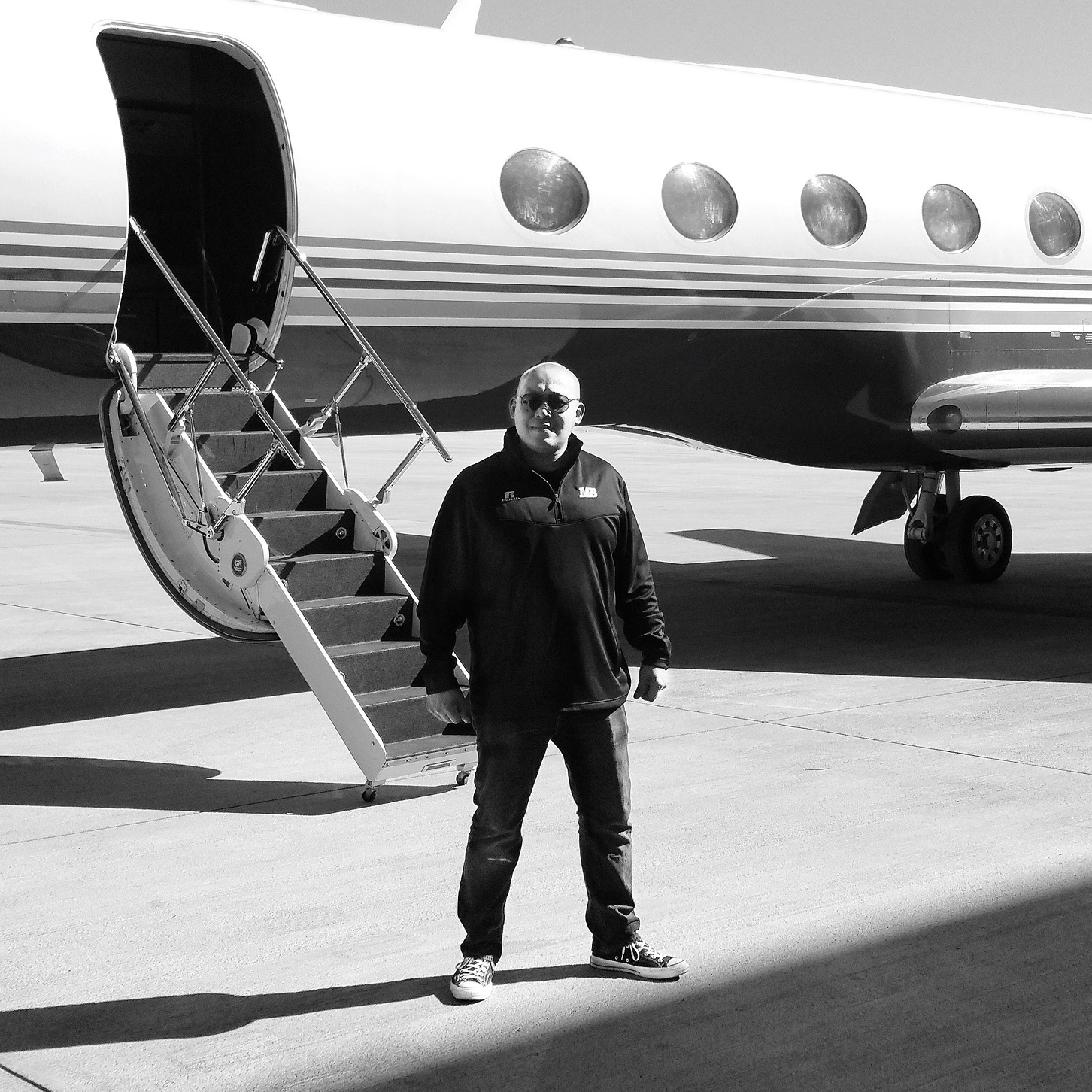
Hurtling down a mountain road on a customized skateboard, navigating turns with the scenery rushing by, doesn’t sound like an ideal afternoon to most people. To Rafael Zamora, it’s heaven.
An extreme sports enthusiast, Zamora envisioned Totali Action Sports as a CSUMB student, when he was scuba diving in the mornings before heading to class. The expanse of surrounding Fort Ord sparked his curiosity with what Zamora calls “transportation mobility with efficiency.” He was introduced to the concepts of ecology, sustainability and commerce. It went from there.
“At that time, it never dawned on me how such foreign topics that I once thought were anecdotal, would become the foundations of my business,” he said.
One flagship product that supports these principles is the TSB-Freedom Electric V1.5, a battery-powered electric “platform” that can reach speeds of 30 mph. Resembling a large skateboard, the Freedom Electric is controlled by a wireless hand-held device that allows the rider to accelerate, stop and enable a cruise control. The battery pack has an 18-mile range. According to the company, on average the Freedom Electric uses 22 times less energy for every mile compared to a gasoline-powered car. It reduces the carbon footprint significantly, especially for short distances.
Other products are in development that also will allow innovative and personal modes of transportation. The company’s apparel line has gotten increasingly popular with its customers, another aspect that differentiates Totali from competitors.

“Our target demographic are college-educated, working professionals who maintain an active lifestyle, but who no longer align themselves with the skateboard/surfboard and T-shirt brands,” Zamora said. “We cater to a mature buying audience that can make their own purchase decisions. Not the pre-teen, teen and early 20s market.”
Zamora loves owning a business in the action sports industry. One of the best things about it is the creative aspect, and working with a staff that compliments and challenges, according to Zamora. Another highlight is the like-minded entrepreneurs that he has met along the way. It’s a community.
That’s not the only community he feels a part of. “Out of my time at CSUMB, the strongest influence on me were the friendships I made there,” Zamora said. “Those friendships are stronger today. We have kept in touch through the years and have grown up together. It’s an alumni family now, with friends thousands of miles away.”
Love at First Sting
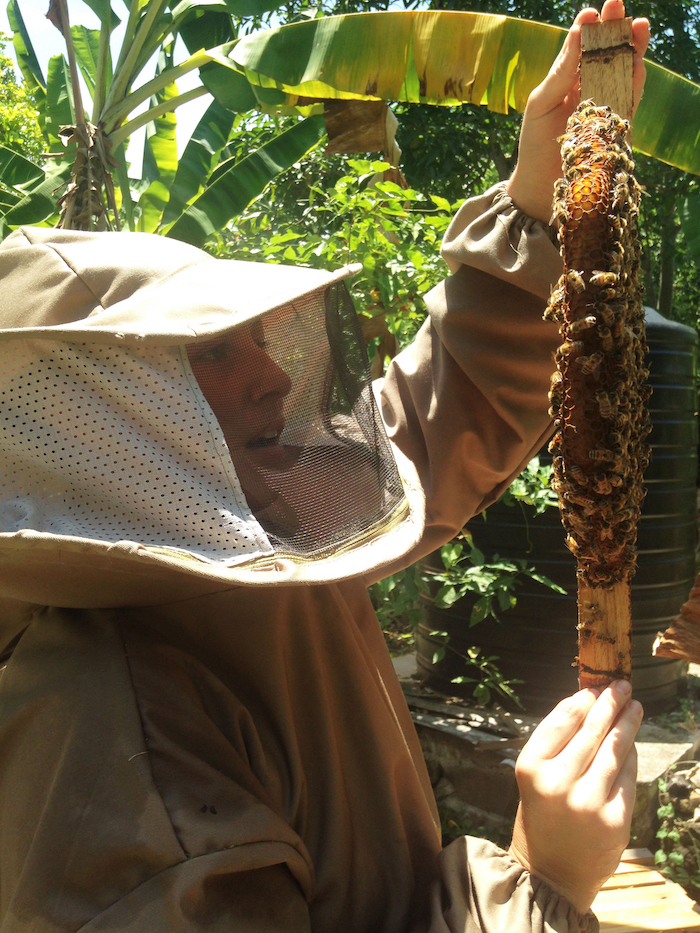
Rebecca Ortega was a little scared of bees when she set off for a summer internship in Jamaica, where she wound up caring for 100 beehives. The environmental studies major from Placerville wanted to see firsthand what life on a small self-supporting farm was like. “It was outside my comfort zone, but I knew bees were having problems and I wanted to learn about it,” she said.
Mysterious phenomena
As pollinators, bees play an important role in agriculture and natural ecosystems. However, both native and honey bee populations have been declining in recent years due to pesticide use, habitat loss, parasites such as the invasive varroa mite, and Colony Collapse Disorder, a mysterious phenomena in which the majority of worker bees disappear from the hive, abandoning the queen.
Ortega spent six weeks at Yerba Buena Farm in St. Mary, Jamaica. She lived on site with Agape and Kwao Adams and their six sons, and helped tend their hives, orchards, gardens and livestock. The Adams use a style of beehive called “top-bar” which minimizes the beekeeper’s disruption of the hive. This technique means the bees are easier to work with and less likely to sting.
“After six weeks and checking on 100 hives I was only stung four times, and two of those were definitely my fault. It had taken a week to get my first sting, and it truly wasn’t as bad as I was expecting,” she said.
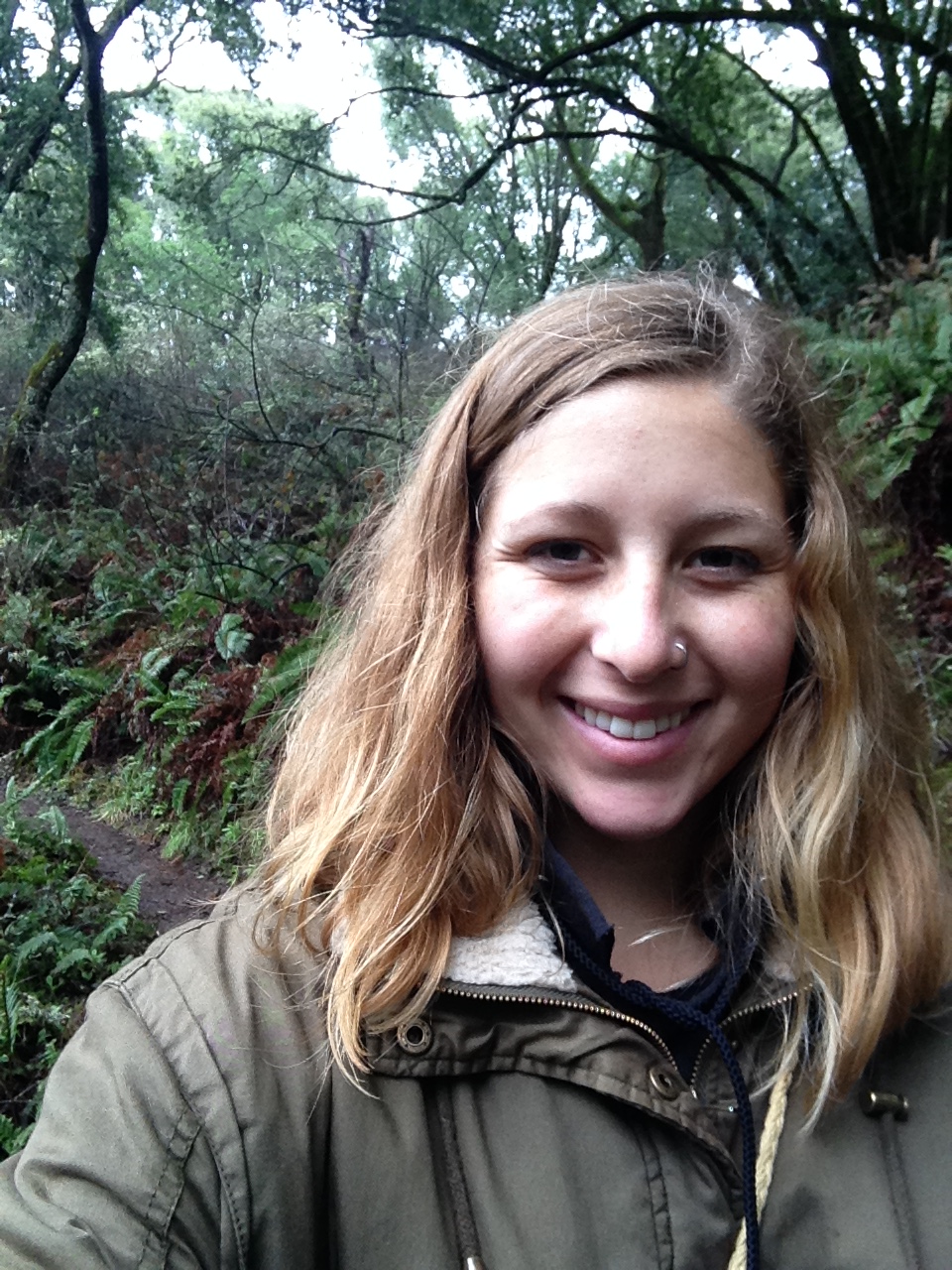
While she and the bees got along fine, 10 days into the experience she slipped on a mango, fell and broke her leg. But even that didn’t stop her from checking hives, harvesting honey, helping to assemble and paint new hives, and developing a passion for beekeeping that she brought back to the United States.
She now hopes to establish a hive at CSUMB so that she can spread her love of bees and beekeeping to her fellow students – and anyone else on campus who might want to learn.
Her proposal gained support from the CSUMB garden and sustainability clubs, as well as the Campus Sustainability Committee. The proposed hive also got the blessing from the Watershed Institute, which will host it in a 15’x15’ fenced parcel near the CSUMB garden club’s plot.
The Monterey Bay Aquarium agreed to donate one of its hives in exchange for a percentage of honey the hive produces to be used in the Aquarium’s cafe. Charles Wesley, the general manager for campus dining, is also interested in using the honey for campus food services.
Campus beekeeping
Eventually, Ortega envisions the campus having several hives that can generate income from honey, and perhaps other products such as cosmetics or candles made from beeswax. Several business students have expressed interest in this aspect of campus beekeeping.
Ortega plans to have the hive in place before the end of the semester, and will tend it over the summer and through next fall, when she’s slated to graduate. She hopes other students will get involved and learn how to care for the bees in the meantime.
“My major is all about working with people to solve environmental problems,” Ortega said. Establishing the hive at CSUMB is one way to get people engaged with protecting bees and understanding their role in the environment. “Anyone who wants to see the hive and learn about beekeeping should contact me,” she says. “Wannabees” can get in touch by emailing rortega@csumb.edu.
A Different Path
By Liz MacDonald
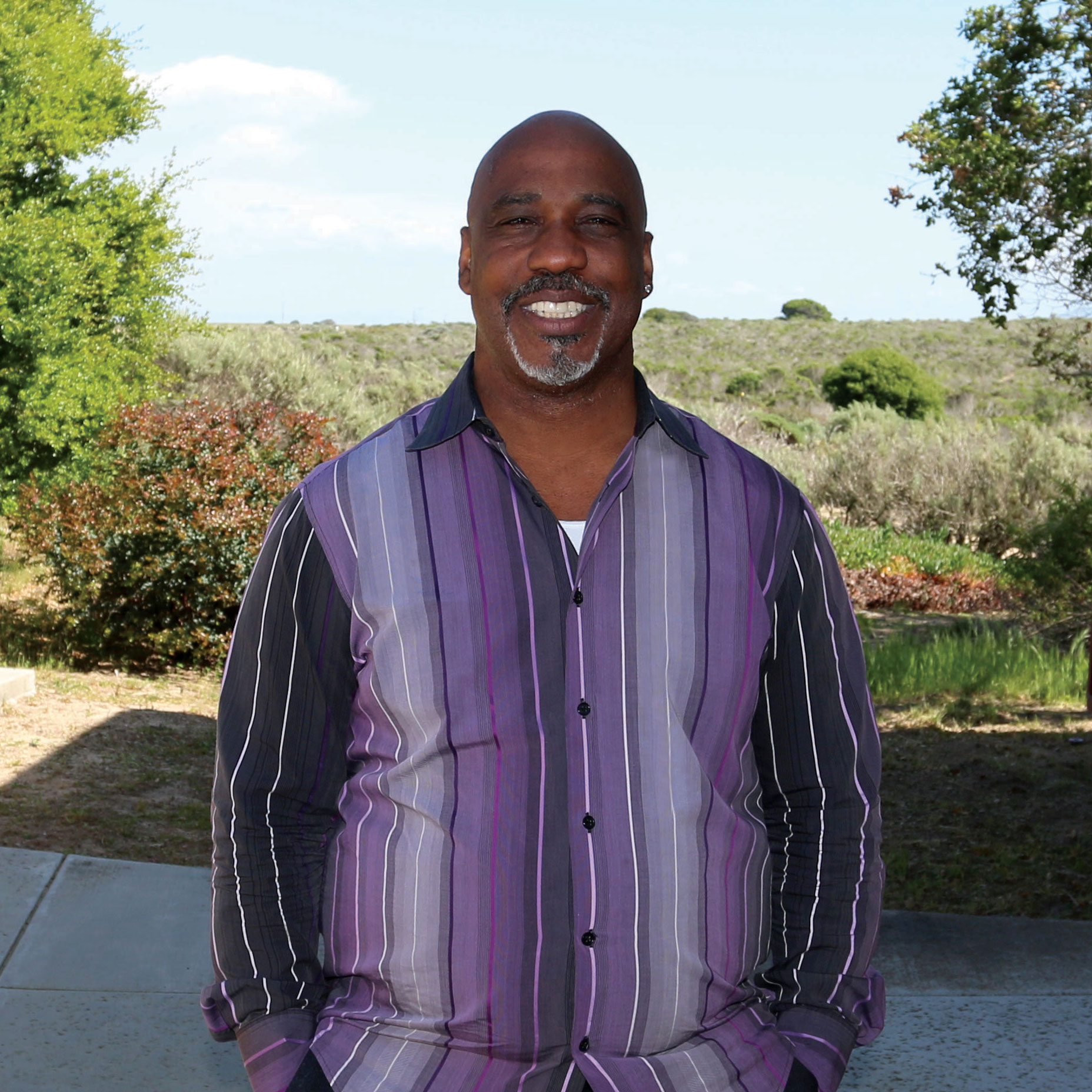
Lamar Green found the inspiration to return to school at age 50 after his 18-year-old son, Zachary, passed away from a drug overdose. His son had just graduated from high school, and for Lamar, going to college became a way to honor his son’s memory and create something positive.
“I want to help other young men not take that path, so other families don’t have to go through what ours went through,” Green said.
The longtime Seaside resident started by taking classes at MPC, and then transferred to CSUMB where he majored in Collaborative Health and Human Services.
“I was scared at first. I felt like I was too far beyond college,” he said. “I saw that you had to maintain a 2.0 GPA and I thought, how am I going to do that?”
With the support of his family (four other children and six grandchildren), he made the commitment, buckled down and developed the study habits that would get him through. When he completed his coursework in December 2015, his cumulative GPA was 3.46. He’ll walk in the commencement ceremony this May.
“CSUMB is a wonderful campus and great resource for the people of this area,” he said. “Had it not been for CSUMB being local, I would not have had the opportunity to get a university education.”
As a military veteran, he was entitled to benefits that helped him earn his degree. Giving back to other vets has been an important part of his educational experience.
Resources for veterans
For his Capstone, Green worked as an intern at the Monterey County Military and Veterans Affairs Office. During the internship he organized a veterans’ resource fair to connect homeless veterans in the area to services and resources that could support them.
Fourteen local organizations participated and about 40 homeless veterans attended. Many of the participating organizations gave positive feedback, stating the fair provided them an opportunity to network with other veteran-serving organizations in the area. “They were able to better understand what each other does and learn how to make referrals,” said Green. “It really opened up the chain of resources.”
The Monterey County VA plans to organize resource fairs on a quarterly basis following the model Green developed.
Now Green works as a case manager with Vocational Rehabilitation Specialists, Inc., providing veterans with vocational counseling and employment services. During his first month on the job, he’s worked with 10 veterans, three of whom have already found employment.
In the future, he is considering returning to school again, this time for a master’s degree.
Don't Let a Classroom Get in the Way of Your Education
Hundreds of students have discovered this through the Outdoor Recreation program at Cal State Monterey Bay. From hiking the forests of Big Sur, climbing up sheer rock for hundreds of feet at the Pinnacles, flying down a trail on a mountain bike at Fort Ord, or sleeping under a majestic canopy of stars in the Sierra Nevada, students have experiences often described as life-changing. Friendships forged during these adventures can last a lifetime.
None of this is surprising to Rick Dawson, associate director of Leadership Development & Student Recreation. It’s more than being a “week-end warrior” or getting exercise and sun. “Students gain invaluable skills they will use beyond college, including time management, developing relationships and relieving stress in healthy ways,” he said.
The Outdoor Recreation Program served 800 to 1,000 students last year and employs nearly 35 volunteers and staff. It operates under the broad umbrella of Student Recreation, which includes intramural sports and the sports clubs. It was founded in 2011 under Dawson’s leadership.
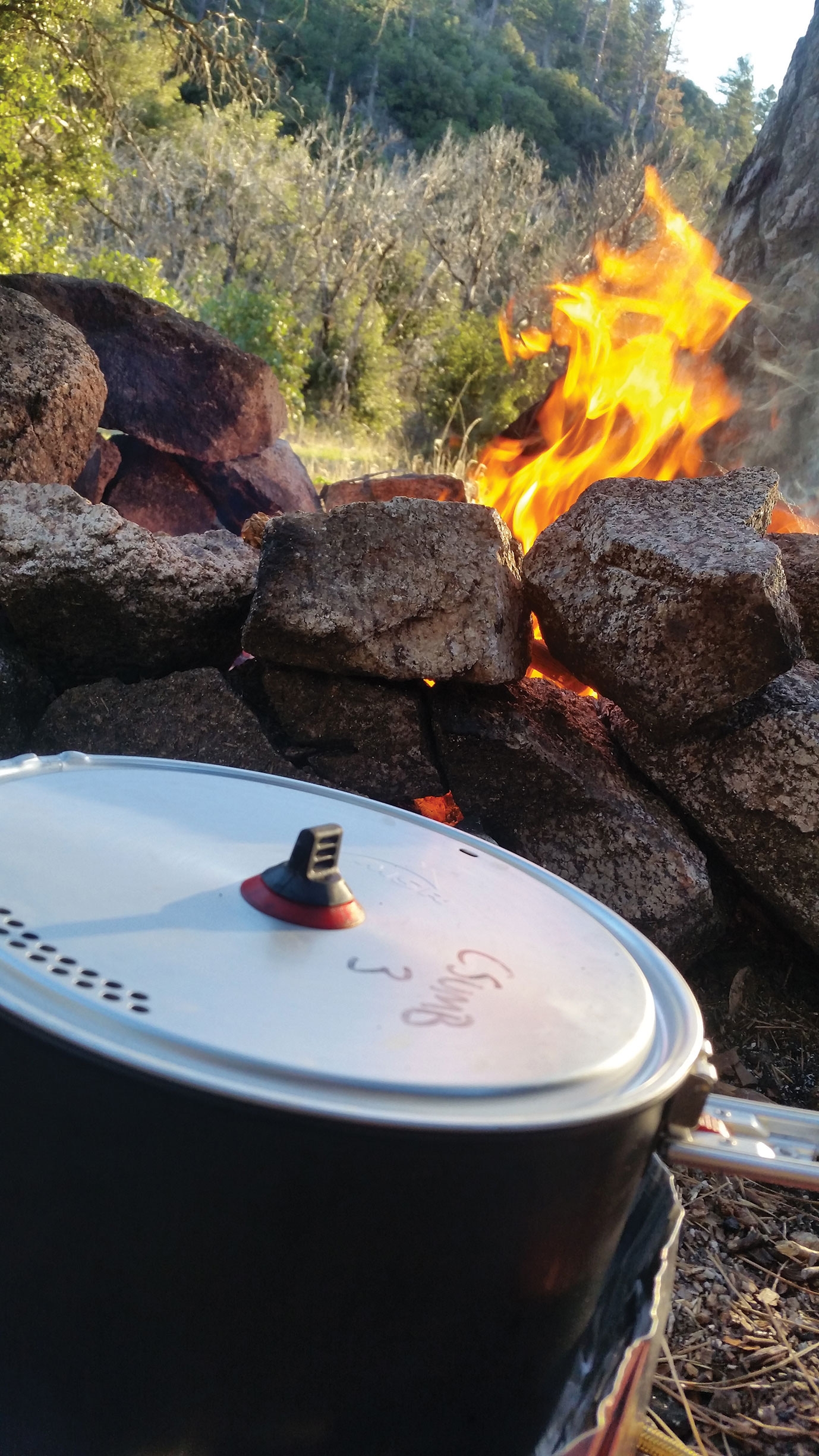
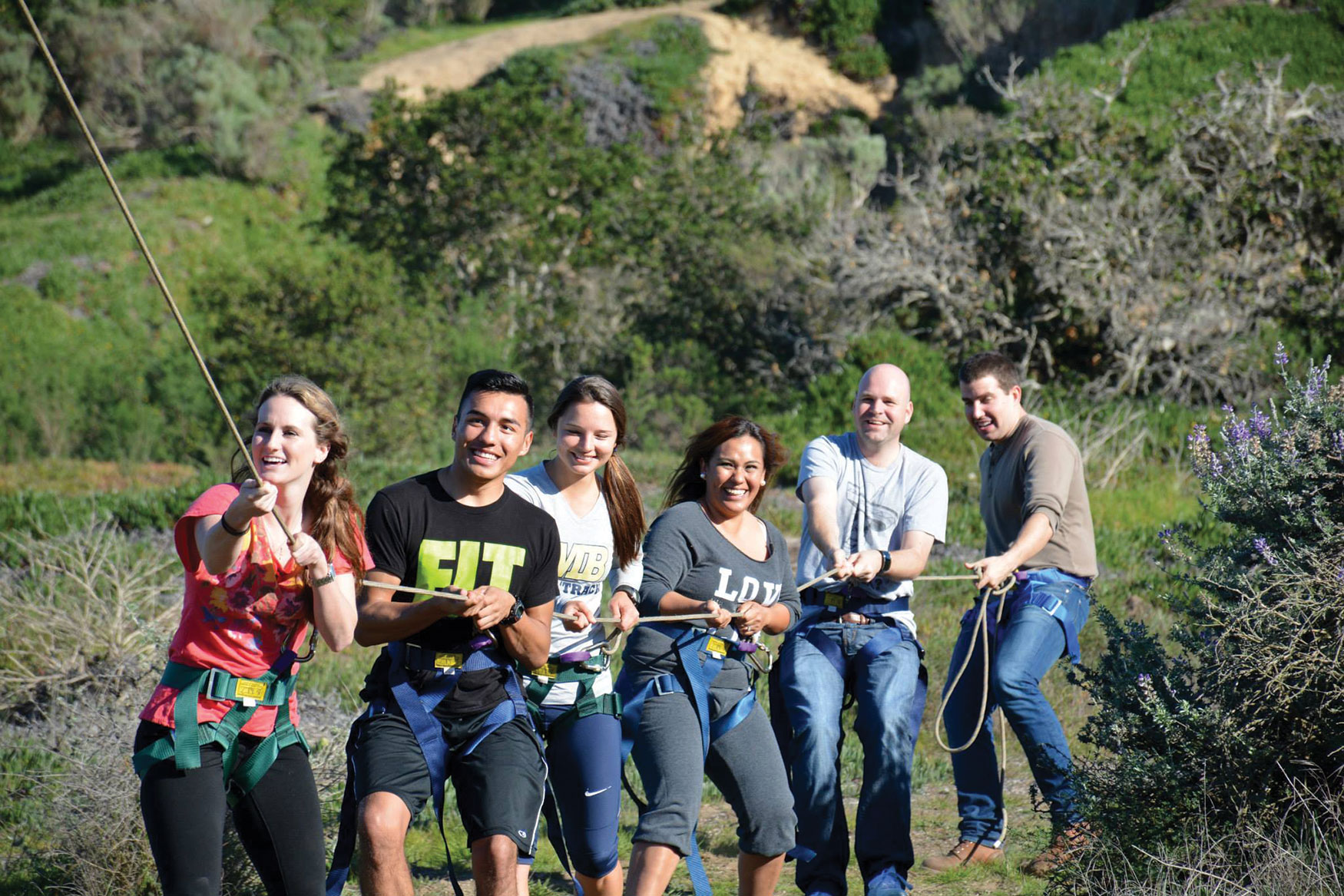
Since then, the Outdoor Recreation Program has grown rapidly and exploded in popularity. Camping trips to Yosemite, Malibu and the Pinnacles are scheduled each semester. Trips that feature day hikes, rock climbing, kayaking and stand-up paddle boarding are local and affordable, ranging from $20 to $30 per outing. Skiing and snowboarding in the Sierra Nevada are also offered. Costs typically include transportation, food and gear. First-time participation is strongly encouraged.
Freshmen are particularly encouraged to participate, since the program strongly focuses on multicultural awareness and leadership skills. Matt Salyer (GS ’14) discovered the program as a student and after graduation became a full-time staff member. One key component, Salyer said, is the Outdoor Leadership Program (OLP) which combines leadership development, outdoor skills training and mentoring.
“Students in the OLP come from different backgrounds and all walks of life. Some grew up in the city and never pitched a tent. Others grew up camping,” Salyer said. “Regardless, it’s amazing how everyone comes together on a trip.”
Personal development can happen in the woods, miles from civilization, with the rain coming down hard as you set up tents for the first time with fellow students. The hike was amazing and lasted for miles. But now it’s over. You’re all exhausted. You’re all hungry. The mud clings to boots and knees as everyone takes turns kneeling and pounding stakes in the ground, securing each tent. Poles are assembled quickly in the downpour. Everyone at last finds shelter. That’s the kind of teamwork which breaks down social barriers, Salyer said. Bringing that together is a critical learning experience for participants in the program.
The OLP also focuses on environmental stewardship. One popular trip, which is free to students, is the Ventana Wilderness Project. OLP participants spend the day doing trail restoration in Big Sur.
It is a transformative experience for many students who are first-generation or come from major metropolitan areas, said Carlos Espinoza (CSIT ’15). “They can be all over the place, personally, academically, and then become grounded in many ways,” Espinoza said. “We’ve had students thank us with tears in their eyes after sitting by the first campfire they built themselves, or sleeping in the wilderness for the first time. Many feel vested in the program and it gives them a ‘home’ during their college years. It did for me.”
Espinoza, like Salyer, discovered the program as a student and is now on staff. Along with the trips, Salyer coordinates the Challenge Course on campus. Espinoza coordinates the Otter Cycle Center in the CSUMB Student Center. Both are integral parts of the Outdoor Recreation Program.
According to Salyer, teamwork activities learned on the trips and the Challenge Course can complement each other. The course itself consists of ropes, planks and rock climbing equipment, elevated by large wooden poles, resembling telephone poles, secured firmly into the ground. Participants, overcoming natural fears and using teammates as spotters, traverse lines over large swaths of empty space with the ground nearly 100 feet below at the highest points.
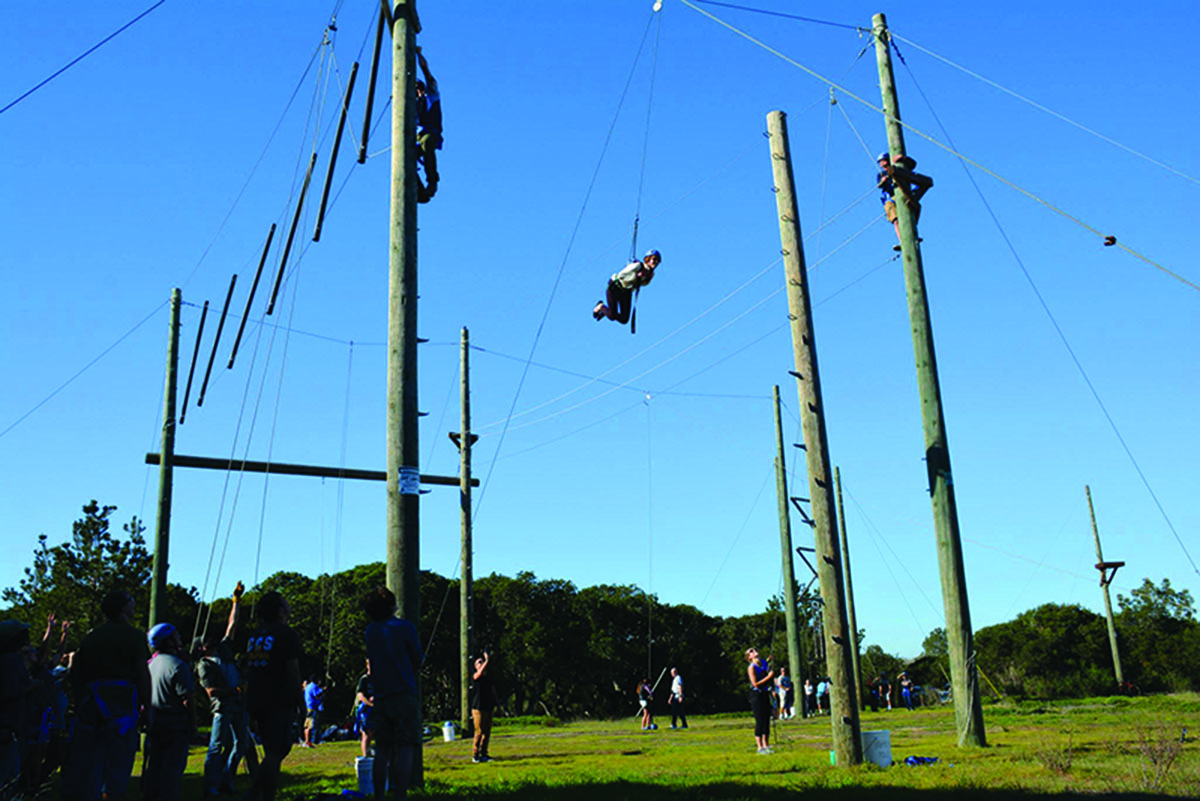
Think of walking on a rope between the tops of two seven-story buildings. You are secured by a safety line. However, the psychological impact of having ground that far below, with nothing but a rope to stand on, can be intense. You slowly make progress at the encouragement and guidance of teammates. Group cooperation tends to improve very quickly, Salyer said. Individuals learn to expand their comfort zones.
Of course, other participants may want to keep things a little more down-to-earth. The Challenge Course allows participants to start activities three feet off the ground. Higher elevations can be achieved in time. Other activities on the Challenge Course cater to individual experiences.
If two wheels on solid ground are more appealing, the Otter Cycle Center is conveniently located in the Student Center. The center is a complete bicycle repair and rental shop. A student can rent a bike for $10 a day, with rentals also available by the weekend, week, month or semester.
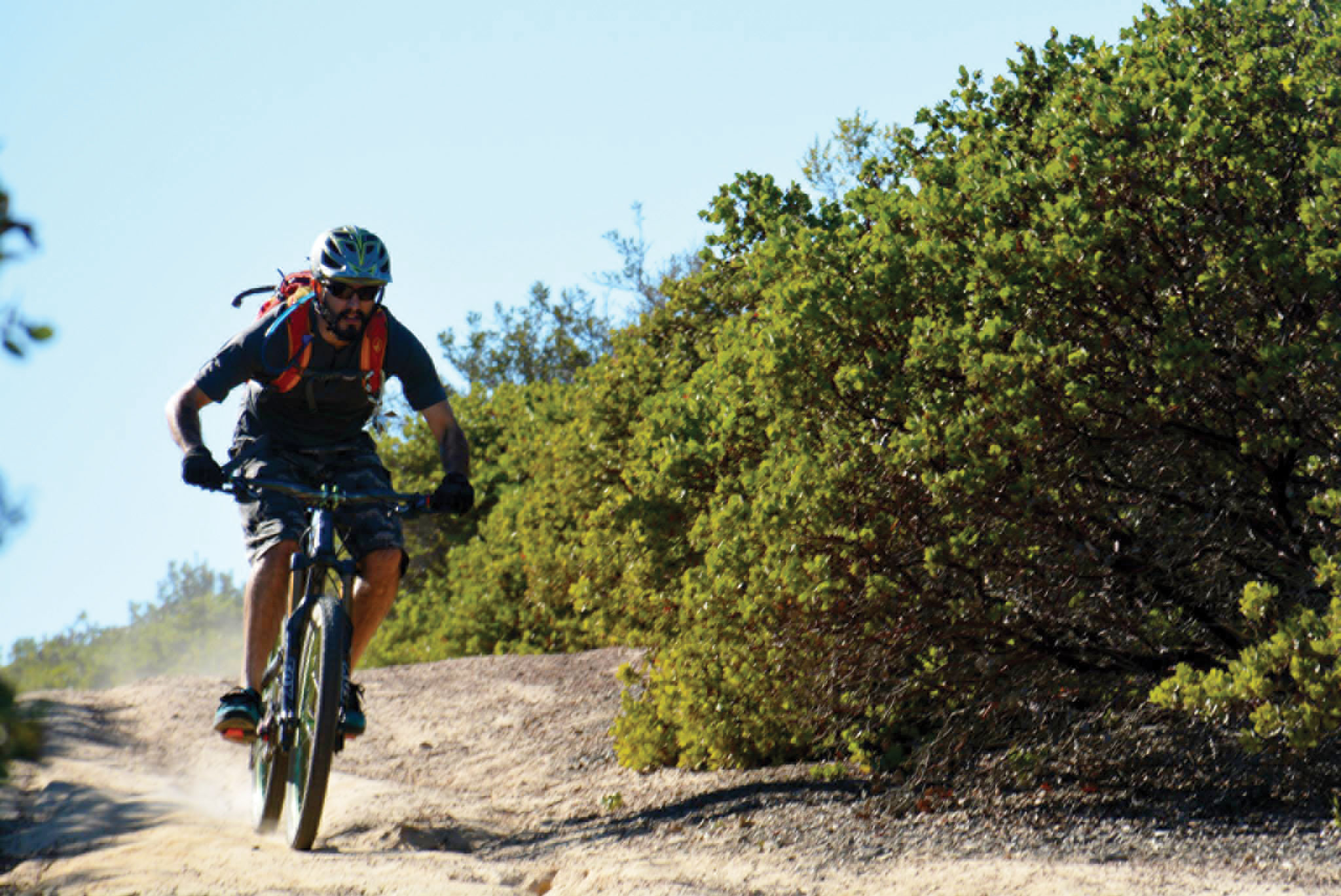
On Fridays, students can take a free mountain bike tour through the Fort Ord National Monument, adjacent to campus. Espinoza often leads these trips, which can go for miles on trails of open space. More advanced rides through difficult terrain are scheduled once a month. Students who bring a GoPro camera get some great YouTube videos.
All of the Outdoor Recreation Program activities – the trips to the wilderness, the Outdoor Leadership Program, the Challenge Course and the Otter Cycle Center – are critical to the core mission of CSUMB Student Recreation.
“We are committed to enriching the lives of the CSUMB community through multicultural awareness, physical fitness and cultivating a sense of belonging,” Dawson said. Future plans for the program include the development of international trips, a boating center and academic units for OLP students.
John Muir said, “The mountains are calling and I must go.” Thousands of CSUMB students have heard a call and will continue to do so. The Outdoor Recreation Program will be a gateway for years to come.
Teach Now
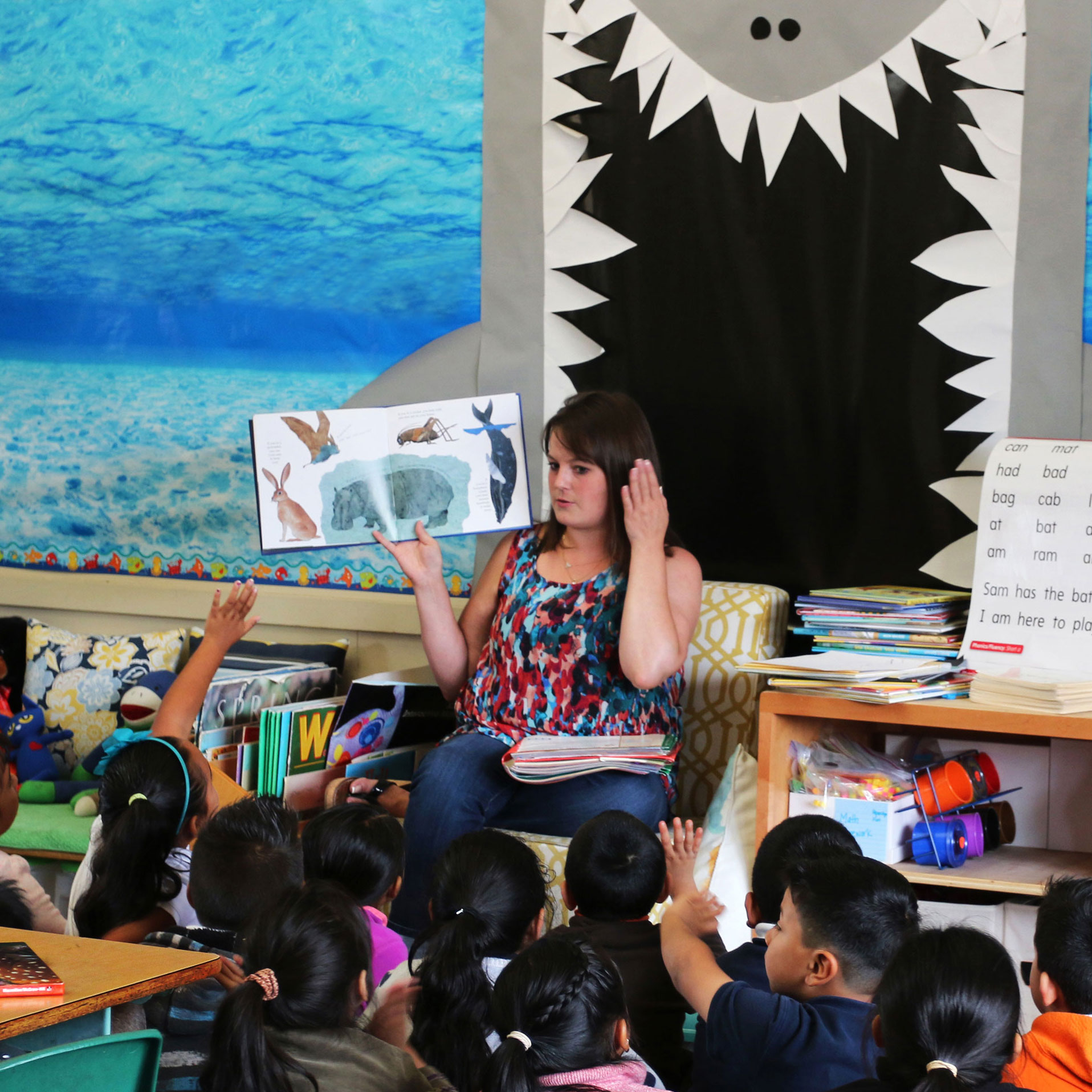
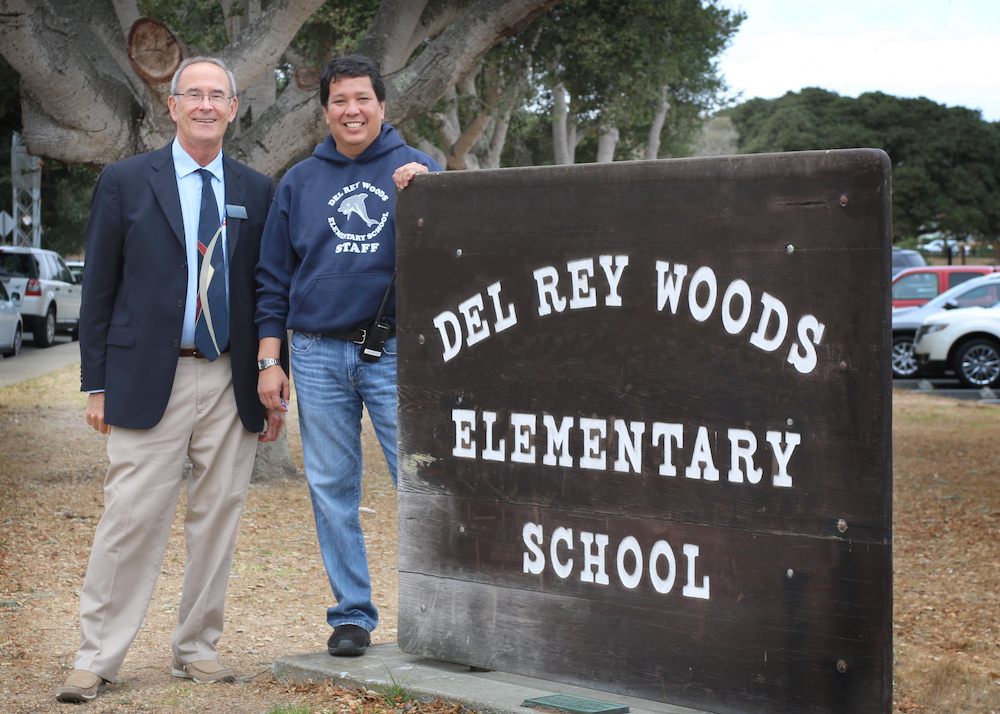
First-grade teacher Theresa Ferrante had worked with plenty of student teachers from several colleges during her long career at Del Rey Woods Elementary School in Seaside. But eventually she decided to step away from the program.
“Then Marilyn Whitcomb (CSUMB teacher education instructor) approached me and said ‘Don’t you want to have a student teacher? It is different now.’ And I got back involved in it, and it has been great,” Ferrante said.
The difference is that Cal State Monterey Bay’s teacher preparation program now uses a co-teaching model, in which teaching candidates work with the professional teachers from before the first day of class.
CSUMB College of Education Dean Jose Luis Alvarado said, “One of the things that makes CSUMB unique is that we have a commitment from our district partners to allow our students to begin their activities at the beginning of the school year at the same time as their teachers. Most of the CSU campuses don’t do that.”
Active teaching
“We get our teacher candidates ready to teach children from the first day in the classroom forward,” said Mark O’Shea, professor of teacher education. “There is no back-seat observation, no extended period of passive presence in the classroom. They are actively teaching the children.”
That includes working with the teacher on setting up the classroom and planning the class, all the way through awarding the final grades.
The traditional model cast the teacher candidate more in the role of teacher’s aide, observing the classroom, working up to a period of solo teaching and then moving on.
Dr. O’Shea said CSUMB adopted the co-teaching model early, after sending personnel to San Diego to be trained on the new method.
“This is a much nicer blend, I think,” Ferrante said. “They (the student teachers) are here from the start of the year and they see the kids every day, or at least most days. It is nicer for the kids, it is nicer for the classroom teacher, because we have two adults providing the one-on-one that some students need.”
Dr. O’Shea said there is evidence that classrooms with co-teachers are seeing better standardized test scores.
“We are working on a model where we are adding value in the classroom, not asking the teacher to make a sacrifice to work with a student teacher— Mark O’Shea
Del Rey Woods Elementary was one of the first adopters of the new student teaching model. The principal is Rey Reyes.
“I wrote my dissertation on professional development in the schools, so it has always been an interest of mine. To help develop this and see the results has been really amazing,” said Reyes, now in his sixth year as principal.
Student teachers seeking an elementary credential spend two semesters at the school – one at a K-2 level classroom, the other at grade 3-5.
“We have been very fortunate. I work very closely with Diane Brandell (CSUMB teacher placement coordinator). She must give us the cream of the crop because the student teachers who come here have been really amazing,” Reyes said.
One of those CSUMB student teachers was Elyse Etcheverry.
Amazing experience
“I had a great experience here. I started in fourth grade, then I went to second grade with Theresa (Ferrante), who was amazing,” Etcheverry said.
Principal Reyes encouraged her to wait and see if a full-time job opened at Del Rey Woods.
“Five days before school started, he called me in and asked me if I wanted a job and I said, ‘yes please.’ So here I am,” said Etcheverry, who now teaches first grade and is in her third year of working full-time at the school.
Another of the benefits of the program for Del Rey Woods is that school personnel get a chance to see student teachers in action, and decide which ones would be the best fit for any openings. Five graduates of the CSUMB credential program now teach at Del Rey Woods.
“You can see really quickly, who has the gift to work with your age group. Within a week, you can see this person is meant for the little kids, and this person will stick with it,” Ferrante said.
And the student teachers aren’t just learning the basics.
“I always tell the student teachers, ‘You have an opportunity right now, if you want to try something new, do it in this class,’ ” Ferrante said. “ ‘There are two of us in this room. If you get hired, it is likely you will be the only teacher in that room, so here is an opportunity’.”
Teacher shortage
The need to educate excellent teaching candidates and to keep them in the classroom has never been more critical, as California and the nation as a whole face a severe teaching shortage.
Dr. O’Shea said the Great Recession forced a number of school districts to lay off teachers and raise class sizes. Reacting to that news, fewer and fewer students went into teacher education programs. Meanwhile, some older teachers stayed on the job and waited for their retirement accounts to recover.
Now the economy is bouncing back. More teachers are retiring. Districts are cutting class sizes. That adds up to a rising demand for teachers at a time when fewer students are pursuing those careers.
The Center for the Future of Teaching and Learning estimates that California will need an additional 100,000 teachers over the next decade.
“I really began to notice it during the 2013-14 academic year,” Dr. O’Shea said. “I visited teacher recruitment fairs. A lot of people were seeking teachers and people were not coming to their tables.
“It (the shortage) has moved from conventional areas such as math and science, into other areas. A typical area that has had a surplus was social studies. However, for the past couple of years we have had no trouble getting jobs for all of our social studies teachers.”
In response to the teaching shortage, the California Legislature is considering a number of bills, including one that would fund co-teaching programs like CSUMB’s in low-income schools.
Support
Another aspect of the problem, Dr. O’Shea said, is that half of new teachers nationwide leave the classroom within five years. A benefit of the co-teaching model, especially for new teachers who get jobs in the same districts where they were student teachers, is that they have a built-in support system to help them succeed.
“Starting a new job, you have to get to know the school atmosphere, get to know the teachers, get to know the kids. If they get hired in the same place, the stress level is on the academic part of it, not all the other issues,” Ferrante said.
Etcheverry said her former supervising teachers are “genuinely friends, as well as a wealth of knowledge for me to use.”
This semester, Ferrante’s student teacher from CSUMB is Haley Kostas. Kostas said she talks with friends who are in student teacher programs at other colleges who don’t have the chance for such extensive classroom experience.
“I would have not felt confident after just one semester (of student teaching). I think I really needed this extra time. I think it makes better teachers and it takes away some of the struggles of the first year. I am sure they still will be there, but I am not as nervous about it as I would have been,” Kostas said.
For the record, Ferrante said Kostas should have no problem finding a job.
Jose Luis Alvarado
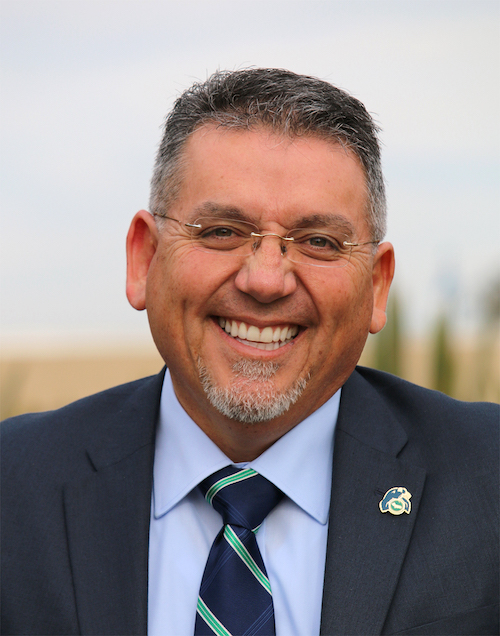
“It has been a sprint from Day One. And it is not letting up.”
That’s how Jose Luis Alvarado describes his nearly two-year tenure as dean of one of Cal State Monterey Bay’s newest colleges – the College of Education. And as talks about his goals for the college, you can see what he means.
“We are dedicated to developing professionals who can go out in the communities and say, ‘The status quo is no longer appropriate. The kind of results we have had in the schools is no longer acceptable.’ We want to be change agents, to bring about success for every student in every school,” Dr. Alvarado said.
Alvarado came to CSUMB after working for 15 years as a faculty member and administrator at San Diego State, rising to the rank of associate dean of the College of Education.
“I really identified with the vision and mission of this university,” Alvarado said.
“My life pretty much resembled the lives of the students who grew up in the Salinas Valley. My parents worked in the fields, and I became a CSU grad, so that was in perfect alignment. And, of course, the excitement of coming in and building a new college, understanding that the education programs have a long tradition of excellence here,” he said.
Alvarado was born in Mexico and moved with his family to California’s Central Valley when he was 10. He didn’t speak English, and ran into plenty of doubts that he would ever earn a college degree.
He went on to receive bachelor’s and master’s degrees in special education from San Diego State and his Ph.D. from the University of Virginia.
While building on the already established teacher credential program, Alvarado has sought to broaden the college’s focus. The college has introduced a major in human development and family studies, to address needs at both ends of the age spectrum, from preschool to gerontology.
In the planning stages are programs to educate school psychologists, to provide training in educational leadership for school administrators, to educate school counselors, and also to move into post-secondary education fields, including academic affairs and academic administration.
The long-term goal, Dr. Alvarado said, is to address the full range of educational needs that exist in this area.“What we have accomplished so far would have taken a typical college five or six years,” he said. “We have accomplished it in a year and a half. So we are on a fast trajectory. Absolutely.”
Going to the Dentist Doesn’t Have to Bite
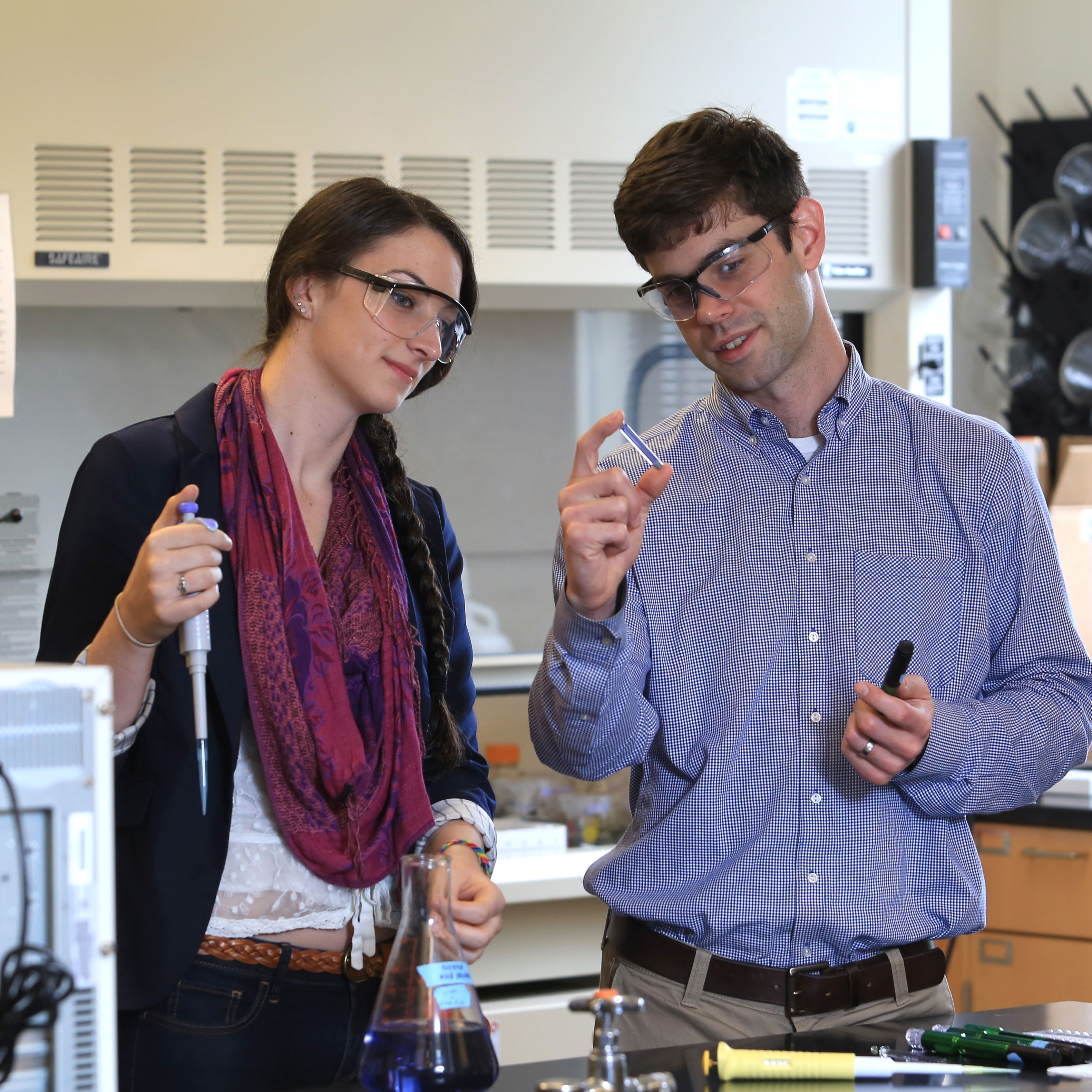
Remember the last time you went to the dentist?
You probably sat there, staring up at a white light while the dentist prepared to inject you with an anesthetic. Small talk was made as the shot was given. Then you waited.
Soft rock or Top 40 most likely played overhead as you lay there, waiting for the numbness to take hold. An assistant checked on you periodically. Finally, you were ready for the procedure. You crossed your fingers that the anesthetic had completely kicked in, especially before the drilling started.
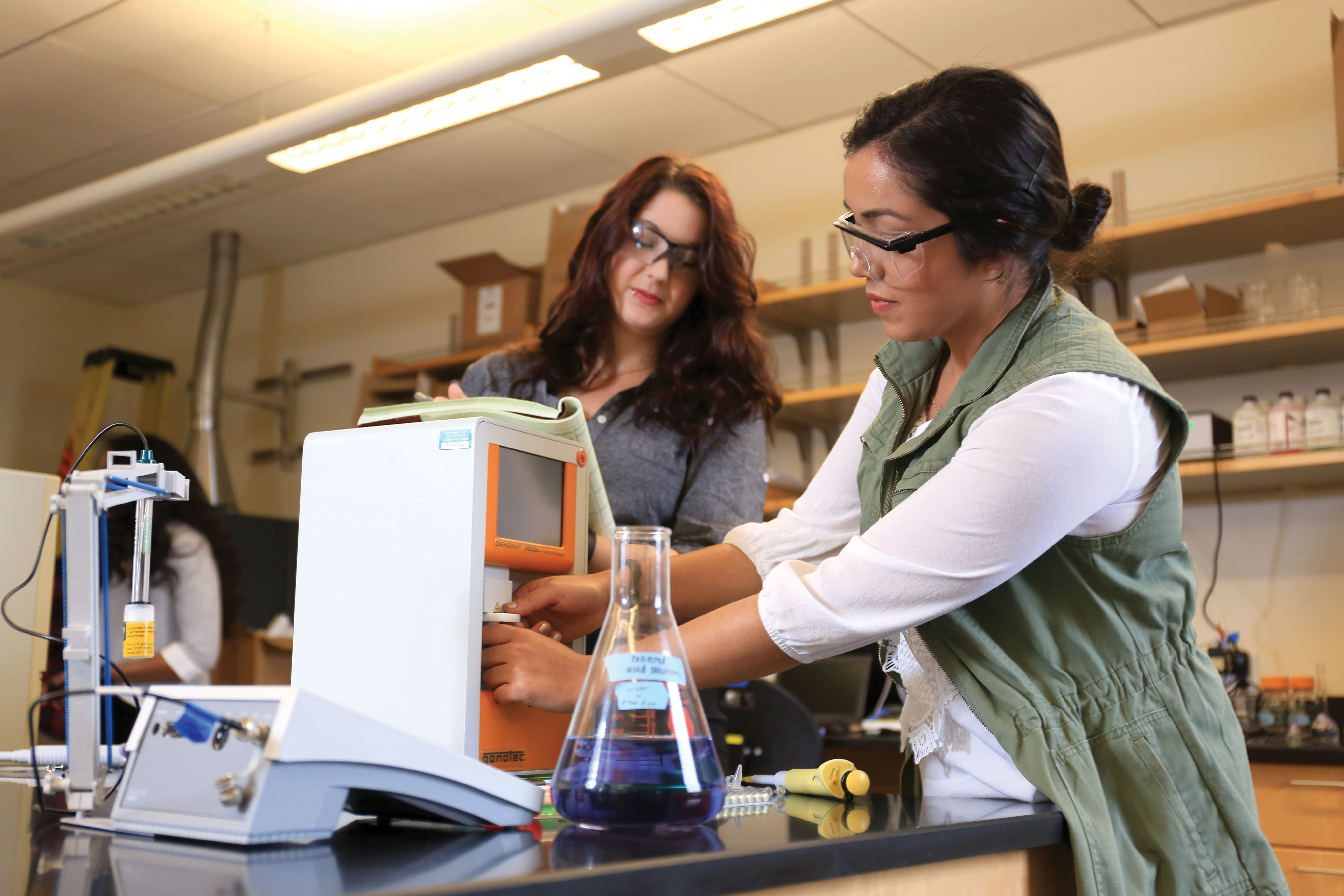
Sound familiar? This scenario could be much less common thanks to chemistry professor Dr. John Goeltz, statistics lecturer Jon Detka and College of Science students at CSUMB. Along with Monterey dentist Dr. Mic Falkel, the group performed extensive research that validated the use of three additional dental anesthetics – articaine, mepivicaine and prilocaine – with a process called an Onset Buffering System, which Dr. Falkel developed. Previously, only one dental anesthetic, lidocaine, was approved to work with the buffering system.
The Onset Buffering System, used by dentists since 2011, “buffers” the anesthetic before injection by raising its pH level, which is a measure of acid-base properties in a solution. The off-the-shelf anesthetic pH level, which is 3.5, is approximately the same as lemon juice. This is why patients often feel a “burning” sensa- tion and often must wait for up to 15 minutes before the anesthetic fully kicks in. With “buffering,” sodium bicarbonate is added to the anesthetic before injection, raising the anesthetic’s pH level to 7.4 – the same level as the human body.
This means no more burning, immediate numbness and reduced failure of the anesthetic to be fully in effect before procedures start. Dentists can start working immediately, never leaving the patient. Everything stays on schedule. Patients are more comfortable.
In short: happier, more efficient dentists and happier, less traumatized patients.
According to Dr. Goeltz, the research project was invaluable for his students. Over the course of about a month, the six students worked in a CSUMB lab to buffer the anesthetics using the Onset technology and then immediately measure the resulting pH levels and osmolality, which is a measure of “saltiness” in a solution.
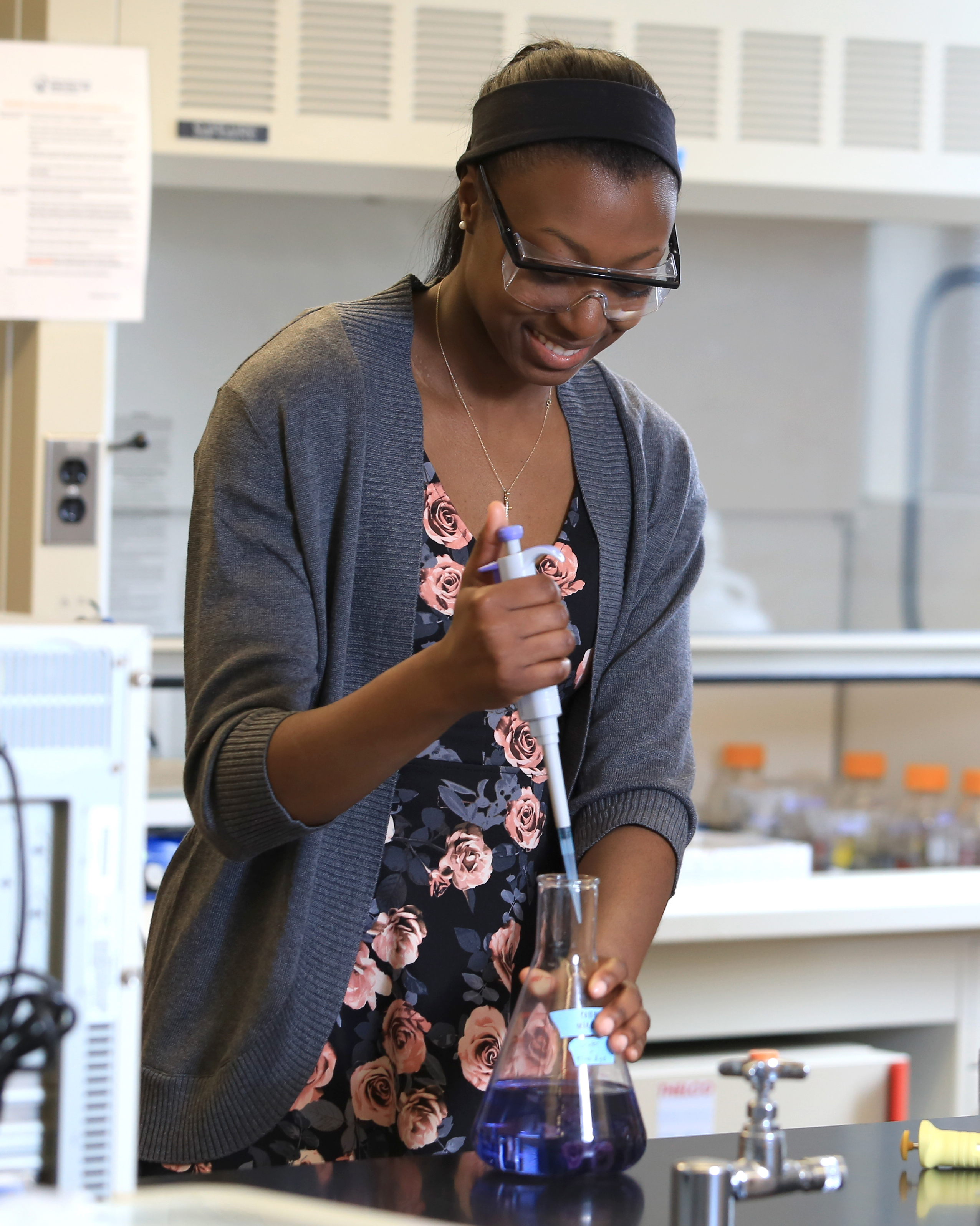
The pH values were measured directly in separate glass vials that contained each of the three dental anesthetics. A pH indicator dye was then added to each vial. Each vial was measured by a spectrometer, a lab tool that determines the color of the sample and allows calculation of the pH. The osmolality data were collected using a separate instrument. “The students gathered hundreds of reliable data points in a very short time frame,” Dr. Goeltz said. “They demonstrated great leadership and teamwork.”
The resulting data was then analyzed by the students, Dr. Goeltz and Detka, one of CSUMB’s resident experts in statistics. That output enabled best-use recommendations and validated the three anesthetics for the buffering system and a more comfortable experience for patients in the dentist chair.
“The project was an extraordinary opportunity to take fundamentals of chemistry and apply them to real-life research and problem-solving in medicinal science,” Dr. Goeltz said. All six of the students are undergraduates with various majors in the College of Science. A chemistry major does not exist at CSUMB, at least not yet.
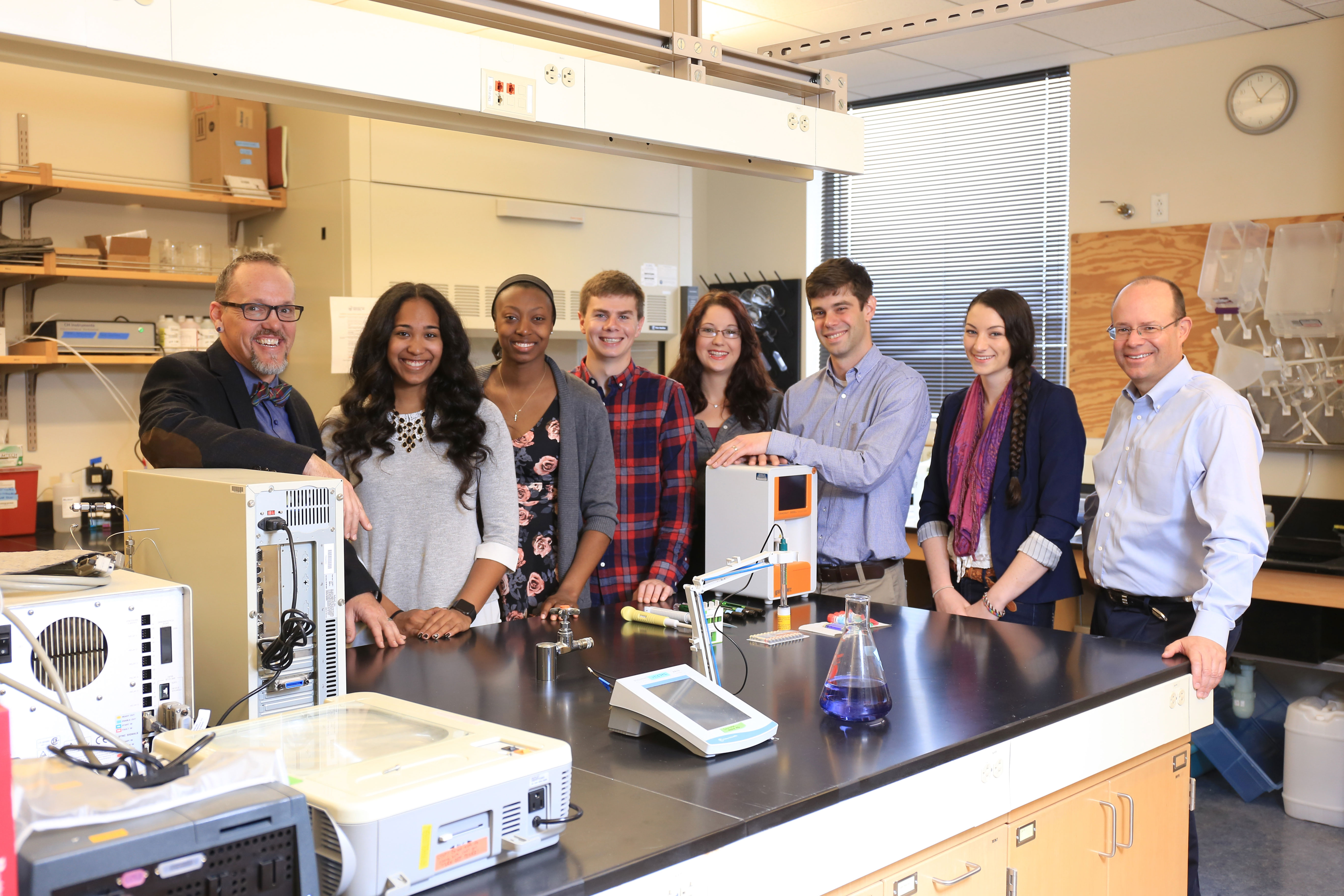
The research performed at CSUMB will have amazingly broad implications for thousands of dentists and their patients, according to Dr. Falkel, who invented the buffering technology and has practiced dentistry on the Monterey Peninsula for more than 25 years.
“The process and the result ended up being a win-win situation. I sought out CSUMB for this research, I wanted to keep it close to home,” Dr. Falkel said. “I think the world of John and his students. If I needed to do further research, I would go straight back to CSUMB.”
Balancing Act
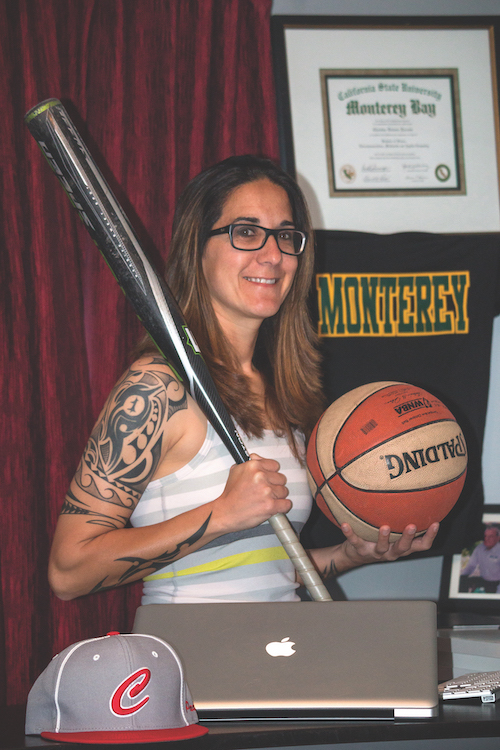
“I’ll sleep when I’m dead.” Spend any time with Christina Ferrante and you know she means it.
The woman who says her best working hours are from 11 p.m. to 5 a.m., is the definition of self-starter, driven and a self-admitted glutton for punishment when it comes to work.
Her business, Christina V. Ferrante - Creative. Consulting. Development., is a one-woman marketing machine. She does the brand strategy, art direction, social media, web design and development herself.
She has done photography for USA Softball and various NCAA Division I college softball programs as well as several professional female athletes, for whom she also manages their brands.
If that’s not enough, Ferrante somehow manufactures more time as the head coach of the Monterey High girls basketball team and assistant varsity coach of the Carmel High girls softball team.
“I spread myself so thin, but I do it to myself because I love what I do.”
Ferrante also loves Cal State Monterey Bay, “You leave here, you are a part of here, and they want you to come back because it’s a team.”
Ferrante comes back twice a year to speak to her former professor Eric Tao’s technology classes. She wants to help continue what she says was a “relationship of trust and mentorship and respect that I had with all of my teachers.”
The proud Otter alum (BA ’07, MA ’09) also has some sage advice for students from her own experiences, which she says were much different than a lot of her classmates. “Don’t be afraid to offer your services for nothing right now because word of mouth in this community is huge.”
Ferrante has worked full-time and gone to school full-time since she graduated from high school. Bartering was her first entrée into the business world. “I would make websites for experience and trade-offs. I would make a website for a restaurant and would get free food for a period of time.”
Before finding her home at CSUMB, she played softball at Monterey Peninsula College, went to school for a short time in San Diego and eventually returned to Monterey when her grandfather fell ill.
That’s when she found her niche in the Telecommunications, Multimedia, and Applied Computing program at CSUMB. All the while, she was teaching herself about web development and design, creating pages for the city of Pacific Grove. Once she graduated, Ferrante was hired by the city of Salinas as the webmaster and systems analyst, eventually doing a complete overhaul of the city website. It was then she also worked to get her master’s degree in Instructional Science and Technology.
All that side work got her through college debt free. It also gave her the ability to network, something she says CSUMB taught her how to do.
Ferrante just can’t stop herself from starting another project or taking on another commitment; but it isn’t random. They are all thought out, they all have meaning.
Right before the 2012 Summer Olympics, Ferrante launched a website called WSN247.com. Its mission is to bring more attention to female sports and their athletes after Ferrante saw a void in the mainstream sports media. The site is chock full of athlete blogs and the latest news from national and international women’s sports.
Ferrante is all about evolving. That mentality also explains the next new project she always has up her sleeve.
Speaking of sleeves. You might be wondering about those tattoos covering her arms. Those too were thought out and have specific meaning.
One prominent tattoo is the bow and arrow, which has two meanings. The most significant is “go forward”– something Ferrante’s grandfather often said before he passed away on the morning of her master’s degree commencement ceremony. The second is Sagittarius – the astrological sign of both her grandfather and grandmother. Another tribal design represents the idea that when life gets hard, choose a different path and keep going.
All things that Ferrante passes on to the students she speaks to at CSUMB and coaches in high school. She tells them there is opportunity everywhere and most of all “be good to people, they will remember you. They will either remember you for a good reason or a bad reason, and the first impression is everything.”
Magnolia Zarraga
Immigration law is not only a passion for attorney Magnolia Zarraga (CHHS '03), it's personal.
A first-generation college student and Salinas native, Zarraga grew up seeing her parents work in the fields during the day and take English classes by night.
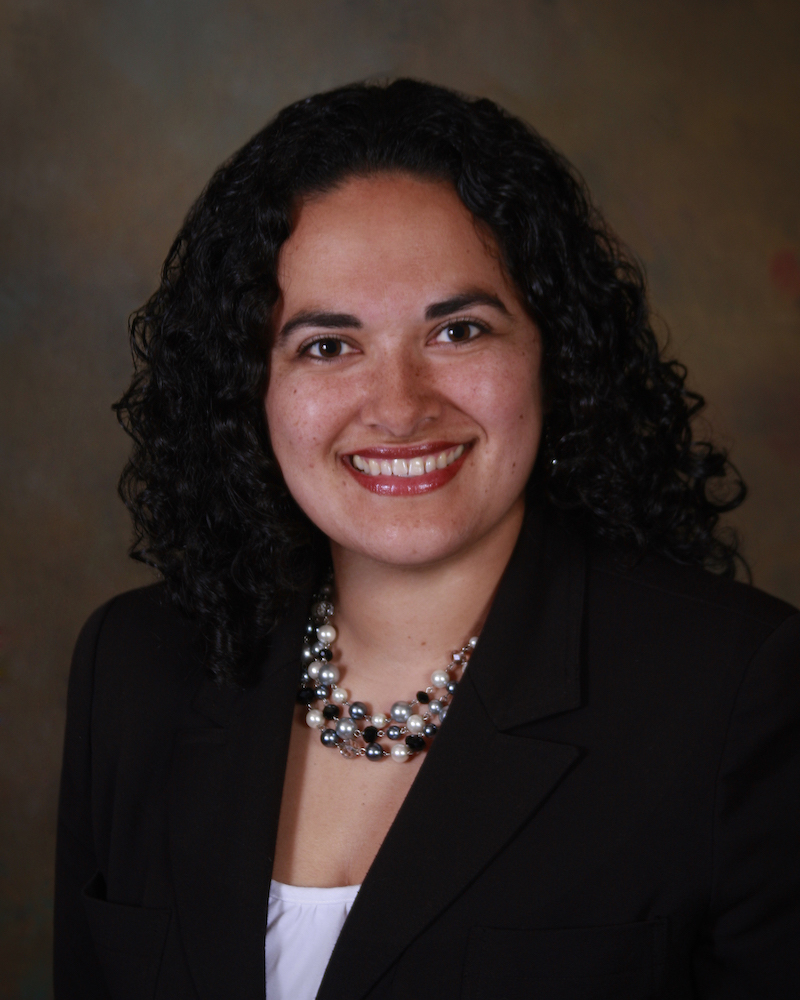
“My mother took me to work many times and I saw first-hand how difficult it was,” Zarraga said. “Like many immigrants, my parents struggled to learn English but they did it to get out of the fields.” It paid off. Her parents are now U.S. citizens. Zarraga’s father is a local business owner. Her mother works for Monterey County.
Zarraga discovered her calling for immigration law when she was a student at CSUMB. She completed her required CSUMB internships at the District Attorney’s office and Women’s Crisis Center. She credits these experiences for exposing her to the law, the courts and the role of an advocate. Professor Brian Simmons was a tremendous influence, encouraging her to attend law school.
Zarraga was also inspired by her older sister, Christabelle, who was the first in the family to attend college. Zarraga graduated from CSUMB and then attended the Monterey College of Law. After obtaining a Juris Doctorate, Zarraga worked as an attorney for several law firms before opening her own practice in Salinas.
Helping people obtain legal status to better their lives is Zarraga’s priority. When she was growing up, a cousin who lived in the U.S. most of her life applied for legalization through her husband, who was a U.S. citizen. Zarraga’s cousin was denied the visa and barred from re-entering the U.S for 10 years. There was no waiver available. As a result, the cousin’s spouse, a local dentist, closed his practice in Salinas and relocated to Mexico to keep the family intact.
Immigration is complicated, it is a controversial issue, and it is in need of a serious reform— Magnolia Zarraga
The current immigration laws are harsh according to Zarraga. For example, someone comes to the U.S. illegally from Mexico and wants to legalize. Unless they fit within some narrow exceptions, there’s a required consular interview in Juárez, Mexico, one of the most dangerous cities in the world. Additionally, if they’ve lived over a year unlawfully in the U.S., upon departure they trigger a bar that denies their visa. Sometimes the bar could be waived but often that’s not the case. It depends on the person’s prior immigration history.
Despite a current provisional waiver process, meant to alleviate the uncertainty and family separation involved in consular processing, Zarraga says, “Many people are afraid to go back to Mexico because of the violence and corruption. Therefore, people who are eligible to legalize, often don’t. Often times, however, the news I have to give my clients is bad. I have to tell them that they have no options to legalize. It is heartbreaking, but then I think of my cousin and how she wished someone would have told her. Immigration is complicated, it is a controversial issue, and it is in need of a serious reform,” she said.
Zarraga knows that she has found her calling. “What I love most about having my own practice is helping families achieve their dreams of a better future for themselves and their children. Just like my parents changed their life, I strive to assist others to achieve their own dreams for a better life in this country.”
Many Ways To Speak Your Truth
Your body can speak. Your body can listen. Your mind adapts and strong connections are made.
Silent classroom
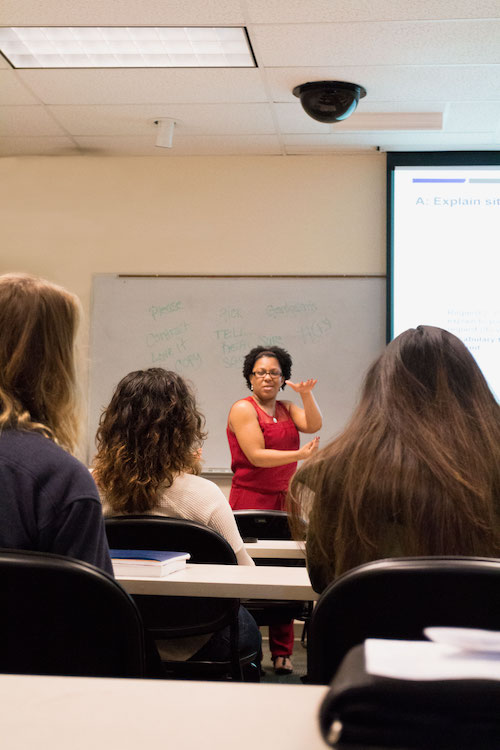
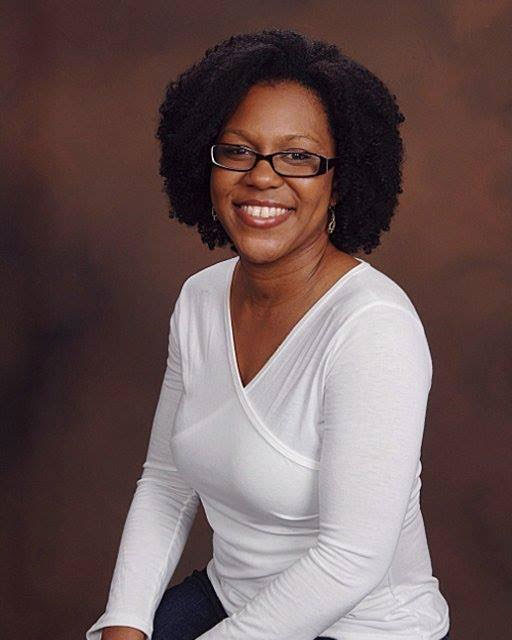
Creating these connections is a passion for American Sign Language (ASL) Instructor Regina Daniels. Students in her class learn to communicate powerfully without speaking a word. They don’t have a choice. Nearly every one of her students can hear. Daniels herself is deaf.
Another typical day in class has begun as Daniels stands in front of her students, signing quickly and with extensive eye contact as she tells students about the day’s exercise. The students sign back. If they have a question, they raise their hand and Daniels points to them, nods and smiles. The student with the question signs at Daniels. She signs back. Not a word is spoken. The room is quiet.
A whiteboard and projection screen behind Daniels show words and visuals to accompany the lesson. She indicates for the students to work with each other. The students turn to the person next to them and sign each other for several minutes. Again, silence. When Daniels wants their attention again, she taps the whiteboard with her fist. The signing stops and all eyes are directed forward.
Students are forced to think outside of the box and learn quickly to “turn their voices off” according to Daniels. On the first day of class, Daniels communicates through an interpreter. After that, it’s only her. Communication is through a whiteboard and PowerPoint before students become proficient enough in ASL.
The in-class tests include students working together for approximately 20 minutes to practice 10 to 15 words in spelling, 10 to 15 words in vocabulary and then identify sentence structures. Afterwards, Daniels asks students one question at a time through signing. The students write their answers down on paper before Daniels moves onto the next question. This process takes nearly an hour. In addition, each student creates a two-minute video of themselves telling a story through signing, which they are graded on.
Positive identity
“The structure of ASL is completely different than any other language – you use your hands and body to not only convey the words, but the inflection and tone,” Daniels said. “I enjoy exposing them to Deaf culture and what it means to be deaf.”
Deaf culture, spelled with a capital D and called “big D Deaf” in speech and ASL, refers to a set of shared values in the deaf community, according to Daniels. They view being deaf as a difference and a source of positive identity, not a disability or disease.
Daniels knows Deaf culture well. Born and raised in New Orleans, Daniels’ mother and sister were deaf. She learned ASL before English. Family conversations tended to happen in the kitchen where the lighting was good for signing. Everything in life revolved around what was in front of them, according to Daniels. Face to face, expressive conversations and noises for emotional emphasis. Dinner conversations could be very animated.
Her parents emphasized interaction with everyone, not just people who identified with Deaf culture. She attended a regular public school as a child. High school was a boarding school specifically for the deaf. Other career pursuits then followed, including dancing and acting with minor roles in several television shows and films. Then Daniels discovered teaching thanks to the encouragement of one of her college professors.
Another world
A recent transplant to California, Daniels came to CSUMB three years ago after spending time in Chicago and the East Coast. Along with ASL, Daniels hopes to teach dance someday. A fan of hip-hop and modern dance music, Daniels went off the beat and vibration when she danced professionally. “I have to feel the song,” she said.
Another day of class wraps up for Daniels and her students. It’s nearly two hours where the spoken word is not needed. The students quietly put their books in bags and begin to walk out. Many are still signing each other with smiles.
“I love it when I see students have that ‘light bulb’ moment,” Daniels said. “It can open up another world, helping them communicate in ways they never thought possible.”
CSUMB Salutes CSU Summer Arts
Photos by Todd Sharp
The CSU Summer Arts program is taking a final bow in 2016 and relocating to another CSU campus yet to be determined. The program has treated the Monterey Bay community to inspiring performances in dance and theater, along with writing and other art forms. It has provided a creative outlet for hundreds of students from throughout the California State University system, adult learners and community artists.
The CSU Summer Arts program was created in 1985 during an arts faculty institute in the woods of the Sierra Nevada, south of Lake Tahoe. CSU faculty and administrators were striving to meet the needs of CSU arts students and supplement the CSU’s extensive and diverse art curriculum.
CSU Long Beach hosted the first Summer Arts, beginning as a summer dance program. Summer Arts quickly expanded to include various arts genres and in 1990, the Media Arts Festival. It has been housed at Cal Poly, San Luis Obispo, Humboldt State University, back to CSU Long Beach and then to CSU Fresno before coming to Cal State Monterey Bay in 2011.
The CSU Summer Arts legacy continues. Cal State Monterey Bay is proud to be a part of it.
Editor’s note: a complete list of the final CSU Summer Arts events can be found at blogs.calstate.edu/summerarts
News Briefs
Published Dec. 20, 2019
Otter Athletics inducts inaugural Hall of Fame members
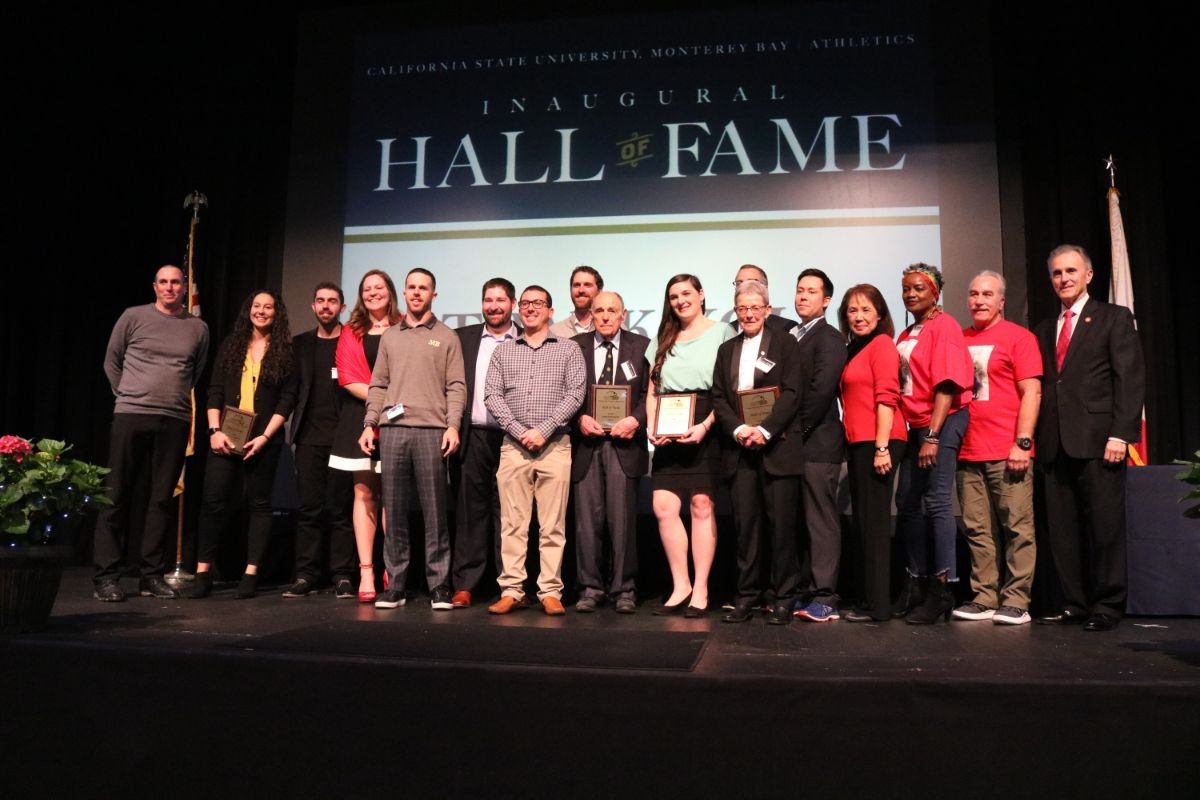
California State University, Monterey Bay, announced its inaugural Athletics Hall of Fame class this year. The first honorees — including eight student-athletes, two coaches and one national championship team — were inducted on Feb. 16, 2019, at the University Center.
“Our Hall of Fame allows us to recognize individuals who have shaped our identity and contributed significantly to the growth of our university and athletics programs,” Director of Athletics Kirby Garry said. “(We) look forward to building on this new tradition in future years.”
In alphabetical order, the inductees were: Dana Andrews – Women’s Basketball (2006-09), all–time leading scorer; Bobbi Bonace – Administrator/Coach (1996-2007), first director of intercollegiate athletics; Cicillia Chudivan – Women’s Golf (2007-10), All-American, all-time winningest golfer; Rheann Fall – Volleyball (2008-11), All-American, career kills leader; Brian Haggett – Baseball (2012-13), first Academic All-American; Bob Johnson – Community supporter, passionate backer of Otter Athletics and CSUMB; Devougn Lamont – Men’s Basketball (2005-06), first player to average 20 points per game; Chealsea (Laning) Brown – Water Polo (2005-08), career record holder for goals and points; Ashlee Trotter – Softball (2006–09), captain of first California Collegiate Athletic Association (CCAA) championship team; Bill Trumbo – Administrator/Coach (2000-06), led CSUMB to NCAA Division II membership; Erik Uppman – Cross Country (1998-2001), captain of first conference championship team (California Pacific Conference); Team of Distinction – 2011 Men’s Golf Team, CSUMB’s first national championship team.
CSUMB launches innovative Responsible Business MBA
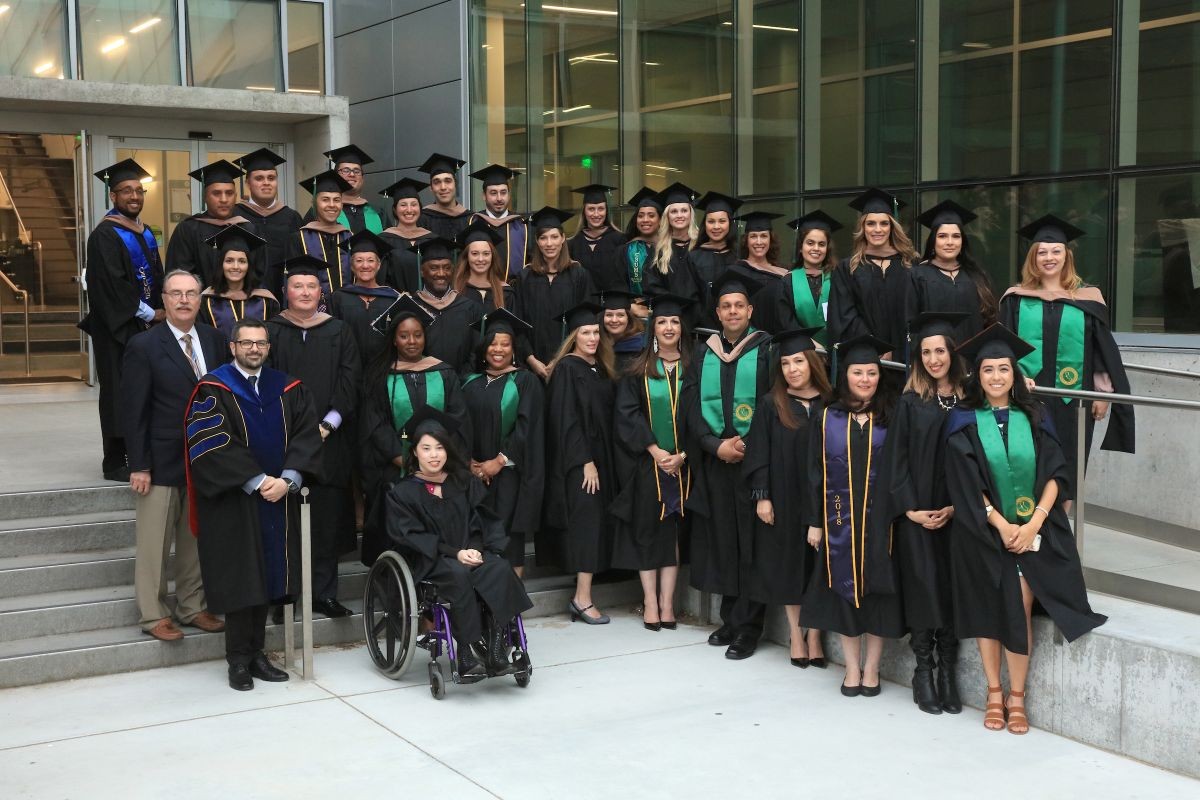
The College of Business at CSUMB launched the world’s first Responsible Business Master of Business Administration (MBA) degree program in fall 2019. The entirely new curriculum is designed around the theme of “Innovation, Responsibility, Impact,” with a quintuple bottom line adding “Ethics” and “Equity” to the traditional triple bottom line of “People, Planet, Profit.”
“We’re emphasizing critical systems thinking, continuous improvement, integrated communications, and creative problem solving — in an expanded quintuple bottom line context — to develop the Responsible Business mindset and toolkit,” Dean Shyam Kamath said.
Responsible Business goes beyond the triple bottom line to educate business leaders to develop and transform organizations into 21st-century business models. The quintuple bottom line enables businesses to achieve financial success while taking care of valuable human and environmental resources, Kamath said.
With busy working professionals and executives in mind, the program is 100% online to offer maximum flexibility. The curriculum consists of 38 units delivered in sequence across 14 individual courses. The online MBA degree can be earned in as few as 18 months. “The faculty have thoughtfully created a unique education experience,” said Nicolas Dahan, program director. “It builds on the university’s tradition of concern for community, ethical leadership, social justice, and environmental stewardship.”
Go online to mba.csumb.edu to learn more.
WASC grants accreditation for 10 more years
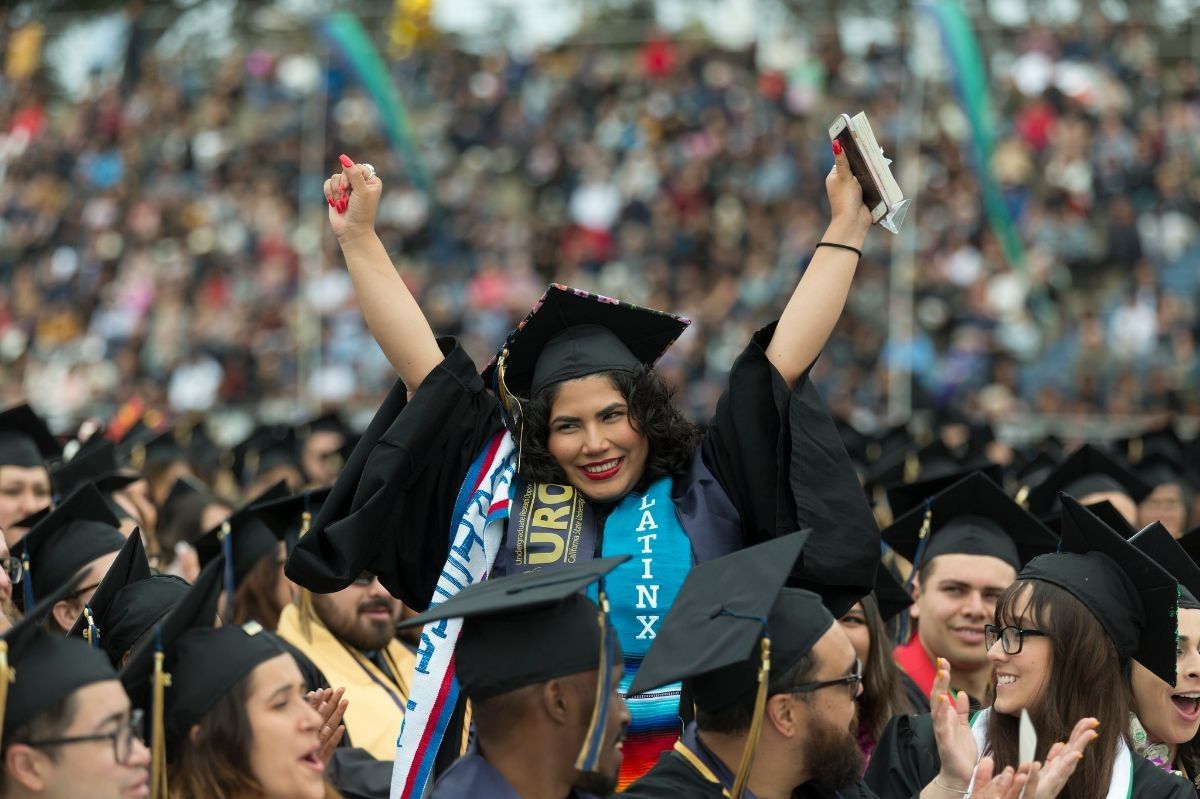
California State University, Monterey Bay (CSUMB) achieved reaffirmation of its accreditation from the Western Association of Schools and Colleges (WASC) in July 2019. The reaffirmation is for 10 years, the longest achievable period of accreditation.
The WASC Senior College and University Commission (WSCUC) commended CSUMB in a number of areas, particularly the increase in graduation rates since 2011. A recent Chronicle of Higher Education publication recognized CSUMB as one of three public universities in the U.S. with the greatest improvements in graduation rates. The Commission also praised the university for its commitment to the whole student, a culture of innovation and strong regional stewardship.
“I would like to thank all the many faculty, staff and administrators who made this achievement possible through their on-going and lasting commitment to reflection and improvement which was visible throughout the Institutional Report submitted to WSCUC as part of the reaccreditation effort,” President Eduardo M. Ochoa said.
Accreditation aids institutions in developing and sustaining effective educational programs and assures the educational community, the general public, and other organizations that an accredited institution has met high standards of quality and effectiveness.
CSUMB professor, researchers decode white shark genome
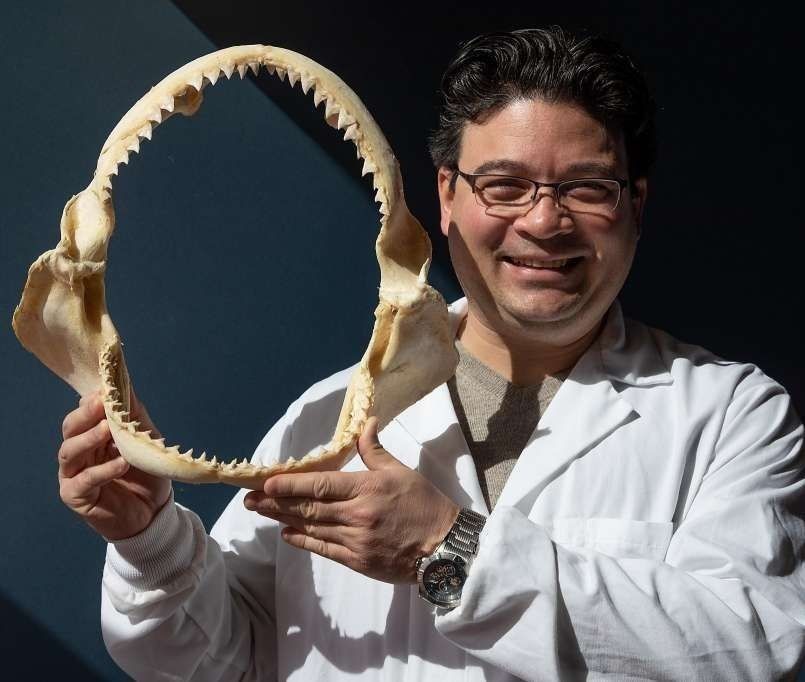
Assistant Professor Nate Jue with the School of Natural Sciences at Cal State Monterey Bay collaborated with an international team of researchers to decode the entire genome of the white shark. The results of their study were announced in March 2019 and marked a major scientific breakthrough which could assist in cancer prevention in humans.
The findings were published in the scientific journal “Proceedings of the National Academy of Sciences.” Through comparisons with other species, genetic adaptations in the white sharks can help scientists better understand how important processes like the repair of damaged DNA may function in other organisms including humans.
The researchers discovered unique blood-clotting and cancer-protection genes within the white shark genome. Further studies may assist medical researchers in their efforts to prevent cancer, treat age-related ailments and heal injuries in humans.
In addition, researchers were shocked to discover the size of the white shark genome measured approximately one-and-a-half times the size of the human genetic code. Decoding the white shark genome may also assist with the conservation of this often feared, yet vulnerable species by providing information about white shark population dynamics.
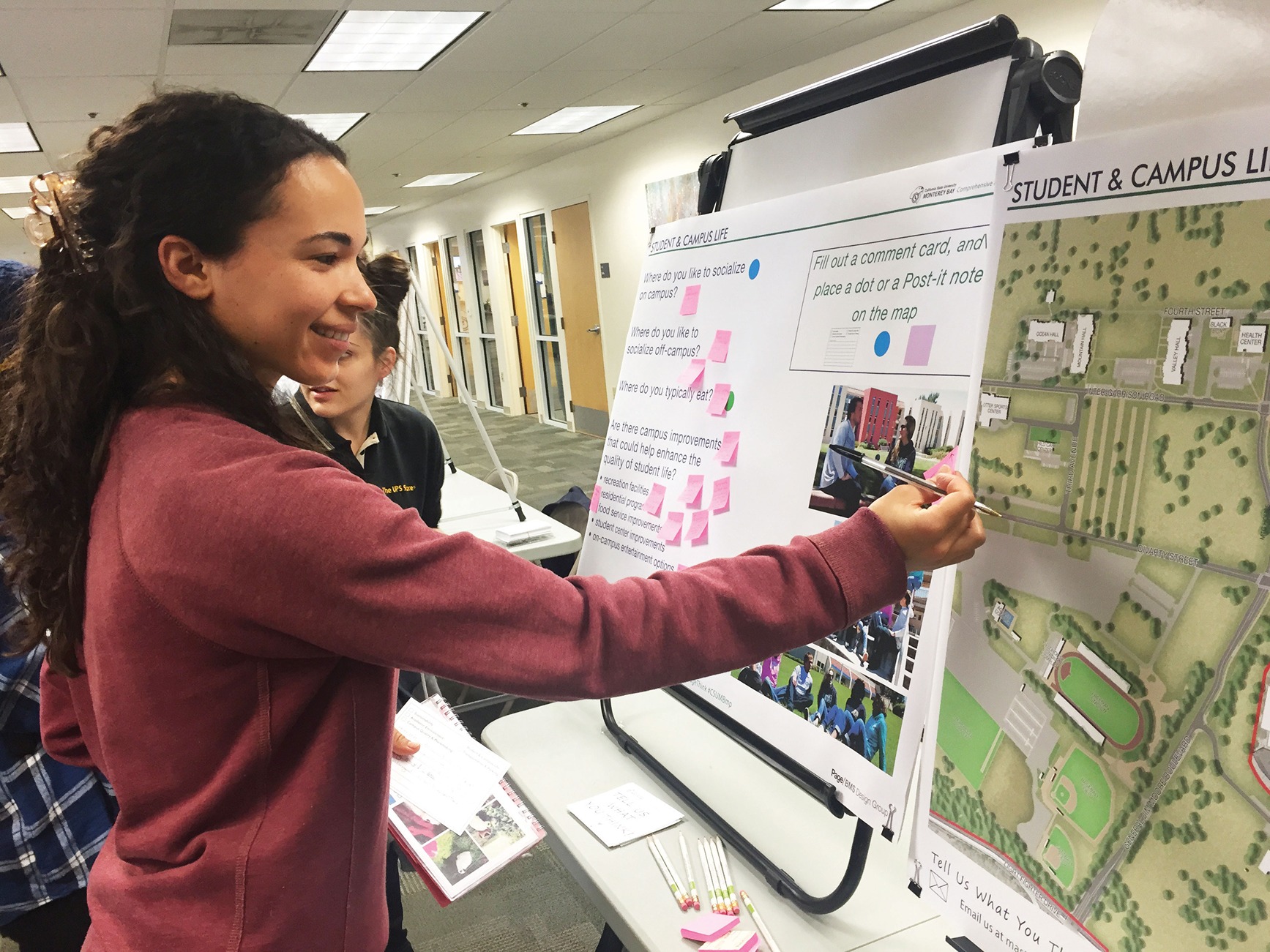
Since the university opened in 1995, the campus has grown from 650 students in repurposed buildings on a former Army base to a 21st century institution for teaching, research and innovation.
To accommodate the expected growth to 12,000 students by 2024, the campus master plan is being updated. The master plan provides a road map for growth and renewal of the campus. It includes academic needs such as classrooms and labs; student and residential life, such as a student union, recreation center and housing; infrastructure; sustainability; transportation; and connections with neighboring communities. The draft is expected to be completed by the end of the year.
After a series of meetings with campus groups to start the process, it became clear that there is an interest in making the campus more pedestrian- and bike-friendly.
Page/BMS Design Group of San Francisco has been hired to lead the process.
Marina, university team up on student housing project
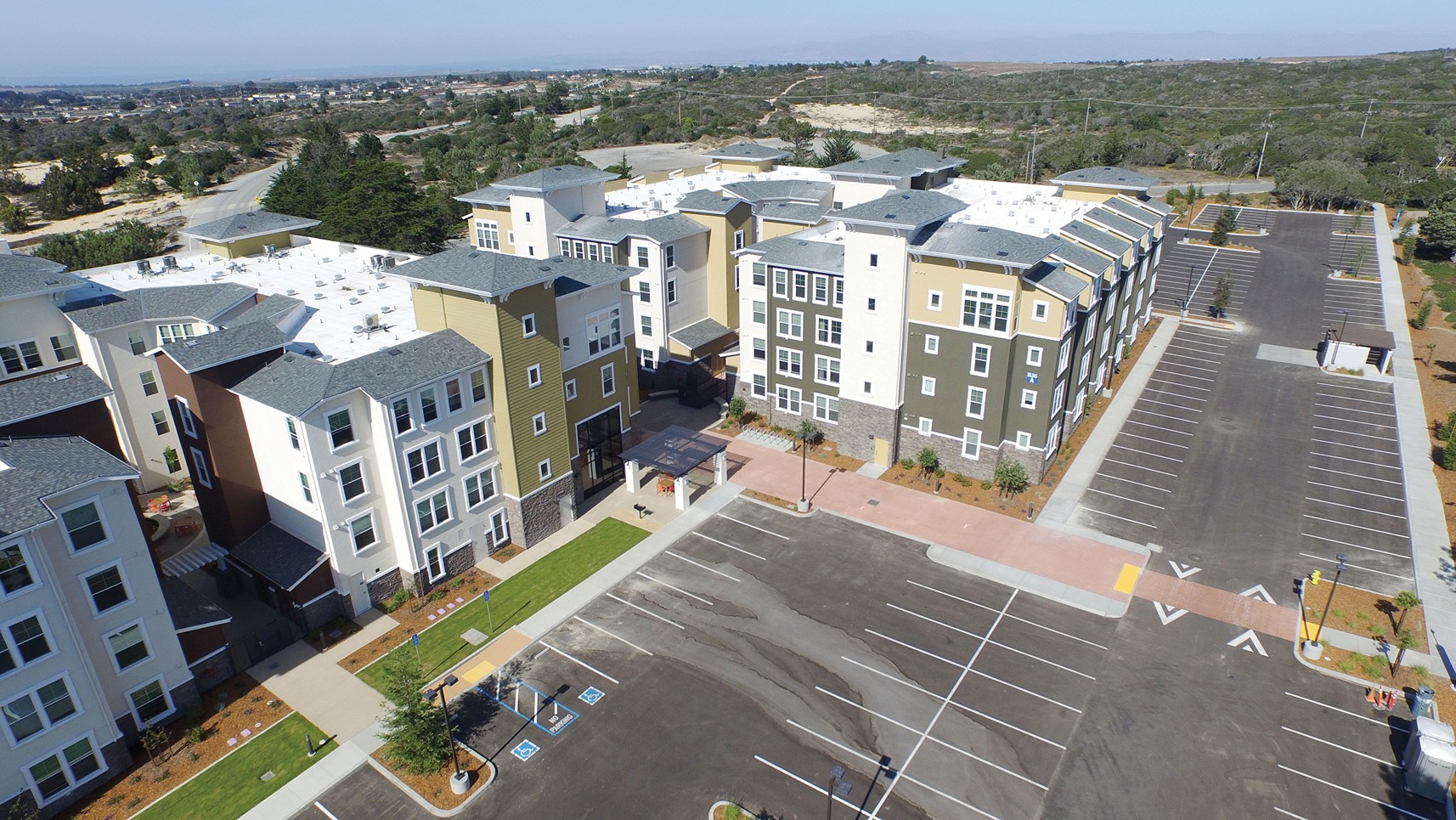
It’s about as far as you can get from dormitory life. The Promontory, a student housing complex just north of campus in Marina, opened in August. It’s the first new housing to come online since 2004. The project consists of three 150,000-square-foot, four-story buildings, with a total of 174 units and 579 beds. All units — which range from one to four bedrooms —come with a microwave, stove/range, dishwasher and washer and dryer.
The development has plenty of perks that have proven popular with students: a two-level fitness center, a game room with pool table, study rooms, a cyber café with kitchen, and a theater. Each of the buildings has an interior courtyard.
The project was built to LEED silver standards. It is the first joint housing venture between the city of Marina and CSUMB.
CSUMB acquires National Steinbeck Center

California State University, Monterey Bay and the National Steinbeck Center have completed a deal that will bring the university to the city of Salinas.
Under terms of the deal, negotiated among the university, the Steinbeck Center and the city of Salinas, CSUMB’s corporation purchased the building for $3 million. In addition, CSUMB paid the city $100,000 for the land beneath the building.
The Steinbeck Center will remain as a tenant, with an 80-year lease.
“This is our front door to Salinas and we’re going to use this as a way to connect to the community and respond to their needs,” said CSUMB President Eduardo Ochoa.
The University Corporation at Monterey Bay is a non-profit 501(c)(3) auxiliary organization that operates as the business arm of the university. It provides direct support for a number of university programs and activities.
The university is considering how to use the space. Possibilities include cultural and educational programming and outreach by staff members from CSUMB’s admissions and financial aid offices. In addition, the space will continue to be available as a resource for the community.
“We are planning on engaging the campus and our partners in Salinas in discussions of how we might best advance the mission of the university and meet community needs,” said CSUMB Provost Bonnie Irwin.
Art donations bring campus to life

Walk into the library and look around. Many of the walls have color and character thanks to the multiple pieces of beautiful art that decorate the walls. These pieces, along with pieces displayed throughout campus, are made possible by the University Art Committee – and more is on the way.
The University Art Committee, comprised of Holly Ochoa, administrators, faculty, staff and students, is a recommending body to the President that facilitates the acquisition and placement of donated art throughout campus. Many pieces are possible thanks to the generosity of an anonymous donor.
The artists represented among the works that CSUMB has been gifted include Eleen Auvil (the copper panel piece at the library stairwell), Susan Manchester, Barry Masteller, Amy Ellingson, Chris Winfield, Charles Eckart, Lucas Bloc, Cynthia Ona Innis, Susan Parker, Rick Arnitz, and Jamie Brunson. In the library reference area, the Cornwell mural is displayed on loan from the Monterey Museum of Art.
In addition, a three piece work by Vern Trindade, recently exhibited at the Triton Museum in San Jose, will be mounted in the near future at the library. For more information or to inquire about making art donations, contact the committee chair, Ilene Feinman, dean of the College of Arts, Humanities and Social Sciences, at ifeinman@csumb.edu.
Published Feb. 2, 2019
Salinas Center for Arts & Culture celebrates one-year anniversary
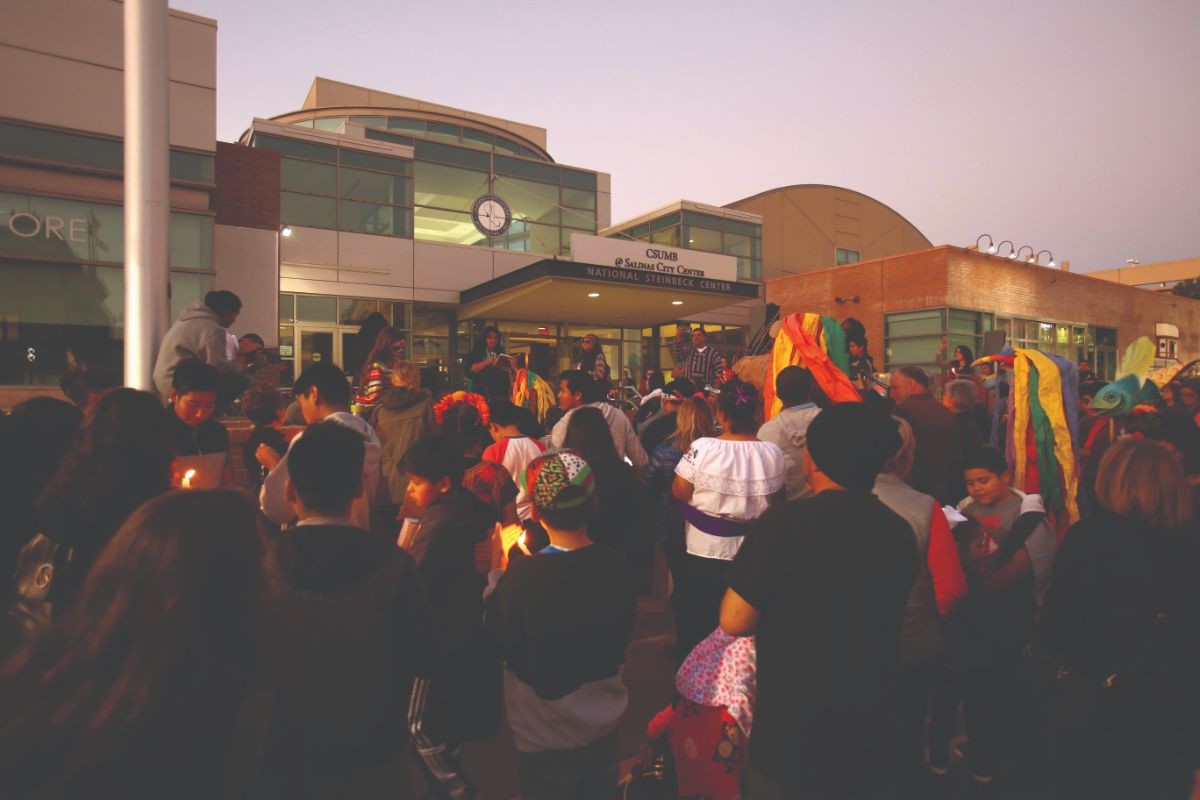
California State University, Monterey Bay’s Salinas Center For Arts and Culture officially celebrated its first anniversary with a series of Dias de Muertos events on Friday, Nov. 2, 2018. The center is housed within CSUMB @ Salinas City Center and strives to create a community of artists and a culture of activism in Salinas.
Over the past 12 months, the center has hosted a wide range of events, all free and open to the public, to include monthly First Friday events. Along with community-centered events encouraging local residents to visit, the center has held countless exhibitions featuring artwork from local artists and CSUMB students.
The center serves as a pivotal piece in extending CSUMB’s impact into the Salinas community and upholding the mission and vision of CSUMB. Hosting open community events is in keeping with CSUMB’s role as a community resource, providing forums for provocative discussions that can impact thought and action on issues important to our community.
Director Enid Ryce said the center serves as a boon for students as well, with “opportunities to create exhibitions, work in collaboration with community partners, and be in conversation with national figures in arts and humanities.”
Grant supports continued growth of Teacher Pathway Program
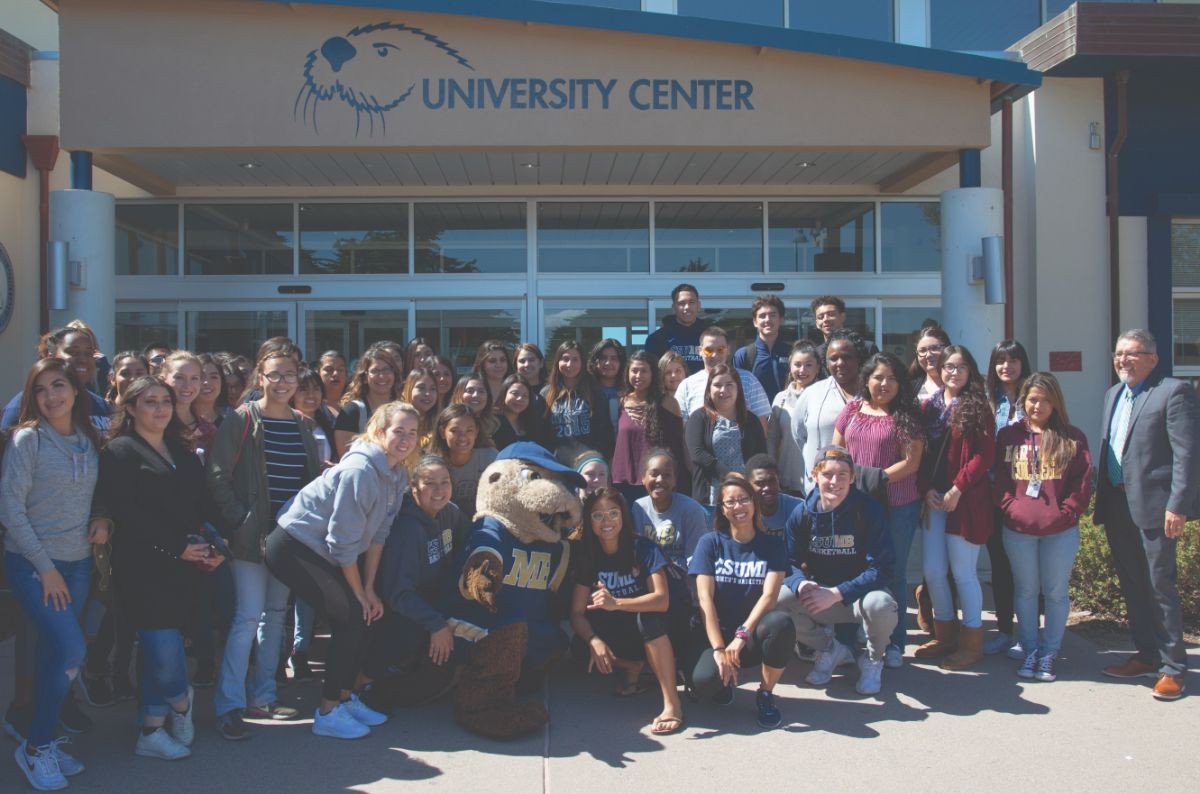
Hartnell College and California State University, Monterey Bay’s joint Teacher Pathway Program received a $335,000 grant from The Claire Giannini Fund last Fall that will help ensure the program’s continued growth and success. The program prepares fully-qualified elementary and special education teachers for Monterey County communities, with an eye towards sustainability.
The first cohort of the program, which began in fall 2016, has entered its third year. Students have achieved an 86 percent graduation rate — a much higher graduation rate than students enrolled in a traditional program — and earned their associate’s degree for transfer in two years. The first cohort is now working to earn their bachelor’s degrees in liberal studies and teaching credentials at CSUMB.
The Teacher Pathway Program is a collaborative “grow-our-own” solution to addressing the regional teacher shortage, said CSUMB College of Education Dean Jose Luis Alvarado.
The unique partnership, along with the streamlined program design, reduces the time it takes to transfer, thereby reducing costs to the participants.
The success of the program has resulted in expansion to new locations in South Monterey County and Salinas, and an enrollment increase of 80 percent with 28, 38 and 42 students in each cohort over the last three years.
Congressman Panetta introduces bill supporting veteran students
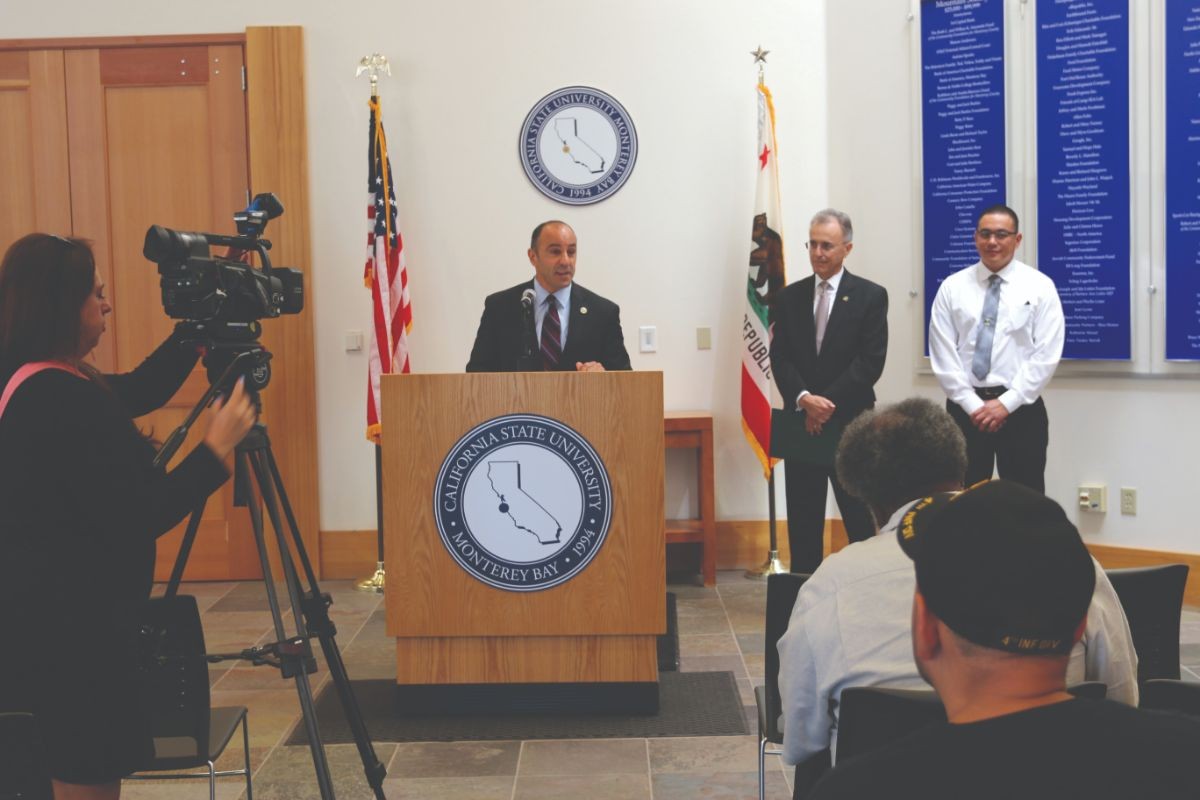
Congressman Jimmy Panetta, D-Carmel Valley, introduced the Veterans Resource Center Act during a press conference last fall at CSUMB. The legislation would authorize the Department of Veterans Affairs to provide federal grants to public universities to establish, maintain, and provide services at Veterans Resource Centers on campuses. It also incentivizes priority registration for veteran and military-connected students.
The legislation, co-sponsored by Nebraska Congressman Don Bacon, empowers universities to establish support centers modeled after the proven success of the California State University system’s Veteran Success Centers. CSUMB currently has more than 50 veteran students and a Veteran Student Services center that provides information on campus resources, veteran benefits, veteran service organizations, and social and study opportunities.
“Federal tuition support under the Post-9/11 G.I. Bill expires after three years, pressuring veteran students to complete their degrees early,” Panetta said.
“This bill will help our veterans choose classes that fit their personal needs, allowing them to graduate on time, while simultaneously providing them social and educational support. While these support resources are utilized throughout the California State University system, including here at home at CSUMB, I look forward to expanding this service to universities and veterans across the country.”
CSUMB business students attend West Point ethics conference
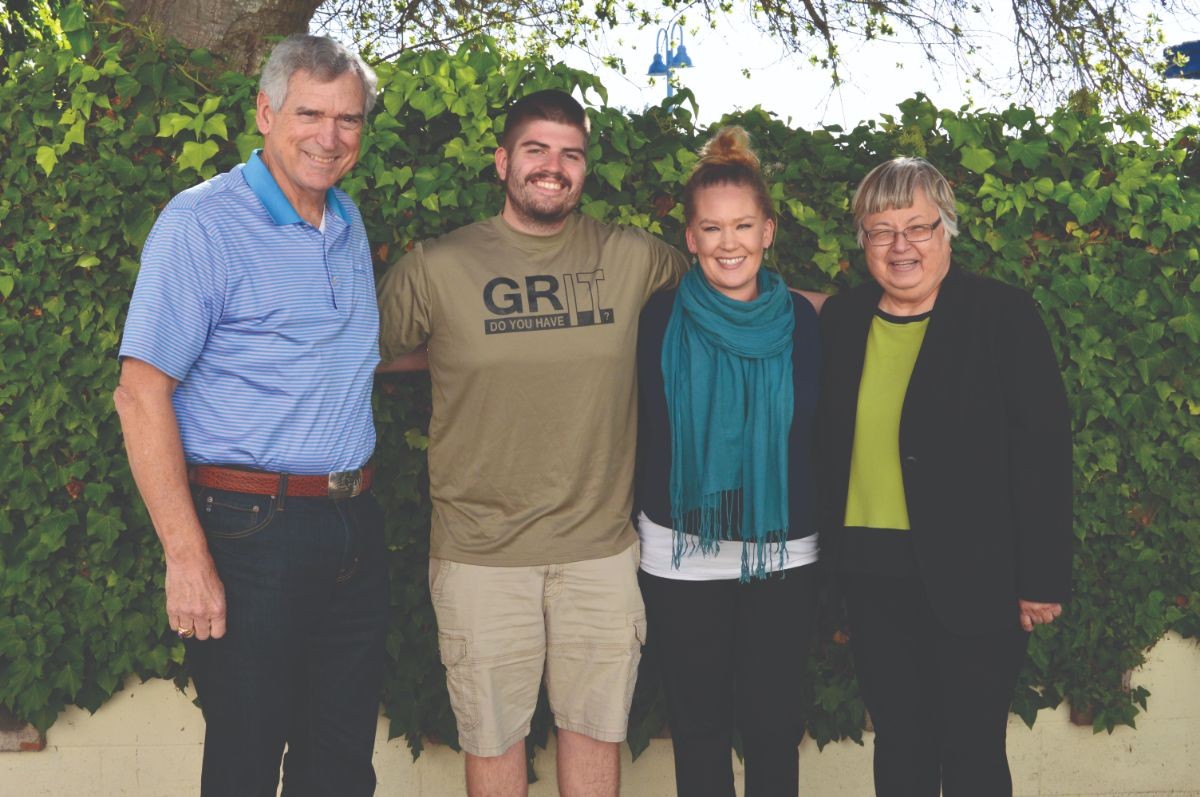
Two CSUMB College of Business students participated in the 34th annual National Conference on Ethics in America (NCEA) at the United States Military Academy (USMA) in West Point, N.Y, in October. The two-day conference is part of the USMA Cadet Character Education Program, and outstanding civilian students from universities across the country are invited to attend.
Brandon Baughn, a business administration and marketing major, and Alice Oaks, who is studying business administration and accounting, were able to attend thanks to the generous support of a sponsor.
This year’s conference theme was “Grit: The Unyielding Determination to Prevail.” It aimed to inspire and challenge attendees to overcome obstacles to achieve their goals, as well as find innovative solutions for pressing problems.
Keynote speaker Shilo Harris, a retired U.S. Army Cavalry Scout, survived devastating injuries after his armored vehicle was struck by an improvised explosive device (IED) in Iraq. Other speakers included Karl Meltzer, an ultramarathon record holder; Capt. Shaye Haver, the first female Army Ranger; and Adrianne Haslet, the Boston Marathon bombing survivor who won ballroom dance competitions and ran Boston twice after losing a leg.
Applications soar for fall enrollment
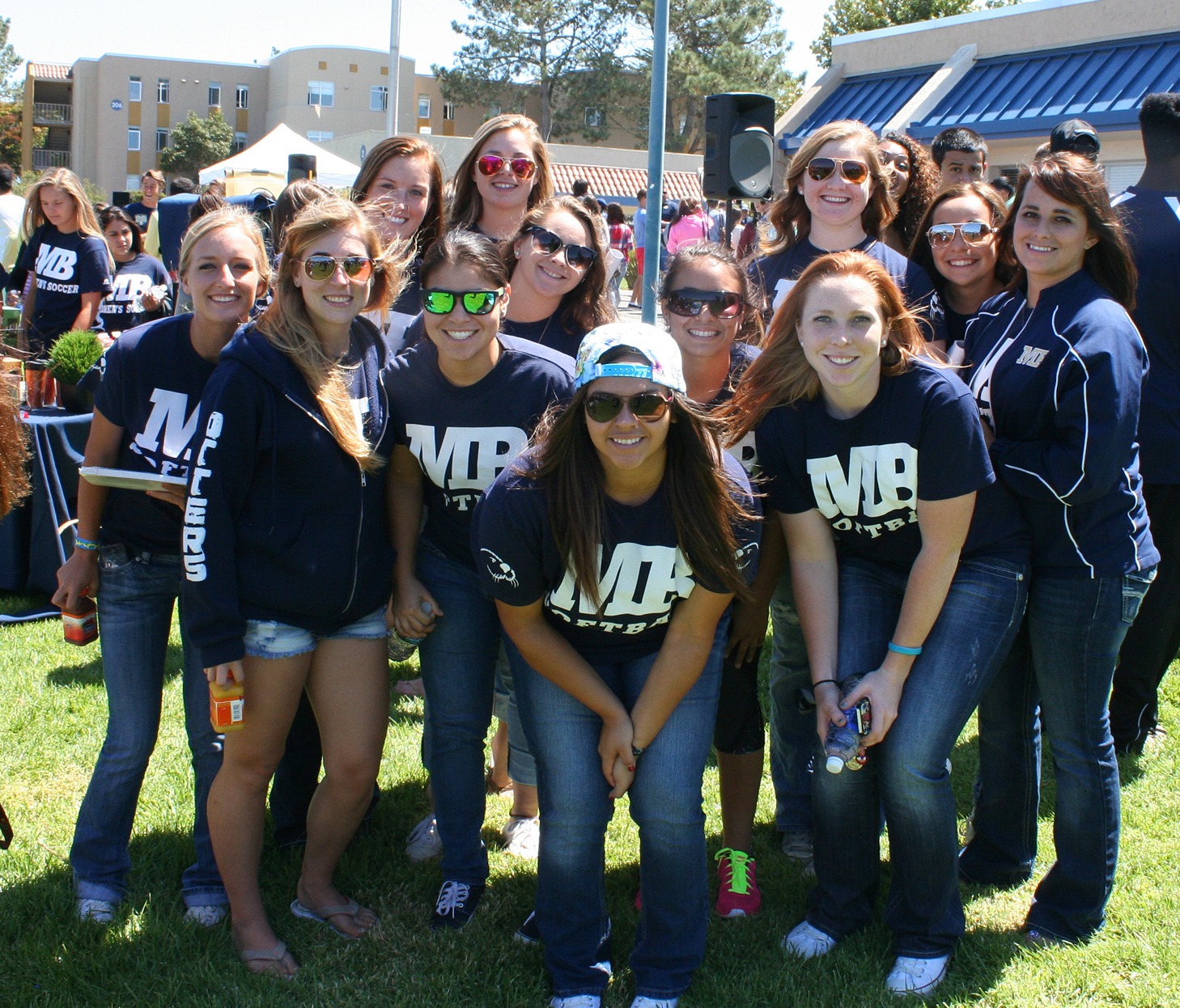
A record number of students applied to attend Cal State Monterey Bay for the Fall 2016 semester.
The university received 16,208 freshmen applications by the Nov. 30 deadline to apply. That’s up almost 5 percent from the previous year. The number of transfer students applying to attend CSUMB increased 15 percent to 4,124.
“We are slowing our enrollment growth to match available resources for Fall 2016,” said Dr. Ronnie Higgs, vice president for student affairs and enrollment services. “We anticipate the enrollment to be just under 7,000 students.”
The entire California State University system received a record number of applications for Fall, with more than 830,000 submitted by prospective students, marking a 4.8 percent increase and more than 40,000 applications over last year’s total.
“CSUMB is a first-choice institution,” Dr. Higgs said. “Students from the region, California and beyond know that CSUMB will prepare them for success.”
CSUMB expands its presence in Salinas
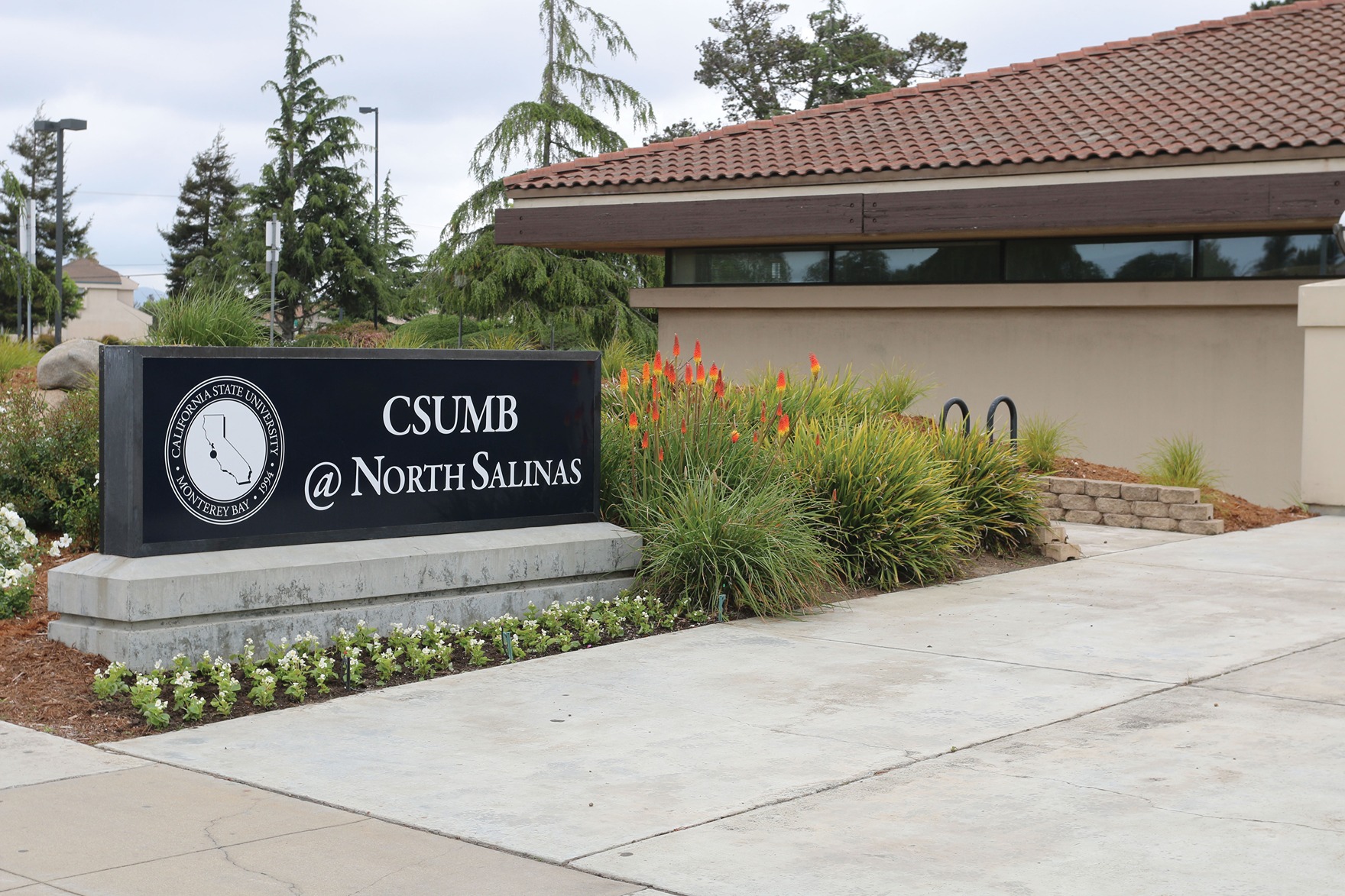
Cal State Monterey Bay has leased the main building vacated by last year’s closure of Heald College in Salinas and will begin offering classes in that facility later this year.
The lease, which went into effect Feb. 1, is for a 25,000-square-foot building located on North Main Street off Alvin Drive. The building includes 11 classrooms, several of which can serve as labs, and a number of offices. The facility will be known as CSUMB @ North Salinas.
“Leasing the building previously occupied by Heald College will allow us to increase our outreach and our course offerings to Salinas and the Salinas Valley,” said CSUMB President Eduardo Ochoa. “With the space crunch on our main campus, and the need to expand higher education opportunities in Salinas, this seemed to provide an ideal opportunity.”
The building has been vacant since April 2015, when the for-profit college’s parent company, Corinthian Colleges, Inc., closed its remaining campuses.
CSUMB first established a presence in Salinas last year, when the University Corporation purchased the National Steinbeck Center’s building in Oldtown.
Renovations are continuing on the building, to be known as CSUMB @ Salinas City Center. The National Steinbeck Center remains the name of the non-profit organization that manages the Steinbeck museum, which continues to occupy about half of the downtown structure.
$1 million grant creates data science program

Starting next fall, CSU Monterey will train students in the field of biomedical data science, thanks to a $1 million grant from the National Institutes of Health.
Biomedical data science is the application of statistics and computer science to biomedical problems. It has hundreds of applications, from tracking disease outbreaks to providing personalized medical care.
CSUMB will partner with UC Santa Cruz’s Center for Big Data in Translational Genomics over the five-year project.
“The emphasis for the program is really on the students and on preparing them for careers,” said Dr. Judith Canner, a CSUMB statistics professor and the principle investigator on the grant. The funding will enable CSUMB to create data science classes, train faculty, and fund student research - one of CSUMB’s strengths.
CSUMB professors will develop interdisciplinary coursework in data science, using classes offered at UCSC as a model. “UCSC is serving as a mentor institution,” Dr. Canner said. “They have a lot of courses and programs in this area, and we are just in the beginning stages of development.”
The ultimate goal of the grant is to enhance diversity in biomedical data science by opening up opportunities for CSUMB students who might not otherwise have access to such advanced training.
Students help with one city’s sustainability efforts
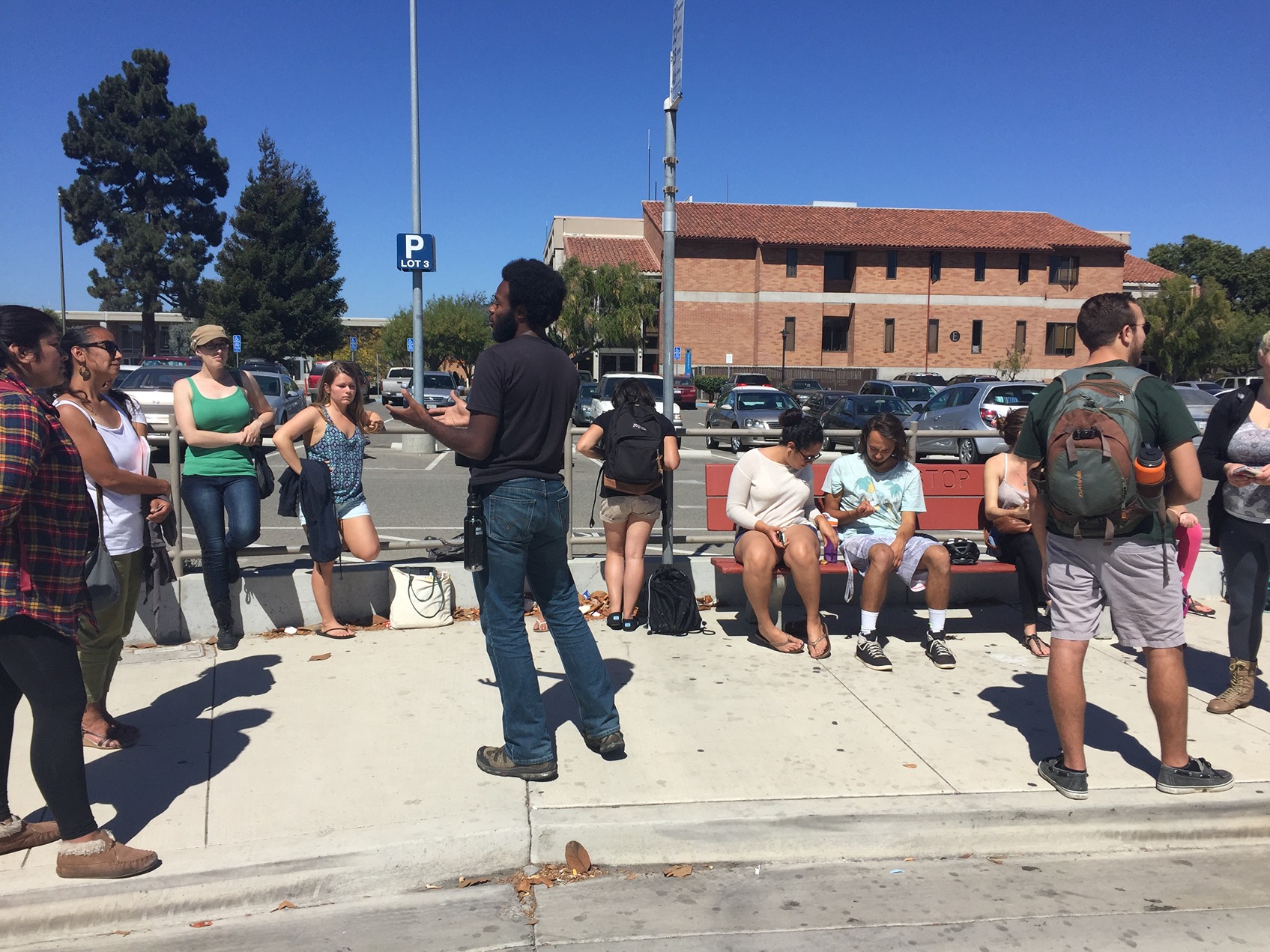
CSUMB has partnered with the city of Salinas as part of the Sustainable City Year Program. Dr. Dan Fernandez, professor of Science and Environmental Policy, is coordinating the effort.
The Sustainable City Year Program (SCYP) is a one-year partnership between the campus and an interested city partner. Regional cities often have projects that have some element of sustainability (mixed-use development, water conservation, improved signage, and increased access to bike or walkways, etc.) that they would like to undertake, but lack sufficient staff time or resources.
Through the program, CSUMB students have the opportunity to work on real-world problems, while the city benefits from the university’s expertise as it provides fresh perspectives on familiar issues.
Last fall, CSUMB completed its first semester of running this program. Three classes worked with Salinas on projects related to road design for West Alisal Street, analyzing the wealth of GIS data the city collects related to parking and infrastructure, and looking at parent-child interactions within public spaces. More classes are working with the city this semester.
Through this program, CSUMB has become a member of the Educational Partnerships for Innovation in Communities Network, including more than two dozen institutions across the country. CSUMB is the second school in the state of California to initiate this program.

When graduates cross the stage at commencement next May, they will join not only the Class of 2015, but also The Class of 3 Million – three million graduates of the California State University system.
It’s one of the largest alumni networks in the world.
To mark this milestone, 2015 graduates as well as alumni from all 23 CSU campuses are invited to “sign” The Class of 3 Million Yearbook. The online yearbook is a way for CSU alums to connect and build relationships with one another.
Everyone who signs the yearbook will be entered to win one of three $10,000 scholarships for a current or future student. All 2015 grads will receive Class of 3 Million silicone wristbands in time for commencement ceremonies.
Sign the yearbook at Classof3Million.calstate.edu.
Professor, grad student work to protect Big Sur River
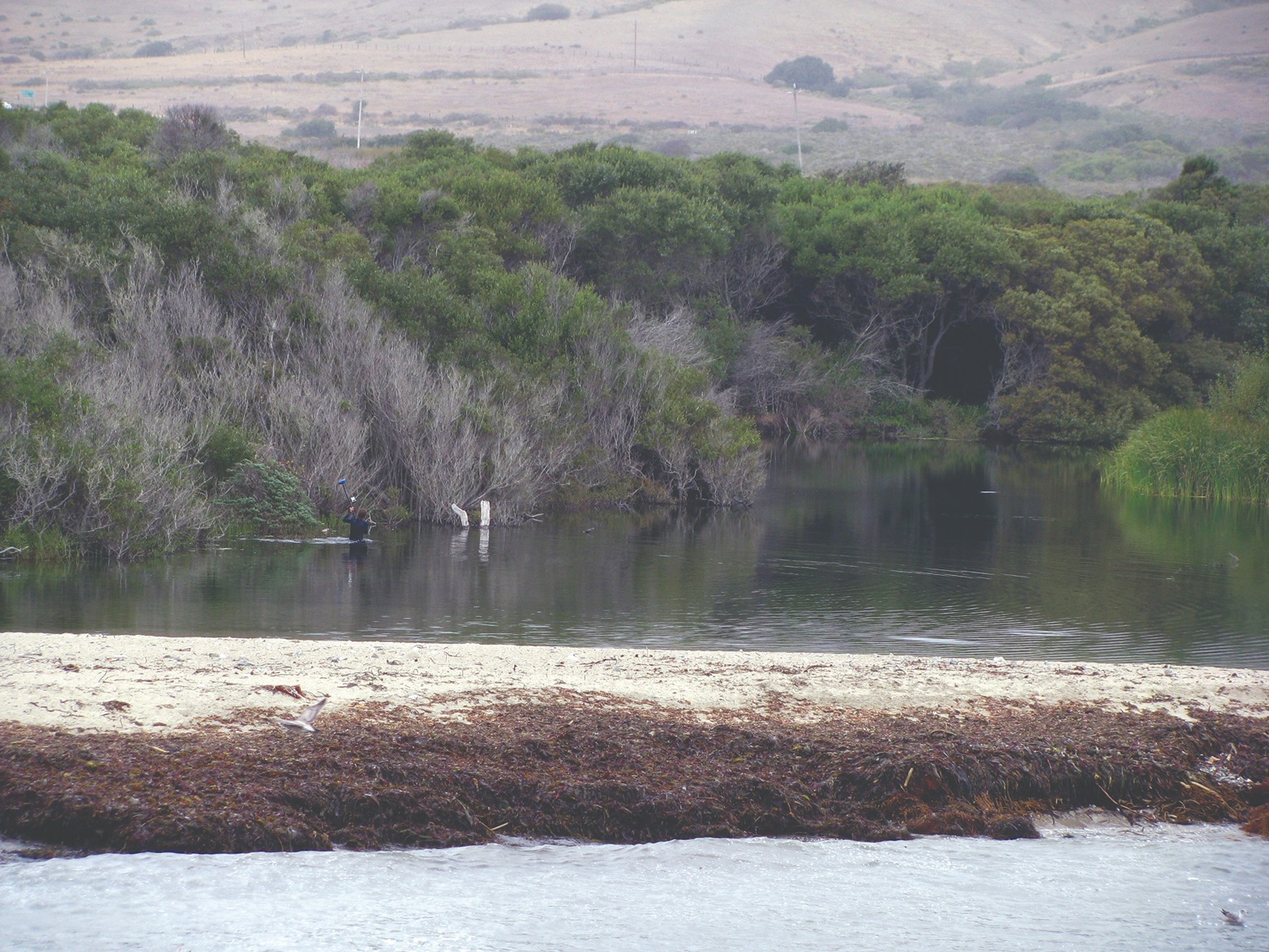
Cal State Monterey Bay Professor Doug Smith and graduate student Sam Phillips are collaborating with federal and state resource agencies to develop the Big Sur River Watershed Management Plan. The plan summarizes the environmental condition of the watershed and details the steps that residents and resource managers can take to sustain the local salmon population.
The Big Sur River and other ecologically critical streams and wetlands are constantly threatened by human activities that alter how water flows over and through the landscape. Urbanization and agricultural impacts are the leading cause of declining salmon populations along California’s Central Coast. While some impacts are inevitable, they can be markedly reduced or avoided through thoughtful and well-considered planning.
Resource managers can use the Big Sur management plan to apply for state and federal funding to make improvements that will help this important species thrive far into the future. Phillips used a wide range of cutting-edge tools in the project. The internship experience helped him land a position as a Fish Habitat Specialist with Eco Logical Research, Inc.
Study could yield changes in fishing behavior
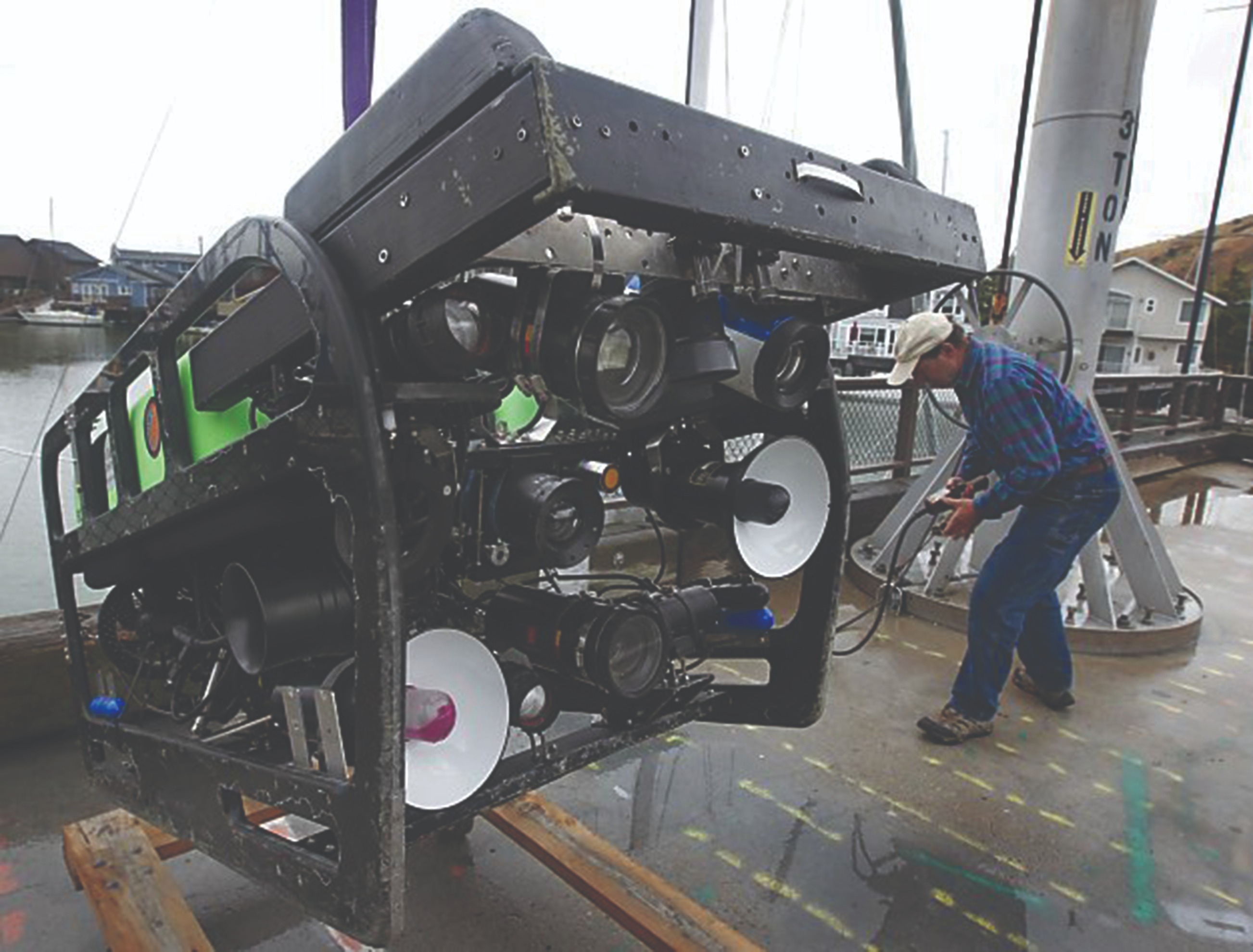
With a $320,000 grant from the National Oceanic and Atmospheric Administration and help from several partners, Professor James Lindholm will study how the impact of traditional trawling on the seafloor may be reduced by using modified gear.
In traditional bottom trawling, large nets are dragged across the seafloor, altering fish habitats that occur there. Dr. Lindholm’s study will compare the impacts of traditional gear to newly modified gear that significantly reduces contact with the seafloor.
The project will start next summer off Half Moon Bay. “We hope the study will yield insights that result in changes in fishing behavior,” Dr. Lindholm said.The project is a collaborative effort among CSUMB, the Environmental Defense Fund, the Monterey Bay National Marine Sanctuary and fisherman Giovanni Pennisi.
Catch CSUMB on tv

In partnership with KCBA Fox 35, the university is producing a weekly television program, “Campus to Community.” It’s part of CSUMB’s commitment to serving as a catalyst for positive change – through education, outreach and public service.
The show highlights speakers and issues of interest to the Central Coast. Students, alumni, faculty and staff are involved in the production of the program. Some installments feature one speaker, others are a magazine format with short segments highlighting various programs and professors.
The hour-long show started in early October and airs every Sunday at 8 a.m.
KCBA can be found on channel 3 on Comcast and on channel 35.1 on the campus cable system.
Cinematic Arts Professor Luis Camara pens successful film screenplay
Luis Camara has added another accomplishment to an impressive cinematic career. This year, the longtime CSUMB Cinematic Arts professor wrote a screenplay for a comedy that became a box office success in Mexico.
The film “Me estás matando Susana,” (you’re killing me Susana) is based on a novel by the prominent Mexican author José Agustin. It stars Gael Garcia Bernal and Verónica Echegui and opened on 600 screens in Mexico, coming in 7th at the box office on opening week. Reviews have been positive, with major newspapers such as El Norte, Reforma and Exelsior praising the film and screenplay.
In a video review, critics for El Norte called Camara’s screenplay “a solid script” and that the “well executed film” captures “the essence of the Mexican Onda literary movement, while actualizing it to the present day.”
Originally from Mexico City, Camara is a graduate of the American Film Institute. He has directed the award-winning short films “Endgame” and “Ex Voto,” and the feature films “Steel Trap” and “Silencio,” winner of the best feature award at the Los Angeles Fear and Fantasy Film Festival and best cinematography award at the Queens International Film Festival.
CSUMB students, local researchers to benefit from NOAA Grant

CSUMB is one of six universities across the nation that will benefit from a new five-year, $15.5-million National Oceanic and Atmospheric Administration (NOAA) Center for Coastal and Marine Ecosystems. NOAA has approved a total of $3 million to be awarded this year for the first phase of the new NOAA Cooperative Science Center.
“With CSUMB’s portion of the funding, we will be able to support between six and eight students per year on our campus,” said CSUMB School of Natural Sciences Associate Professor Corey Garza.
Graduate students will be eligible for two years of funding; including a yearly stipend of $20,000 and the full cost of tuition. Graduate students also receive a $10,000 scholarship to support research and summer funding up to $5,000 to support research activities at a NOAA facility.
Undergraduates funded through the center will receive one year of stipend support up to $12,000 and a research account of $1,000. Faculty who mentor students through the center will have access to funding to support the purchase of supplies and non-capital equipment for their respective groups. Access to NOAA vessel time and post-doctoral funding will also be available.
Research topics include: fisheries, eco-forecasting, terrestrial impacts on coastal systems, climate change, ocean acidification and ocean engineering.
Bachelor of Science in Nursing program at CSUMB receives CCNE accreditation
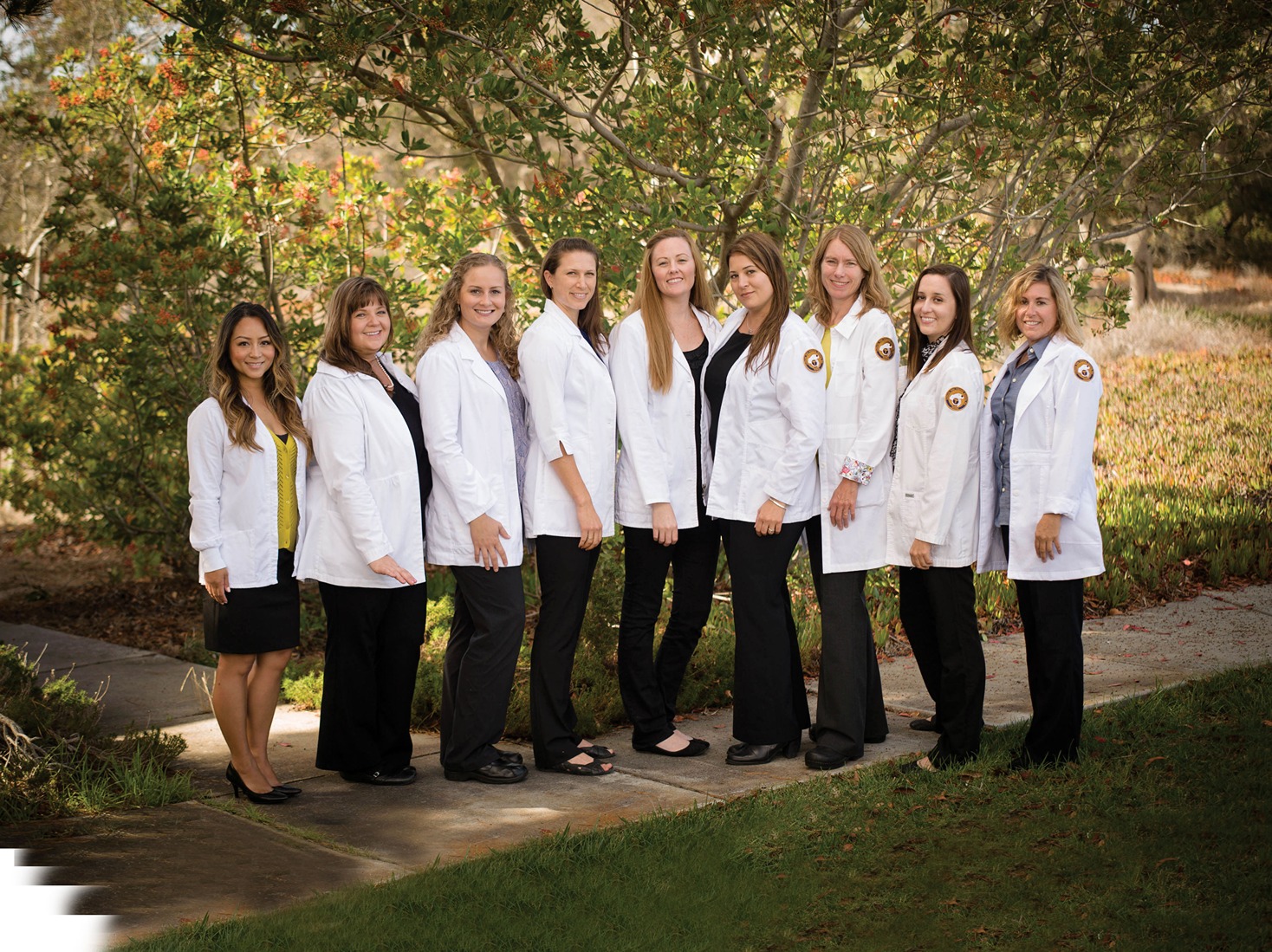
CSU Monterey Bay’s Bachelor of Science in Nursing (BSN) is now the only Commission on Collegiate Nursing Education (CCNE) accredited program in the tri-county region.
Bachelor-prepared registered nurses (RNs) advance the nursing profession and qualify RNs for advanced professional career opportunities in a wider array of healthcare settings.
“BSN graduates are prepared with an increased knowledge of the theoretical practice of nursing and in turn are able to provide a broader spectrum of healthcare to our community,” said CSUMB Department of Nursing Director, Savitri Singh-Carlson, who has a doctorate in nursing. “This program will help address a critical healthcare gap in the region by increasing the number of bachelor-prepared RNs.”
While there is no direct entry BSN program at CSUMB, partnerships and pathway programs with local community colleges facilitate a seamless transition from associate degree in nursing (ADN) and RN programs to the CSUMB BSN program. By earning a BSN, RNs are also prepared to pursue a master of science in nursing (MSN).
According to Singh-Carlson, the CSUMB Department of Nursing hopes to submit a proposal for a MSN degree in 2017 with hopes that the degree could be offered in 2018.
CSUMB Science and Environmental Policy is now the School of Natural Sciences

The CSUMB Science and Environmental Policy Division has a new identity. The division has changed its name to the School of Natural Sciences (SNS), and will continue to be a part of the College of Science, together with the School of Computing & Design and the Mathematics & Statistics Department.
The SNS is the home for an array of academic degree programs, research laboratories, and community outreach programs. All SNS programs provide outstanding opportunities for over 1,300 students to learn how to use interdisciplinary science, technology and communication skills to serve community needs.
The SNS places a heavy emphasis on preparing students for rewarding careers and more advanced academic study in fields related to environmental resource assessment, management, and policy. The faculty provides particular strengths in marine and terrestrial biology and ecology, watershed science, marine science, molecular biology and genetics, environmental education, and advanced technologies for geospatial data collection, analysis and visualization.
Enid Baxter Ryce’s Film Recognized

CSUMB professor and experimental filmmaker Enid Baxter Ryce had her Fort Ord feature film “A Land for War” highlighted in March by The Library of Congress’s Veterans History Project in Washington D.C.
The film was also screened, along with a collection of her students’ documentaries in “Fort Ord: A Sense of Place,” at the National Gallery of Art as a part of the D.C. Environmental Film Festival.
In “A Land for War,” Ryce documents the lands and ruins of the historic Fort Ord and portrays the impact of the military base on the terrain and people. The film’s original musical score is by CSUMB Music Instructor Lanier Sammons.
The student film program, “Fort Ord: A Sense of Place,” is a compilation of the university students’ documentary and experimental shorts focused on the ecology, community and history of the base. The films also feature oral histories collected for the Library of Congress Veterans History Project.
Congress created the Veterans History Project in 2000 to collect, preserve and make accessible the first-hand remembrances of America’s war veterans from WWI through current conflicts, so that future generations may hear directly from veterans and understand the realities of war.
Student Supports Immigrants with Scholarship Program

Daisy Leon Melendrez, a CSUMB service learning student leader, has been selected as a Principal Community Scholar for her community project to provide information to immigrant communities about their constitutional rights.
Melendrez is among 20 college students from Iowa and California selected for the first class of the new program.
The project addresses fears and anxieties of those in immigrant communities about impending changes to immigration policy. The recipients were selected by Principal, Iowa Campus Compact and California Campus Compact after being nominated by faculty or staff from their college or university. They underwent a rigorous review process.
Melendrez is a collaborative health & human services major. She has been the liaison to the Central Coast Citizenship Project in East Salinas.
“We are excited that Daisy has been selected as a Principal Community Scholar for her community project to provide information to immigrant communities about their constitutional rights,” said Pamela Motoike, professor at the CSUMB Service Learning Institute and program adviser.
CSUMB Signs Partnership with Universidad de León, Spain
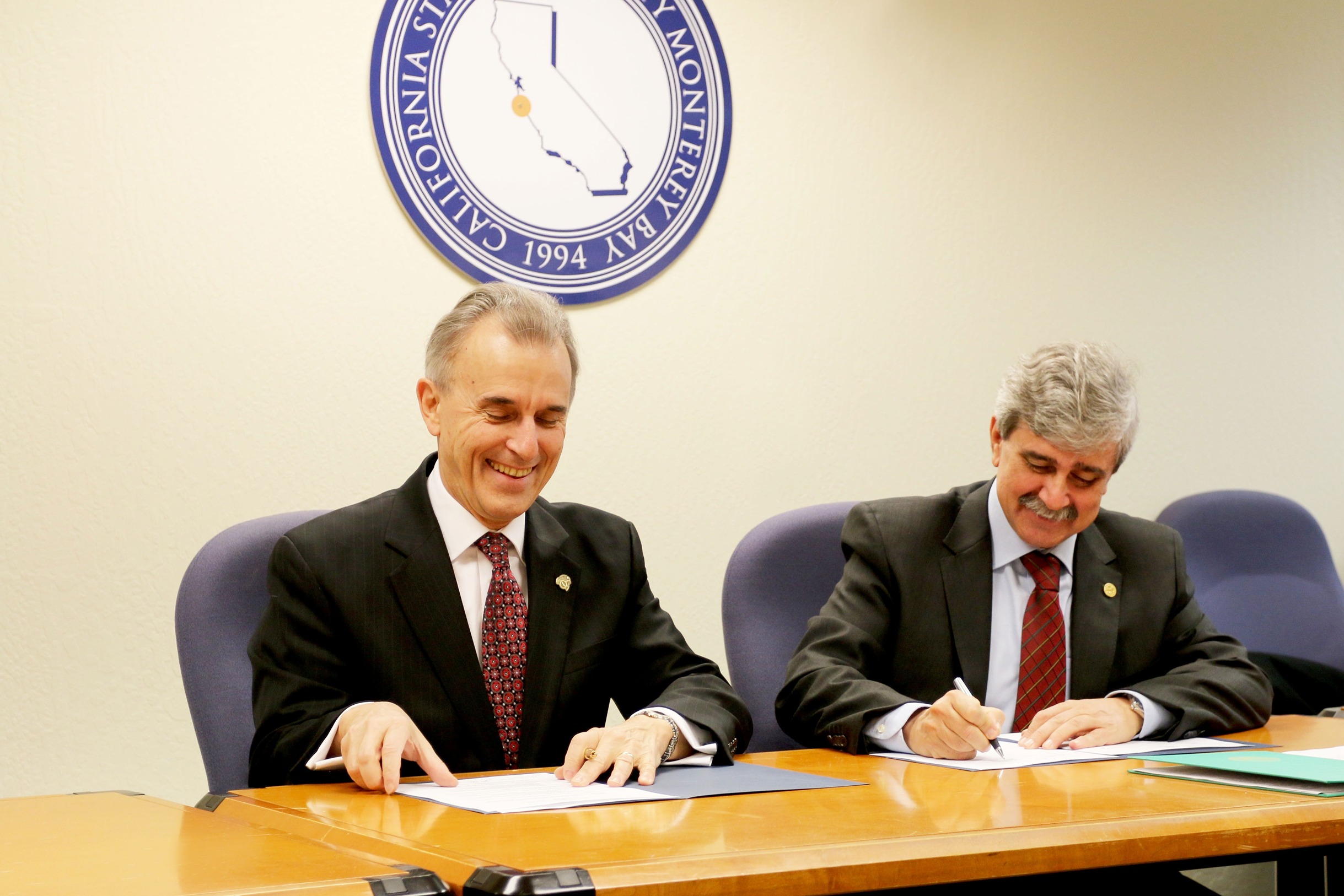
California State University Monterey Bay and Universidad de León, Spain signed a memorandum of understanding recently, creating an international partnership that opens great possibilities for exchange of students, professors and educational resources.
Universidad de León delegates President Juan Francisco Garcia Marin, Professor Oscar Fernandez and Professor Eduardo Compadre toured the CSUMB campus, and met with students, faculty and staff for an official welcoming and signing ceremony to commemorate the new international partnership between the two universities.
The new alliance will allow the exchange of undergraduate students between both universities during certain academic periods. In addition, the alliance will facilitate the opportunity to help each other learn a second language, study a new culture through personal interaction and share best teaching practices in a variety of subject areas.
CSUMB Renovates Veterans Resource Center
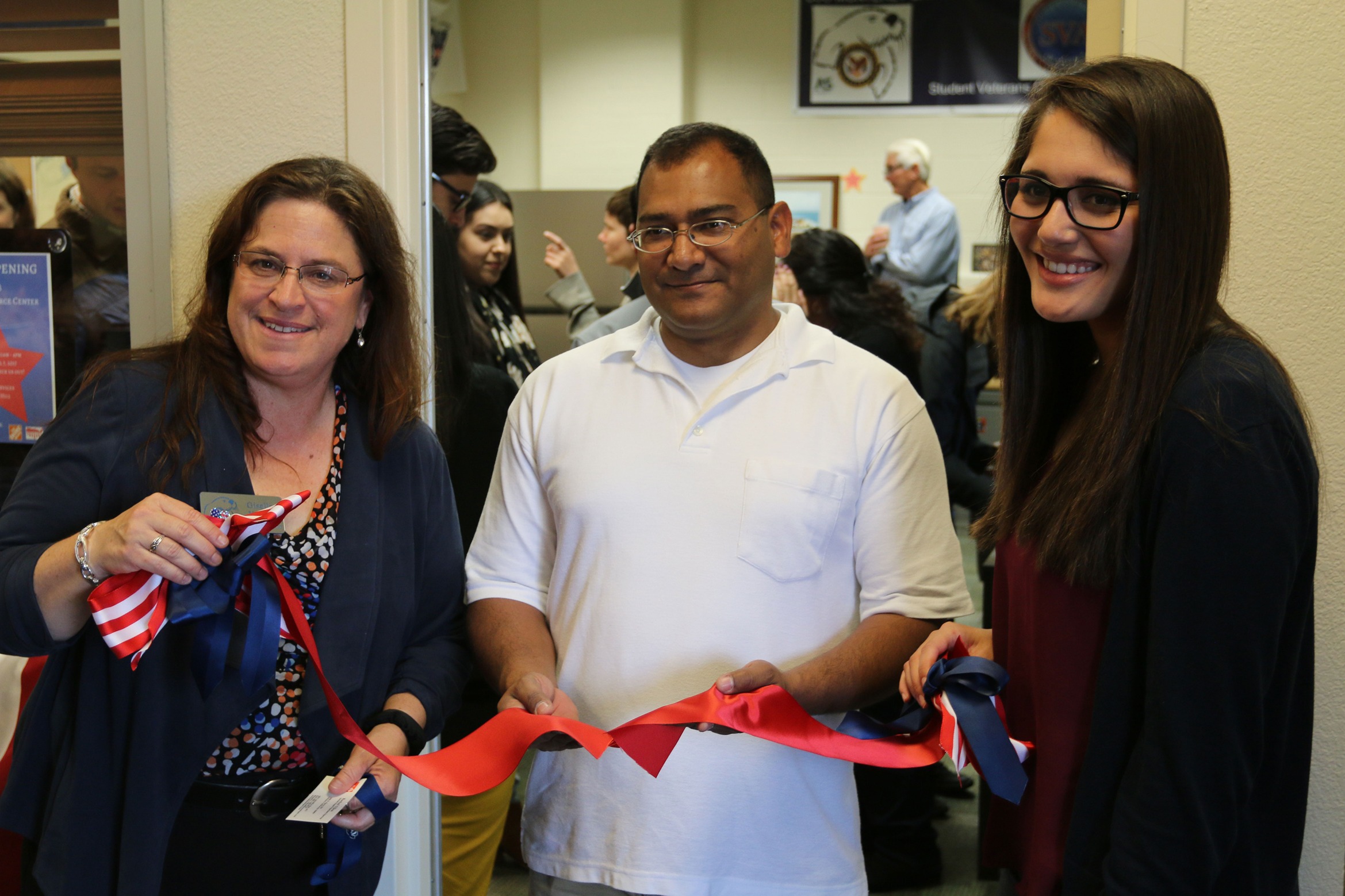
CSUMB recently celebrated the renovation of its Veterans Resource Center, thanks to a generous donation of $6,000 by The Home Depot Foundation (THDF).
The renovations, which include new carpeting and furnishings, were received from THDF in partnership with the Student Veterans of America (SVA). The new and improved Veterans Resource Center offers an inviting atmosphere, allowing veterans to seek assistance with benefits, gain access to support services and build social support networks to motivate each other to stay in college.
“The veteran students on campus finally have a fully furnished space where they can study, relax and connect with each other when not in class,” said CSUMB Veteran Services Coordinator Giselle Young.
CSUMB Student Veterans Organization President, business major and Army veteran Gilbert Bernabe says the Veterans Resource Center has become a home away from home. He utilizes the center more now than during his first semester. “That is all thanks to the work of Giselle, and the sponsors, for making the resource center feel welcoming,” said Bernabe.
“We were very lucky to have received the generous financial support from The Home Depot Foundation,” said Young.
Out of the Pacific Air
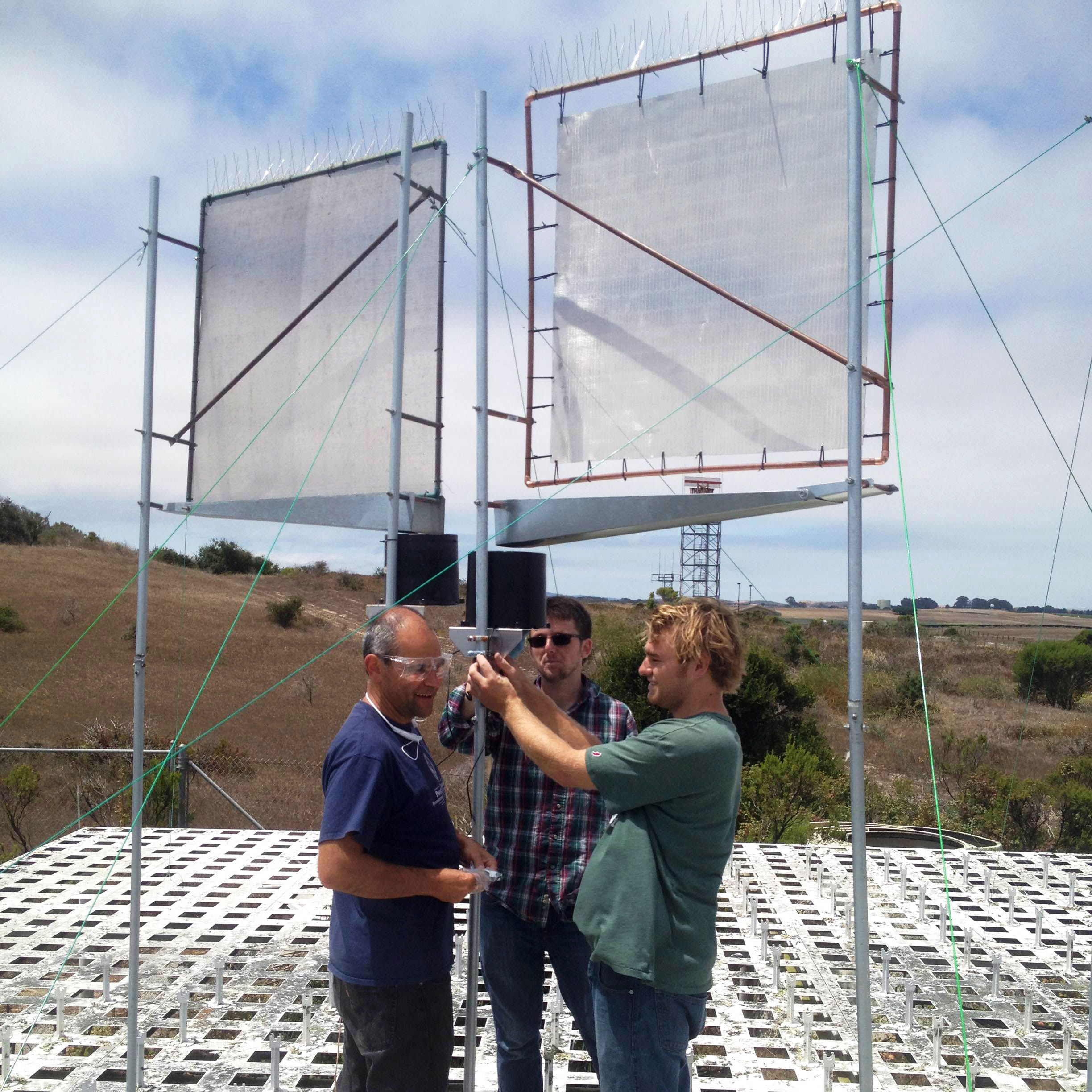
I have often felt the mystery and allure of a foggy afternoon or evening, having lived in Monterey for the past two decades. I am also painfully aware of the drought that our state faces, which is also chronic throughout the Southwestern U.S. At one point, in 2004, I put the two of them together and wondered if we can collect the moisture from fog. Details on that moment of realization can be heard in my 2011 TedX talk.
What followed was an opportunity to connect with Fogquest, a non-profit Canadian organization whose mission is to provide atmospheric sources of water where traditional water sources, such as wells, rivers, and pipelines, are unavailable. Their executive director, Dr. Robert Schemenauer, pointed me to the relevant publications and provided guidance as I initiated some preliminary efforts with several students, who worked with fog water collection to complete their Capstone requirements.
One of the key points Dr. Schemenauer emphasized was the need to utilize a standard collection instrument for fog water, such that results can be compared on an international basis. It was for this reason that all of my deployments involved a device known as a Standard Fog Collector (SFC).
The standard fog collector stands three meters tall (around nine feet) and consists of a square, 1.00 meter copper loop fitted tightly with a Raschel shade cloth mesh. The specified mesh is manufactured in Chile and represents the inter- national standard for comparison of fog data. The structure of the mesh allows wind laden with the tiny fog droplets to pass through it, yet it also has sufficient surface area to capture many of these fog droplets as they accrue into larger droplets and fall, due to their weight.
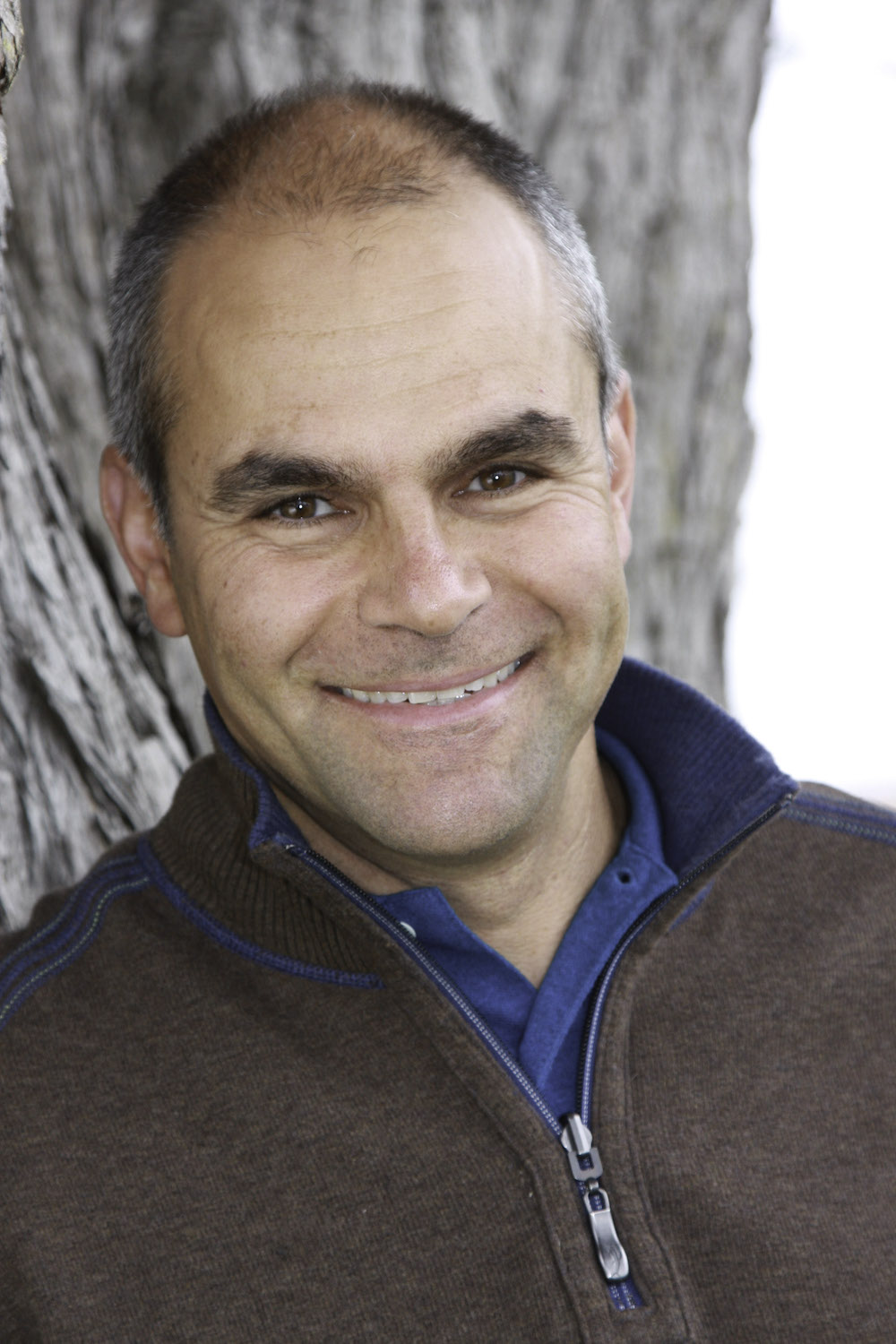
The copper square is supported by two vertical galvanized pipes and an angled trough underneath it captures the water that drips down from the mesh. The fog collector is supported by four guy wires that are either staked into the ground or tied to existing structures. A tipping bucket rain gauge records the water that comes out of the trough. Local meteorological station data lets us know when rain events occur so that we can remove those events from our records.
Amounts these systems have collected regionally vary from between nothing (when there is little or no fog) to as much as 36 liters from one square meter in a day that happened to be very foggy with high winds at an elevated location in the rugged coastal terrain of Big Sur. However, typical amounts we have collected from a square meter in a one-day period are generally somewhere between a fraction of a liter to three liters.
The first three standard fog collectors that we deployed were constructed in Chile and shipped here. Since then, as a result of some funding from CSUMB, NASA, and, most currently, the National Science Foundation, we have been building our own standard fog collectors, which have been deployed in the Marina area and in the Carmel Highlands since 2009. The National Science Foundation funds allowed us to expand our fog collection network to around a dozen sites from Big Sur all the way to Arcata (a span of over 400 kilometers).
Important data
There are several reasons why collection of fog water is important. One is that it provides an indication of the amount of fog water that is potentially available to regional ecosystems. There are many species of flora that are dependent upon fog water during the otherwise rather dry season in California.
These include, but are not limited to, coastal redwoods, various species of manzanita, and a variety of perennial grasses. Some animals, such as certain species of lizard, are also dependent upon both the moisture and the cooler temperatures that the fog provides. Better understanding of regional and statewide fog patterns can help us make better decisions on rangeland management issues.
Additionally, as many of us experience when standing under a Monterey pine on a foggy day, trees are excellent fog collectors and some of the fog water that they collect penetrates into the ground, providing moisture to the tree itself and to the understory. Absent these trees, very little of the fog accumulates and much of it ends up evaporating. Some efforts at re-foresting following fire or human activity require the water that would normally come from tree fog drip, but which no longer does. In these cases, some of which exist in formerly mined areas in Chile, use of large-scale fog collection is being considered to encourage re-growth of formerly forested areas.
Many uses
While the amounts of water that can be collected from fog are relatively modest compared to the typical amounts we demand for drinking, bathing, flushing toilets, watering lawns, and, of course, growing our food, the amounts obtainable from these systems may be practical for some remote villages which do not have access to water by more conventional means. Additionally, the water obtained from passive fog collecting systems may provide a means to keep wildlife from encroaching on human settlements in search of water.
Furthermore, the fog is a vector for many different types of contaminants, from sulfur, sodium and chloride, associated with the ocean, to organic and nitrogen compounds produced by industry and even to pesticides in agricultural areas. Recently, levels of mercury compounds have been found in some coastal fog that has generated significant research efforts which CSUMB has also been a part of. Results from these studies of mercury indicate that organic mercury compounds, which are thought to be formed by bacteria in the ocean column, are entering the fog, which may then be depositing them on the land, where they may tend to bio-accumulate in top predators. The original source of most of this mercury is thought to be from coal-fired power plants and, possibly mining operations, since the quantities of naturally occurring mercury are believed to be much lower. Studying the fog, then, may provide a better understanding of not only the natural cycles of water, but of the cycles of various toxic chemical compounds, including mercury-based organic compounds, hopefully leading to improved policy and management decisions on mercury emissions.
Despite the completion of the National Science Foundation project, we are hoping to maintain many of the passive collector sites to establish a long-term data set of fog water availability for the California coastal region.
Scandinavia’s Green Streak
By James Tinney
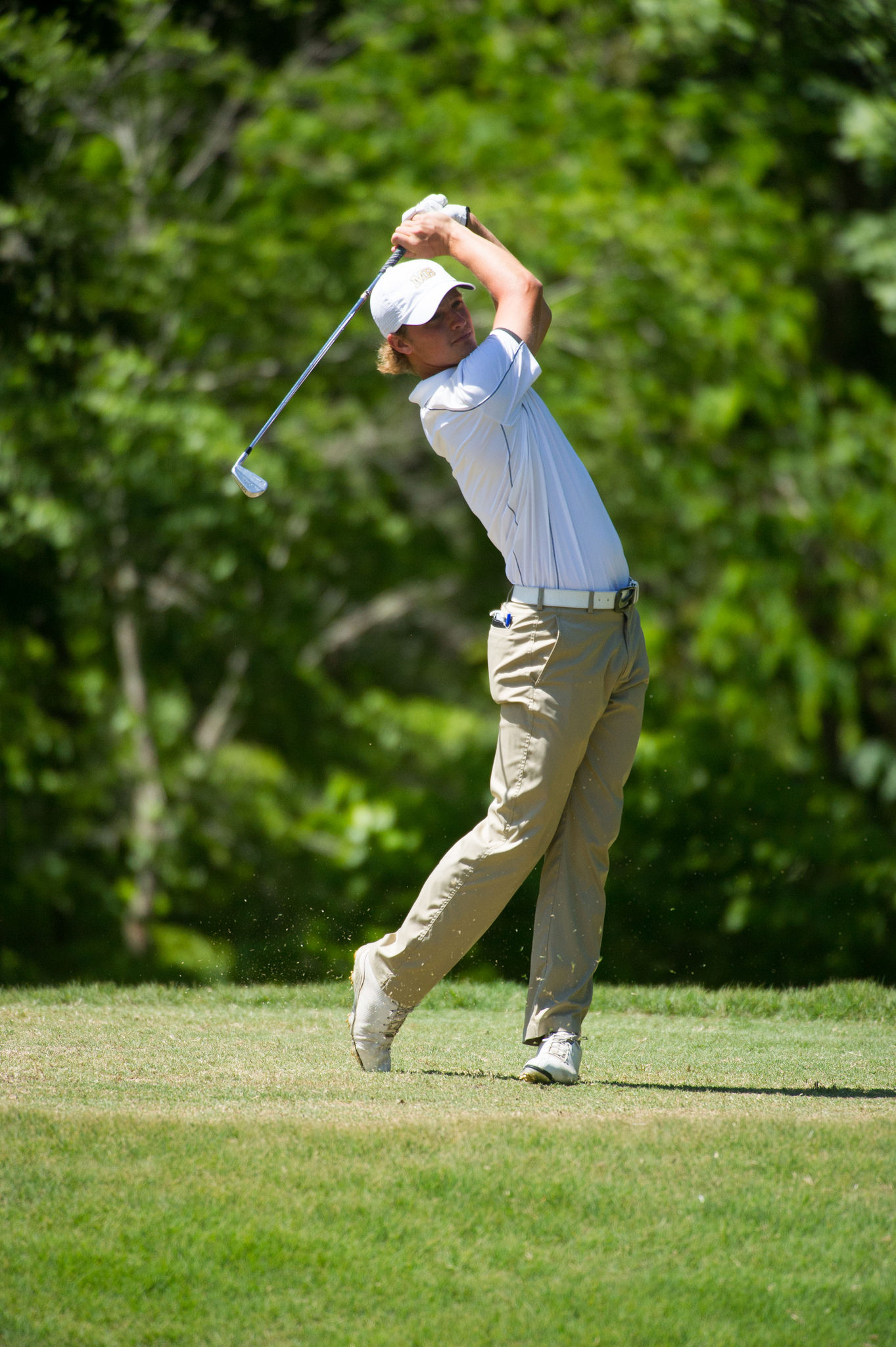
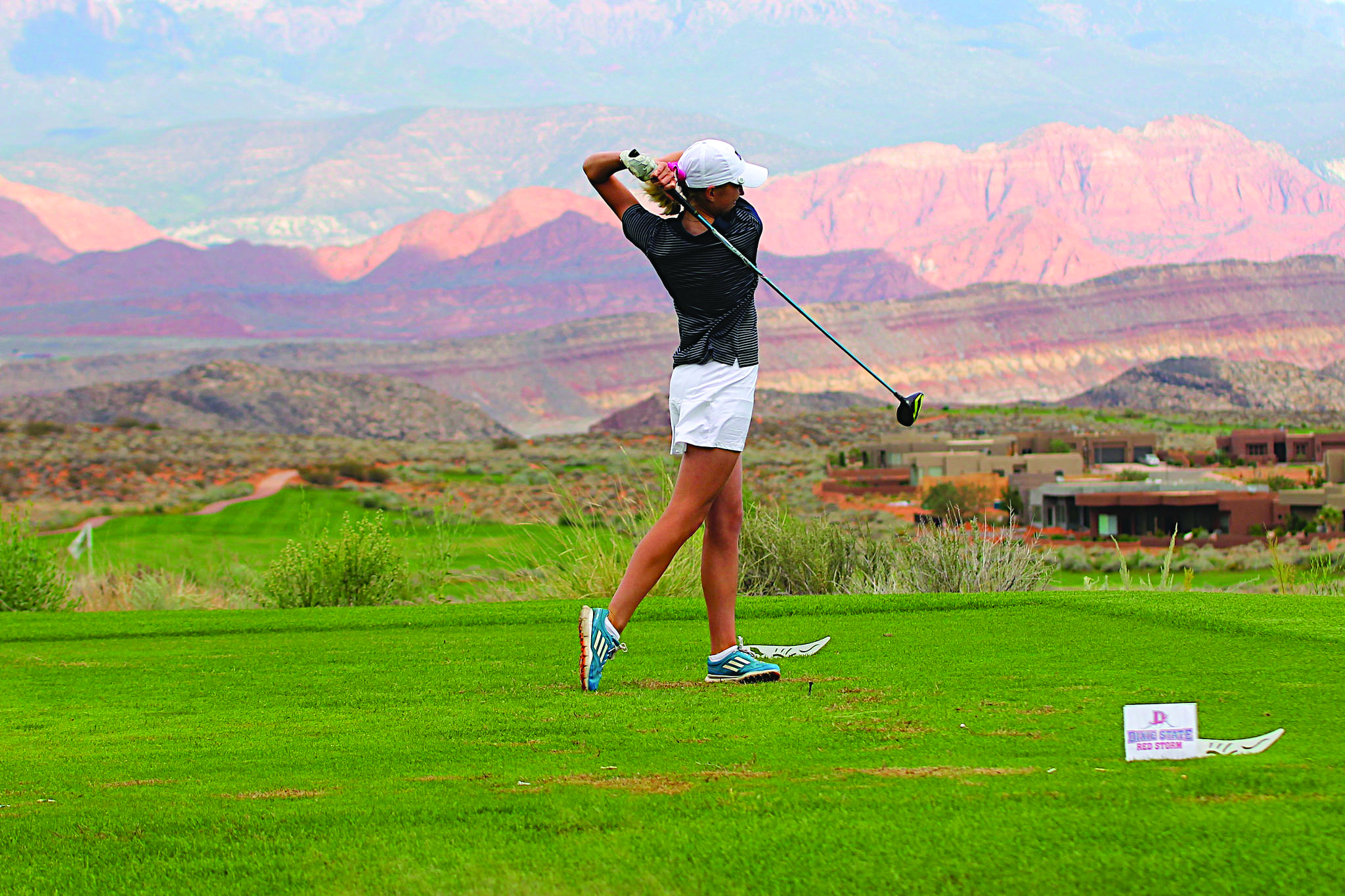

Recruiting athletes internationally is not really in the budget for Division II universities, especially not for golf programs. Never underestimate, however, the power of a satisfied alumnus.
Recruiting talent
“I happened to meet Oskar (Nystrom) in the summer of 2011. I was paired with him in a tournament,” said Anton Rosen, from Stockholm, Sweden, who is now a senior at CSUMB.
“At the time I wasn’t thinking about going to college. I had a job and was planning to go ahead with that. And Oskar encouraged me to try at least. He got me in touch with (CSUMB Golf) Coach (Jason) Owen and I liked everything he told me.”
That summer, Nystrom had just helped CSUMB win its first (and so far, only) Division II national championship. He was joined on the 2011 national champs by fellow Swede Martin Hardenberger.
Around that same time, Fredrik Jullum from Lorenskog, Norway, was considering the possibility of becoming a pro golfer right out of high school. “I wasn’t really planning to go to college. But I started talking to a Norwegian guy who had been here, Alex Sobstad, and it happened very quickly after that,” Jullum said. “I didn’t know anything about this area at all, to be honest. But I took his word for it, and I am glad I did.”
Scandinavian connection
The Scandinavian connection has helped the men’s golf team earn five trips to the NCAA Division II national championship tournament in the past six years. Rosen has been named to the All- CCAA team all three of his years at CSUMB; he was joined on last year’s all-conference team by Jullum, who is a junior this year, as well as teammates Carr Vernon, Brandon Hortt and Ray Richards.
This season, the women’s golf team also attracted some foreign talent.
Linnea Karlsson from Äkersberga, Sweden had been playing golf since she was a young girl, while playing a number of other sports as well.
“Growing up, I played soccer and floor ball (a type of floor hockey). A lot of girls stopped playing, and it wasn’t that serious anymore,” Karlsson said. “When I am playing something, I want to go all in, so I figured golf was something that I could work hard at and get better.”
She did that, and then began looking for a place to continue her golf and her studies.
“A lot of people, if they want to continue their golf, go to the U.S. It is a great experience, you can play for a team and continue your education,” Karlsson said.
It turned out that the CSUMB connection was particularly strong for Karlsson. Her mother’s cousin, Gustav Backman, had played on the golf team at CSUMB. Karlsson also played at the same country club in Stockholm as Anton Rosen.
“I heard lots of good things about the school. So Gustav helped me get Jason’s contact information,” said Karlsson, who, in her first tournament at CSUMB, tied the Otter women’s record for 36-hole score.
Good reputation
Owen has coached the golf team for seven years and he understands what attracts Scandinavian golfers to CSUMB.
“The weather there is not great for golf, so California is a big draw. Pebble Beach is a great draw. And I think I have a pretty good reputation for developing good golfers, so that helps.”
“We have developed a pipeline that has brought us some good golfers and great people,’’ Owen said.
“We don’t have the budget to go over there and recruit, but I can look at what someone scores on a certain course and know if he can golf for us. Through the Internet, Skype and phone conversations, you can get to know someone really well and know if someone will be a good fit.”
Rosen said he plans to turn pro after he completes his senior year with the team, but will return to CSUMB in the fall to finish his studies toward a degree in kinesiology.
He said this is the best team he has been on at CSUMB, so team members are looking forward to the possibility of battling for another national championship in May.
They are a close-knit group, but are spurred along by one another as they try to develop a championship team in a highly individualized sport.
“I want Anton to play well, but I want to play better than Anton,” Jullum said. “I want to play my best, better than his best.”
Start It Up
College campuses for decades have been hotbeds for innovation. Did you Google something today? Or use FedEx to ship a package recently? Both were conceived on a college campus. And as almost everyone knows, a dorm room was the birthplace of Facebook. Ideas with a desire to push the limits, combined with energy for long hours and caffeinated nights, can result in extraordinary business success.
Entrepreneurship
CSUMB is kindling this spirit of innovation with events like the Startup Weekend, an annual event that brings together community and student entrepreneurs from CSUMB and other institutions to the University Center for a 54-hour, intensive, hands-on experience in entrepreneurship. The event was held earlier this year.
Startup Weekend began with open-mic pitches on Friday night, where attendees are encouraged to bring their best ideas and inspire others to join their team. Teams then formed around the top ideas (as deemed by popular vote). After that, it was a marathon of business model creation, coding, designing and market validation. The Red Bull and coffee flowed as student entrepreneurs brainstormed their projects.
“It's about learning by doing – and a great way for students to experience the chaos of creating a new business from scratch,” said Brad Barbeau, associate professor in the CSUMB College of Business and the executive director for The Institute for Innovation and Economic Development, which organizes Startup Weekend.
This year at Startup Weekend, 85 participants pitched 38 business ideas. Twelve of those ideas received the popular vote and were worked on through the weekend. Teams formed around these 12 surviving ideas to create the business prototypes for the Sunday night pitches in front of local entrepreneurial leaders, which provided critical feedback.
The following prototypes were evaluated:
• College Car - a student based Air B&B car rental service
• Our Sommelier - wine pairing mobile application for millennials
• My Releaf - connects medical marijuana patients with ideal strains for their symptoms and tells where it can be found locally
• Tinker – allows users to learn how to build hardware interactively for free
• Front Man - app that forms a network connection between venues, bands and fans for scheduling of gigs
• Stop Slop - app for connecting the community to local government to identify hazardous environmental areas for locals
• JamCloud - social voting app for music at parties
• GreenSuite - sustainable student home setup that is convenient, time saving, and affordable
• FITNEX - a fitness scanning machine
• Solar Rail: MAPR - personalized public transportation by rail
• Verbose Lingo - specialized online language training for businesses large and small
• StyleHit - artificial intelligence for men's fashion advice
A panel of four judges picked the top three business prototypes. First place went to JamCloud, followed by My Releaf and Solar Rail. The crowd favorite was Stop Slop.
JamCloud is the brainchild of Brandon Geoffroy, who led a team that included four CSUMB students that finalized the concept and technical details. The social music app would allow anyone attending a party or gathering with music to instantly create a playlist for everyone present to add, vote, and listen.
“The Startup Weekend experience is invaluable for student entrepreneurs, allowing people with entrepreneur mindsets who lack opportunity to dive into the start-up world to meet like-minded people and begin their first venture,” said Geoffroy. “This incredible event also provides networking opportunities and promotes building relationships with people who share similar interests in specific industries.”
Startup Weekend was the first step for several business prototypes. JamCloud and three others, My Releaf, Solar Rail and Tinker, went on to become finalists in the Startup Challenge, which follows Startup Weekend in May of this year. Tinker, the online interactive platform for learning computer hardware, took first place in the student division of Startup Challenge, with a prize of $1,500.
Startup Challenge, like Startup Weekend, is organized by the College of Business’ Institute for Innovation and Economic Development. The Institute focuses on the need for more job opportunities in the region and offers programs that work toward developing entrepreneurs and supporting innovative ideas that lead to new business opportunities.
Class Notes
1997
Tammy (Losik) Springer (B.A. Liberal Studies) has two children, a son Morgan, 16, and a daughter Kayleigh, 13. She has been married for 18 years this June. Springer started teaching in 1998, and has taught at the Monterey County Home Charter School since November 2000. She is a board member of the Central Coast branch of the Arthritis Foundation. All of her family members volunteer for the foundation and in the Monterey Bay community.
1998
Cindy Engebresten (Multi-Subject Teaching Credential) graduated from CSUMB when her son was 8. She worked as a bilingual language tester until he finished high school, then began full-time work as a family advocate for at-risk youth in the Pajaro Valley Unified School District. In this role, Engebresten often traveled to Sacramento and met with legislators to advocate for homeless youth. She also learned how to write grants. Now Engebresten is a full-time first grade teacher. Her son is “out-educating” her by earning an MBA at Santa Clara University.
Bryan Murphy (B.S. Earth Systems Science & Policy) is a senior analyst for a pharmaceutical company. He is married, has two kids, and is learning to fly hang gliders in his free time.
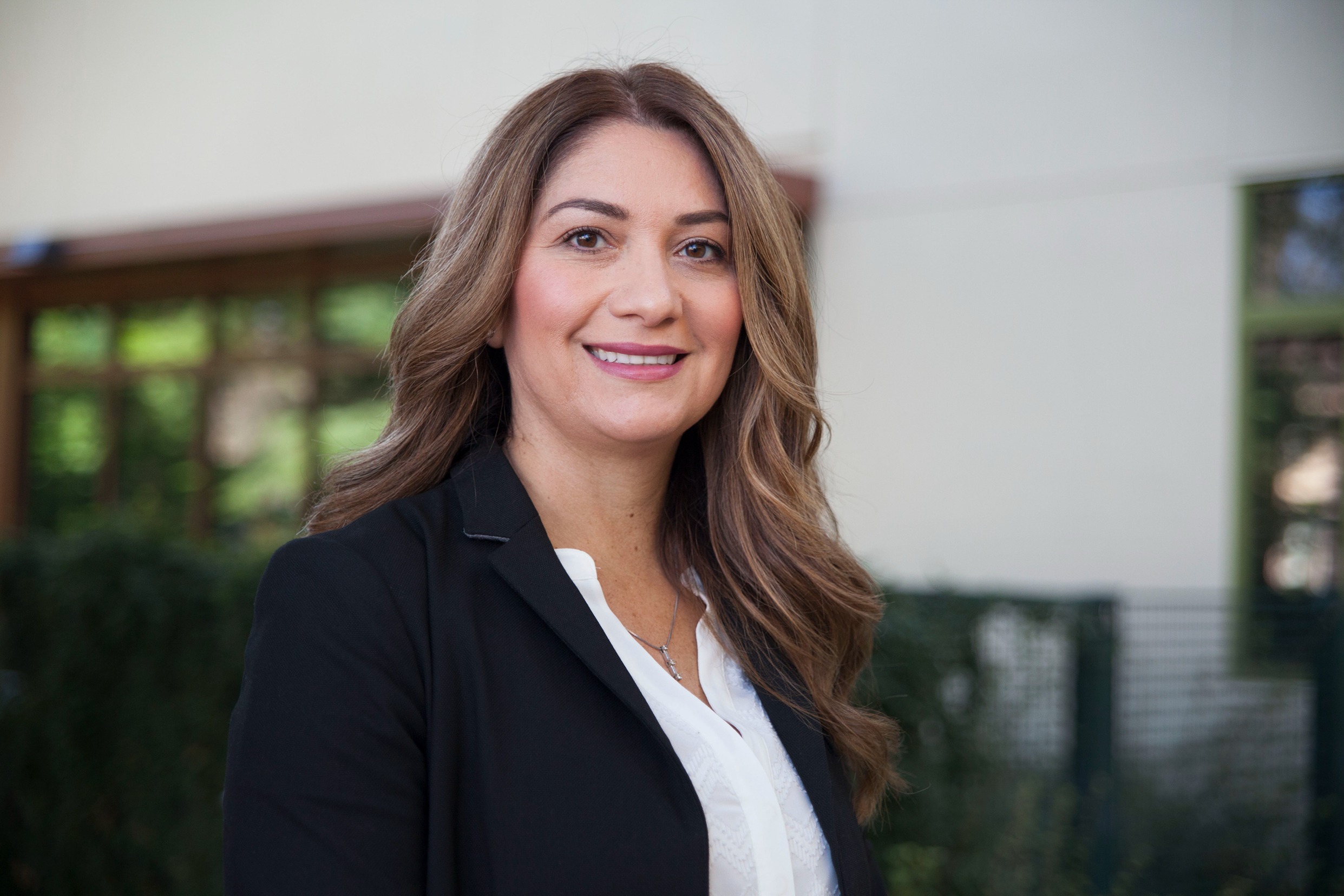
2000
Mayra Llamas (B.S. Management and International Entrepreneurship) is currently finishing up a doctorate degree in Educational Leadership at UC Davis, a tremendous achievement due to being a full-time Student Affairs administrator. Research interests include college access and retention, student of color retention and educational equity.
2003
Kate (Stockham) Pardo (B.A. Human Communication) got married in 2004 to Nick Pardo. They have two boys, Cooper and Nathan, ages 7 and 8. She is currently the office manager at Silver Rail Elementary school in Bend, Oregon.
Chris Horangic (B.A. Teledramatic Arts & Technology) has worked in the film/television industry since graduating. When Horangic first moved to Los Angeles, he worked as a second assistant director on indie feature films. After working in features for a few years, Horangic decided to make the move to reality TV and spent approximately six years working as the production manager for ABC’s “The Bachelor and Bachelorette,” which required him to travel the world looking for exotic filming locations. He left that show in 2012 and took the coordinating producer position on Discovery Channel’s, “Naked & Afraid,” where he oversaw production, scouted and set up all filming locations for the show. After traveling the world and being out of the United States for eight months a year, Horangic decided to find a job that kept him in town. In late 2014, he accepted the line producer position with Travel Channel’s “Expedition Unknown,” where he oversees production and budget.
2005
Daniel Delacruz (B.S. Telecommunications Multimedia and Applied Computing) attended Monterey College of Law after graduating from CSUMB and obtained a Juris Doctor degree. He is currently a disability rights advocate.
Ryan Lockwood (B.S. Earth Systems Science & Policy) has held interesting jobs since graduating from CSUMB, including helping with research projects that required capturing deer with large nets and chasing down mountain lions with the use of hounds. Lockwood’s career in writing and outdoor science has allowed him to serve as a professional editor and biological science technician for such agencies as the National Park Service and Colorado Division of Wildlife. He currently serves as the public and media relations coordinator for the Colorado State Forest Service and was previously the agency’s fire information officer. Since graduating, Lockwood has authored two now- published novels. Both have marine science themes and a main character based out of a fictional Monterey Bay- area marine lab, and both highlight real-world ocean threats (in addition to threats imagined by the author).
2007
Melinda Mazurek (B.A. Social and Behavioral Sciences) moved to Long Beach after graduating and want to work for the Disneyland Resort. Mazurek worked there for six years. In 2014, she left Disney to pursue a master’s degree in archival studies. She then moved to Richmond, Va., and was hired by Ancestry.com as a digitization specialist. From there, Mazurek was able to apply to another graduate school and sent her application to the University of Glasgow in Scotland. Mazurek is now living in Glasgow and is currently working on a master’s in information management and preservation. Her expected graduation date is in November.
2008
Emily Oberheim (B.A. Integrated Studies) recently completed her master’s in counselor education from San Jose State.
Zachary Kasow (B.A. Psychology) went to Cal Poly, San Luis Obispo for a master’s in psychology. After finishing at Cal Poly, Kasow moved to the Bay Area to work at a mental health non-profit. He started out as a case manager and has since been promoted twice. He now runs his own program. Since graduating from CSUMB, Kasow has presented three times at the Western Psychological Association annual convention. One of these studies was subsequently published and another is in progress.
Amanda (Farrah- McDonald) Brackett (B.S. Business Administration) married James Brackett in 2013. Together, they have a very active 2 year old named JP. In 2014, they bought a home in Killingworth, Connecticut, where Brackett is a part of the Killingworth Women’s Organization. Through the group, she started a local program called the Soldier Care Project. The program’s goal is to send care packages and goodies to service members who have ties to their local community. The programs also delivers care packages to the family, significant others or support systems of the service member. Brackett started this project because her husband is an Army veteran and when he deployed, she sent weekly care packages to him and his unit. The Soldier Care Project also focuses on the people who are left behind, because in Brackett’s words, “At least for me, it was a very lonely experience. Our town is small but supportive.”
Shae (Maher) Mitchell (B.S. Earth Systems Science & Policy) went on to earn her Master of Science in Coastal and Watershed Science & Policy at CSUMB. She has been an English teacher in South Korea for approximately two years. She married Adam Mitchell (B.A. Liberal Studies ‘10) and they have one son, who is almost 2 years old.
Aaron Gaulden (B.A. Human Communication) was just named academic dean and dean of student services at San Joaquin Valley College in Hanford.
2009
Chris Ponce (B.A. Teledramatic Arts & Technology) is a member of Central Coast CERT and is also a student at the National Academy of Sports Medicine with the goal to become certified personal trainer.
Chrissy Lofgren (B.A. Psychology) began working in the CSUMB Academic Advising office after graduating and piloted the centralized model of advising for the Psychology Department. The department did not have an adviser since it was a new major (established 2007). Thanks to Lofgren’s work, the CSUMB Psychology Department now has moved toward a centralized model where each major has its own professional staff adviser. Graduation rates have risen every year since the department implemented this strategy. During this time, Lofgren also completed her master’s in academic advising from Kansas State University.

2010
Jessica (Nicholas) Moon (B.A. Human Communication) Married her husband in 2013 after they met at CSUMB in a science class. Shortly after, Moon began serving as a psychiatric social worker at Monterey County Behavioral Health, where she works with juveniles in the justice system. She also serves as the Behavioral Health seat on the Juvenile Justice Commission in the Monterey area.
Lauren Scholz (B.A. Human Communication) completed graduate school at CSU Long Beach, earning a master’s degree in sport management. Upon graduating from CSULB, Scholz won the award for Most Outstanding Capstone Presentation. She now uses both degrees in her role as the content marketing coordinator for the national office of the American Youth Soccer Association.
Courtney Thomas (B.A. Global Studies) is currently working in Oakland for Sutter Health as an application analyst. In this position, Thomas trains providers and other medical staff on how to use an electronic health record. Her work supports multiple clinics in East Bay. Thomas plans to volunteer for an Oakland organization which provides financial literacy to children, grades K-12. As a hobby and side job, Thomas owns three residential properties in the East Bay and Sacramento and manages them as rentals. She enjoys real estate and plans to pursue a life-long career in it sometime in the future. Thomas loves to travel and has fallen in love with Guatemala.

2011
Clover (Lee) Sellden (M.S. Coastal and Watershed Science & Policy) recently reunited with fellow alums Christina Depweg (Mathematics, ‘12) and Michael Diaz (Biology, ‘12) in Costa Mesa, who also recently engaged. Sellden works and lives in San Francisco and recently got married. She continues to engage with the CSUMB internship coordinator and makes sure that opportunities are sent to the CSUMB network.
Danielle Walker (B.S. Environmental Science Technology & Policy) has worked several jobs since graduating from CSUMB. Walker was a fish and wildlife scientific aide for the California Department of Fish and Wildlife where she worked on the California Recreational Fisheries Survey, Black Bear Reclamation Project, and Steelhead Rescue Project. Walker landed her first full-time job as an environmental scientist for a private firm in Santa Cruz, Kinnetic Laboratories Inc., before she started working as a water conservation specialist for Marina Coast Water District in August, 2015. “I absolutely love my job!! I’m thankful for all the wonderful professors I had at CSUMB and the ‘real world’ situations I was exposed to. I recently got engaged and hope to go back to school to get my masters. Thanks CSUMB!”
.jpeg)
Joshua Opatowsky (B.A. Social and Behavioral Sciences) was accepted at CSU Bakersfield and began his master’s degree in social work in 2012, graduating in 2014. In graduate school, Opatowsky received the Who’s Who Among American Colleges and Universities award. In addition, Opatowsky started participating in RunDisney races in 2014 and has collected a total of 47 running medals over the past two years. He got married in November 2014. Opatowsky and his wife run the races together, traveling back and forth from California to Florida to complete races at Walt Disney World between running the races in Anaheim.
2012
Karen H. Moseley (Master of Business Administration) started teaching at Fresno City College in 2014 before teaching at CSU Fresno in spring 2015. Her primary areas of teaching include women’s studies, sociology, and business. Her focus is on women’s history, women in management, and the understanding of historical women’s positions within American culture and society, politically and economically.
Steven Patrick Thiele (B.S. Business Administration) works as the manager of sales and marketing of North Bay Trading Company (NBTC), an international trading firm based in Monterey. However, Thiele is fortunate enough to be able to work remotely from his home in Las Vegas. NBTC exports a large variety of primarily American products including dry and frozen food, building materials, hardware, vehicles, and other specialty products.
Elika Parivar (B.S. Kinesiology) moved to Ogden, Utah, and completed a graduate degree in athletic training. She became certified and licensed, and got a job with the largest hospital system in Utah as an athletic trainer. Parivar does outreach by providing orthopedic medical services to the athletes at high schools in the area. “Education and injury prevention is very important to all athletes but starting at an early age is key!”
Natalie Rojas (B.A. Teledramatic Arts & Technology) continues to live in Monterey and works for the Inns of Monterey, which operates four boutique hotels in the area. She loves writing short poems and taking pictures during her free time. Rojas and her partner enjoy frequent hikes in Pacific Grove, Carmel, and Big Sur. They both love traveling and visiting Santa Cruz any chance they get, especially for the food and music.
Corinne Hanna (B.A. Psychology) moved to Kunming, China, after graduating and has been teaching English there for the last three years. Hanna teaches ages 3-16. “The city here is amazing and I have met some wonderful people from here and all over the world. When I have a chance to get out of the city, the area and countryside is quite beautiful and the culture is very unique to each village.” She plans to move back home soon and go back to school to earn her teaching credential.

2013
Maricela Aboytes (B.A. Human Communication) is completing a master’s program at the University of San Francisco. The Santa Clara County Homelessness Task Force implemented her recommendations from her Capstone project on homelessness.
Michelle Jones (B.S. Environmental Science Technology & Policy) started working full time for the Science Learning and Exploration with the Help of Sea Lions (SLEWTHS) project after volunteering there for four years. The SLEWTHS project is a small non-profit organization affiliated with the Cal State University system. The organization works with rescued and non- releasable California sea lions. It provides training and other programs to educate the public. Jones got promoted to the role of supervisor trainer in January 2016.
Claudia (Pacheco) Vasquez (B.A. Collaborative Health and Human Services) has been employed since graduation with the Monterey County Health Department in the division of In Home Care Services. Vasquez “loves her job,” allowing her to manage her own hours and work around a growing family. Vasquez gets great satisfaction out of being able to help the senior community. “I have been able to apply many learning experiences from the social work concentration! Thank you for the proper education and training through Capstone.” Vazquez and her husband have two children, a girl and boy.
Stephanie Samantha Sumler (B.A. Visual and Public Art) was an assistant of Amalia Mesa-Bains after graduating CSUMB. “She was so wonderful to work with and helped me further my education in gallery installation, as a curator, and as an artist.” Sumler then got a job as a community liaison with the Monterey Peninsula Unified School District. She now serves as the assistant art director for the city of Seaside.
Carmine Lepiane (B.S. Business Administration) is currently employed at Vanderbilt CPA PC as a staff accountant. Through the work at Vanderbilt, Lepaine has grown in the field of accounting. Additionally, he passed all four parts of the uniform CPA exam and has been accepted to Golden Gate University’s masters in accounting program, which he will start this summer. In addition to accounting work, Lepaine has recently been accepted to join the Ambassador Committee for the Monterey Peninsula Chamber of Commerce. “I hope to further grow as a member of Monterey Peninsula business community and I am grateful for all the skills that I have gained from being an Otter!”
Andreina Aguilera (B.A. Psychology) is working on her master’s in social work at CSUMB. She bought her first home this year, and is trying to make a difference in the community through counseling and youth groups.
Christy Welk (B.A. Social and Behavioral Sciences, and Spanish) went on to UC Santa Cruz and San Jose State, where she received a single subject teaching credential in social studies. Welk got her first job teaching middle school this year and met her fiancé at UCSC in the credential program. He teaches sixth and seventh grade social studies at a middle school in Mountain View. They are getting married this June.
Henry Houston (B.A. Human Communication) worked for a year after graduating as a contributing writer for the Santa Maria Sun, Northern Santa Barbara County’s weekly newspaper. He served in this position while applying to graduate schools. Houston then accepted an offer to the master’s program in International Studies at the University of Oregon. His research focus is exploring sustainable energy development issues, water policy, and climate change in Pakistan, specifically examining how water and energy professionals in Pakistan perceive dams as solutions for renewable energy generation and infrastructure to manage climate change-related natural disasters – such as floods and droughts. To gather data, Houston conducted field research in Islamabad, Pakistan.
Courtney (Hoyland) Gamez (B.A. Spanish) applied to law school during her last year at CSUMB. She was accepted and after graduating, Gamez started at Pacific McGeorge School of Law in Fall of 2013. Gamez’s focus is immigration law and she continues to use and build her Spanish skills through work experience and a study abroad program in Guatemala. She is currently working as a law clerk/paralegal for an immigration law firm in Sacramento and will graduate from McGeorge School of Law this year.
Emma Ramirez (B.A. Liberal Studies) is the coordinator of the Guardian Scholars Program at Hartnell College. Guardian Scholars works with former foster youth, helping them transition out of the foster care system and provide support they need to succeed in college.
Nancee Trombley (Master of Business Administration) has been appointed chief deputy executive director at the California Infrastructure and Economic Development Bank, where she has served as deputy director of compliance and chief compliance officer since 2014. She served in several positions at the California State Treasurer’s Office from 2009 to 2014, including treasury program manager at the California Alternative Energy and Advanced Transportation Financing Authority.

2014
Sintia Solis (B.A. Collaborative Health and Human Services) currently works for Monarch Services in Santa Cruz County. As an on-call advocate, Solis responds to the crisis hot line 24/7 as needed for any domestic violence or sexual assault cases. As an administrative coordinator, she helps assist survivors of domestic violence, sexual assault and human trafficking. Solis volunteers for the Make-A-Wish Foundation and plans to pursue a master’s in social work with a focus on children and families. She married in October 2015.
Mariah Tanner (B.A. Collaborative Health and Human Services) works as the marketing coordinator for the United Way of Santa Cruz County
Ruby Liborio (B.A. Human Communication) currently works as a paralegal and is getting ready to apply to law school after working with attorneys for a year, post-graduation.

Patterson Emesible (B.A. Psychology) started a non-profit called the Epicenter with seven other people. The organization serves youth ages 16-24 in Monterey County. During his time at the Epicenter, Emesible was a part of another youth-led organization, California Youth Connection, where he traveled throughout California to discuss issues regarding foster youth and participate in policy/practice development meetings that affect foster youth. Currently, he works as a youth mentor coordinator at a non-profit called Door To Hope, a comprehensive behavioral health organization. Emesible’s responsibilities there consist of program development, outreach, and supervision/operations of the peer mentor program. Future plans include grad school to pursue a dual master’s in public health and urban planning, furthering the work he does in disadvantaged/voiceless communities.
2015
Rebecca (Ortega) Garcia (B.A. Human Communication) recently married and loves her job as a behavior therapist, which she landed right after graduation. Garcia plans to have her teaching credentials in about a year.
Kayla Bueltel (B.A. Psychology) is currently in her second semester at Humboldt State University’s School Psychology Master’s Program. She will graduate in two years, with a paid internship for the third year.
Sam Foster (B.S. Business Administration) works for Fox Manufacturing in Watsonville.