

2016 Fall/Winter Archive
"Monterey Bay," Fall/Winter 2016
This archive preserves previously published materials that document stories, initiatives and community impact over time. Content reflects the context, priorities and perspectives at the time of publication.
Materials in this archive are provided for reference purposes only and may not reflect current programs, policies or organizational updates.
Explore the collection to gain insight into past work, evolving priorities and the broader impact of these efforts over time.
Contents

Expanding Horizons — Things to come
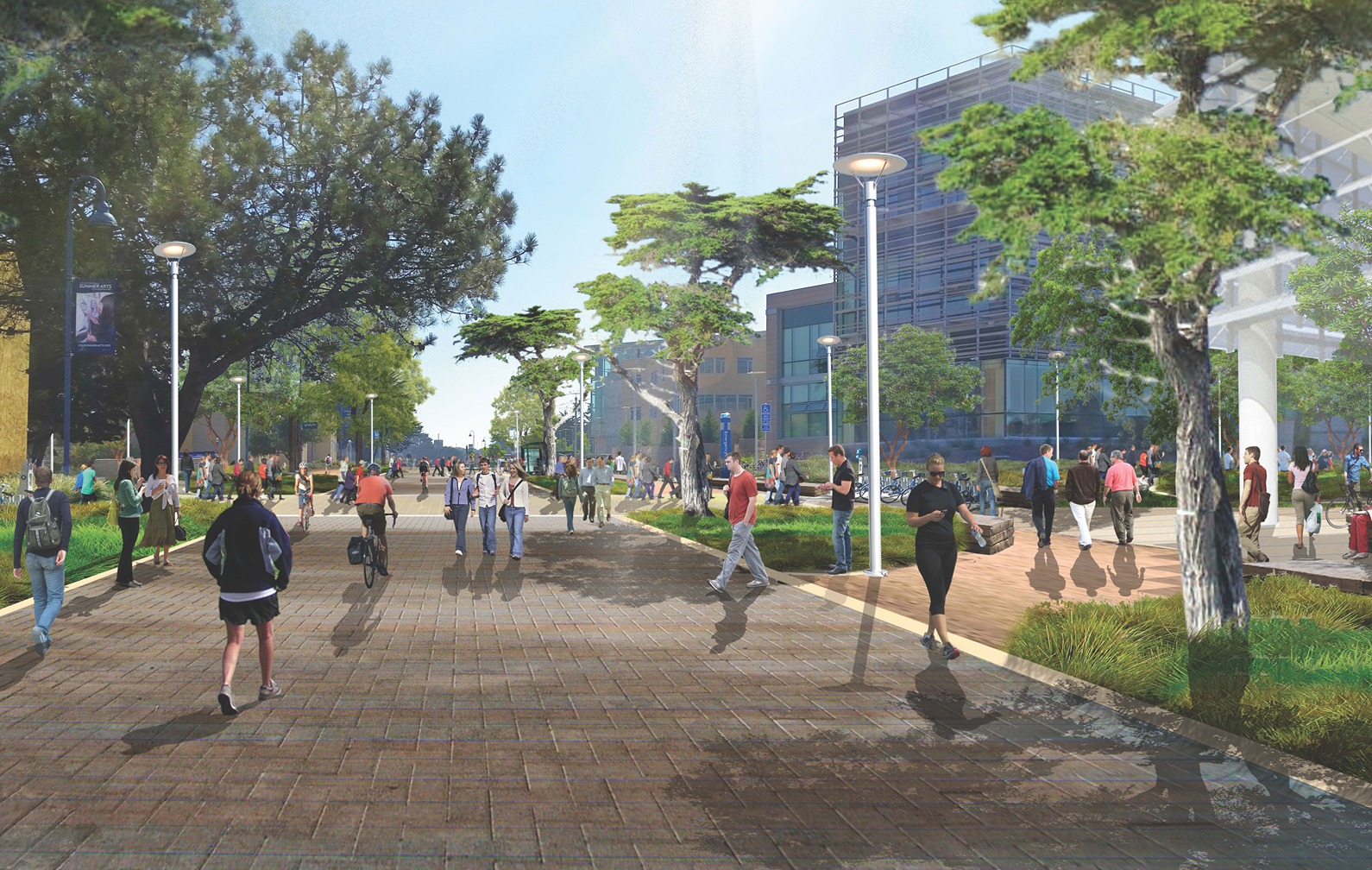
Since 1994, Cal State Monterey Bay has transformed an historic military training facility into an academic community that is shaping the culture and economy of the Monterey Bay region. And things are just getting started.
The university, which recently celebrated its 20th anniversary, serves more than 7,000 students. The 2017 master plan update looks to a campus of up to 12,700 students. The plan also sets aside land for growth to a 25,000-student campus, which was originally envisioned in the Fort Ord Base Reuse Plan.
CSUMB previously updated its master plan in 1998 and 2007. The 2017 update identifies best practices in sustainability and transportation, protects the natural environment, increases public and car-free areas, and determines locations of future classrooms, offices, and research spaces.
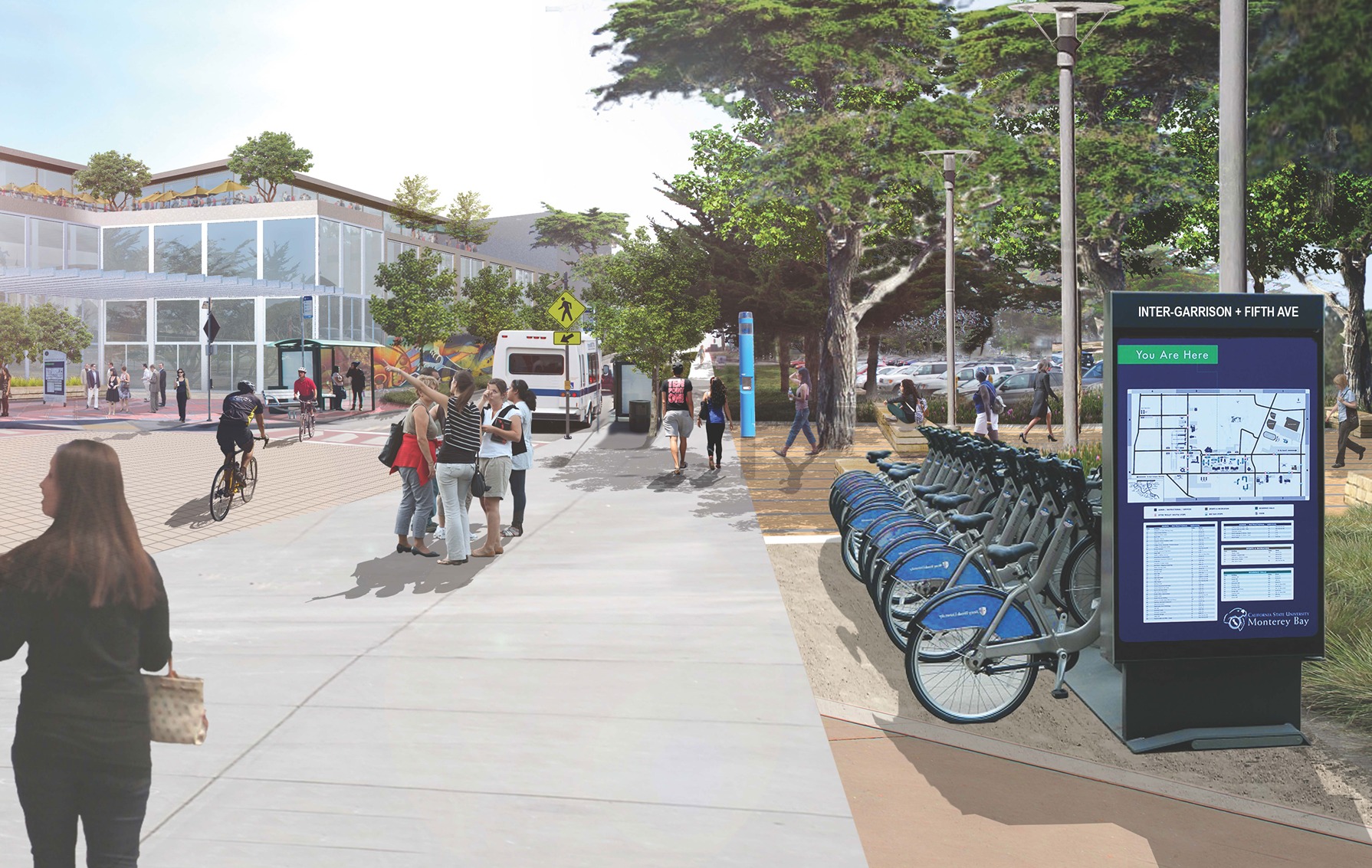
Development in progress
Two buildings are scheduled to break ground in 2017: Academic III, on Divarty Street adjacent to the Business and Information Technology Building, and the Student Union, on the corner of Inter-Garrison Road and Fifth Avenue adjacent to the Student Center. Both are scheduled to be ready to go for fall 2019.
Academic III will house the College of Arts, Humanities, and Social Sciences. The building will be more than 50,000 square feet, and will include classrooms and department and faculty offices. It will have indoor and outdoor community and gallery spaces, and be designed to meet the U.S. Green Building Council’s Leadership in Energy and Environmental Design (LEED) Gold standards.
Master plan comes to life
The Student Union will be approximately 70,000 square feet. It will feature meeting rooms, a ballroom, lounges, food service space, a bookstore, retail space, as well as student government, housing, and administrative offices. It will be designed to LEED Silver standards.
Another project in the early planning stages is the Student Recreation building, to be located near Divarty Street and Engineer Lane, adjacent to the proposed Academic III. The 24,000 square-foot facility will include indoor and outdoor multi-use courts; weight, cardio, and fitness rooms; lockers and restrooms and administrative office spaces. It will be built in phases. Like Academic III, the building will be designed to LEED Gold standards.
With new buildings lining Divarty Street, the concept of the Divarty Street Pedestrian Mall, originally proposed in the 2007 Master Plan, will come to life. The concept of a road for pedestrians and cyclists, and closed to through traffic, is one of the core concepts of the plan (see illustration above).
Creating community
In the past, the primary purpose of master plans was to site buildings and plan basic systems, such as transportation, water, and energy.
According to Lacey Raak, director of sustainability at CSUMB, the 2017 master plan update will take this concept one step further, striving to create community and to site and design buildings and systems that are ingrained with the natural environment. The CSUMB sustainability committee is working closely with this process.
Raak said two sustainability frameworks are being considered, both of which take the concept of building-scale sustainability and expand it campus-wide.
“Addressing the operational and infrastructure elements of sustainability is just one piece of the puzzle. It is also crucial to acknowledge the relationship that people have with physical structures and the natural environment,” Raak said.

Land use and transportation
CSUMB campus planners must take into account a settlement agreement that requires the university to mitigate offsite traffic impacts. This agreement would require CSUMB to spend millions of dollars to improve roadways around campus if annual vehicle counts exceed a certain threshold.
To reduce automobile use, the university could further support the use of transit, car sharing (e.g. Zipcar) and carpooling programs. The university could also look at new policies, such as no on-campus cars for freshmen or restricting East Campus residents from parking on the main campus. Or the university could just spend the money on off-campus improvements for more cars.
Connecting communities
Anya Spear, associate director of campus planning, prefers the more sustainable option.
“I’d rather see our money spent creating an accessible bike and pedestrian network across campus and providing safe pathways for people to walk, talk, and share ideas, than spending millions to widen or signalize off-campus intersections,” Spear said. “I know people want cheap parking close to their buildings, but that comes at a cost.”
The new plan proposes expanded bike and pedestrian pathways to connect all parts of campus. The proposed Fort Ord Rec Trail and Greenway, designed by two CSUMB faculty members, is a 30-mile regional network of paved trails and greenways connecting communities to open space. It was incorporated into the plan and now runs through campus.
President Eduardo Ochoa supports an ambitious transportation scenario presented by the master plan consultants. This scenario is similar to UC Davis, where 30 percent of people drive alone, 20 percent share rides and the other 50 percent bike, walk or use transit.
Water and facilities
In addition, CSUMB is embracing the stewardship of water resources.
“CSUMB is putting itself in a position to be able to treat and reuse its own water in the longer term,” Kathleen Ventimiglia, director of campus planning and development, said. “Decreasing reliance on potable water for irrigation or flushing toilets is important to prevent over drafting our aquifers and supports our role as good stewards.”
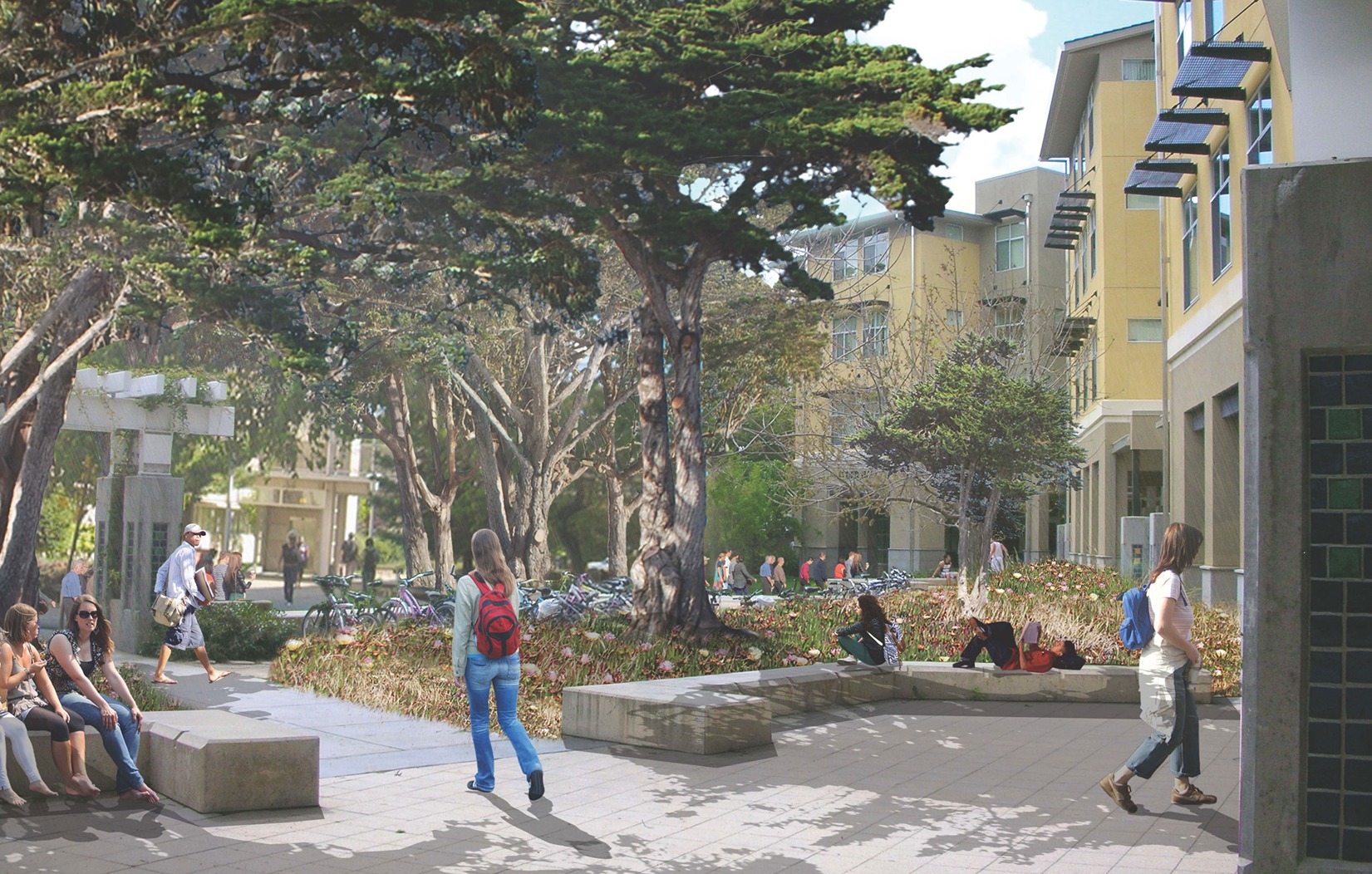
A vision of CSUMB student residential housing.
Partnerships are key
The surrounding community has a vested interest in the growth of CSUMB, and for good reason. The university is a driving force in the Monterey Peninsula economy (see sidebar). Unlike many universities, CSUMB has ample land to grow, but does face water and traffic limits.
As for student housing, the campus hopes to find community partners to help meet CSUMB housing goals.
Ventimiglia said that if CSUMB grows to 12,700 students, the university will need to house at least 60 percent, or 7,620 students. The university now houses about 3,100 students, 45 percent of the current population.
Kevin Saunders, vice president of administration and finance at CSUMB and executive director of the University Corporation, helps develop private and community partnerships for CSUMB.
A recent example is the Promontory, a student housing facility built on an eight-acre site at Eighth Street between Fifth and Sixth Avenues. The Promontory, which houses 600 to 700 students, is a short walk to the main campus and is connected by a bike and pedestrian pathway to Inter-Garrison Road.
The facility was built through a partnership with a private developer and the city of Marina. Earlier this year, the University Corporation purchased the Promontory from the developer, using revenue bonds. The bond payments are now lower than the corporation’s lease payments to the developer.
“Student housing was desperately needed – and the CSU capital project process would have taken too long and been too expensive,” said Saunders.
In addition, the CSU Board of Trustees recently approved the relocation of the K-8 Monterey Bay Charter School from both Pacific Grove and Seaside locations to campus. The school will be located on 18 acres between Sixth and Seventh Avenues and north of Colonel Durham Road.
Also included in the 2007 Master Plan, but just now moving forward, is the construction of a new building for the Panetta Institute for Public Policy. The building is in early planning stages and will likely be located off Second Avenue.
“We anticipate this process with private entities and community partners will be essential for future growth and economic development in the Monterey Bay region,” Saunders said.
Editor’s note: for more information about the CSUMB Master Plan, go online to csumb.edu/masterplan
More information on FORTAG can be found at fortag.org
Edited Feb. 18, 2021
Driven
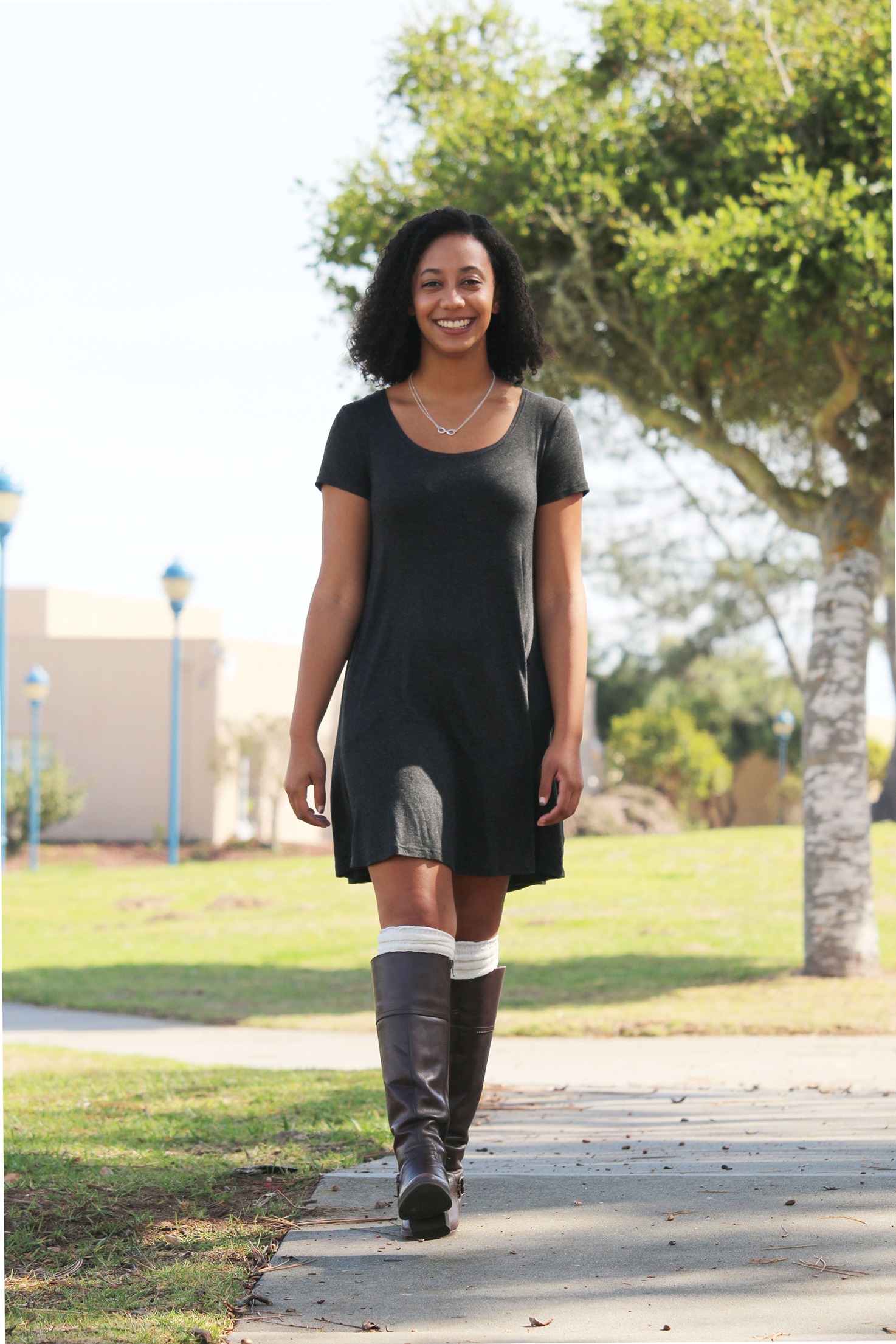
After a few minutes speaking with January Cornelius, you start to wonder when she sleeps. This third-year collaborative health and human services major serves on the First Year Leadership Council, works three days a week mentoring at-risk youth in the Village Project’s after-school program, is the chief programming officer for Associated Students, has advocated for students at CSU Board of Trustee meetings and the state capitol, and has researched best practices across the CSU for bringing real, locally sourced sustainable foods to campus. And she’s made the dean’s list every single semester.
“My motivation is to support students. I want to create a sense of unity and camaraderie, develop student life,” she said. “I want to create an environment where students are supported and successful and proud of their university.”
A dark place
The start of Cornelius’ CSUMB career wasn’t easy. She had endured bullying at her high school in Folsom, California, just outside Sacramento. In her first year of college, her grandmother, who she describes as “her rock” during the bullying, passed away. Cornelius found herself in a very dark place of grief. She wound up leaving school for a month, only coming back to finish her final week of freshman year.
“I felt like I couldn’t let others know I didn’t have it together,” she said. She blamed herself, feeling that anything bad that happened was somehow her fault. She sought mental health services over the summer, eventually learning that it was okay to be more open about her struggles.
Connection and community
When she returned for her sophomore year, she found connection and community through her Service Learning placement at the Village Project in Seaside. She developed a close relationship with Regina Mason, the program’s executive director, as well as the at-risk youth she worked with as a tutor and mentor.
“It meant more to me than doing my hours,” Cornelius said. Even after the Service Learning class ended, Cornelius stuck around. The youth related to her struggles, and she saw herself as a role model. “All the students I work with are low income, and black or Latino. It makes a huge difference to them to see someone who looks like them succeeding in college,” she says.
Working through her mental health issues led Cornelius to an even deeper commitment to the students both at the Village Project and CSUMB. It’s clear the work energizes her. “I love creating avenues for people to be successful,” she said. “I know my limits, but if something is important to me, I am going to take it on.”
Let's go save the world
It took a bit of exploration before Cornelius was able to tap into her passion. She changed majors twice - from psychology to social and behavioral studies before settling with collaborative health and human services with a focus on public administration and community health.
“I feel like I belong there,” Cornelius said. “We all have the same mindset – let’s go save the world.”
Cornelius’ desire to help others has already led to many accomplishments. She plans to continue this work after graduation. “I want to be on the advocacy side of things, creating avenues for people to be successful,” she said. She’s off to a strong start.
Squirreling the Days Away
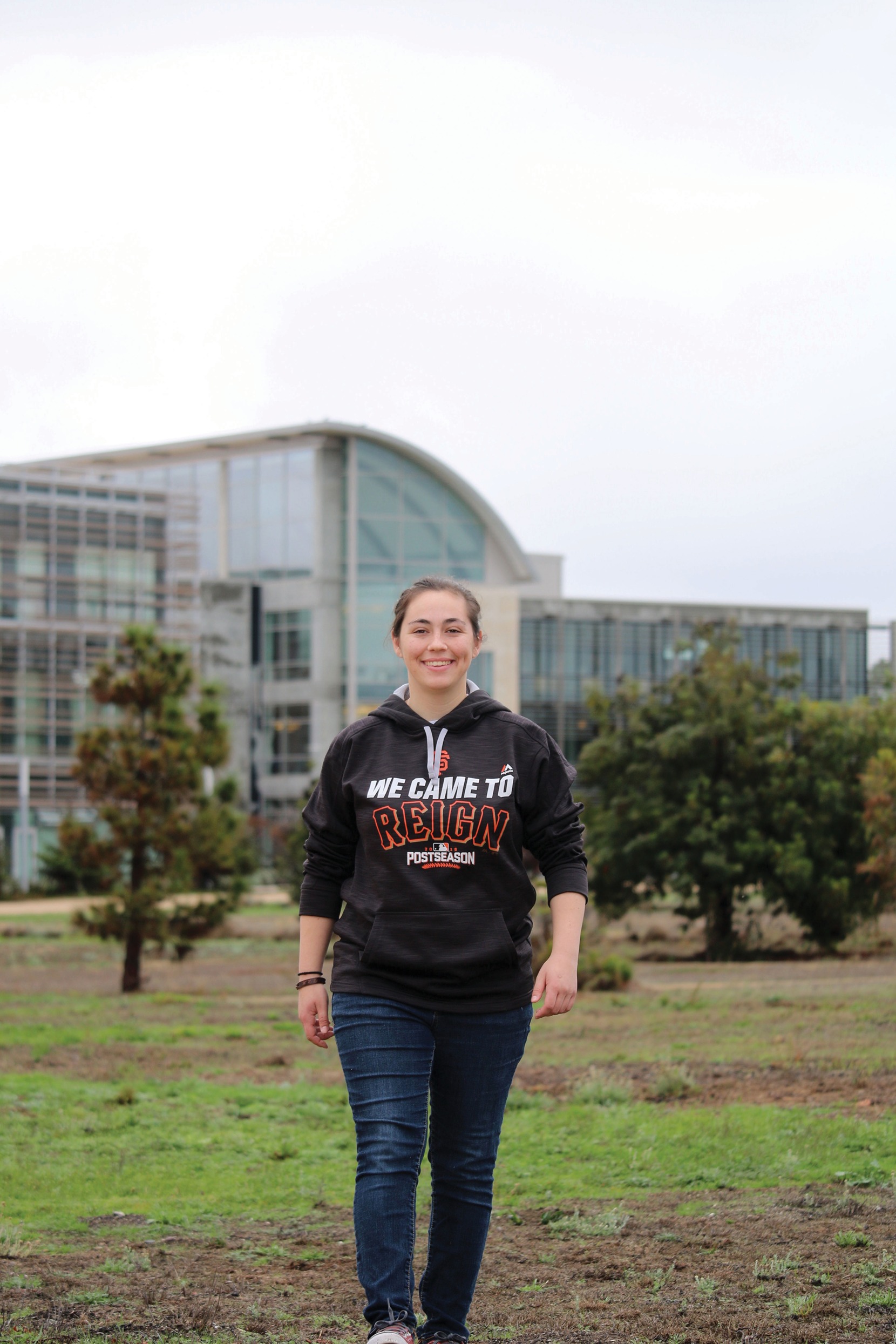
CSUMB’s ground squirrels are so common that most students hardly notice them as they walk across campus. But since Kendall Emerick began studying their behavior last spring, she almost always has to stop and see what the squirrels are up to on her way to class.
Under the direction of Professor Jennifer Duggan, Emerick and several other students are monitoring the squirrels to see how they coexist with CSUMB’s growing campus.
“California ground squirrels are becoming more prominent and thriving in areas with human activities,” Emerick said.
Perceived risk
The researchers wondered if the squirrels perceived more or less risk in urban habitat than non-urbanized areas. They tested this question by leaving seed trays – boxes of sand with 100 peanuts hidden in them– in areas with different levels of human activity. They monitored ground squirrel behavior around the boxes, and at the end of the day they photographed any squirrel tracks around the boxes and sifted through the sand to count how many peanuts remained.
The researchers also captured and radio-collared 28 squirrels, and are using radio telemetry to track how the squirrels forage. They’re comparing how the squirrels behave on Main Campus, East Campus, land controlled by the Department of Defense, and areas that are part of the Fort Ord National Monument.
The next phase of the research delves into squirrel personalities – seeing if the squirrels that succeed in proximity to humans have different personality traits from those in more rural areas.
This involves capturing the squirrels in a box and recording their behavior in this situation.
“Are they adventurous, trying to go through the holes in the box?” Emerick asked. “Or do they just sit and wait? Are they alert and chirping?”
The team is still collecting data, but they hope to present answers to some of these questions in a paper and at a wildlife ecology conference.
Animal behavior
Emerick says squirrels were not her first choice for an animal to research (she’s more into sharks), but has found them to be fascinating. “They’re more rambunctious than you’d think,” she said.
Marine science has been and still is Emerick’s true passion. When she arrived at CSUMB, she lived in the marine science learning community– a first-year student cohort that lives together, takes all of their classes together, and participates in extra-curricular programs around their shared interest together. She continued to be involved in the community after her first year – as a resident advisor and currently as a student assistant who helps with programming and activities.
The squirrel study gives Emerick direct experience researching animal behavior, which will complement her interests in ecotoxicology, or how pollutants affect animal behavior, especially fish (sharks!) or other marine life.
The Orange County native will graduate next spring. She’s still weighing her post-college options – she’s also interested in GIS and remote sensing, and sees some opportunities in these areas with the Department of Defense. She’s also considering grad school, or perhaps a career that gets elderly people more involved with the environment.
Seas of Change
CSUMB faculty and student researchers traverse the globe
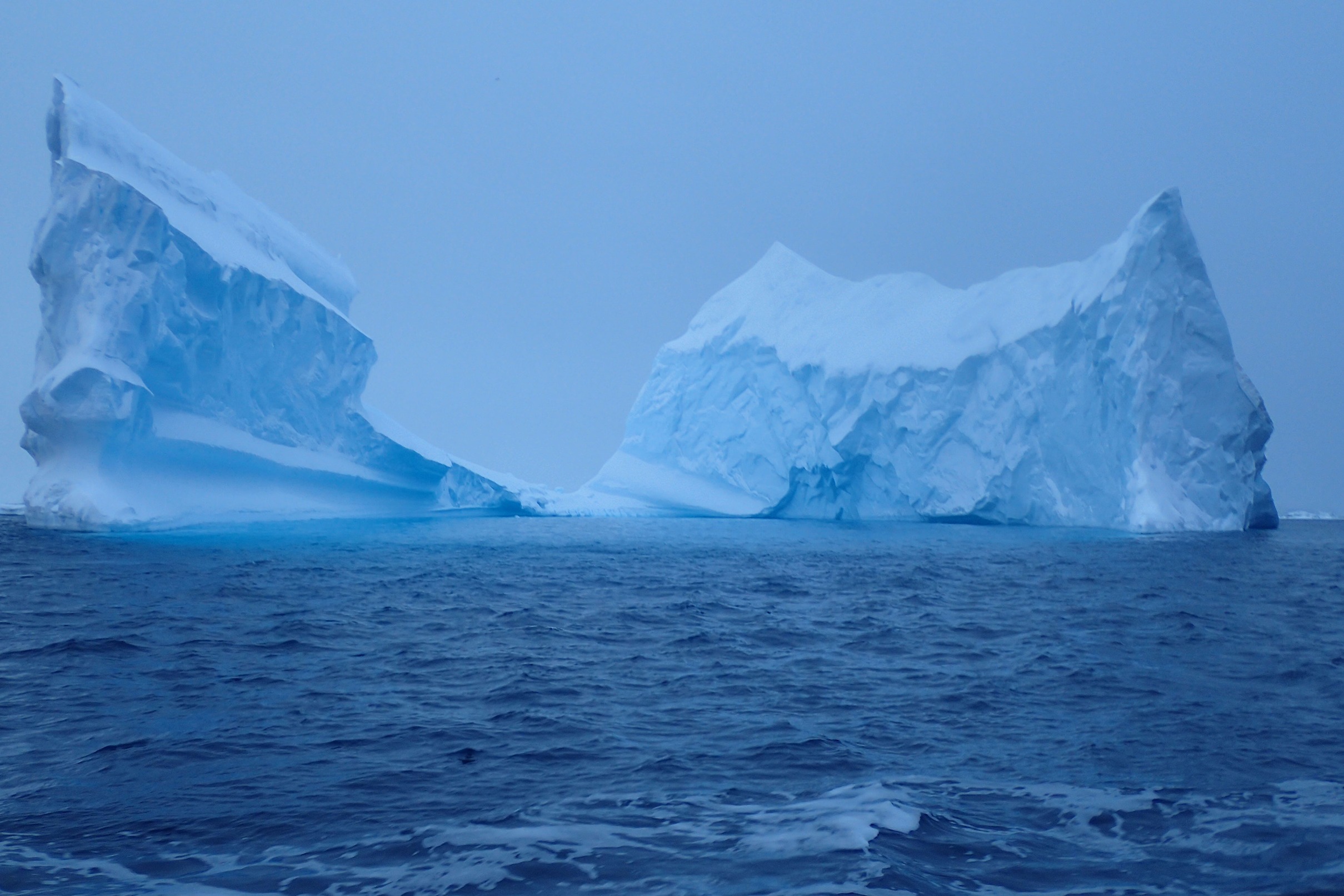
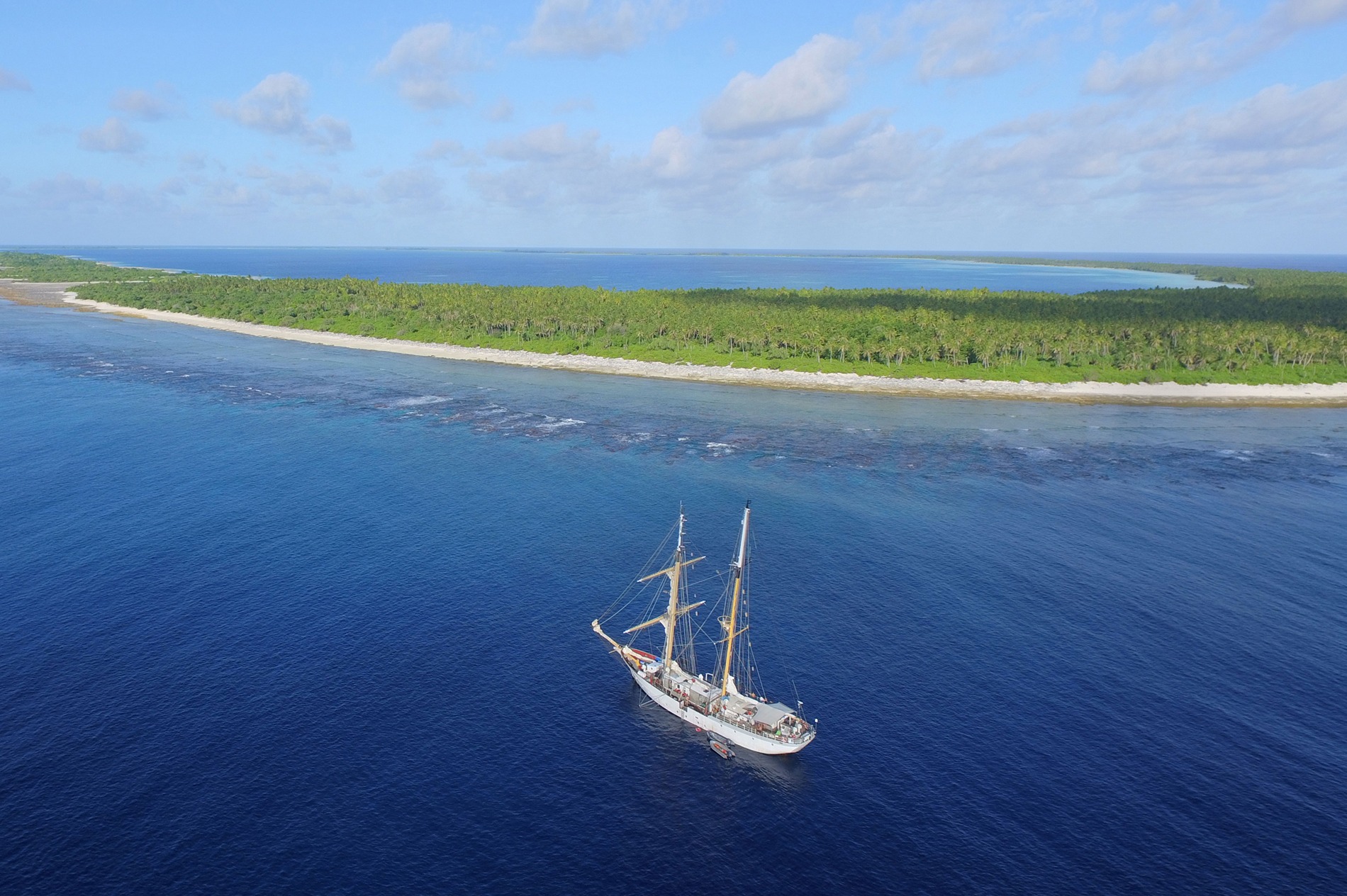
Two oceans. Two extremes. Two environments. The first filled with wide expanses of ice and freezing wind under a faded, colorful sky. The second filled with warmth and crystal-clear water under a blazing hot sun. Both teem with life. Both remote, thousands of miles from modern civilization. Both ideal for research.
Kerry Nickols, an assistant professor of marine science, and Brooke Morgan, a senior majoring in marine science, traveled the oceans for thousands of miles last summer, researching marine life and seeing first-hand the impacts of human activity on our planet. Each traveled by ship to get to their respective destinations.
Nickols shared the deck with fellow scientists on her ship as it plowed through ice before arriving on the frigid shores of Antarctica. Once there, Nickols’ research focused on plankton behavior and distributions and how it may be impacted by rising water temperatures. Morgan sailed through tropical waters to the Phoenix Islands, a largely unexplored region of the South Pacific, where she and fellow students studied coral reefs, collected samples and developed policy plans for the region’s future protection.
Research on the ice
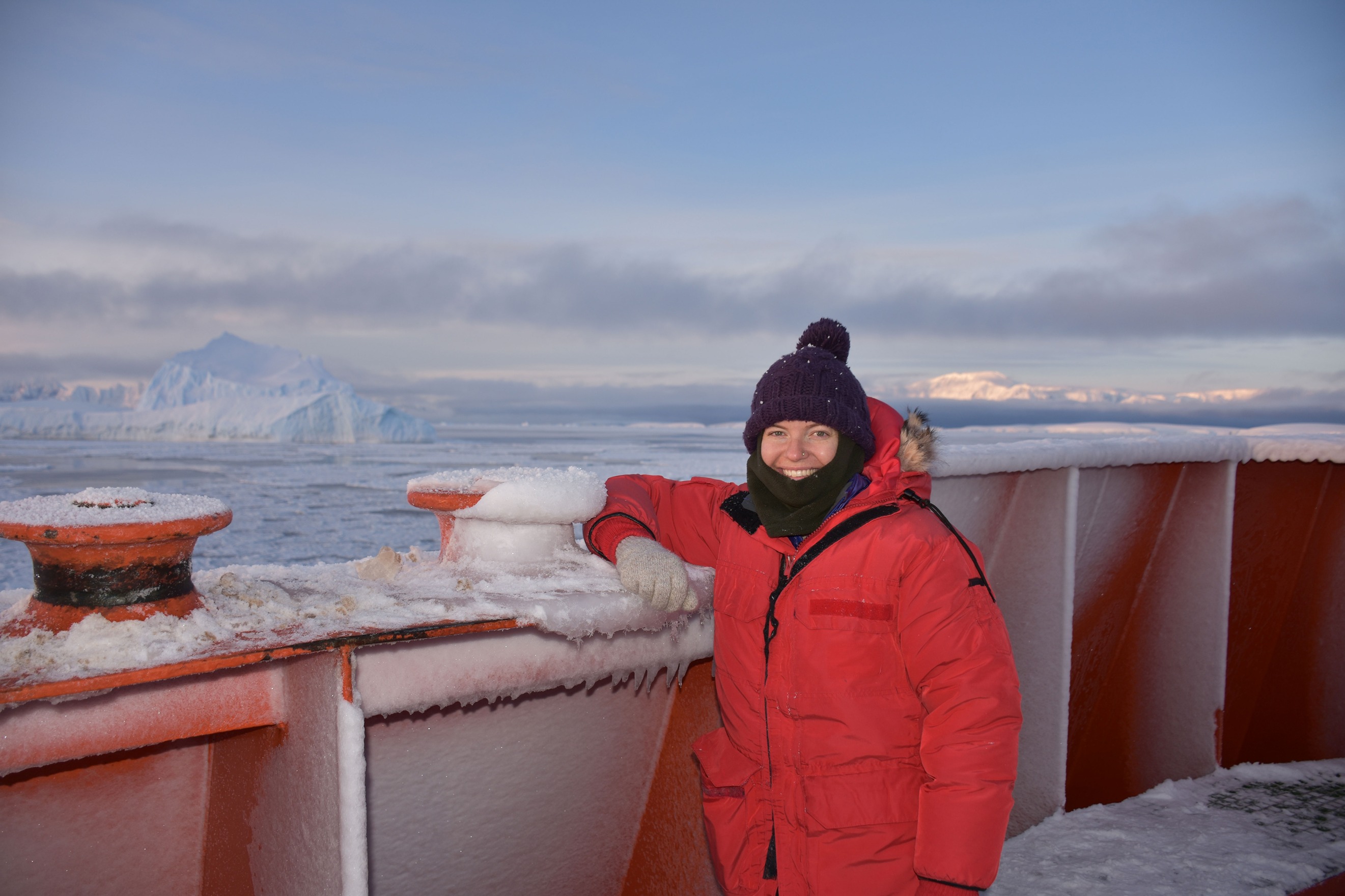
Nickols began her journey in Chile, spending one week at sea before her ship, the RV Laurence M. Gould arrived at Palmer Station, situated between glaciers and cliffs on Anvers Island in the West Antarctica Peninsula. The station, one of three permanent U.S. research stations on Antarctica, is only accessible by water. It can house 20 scientists and research personnel during the Antarctic winter (our summer) when Nickols called the station home.
The station is composed of two main buildings and several smaller structures. It houses laboratories, indoor aquarium tanks, a cafeteria-style kitchen, communal bathrooms and dormitory bedrooms. Outside temperatures averaged -10 degrees Celsius, or 14 degrees Fahrenheit. Winds could reach 70 knots, or approximately 80 miles per hour. During the Antarctic winter, the sun is up for three to four hours a day.

Nickols loved every minute of it.
“We worked under a sky that was filled with the colors of sunrise or sunsets,” she said. “Underneath that beautiful canopy, you had glaciers and enormous mountains rising up next to the ocean. It was stunning.”
Nickols was a part of the National Science Foundation’s (NSF) Advanced Training Program in Antarctica for early career scientists. The international program, open to all nationalities, emphasized integrative biology for the course that Nickols participated in, using a combination of laboratory, field and ship-based projects. Nickols and her colleagues were offered the opportunity to study a wide range of Antarctic organisms and several different levels of biological analysis, such as molecular biology, biochemistry, physiology, ecology and evolution.
Nickols focused on the study of plankton and how they are affected by changes in temperatures. The pristine environment housed an ideal place for Nickols to do her research. “Climate change is happening rapidly – we are seeing it first hand in places like the West Antarctic Peninsula,” she said.
According to the Earth Institute at Columbia University, temperatures on the West Antarctic Peninsula have been warming at approximately 0.5 Celsius, or nearly one degree Fahrenheit, per decade since the early 1950s. The glacier on Anvers Island near Palmer Station has been shrinking approximately seven meters, or just under 23 feet, per year.
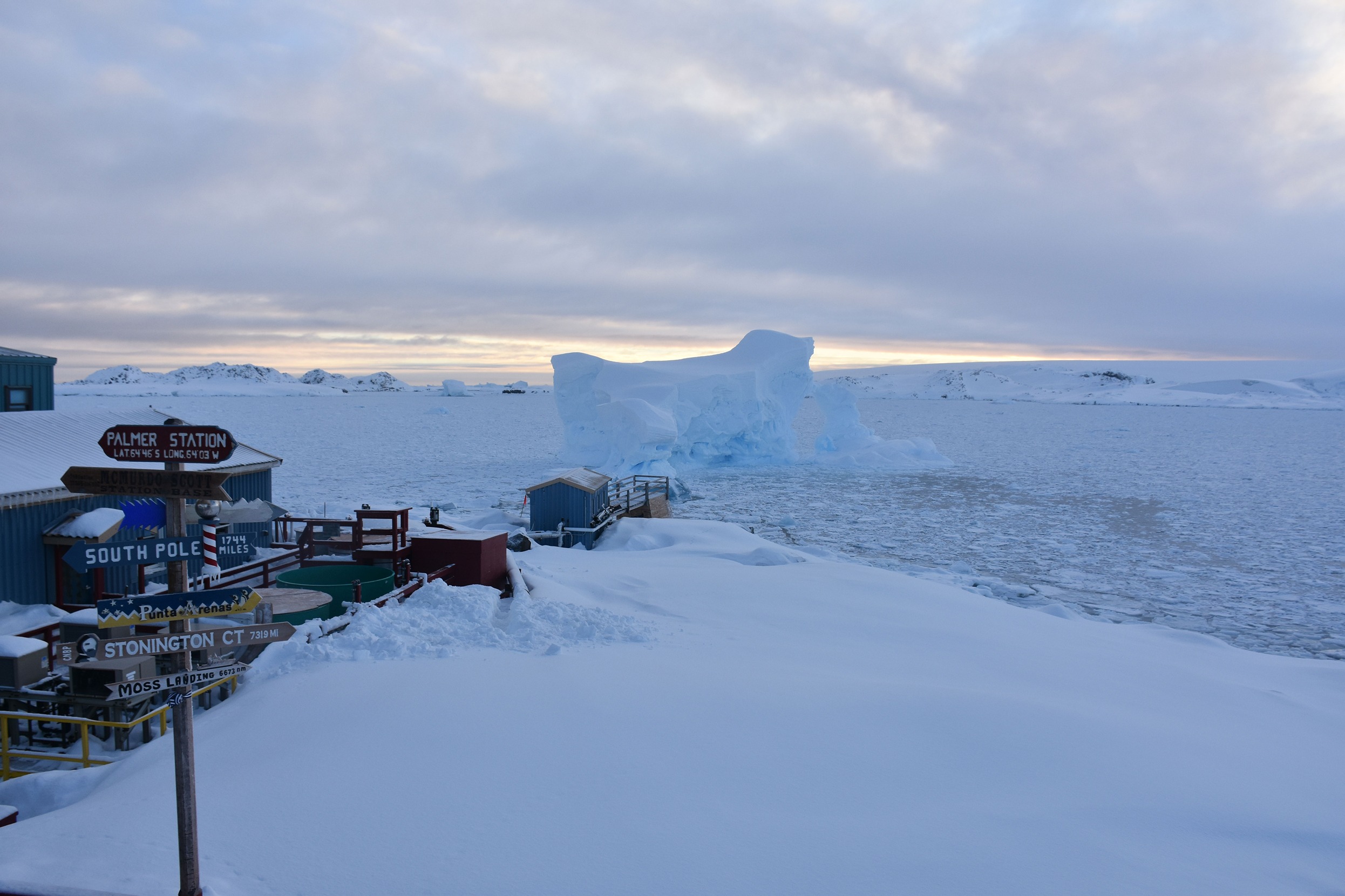
And that’s what we know from the ice melting above. As Nickols points out, it’s much more difficult to measure the ice melting from below due to rising water temperatures.
Melting ice is critical for plankton and other marine life. Ice provides a place for plankton to bloom and thrive. This plankton is eaten by krill, small shrimp-like creatures that are the main food source for penguins, whales and seals. The entire food chain is affected.
Nickols and colleagues studied plankton firsthand by utilizing the indoor aquarium tanks at Palmer Station. The tanks were connected to the sea outside by an intake valve. Nets that collected specimens were changed at sunrise and at sunset. This was done every day for approximately a month.
Krill also were a main focus of study. Together, the group tested impacts of increased temperature on krill from molecular up to ecological processes, and found indications of temperature effects on this important organism.
Nickols and her colleagues plan to publish some of their findings, and hope to conduct follow-up studies. She is looking forward to the possibility of another trip south. “I fell in love with the place,” Nickols said.
Living laboratory in the tropics
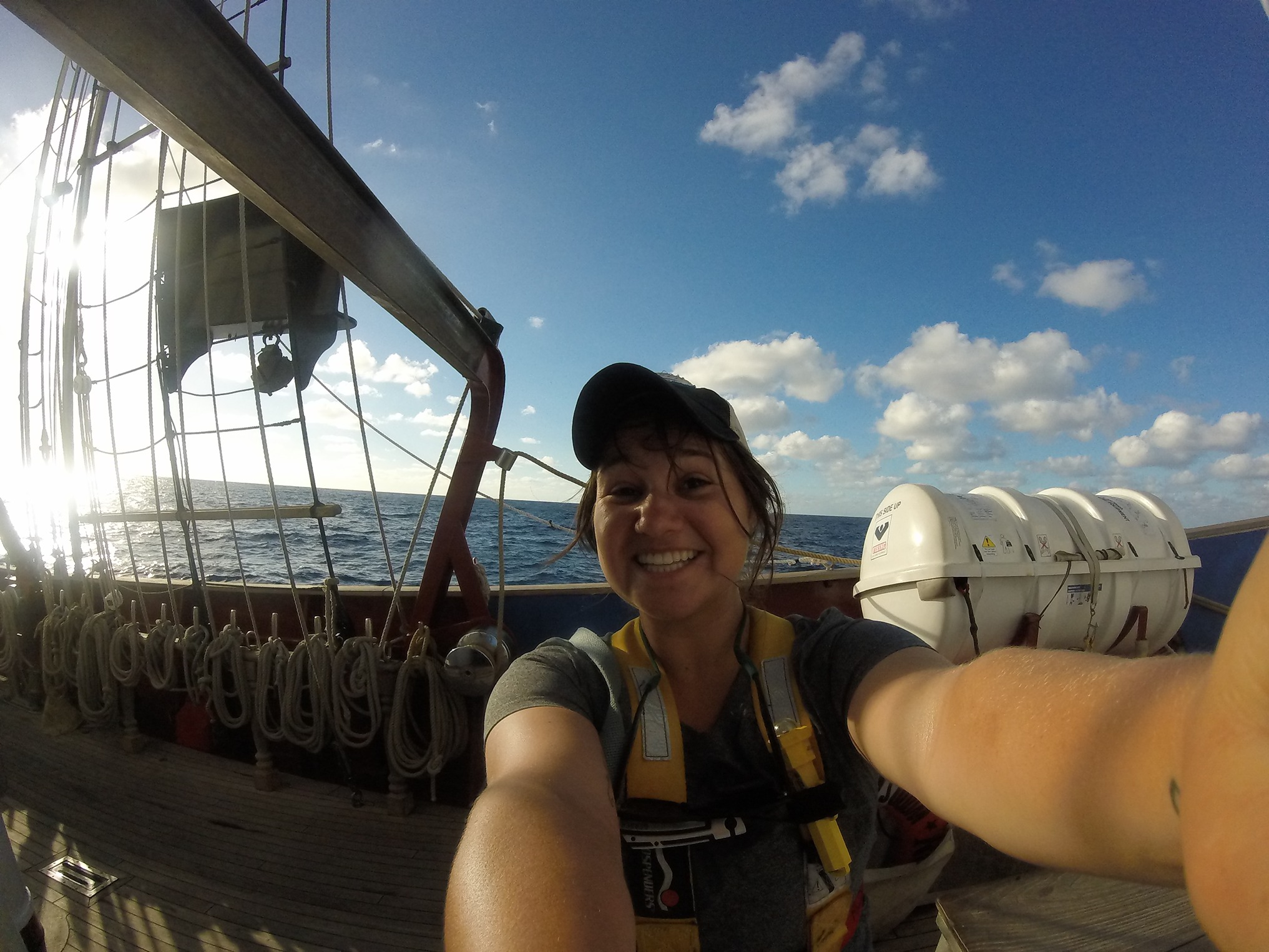
Photo by: Brooke Morgan
Thousands of miles from the ice of Antarctica, in the balmy waters of the South Pacific, is the Phoenix Islands Protected Area (PIPA). The PIPA covers an area about the size of California and is considered one of the last remaining coral wildernesses on Earth. It’s rarely visited.
That’s where Morgan and 22 fellow students from other universities headed last summer, living aboard a 135-foot sailing ship, the SSV Robert C. Seamans, for six weeks. Beginning their journey in Hawaii, they were accompanied by research divers from the New England Aquarium, scientists from the Woods Hole Oceanographic Institution and faculty from the Sea Education Association (SEA).
The work began before arrival to the research site. They were living on a working sailing ship. It was all hands on deck.
“Everyone had two six-hour watches a day. You were in the engine room. You were rigging the sails. When you weren’t taking care of the ship, you were in the lab,” said Morgan. “Sailing is physically demanding but it was amazing. You are completely disconnected. No internet. The only connection was with your shipmates. At night, you see countless stars blanketing the sky and touching the horizon. You really have time to reflect.”
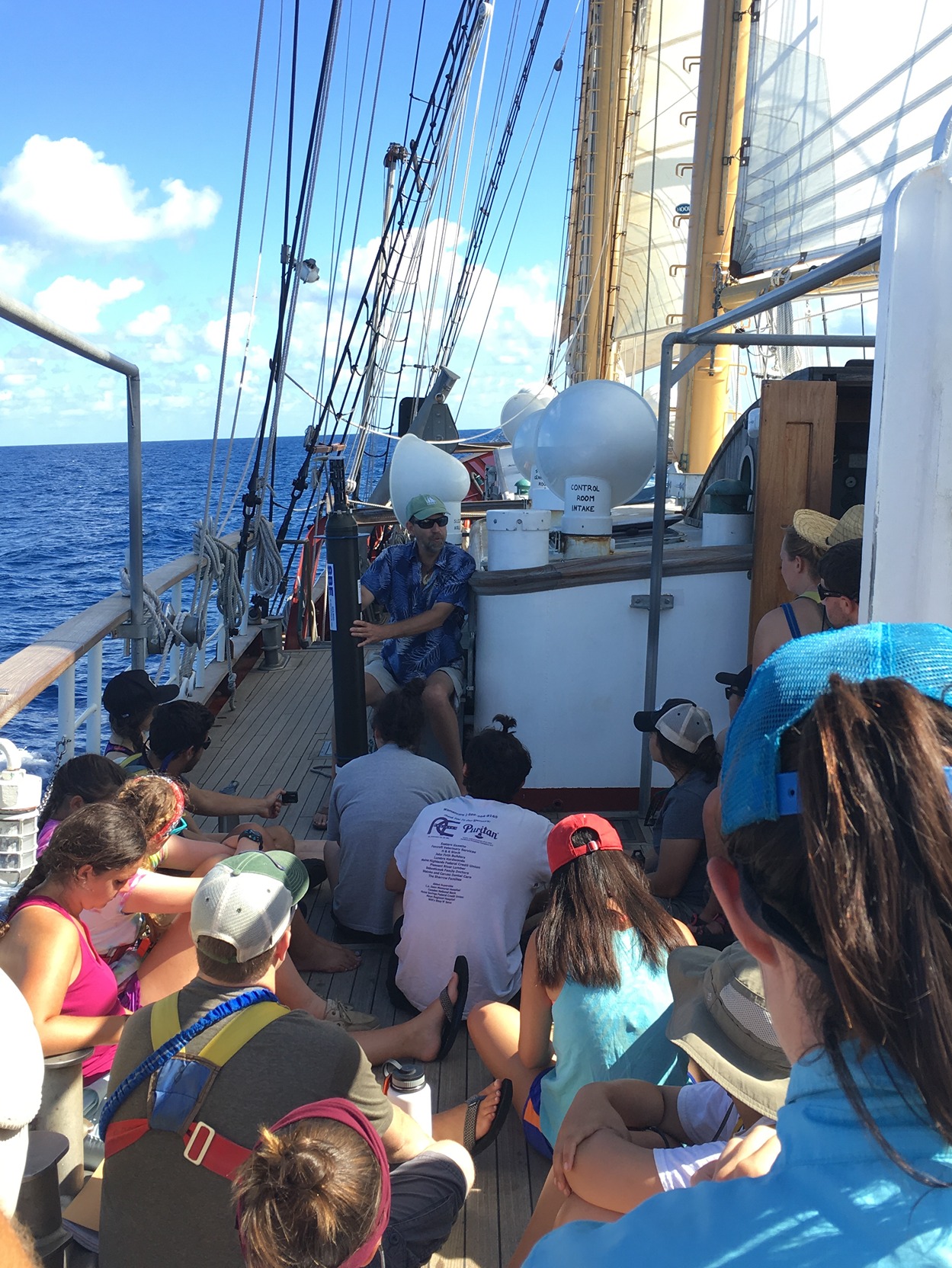
Photo by: Brooke Morgan
The crew didn’t see land for two weeks, crossing the equator as they sailed approximately 1,600 miles of open ocean. Once they arrived at their destination, they anchored offshore of Orona, an atoll in the Phoenix Islands region. Sized at approximately two square-miles, the remote atoll surrounds a shallow lagoon filled with an abundance of sea life.
“In the shallow waters of the lagoon, we observed giant clams, young reef sharks and an abundant amount of fish of all kinds. The giant clams were all colors and patterns, and covered the rocky substrate of the reefs,” Morgan said. “It was vibrant, collected chaos.”
Highs and lows
Morgan and her fellow students had heartening and disheartening observations. The positive was the coral. The coral in the Phoenix Islands region was rebounding after coral bleaching was observed by a scientist in 2015. Bleaching occurs when the water is too warm. Corals expel the algae living in their tissues, causing the coral to turn completely white. The coral is not dead but it’s under more stress and subject to mortality. According to the National Oceanic Atmospheric Association, in 2005, the U.S. lost half of its coral reefs in the Caribbean in one year due to a massive bleaching event.
The negative was, on a remote atoll in the South Pacific, thousands of miles from the nearest continent, the students observed heaps of trash and plastics washed ashore on the beaches. “It was shocking to see common trash – shoes, shampoo bottles and toys – piled on the white sands of such a pristine, remote environment,” Morgan said.
Documenting sea life
Back on the ship, Morgan and her fellow students went to work. The crew began collecting water samples and specimens from a total of seven coral atolls in the Phoenix Islands region. Water samples were analyzed for salinity and alkalinity, the latter a measure for how a water body can neutralize acidic pollution from rainfall or basic inputs from wastewater. Samples of plankton were also collected, along with krill. “Since so little was known about the Phoenix Islands region, we were simply documenting sea life to get an idea of the abundance and diversity of the area,” Morgan said.
This research went for three weeks before the expedition ended at American Samoa. It was the trip of a lifetime for Morgan and her fellow students.
“I am humbled by the fact that very few people have visited this part of the world – and we experienced it,” said Morgan. “From an academic point of view, the on-site research was invaluable. But in some ways, the life lessons, especially the teamwork needed to run a sailing ship across the Pacific, were just as important.”
Full Circle
CSUMB Women’s Disc Golf Bring Home National Championships

An unlikely powerhouse
There they are, smiling and holding the national championship trophy.
Traci Alger, Mikaela Bogdan, Bayli Miller and Jenn Schopfer just got done blitzing the field by 35 strokes for the women’s championship in the 2016 National Collegiate Disc Golf Championships held in North Augusta, South Carolina.
It’s a good story, sure. But what makes it even better is all those people not pictured, people like Mary Ann Ebner, Merle Witvoet, Scott Keasey, Steve Bonar, Greg Pool and, of course, “Steady” Ed Headrick, “The Father of Disc Golf.” They all played a part in making Cal State Monterey Bay an unlikely powerhouse in this growing sport.
Ebner was the recreation program coordinator for the Wellness Recreation and Sport Institute in the early days of the campus.
“Everyone had an idea, which was great. There was so much energy around opening up programs to serve students,” said Ebner.
A perfect fit
Among those with big ideas were Keasey and Bonar, students in the Institute for Management and International Entrepreneurship, who shared a love of disc golf.
They often drove to Delaveaga in Santa Cruz to play there.
“I think we started talking about it on one of those drives. What if we put a disc golf course on CSUMB’s campus?” Keasey said. Ebner liked the idea, and learned more about it from Witvoet, an early disc golf advocate.
“Merle had a lot of knowledge of the game to share with me. It didn’t take much to sell me on it, it was a perfect fit. It wasn’t going to disrupt the natural environment,” Ebner said.
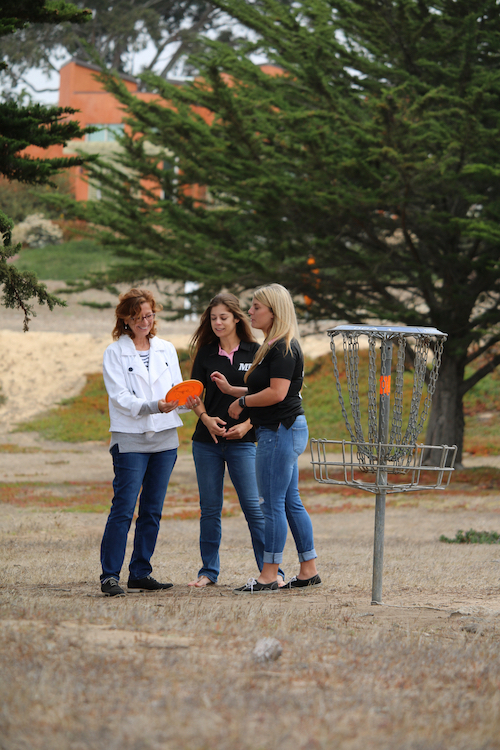
“We were talking to Mary Ann about putting a course in,” said Witvoet, who teaches a class in disc golf and coaches the CSUMB men’s and women’s teams. “And then the two students came along – Keasey and Bonar – and said ‘we’re putting a course in, are you with us?’ I said sure.”
The right time
Pool, now the web services lead in technology support services, signed on as advisor to the program and helped it get established.
“We came in at the right time with an idea that would bring students out of the dorm and create more activity in the heart of campus,” Keasey said.
Disc golf – as opposed to its more famous cousin “ball golf” – does not require manicured fairways and greens. The courses often wind through natural areas, marked by pads where players “tee off” and baskets where the discs eventually end up.
As such, it was well-suited to many areas on and around the new campus. But money was short, and even the low- expense sport of disc golf is not a no-expense sport.
However, Bonar and Keasey discovered something interesting. Just up the road – in Watsonville, in fact – was Headrick, who designed the modern Frisbee, invented the basket used in disc golf and designed more than 200 courses.
“Ed was super-generous to us,” Keasey said. Headrick helped design the CSUMB Cypress Course, located along Inter-Garrison across from the University Police Department, and provided much of the material, to be paid back by revenues from disc sales.
Building a reputation
Over the years, CSUMB continued to build a reputation in the sport. The men’s team became a consistent contender in national tournaments. And, two years ago, the women’s team made the trip to the nationals as well.
Mikaela Bogdan was part of that team.
She had played a little disc golf in high school and liked it. “It is a good thing to do when you are hanging out with your friends, because it is a pretty relaxed sport. Nobody is yelling at you to be somewhere. So when I got here I saw there was a class, I said I guess I will try that.”
She ended up joining the women’s team.
“It took me a while to even decide to go to the nationals the first year,” she said. “I said I am terrible, why would I want to go? But it is a great experience, you get to see what it is like to be in the tournament. So I went (to the 2015 tournament), and it was a lot of fun, and our women’s team ended up winning. So that was cool.”
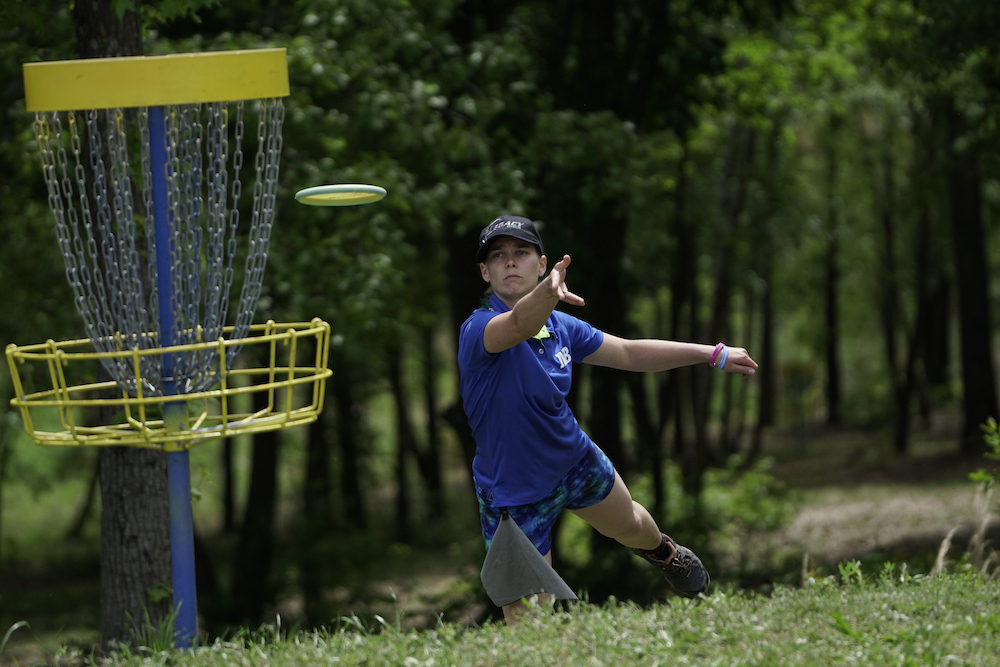
Cool, indeed. The CSUMB women won by one stroke over Oregon, and returned in the spring of 2016 to defend their title in emphatic fashion. Bogdan was CSUMB’s top individual finisher in 2016, taking 4th place.
Over the years, a second disc golf course has been built on campus – the Oaks course located off General Jim Moore Boulevard. And last year, a dozen volunteers, mostly from CSUMB, helped create a nine-hole disc golf course at Los Arboles Middle School in Marina.
Men’s and women’s disc golf are club sports at CSUMB, supported by the university’s Sports Club Council and fundraising efforts.
“It is great to see how far it has all come,” Keasey said. “CSUMB is a known entity in disc golf. People in the sport know teams come to compete. I have a ton of pride in them for what they have accomplished.”
A growing sport
Steady Ed passed away in 2002. At his request, his ashes were molded into a limited edition set of flying discs. His son Daniel told Sports Illustrated: “He said he wanted to end up in a Frisbee that accidentally lands on someone’s roof.”
So now, when you call the Disc Golf Association, which was founded by Headrick, and ask for the general manager, who do you get?
Scott Keasey, of course.
He worked in the Bay Area for a while after graduation, but was happy for the opportunity to come back south and work to promote this growing sport.
“It is low-impact, low-cost. The courses fit well into places you might not be able to do other things. Most of the courses are free; families can play together,” said Keasey, who said participation in the sport is growing every year.
Steady Ed would be proud.
A New Era Takes Root
Andrew Lawson is ready for growth at the College of Science
By James Tinney
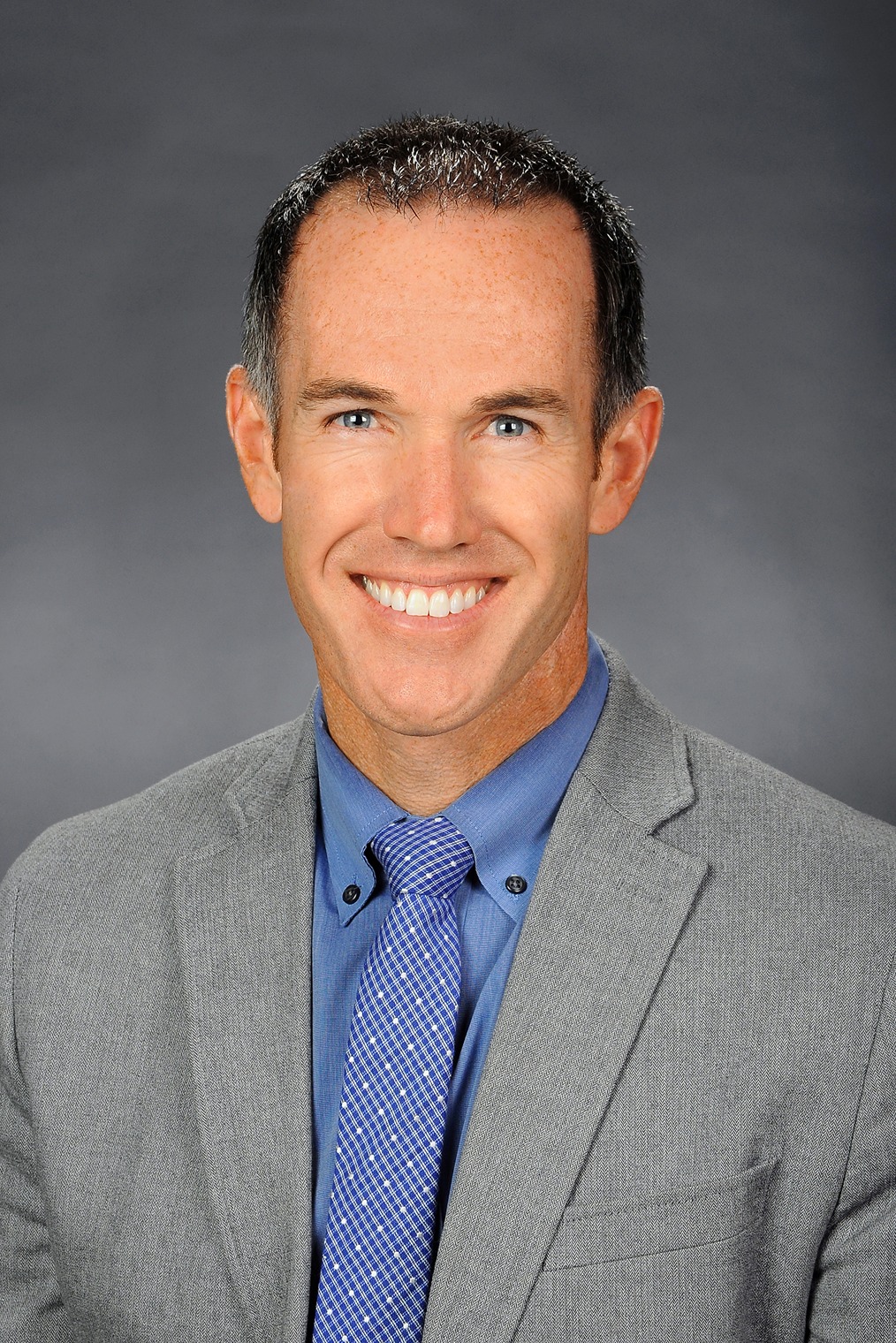
He grew up near the Bay of Fundy in Eastern Canada. He is now science dean at a campus near Monterey Bay.
Clearly, Andrew Lawson’s academic career has taken him a long way. And he is confident he has landed in a good place.
Lawson succeeded long-time College of Science Dean Marsha Moroh this summer, coming to CSUMB from Fresno State, where he had been a faculty member, chair of the Department of Plant Science, and an associate and interim dean.
We have a significant agriculture industry here and there are ways that we can better serve that community.— Andrew Lawson
At Fresno State, Lawson worked on committees dealing with general education and assessment, which gave him the opportunity to learn about these and other issues in the changing landscape of higher education nationwide.
“Cal State Monterey Bay has, since its founding, been on the leading edge nationally in addressing some of these changes and adopting new pedagogical approaches and I felt it was a good fit for me. Monterey Bay certainly has the reputation for being willing to experiment, and I think its smaller size gives it a little more flexibility and adaptability in that regard,” Lawson said.
Opportunities for growth
“It is an exciting time to be at this campus. CSUMB is well-positioned to move from a relatively small institution to more of a mid-sized campus and it is an interesting challenge to think about growing programs and perhaps beginning new programs.”
One of the areas that Lawson sees for growth is in agriculture.
“We have a significant agriculture industry here and there are ways that we can better serve that community. We don’t want to become a major agricultural campus necessarily but I think there are some programs we could offer that meet the immediate needs of the Salinas Valley industry,” he said.
During his undergraduate studies at Dalhousie University in Nova Scotia, Lawson studied predatory mites in apple orchards.
“That got me interested in controlling predatory pests with natural enemies, so I went on to graduate work at UC Berkeley. They had a center for biological control and I ended up working in urban forest systems – street trees,” Lawson said.
His first faculty position at Fresno State was in the College of Agriculture; he moved to the College of Science, where he became first an associate dean, then an interim dean.
“Dr. Lawson was the clear first choice of the committee based on his previous experience as an interim dean while at CSU Fresno,” said Fran Horvath, associate vice president for academic planning and institutional effectiveness, who headed the search committee. “His knowledge of the agriculture industry and successful fundraising efforts along with his commitment to student success made him a strong fit for CSU Monterey Bay.”
Deliberate design
Lawson, who is 47, said he first met Marsha Moroh at a meeting of CSU science deans about four years ago. In the intervening years, his contact with Dean Moroh allowed him to learn more about CSUMB’s programs.
“We have been chatting. I think she is consciously trying to give me some space here, but she is also there to help out if I need anything. She has been great,” Lawson said, a few weeks after moving into his new office this summer.
He said he has also been impressed by his discussions with faculty in the college.
“It is clear that they have been very deliberate in the design of their curriculum. (They have been) very conscious not just of preparing students for graduate school but also focusing on the skills that our students need to be well prepared in the job market,” Lawson said.
Rising
Native Americans, or as many prefer to be identified: Dine, Cherokee, Potawatomi and Choctaw among hundreds of other tribal identities, continue to be an integral part of our social fabric. The history of interactions between Native Americans and the United States government is long and complex. Before contact with settlers, nearly all indigenous groups in North America were communal societies, organized around systems of kinship and clan membership. Individuals did not own land and resources were shared by the group.
Pictures from the Second Annual Native American Gathering, held at the CSUMB University Center in November 2016. Participants came from the Kiowa, Lakota, Ute, Yaqui, Cherokee and Choctaw tribes, and the Tule River Native Veterans Post. (photos by Randy Tunnell)
From the beginning of settler contact, Native peoples endured grave injustices, including policies of extermination, forced removal, and assimilation. They were forced to adapt to an immigrating foreign culture that now, ironically, is becoming increasingly wary of immigration.
At CSUMB and other institutions, many Native students tend to be quiet. They don’t draw attention to themselves. Their fellow students are often oblivious to Native American history. Kathryn England-Aytes, a CSUMB psychology lecturer, and Browning Neddeau, an assistant professor of liberal studies, are among a number of Native faculty at CSUMB working to change that.

Trauma, resilience and cultural identity
England-Aytes is of Cherokee descent. She was raised in Oklahoma and still resides there part-time, also teaching at Bacone College in Muskogee. Many of her tribal students in Oklahoma are first-generation students with strong cultural connections. Her teaching and research include perceptions of historical trauma, resilience and cultural identity for Native Americans and their descendants. Among many passions is her work with the Native American Children’s Alliance (NACA), an inter-tribal membership organization that promotes child abuse prevention in Native American communities.
“Maria Yellow Horse-Brave Heart defines historical trauma as the ‘cumulative emotional and psychological wounding, over the lifespan and across generations, emanating from massive group trauma experiences’ and it can have devastating effects on Native populations, resulting in intergenerational effects,” said England-Aytes. “High rates of depression, anxiety, suicide, substance abuse, and poor health continue to plague many Native communities.”
England-Aytes cites the Dawes Act of 1887 as a significant turning point in the painful historical record of federal policy toward Native Americans. The 1887 Dawes Act gave the U.S. government the power to divide Native American tribal land into allotments for individual ownership and fundamentally changed the way Native people could deal with their lands. It eventually removed over 90 million acres from their reservations through private sales or outright theft according to England-Aytes.
U.S. President Theodore Roosevelt described the Dawes Act as “a mighty pulverizing machine intended to break up the tribal mass,” and England-Aytes said, “effects continue to be felt by tribes today.”

Neddeau, who has taught at CSUMB since 2015 and grew up in nearby Hollister, is a member of Citizen Band Potawatomi Nation. He points out that private ownership itself was a foreign concept to Native Americans, who were communal in nearly all aspects. Many tribes didn’t understand the concept of selling and dividing land. Also said Neddeau, if the tribes divided the designated allotments any further, the government took the land back.
The results were devastating to Native Americans. Privately owned parcels isolated tribal members into a world that was foreign to their culture. The “surplus” land was sold to non-native settlers and corporations.
And of course, this land in many cases was not the native land of the tribes, but reservation land. They were forced to relocate there from a region where the tribe had been for generations.
Lessening the impact
Understanding this history, much of it not taught in today’s schools, is critical for both Native and non-Native students said England-Aytes. In the past, Native families were secretive about their history for fear of discrimination – and they have paid a psychological and emotional price. “One of my favorite quotes is by Wilma Mankiller, the first female chief of the Cherokee nation, who stated ‘the war for Indian children will be won in the classroom, whoever controls our education controls our future,” said England-Aytes. “It’s so true.”
Those classrooms can be found at CSUMB. Education can lessen the impacts of historical trauma, providing Native students a strong identity, connecting them to resources and fellow Natives and providing tools to thrive in modern society, said England-Aytes. She strives to provide this support to Native students – and also educate non-native students on the history of Native Americans in the U.S.
“Patricia King, a historian at the Center for American Indian Studies at Bacone College where I teach in Oklahoma, is always reminding our students that American Indian History is American History!” There should be no distinction - we are all part of this fabric, and our stories must be shared,” said England-Aytes.

Classroom discussion can enlighten non-Native students about how common features of our society, such as school mascots, are perceived by native students. “We often talk about school mascots in class,” Neddeau said. “And many non-native students, of all different identities, often question why it’s even an issue. We frame the discussion by proposing other school ‘mascots’ based on ethnic stereotypes, whether it’s African-American, Latino or another. That increases their understanding.”
Along with the classroom, Native American students are becoming more visible on campus. A Native American Student Council was founded at CSUMB last year and its membership is growing. The group meets monthly and holds an annual public gathering that showcases Native American culture with food, crafts and workshops.
The war for Indian children will be won in the classroom, whoever controls our education controls our future.— Kathryn England-Aytes
Both England-Aytes and Neddeau are passionate about continuing to provide a voice for Native American students at CSUMB and elsewhere.
“I am hoping to share some of those stories first hand with Native students in both locations in which I teach,” says England-Aytes, “I want to bring Oklahoma students to CSUMB and take California students to Oklahoma so we can experience different Indigenous communities firsthand - I just need to find a way to fund it!”
The CSUMB faculty include three other tribal citizens who are working with the Native Advisory Council: George Baldwin, a member of the Osage Nation in Oklahoma, is a founding faculty member of Social, Behavioral & Global Studies; Dennis Johnson, lecturer in Psychology, is a member of the Ponca Nation in Nebraska; and Dennis Tibbetts, lecturer in First Year Seminar, is a member of the Ojibwe Nation.
“My dissertation research was entitled “Memories Hold Hands,” said England-Aytes. “It honors how powerful and direct oral history is to our cultural identity. As a child, I held the hand of my father, who had held the hand of his mother, who had once held the hand of her father as he told stories about life in a traditional tribal community. That story is as relevant to my six-year old granddaughter, who holds my hand today, as it was five generations before her. My grandmother was born in 1888, one year after the Dawes Act was implemented. Her quote hangs in my office, along with her 1907 public school teacher’s certificate:
“What a joy if all we carried was pure truth. The actual truths of life, boiled down, would weigh no more than a small piece of pure gold. Life’s path was made simple. We now walk through the clutter left by civilization.” ~ Minerva Brock England (1888-1983)
Editor’s note: for more information about the Native American Children’s Alliance, check nacalliance.org.
Greeks on the Bay
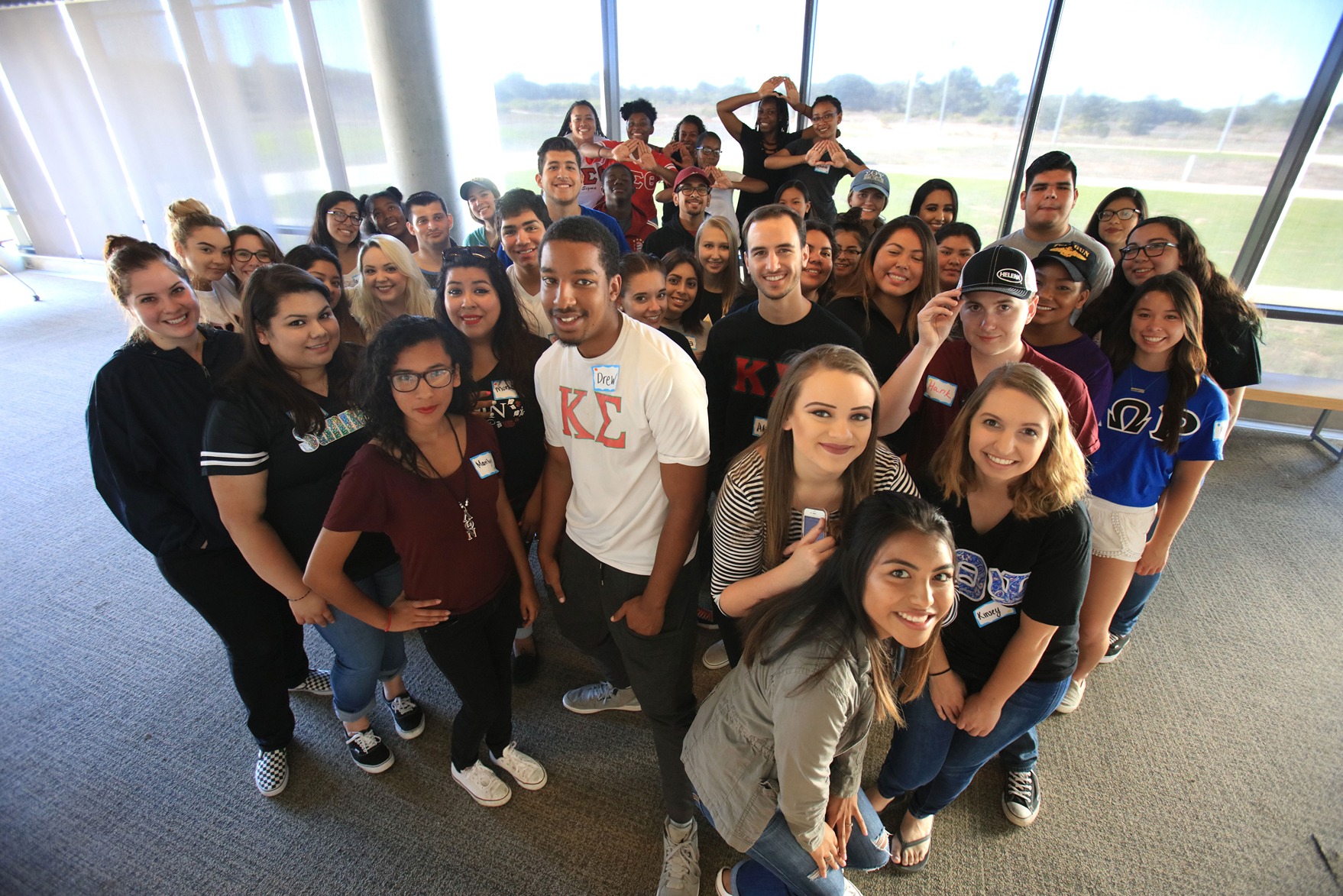
The college experience can be one of the most formative in a young person’s life. New friends are made. World views are broadened. Limits are tested. You gain an incredible amount of knowledge. And that’s outside the classroom.
The mere mention of fraternities and sororities usually drudges up common stereotypes. Most people, especially Baby Boomers and Generation Xers, think of “Animal House.” Millennials may think of the movie “Neighbors.” Negative press on hazing rituals by Greek organizations does not help with this common image. Yet, CSUMB Greek culture is defying these conventions.
CSUMB is home to six fraternities and eight sororities. All include members of different ethnicities and different walks of life. None live together in a single house. All include community service as a main priority. Hazing rituals, even moderate ones, are not tolerated.
Kristen Vega is CSUMB’s first coordinator of Greek Life and Civic Engagement. The position was created last year to oversee the CSUMB Multicultural Greek Council and the CSUMB Catalyst Center, a one-stop “resource center” for students participating in community volunteering and philanthropy.
“We emphasize academics, social justice, service, leadership and support,” said Vega, herself a sorority member at Chapman University in Orange, Calif. “From the beginning, CSUMB has taken a different approach to its Greek culture when compared to other institutions, focusing on creating an equitable community.”

That beginning was in 2001 when student clubs approached the CSUMB administration about allowing Greek organizations on campus. A town hall meeting was held and the student body was surveyed in spring 2002. When the survey results showed support for the idea, an 18-month trial period began with four organizations in Fall 2003.
To this day, many Greek members at CSUMB are first-generation students according to Vega. The average membership size is 15 students. All of the organizations represent a variety of national umbrella Greek organizations.
One of those first-generation students is kinesiology major Alex Munoz, a member of https://omegadeltaphi.com/. Munoz came to CSUMB from Southern California. An only child, he enjoys the sense of brotherhood with his fellow members, and that carries over to not only recreational activities and support on campus, but for community service projects.
"We are affiliated with multiple nonprofits. One local organization that we volunteer and fundraise for is Voices for Children, a support organization for foster youth,” said Munoz. “Another is the Lupus Foundation, which is personal for us since one of our members was diagnosed recently."
Deeply personal work
Much of the community work done by CSUMB Greek organizations can be deeply personal for its members. Global studies major Jalea Finkelstein is a member of Theta Alpha Sigma. The sorority works closely with the Monterey Rape Crisis Center, doing events and making “health bags” for fellow students and community members.
“A couple of my sorority sisters have lived through domestic violence and sexual assault,” said Finkelstein. “Being an advocate for this issue has been one of my best experiences here at CSUMB. We show that victims are not alone."
The multi-cultural experience has been especially enlightening for Finkelstein, who has Latino sisters in her organization. “I’ve learned a lot about their culture. I love that connection.”
That connection, the experience, also comes with further education thanks to the efforts of Vega and her colleagues. All of the CSUMB Greek members are required to attend Greek Otter Training, or GO Training, which educates students about alcohol and drug management, sexual assault, hazing prevention and bystander intervention.
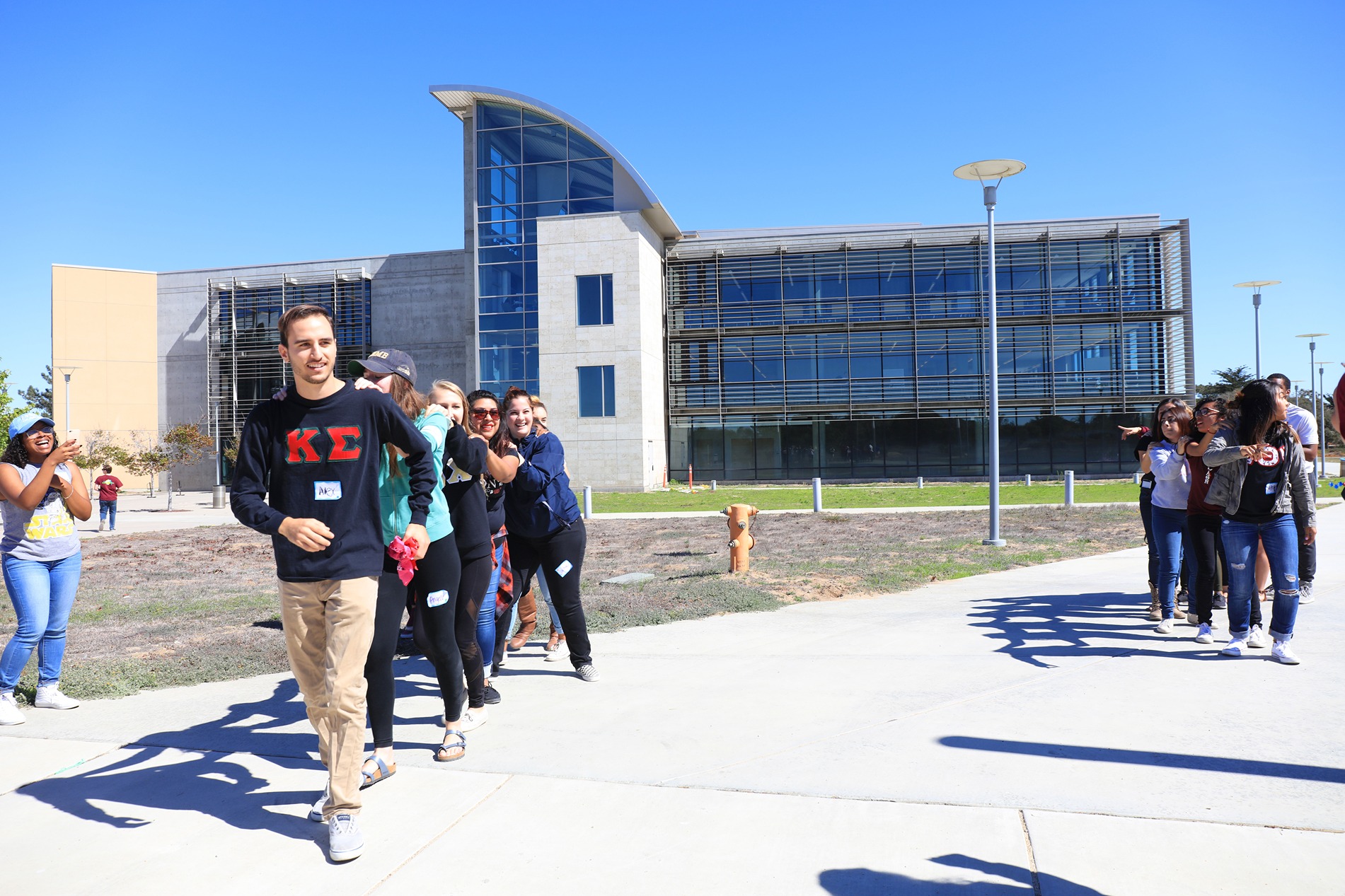
CSUMB Greek members enjoying a team-building exercise during the new member retreat.
One of the more unsettling parts of the training is a presentation that includes a slide showing eight CSU students who have died since 2000 due to hazing rituals. In 2006, “Matt’s Law” passed the California Legislature, allowing felony charges if serious injuries or death result from hazing rituals. It previously had been a misdemeanor. In addition, the law gave prosecutors the ability to seek felony charges against non-students if they were involved.
“Matt’s Law” was named after Matt Carrington, a CSU Chico student who died in a fraternity house basement in 2005. His death was the result of a so-called “water intoxication” ritual which caused brain swelling, seizures and heart failure.
Vega is passionate about this subject. “We absolutely forbid hazing in any form on campus or off-campus with our Greek organizations – I can’t stress that enough,” Vega said. “Neither the express or implied consent of the person being hazed, or the lack of active participation while hazing is going on, is a defense.”
As CSUMB continues to grow in the coming years, the Greek system will grow with it. That college experience is still going to be one of the most formative in the lives of future students. What’s critical is laying the foundation for a culture of inclusiveness and respect in the CSUMB Greek system.
“Developing responsible leadership and service now, here at places like CSUMB, will ultimately carry over into the working world as our students graduate. Many students will carry these ideals for the rest of their lives,” Vega said.
Spanish Connection
“For what are we born if not to aid one another?”
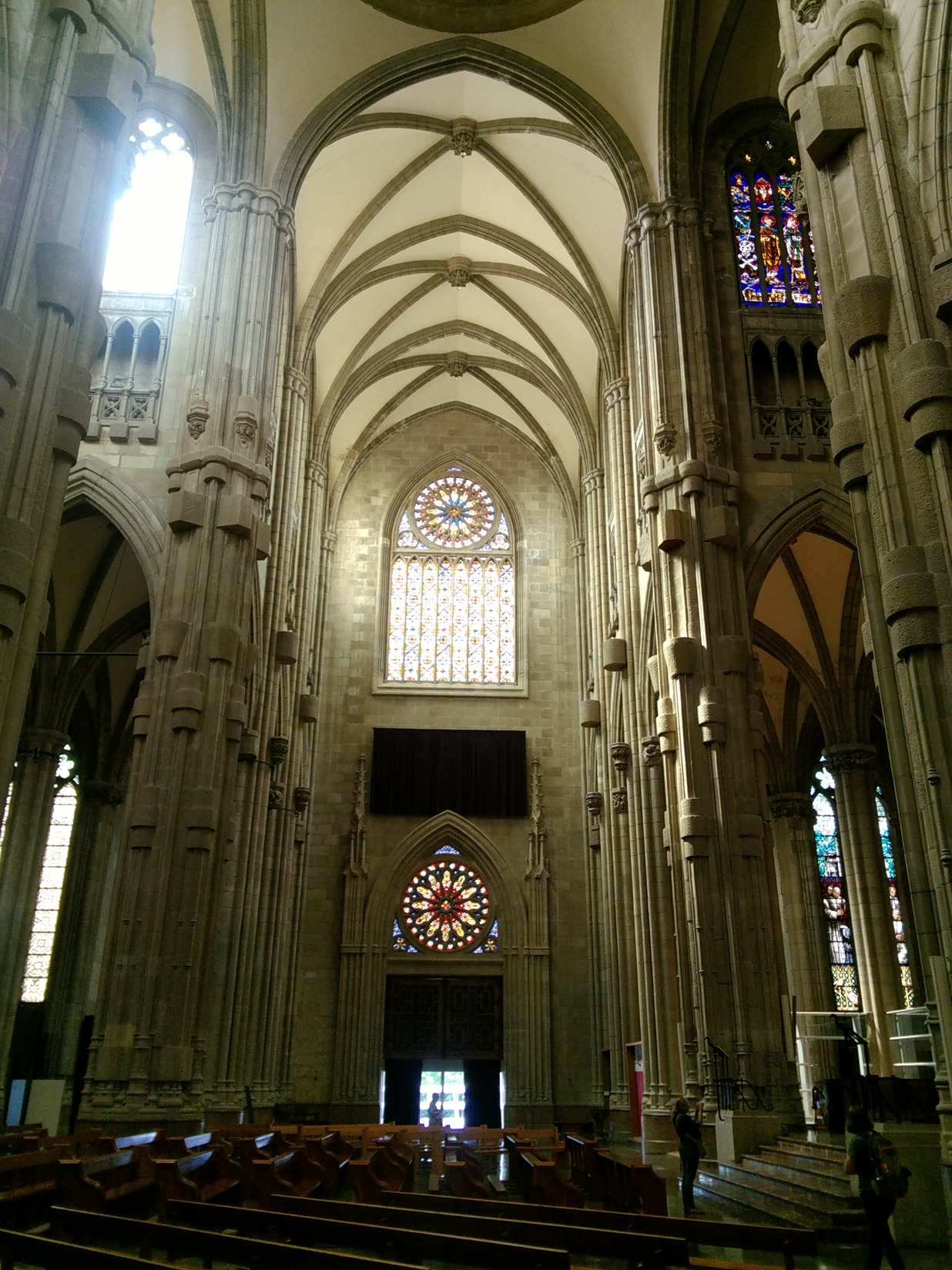
Ernest Hemingway wrote those words in “For Whom the Bell Tolls,” a book set during the Spanish Civil War in the late 1930s. The words seem almost out of place in a novel that describes the horror of war – fought viciously in the regions surrounding the churches and cathedrals of León, Spain, which itself ended up occupied by nationalist forces led by General Francisco Franco.
Remnants of history
Today, León and those mountains are a much different place. The war has been over for several generations. Industries in the region, namely in mining and agriculture, have prospered and then withered. The mountain villages are now especially quiet. Many of the young people have left. Mostly the elderly remain. There are many stories to tell. These isolated places, surrounded by remnants of history dating from the Roman Empire to the Spanish Civil War, are the ideal setting for the CSUMB Program.
The program is marking its fifth year and more than 50 students have participated. It’s led by CSUMB Professor Juan José Gutiérrez in Social, Behavioral and Global Studies. Students in the program can choose a focus of ethnographic field training and service learning, or Spanish.
Students who choose ethnographic field training and service learning develop skills in data collection and analysis, including mapping, observation, interviewing, and reporting about a population in their current location. Those who choose Spanish communicate interpersonally and interpretively with the local Spanish speaking population. They develop relationships and expand their studies of the Spanish language and Hispanic cultures.
In short, get to know the neighborhood, serve the residents and learn everything you can. All in a four-week period.
Gutiérrez has led the program since its inception at CSUMB. He started the program by taking his students to Mexico, his native country and “where my heart still is.” He moved it to Spain because of safety concerns and following a generous offer from local people in the region to help the initiative.
“The program trains students in current data collection techniques and takes care of service learning requirements,” Gutiérrez said. “This area of Spain is very economically depressed. Most of the people are elderly. The Spanish is much different than Mexico. They speak quickly. It’s a good challenge for the students to hone their language skills and practice their research methodology.”
Service and learning
According to Gutiérrez, during the first week of the program, students map the communities as a way to get acquainted with the location and to start establishing rapport with the people. They define research objectives, participate in class lectures, and work in their daily field-note taking assignments.
During the second week, students start informal interviewing of the local people, creating genealogical maps of families, and exploring different topics and issues of interest such as gender relations, health issues, local economy, trade and traditions and local history. Half of the students are placed with local families to strengthen communication. The other half focus on service learning work.
This past year marked a first for the program. The service learning component was expanded significantly with help from the Red Cross said Gutiérrez. Students began participating in Teleasistencia, a successful Red Cross program to monitor the health of the local elderly population in Spain.
According to Gutiérrez, students conducted site visits accompanied by personnel of the Red Cross, participated in fundraising activities, sold tickets to the annual lottery event (the most important fundraising source for them), and actively participated in the sorting and organizing of the food bank.
This relationship with the Red Cross may just be the beginning said Gutiérrez.
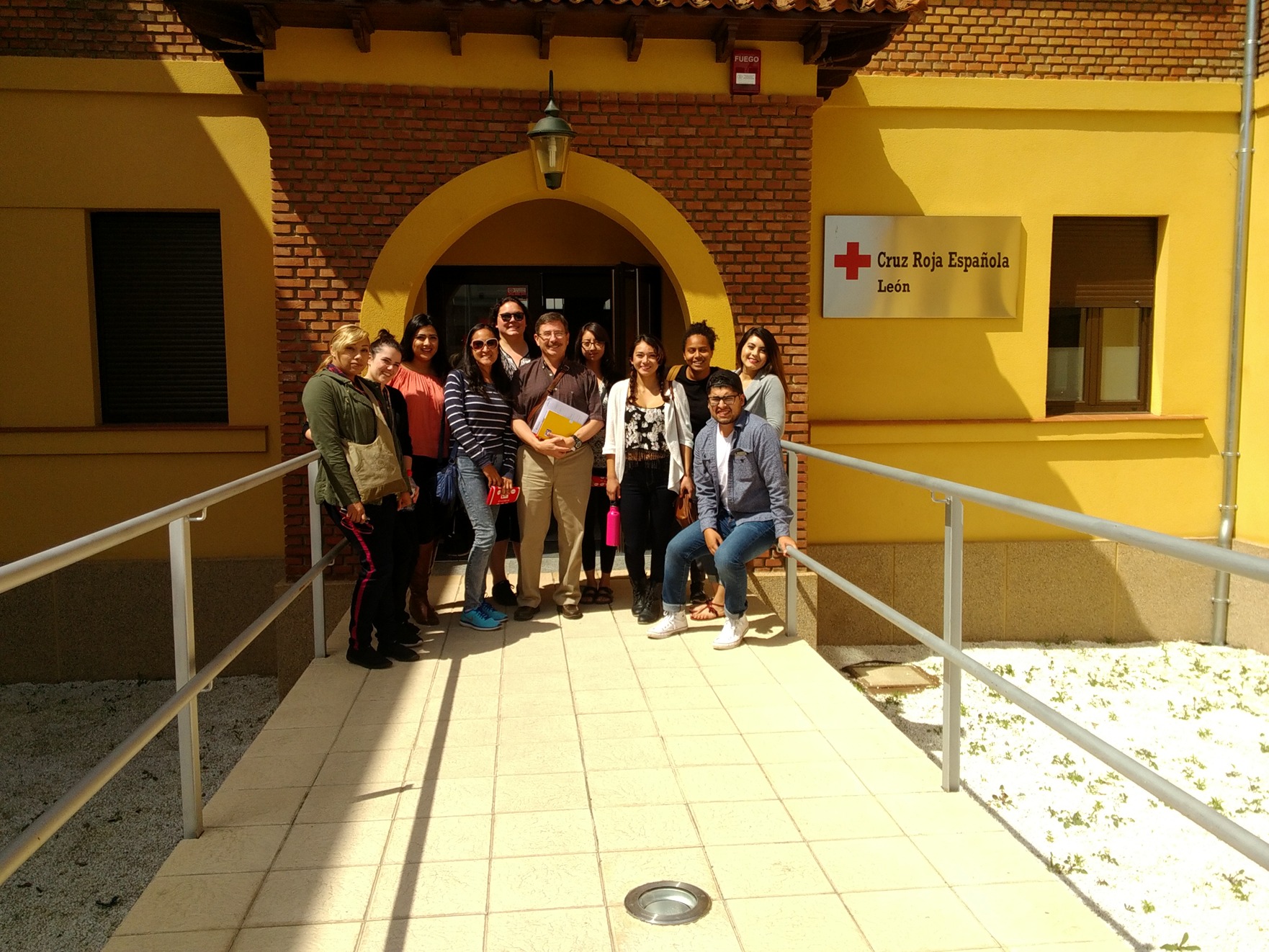
Professor Gutiérrez and his students at the entrance of the Regional Offices of the Red Cross in León, Spain in summer 2016. CSUMB students completed their service learning by supporting the work the Red Cross carries out with immigrant youth, children and the elderly.
“We are working on an agreement that will permit CSUMB students to complete their service learning graduation requirement in different communities throughout Spain, then return to California and continue their service at the local Red Cross,” said Gutiérrez. “This partnership will provide amazing opportunities for our students, creating professionals invested in the continued success of the Red Cross in America.”
The best education
Gutiérrez talks enthusiastically of the relationships developed between the local residents and the students. The elderly population in that region of Spain is very isolated. They live off meager pensions. Many residents are amazed the students are there in the first place. Why go there?
It’s an ideal place for students beginning directed field research, according to Gutiérrez. “Many of the CSUMB students are first-generation and being immersed in another culture, even a Spanish-speaking one, thousands of miles from home, can be a life-changing experience. They learn amazing things from this elderly population, who in turn are usually grateful for the students’ presence.”
And the students’ work is recognized not only by their peers and faculty. The mayor of Boñar, a municipality located in northwest Spain in the province of León, established an award on behalf of the community for the best CSUMB student report. This award consists of a one-week, all-inclusive stay at the best tourist resort of the province. CSUMB student Luis Canett secured that honor this year with his research project on the “Oral History of Local Miners” – and completed his Capstone in the process.
Hemingway’s words now seem more fitting. Service can be the best education. The program boasts a 100 percent graduation rate for its students. “I am proud of what this program has accomplished and the potential it has for future student research,” Gutiérrez said.
Class Notes
2001
Michael Bogan (B.S., Earth Systems Science) was hired as an assistant professor of aquatic ecology at the University of Arizona after a two-year postdoctoral researcher position at University of California, Berkeley. “I hope to be able to inspire undergraduate and graduate students in the same way that CSUMB professors inspired me for a lifetime of learning.”
2002
Kate (Ammerman) White (B.A., Social and Behavioral Science) recently worked to complete the expansion and renovation of Cal State East Bay’s downtown Oakland facility for continuing education.
2003
Bobby Quinonez (B.S., Earth Systems Science and Policy) is a proud employee of CSUMB, first as the program coordinator for the Recruitment in Science Education (RISE) Program, and now as the administrative support coordinator for the Undergraduate Research Opportunities Center (UROC). He is proud to participate as a member of the CSUMB Alumni Association Board of Directors and member of the newly created external affairs and marketing committee.
Heather (Edwards) Johnson (B.S., Earth Systems Science) is on her 10th year teaching biology and AP environmental science at Burlingame High School in Burlingame, Calif. She was awarded teacher of the year for 2014-15 and is now helping other teachers integrate technology into their curriculum. “My daughter began the first grade and has decided that she wants to go to CSUMB so she can be an Otter!”
2004
Jacob Cooney (B.A., Teledramatic Arts and Technology) has been writing and directing projects in both film and television. Most recently, he directed the films “Blue Line” for Lionsgate, “Pitching Tents” for Meritage Pictures and “House Rules” for DTLA Entertainment. Cooney also wrote the film “Isle of the Dead” for Sony Pictures Homes Entertainment, which aired on the Syfy Channel.
2007
Margo Mullen (B.A., Visual and Public Art) resides in Southern California and has been traveling extensively. Recent trips include Quito, Ecuador, to assist Suzanne Lacy, a former CSUMB faculty member, in a performance piece that included approximately 300-400 participants and was about non-violence towards women. Mullen then went to Ireland to work on a performance with Lacey and the Irish Museum of Modern Art. A trip to Manchester, England (for a week) followed for another performance. Her art has been exhibited at the Monterey Museum of Art and the Wild Heart Gallery in Carmel Valley. More information about her work can be found at studiomargo.com.
2008
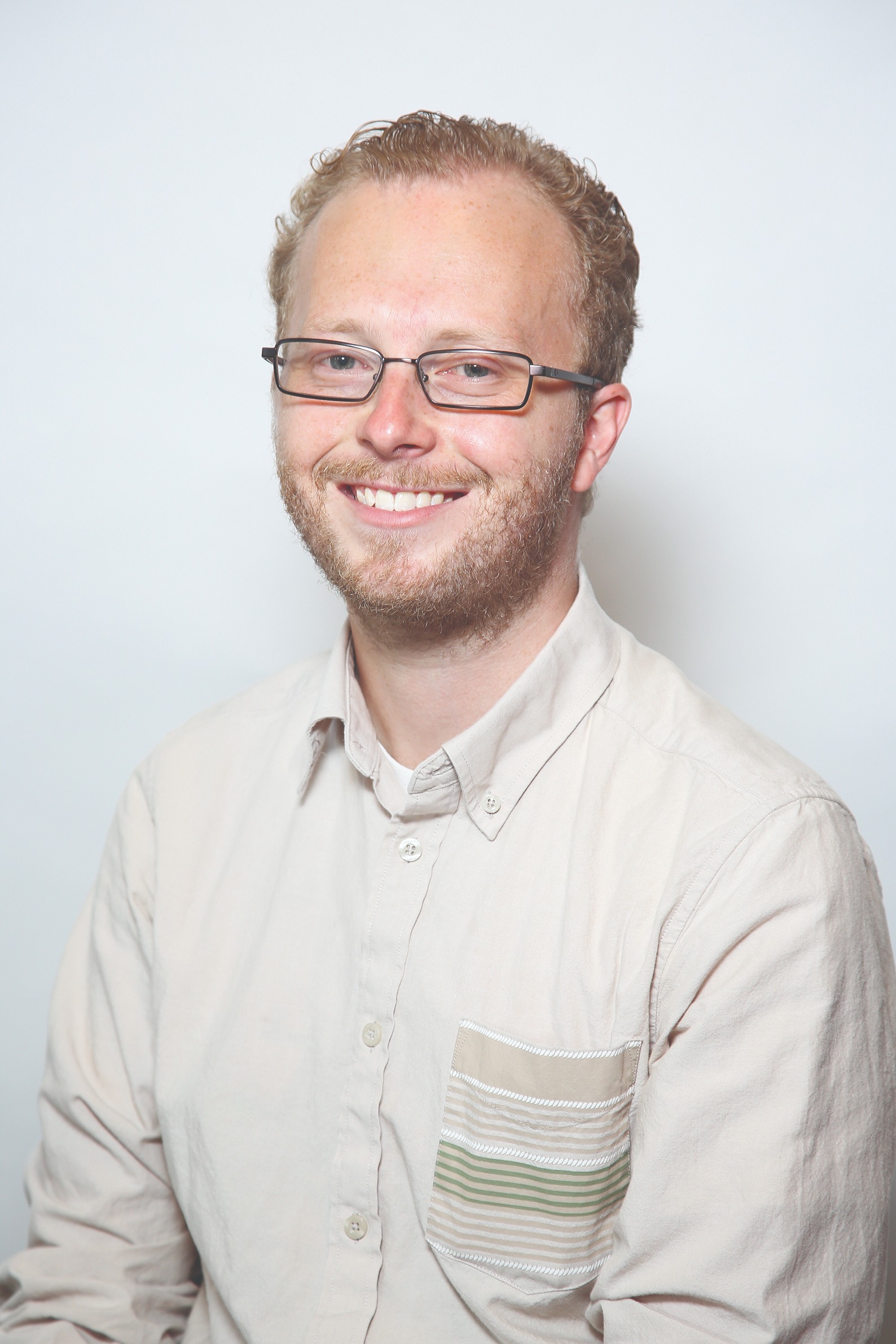
Garett Thomas (B.A., Teledramatic Arts and Technology) Garett is a program director at Peninsula Television (pentv. tv), a local cable channel for San Mateo County. Over the past seven years, he has directed and/or edited more than 500 in-studio, field and live-stream episodic shows. He also creates weekly channel lineups, animates promos, manages social media, coordinates studio reservations and developed their mobile-friendly company website update for the Silicon Valley. Thomas independently produced and directed more than 50 short films, three of which showed theatrically, most recently in 2013 at the Castro Theatre for “Urban Hustle.”
Alexander McDermott (B.S., Business Administration) works in real estate in Orange County. In 2011, McDermott was diagnosed with multiple sclerosis. Since getting back on his feet, McDermott has had the pleasure of working with the MS Society as well as being an active member of their young professionals group. “I hope to further develop my business skills and use my free time to help others who have fallen subject to this disease.”

2009
Israel X. Nery (B.S., Business Administration) is currently a Presidential Management Fellow (PMF) at the U.S. Small Business Administration (SBA) in Washington, D.C. He was the 2014-2015 Law Graduate Fellow at the Congressional Hispanic Caucus Institute (CHCI). During his time as a CHCI Law Graduate Fellow, he worked for the House of Representatives Financial Services Committee under Maxine Waters [D- CA43]. After completing his undergraduate studies at CSUMB, he earned his MBA from Woodbury University in 2011, followed by a juris doctorate from the University of Illinois College of Law in 2014.
2010
Alan Rosemberg (B.S., Business Administration) got married, traveled to Italy and did a two-year program at UCLA to become a board certified financial planner (CFP) practitioner for Fidelity Investments.
Ashley Duquette (B.S., Environmental Science, Technology and Policy) worked at the Aquarium of the Pacific in Long Beach after graduating and then got married. Duquette spent four years at the aquarium as an exhibit interpreter where she did shows, talked about lorikeets and sharks, gave “awesome behind-the- scenes tours” and had the privilege of being a naturalist on whale watch tours. Afterwards, she worked at the Cincinnati Zoo in Ohio before returning to Southern California, where she currently lives.
Rachel L. Osias (B.S., Environmental Science, Technology and Policy) completed a K-6th grade teaching credential with CalStateTeach in 2014. Osias earned a master’s in urban environmental education through Antioch University and works with Seattle public schools in their curriculum, assessment, and instruction department. “The majority of my ‘extra-curricular’ activities still revolve around service, social justice, environmental justice, and environmental education.”
2012
Kyle Holmes (B.A., Global Studies) graduated with a dual degree (JD/MBA) from Florida Coastal School of Law and Jacksonville University, and currently lives in Tampa, Fla.
2013
James W. Lewis (B.S., Kinesiology) earned a master’s in exercise physiology from San Jose State. For his final project, he wrote a book entitled “Exercises for Older Veterans with PTSD,” which promotes exercise therapy to help minimize post-traumatic stress disorder symptoms. Lewis was nominated for a Global Ebook Award for his work.
Sara Reis (B.S., Kinesiology) graduated with honors in 2015 from University of the Pacific with a doctorate of physical therapy. Reis was awarded a scholarship for her participation in the community and interest in working with physically disabled children. She is now a physical therapist at Santa Clara Valley Medical Center, “continuing the legacy of service learning and community involvement that I experienced while part of the CSUMB community.”
2014
Brittany Harden (B.A., Human and Communication) moved to Santa Barbara after graduating, working as a development assistant for a non-profit that served low-income families and seniors before being hired at Santa Barbara City College.
Angelina “Angie” Purchio (B.S., Kinesiology) is currently working on a master’s degree in athletic training at Weber State University in Utah.

2015
Kristine Elizondo (B.A., Cinematic Arts and Technology) worked for the City of Monterey as a digital media intern after graduating. She worked directly with the communications office and city manager’s office in Monterey, assisting with the website and social media, along with photography and videography.
Kymber Senes (B.A., Collaborative Health and Human Services) is a research analyst at CSUMB in the department of Health, Human Services and Public Policy, with the Institute for Community Collaborative Studies (ICCS). The Monterey County Health Department (MCHD) partnered with ICCS to implement the Prevention First Project, a five-year grant project funded by the Centers for Disease Control and the California Department of Public Health to address diabetes and hypertension prevention and management in Monterey County.
2016
Jennifer Bennett (B.A., Psychology) started a mental health counselor master’s program at University of West Florida.
News Briefs
Published Dec. 20, 2019
Otter Athletics inducts inaugural Hall of Fame members
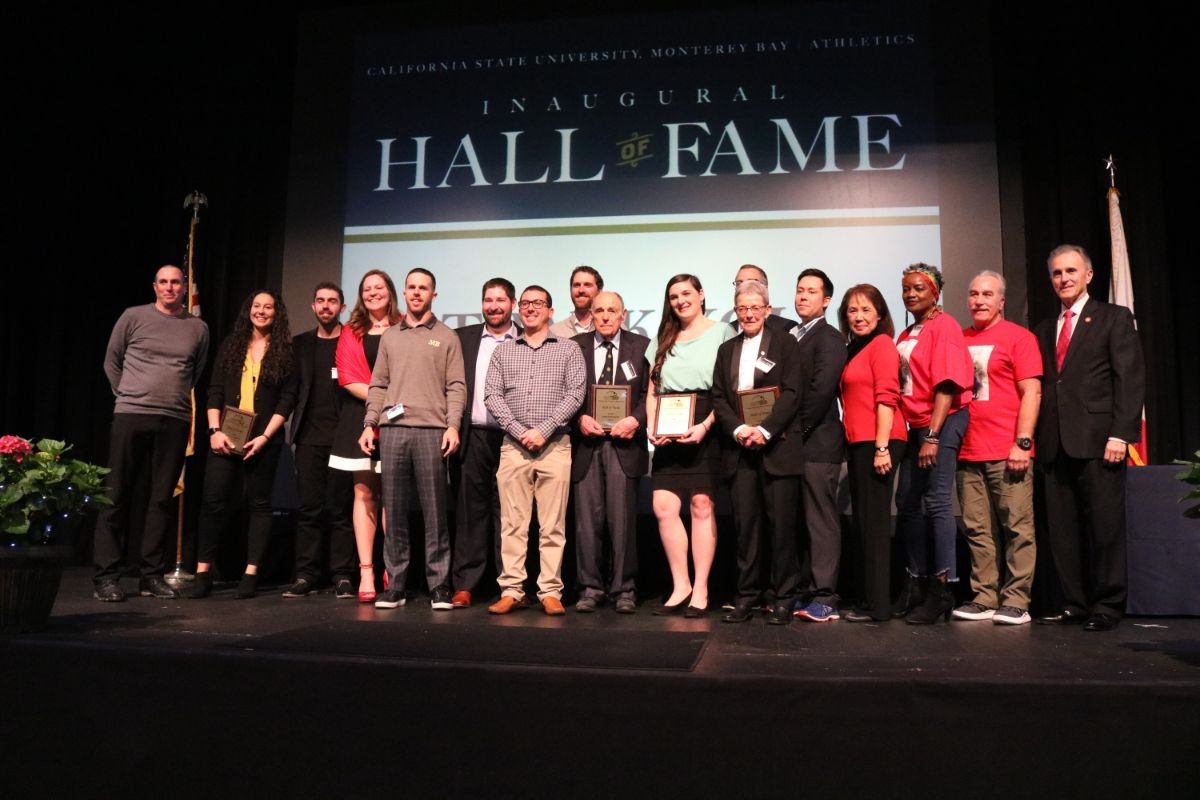
California State University, Monterey Bay, announced its inaugural Athletics Hall of Fame class this year. The first honorees — including eight student-athletes, two coaches and one national championship team — were inducted on Feb. 16, 2019, at the University Center.
“Our Hall of Fame allows us to recognize individuals who have shaped our identity and contributed significantly to the growth of our university and athletics programs,” Director of Athletics Kirby Garry said. “(We) look forward to building on this new tradition in future years.”
In alphabetical order, the inductees were: Dana Andrews – Women’s Basketball (2006-09), all–time leading scorer; Bobbi Bonace – Administrator/Coach (1996-2007), first director of intercollegiate athletics; Cicillia Chudivan – Women’s Golf (2007-10), All-American, all-time winningest golfer; Rheann Fall – Volleyball (2008-11), All-American, career kills leader; Brian Haggett – Baseball (2012-13), first Academic All-American; Bob Johnson – Community supporter, passionate backer of Otter Athletics and CSUMB; Devougn Lamont – Men’s Basketball (2005-06), first player to average 20 points per game; Chealsea (Laning) Brown – Water Polo (2005-08), career record holder for goals and points; Ashlee Trotter – Softball (2006–09), captain of first California Collegiate Athletic Association (CCAA) championship team; Bill Trumbo – Administrator/Coach (2000-06), led CSUMB to NCAA Division II membership; Erik Uppman – Cross Country (1998-2001), captain of first conference championship team (California Pacific Conference); Team of Distinction – 2011 Men’s Golf Team, CSUMB’s first national championship team.
CSUMB launches innovative Responsible Business MBA
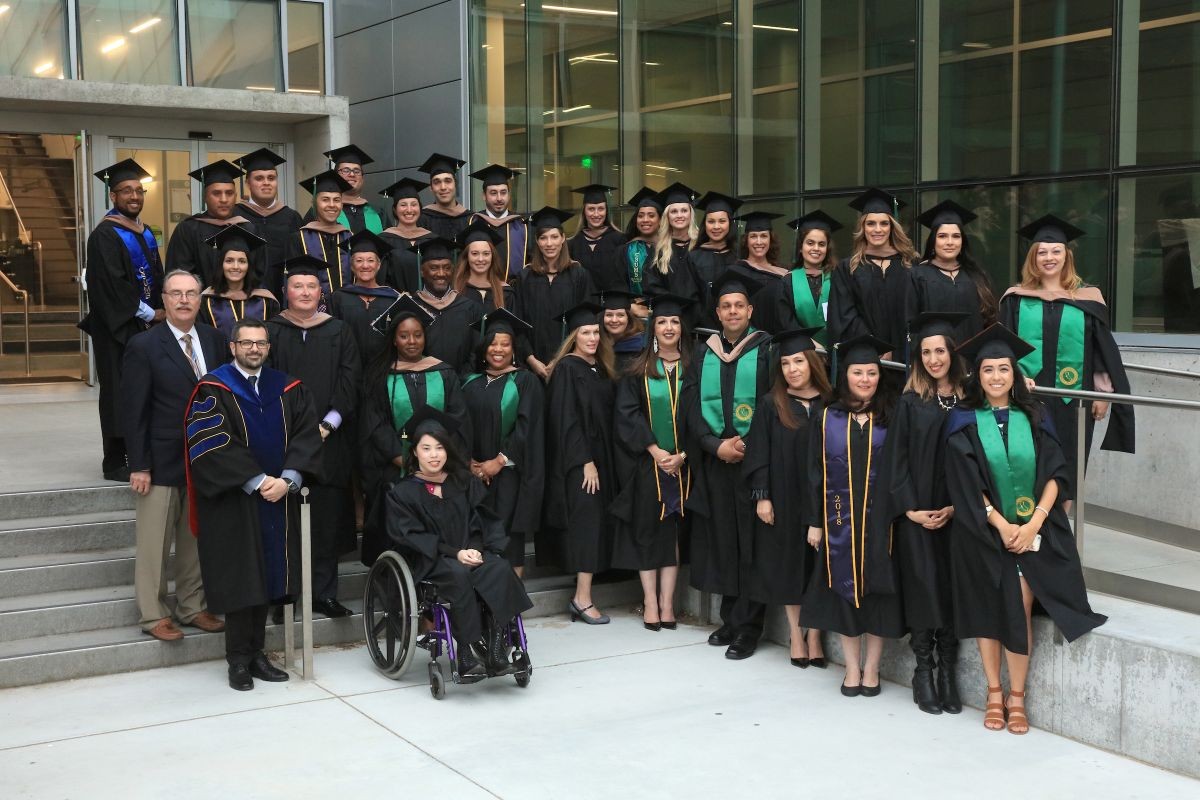
The College of Business at CSUMB launched the world’s first Responsible Business Master of Business Administration (MBA) degree program in fall 2019. The entirely new curriculum is designed around the theme of “Innovation, Responsibility, Impact,” with a quintuple bottom line adding “Ethics” and “Equity” to the traditional triple bottom line of “People, Planet, Profit.”
“We’re emphasizing critical systems thinking, continuous improvement, integrated communications, and creative problem solving — in an expanded quintuple bottom line context — to develop the Responsible Business mindset and toolkit,” Dean Shyam Kamath said.
Responsible Business goes beyond the triple bottom line to educate business leaders to develop and transform organizations into 21st-century business models. The quintuple bottom line enables businesses to achieve financial success while taking care of valuable human and environmental resources, Kamath said.
With busy working professionals and executives in mind, the program is 100% online to offer maximum flexibility. The curriculum consists of 38 units delivered in sequence across 14 individual courses. The online MBA degree can be earned in as few as 18 months. “The faculty have thoughtfully created a unique education experience,” said Nicolas Dahan, program director. “It builds on the university’s tradition of concern for community, ethical leadership, social justice, and environmental stewardship.”
Go online to mba.csumb.edu to learn more.
WASC grants accreditation for 10 more years
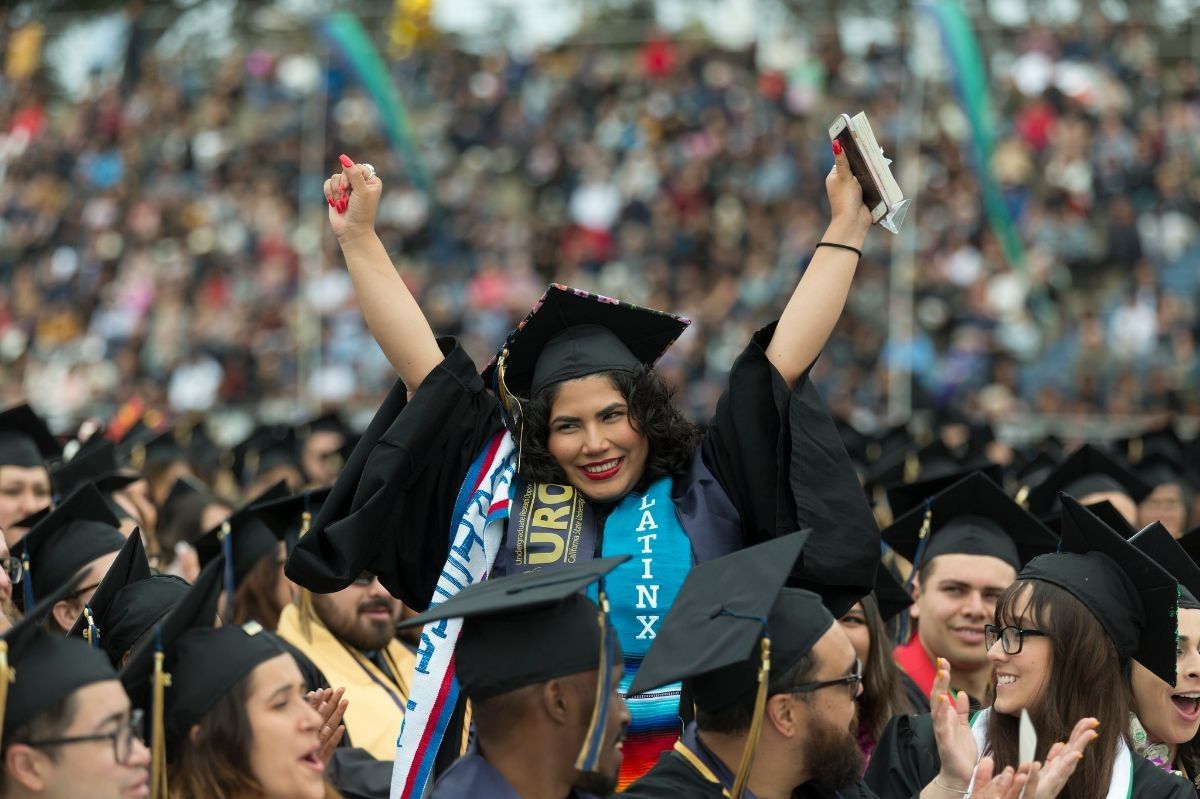
California State University, Monterey Bay (CSUMB) achieved reaffirmation of its accreditation from the Western Association of Schools and Colleges (WASC) in July 2019. The reaffirmation is for 10 years, the longest achievable period of accreditation.
The WASC Senior College and University Commission (WSCUC) commended CSUMB in a number of areas, particularly the increase in graduation rates since 2011. A recent Chronicle of Higher Education publication recognized CSUMB as one of three public universities in the U.S. with the greatest improvements in graduation rates. The Commission also praised the university for its commitment to the whole student, a culture of innovation and strong regional stewardship.
“I would like to thank all the many faculty, staff and administrators who made this achievement possible through their on-going and lasting commitment to reflection and improvement which was visible throughout the Institutional Report submitted to WSCUC as part of the reaccreditation effort,” President Eduardo M. Ochoa said.
Accreditation aids institutions in developing and sustaining effective educational programs and assures the educational community, the general public, and other organizations that an accredited institution has met high standards of quality and effectiveness.
CSUMB professor, researchers decode white shark genome
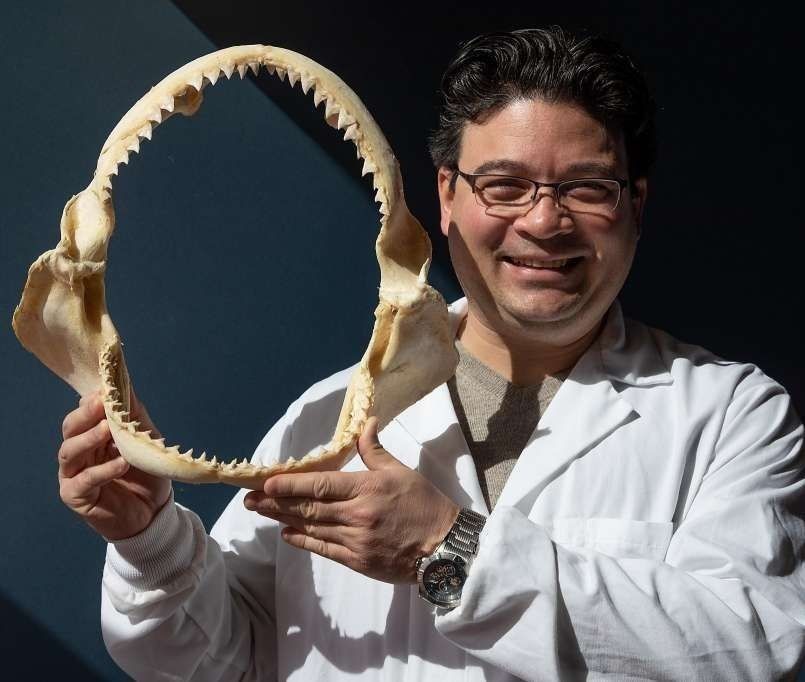
Assistant Professor Nate Jue with the School of Natural Sciences at Cal State Monterey Bay collaborated with an international team of researchers to decode the entire genome of the white shark. The results of their study were announced in March 2019 and marked a major scientific breakthrough which could assist in cancer prevention in humans.
The findings were published in the scientific journal “Proceedings of the National Academy of Sciences.” Through comparisons with other species, genetic adaptations in the white sharks can help scientists better understand how important processes like the repair of damaged DNA may function in other organisms including humans.
The researchers discovered unique blood-clotting and cancer-protection genes within the white shark genome. Further studies may assist medical researchers in their efforts to prevent cancer, treat age-related ailments and heal injuries in humans.
In addition, researchers were shocked to discover the size of the white shark genome measured approximately one-and-a-half times the size of the human genetic code. Decoding the white shark genome may also assist with the conservation of this often feared, yet vulnerable species by providing information about white shark population dynamics.
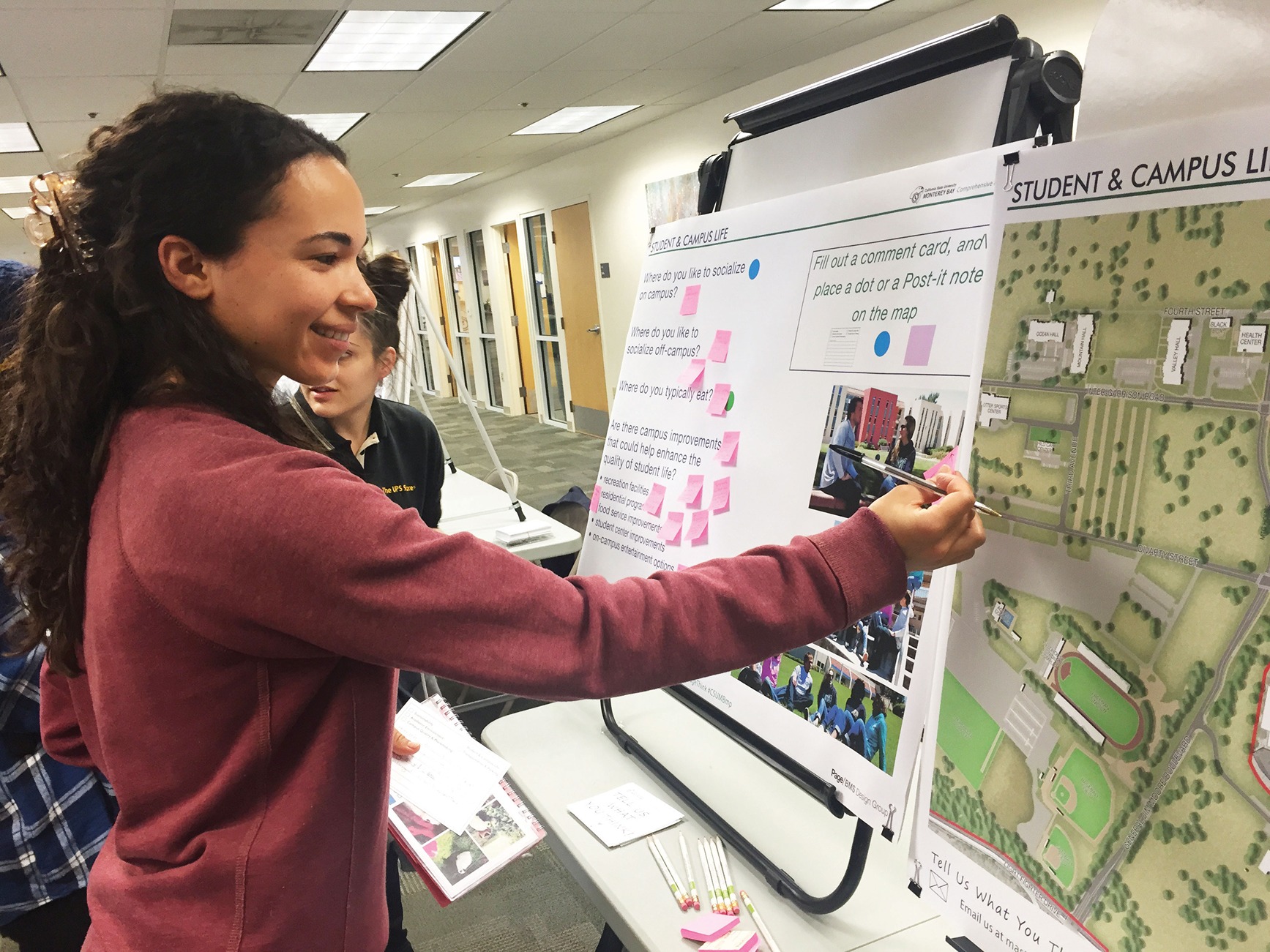
Since the university opened in 1995, the campus has grown from 650 students in repurposed buildings on a former Army base to a 21st century institution for teaching, research and innovation.
To accommodate the expected growth to 12,000 students by 2024, the campus master plan is being updated. The master plan provides a road map for growth and renewal of the campus. It includes academic needs such as classrooms and labs; student and residential life, such as a student union, recreation center and housing; infrastructure; sustainability; transportation; and connections with neighboring communities. The draft is expected to be completed by the end of the year.
After a series of meetings with campus groups to start the process, it became clear that there is an interest in making the campus more pedestrian- and bike-friendly.
Page/BMS Design Group of San Francisco has been hired to lead the process.
Marina, university team up on student housing project
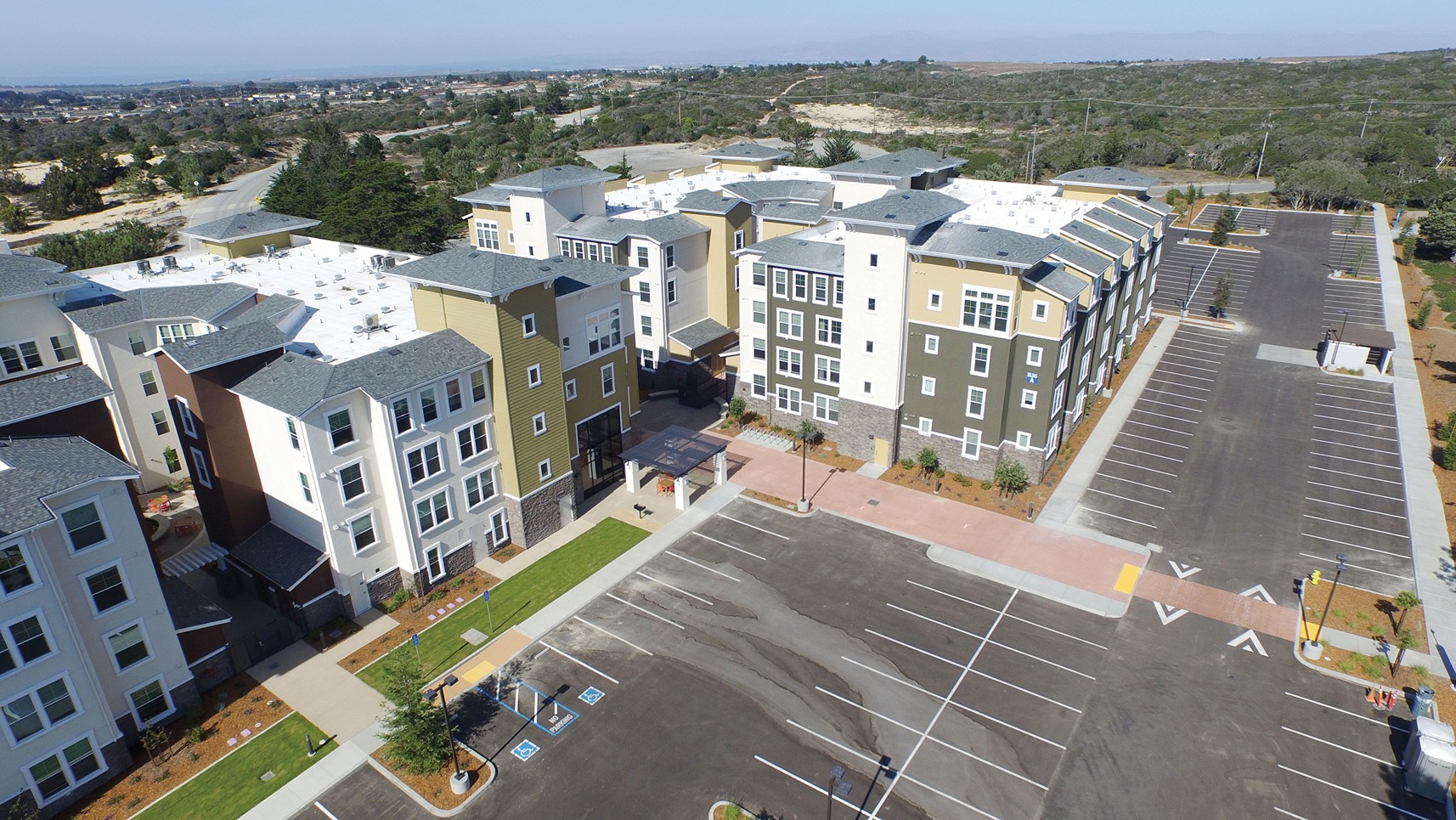
It’s about as far as you can get from dormitory life. The Promontory, a student housing complex just north of campus in Marina, opened in August. It’s the first new housing to come online since 2004. The project consists of three 150,000-square-foot, four-story buildings, with a total of 174 units and 579 beds. All units — which range from one to four bedrooms —come with a microwave, stove/range, dishwasher and washer and dryer.
The development has plenty of perks that have proven popular with students: a two-level fitness center, a game room with pool table, study rooms, a cyber café with kitchen, and a theater. Each of the buildings has an interior courtyard.
The project was built to LEED silver standards. It is the first joint housing venture between the city of Marina and CSUMB.
CSUMB acquires National Steinbeck Center

California State University, Monterey Bay and the National Steinbeck Center have completed a deal that will bring the university to the city of Salinas.
Under terms of the deal, negotiated among the university, the Steinbeck Center and the city of Salinas, CSUMB’s corporation purchased the building for $3 million. In addition, CSUMB paid the city $100,000 for the land beneath the building.
The Steinbeck Center will remain as a tenant, with an 80-year lease.
“This is our front door to Salinas and we’re going to use this as a way to connect to the community and respond to their needs,” said CSUMB President Eduardo Ochoa.
The University Corporation at Monterey Bay is a non-profit 501(c)(3) auxiliary organization that operates as the business arm of the university. It provides direct support for a number of university programs and activities.
The university is considering how to use the space. Possibilities include cultural and educational programming and outreach by staff members from CSUMB’s admissions and financial aid offices. In addition, the space will continue to be available as a resource for the community.
“We are planning on engaging the campus and our partners in Salinas in discussions of how we might best advance the mission of the university and meet community needs,” said CSUMB Provost Bonnie Irwin.
Art donations bring campus to life

Walk into the library and look around. Many of the walls have color and character thanks to the multiple pieces of beautiful art that decorate the walls. These pieces, along with pieces displayed throughout campus, are made possible by the University Art Committee – and more is on the way.
The University Art Committee, comprised of Holly Ochoa, administrators, faculty, staff and students, is a recommending body to the President that facilitates the acquisition and placement of donated art throughout campus. Many pieces are possible thanks to the generosity of an anonymous donor.
The artists represented among the works that CSUMB has been gifted include Eleen Auvil (the copper panel piece at the library stairwell), Susan Manchester, Barry Masteller, Amy Ellingson, Chris Winfield, Charles Eckart, Lucas Bloc, Cynthia Ona Innis, Susan Parker, Rick Arnitz, and Jamie Brunson. In the library reference area, the Cornwell mural is displayed on loan from the Monterey Museum of Art.
In addition, a three piece work by Vern Trindade, recently exhibited at the Triton Museum in San Jose, will be mounted in the near future at the library. For more information or to inquire about making art donations, contact the committee chair, Ilene Feinman, dean of the College of Arts, Humanities and Social Sciences, at ifeinman@csumb.edu.
Published Feb. 2, 2019
Salinas Center for Arts & Culture celebrates one-year anniversary
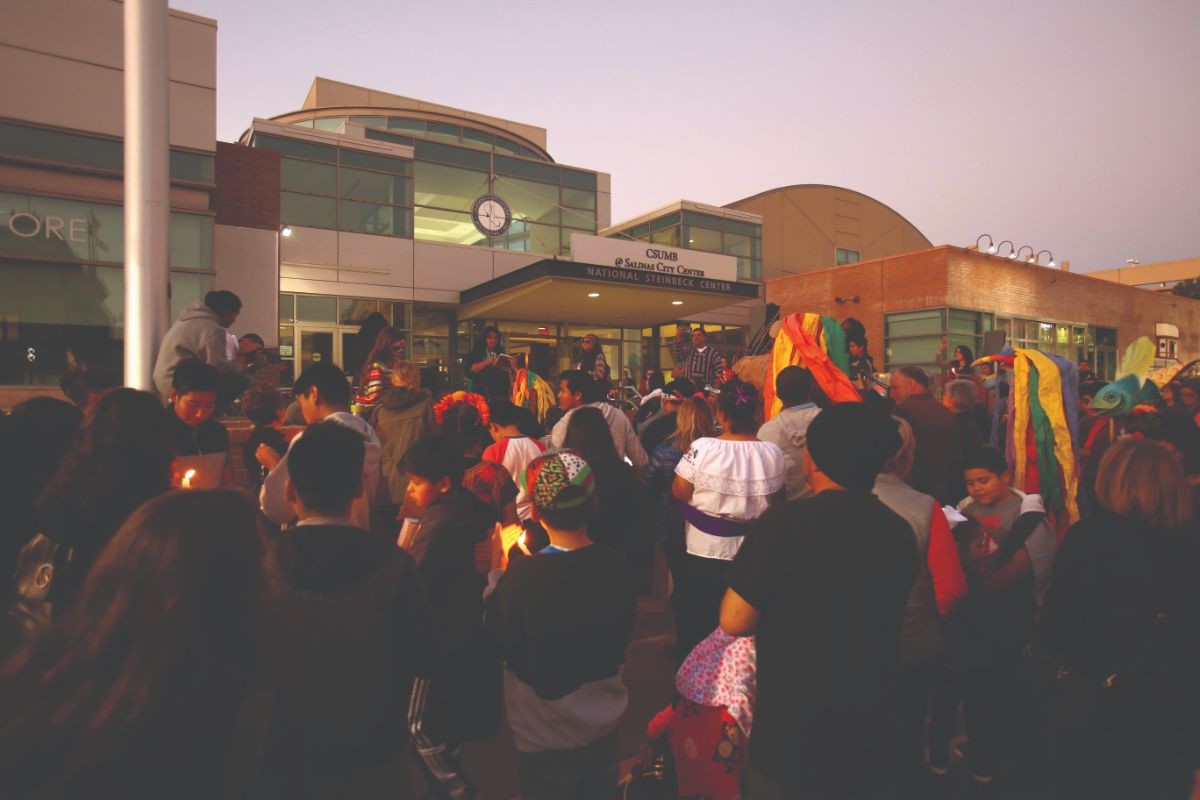
California State University, Monterey Bay’s Salinas Center For Arts and Culture officially celebrated its first anniversary with a series of Dias de Muertos events on Friday, Nov. 2, 2018. The center is housed within CSUMB @ Salinas City Center and strives to create a community of artists and a culture of activism in Salinas.
Over the past 12 months, the center has hosted a wide range of events, all free and open to the public, to include monthly First Friday events. Along with community-centered events encouraging local residents to visit, the center has held countless exhibitions featuring artwork from local artists and CSUMB students.
The center serves as a pivotal piece in extending CSUMB’s impact into the Salinas community and upholding the mission and vision of CSUMB. Hosting open community events is in keeping with CSUMB’s role as a community resource, providing forums for provocative discussions that can impact thought and action on issues important to our community.
Director Enid Ryce said the center serves as a boon for students as well, with “opportunities to create exhibitions, work in collaboration with community partners, and be in conversation with national figures in arts and humanities.”
Grant supports continued growth of Teacher Pathway Program
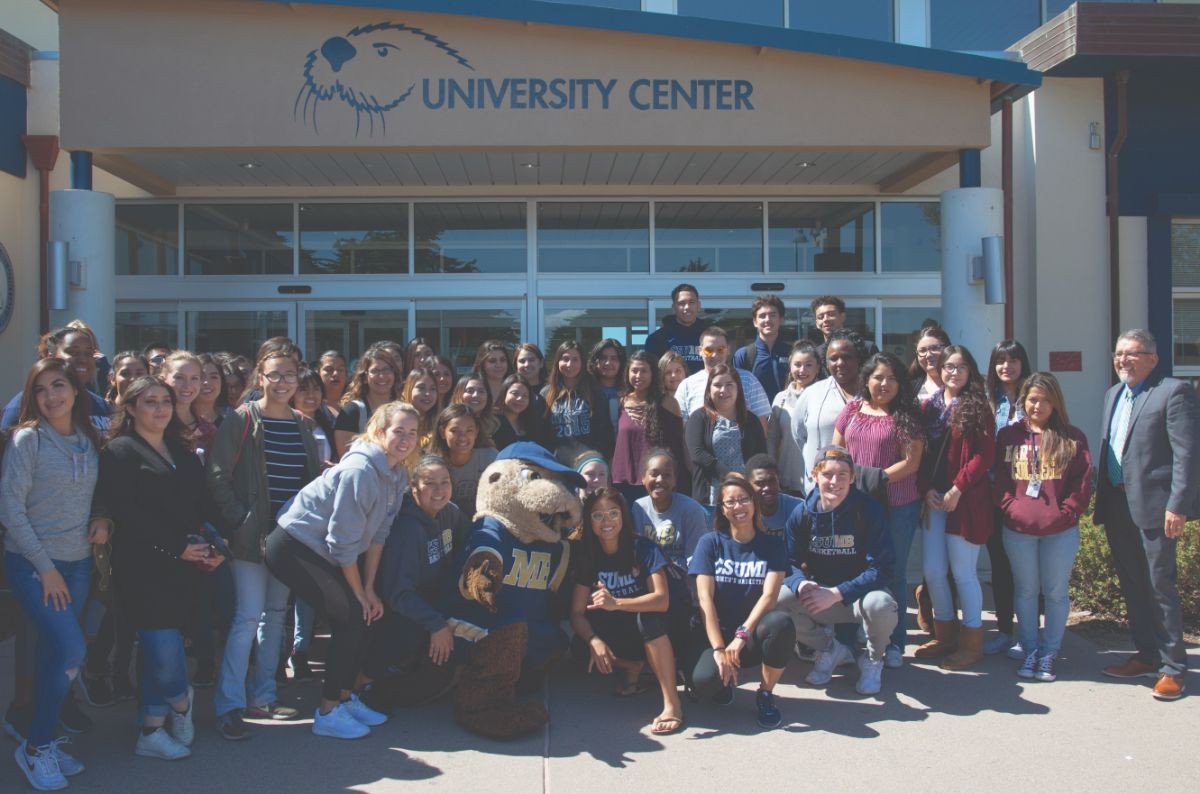
Hartnell College and California State University, Monterey Bay’s joint Teacher Pathway Program received a $335,000 grant from The Claire Giannini Fund last Fall that will help ensure the program’s continued growth and success. The program prepares fully-qualified elementary and special education teachers for Monterey County communities, with an eye towards sustainability.
The first cohort of the program, which began in fall 2016, has entered its third year. Students have achieved an 86 percent graduation rate — a much higher graduation rate than students enrolled in a traditional program — and earned their associate’s degree for transfer in two years. The first cohort is now working to earn their bachelor’s degrees in liberal studies and teaching credentials at CSUMB.
The Teacher Pathway Program is a collaborative “grow-our-own” solution to addressing the regional teacher shortage, said CSUMB College of Education Dean Jose Luis Alvarado.
The unique partnership, along with the streamlined program design, reduces the time it takes to transfer, thereby reducing costs to the participants.
The success of the program has resulted in expansion to new locations in South Monterey County and Salinas, and an enrollment increase of 80 percent with 28, 38 and 42 students in each cohort over the last three years.
Congressman Panetta introduces bill supporting veteran students
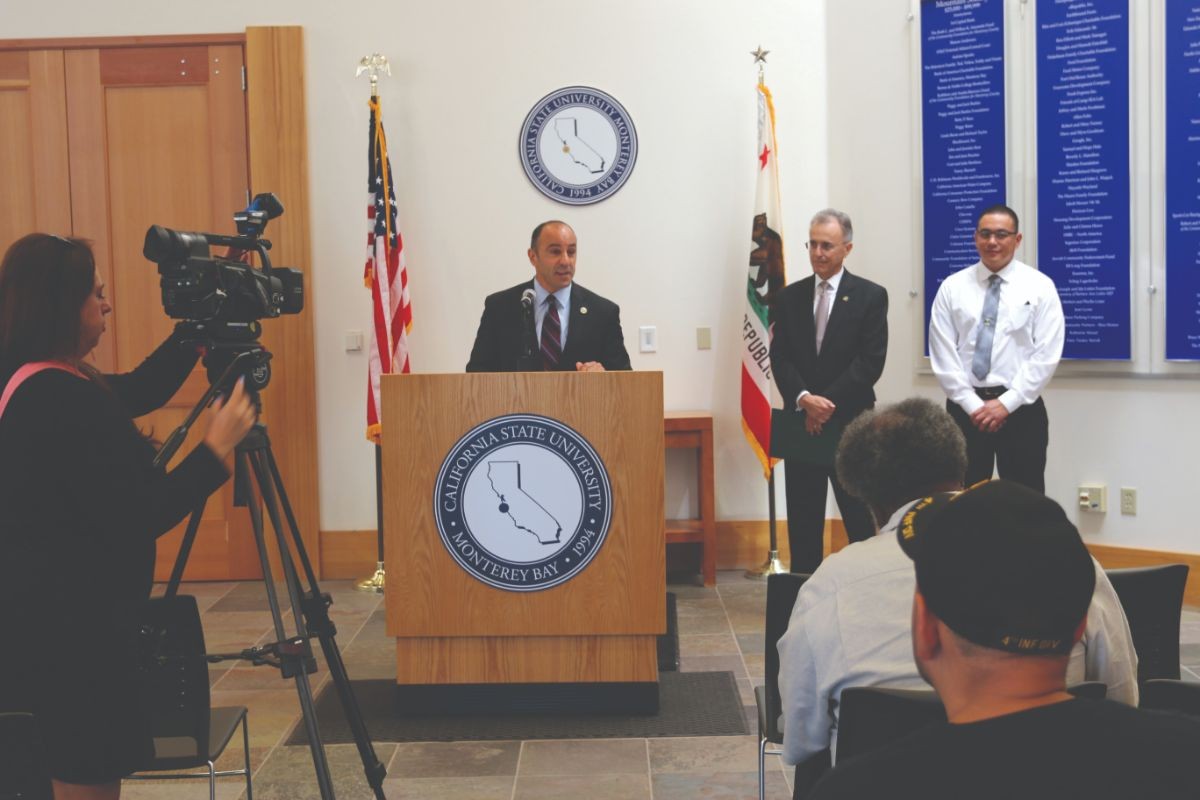
Congressman Jimmy Panetta, D-Carmel Valley, introduced the Veterans Resource Center Act during a press conference last fall at CSUMB. The legislation would authorize the Department of Veterans Affairs to provide federal grants to public universities to establish, maintain, and provide services at Veterans Resource Centers on campuses. It also incentivizes priority registration for veteran and military-connected students.
The legislation, co-sponsored by Nebraska Congressman Don Bacon, empowers universities to establish support centers modeled after the proven success of the California State University system’s Veteran Success Centers. CSUMB currently has more than 50 veteran students and a Veteran Student Services center that provides information on campus resources, veteran benefits, veteran service organizations, and social and study opportunities.
“Federal tuition support under the Post-9/11 G.I. Bill expires after three years, pressuring veteran students to complete their degrees early,” Panetta said.
“This bill will help our veterans choose classes that fit their personal needs, allowing them to graduate on time, while simultaneously providing them social and educational support. While these support resources are utilized throughout the California State University system, including here at home at CSUMB, I look forward to expanding this service to universities and veterans across the country.”
CSUMB business students attend West Point ethics conference
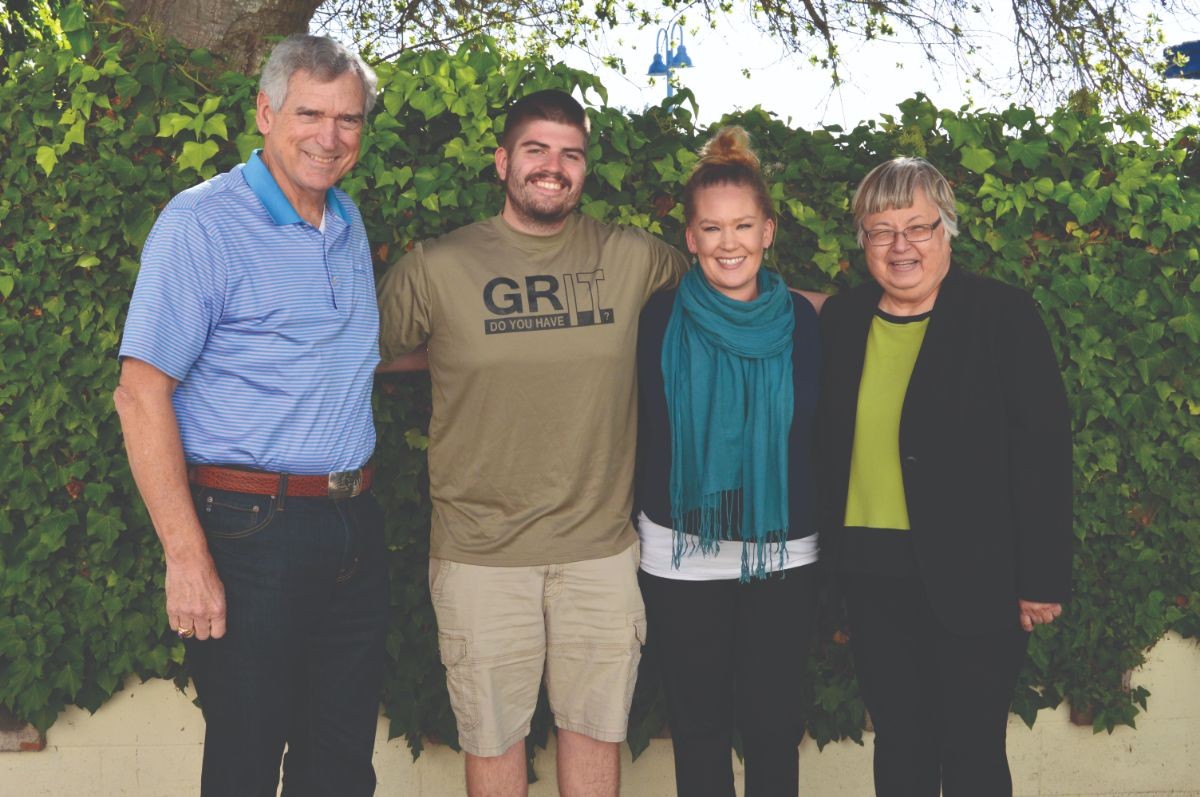
Two CSUMB College of Business students participated in the 34th annual National Conference on Ethics in America (NCEA) at the United States Military Academy (USMA) in West Point, N.Y, in October. The two-day conference is part of the USMA Cadet Character Education Program, and outstanding civilian students from universities across the country are invited to attend.
Brandon Baughn, a business administration and marketing major, and Alice Oaks, who is studying business administration and accounting, were able to attend thanks to the generous support of a sponsor.
This year’s conference theme was “Grit: The Unyielding Determination to Prevail.” It aimed to inspire and challenge attendees to overcome obstacles to achieve their goals, as well as find innovative solutions for pressing problems.
Keynote speaker Shilo Harris, a retired U.S. Army Cavalry Scout, survived devastating injuries after his armored vehicle was struck by an improvised explosive device (IED) in Iraq. Other speakers included Karl Meltzer, an ultramarathon record holder; Capt. Shaye Haver, the first female Army Ranger; and Adrianne Haslet, the Boston Marathon bombing survivor who won ballroom dance competitions and ran Boston twice after losing a leg.
Applications soar for fall enrollment
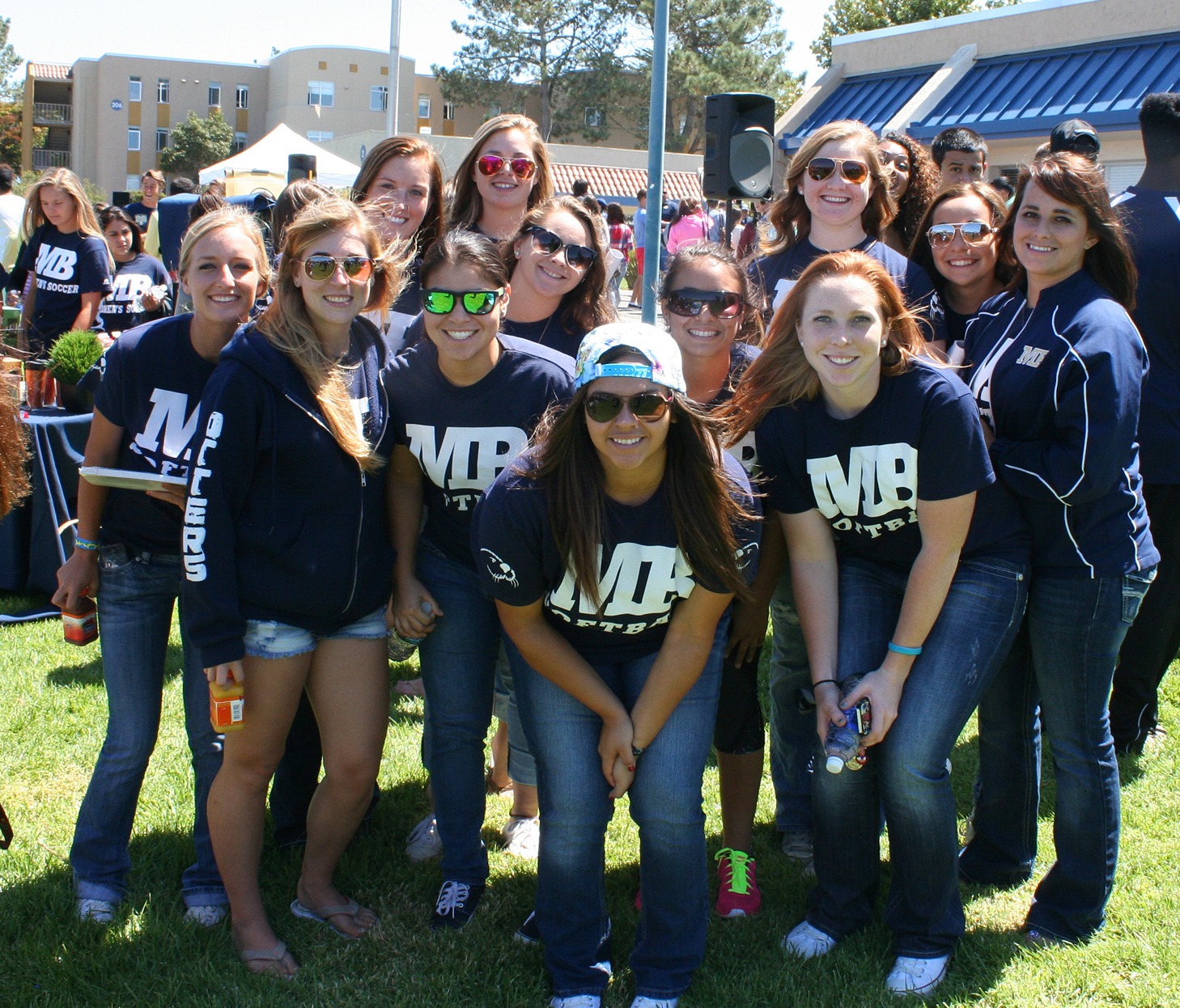
A record number of students applied to attend Cal State Monterey Bay for the Fall 2016 semester.
The university received 16,208 freshmen applications by the Nov. 30 deadline to apply. That’s up almost 5 percent from the previous year. The number of transfer students applying to attend CSUMB increased 15 percent to 4,124.
“We are slowing our enrollment growth to match available resources for Fall 2016,” said Dr. Ronnie Higgs, vice president for student affairs and enrollment services. “We anticipate the enrollment to be just under 7,000 students.”
The entire California State University system received a record number of applications for Fall, with more than 830,000 submitted by prospective students, marking a 4.8 percent increase and more than 40,000 applications over last year’s total.
“CSUMB is a first-choice institution,” Dr. Higgs said. “Students from the region, California and beyond know that CSUMB will prepare them for success.”
CSUMB expands its presence in Salinas
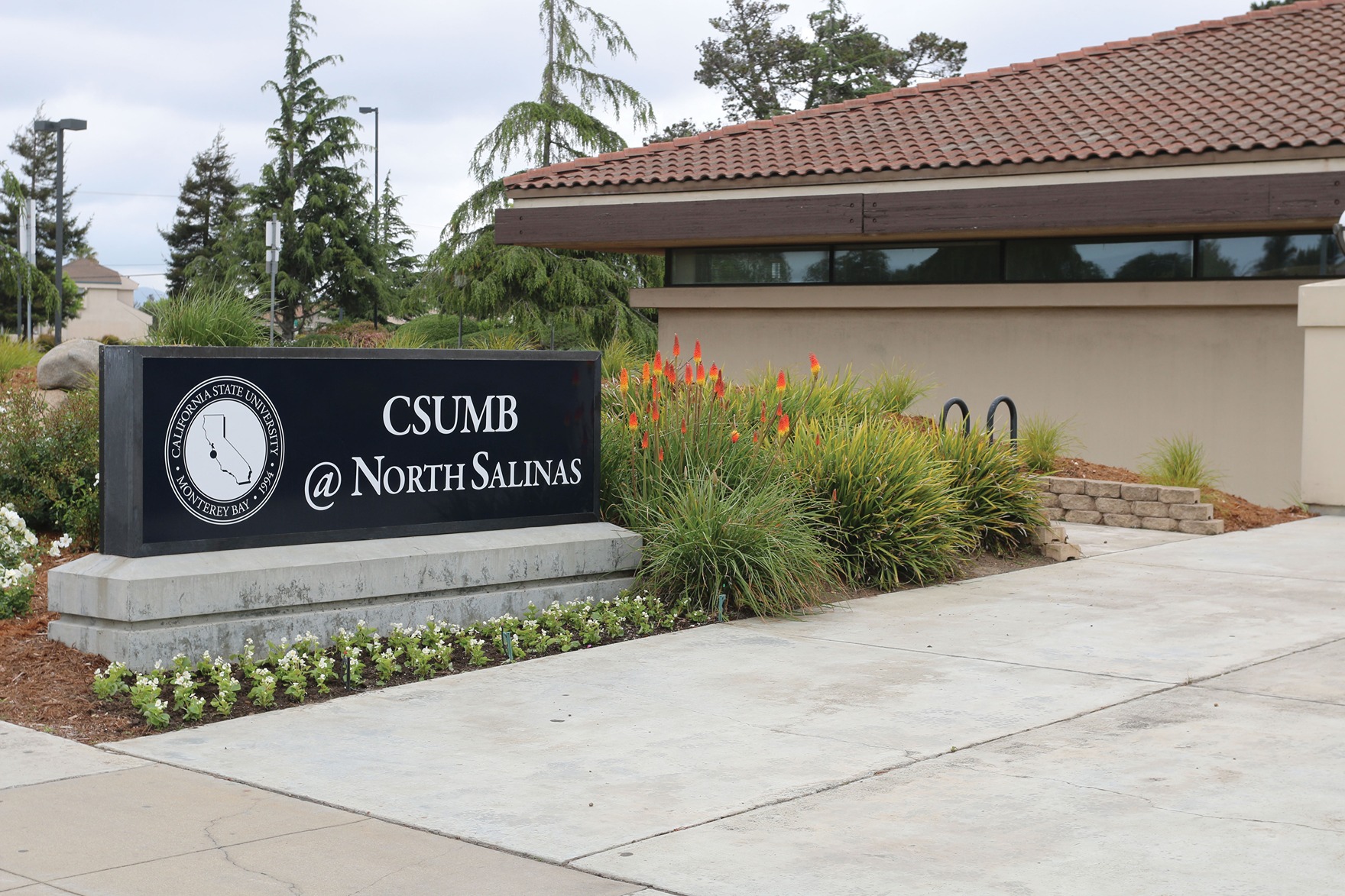
Cal State Monterey Bay has leased the main building vacated by last year’s closure of Heald College in Salinas and will begin offering classes in that facility later this year.
The lease, which went into effect Feb. 1, is for a 25,000-square-foot building located on North Main Street off Alvin Drive. The building includes 11 classrooms, several of which can serve as labs, and a number of offices. The facility will be known as CSUMB @ North Salinas.
“Leasing the building previously occupied by Heald College will allow us to increase our outreach and our course offerings to Salinas and the Salinas Valley,” said CSUMB President Eduardo Ochoa. “With the space crunch on our main campus, and the need to expand higher education opportunities in Salinas, this seemed to provide an ideal opportunity.”
The building has been vacant since April 2015, when the for-profit college’s parent company, Corinthian Colleges, Inc., closed its remaining campuses.
CSUMB first established a presence in Salinas last year, when the University Corporation purchased the National Steinbeck Center’s building in Oldtown.
Renovations are continuing on the building, to be known as CSUMB @ Salinas City Center. The National Steinbeck Center remains the name of the non-profit organization that manages the Steinbeck museum, which continues to occupy about half of the downtown structure.
$1 million grant creates data science program

Starting next fall, CSU Monterey will train students in the field of biomedical data science, thanks to a $1 million grant from the National Institutes of Health.
Biomedical data science is the application of statistics and computer science to biomedical problems. It has hundreds of applications, from tracking disease outbreaks to providing personalized medical care.
CSUMB will partner with UC Santa Cruz’s Center for Big Data in Translational Genomics over the five-year project.
“The emphasis for the program is really on the students and on preparing them for careers,” said Dr. Judith Canner, a CSUMB statistics professor and the principle investigator on the grant. The funding will enable CSUMB to create data science classes, train faculty, and fund student research - one of CSUMB’s strengths.
CSUMB professors will develop interdisciplinary coursework in data science, using classes offered at UCSC as a model. “UCSC is serving as a mentor institution,” Dr. Canner said. “They have a lot of courses and programs in this area, and we are just in the beginning stages of development.”
The ultimate goal of the grant is to enhance diversity in biomedical data science by opening up opportunities for CSUMB students who might not otherwise have access to such advanced training.
Students help with one city’s sustainability efforts
CSUMB has partnered with the city of Salinas as part of the Sustainable City Year Program. Dr. Dan Fernandez, professor of Science and Environmental Policy, is coordinating the effort.
The Sustainable City Year Program (SCYP) is a one-year partnership between the campus and an interested city partner. Regional cities often have projects that have some element of sustainability (mixed-use development, water conservation, improved signage, and increased access to bike or walkways, etc.) that they would like to undertake, but lack sufficient staff time or resources.
Through the program, CSUMB students have the opportunity to work on real-world problems, while the city benefits from the university’s expertise as it provides fresh perspectives on familiar issues.
Last fall, CSUMB completed its first semester of running this program. Three classes worked with Salinas on projects related to road design for West Alisal Street, analyzing the wealth of GIS data the city collects related to parking and infrastructure, and looking at parent-child interactions within public spaces. More classes are working with the city this semester.
Through this program, CSUMB has become a member of the Educational Partnerships for Innovation in Communities Network, including more than two dozen institutions across the country. CSUMB is the second school in the state of California to initiate this program.

When graduates cross the stage at commencement next May, they will join not only the Class of 2015, but also The Class of 3 Million – three million graduates of the California State University system.
It’s one of the largest alumni networks in the world.
To mark this milestone, 2015 graduates as well as alumni from all 23 CSU campuses are invited to “sign” The Class of 3 Million Yearbook. The online yearbook is a way for CSU alums to connect and build relationships with one another.
Everyone who signs the yearbook will be entered to win one of three $10,000 scholarships for a current or future student. All 2015 grads will receive Class of 3 Million silicone wristbands in time for commencement ceremonies.
Sign the yearbook at Classof3Million.calstate.edu.
Professor, grad student work to protect Big Sur River
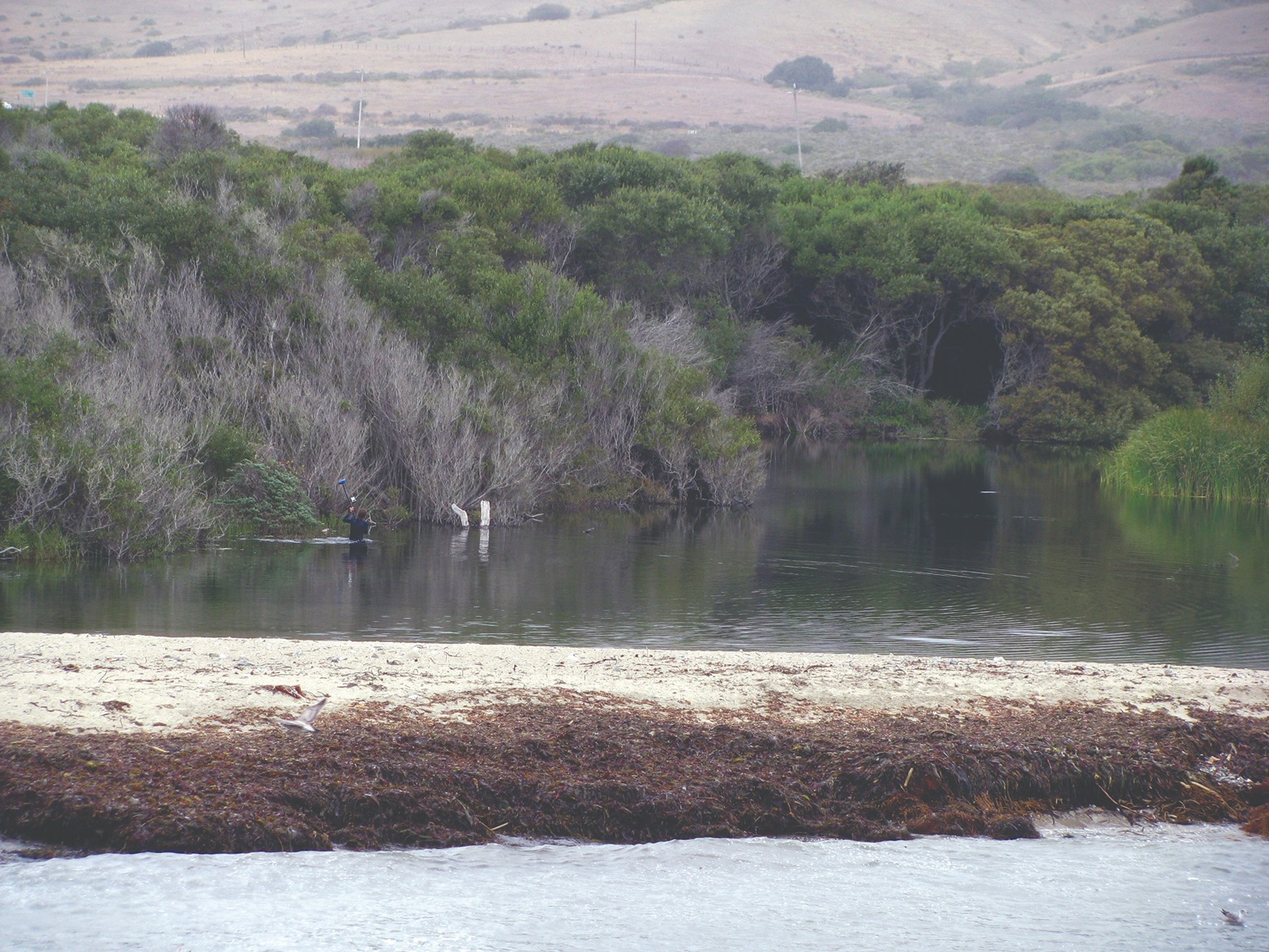
Cal State Monterey Bay Professor Doug Smith and graduate student Sam Phillips are collaborating with federal and state resource agencies to develop the Big Sur River Watershed Management Plan. The plan summarizes the environmental condition of the watershed and details the steps that residents and resource managers can take to sustain the local salmon population.
The Big Sur River and other ecologically critical streams and wetlands are constantly threatened by human activities that alter how water flows over and through the landscape. Urbanization and agricultural impacts are the leading cause of declining salmon populations along California’s Central Coast. While some impacts are inevitable, they can be markedly reduced or avoided through thoughtful and well-considered planning.
Resource managers can use the Big Sur management plan to apply for state and federal funding to make improvements that will help this important species thrive far into the future. Phillips used a wide range of cutting-edge tools in the project. The internship experience helped him land a position as a Fish Habitat Specialist with Eco Logical Research, Inc.
Study could yield changes in fishing behavior
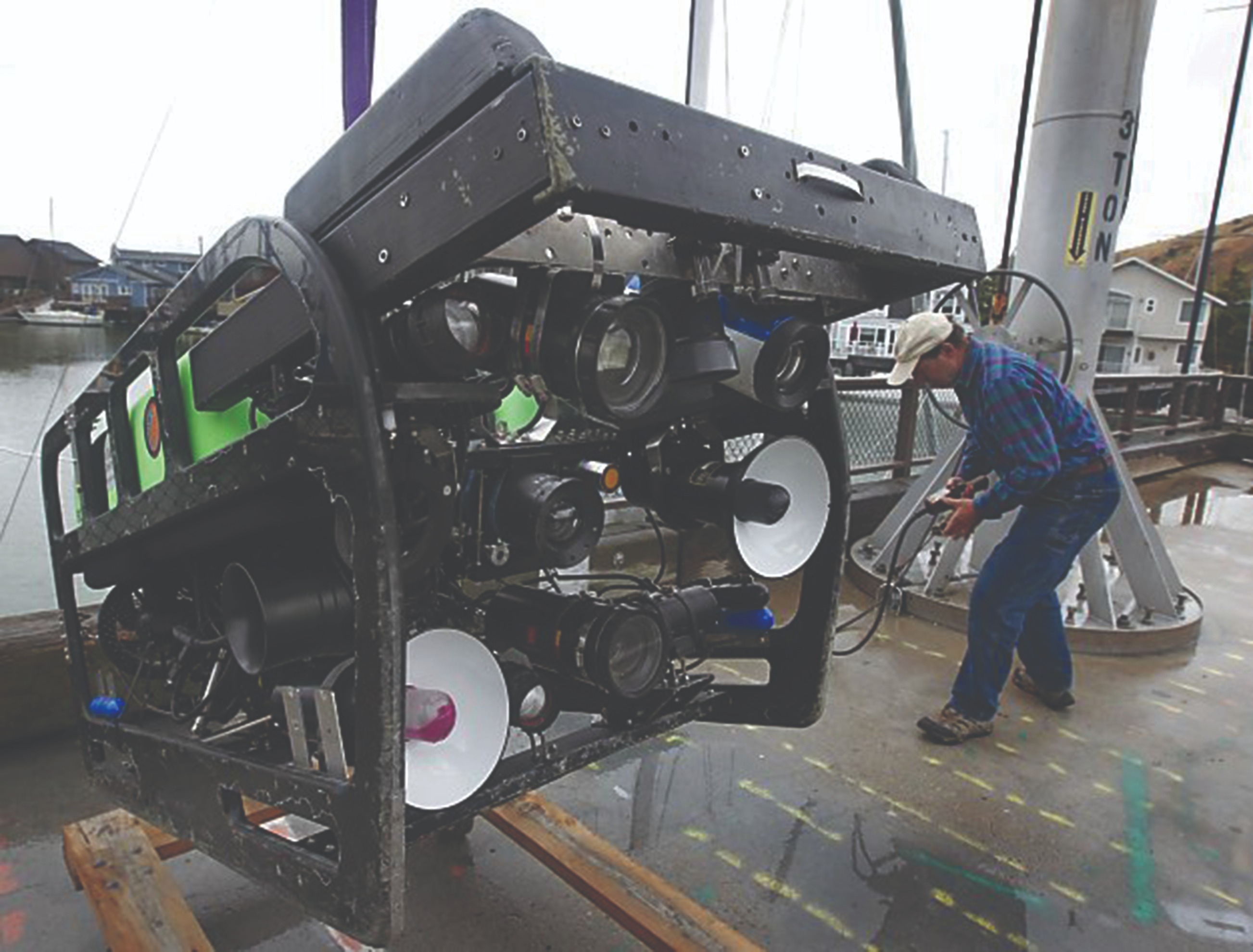
With a $320,000 grant from the National Oceanic and Atmospheric Administration and help from several partners, Professor James Lindholm will study how the impact of traditional trawling on the seafloor may be reduced by using modified gear.
In traditional bottom trawling, large nets are dragged across the seafloor, altering fish habitats that occur there. Dr. Lindholm’s study will compare the impacts of traditional gear to newly modified gear that significantly reduces contact with the seafloor.
The project will start next summer off Half Moon Bay. “We hope the study will yield insights that result in changes in fishing behavior,” Dr. Lindholm said.The project is a collaborative effort among CSUMB, the Environmental Defense Fund, the Monterey Bay National Marine Sanctuary and fisherman Giovanni Pennisi.
Catch CSUMB on tv

In partnership with KCBA Fox 35, the university is producing a weekly television program, “Campus to Community.” It’s part of CSUMB’s commitment to serving as a catalyst for positive change – through education, outreach and public service.
The show highlights speakers and issues of interest to the Central Coast. Students, alumni, faculty and staff are involved in the production of the program. Some installments feature one speaker, others are a magazine format with short segments highlighting various programs and professors.
The hour-long show started in early October and airs every Sunday at 8 a.m.
KCBA can be found on channel 3 on Comcast and on channel 35.1 on the campus cable system.
Cinematic Arts Professor Luis Camara pens successful film screenplay
Luis Camara has added another accomplishment to an impressive cinematic career. This year, the longtime CSUMB Cinematic Arts professor wrote a screenplay for a comedy that became a box office success in Mexico.
The film “Me estás matando Susana,” (you’re killing me Susana) is based on a novel by the prominent Mexican author José Agustin. It stars Gael Garcia Bernal and Verónica Echegui and opened on 600 screens in Mexico, coming in 7th at the box office on opening week. Reviews have been positive, with major newspapers such as El Norte, Reforma and Exelsior praising the film and screenplay.
In a video review, critics for El Norte called Camara’s screenplay “a solid script” and that the “well executed film” captures “the essence of the Mexican Onda literary movement, while actualizing it to the present day.”
Originally from Mexico City, Camara is a graduate of the American Film Institute. He has directed the award-winning short films “Endgame” and “Ex Voto,” and the feature films “Steel Trap” and “Silencio,” winner of the best feature award at the Los Angeles Fear and Fantasy Film Festival and best cinematography award at the Queens International Film Festival.
CSUMB students, local researchers to benefit from NOAA Grant

CSUMB is one of six universities across the nation that will benefit from a new five-year, $15.5-million National Oceanic and Atmospheric Administration (NOAA) Center for Coastal and Marine Ecosystems. NOAA has approved a total of $3 million to be awarded this year for the first phase of the new NOAA Cooperative Science Center.
“With CSUMB’s portion of the funding, we will be able to support between six and eight students per year on our campus,” said CSUMB School of Natural Sciences Associate Professor Corey Garza.
Graduate students will be eligible for two years of funding; including a yearly stipend of $20,000 and the full cost of tuition. Graduate students also receive a $10,000 scholarship to support research and summer funding up to $5,000 to support research activities at a NOAA facility.
Undergraduates funded through the center will receive one year of stipend support up to $12,000 and a research account of $1,000. Faculty who mentor students through the center will have access to funding to support the purchase of supplies and non-capital equipment for their respective groups. Access to NOAA vessel time and post-doctoral funding will also be available.
Research topics include: fisheries, eco-forecasting, terrestrial impacts on coastal systems, climate change, ocean acidification and ocean engineering.
Bachelor of Science in Nursing program at CSUMB receives CCNE accreditation
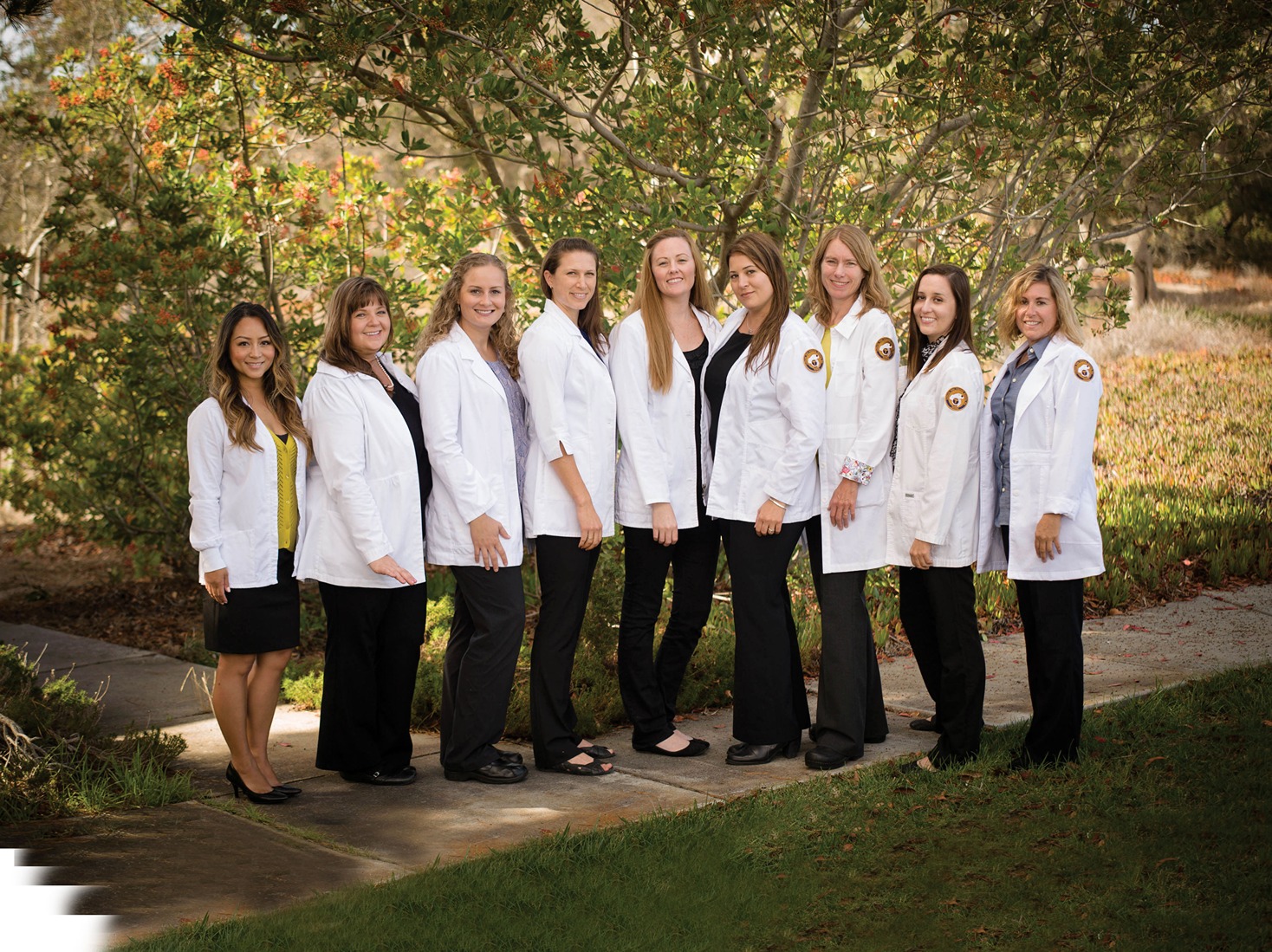
CSU Monterey Bay’s Bachelor of Science in Nursing (BSN) is now the only Commission on Collegiate Nursing Education (CCNE) accredited program in the tri-county region.
Bachelor-prepared registered nurses (RNs) advance the nursing profession and qualify RNs for advanced professional career opportunities in a wider array of healthcare settings.
“BSN graduates are prepared with an increased knowledge of the theoretical practice of nursing and in turn are able to provide a broader spectrum of healthcare to our community,” said CSUMB Department of Nursing Director, Savitri Singh-Carlson, who has a doctorate in nursing. “This program will help address a critical healthcare gap in the region by increasing the number of bachelor-prepared RNs.”
While there is no direct entry BSN program at CSUMB, partnerships and pathway programs with local community colleges facilitate a seamless transition from associate degree in nursing (ADN) and RN programs to the CSUMB BSN program. By earning a BSN, RNs are also prepared to pursue a master of science in nursing (MSN).
According to Singh-Carlson, the CSUMB Department of Nursing hopes to submit a proposal for a MSN degree in 2017 with hopes that the degree could be offered in 2018.
CSUMB Science and Environmental Policy is now the School of Natural Sciences
The CSUMB Science and Environmental Policy Division has a new identity. The division has changed its name to the School of Natural Sciences (SNS), and will continue to be a part of the College of Science, together with the School of Computing & Design and the Mathematics & Statistics Department.
The SNS is the home for an array of academic degree programs, research laboratories, and community outreach programs. All SNS programs provide outstanding opportunities for over 1,300 students to learn how to use interdisciplinary science, technology and communication skills to serve community needs.
The SNS places a heavy emphasis on preparing students for rewarding careers and more advanced academic study in fields related to environmental resource assessment, management, and policy. The faculty provides particular strengths in marine and terrestrial biology and ecology, watershed science, marine science, molecular biology and genetics, environmental education, and advanced technologies for geospatial data collection, analysis and visualization.
Enid Baxter Ryce’s Film Recognized

CSUMB professor and experimental filmmaker Enid Baxter Ryce had her Fort Ord feature film “A Land for War” highlighted in March by The Library of Congress’s Veterans History Project in Washington D.C.
The film was also screened, along with a collection of her students’ documentaries in “Fort Ord: A Sense of Place,” at the National Gallery of Art as a part of the D.C. Environmental Film Festival.
In “A Land for War,” Ryce documents the lands and ruins of the historic Fort Ord and portrays the impact of the military base on the terrain and people. The film’s original musical score is by CSUMB Music Instructor Lanier Sammons.
The student film program, “Fort Ord: A Sense of Place,” is a compilation of the university students’ documentary and experimental shorts focused on the ecology, community and history of the base. The films also feature oral histories collected for the Library of Congress Veterans History Project.
Congress created the Veterans History Project in 2000 to collect, preserve and make accessible the first-hand remembrances of America’s war veterans from WWI through current conflicts, so that future generations may hear directly from veterans and understand the realities of war.
Student Supports Immigrants with Scholarship Program

Daisy Leon Melendrez, a CSUMB service learning student leader, has been selected as a Principal Community Scholar for her community project to provide information to immigrant communities about their constitutional rights.
Melendrez is among 20 college students from Iowa and California selected for the first class of the new program.
The project addresses fears and anxieties of those in immigrant communities about impending changes to immigration policy. The recipients were selected by Principal, Iowa Campus Compact and California Campus Compact after being nominated by faculty or staff from their college or university. They underwent a rigorous review process.
Melendrez is a collaborative health & human services major. She has been the liaison to the Central Coast Citizenship Project in East Salinas.
“We are excited that Daisy has been selected as a Principal Community Scholar for her community project to provide information to immigrant communities about their constitutional rights,” said Pamela Motoike, professor at the CSUMB Service Learning Institute and program adviser.
CSUMB Signs Partnership with Universidad de León, Spain
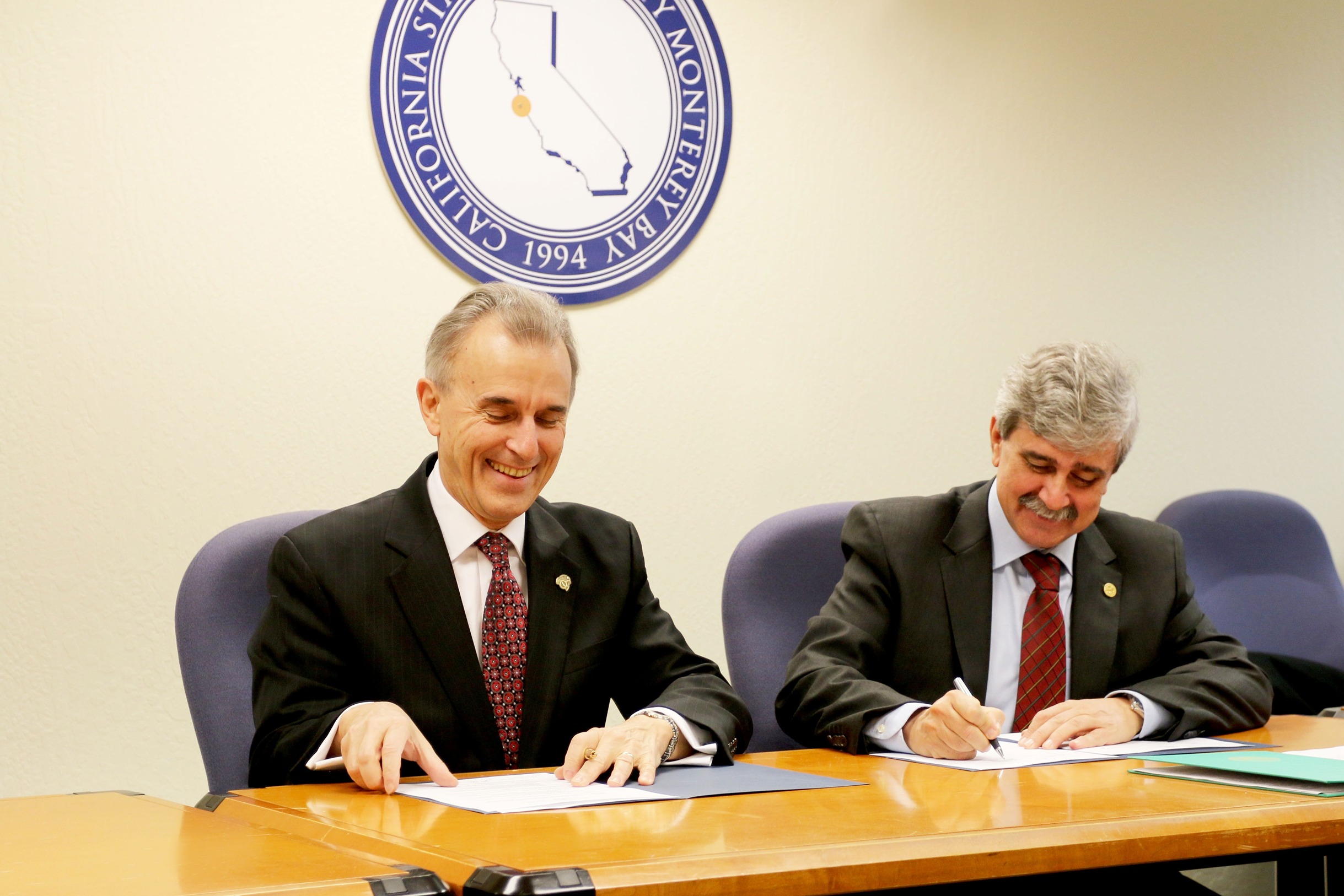
California State University Monterey Bay and Universidad de León, Spain signed a memorandum of understanding recently, creating an international partnership that opens great possibilities for exchange of students, professors and educational resources.
Universidad de León delegates President Juan Francisco Garcia Marin, Professor Oscar Fernandez and Professor Eduardo Compadre toured the CSUMB campus, and met with students, faculty and staff for an official welcoming and signing ceremony to commemorate the new international partnership between the two universities.
The new alliance will allow the exchange of undergraduate students between both universities during certain academic periods. In addition, the alliance will facilitate the opportunity to help each other learn a second language, study a new culture through personal interaction and share best teaching practices in a variety of subject areas.
CSUMB Renovates Veterans Resource Center
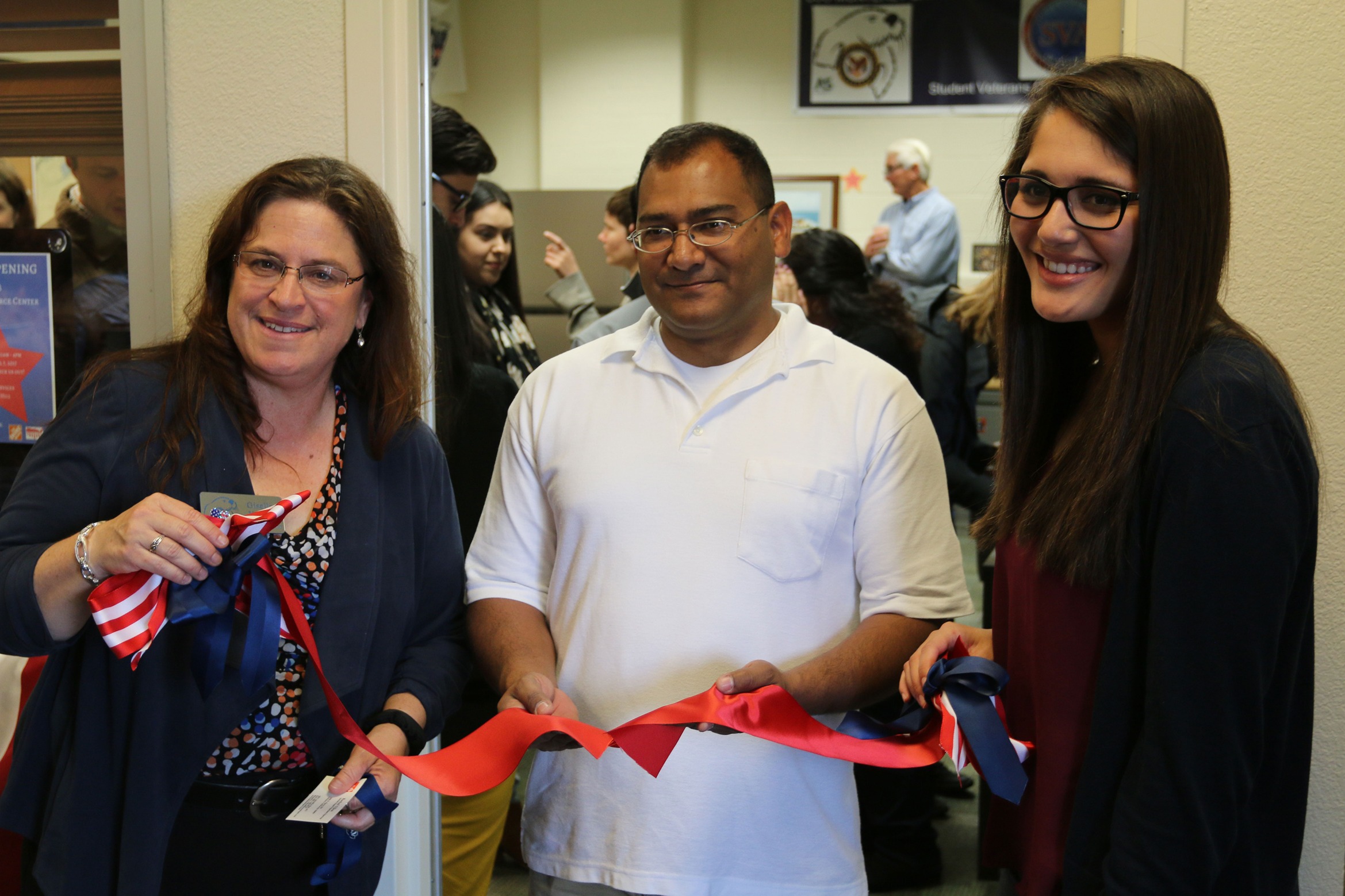
CSUMB recently celebrated the renovation of its Veterans Resource Center, thanks to a generous donation of $6,000 by The Home Depot Foundation (THDF).
The renovations, which include new carpeting and furnishings, were received from THDF in partnership with the Student Veterans of America (SVA). The new and improved Veterans Resource Center offers an inviting atmosphere, allowing veterans to seek assistance with benefits, gain access to support services and build social support networks to motivate each other to stay in college.
“The veteran students on campus finally have a fully furnished space where they can study, relax and connect with each other when not in class,” said CSUMB Veteran Services Coordinator Giselle Young.
CSUMB Student Veterans Organization President, business major and Army veteran Gilbert Bernabe says the Veterans Resource Center has become a home away from home. He utilizes the center more now than during his first semester. “That is all thanks to the work of Giselle, and the sponsors, for making the resource center feel welcoming,” said Bernabe.
“We were very lucky to have received the generous financial support from The Home Depot Foundation,” said Young.