

2019 Winter/Spring Archive
"Monterey Bay," Winter/Spring 2019
This archive preserves previously published materials that document stories, initiatives and community impact over time. Content reflects the context, priorities and perspectives at the time of publication.
Materials in this archive are provided for reference purposes only and may not reflect current programs, policies or organizational updates.
Explore the collection to gain insight into past work, evolving priorities and the broader impact of these efforts over time.
Contents
Creating Jobs for the Future
By Sophia Huang McKenzie
Published Feb. 2, 2019
Central Coast entrepreneurs face off again this spring for a share of $50,000 in prize money at the annual Startup Challenge Monterey Bay sponsored by the College of Business’s Institute for Innovation and Economic Development (iiED). The Challenge offers four divisions of competition: Venture for businesses that intend to scale into large enterprises and can provide venture-capital level returns to investors; Main Street for small businesses, sole proprietorships, and non-profits; Student for middle through graduate school students; and Social Venture, a new division added this year for businesses with a social mission.
Past winners Cruz Foam, Katie’s Coldpress and HeavyConnect are standouts flourishing in the region. Monterey Bay magazine recently checked in with the businesses to find out their latest news and to ask them how the Startup Challenge impacted their entrepreneurial journeys.

Cruz Foam
CEO John Felts of Cruz Foam loves surfing, but not the Styrofoam in the surfboards he uses to ride the waves.
“Surfers care deeply about the ocean and environment. However, the equipment we ride couldn’t be more toxic,” Felts says.
Modern surfboards are made from Styrofoam, which takes more than 500 years to degrade and is one of the biggest offenders in the mounting problem of pollutants in the environment.
As a graduate student at UC Santa Cruz, Felts learned about a bio-polymer found in shrimp, lobster and crab shell waste that can be turned into a non-toxic, biodegradable and sustainable foam material. Cruz Foam is transforming the shell waste into eco-friendly surfboards, and plans to expand to products for the auto, marine, construction and packaging industries.
The company is a two-time winner of the Startup Challenge. Cruz Foam took the top prize of $1,500 in the Student division in 2017, and then won the $20,000 Venture division award in 2018. Both wins came at make-or-break moments for the company.
Felts had placed second with his surfboard idea at Grad Slam 2017, an annual competition for University of California grad students who sum up their research in three-minute presentations for a general audience.
But Felts wasn’t sure his idea could be turned into a viable business until his team entered and won the Startup Challenge shortly after.
It’s a great opportunity. The real benefit is you’re going to get tied to a strong entrepreneurial ecosystem in the Monterey Bay region.— John Felts
“We were in limbo. We had not been incorporated yet, and we didn’t know what we were going to do. Winning definitely pushed us over the edge, and told us we have a something worth pursuing here. We incorporated the next month. It was a really big turning point for us,” he said.
When Cruz Foam entered Startup Challenge again in 2018, they were languishing as funds invested by friends and family were quickly running out. Winning the competition saved the company.
“Having that Startup Challenge money kept us going,” Felts said. “The competition also connected us to a couple of key people including a member of an angel (investor) group. It really helped us bridge to where we are now.”
Cruz Foam is busy working on a six-foot, full-size prototype surfboard in its Santa Cruz lab. The company has already built a half-size, three-foot version. Cruz Foam recently completed participation in two leading accelerator programs, Plug and Play and Alchemist Accelerator, and were featured in Forbes magazine for having the “most unusual idea” at Plug and Play’s spring showcase. Late last year the company was on track to finalize a deal with a strategic partner.
Felts recommends entering the Startup Challenge to any budding entrepreneurs who want to educate themselves, test their ideas and make connections.
“It’s a great opportunity. The real benefit is you’re going to get tied to a strong entrepreneurial ecosystem in the Monterey Bay region,” Felts said. “You’ll learn how to scale your business, get a lot of good feedback, develop your pitch. It’s good for every stage. It helped us at every stage. It’s beyond valuable, even if you don’t win.”

Katie's Coldpress
Katie Raquel discovered the benefits of raw juice as a new mom looking for healthy food options. It gave her newfound energy and helped clear up lingering health issues, she said. When she couldn’t find it for sale anywhere on the Monterey Peninsula, the idea for Katie’s Coldpress raw organic juice was born.
Raquel entered the Startup Challenge in 2014 and took first place in the Main Street division. Winning the competition contributed to her business’s success in “a very direct way,” she said.
The $10,000 prize money enabled her to purchase the hydraulic press she needed to make the juice. Preparing for the competition gave her the confidence to quit her job as a teacher and start the business, she said.
“I was so prepared. I ran through a billion questions. Have your friends, family, everyone ask you questions. Get to the point where you can answer all the challenging questions. I practiced the pitch I gave a hundred times. By the time I got there, I was so comfortable with it.”
She advises other prospective entrepreneurs to look at the Startup Challenge as an opportunity to learn and reach the point where you know how to start your business.
Don’t focus too much on winning. Winning is a bonus. ... The important part is doing all the work. You can leverage that in a lot of ways.— Katie Raquel
“Don’t focus too much on winning. Winning is a bonus,” she said. “The important part is doing all the work. You can leverage that in a lot of ways.”
The last several months have been exciting times for Katie’s Coldpress. Over the summer, HBO used Katie’s juice in multiple scenes while filming season two of the hit series “Big Little Lies” in Monterey, where the company is headquartered. In November, Raquel was a featured speaker at JuiceCon! in Venice Beach, the first ever conference for juice-industry professionals. In January, Katie’s was scheduled to reach a major milestone with the opening of its first juice bar at The Presidio of Monterey.
“To our knowledge, we are the only certified organic juice available on a military base,” Raquel said of the location. “We hope to expand to other bases. We are already receiving inquiries.”
Prior to the opening of the juice bar, customers could only purchase Katie’s juice from booths at the Old Monterey and Carmel-by-the Sea farmers markets on Tuesdays and Thursdays, or order it for weekly delivery on Mondays in Monterey County.
The Presidio juice bar, which also offers iced coffee drinks and organic raw food items, is accessible solely to military personnel and staff at the base. Raquel wants to open a second location outside the base in the near future.
“We are planning to follow this project up with a second juice bar in Monterey County as soon as we find the right space. We want to be able to serve everyone,” she said.
HeavyConnect
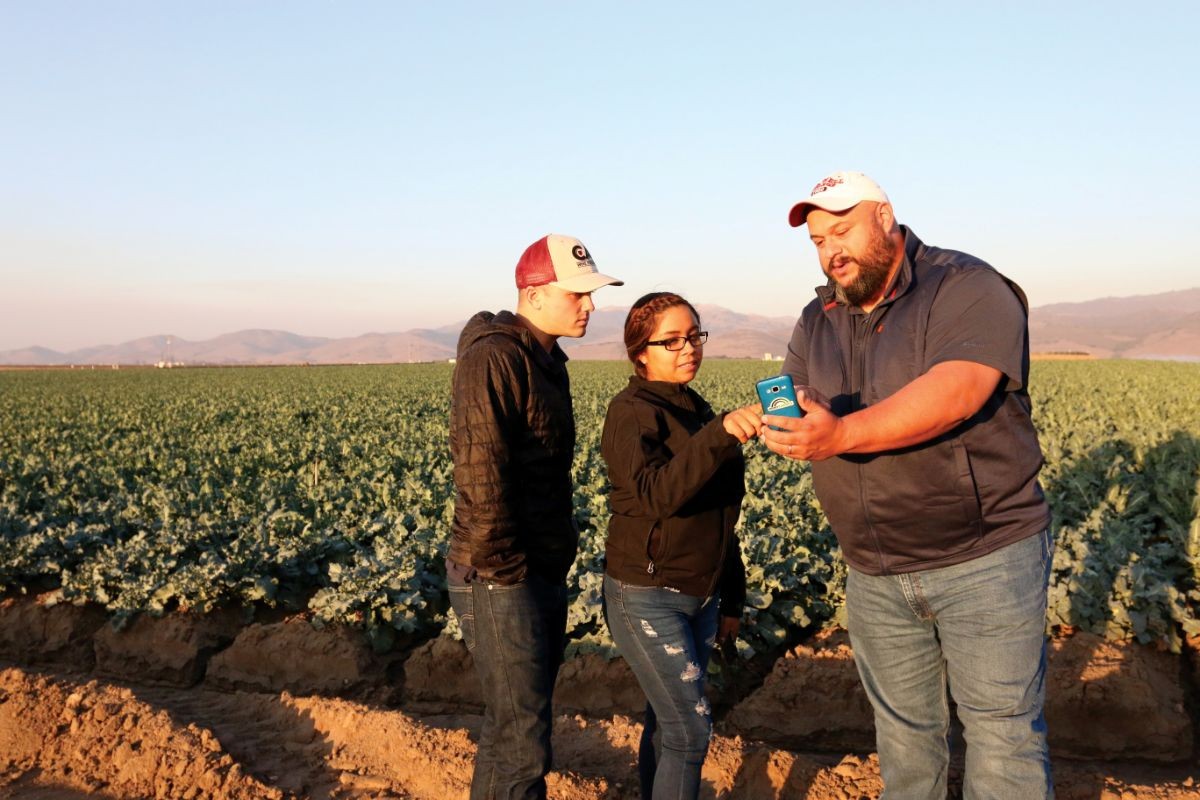
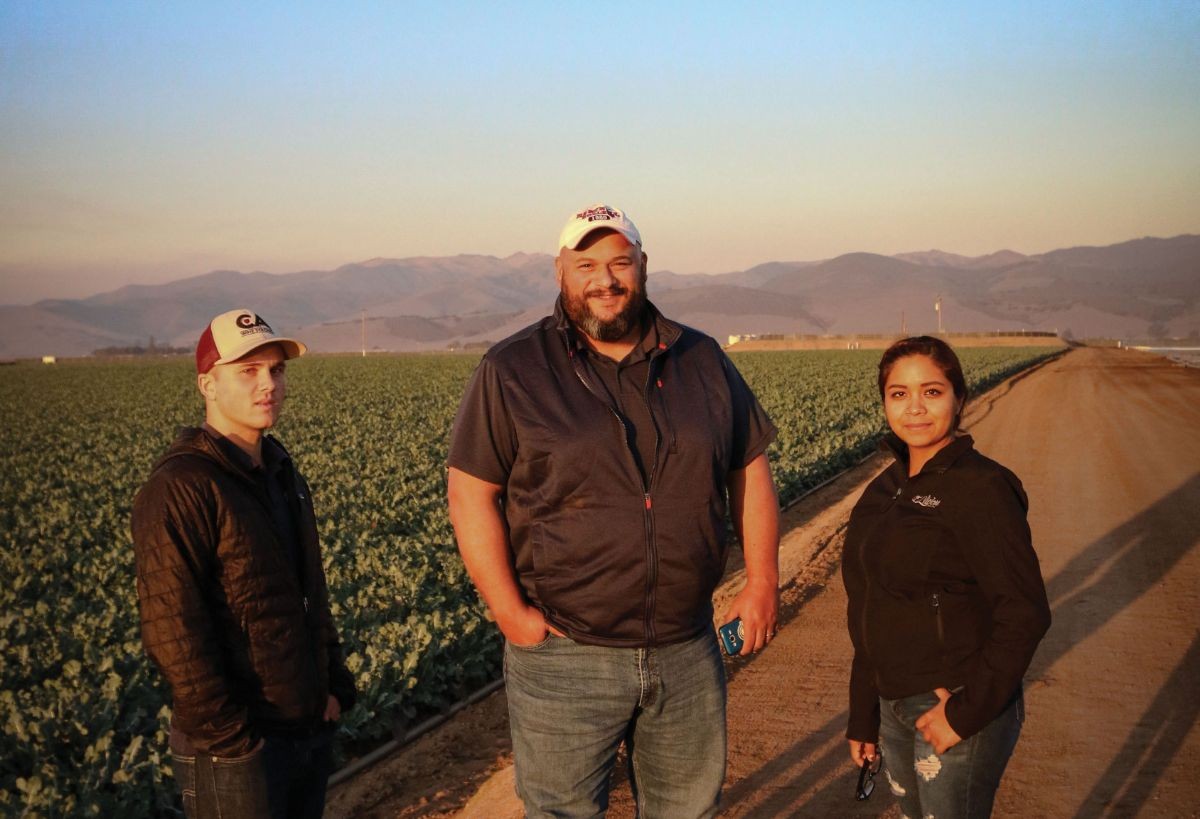
In the heart of the “Salad Bowl of the World,” Salinas-based HeavyConnect is bringing high tech to the farming industry. The company’s mobile applications help agriculture companies improve farm management.
“HeavyConnect is a platform, not unlike Microsoft Office, with different modules. The goal of the platform is to remove paper from farming operations, to simplify, and increase efficiency,” co-founder Patrick Zelaya explained.
Zelaya left a career as a John Deere sales manager to start HeavyConnect. He realized the technology used on tractors, similar to the “black box” on an airplane, could be applied in a better way.
“A black box will tell you everything about the plane crash, but it won’t prevent the plane crash. That’s what I wanted to do,” Zelaya said.
The company’s first app asked tractor drivers to answer questions on a daily safety checklist. The information gathered let farm managers know when something was about to go wrong.
“Some of these telltale failure signs -- like change in vibration, change in noise -- could prevent a tractor failure that would be a $40,000 transmission replacement and turn it into a $4,000 repair. That started working well for farmers in the area, and they asked what else we can do.”
Farmers wanted help with employee time cards, quality assurance, pest scouting and, more recently, food safety. The common theme was “digitize my paper processes and my work flows,” Zelaya said.
Our success has been in large part a result of the support we get from our community in the Salinas Valley and from CSUMB.— Patrick Zelaya
The company kept simplicity in mind while developing its applications, because farm workers are often not accustomed to using mobile technology.
“We used fewer words, we color-coded, used large colorful buttons,” he said.
The mobile apps improved efficiency remarkably. Tasks formerly done on paper take “anywhere from 20 percent to as little as 2 percent of the time,” he said.
In addition, the information gathered is more detailed, accurate and useful.
“You get geotagged photos, you get offline functionality, you get barcode scanning, you get file attachment. It’s a lot better than paper.”
From the beginning, CSUMB computer science students have played an integral role in the company. The company’s first developers were CSUMB students. Zelaya has since hired CSUMB graduates, including two of the original coders, and currently has four seniors interning with the company.
“We’ve tried to do that consistently with CSUMB since we started. Those students usually have agriculture in their background. Their parents are involved in farm working. They understand how to build technology, and they understand why, and they understand who it’s for. So that’s just a perfect combination for us,” he said.
HeavyConnect won the Venture division of the Startup Challenge in 2016, giving Zelaya confirmation the business could succeed.
“One of the drawbacks to a startup in a risk-averse industry like farming is validation. The Startup Challenge provided a great deal of that for us,” he said. “We had just started sharing our prototype with people and getting market feedback. We were able to validate that what we were building was needed, and there was a large market for it.”
Top startup accelerators agree. HeavyConnect has participated in 500 Startups and Techstars, recognized as two of the best accelerator programs in the world, according to Forbes magazine. The programs have an acceptance rate as low as 1.5 percent, meaning for every 7,000 applications, only 106 spots will be available.
HeavyConnect is now focused on growth. The company completed its first round of seed funding at the end of last year, receiving $4 million from a strategic investor.
“The iiEd has been super helpful and supportive,” Zelaya said. “Our success has been in large part a result of the support we get from our community in the Salinas Valley and from CSUMB.”
Read a related story about the iiEdand its ongoing efforts to build our region's economic ecosystem. Learn more about the College of Business and how to get involved with iiED.
Fueling Entrepreneurs
By Sophia Huang McKenzie
Published Feb. 2, 2019
What do surfboards made from shrimp shells, organic cold-pressed juice and an ag-tech mobile app for farm management have in common?
They’re all products made by winners of Startup Challenge Monterey Bay, an annual competition for entrepreneurs sponsored by the Institute for Innovation and Economic Development (iiED) at Cal State Monterey Bay’s College of Business (COB). More importantly, the entrepreneurs and their businesses are now part of a thriving “economic ecosystem” in Santa Cruz, Monterey and San Benito counties.
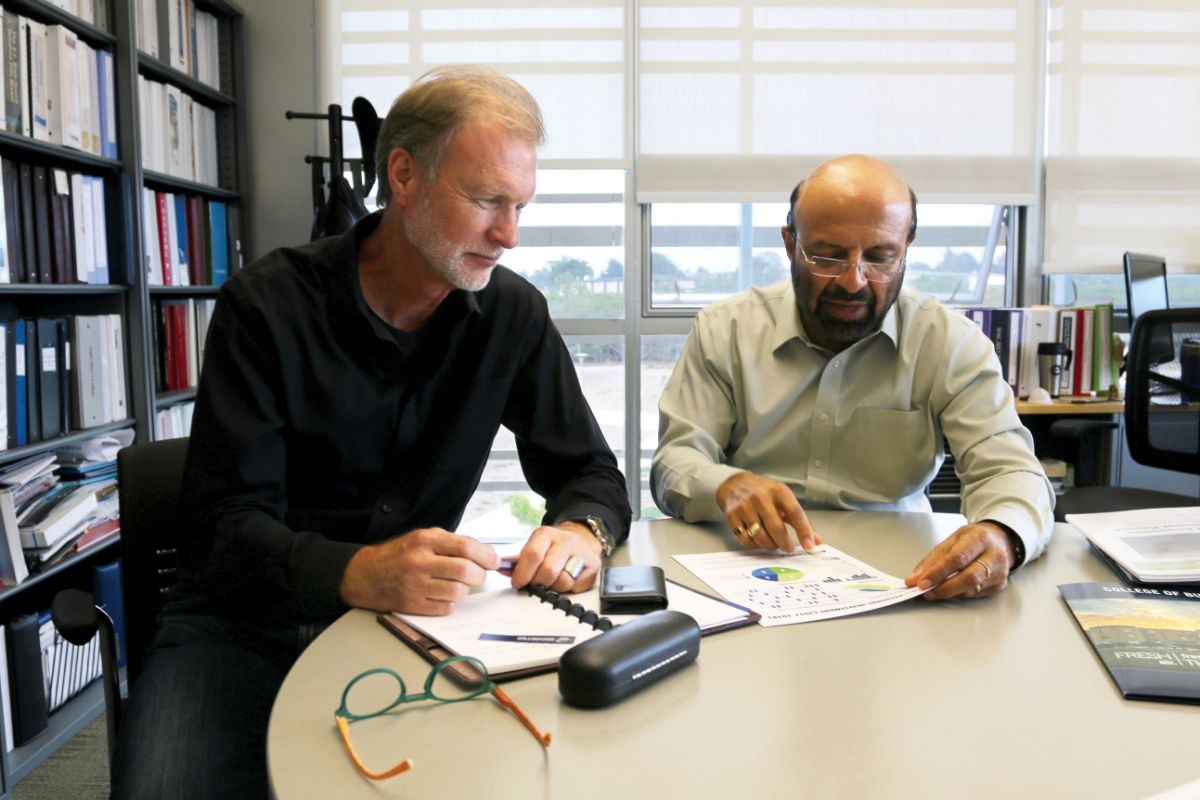
“The iiEd has been the fulcrum of the lever to bring the ecosystem into existence,” said COB Dean Shyam Kamath. “If you look at the contribution the iiEd has made, it’s quite fantastic.”
Now in its 10th year, the iiED is well on its way to achieving its vision of building a sustainable economy in the Monterey Bay region. One of the pillars of the university’s strategic plan is to serve as “stewards of place” through regional development, Kamath said. Bright Futures, the university’s cradle-to-career initiative, is improving education, while the iiED is at the forefront of promoting entrepreneurship.
The numbers tell the story: 2,200 aspiring entrepreneurs trained, 525 participating companies, over 150 jobs created, and more than $10 million in capital raised by companies. That’s the official figure, anyway. It’s likely closer to $15 million or perhaps even $20 million, according to Brad Barbeau, iiED executive director.
“It’s actually over $20 million, but who’s counting?” Barbeau said with a laugh.
“If you think of the jobs, the entrepreneurship that’s created, the businesses that are started and get funding … We’re being conservative. We can’t keep track of it all!” Kamath added.
Startup Monterey Bay
The iiED’s mission is twofold: develop the knowledge, expertise and financial resources to create and support a vibrant business community in the region; and collaborate with public and private institutions to develop programs and events that connect the university and the local economy to the global marketplace.
The iiED also acts as a prime provider of entrepreneurial education to CSUMB students to “fuel their American Dream” and provide them with training, advice and networks to start their own businesses, Kamath said. To those ends, the institute sponsors three major hands-on programs each year for CSUMB students and tri-county community members under the Startup Monterey Bay umbrella. The first event of the academic year is the Startup Hackathon in November, with primary leadership by faculty members from the School of Computing and Design. The three-day competition pairs mentors with student teams from CSUMB and Monterey Peninsula, Cabrillo and Hartnell colleges to create new technology-based solutions to social and global problems.
The Hackathon is followed by Startup Weekend in January. Kamath describes it as a “Red Bull-fueled long weekend” in which students and community members team up for an intensive 54-hour experience building new startups and businesses. It connects students, developers, designers, entrepreneurs and startup enthusiasts with mentors and resources to share ideas, form startup teams and launch businesses.
Startup Challenge, the culminating event, kicks off in March. It’s a three-month contest for entrepreneurs, startups and new companies to hone their ideas and business concepts, seek expert advice from mentors and vie for more than $50,000 in prize money. Applications are submitted in March, a qualifying round follows in April, then the final round called “Otter Tank” -- modeled after the popular TV show “Shark Tank” -- takes place in May.
In addition to its three main events, the iiED hosts a monthly Startup Tech Meetup at the Monterey Bay Incubator in Pacific Grove. It’s a gathering for aspiring entrepreneurs, innovators, local startups and business people to share ideas and information. The institute also co-sponsors numerous other expos, forums and symposiums during the year.
The iiED is building global reach through a partnership with Thammasat University in Bangkok, Thailand. The institute hosts an American Business and Entrepreneurship Program for Thai business managers. They come to CSUMB twice a year to visit area companies and attend lectures and presentations.
Keys to Success
Kamath credits the institute’s success to the leadership team of Barbeau, Program Manager Mary Jo Zenk and Founding Director Eric Tao, a professor in the School of Computing & Design.
“It takes a very special kind of focus and a very special kind of capability to get something like this going and keep it going for nine years now. Brad, Mary Jo and Eric have formed this team of three people who have continually innovated. This is innovation at its highest level,” Kamath said.
“A tremendous amount of work goes into setting up these events. Bringing together the resources, bringing together the people, bringing together the judges, the mentors, attracting the students to be there. It’s Brad and his team and whatever I can do to fundraise or bootleg whatever resources I can to support them.” The iiED leadership team recently added a fourth member, Dan Ripke, as director of economic development. Ripke wants to identify challenges facing regional communities, industries, and businesses. He also is seeking to obtain contracts and grants to fund the iiED sustainably and to find opportunities for the faculty and students to work collaboratively with public and private sector entities.
While a key role of the university is to develop minds and confer degrees, the role of a university in supporting regional economic development is also a vital one.— Dan Ripke
“While a key role of the university is to develop minds and confer degrees, the role of a university in supporting regional economic development is also a vital one,” Ripke said. “This provides iiED with a unique opportunity to have a full-blown research, consulting and entrepreneurship development program that can be fully funded through contracts and grants.”
Barbeau said Kamath’s support, from his enthusiasm to his national and international academic and business connections, have been vital to the institute.
“His willingness to jump in and actually participate in the events, sometimes just being there as head cheerleader, but he’s done so much more. He brings in coaches and mentors and speakers. He uses his connections to support us. It would not be happening without him,” Barbeau said.
The unflagging interest of supporters in the community and among students and faculty have also been instrumental to keeping the institute and its programs going.
“The entrepreneurial spirit of the area is what I depend on. Students love to do the hands on work, taking a shot at starting a business, getting in there and developing technology,” Barbeau said.
The iiED events are integrated into the courses offered in the entrepreneurship concentration of the college’s undergraduate degree program and are integral to student success in their professional lives, Kamath said.
In addition, a network of about 100 active volunteers serve as mentors and judges at iiED events. The volunteers include community members, successful business people, alumni and university faculty.
“We reach out to the community and to the university to include the whole university. It’s not just the business students or just the tech students,” Kamath said.
Beyond the Valley of Death
While the typical survival rate for startup companies is only 2 to 3 percent, the iiED’s percentage has been significantly better at 5 percent. Even so, the institute wants to do more to help startups avoid what Barbeau and Kamath call “the Valley of Death” after launch.
“We wave goodbye, and it really is goodbye for most of them. Their startups die,’” Kamath said. “An early incubator service is going to make all the difference.”
At the end of last year, the iiED was in the process of applying for a $1 million grant from the U.S. Economic Development Administration to provide early incubator services for fledgling businesses.
“What we’ve done so far is provide opportunities for businesses to get started. We bring people in, we have an intense time with them, we mentor them through Startup Challenge and help them drive their businesses forward,” Barbeau said.
“What we haven’t done yet is to work with those companies consistently over time and provide mentors and workshops, because these very early stage companies need that nurturing to bring them along. It takes two, three, four years to get a company off the ground. It’s not a two-month project. They need that consistent help. That’s the next stage. We’re always looking to the next stage.”
Diversifying the Region
Tourism and agriculture have long formed the foundation of the economy in the Monterey Bay region. The iiED is building on that foundation to grow companies that will provide the jobs of the future and keep college graduates in the region.
“It’s regional development that goes beyond agriculture and hospitality, it diversifies the region. It brings tech companies, companies in food processing, companies in recreation and healthcare. … It essentially makes the region more resilient,” Kamath said.
While much has been accomplished, Kamath believes just 30 percent of the necessary work has been done. They’ll reach 60 percent when the early incubator services are in place, then the next piece is to combine and collaborate with all the other entrepreneurship institutions in the region. This includes Thrive, Santa Cruz Works, Western Growers Center for Innovation and Technology, Kamath said.
“Then we’ll have this entrepreneurial ecosystem firmly established.”
Read a related story about successful winners of Startup Challenge Monterey Bay, the iiED's annual competition for entrepreneurs. Learn more about the College of Business and how to get involved with iiED.
Success Stories
By Sophia Huang McKenzie
Published Feb. 2, 2019
Central Coast entrepreneurs face off again this spring for a share of $50,000 in prize money at the annual Startup Challenge Monterey Bay sponsored by the College of Business’s Institute for Innovation and Economic Development (iiED). The Challenge offers four divisions of competition: Venture for businesses that intend to scale into large enterprises and can provide venture-capital level returns to investors; Main Street for small businesses, sole proprietorships, and non-profits; Student for middle through graduate school students; and Social Venture, a new division added this year for businesses with a social mission.
Past winners Cruz Foam, Katie’s Coldpress and HeavyConnect are standouts flourishing in the region. Monterey Bay magazine recently checked in with the businesses to find out their latest news and to ask them how the Startup Challenge impacted their entrepreneurial journeys.
Cruz Foam
CEO John Felts of Cruz Foam loves surfing, but not the Styrofoam in the surfboards he uses to ride the waves.
“Surfers care deeply about the ocean and environment. However, the equipment we ride couldn’t be more toxic,” Felts says.
Modern surfboards are made from Styrofoam, which takes more than 500 years to degrade and is one of the biggest offenders in the mounting problem of pollutants in the environment.
As a graduate student at UC Santa Cruz, Felts learned about a bio-polymer found in shrimp, lobster and crab shell waste that can be turned into a non-toxic, biodegradable and sustainable foam material. Cruz Foam is transforming the shell waste into eco-friendly surfboards, and plans to expand to products for the auto, marine, construction and packaging industries.
The company is a two-time winner of the Startup Challenge. Cruz Foam took the top prize of $1,500 in the Student division in 2017, and then won the $20,000 Venture division award in 2018. Both wins came at make-or-break moments for the company.
Felts had placed second with his surfboard idea at Grad Slam 2017, an annual competition for University of California grad students who sum up their research in three-minute presentations for a general audience.
But Felts wasn’t sure his idea could be turned into a viable business until his team entered and won the Startup Challenge shortly after.
It’s a great opportunity. The real benefit is you’re going to get tied to a strong entrepreneurial ecosystem in the Monterey Bay region.— John Felts
“We were in limbo. We had not been incorporated yet, and we didn’t know what we were going to do. Winning definitely pushed us over the edge, and told us we have a something worth pursuing here. We incorporated the next month. It was a really big turning point for us,” he said.
When Cruz Foam entered Startup Challenge again in 2018, they were languishing as funds invested by friends and family were quickly running out. Winning the competition saved the company.
“Having that Startup Challenge money kept us going,” Felts said. “The competition also connected us to a couple of key people including a member of an angel (investor) group. It really helped us bridge to where we are now.”
Cruz Foam is busy working on a six-foot, full-size prototype surfboard in its Santa Cruz lab. The company has already built a half-size, three-foot version. Cruz Foam recently completed participation in two leading accelerator programs, Plug and Play and Alchemist Accelerator, and were featured in Forbes magazine for having the “most unusual idea” at Plug and Play’s spring showcase. Late last year the company was on track to finalize a deal with a strategic partner.
Felts recommends entering the Startup Challenge to any budding entrepreneurs who want to educate themselves, test their ideas and make connections.
“It’s a great opportunity. The real benefit is you’re going to get tied to a strong entrepreneurial ecosystem in the Monterey Bay region,” Felts said. “You’ll learn how to scale your business, get a lot of good feedback, develop your pitch. It’s good for every stage. It helped us at every stage. It’s beyond valuable, even if you don’t win.”
Katie's Coldpress
Katie Raquel discovered the benefits of raw juice as a new mom looking for healthy food options. It gave her newfound energy and helped clear up lingering health issues, she said. When she couldn’t find it for sale anywhere on the Monterey Peninsula, the idea for Katie’s Coldpress raw organic juice was born.
Raquel entered the Startup Challenge in 2014 and took first place in the Main Street division. Winning the competition contributed to her business’s success in “a very direct way,” she said.
The $10,000 prize money enabled her to purchase the hydraulic press she needed to make the juice. Preparing for the competition gave her the confidence to quit her job as a teacher and start the business, she said.
“I was so prepared. I ran through a billion questions. Have your friends, family, everyone ask you questions. Get to the point where you can answer all the challenging questions. I practiced the pitch I gave a hundred times. By the time I got there, I was so comfortable with it.”
She advises other prospective entrepreneurs to look at the Startup Challenge as an opportunity to learn and reach the point where you know how to start your business.
Don’t focus too much on winning. Winning is a bonus. ... The important part is doing all the work. You can leverage that in a lot of ways.— Katie Raquel
“Don’t focus too much on winning. Winning is a bonus,” she said. “The important part is doing all the work. You can leverage that in a lot of ways.”
The last several months have been exciting times for Katie’s Coldpress. Over the summer, HBO used Katie’s juice in multiple scenes while filming season two of the hit series “Big Little Lies” in Monterey, where the company is headquartered. In November, Raquel was a featured speaker at JuiceCon! in Venice Beach, the first ever conference for juice-industry professionals. In January, Katie’s was scheduled to reach a major milestone with the opening of its first juice bar at The Presidio of Monterey.
“To our knowledge, we are the only certified organic juice available on a military base,” Raquel said of the location. “We hope to expand to other bases. We are already receiving inquiries.”
Prior to the opening of the juice bar, customers could only purchase Katie’s juice from booths at the Old Monterey and Carmel-by-the Sea farmers markets on Tuesdays and Thursdays, or order it for weekly delivery on Mondays in Monterey County.
The Presidio juice bar, which also offers iced coffee drinks and organic raw food items, is accessible solely to military personnel and staff at the base. Raquel wants to open a second location outside the base in the near future.
“We are planning to follow this project up with a second juice bar in Monterey County as soon as we find the right space. We want to be able to serve everyone,” she said.
HeavyConnect
In the heart of the “Salad Bowl of the World,” Salinas-based HeavyConnect is bringing high tech to the farming industry. The company’s mobile applications help agriculture companies improve farm management.
“HeavyConnect is a platform, not unlike Microsoft Office, with different modules. The goal of the platform is to remove paper from farming operations, to simplify, and increase efficiency,” co-founder Patrick Zelaya explained.
Zelaya left a career as a John Deere sales manager to start HeavyConnect. He realized the technology used on tractors, similar to the “black box” on an airplane, could be applied in a better way.
“A black box will tell you everything about the plane crash, but it won’t prevent the plane crash. That’s what I wanted to do,” Zelaya said.
The company’s first app asked tractor drivers to answer questions on a daily safety checklist. The information gathered let farm managers know when something was about to go wrong.
“Some of these telltale failure signs -- like change in vibration, change in noise -- could prevent a tractor failure that would be a $40,000 transmission replacement and turn it into a $4,000 repair. That started working well for farmers in the area, and they asked what else we can do.”
Farmers wanted help with employee time cards, quality assurance, pest scouting and, more recently, food safety. The common theme was “digitize my paper processes and my work flows,” Zelaya said.
Our success has been in large part a result of the support we get from our community in the Salinas Valley and from CSUMB.— Patrick Zelaya
The company kept simplicity in mind while developing its applications, because farm workers are often not accustomed to using mobile technology.
“We used fewer words, we color-coded, used large colorful buttons,” he said.
The mobile apps improved efficiency remarkably. Tasks formerly done on paper take “anywhere from 20 percent to as little as 2 percent of the time,” he said.
In addition, the information gathered is more detailed, accurate and useful.
“You get geotagged photos, you get offline functionality, you get barcode scanning, you get file attachment. It’s a lot better than paper.”
From the beginning, CSUMB computer science students have played an integral role in the company. The company’s first developers were CSUMB students. Zelaya has since hired CSUMB graduates, including two of the original coders, and currently has four seniors interning with the company.
“We’ve tried to do that consistently with CSUMB since we started. Those students usually have agriculture in their background. Their parents are involved in farm working. They understand how to build technology, and they understand why, and they understand who it’s for. So that’s just a perfect combination for us,” he said.
HeavyConnect won the Venture division of the Startup Challenge in 2016, giving Zelaya confirmation the business could succeed.
“One of the drawbacks to a startup in a risk-averse industry like farming is validation. The Startup Challenge provided a great deal of that for us,” he said. “We had just started sharing our prototype with people and getting market feedback. We were able to validate that what we were building was needed, and there was a large market for it.”
Top startup accelerators agree. HeavyConnect has participated in 500 Startups and Techstars, recognized as two of the best accelerator programs in the world, according to Forbes magazine. The programs have an acceptance rate as low as 1.5 percent, meaning for every 7,000 applications, only 106 spots will be available.
HeavyConnect is now focused on growth. The company completed its first round of seed funding at the end of last year, receiving $4 million from a strategic investor.
“The iiEd has been super helpful and supportive,” Zelaya said. “Our success has been in large part a result of the support we get from our community in the Salinas Valley and from CSUMB.”
Read a related story about the iiEdand its ongoing efforts to build our region's economic ecosystem. Learn more about the College of Business and how to get involved with iiED.
Social Media Sensation
By Sophia Huang McKenzie
Published Feb. 2, 2019
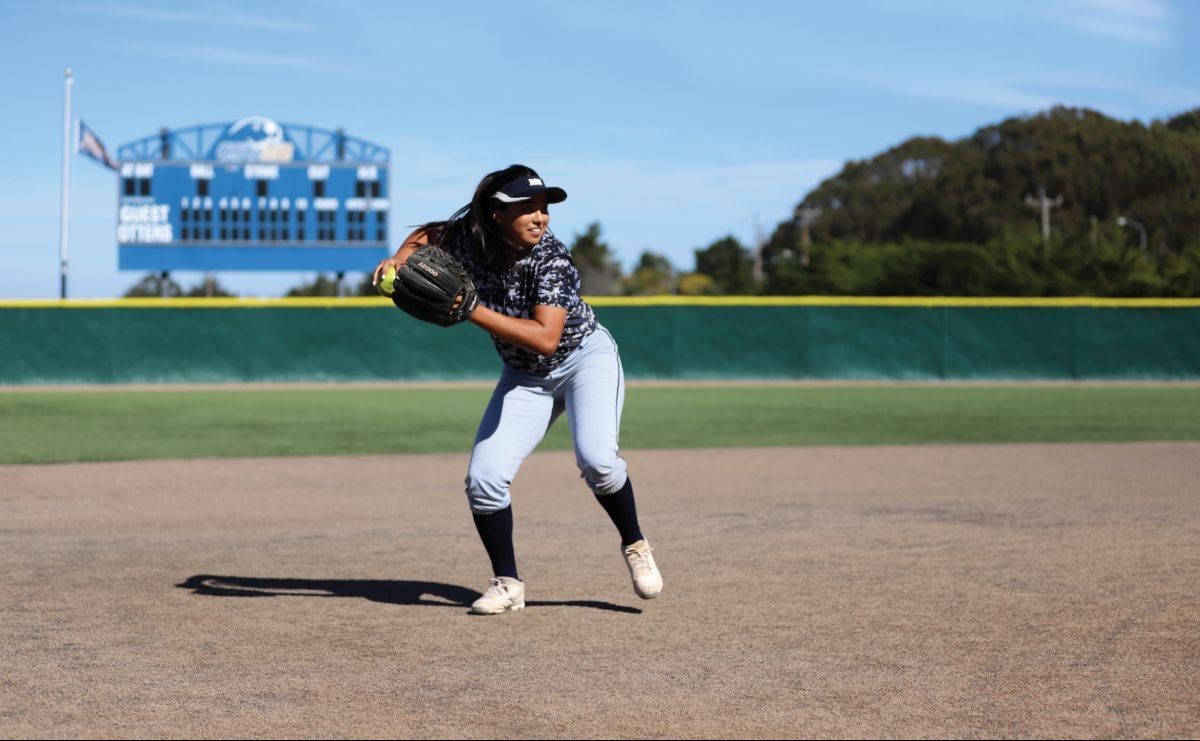
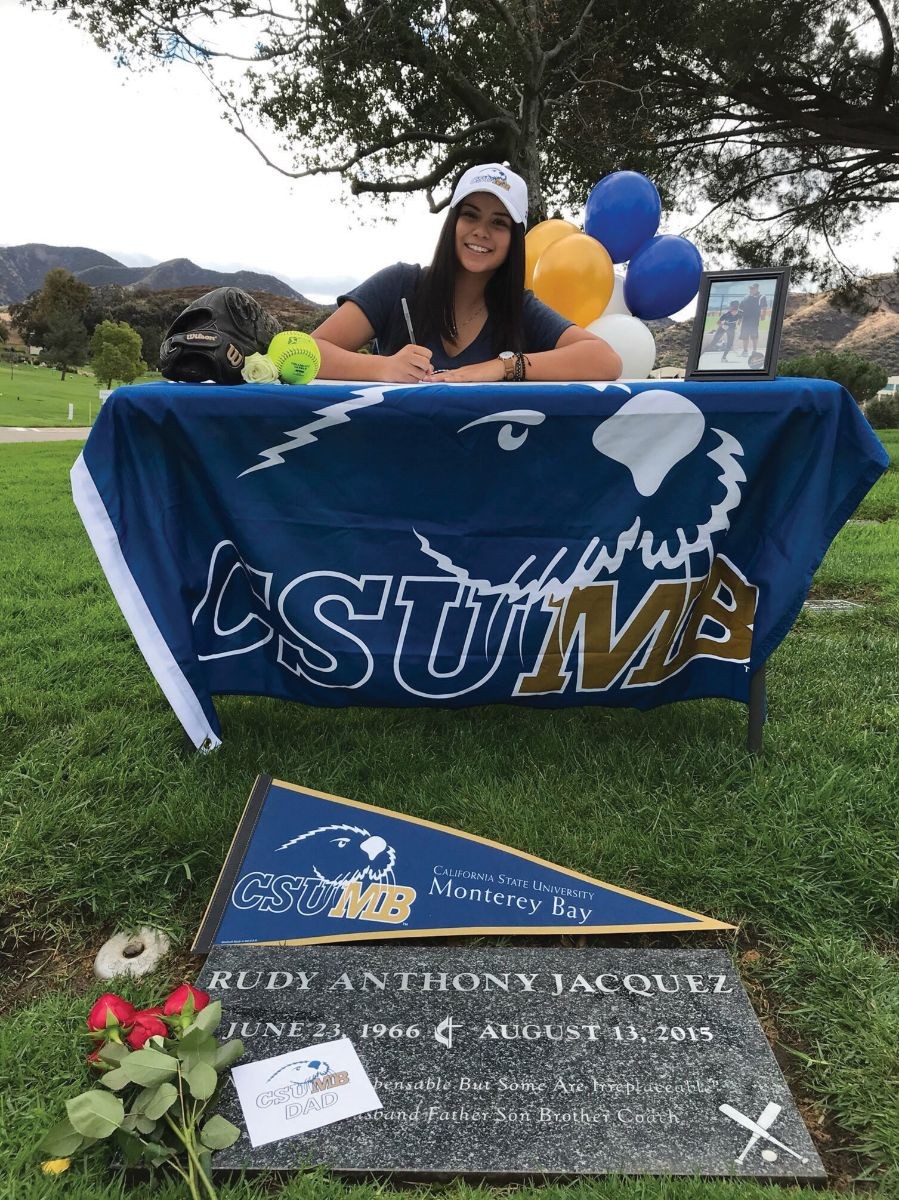
Softball has always been much more than just a game to CSUMB freshman Vanessa Jacquez. It was a second family, a path to college, and now it’s a special connection to her late father.
Rudy Anthony Jacquez died unexpectedly from a brain aneurysm in August 2015, three years before his only child achieved their shared dream: for Vanessa to become a student-athlete and the first person on both sides of the family to go to college.
The dream became reality in Fall 2017 when CSUMB’s softball team recruited Jacquez to play third base for the Otters. She told her mother, Monica, she wanted to sign her letter of intent at her father’s gravesite.
“I felt like he needed to be there with me when I signed. I asked my mom to take a picture because I wanted to show that we had done it together. I was thinking, he’s looking down, and I know he’s proud of me,” Jacquez said.
She decorated her father’s gravesite with Cal State Monterey Bay accessories including a “CSUMB DAD” sticker, and posted the pictures on Twitter along with the words: “Dad! I’m officially going to college! You have been with me every step of the way love and miss you more than you can imagine.”
I felt like he needed to be there with me when I signed. I asked my mom to take a picture because I wanted to show that we had done it together. I was thinking, he’s looking down, and I know he’s proud of me.— Vanessa Jacquez
What happened next was unexpected.
“At first, it was just my friends retweeting and commenting, and then my phone kept buzzing and buzzing. ... So I went back on Twitter, and there were a hundred retweets!” Jacquez said. “I thought it would stop, but then the whole night I just kept getting notifications. My phone was glitching.”
People she didn’t know offered congratulations:
“I’m so proud of you!”
“Your dad is so happy for you!”
A publicist contacted her. (She didn’t respond.)
By the time the frenzy slowed, Jacquez had close to 8,000 retweets and 80,000 likes. Her post had gone viral.
“To this day, I’m still getting likes and retweets, and it’s been a year almost,” she said.
The experience was “kind of a shock” at first, but then she was heartened by it.
“Friends and old teammates I had not spoken to in years were commenting. They knew my Dad, and how he coached. It made me think of all the people my dad had touched,” she said.
Family of Athletes
Jacquez’s parent were both athletes. Her mom ran cross country and track, and her dad played football and baseball and wrestled. She followed in their footsteps, playing several sports including volleyball, soccer, cheer and softball, while growing up in Ventura County.
“Sports were kind of just in my blood,” she said. “When I was younger, I started thinking about, what do I see myself playing in college? Something about softball, ... It felt like my second home and family. I made of lot of my closest friends through softball. Softball was my happy place.”
Rudy Jacquez coached his daughter’s softball teams for 11 years. She says his coaching wasn’t just about the game.
“He was the one constantly trying to push me to be better. It wasn’t just on the softball field, but in life,” she said.
One day after softball practice, he collapsed at home. He lay unconscious in the hospital for three days, his heart failing. Vanessa, then 15, asked to be alone with him to say goodbye.
“I made a promise to my Dad when he was in the hospital. I told him I was going to work hard in school, work hard in softball. I promised I was going to work so hard for him, for us, and go to college.”
He died on Aug. 13, 2015, at age 49.
“It was really hard,” Jacquez said. She missed school, her grades suffered, and she stopped playing softball. But after a few months, she knew she had to keep her promise to her father. She re-dedicated herself to their shared goal, and went on to have a stellar high school career.
Softball Standout
Jacquez took summer classes, improved her grades, and continued to excel in softball. At the end of her high school career, her awards included: Rookie of the Year at La Reina High School in Thousand Oaks, and first team for All-Coastal Canyon League, Most Valuable Player, and Top Scholar Athlete at Moorpark High in Moorpark, where she transferred after her father’s death. Her batting average was .360 with 72 hits in 67 games, 42 RBI, 47 runs scored, 17 doubles, five triples and five home runs.
Jacquez briefly considered heading to the East Coast or other schools in California, but soon set her sights on Cal State Monterey Bay. CSUMB was neither too-close nor too-far from home, it had a “really good biology program” (Jacquez wants to be a nurse), and a championship softball program. Furthermore, a friend already playing for the Otters told her what she needed to hear about the team and its coach.
“She would tell me how hardworking the team was, how focused they were, how they all want to win, how the coach wants to win. I wanted to play for a coach that really wanted hard workers, someone that would push you, knew when you had potential, and would help you get to your best playing ability,” Jacquez said.
Since coming to CSUMB last fall, Jacquez said she has gained confidence, improved as a player, and bonded with her coach and teammates.
“I really like our team chemistry. We’re focusing on loving one another, and loving the game, so we can work hard together. It’s really helping us.”
As for head coach Andrea Kenney, “she focuses on breaking things down, making sure we get the fundamentals. You can make an amazing play, but she wants you to have good fundamentals while doing it. She pushes us so hard at practice. We’re diving for balls, we’re talking. … She coaches like my dad. I think that’s why I like Coach Kenney so much.”
'Right Kind of Kid'
When Jacquez caught a cold during an Educational Opportunity Program (EOP) Summer Bridge program at CSUMB, Kenney contacted her new recruit and asked if she needed anything.
“She actually cares about her players. I know at some schools, half the coaches don’t even know your name. Here she’s texting me, checking in, making sure I’m OK, saying, ‘I know being away from home is going to be a little hard at first, especially getting your first cold away from home.’ It was really comforting.”
Kenney said she knew Jacquez was the type of player she wanted for multiple reasons.
“We needed depth at third base, and she really wanted to come here. Of course she’s a good athlete, but kids that really want to be here will achieve more. That, along with her athletic ability and a good academic fit, made her a desirable recruit.”
Kenney was aware that Vanessa’s father had died, but “Vanessa didn’t share much about that during the recruiting process. She’s a private person.”
When she heard about the gravesite signing, Kenney said it confirmed she had recruited “the right kind of kid.”
“Just like everyone else, I thought it was very touching, a wonderful sentiment. If you can get the kind of kid in your program that cares about their family, they’re going to care about their teammates, and work hard, and help the team succeed.”
Jacquez said she doesn’t mind all the attention she’s received because of her viral tweet, even though she’s “really shy.”
“I don’t talk a lot. But I like talking about my dad,” the soft-spoken teen said with a smile. “It makes me feel like he’s still here with me.”
CSUMB Otter softball boasts six NCAA Tourney appearances, four California Collegiate Athletic Association (CCAA) regular season titles (2010, 2012, 2014, 2015) and two CCAA Tournament titles (2009, 2015). After a rough season last year, head coach Andrea Kenney says the goal this year is make it back to the playoffs and the Top 3 in the conference. Conference play for 2019 kicks off with an away game on Friday, Feb. 8, against the Stanislaus State Warriors. The first home game is Friday, Feb. 22, vs. Cal State Dominguez Hills. For more information about the team and its schedule, visit otterathletics.com.
"War & The Weather"
By Joey Perotti
Published Feb. 4, 2019
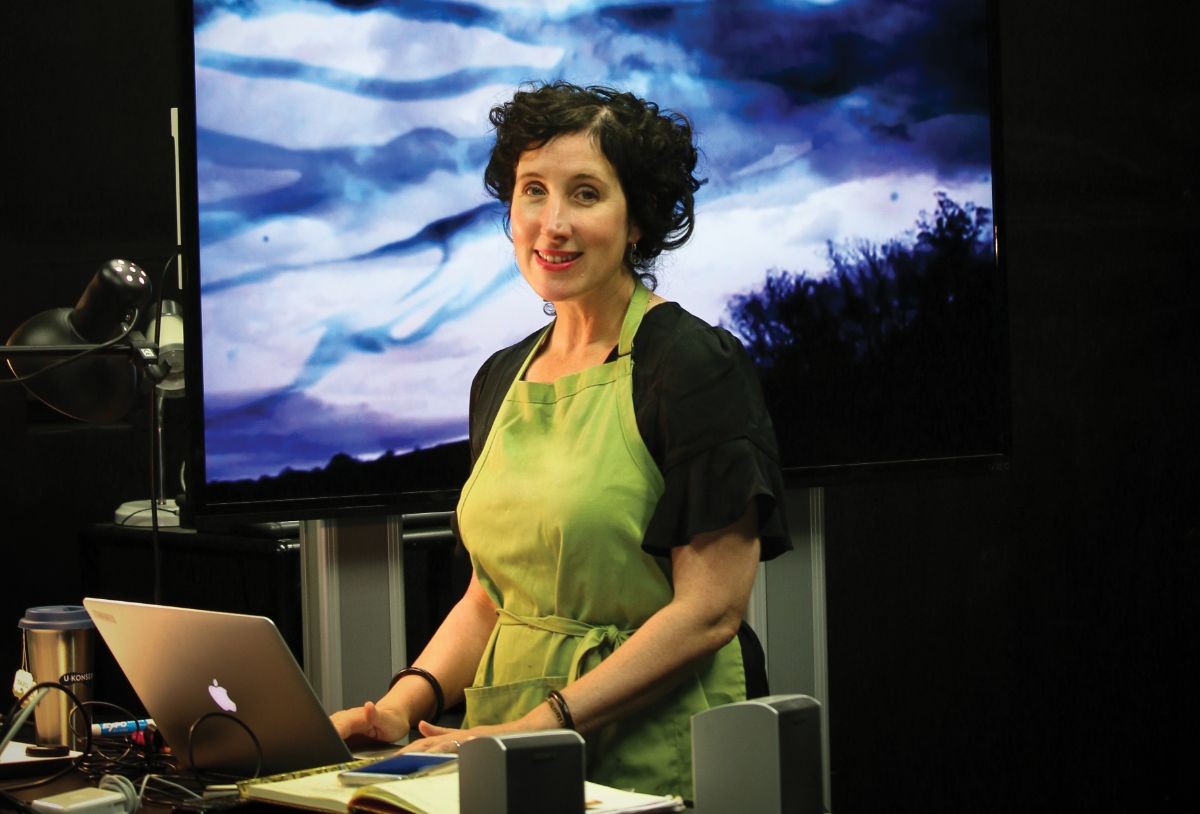
The history of water in California is “complicated and sprawling and crazy,” says filmmaker and CSUMB professor Enid Ryce. She didn’t realize that when asked to collaborate on a project about the subject in 2007. If she had known, "I never would have agreed to do it.”
The project led to the discovery of a book by a Civil War general and, more than 10 years later, became the inspiration for Ryce’s latest film. “War & The Weather” combines elements of documentary, animation, and experimental film, and features a score by world-renowned composer Philip Glass. Ryce completed the film at CSUMB, where she teaches in the Cinematic Arts & Technology department.
I try to make mainstream, normal-style films and they just take a left turn. I've always been a painter, and I've always made experimental films, and I thought, I've never really done them together.— Enid Ryce
The book “War & The Weather: Or, The Artificial Production of Rain” was published in 1871 by Gen. Edward Powers and catalogues every battle of the Civil War, and more specifically, when rain fell. A best-seller in its time, the book posited the theory that warfare causes precipitation, and paralleled another theory that was part of the colonization of the American West called “Rain follows the plow,” Ryce said.
Both of these theories promoted the idea that the noise of European-style civilization would transform the climate of the American West into one resembling Europe’s. “I thought it was so interesting because in a way it was an argument to continue the Indian Wars” and “that doing so would literally transform the landscape into one more hospitable for European culture,” Ryce said.
Powers actually received $10,000 from the government and fired cannons into the sky in Texas in a failed attempt to produce rain. “So it seemed really interesting, this idea of like, ‘Well, let's see... We want it to do something, so let's shoot at it!’ ”
Waterways in the Sky
Ryce said she always works with history and science and likes to connect the two. She met a number of scientists when she was invited to create art installations and experiences at the Bay Delta Science Conference in Sacramento. It was here that Ryce learned about “atmospheric rivers,” waterways in the sky that carry as much water as the Mississippi and are responsible for most of the major rainfall in California. This conference is also where the vision for her film came into view.
Ryce has been the director of community engagement for the Philip Glass Days & Nights Festival for the last six years. She was invited to screen her last film, “A Land for War,” at the festival in 2017. The documentary about the former Fort Ord military base and its impact on the land premiered at the National Gallery of Art in Washington, D.C., with an accompanying exhibition at the Library of Congress.
The night before the “A Land for War” screening, Ryce was in the hospital. “I got a virus that attacked the nerves around my brain that control balance and vision, and I lost the ability to focus my eyes and walk. I had to relearn how to do that over this past year. So I missed my screening.”
Despite a slow recovery from her virus, Ryce was determined to complete her next film, “War & The Weather.” Glass had heard about the project and decided he wanted it to be the first ever arts and science project developed at the festival.
Just as she had worked with scientific and historical collaborators during the research and pre-production periods, Ryce had no shortage of help during the actual production. Not only had Glass agreed to score the film, but experimental animator Timothy David Orme came from South Dakota for a week to animate scenes.
Another Collaborator
They had never met in person, but had had long admired each other’s work and kept in contact online. When Ryce told Orme about “War & the Weather,” he offered to help. “From 9 a.m. to 5 p.m., every day for a week, we went in and animated 32 scenes. So it was really exciting, and I learned so much, and now I'm teaching my students. We just did an animation workshop, and I'm starting a new migrant youth animation workshop based on Tim's advice.”
Orme not only worked on the film, but also pitched in at the Migrant Activity Center in East Salinas. “He did a workshop for migrant youth on animation and that was how we ended that week.”
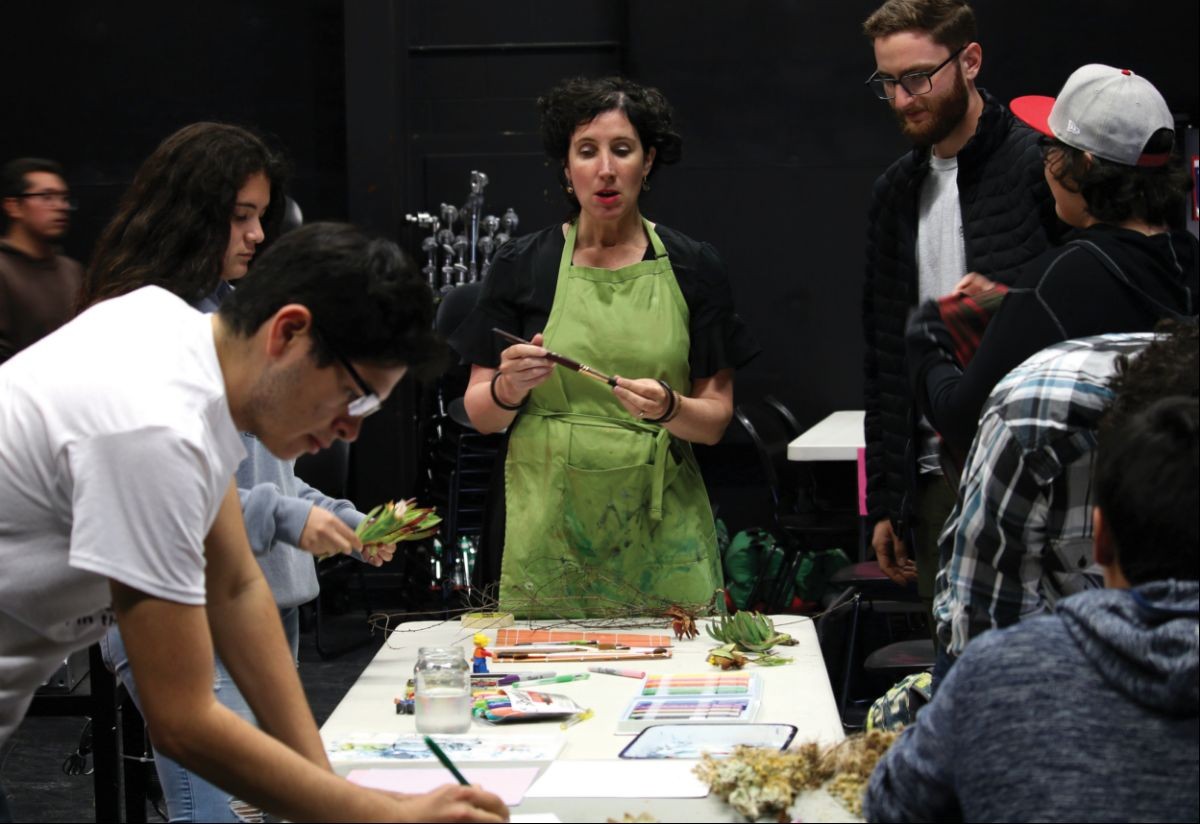
For one week the Cinematic Arts department allowed use of its studio to create different stations such as voice recording, research, painting, animating, editing, and projecting old footage onto canvas for re-filming. “I've always liked projecting film onto painted surfaces and filming it,” Ryce said.
While it may have been easier to take a more simplified approach, Ryce wasn’t interested in making a basic documentary. “I try to make mainstream, normal-style films and they just take a left turn,” explains Ryce. “I've always been a painter, and I've always made experimental films, and I thought, I've never really done them together.”
Rewarding Work
Ryce also credits the experimentation to needing to differentiate her project from what has come before. “There's literally a ‘Ken Burns effect’ in iMovie you can do, and that's from his very famous film (“The Civil War”) where the images pan, so I had to find a different way to do it.” Ryce said. “With the Civil War images, I painted these rivers and then animated them, and so they're flowing through the images.”
In addition to using the Cinematic Arts & Technology Studio, the entire crew was comprised of mostly female CSUMB students. “It was a very diverse crew. They shot the interviews, the panel discussion, and now I'm going to be working in post-production with CSUMB alumni at Honest Engine Films.” Having current students working on the film may slow down the process at times, but Ryce believes in their work. “Working with the students to create something -- that's a hundred percent the most rewarding.”
Ryce returned to the Bay Delta Science Conference to screen a work-in-progress cut of the film. She was nervous because the audience was made up of scientists and water experts. To her relief, “It was really well received, and I even received an invitation to show it for all the employees at the Department of Water for the state of California.”
But one screening may have topped that experience. “I was really proud because the one-year anniversary of (my hospitalization) was when I showed ‘War & The Weather’ at the Philip Glass Days and Nights Festival. I came back and everybody was like, ‘You know what happened to her?’ And I said, ‘Well, I’m back. I can walk, I can talk, and I made this film.’”
“War & The Weather” is slated to officially premier in the Fall of 2019. While recovering from her virus and creating an experimental animated documentary, Ryce has also been running CSUMB Salinas Center for Arts and Culture, turning the building into a hub for arts, culture and community. Read a news briefabout the center’s one-year anniversary.
Statistics, Sidewalks & Social Justice
By Liz MacDonald
Published Feb. 2, 2019
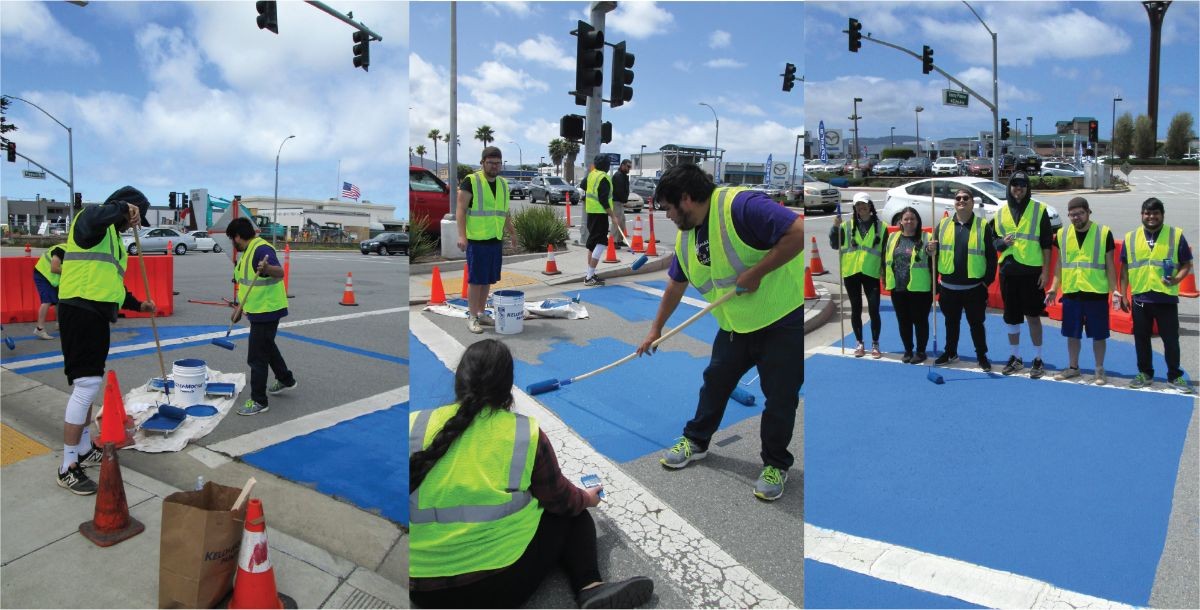
While sidewalks may seem straightforward at first glance, they are actually an important and challenging aspect of city infrastructure management. It’s easier to create a new sidewalk than to repair or maintain an old one. In the city of Salinas, some sidewalks have waited 14 years for needed repairs to be prioritized in the city budget.
CSUMB students in professor Steven Kim’s statistics class spent a semester studying the conditions of sidewalks in Salinas at the request of city employees Steve Flores and Eric Sandoval. The students’ work helped them prioritize where sidewalk improvement funds should go to ensure that public services were being provided equally to all citizens.
Sidewalk conditions can predict whether a road is designed with cars or pedestrians in mind, and have an impact on a community's carbon footprint as well as its overall health. The Washington Post has reported on studies that linked poor sidewalk conditions to increased rates of childhood obesity and higher numbers of pedestrian deaths. Sidewalk conditions can also be an important indicator of inequality — especially when sidewalk conditions are mapped against community demographic data.
Being able to experience city government really left an impact on me and gave me a great set of skills I can use for the rest of my life.— Robert Banales
“Based on the data and statistical model, students concluded that the sidewalk condition was poorer in low-income areas when compared to high-income areas,” Kim said. As a result of the students’ work, the city decided to first focus on sidewalk maintenance in lower-income areas.
“As a statistics educator, I was very happy to provide hands-on projects to my students, and the empirical evidence helped the city to make a right decision.”
That’s just one example of the collaboration happening between CSUMB classes and city officials as part of the innovative Sustainable City Year Program (SCYP).
A Lean but Effective Machine
Now in its fourth year, the program is picking up momentum under its director, School of Natural Sciences professor Dan Fernandez. Last fall it received a best-practice award for university-community partnerships from the California Higher Education Sustainability Conference, beating out two other universities with similar programs.
“We are the smallest of the three and have a tenth of the budget. We run a lean but effective machine, which makes our model more realizable for cities that don’t have a budget,” Fernandez said.
The program works this way: Every two years, Fernandez requests proposals from area city officials for possible projects they would like help with from university students. The proposals include how much time city staff can devote to projects, and how much funding they can provide.
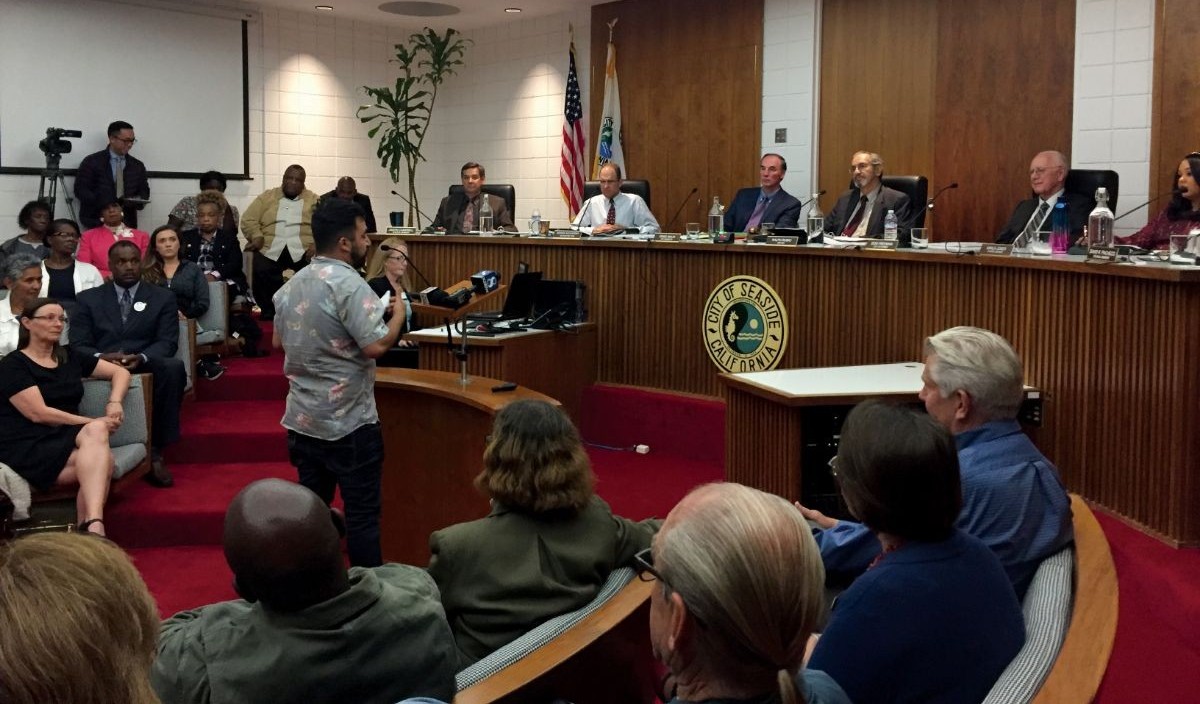
Fernandez selects proposals and begins “matchmaking” or pairing existing classes and faculty with needs the city has identified. The university and city work together for four semesters worth of projects. After two years, the program ends in one city and moves on to share the wealth of resources with the next municipality in the region.
“It’s a big shot in the arm for the city,” says Fernandez.
“The cities obtain near professional level analyses and products that they are either not able to afford or lack the internal expertise to do themselves,” says environmental science professor Rikk Kvitek. His class was matched to a project analyzing sewer spills and overflows for the city of Seaside.
The two-year timeframe works well, because the city gets an intense dose of research and creativity from the students in the short term, and then has time to assimilate the findings and ideas over the long run.
“Cities operate on different timescales than universities and students. Students are involved for one semester, but it may take a city years for the work to materialize,” Fernandez said.
It’s a model that began at the University of Oregon and has been replicated at more than 30 institutions across the country by a group called the Educational Partnerships for Innovation in Communities Network (EPIC-N). It’s a perfect fit for CSUMB, where real-world learning has been a core value since the university’s founding.
Many of the legal and logistical challenges of bringing students into the community have already been worked out through the university’s Service Learning program, which requires students to complete two community service projects to earn their degree. And while some SCYP courses may overlap with Service Learning, most are focused on completing a project within the classroom and don’t count toward the in-the-field Service Learning requirements.
So far about 25 wide-ranging CSUMB courses have participated in the program during its first two years in Salinas, and now in its second partnership with Seaside. Fernandez has matched courses in business, environmental studies, statistics, journalism, psychology, global studies and liberal studies. Most other EPIC-N universities have a full-time employee to coordinate the program, but Fernandez just “juggles it into what I’m already doing, which keeps our budget way lower.” It’s clearly a passion project for him; one which the university, the students, and the cities have embraced.
Opening a Door You Didn't See
Austin Fontanilla took Fernandez’s sustainability systems course during his last semester as an undergraduate. He took it because it sounded interesting, and he’d heard good things about the professor. Little did he know, the experiences he gained in the class would launch his career.
“Half of the semester was devoted to our final project: a transportation study for CSUMB and for the East Alisal Street corridor in Salinas. This project exposed me to the world of transportation planning. Before that I had no idea that people were paid to study traffic and write reports to government organizations,” Fontanilla said.
At the end of the semester, all the students in the class were forwarded a notice of an eight-month internship in transportation planning with the Transportation Agency for Monterey County (TAMC). Fontanilla got the job, and built on his experience with an AmeriCorp fellowship working in stormwater compliance for Salinas.
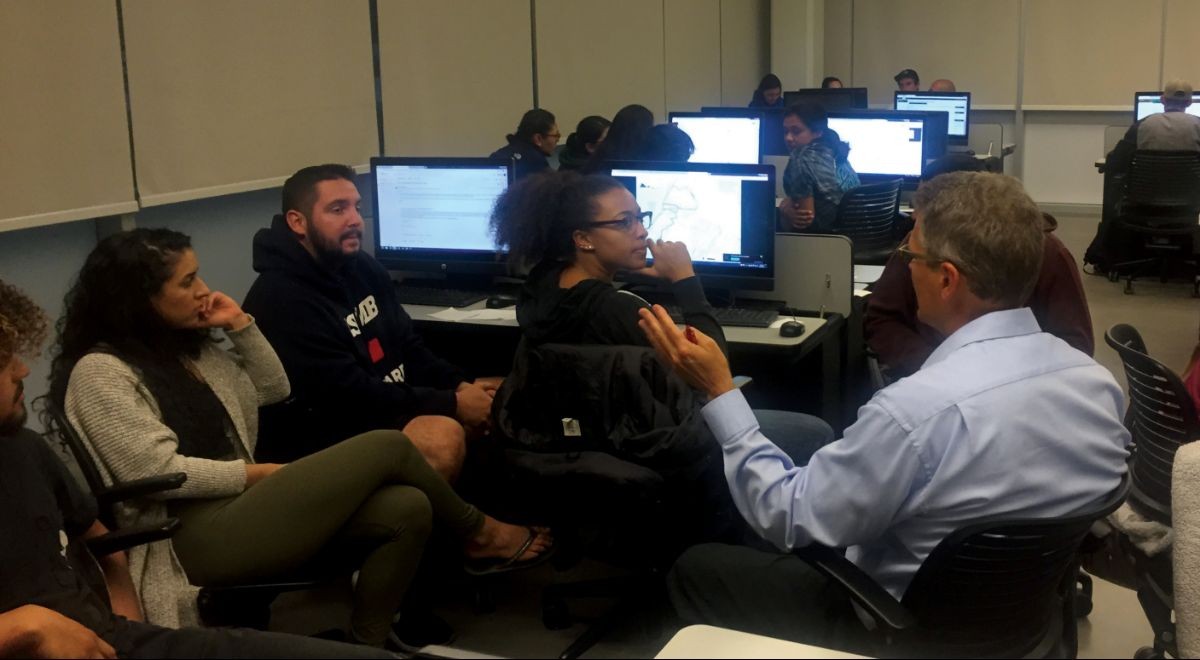
“If it weren’t for the class, I don’t know if I would be employed full time right now,” he says. “I had a great experience with it, but it was really challenging at times. If you put in the work, you might open up a door you didn't see was there.”
Current student Fady Ellaham is working on his capstone project through SCYP, a project to promote nature-rich, non-motorized transportation routes on Fremont Street. “For me, it provides experience for the things I want to do in my future,” he said.
Jessie Doyle is another student who’s leveraged her involvement with the program into a position with Seaside. She manages geographic information system (GIS) data as a member of the engineering department. She’s also a graduate student in environmental science and a teaching assistant, and she’s brought SCYP projects into her courses. Her students have mapped Americans with Disabilities Act (ADA) ramps and helped geocode fire department data.
“This is an amazing program that connects students to real-world projects. My students learn skills that I didn't learn until after I received my bachelor’s (degree), which will only help them in their future job hunt,” Doyle said. In addition, Doyle gained public speaking experience through the program when she presented GIS work to the Seaside City Council.
Inner-workings of a City
Attending city council meetings is an important channel for students involved in SCYP to communicate their ideas and work back to Seaside. In the fall semester, Fernandez’s class time happened to overlap with city council meetings, and so his 22 students regularly attended and presented their work to the council.
“Students have this neutrality,” Fernandez said. “They can suggest innovative solutions that would be politically impossible for city staff to suggest.”
Business professor Dante Di Gregorio agrees. Students in his entrepreneurship classes have participated in the program with Salinas and Seaside. Their projects have included: using recycled materials to build short-term housing for farmworkers on farmland that is temporarily available in Salinas, planning and implementing a pilot farmers market on Echo Avenue in Seaside, and developing business models for cannabis tourism that would create positive spillovers for the local community.
“For the students, the main benefits are to work on business ideas that can create a positive impact in the local community, and to have the opportunity to interact with professionals from the city government and others who care about the region,” Di Gregorio said.
“The projects gave the students a sense of real-world purpose, making them feel like professionals rather than merely students,” Kvitek said. “This was especially evident when they presented their results to the city officials.”
“I learned what it takes to get things done for a community, and how to work with city officials,” said student Robert Banales, who worked on a parks project for Seaside. “Being able to experience city government really left an impact on me and gave me a great set of skills I can use for the rest of my life.”
In the meantime, Fernandez is already thinking about where the program will go next. “We’re flanked by all these cities doing great things,” he said. “Cities have all these aspirations, but they need help from the university to do it.”
Help that CSUMB’s faculty and students are ready and eager to provide.
Affordable Learning Solutions

By James Tinney
Published Feb. 2, 2019
You buy a textbook, an expensive one. You use it a lot, or just a little. At the end of the semester, you take it back to the bookstore. It turns out, next semester, that book is not going to be used. You are offered pennies on the dollar. Outrageous! You take the book home. You pack it up when you move, and when you move again and again.
Eventually, it goes to Goodwill.
If you see a royal blue psychology text there, take a look. It may have been mine.
Most former and current college students can recount a similar tale of woe. For some, it is a mere annoyance. For others, especially those struggling to fund their college education, the high cost of learning materials can be one more barrier to earning a degree.
That’s why the Cal State system has launched Affordable Learning Solutions, an initiative that encourages faculty members to adopt e-books and other free or inexpensive materials available online. The program uses a range of strategies to provide students with affordable options for learning, which have resulted in the CSU’s students saving an estimated $35 million annually.
Danielle Burchett, an assistant professor of psychology at CSUMB, teaches a course in career preparation, which enrolls around 180 students.
I was shocked at the bills that students would rack up. You would see undergrad students with seven, eight, nine hundred dollars worth of textbooks. And some of those students would buy a textbook and hardly ever read out of it.— Ryan Luke
“When you try to decide on a textbook, content is very important, of course, but affordability is a consideration as well,” she said. “In looking through the different options, I was fortunate to find one that was quite inexpensive. Even new, I think it is about $25; used copies run around $20.
“So right away, the content was what I was looking for, the price was great, compared to those gigantic, mega-hardback books that can cost $200.”
The CSUMB library paid for an online version of the textbook, which allowed students with their Otter ID to access it through the internet.
“The other piece was trying to create a website that students could continue to access,” Burchett said. “The class is about preparing for a career, so that is certainly not something you do for one semester and stop. And as they approach graduation a few semesters later, they are going to want to have those sources and that information that they can come back to.
“It is a fun part of the job, because it is a way of working toward student success and providing one big resource where students can go and find information they need.”
Grants to Faculty
Librarian Jacqueline Grallo served as the original coordinator of the affordable learning initiative at CSUMB. Grallo oversaw the distribution of grants – typically ranging from $500 to $2,000 – made available by the state to help pay for faculty members’ time in making the switch.
“Commercially published textbooks often come with power points, quizzes, supplementary materials that the instructor can use,” Grallo said. “But if you are using free materials, you are often in the position that you have to redesign the course and create all those supplementary materials on your own, which was what the grants were intended to support.”
Grallo encouraged faculty members to decide on textbooks well in advance, to allow the bookstore maximum opportunity to find used copies. She helped faculty members share ways they have used affordable materials to inform others about what might be available for their courses. And she compiled progress reports to the Chancellor’s Office about the initiative at CSUMB.
A Book-Free Class
When Browning Neddeau, an assistant professor in liberal studies, began teaching a course in arts in the school and community, the previous instructor had used several textbooks to cover the wide-ranging subject matter, which includes music, dance, theater and visual arts.
“Someone on campus said I should contact her (Grallo) because I was interested in moving this into being a book-free class. We had a meeting or two, and she was there as a resource to help me find material,” Neddeau said.
“I was able to cover everything with digital material, and I found resources through our library that students can download,” he said. “We also have a wonderful video library on campus, and there are videos there that relate to the course content as well.”
“For the students to come into the class and not have a textbook, they really appreciated that. And the readings were very targeted, and the students appreciate that part, too.”
Textbook Sticker Shock
When Ryan Luke, an assistant professor in kinesiology, was a doctoral student at Georgia State, he and his wife would help out at an off-campus bookstore during the beginning of semester rush.
“I was shocked at the bills that students would rack up. You would see undergrad students with seven, eight, nine hundred dollars worth of textbooks. And some of those students would buy a textbook and hardly ever read out of it,” Luke said.
That experience is hardly unique. The College Board estimates that the average college student spends more than $1,200 a year on books and learning materials.
When he became a faculty member at CSUMB, Luke wanted to save students some of that expense. He has created digital presentations using a variety of online tools and has shifted the focus of his courses away from traditional textbooks.
“I always tell the students, if there is some way I can get you to interact with the material, if you are watching it, listening to it, or reading it, I am happy with that.”
Luke said he and department chair Kent Adams have discussed the need for students to work directly with research articles, which reflect the current consensus on issues within the field and are available through academic journals and professional organizations.
“What we tried to do was to integrate more research into our course settings, and by doing that, especially in our advanced courses, there was not as much need for a textbook,” Luke said.
Lowering barriers to success
Lowering Barriers to Success
The CSU’s push for affordable learning materials is part of Graduation Initiative 2025, the effort to improve graduation rates on every CSU campus.
CSUMB faculty members agree that the effort has particular relevance on a campus that educates large numbers of first-generation and low-income students.
Burchett said by using affordable learning materials and by making study guides for tests such as the Graduate Record Exam freely and readily available, the university hopes to increase opportunities.
“We have students who want to go into very competitive graduate programs, where there is a wide range of expense,” Burchett said. “Some graduate programs are completely free, but they are very hard to get into. So if we can give students the resources that can help make them competitive to get into those programs, we’re giving students who are low-income and first generation the opportunity to afford to continue their education.
“That is critically important on a campus like ours where we have students who face a lot of barriers, and the students they are competing against maybe don’t have as many barriers.”
Inspiring Role Model
By Sophia Huang McKenzie
Published Feb. 2, 2019
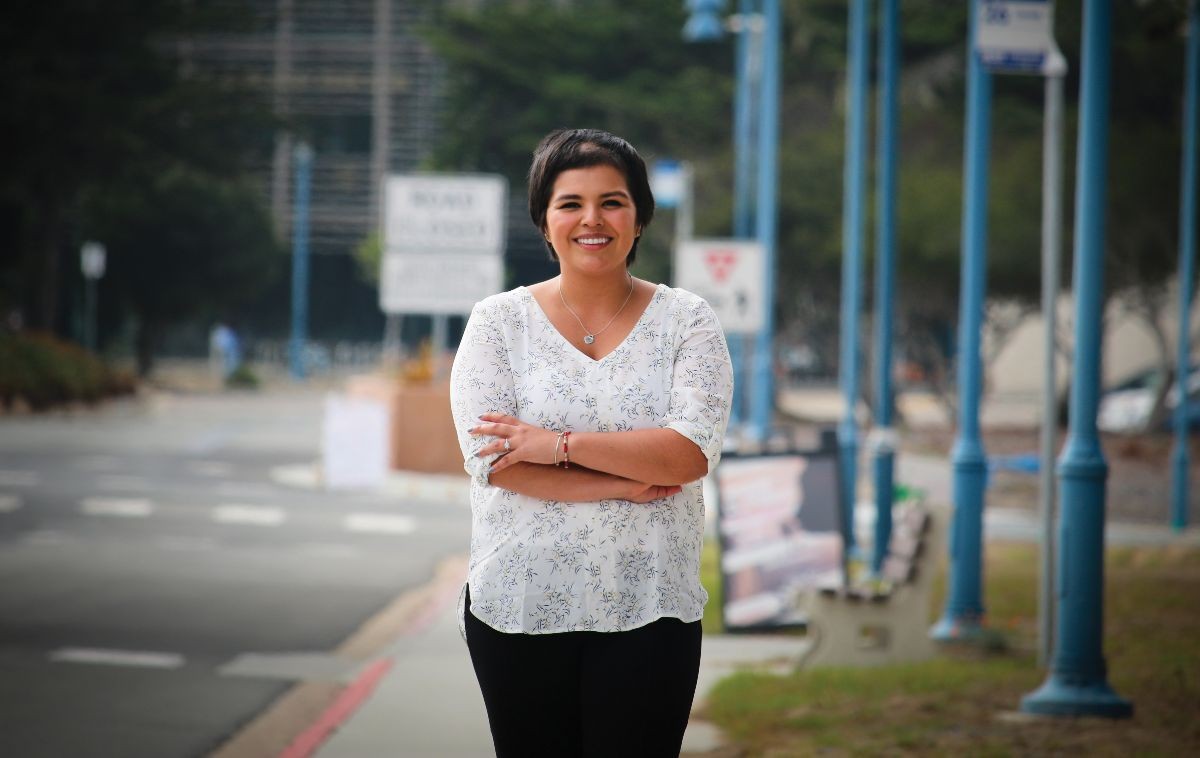
Jessica Sierra (B.S., Business Administration, 2013) didn’t set out to be an inspiration and a role model, but that’s exactly what she’s become. She’s broken through barriers, defied statistics, and survived stage 4 brain cancer. Through all her struggles, Sierra has remained remarkably optimistic.
Sierra is featured in a video series called “Sharing Stories” produced by Inspira Studios of Watsonville. The videos are meant to challenge stereotypes, empower others and generate positive change. They can be viewed online at Inspira-Studios.com.
“I’ve known Jessica for a while, and she’s someone I admired. I wanted to feature a strong female, and she’s gone through so much,” said Eugenia Renteria, director of video productions for Inspira and a former CSUMB classmate of Sierra’s.
“She has encountered multiple challenges, and she still has a positive outlook on life. People see her as an inspiration, someone they look up to. She’s an awesome person.”
Overcoming Difficulties
Sierra grew up in Seaside with three brothers in a Salvadorian-Mexican immigrant family. She describes it as a rough upbringing in a working-class community with few resources for young people. She had to overcome serious difficulties including emotional abuse, sexual assault, domestic violence and gang influences.
Despite the challenges, Sierra was able to become the first person from her family to attend college. At CSUMB she worked with “incredible professors and advisors who knew I could go far,” Sierra said. “Coming here as an undergrad was one of the best times of my life. I learned so much about everything I am today, essentially.”
Sierra was active in student government, studied abroad in Granada, Spain, and helped start a campus club which later became the Alpha Phi chapter of Kappa Delta Chi, a national Latina sorority.
I just know there’s so many people out there who are experiencing some sort of hurt, or lack of motivation in doing anything in their lives. If I can get through this, y’all can do whatever you need to do.— Jessica Sierra
She graduated from CSUMB with a bachelor’s degree in business administration and a minor in Spanish, and went on to earn a master’s degree in higher education leadership from the University of San Diego. She intends to pursue a doctorate degree one day.
At CSUMB she learned vital life skills; perhaps most significantly, how to self advocate and “navigate systems,” she said. CSUMB prepared her for success in graduate school, and enabled her to “navigate the whole health care system.”
“I wholeheartedly believe that without my education, I wouldn’t have made it (through cancer treatment),” Sierra said.
Cancer Diagnosis
She was working in higher education and living in San Diego in March 2017 when she was diagnosed with glioblastoma, one of the deadliest cancers and the same type that killed U.S. Sen. John McCain. Her prognosis was just as grim. Sierra was devastated at first after hearing the terrible news. She allowed herself to cry for a week, but then it was time to fight for her life.
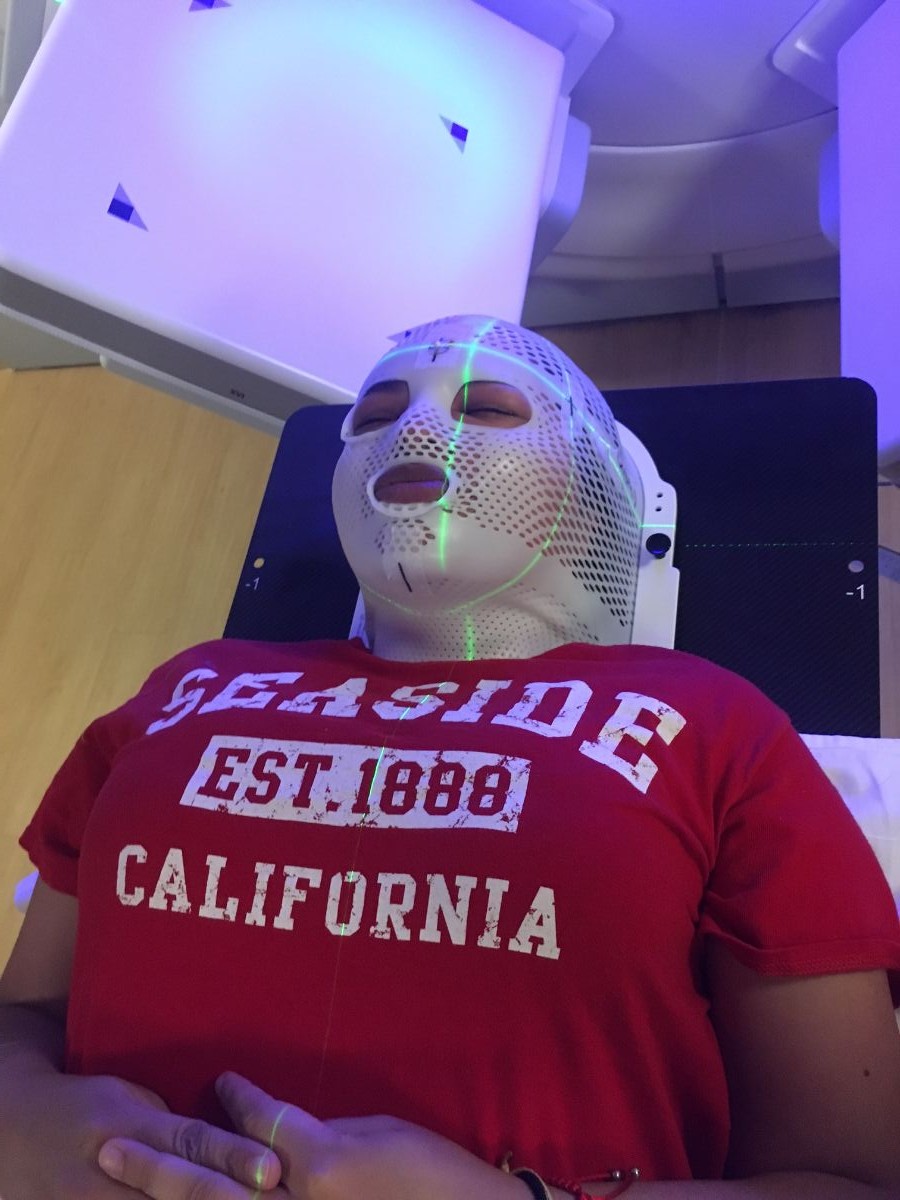
As a way to cope and share her experience, Sierra wrote openly, honestly and extensively about her cancer diagnosis and treatment in a blog called Soy Jessica Garcia De Paz.
From her May 12, 2017, blog entry: “I had a massive headache for a month. My ears started to hurt and one day I puked (y’all know I hate puking). My gut told me something wasn’t right, that it might even be a brain tumor. … Got a CT Scan and found out I had a 5.5 cm tumor with lots of fluid in the brain and needed surgery. … Found out about the cancer cells on March 22, 2017. Started the targeted zapping of the cancer cells on April 17, 2017. Here we are now. Thankful to be receiving treatment and be sharing this with you all.”
Miraculous Healing
Surgery and radiation were followed by months of chemotherapy. She had wires and screws in her head and suffered debilitating nausea and pain. She lost her hair from wearing a cap which uses electrodes to kill brain tumor cells. After about a year of treatment, the cancer miraculously didn’t grow back, and she began to heal.
Last fall CSUMB’s TRiO Student Support Services hired Sierra as a retention specialist. TRiO is the U.S. government’s education programs which support students from disadvantaged backgrounds. Just as TRiO counselors once did for her, Sierra now helps students succeed in higher education and beyond. “I just love working with students, and seeing them get their ‘a-ha’ moment,“ Sierra said. “I tell them, ‘You’re good enough for anything that you set your mind to. You’re good enough just the way you are. Reach for the stars and achieve your goals and dreams.’ ”
Sierra said she’s thankful her story speaks to people facing obstacles in life and gives them hope.
“I just know there’s so many people out there who are experiencing some sort of hurt, or lack of motivation in doing anything in their lives. If I can get through this, y’all can do whatever you need to do,” Sierra said.
“Anybody that’s struggling, anyone that has a cancer diagnosis ... just cry, feel those emotions, but it’s important not to stay there. Whatever it is — something’s wrong in your family, something’s wrong at work — you have the power to move forward and keep going.”
Staying Tuned
By James Tinney
Published Feb. 2, 2019
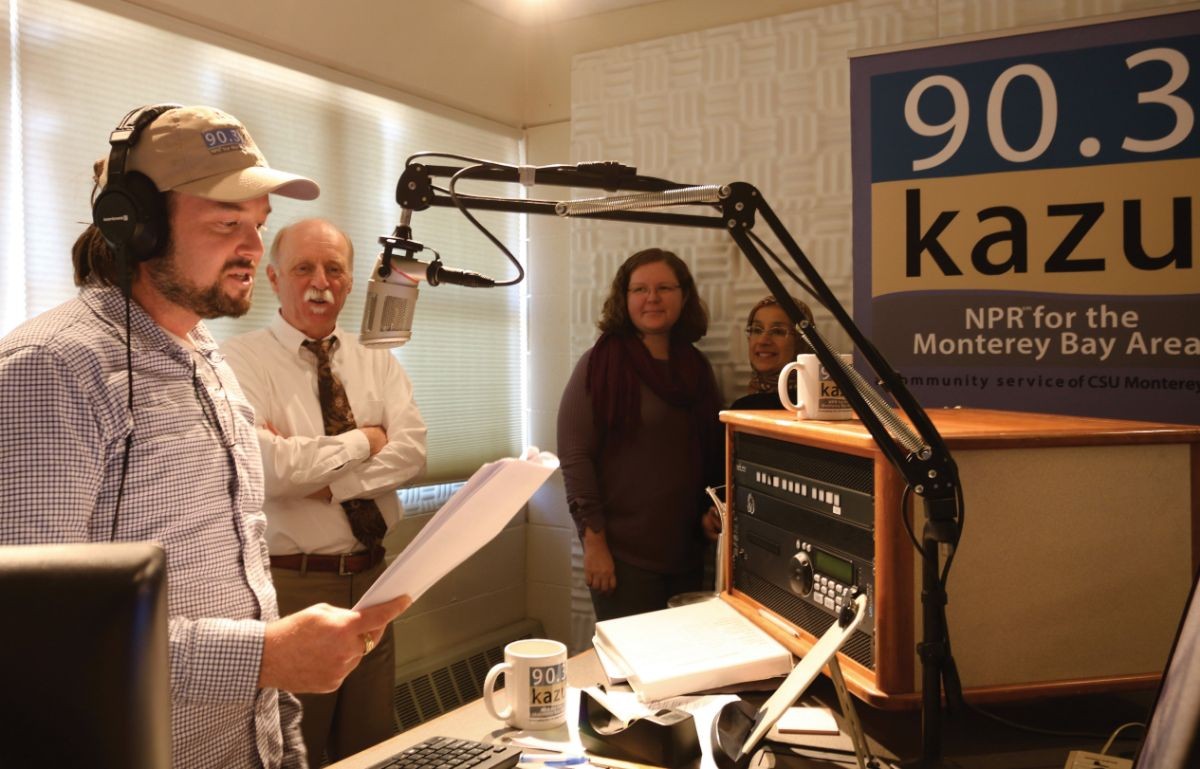
An investment in a struggling radio station back in 2000 continues to produce benefits for Cal State Monterey Bay and a growing listener base nearly two decades later.
The station is 90.3 KAZU, the Monterey Bay area’s member-supported National Public Radio (NPR) affiliate housed in modest offices on the CSUMB campus.
Station manager Mik Benedek said KAZU currently has about 75,000 listeners a week and is the top station in the market among listeners with an undergraduate or advanced degree.
Our goal is to sound like a major market station, with that professionalism, but at the same time have fun doing it.— Mik Benedek
“Overall, it is among the top three or four stations in the market, which is amazing for a public news and information station.”
“The staff is just an exceptional group of individuals. The way we work together somehow comes out in the presentation and what people hear. It’s intangible. But I really think the cohesiveness of the group does manifest itself in how the station is received and why we are successful,” Benedek said.
“Our goal is to sound like a major market station, with that professionalism, but at the same time have fun doing it.”
Listeners and Members
At a time when news is an increasingly divisive topic, KAZU has built an expanding audience of listeners who do more than just tune in. They also contribute.
Noel Freitas, KAZU membership director and a CSUMB alum, reports that membership dues increased 12 percent in the 2017-18 fiscal year. That comes on top of increases of 29.5 percent and 14.4 percent the previous two fiscal years.
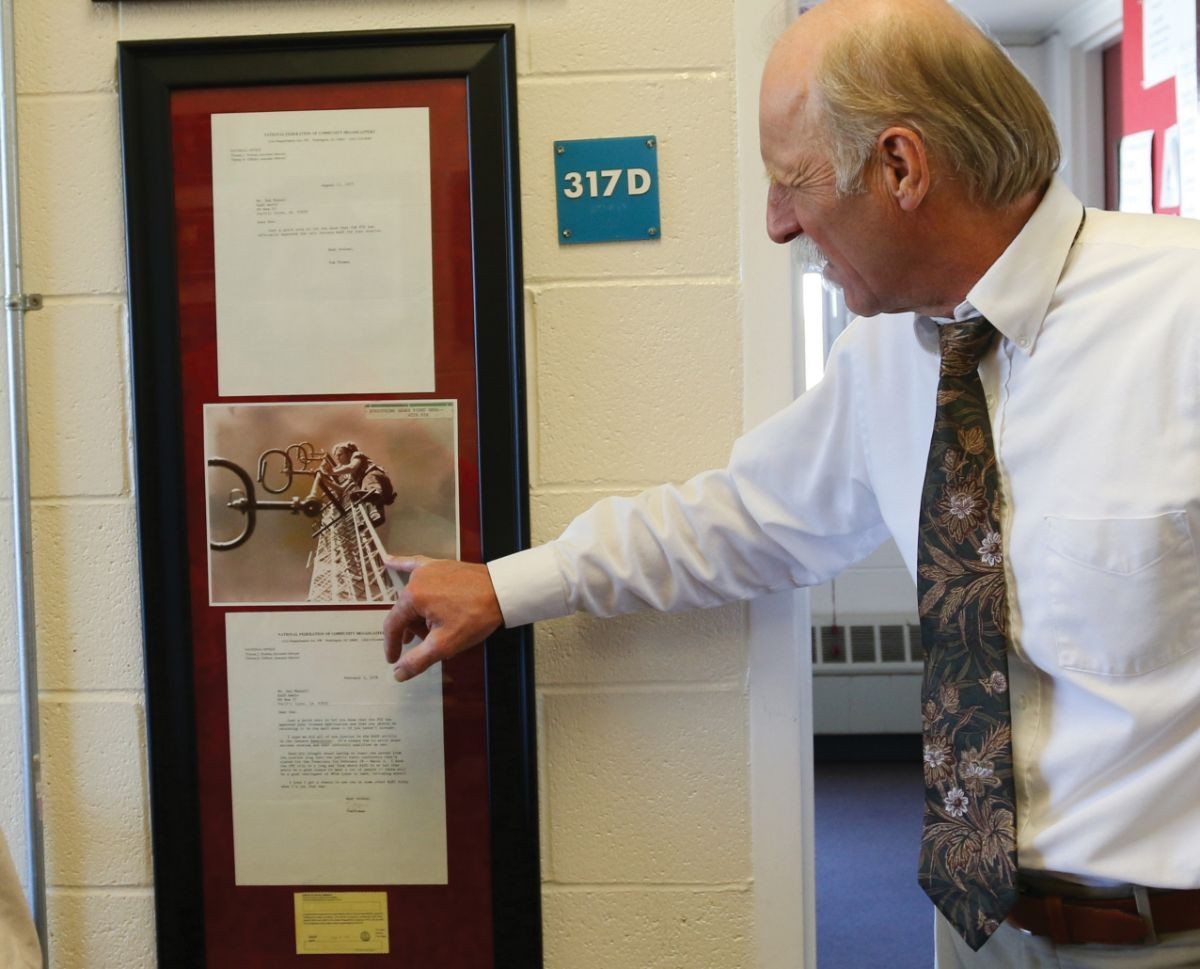
Benedek said support from members makes up more than 60 percent of the station’s income. The second largest source is underwriting — companies and non-profits receive on-air acknowledgements in return for contributions — and grants from the Corporation for Public Broadcasting.
KAZU’s license is held by the CSUMB University Corporation, a 501(c)(3) nonprofit that administers the business functions of the university. The corporation provides KAZU rent-free office space and human resources, IT and accounting support. However, Benedek stresses, it does not provide any cash subsidy for the station, which has long since retired its debt and now operates in the black.
Founded in Pacific Grove
The station’s strong listenership figures and financial health may have been hard to predict back when the University Corporation acquired the station license in 2000 when it assumed the station’s liabilities, estimated at about $150,000.
KAZU was founded in Pacific Grove as a 10-watt independent community station in 1977. When the university, led by its first president Peter Smith, took over the station, KAZU featured an eclectic mix of music programming and was still housed in offices in Pacific Grove.
KAZU shifted its format to NPR — over the objections of some loyal fans of the station — in 2002.
Doug McKnight, who began as KAZU development director in 2004 and served as station manager from 2008 to 2011, said Smith once told him that for a university to be recognized in the community, it needed a radio station and an athletic program.
McKnight said, “When we started here, this was a very isolated place. Almost nobody knew much about the university. They were terrified to come out here because they would get lost and eaten by coyotes. So we were a way to reach out to them.”
Lifelong Learning
“It (the radio station) also helps fulfill the university’s obligation to lifelong learning. Our programs are educational in nature. They are not only news but science and the arts and culture. So we are part of that whole idea that when you leave the university, you continue to learn,” said McKnight, who continues to serve as a fill-in on-air host and news reporter.
Benedek said the station has eight full-time employees, and typically has four or five student interns who assist in graphic design, production and business development.
It (the radio station) also helps fulfill the university’s obligation to lifelong learning. Our programs are educational in nature. They are not only news but science and the arts and culture.— Doug McKnight
KAZU’s listenership numbers have received a bit of a boost in the past year with the demise of KUSP, the Santa Cruz-based NPR station, which filed for bankruptcy in 2016. Over the years, there had been discussions about a potential merger of the two stations, but no agreement was ever reached.
Benedek said, “Even when KUSP was here, we had a very strong presence in Santa Cruz. Our listenership and our underwriting and our membership are evenly split between Monterey and Santa Cruz counties. We are very cognizant of the importance of Santa Cruz County.”
Far-Flung Listeners
Along with broadcasting over the FM dial, KAZU streams its content over the internet. That has earned the station some listeners in far-flung places.
“We got a donation from a ski guide in Canada. We get emails from various people around the world and around the country that happen to like our programming lineup,” said Benedek, who estimates about 10 percent of the station’s listeners tune in through the internet.
“Smart speakers have really brought radio back into the home because you can simply say, ‘Alexa, I want to play KAZU’ or ‘Hey Google, play 90.3 KAZU’ and the station is on,” Benedek said. “Conversely, we have to compete against all the other radio stations people can listen to as well.”
McKnight said, “It (KAZU) will stay relevant because of this direct connection we have with listeners. And because NPR, through either luck or wisdom, made an investment in news.”
“The question is, how do we adapt what we have so that it is available on other platforms — multiple platforms, multiple delivery systems.”
Seeking Pledges
Along with the station’s focus on local news, and the local hosts who provide announcements, weather and traffic updates during NPR programming, KAZU also connects to its listeners through its three yearly pledge drives.
Although some may find pledge breaks annoying, Benedek says the process has value.
“When we actually talk to the listeners, they do have a feeling of seeing behind the curtain, I think that is an opportunity and not an intrusion. I think that bonds us to the community and the pledge drives have been very successful,” he said.
“More than commercial radio, we have direct contact with the listeners. They pay us. We don’t go through advertisers; we go directly to the listeners. So they ought to be the first thing we think about,” McKnight said.
Class Notes
Published Dec. 20, 2019
HCOM graduate travels country in ‘skoolie’
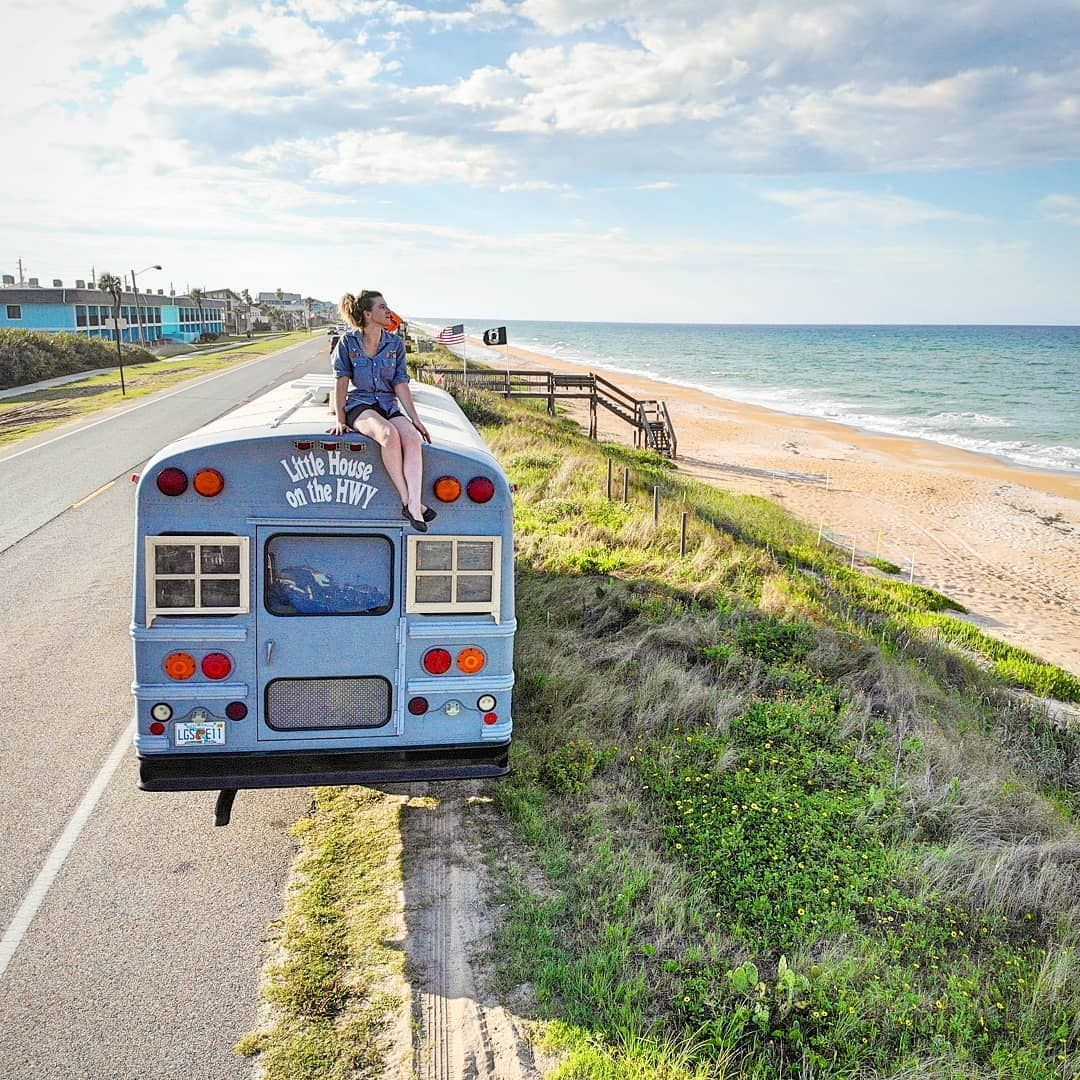
Elizabeth Hensley (B.A., Human Communication, 2016) is taking the road less traveled. After earning a master’s degree in American Studies from Kennesaw State University in Georgia in December 2018, she and her partner, Richard Tilford, decided to eschew a traditional lifestyle and travel full-time in a school bus converted into a tiny home. Their goal is to explore the country, live sustainably, better understand American culture and write a book about their adventures.
They purchased the bus, a 1996 Thomas International school bus, in April 2018 and spent the summer turning it into a home on wheels at a cost of about $10,000 for the bus and conversion. The bus includes solar power, laminate flooring, black-out curtains, a porta-potty, electric pumped water, a kitchen area and a bed. They dubbed the bus “Little House on the HWY” after the classic book “Little House on the Prairie” by Laura Ingalls Wilder.
As of August of this year, Hensley and Tilford had traveled more than 19,000 miles across 37 states, attending tiny house and “skoolie” (converted school bus owner) festivals and expos along the way.
Everywhere they go, they attract attention and field questions from the curious. The couple says they practice an open-door policy and are happy to give tours to visitors. They’ve been featured in stories on the radio, television and in newspapers, including on the front page of the Orange County Register.
Find them on Instagram, YouTube and Facebook and visit LittleHouseonTheHwy.com to learn more.
2018
Summer Faso (B.A., Psychology) is a special education teacher for the Moreland School District in San Jose, California. She is working on obtaining a Moderate-to-Severe Education Specialist Instruction Credential at San Jose State University while working full time. Faso says she cannot wait to change the lives of special education students and teach them the skills they need to become successful citizens.
Kelly Galten (B.A., Human Communication) moved to San Luis Opispo, California, wrote a novel for National Novel Writing Month and is working on publishing her poetry.
Jordan Leininger (B.A., Social and Behavioral Sciences) went on the trip of a lifetime to Egypt in February 2019. As a historian, Ancient Egypt is one of his favorite historical eras and seeing the amazing sites he had learned about his whole life was the most incredible experience, he said. Leininger is an artifacts specialist for the city of Monterey and manages, catalogues and conserves the city’s historical collection. He also helps create new exhibits and curates the city’s museums including Colton Hall, the birthplace of the state of California. In October 2018, he helped create a beer called “Dank & Dusty” with his favorite brewery, Alvarado Street Brewing Company, for the inaugural Monterey Peninsula Archives Crawl, a self-guided tour of at least 19 area archival collections. Leininger says he had a wonderful Service Learning experience at CSUMB and is proud to give back by working with new Service Learning students.
Brittany Lopez (B.A., Psychology) earned her RADT(Registered Alcohol and Drug Technician) certification and was promoted to her current position as a substance abuse counselor with Geo Group, Inc.. She counsels recently released probationers and parolees at Monterey County Day Reporting Center. She is currently working on becoming a certified drug and alcohol abuse counselor. In her personal life, Lopez became engaged to a fellow CSUMB alumni.
Dinora Martinez (B.A., Spanish Language and Hispanic Cultures) served as an AmeriCorps literacy tutor at a Salinas elementary school for one year after graduation. Upon completing her service year in July 2019, Martinez moved to Southern California to begin working on her master’s degree in Spanish with a concentration in Chicana and Chicano Studies at Cal State Fullerton.
Victor Martinez (Master of Social Work) has started his dream career as a psychiatric social worker providing an array of mental health and substance use services to youth involved in the juvenile justice system. Martinez works for the Monterey County Health Department and has had the opportunity to work alongside members of a multidisciplinary team from local non-profits, the probation department, social services, Monterey County Office of Education, and Natividad Medical Center. The team’s goal is to meet the holistic needs of youth and families, and provide the necessary resources for them to successfully navigate the county’s public systems.

Cristina Zaragoza (B.S., Biology) works as an embryology lab technician at Reproductive Science Center. Zaragoza says she wasn’t always sure about a career in the medical field, but now she loves her work and the field of reproductive science.
2017
Maddison Burton (B.A., Social and Behavioral Sciences) earned her Master of Science in Human Resource Management from the University of Southern California in August 2018. Since October 2018 she has been working as an HR manager with the University Corporation at Monterey Bay.
Iliana Cardosa (B.S., Collaborative Health & Human Services) had a baby boy, Joseph Axel Cardosa, on Feb. 13, 2019. Joseph has one older brother, Xavier.
Michelle Meissner (B.S., Kinesiology) graduated from Columbia University with a master’s degree in nursing. While at Columbia, she was awarded a Nursing Scholar scholarship for exemplary academia. She is now employed as a registered nurse at New York Presbyterian Hospital and plans to enroll in a doctor of nurse practitioner program.
Melissa Miranda (B.A., Psychology) recently was promoted from part-time to full-time employment with the Salinas Union High School District as a Typist Clerk II. She plans to pursue her goal of becoming a special education teacher. Miranda says her time and accomplishments at CSUMB helped her develop skills, better her work ethic, and grow into the person she has become.
Christina Muirhead (B.S., Collaborative Health & Human Services) works as a financial aid counselor at CSUMB. She is also a healthy lifestyle coach for the YMCA Diabetes Prevention Program. She began a Masters of Social Work program in August.
2016

Axanthi Anthony (B.A., Visual and Public Art) has been working as a graphic designer for Plumeria Consulting, LLC, since 2018. She and her boyfriend, Langston, have a 1-year-old daughter born on May 27, 2018, and planned to move to Los Angeles in August so that he can pursue a career with LA County Fire.
Guillermo Rodriguez (B.A., Collaborative Health and Human Services; Master of Social Work, 2018) is a clinical supervisor with Valley Health Associates in Salinas, working in the substance use and mental health disorder field. He celebrated 12 years of sobriety in 2019 and is grateful for a second chance at life and the opportunity to guide others overcoming addiction. Rodriguez said “the best part of it all” is returning to CSUMB as a lecturer in fall 2019 to teach a social work course in the same program from which he graduated.
Ester Santiago-Sanchez (B.A., Liberal Studies) teaches sixth-grade English Language Arts/ Social Studies in the Gilroy Unified School District.
Drew Stuck (B.S., Kinesiology) highlights and promotes the life science community in Northern California as manager of business development for the South San Francisco office of the California Life Science Association (CLSA). His responsibilities include sustaining and improving CLSA member satisfaction while identifying opportunities for growth and utilization of the association’s membership vendor community. Stuck and his wife, Bernadette, live in Emeryville, California, with their dog, Jack.
Alora Tejeda (B.S., Kinesiology) recently earned a physical therapy assistant degree. She is working part-time at an outpatient clinic, Central Care Physical Therapy in Chino, California, while considering other job opportunities in Southern California.
2015
Jena Barrera (B.A., Global Studies) went back to school at the Middlebury Institute of International Studies at Monterey and graduated with a master’s degree in nonproliferation and terrorism studies. She is also working part-time as a social worker for the Franciscan Workers of Junipero Sera, a homeless shelter in Salinas.
Nicole Perez (B.A., Social and Behavioral Sciences) completed a two-year registered nursing program in 2018 and currently works in the operating room as a clinical nurse at Clovis Community Medical Center.
2014
Breanne Edwards (B.A., Humanities and Communication) moved to Colorado after graduation and became a snowboard instructor for two years. She moved back to California three years ago and began working as a personal injury paralegal and recently received her notary license. In addition, she is a volunteer youth volleyball coach and has a golden retriever, age 12.
Lauren A. Floyd (B.A., Humanities and Communication) graduated in 2018 from the University of Southern California with a master’s degree in journalism. She has been writing for the Los Angeles Sentinel for more than a year and was recently promoted to editorial assistant.
Carlos Jurado (B.A., Global Studies) received another promotion at MidPen Housing, the affordable-housing real estate developer he’s worked for since graduation, and is now associate project manager. Jurado says he loves his job and is thankful for the connections he made at CSUMB for helping him find it.
Helen Krummenacker (B.S., Mathematics) has published her first solo novel, “Forever’s Too Long,” a 1940s paranormal detective novel, after previously co-authoring a series of science fiction, horror and mystery books. She works for Santa Cruz County as an accounting technician.
2013
Hilary Hampton (B.S., Communication Design) lives in the Portland, Oregon, area and is employed as a senior designer at Edison Software, a Silicon Valley based startup company. She has worked on several successful application and website launches and currently designs icons, interactions, experiences and interfaces to expand the availability of the company’s applications on more platforms. Hampton has also launched her own company, Left Hook Design, and designs for brands, small businesses and projects she’s passionate about, with the goal of working for herself full time in 10 years.
Kimberly Kellam (B.A., Liberal Studies) has earned a teaching credential, a master’s degree in curriculum and instruction, and is less than a semester from finishing her administrative credential, all through CSUMB. She has also been teaching sixth-grade math and science at Walter Colton Middle School in Monterey. She taught for five years before taking a new role this year as an academic coach, supporting teachers at her school. She is also co-director of the Junior Wings program, a homestay program between Nanao, Japan, and Monterey. She has traveled to Japan four times. Kellam said it’s been an adventure, and she is so thankful for the beginnings at CSUMB.
Alisa Paseman (B.A., Social & Behavioral Science) is studying to earn a master’s degree in clinical and health counseling. She also has been working as an inhome therapist teaching coping and communication skills to clients and their families, and was recently hired by the YMCA as a youth development teacher.
Kylie (Fields) Whent (B.A., Communications) graduated in June 2019 from Brandman University with a master’s degree in teaching and a single-subject credential in English. She teaches seventh and eighth-grade English in the Washington Union School District in Salinas and also coaches for the girls’ water polo program at Notre Dame High School. In her personal life, Whent was married in Felton, California, on March 29, 2019.
2012
Timothy Johnson (B.A., Psychology) is a petty officer second class in the U.S. Navy and earned a master of science degree in strategic intelligence from the National Intelligence University in Bethesda, Maryland, in July 2019. His thesis was titled “RussoUkraine: Evaluation of Warning Intelligence.” Johnson was the youngest and most junior ranking member of his cohort, afforded the opportunity less than three years into service.
Jennifer Lucido (B.A., Social and Behavioral Sciences) completed a master of arts in the Cultural Resources Management Program at Sonoma State University in 2015. She has since published a number of academic papers on Spanish colonial history and archaeology in California. The California Mission Curators and Directors Conference recognized Lucido for her work furthering the preservation and protection of the California missions with the Father Fermin Francisco de Lasua Award for 2014. Lucido currently teaches as an adjunct faculty member at CSUMB.
Tyler “T.J.” Scott (B.S., Business Administration) says he’s been very busy in the seven years since he graduated from CSUMB. He began working as a front office supervisor at the Intercontinental The Clement Monterey hotel, while also employed as an independent contractor at FourWinds Travel in Carmel. The travel agency sent him on an unforgettable trip to explore the islands of Fiji. He was later promoted to front office manager at the hotel and decided to focus on a hospitality career. Scott met his now wife when they were co-workers at the hotel. They began dating after both leaving the hotel for positions at Bernardus Lodge and Resort in Carmel Valley. A few years later in May 2017, he proposed to her with a golden snitch at Harry Potter World at Universal Studios Hollywood. They were married on Nov. 4, 2017, with the beautiful scenery of Monterey Bay in the background. In March 2018, the couple moved to Roseville, California, where Scott became Director of Operations for Winchester Country Club. In December 2018, he started a digital marketing and advertising business called Glasswater Digital with his brother. Scott hopes to eventually focus on the business full-time. Scott and his wife welcomed their first child, a daughter, on May 11, 2019.
2011

Dominick Guglielmo (B.A., Teledramatic Arts & Technology) has been freelancing as a post producer for the ad agency Deutsch, Los Angeles, since 2017. Prior to that, he was on staff at Imaginary Forces, a visual storytelling and brand strategy company. On July 14, 2018, he and fellow CSUMB alumni, Niki Zelenksy, were married.
Hilary O’Neil-Johnson (B.S., Kinesiology) recently started a new position at Penn Medicine in Philadelphia, Pennsylvania, as a gastrointestinal nurse practitioner. She is an alumna of the University of Pennsylvania School of Nursing, where she is also teaching in the family nurse practitioner program.
Shelly Lungstrum (B.S., Business Administration) has been promoted to assistant director of special events for Southern Glazer’s Wine & Spirits, the largest wine and spirits distributor in the United States. She started as an intern for the company, which is headquartered in Miami, Fla., more than six years ago. In her current role, she handles large meetings and events, including the South Beach Wine & Food Festival and the New York City Wine & Food Festival. She’s also responsible for the company’s charitable donations. In October 2018, she passed the Level 2 Wine & Spirit Education Course, globally-recognized as the international standard in wine and spirit knowledge. She is also an avid supporter of the Women of the Vine & Spirits, a foundation committed to advancing and empowering women in the industry. Lungstrum loves to travel and says her favorite spot of all time is South Lake Tahoe, which is back close to home. Barcelona, Spain, is a close second because studying abroad there in 2009 was “the most life-changing and important experience for me, as it led me to moving to Miama six months after I graduated from CSUMB,” she said.
Emily Wood (M.S., Instructional Science & Technology) published the book “E-Learning Department of One” through the Association for Talent Development (ATD) in December 2018. In February 2019, she spoke about e-learning development in a limited resources environment at the ATD TechKnowledge conference in West Palm Beach, Florida.
2010
Amanda Kahn (M.S., Marine Science) has joined the Moss Landing Marine Laboratories as the new assistant professor of invertebrate ecology.
Paige Newbury (M.A., Education) is an award-winning teacher in the Santa Cruz area. She says she is passionate about helping her students and is proud to have had several of them attend CSUMB.
2009
Michelle Baker-Nauta (B.A., Liberal Studies) taught for seven years in the Monterey Peninsula School District after graduation. She met her husband at Moss Landing Marine Laboratories, and they moved to Hawaii after getting married. Baker-Nauta has been teaching for three years for the Hawaii Department of Education. She has redeveloped the science curriculum for oceanography to incorporate more lessons about algae, lead career groups which include the New Teacher Bootcamp for all first- and second-year teachers, and participated in Kahua, the year-long study program to include more ancient Hawaiian history and culture in the curriculum. This year was her first as a grade-level chair. In her personal life, Baker-Natua competes in outrigger canoe regattas including the Queen Lili'uokalani distance race, the largest outrigger race in the world.

Tristan Mansson-Perrone (B.A., Teledramatic Arts and Technology) completed a two-year master’s program in media management at KTH Royal Institute of Technology in Stockholm, Sweden, in June 2019. His thesis focused on incumbent Nordic media companies, holistic sustainability transformation, and impacts on biodiversity integrity. Mansson-Perrone has been working at NatureFootage, a natural history video library, since February 2010. He started as an assistant editor and now leads partnership development as licensing and account manager for Europe.

1998
Doug Harris (M.A., Interdisciplinary Studies) has produced numerous critically acclaimed documentary films, including “Out: The Glenn Burke Story,” about the first openly gay major league baseball player. He is producing a documentary for PBS: “Fair Legislation: The Byron Rumford Story,” about Northern California’s first African-American assemblyman.
1999
Shawn De Haven (B.A., World Languages and Cultures) earned a master’s degree in comparative culture and now is pursuing a doctorate, both at International Christian University in Tokyo. Shawn recently married.
2000
Anthony Puente (B.A., Teledramatic Arts and Technology) graduated from the directing program at the UCLA School of Theater, Film, and Television. After working professionally on production and post-production projects, Anthony and his wife, Stefanie Laney-Puente (TAT ’01), founded Digital Revolution in Long Beach. The digital technology training center offers classes and workshops, and specializes in providing video and post-production services for non-profit agencies, commercial firms and large events. He and Stefanie have a young son, Joaquin. “I am honored to be a pioneer student and alum of CSUMB,” he said. “The astounding effect that CSUMB had on my life for the greater is beyond measure.”
2001
Judith Flores Carmona (B.A., Human Communication, M.A., Education 2003) is assistant professor in the New Mexico State University Department of Curriculum and Instruction and Honors College. She returned to CSUMB in May to serve as keynote speaker for the Service Learning Institute’s Spotlight on Service event.
Stefanie Pechan (B.A., Liberal Studies) is one of six California finalists for the Presidential Awards for Excellence in Math and Science Teaching. The awards are the nation’s highest honors for math and science teachers. Stefanie teaches fifth-grade science in the Pacific Grove Unifed School District. She also is part of the education staff at the Monterey Bay Aquarium.
2003
Evan A. Baker (B.A., Teledramatic Arts and Technology), Glendale, earned the title Run of Show Editor after two-and-a-half years as a contract assistant editor at Discovery Studios, making him a permanent staff member with full benefits. He now edits “sizzle reels” – short video overviews – for the development department. Evan was married in 2013.
Chris Horangic (B.A., Teledramatic Arts and Technology), Santa Monica, spent six years as lead production manager for ABC TV shows including “The Bachelor” and “The Bachelorette.” In 2012, Chris accepted a position with the Discovery Channel as a coordinating producer for survival and adventure shows such as “Naked and Afraid.” He oversees all logistics and budgets and works with the show’s executive team. His work has taken him to more than 50 countries in the last decade. “When I’m not traveling for work or on a plane scouting,” he wrote, “I’m enjoying the beach, in Tahoe with the family, or on an adventure or personal trip with friends.”
Kumi Maemura (B.A., Teledramatic Arts and Technology) and Jeffrey Olney (B.A., Teledramatic Arts and Technology ’04) live in Los Angeles. Kumi is a production manager at BBC Worldwide Productions, working on shows such as “Dancing with the Stars,” “Top Gear” and “Life Below Zero.” Jeffrey is a visual effects supervisor for Digital Film Tree on shows including “NCIS: Los Angeles,” “Cougar Town,” “Perception” and “Agent X.”
2004
Jimmy Jet Black (B.A., Visual and Public Art), Loomis, is senior graphic designer at Consensus Orthopedics, where he manages the marketing department. Jimmy also runs a freelance graphic design business, J3B. Last year, he went on a family vacation to China, getting him closer to achieving his goal of visiting every continent; he’s at five of seven now, with Africa and Antarctica to go. A trip to Iceland also is in the works. He writes that the “GC” still has its yearly Thanksgiving bash, most recently in Los Gatos.
Jacob Cooney (B.A., Teledramatic Arts and Technology) moved to New York in 2013, marrying Dana Bennett in April 2014 in Stony Brook. Many CSUMB alumni were in attendance. He currently works as a producer and director for Simba Productions, based in Manhattan, and also writes and develops scripts for companies including Armory Films, Syfy, Nine/8 Entertainment, and the Hollywood Gang.
2005
Justin Bloch (B.A., Teledramatic Arts and Technology), Los Angeles, spent five years as lead assistant editor on several shows produced by Discovery Channel before moving to a staff position at Discovery Studios. As a media manager, Justin creates standard operating procedures for shows and helps manage the facility’s hardware and software needs.
2006
Thomas A. Burton (B.A., Teledramatic Arts and Technology), White Plains, N.Y., is a computer animator at Blue Sky Studios, where his film projects have included the “Ice Age” series, “Rio” and “Rio 2,” “Epic” and “Peanuts.”
Kristen La Follette (B.A., Human Communication) lectures for the Division of Humanities and Communication at CSUMB and is the program coordinator for the Imagining Salinas Chinatown project. Funded by the National Endowment for the Humanities, the program used oral histories to create a virtual walking tour of the historic Chinatown district of Salinas.
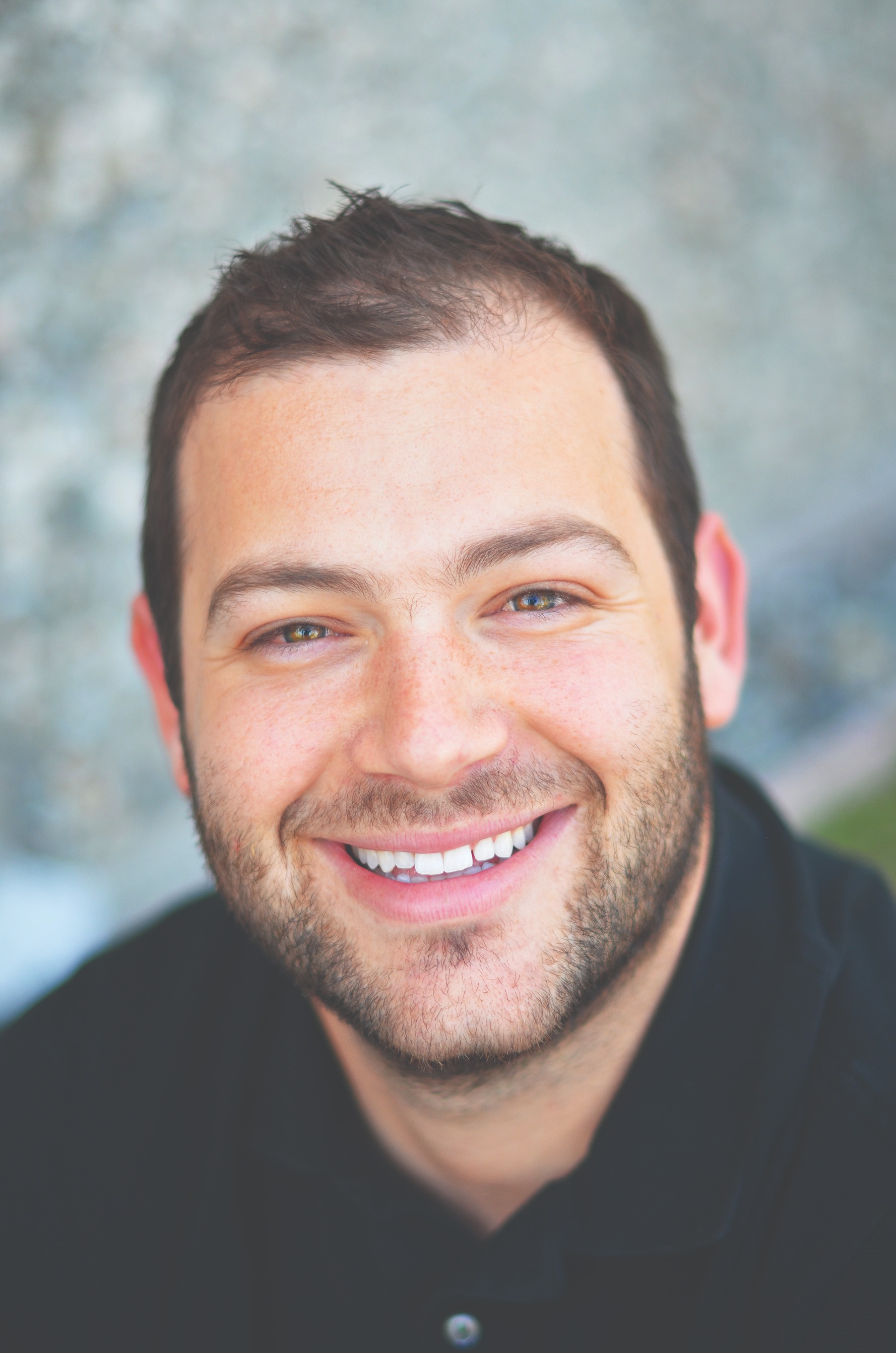
Michael Ludwig
Michael Ludwig (B.A., Teledramatic Arts and Technology), Los Angeles, worked for Lexus for six years until accepting a position as social media customer support lead at Hulu in July. While at Lexus, Michael was named among the “The Top 100 Most Social Customer Service Pros On Twitter” by Huffington Post and was recognized in “The 15 Best Facebook Posts Ever Written” by Business2Community. He enjoys spending time with his girlfriend, watching Angels baseball, hiking, photography, travel and technology. “There are many activities I love,” he wrote. “I am a man who will try everything at least once, and I am extremely happy with where I am in life.”
Nick Noble (B.A., Human Communication) was appointed guest relations manager at the InterContinental San Francisco Hotel.
2007
Miles Daniels (B.S., Earth Systems Science and Policy; M.S., Coastal and Watershed Science and Policy, ’14) is pursuing a doctorate in epidemiology at the University of California, Davis. “I am combining my background in environmental science with health sciences to work on research questions in public, wildlife and environmental health,” Miles wrote.
Mary Catherine Langford (B.A., Human Communication) is a marketing and media specialist with Ocean Mist Farms in Castroville.
Kenneth Lowe (B.A., Teledramatic Arts and Technology), Portland, Oregon, is technical director at Laika Entertainment, an animation studio whose films include “Coraline,” “ParaNorman” and “The Boxtrolls.” Kenny married former CSUMB student Jessica Salesky in 2011; they have a 3-year-old son, Avery.
Paul Tabag (B.A., World Languages and Cultures) participated in the Japanese Exchange and Teaching (JET) program for two years after graduation, living in Gifu and Mie, Japan. Paul took an advanced, submersion Japanese course at Suzuka International University for six months. Now living in San Jose, he works as a TV coordinator for Google Play in Japan and Australia.
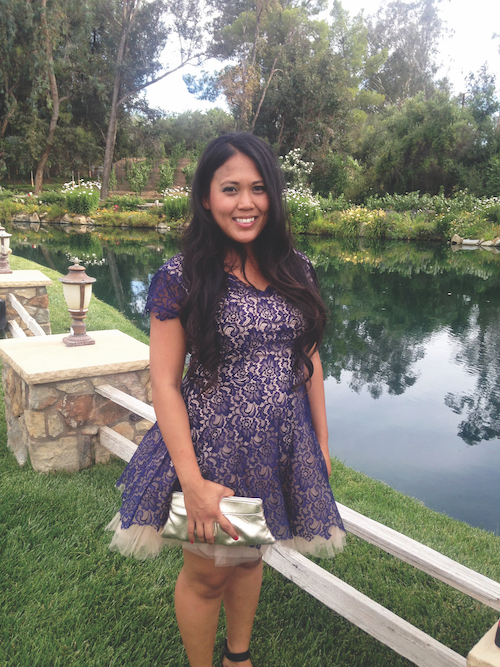
2008
Andrea Aguilar (B.A., Teledramatic Arts and Technology), Venice, is a producer for Ovation, a cable TV network that showcases arts and culture. She also has worked with Surfers Healing, a nonprofit organization that takes children with autism surfing, and on MTV’s “It Gets Better” program in collaboration with The Trevor Project. “The opportunities I’ve had through producing have given me a great perspective on American culture,” Andrea said, “because I’ve had the chance to learn so much about different people and what makes them tick.” She lives with “the love of my life, Ryan,” and dog, Yoshi. “Since leaving CSUMB, I can proudly say I’ve accomplished a number of my goals,” she said. “I hope to continue to make a difference and inspire others through my medium – the camera lens.”
2009
Steven Becker (B.A., Human Communication) is interim head coach of the men’s basketball team at California State University, Dominguez Hills. Previously an assistant coach at CSUDH, he was elevated to the top spot when the head coach left.
2010
Johanna Johnston (B.S., Business Administration) was appointed assistant campus director of the Azure College branch in Sebring, Florida. Johanna oversees all administrative departments at the private college campus. She is president of the Heartland Young Professionals, a member of the Highlands Little Theatre and a U.S. Air Force veteran.
Marcus Lawrence (B.S., Kinesiology) earned a master’s degree in exercise science from Appalachian State University in 2012 and is completing a doctorate in interdisciplinary biology at the University of North Carolina at Charlotte. He has authored or co-authored several articles, including one recently published in the Scandinavian Journal of Medicine & Science in Sports.
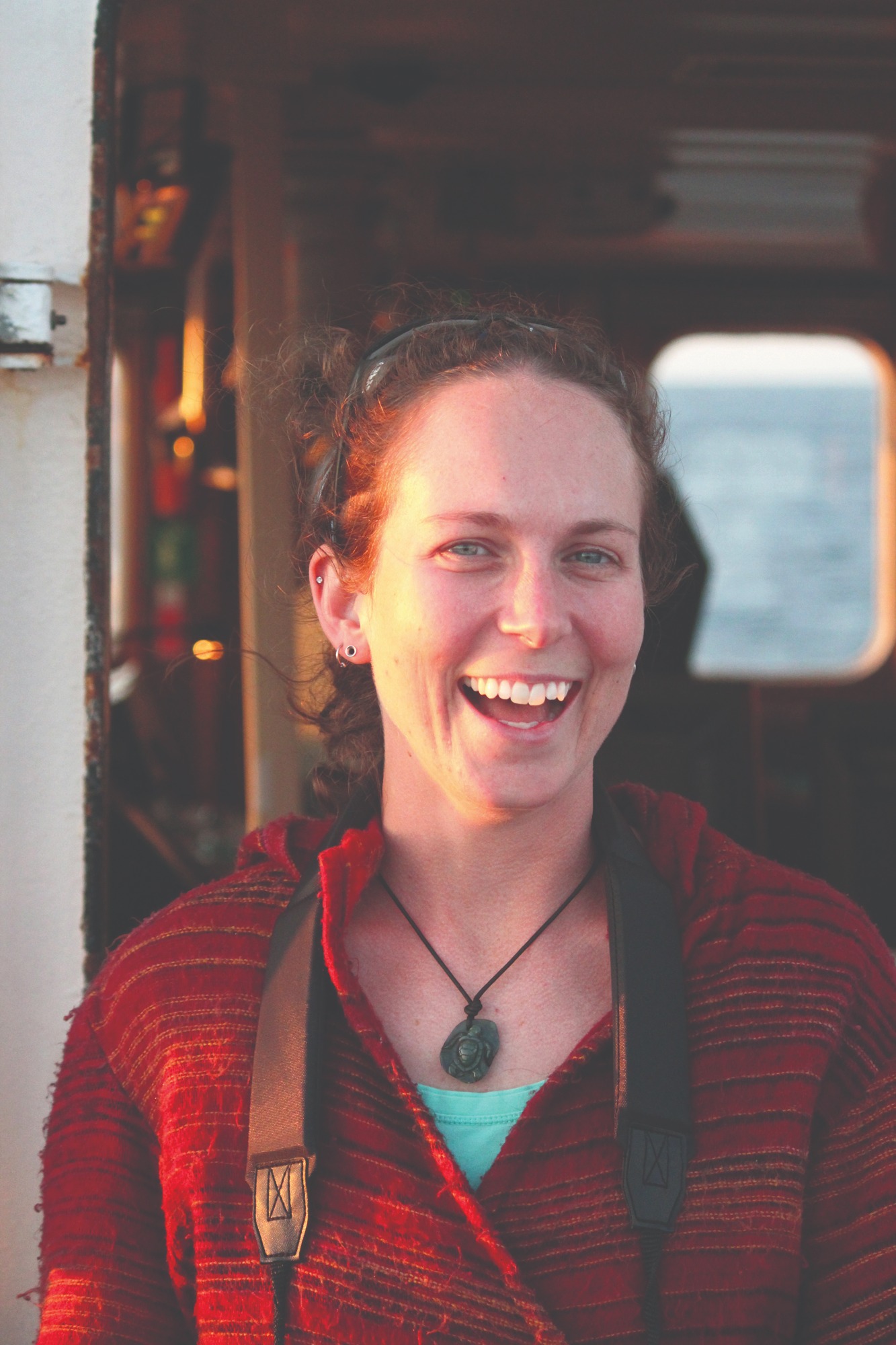
Jessica Riggin (B.S., Environmental Science, Technology and Policy), Townsville, Australia, has been working and volunteering Down Under since graduating from CSUMB, where the Undergraduate Research Opportunities Center gave her a taste of life south of the equator. She returned to New Zealand in 2011 to volunteer on two whale and dolphin-research projects, and then moved to Australia in 2013. “This move was instigated by my UROC-sponsored dolphin-research internship in New Zealand in 2010,” Jessica wrote. She now is working as a marine mammal observer for Gardline Marine Sciences Australia. She previously worked as a freelance environmental consultant on a number of marine mammal and marine megafauna projects through James Cook University, RPS Energy and the Commonwealth Science Innovation & Research Organization. Jessica recently traveled to the United Kingdom, earning certifications in maritime safety and marine mammal monitoring on seismic surveys.
Theresa A. (Madsen) Smith (B.S., Environmental Science, Technology and Policy) is a member of the National Oceanic and Atmospheric Administration Commissioned Officer Corps. In her current position, located in Seattle, she is a benthic mapping specialist with the Alaska Fisheries Science Center of the National Marine Fisheries Service. She previously was a junior officer aboard the NOAA ship Fairweather, based in Ketchikan, Alaska. She recently wrote her former professor, Rikk Kvitek, who directs the Seafoor Mapping Lab in CSUMB’s Division of Science and Environmental Policy: “I am now reviewing and using the backscatter skills you taught me in class for fish habitat mapping,” she said. “I am frequently reminded of how outstanding a program CSUMB offers to an undergraduate with your class and the innovation you have in the industry. Thank you for everything you have taught me.”
2011
Chris Carpenter (B.A., Teledramatic Arts and Technology) Salinas, teaches production classes in CSUMB’s Cinematic Arts and Technology Department. Chris also serves on the board of directors for the CSUMB Corporation. He and his wife, Mindy, have two sons.
Dominick Guglielmo (B.A., Teledramatic Arts and Technology) is a production coordinator at Imaginary Forces, a creative design studio and production company. He recently bought a condo in Long Beach.
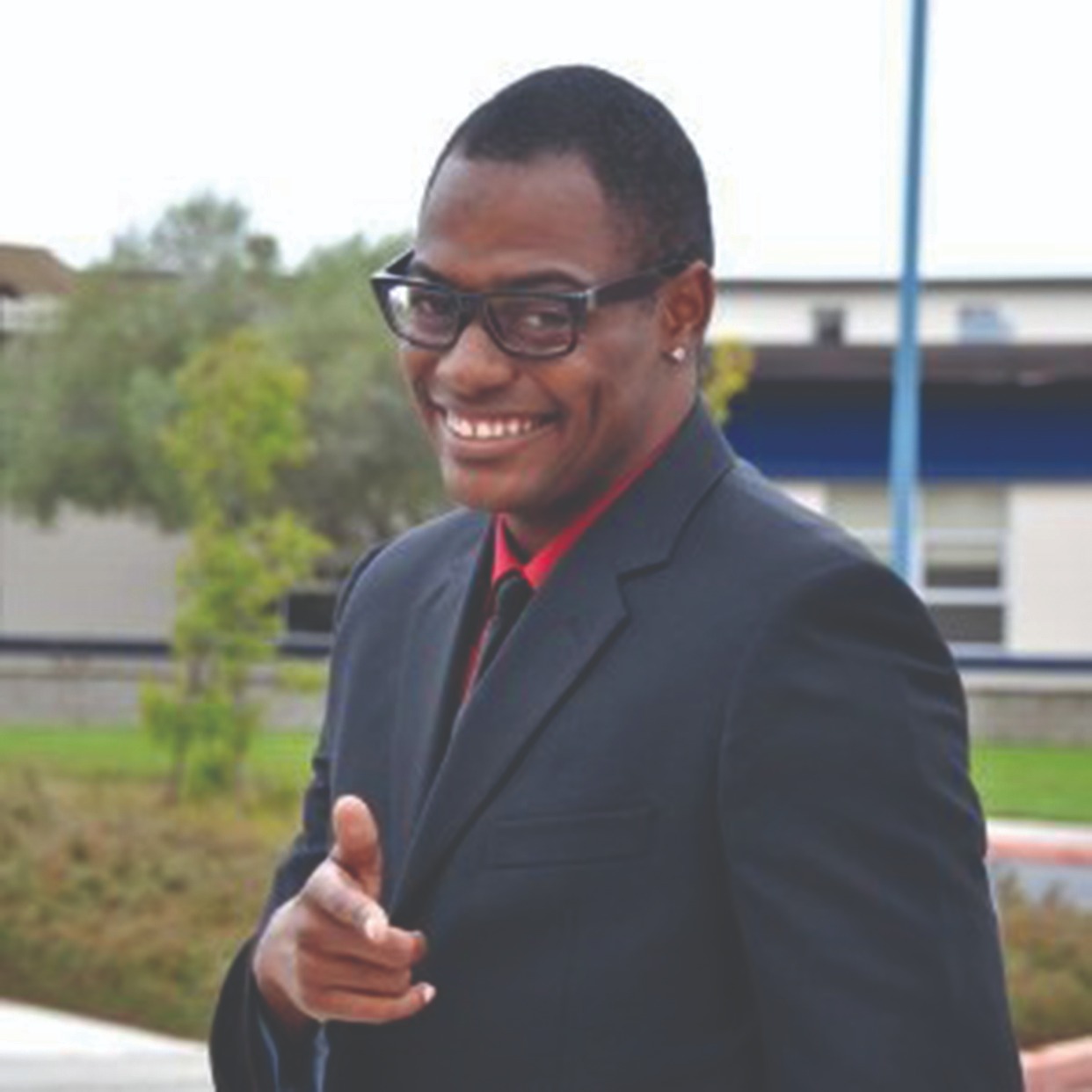
Lewis Hall (B.A., Psychology) is pursuing a master’s degree in higher education administration at the University of Texas at Austin. Lewis works as a graduate assistant for special projects under the dean of students at UT. He also is an executive officer in the campus Higher Education Administration Student Professional Association. He volunteers with Austin Partners in Education as a second-grade reading coach. “One day I hope to return to CSUMB and contribute to making it one of the top CSU campuses,” he wrote. “Currently saying ‘Hook ’em Horns,’ but there is still ‘Nothing hotter than an Otter!’”
Bethany Mayer (Master of Business Administration) was named president and CEO of Ixia, a networking technology company headquartered in Calabasas. Bethany previously was a senior vice president at HP.
2012
Renee Infelise (B.A., Teledramatic Arts and Technology) earned a master’s degree in Applied Theater Arts from the University of Southern California last spring. She also completed a month-long internship in India, studying with a social justice theater group, Jana Sanskriti. Following a move to the Bay Area, she plans to apply her theater and film training to the nonprofit world.
Lydia Jennings (B.S., Environmental Science, Technology and Policy), Tucson, Arizona, is pursuing a doctorate at the University of Arizona Department of Soil, Water and Environmental Science. Lydia is working on phytoremediation of copper mining sites. She was awarded a Sloan Fellowship for Native Americans in STEM fields and an Environmental Protection Agency fellowship for students working on Superfund sites. Lydia also has started running marathons.
Sara Kelly (B.S., Environmental Science, Technology and Policy) received a prestigious fellowship from the National Science Foundation Graduate Research Fellowship Program. She is pursuing a doctorate in watershed science at Utah State University.
D.J. Milligan (B.S., Business Administration) and Darcy (Lake) Milligan (B.A. Human Communication ’11) were married in summer 2013. Both work at the Bayonet & Black Horse golf courses in Seaside.
Imelda Muñoz (B.A., Human Communication) completed a master’s program in ethnic studies at San Francisco State University. She conducted summer research as a pre-doctoral scholar at the University of California, Irvine. Receiving an E.D. Farmer International Fellowship for incoming students, she began a doctoral program in Latin American studies at the University of Texas at Austin.
Michael Neel (B.A., Teledramatic Arts and Technology) works for Apple Inc. and is pursuing a master’s degree in film production at San Diego State University.
2013
Ariel Barry (B.A., Human Communication) earned a master’s degree in journalism and public affairs from American University in Washington, D.C., completing an internship at NPR affiliate WAMU-FM. Ariel now is a reporter for CBS affiliate WBOC-TV in Salisbury, Maryland.
Maritza Bautista (B.A., Liberal Studies) was awarded the first $2,000 John and Dorothy Perry Scholarship to support her pursuit of a teaching credential. She is taking online classes through CalState TEACH while teaching STEM subjects at Tiburcio Vasquez Elementary School in Salinas.
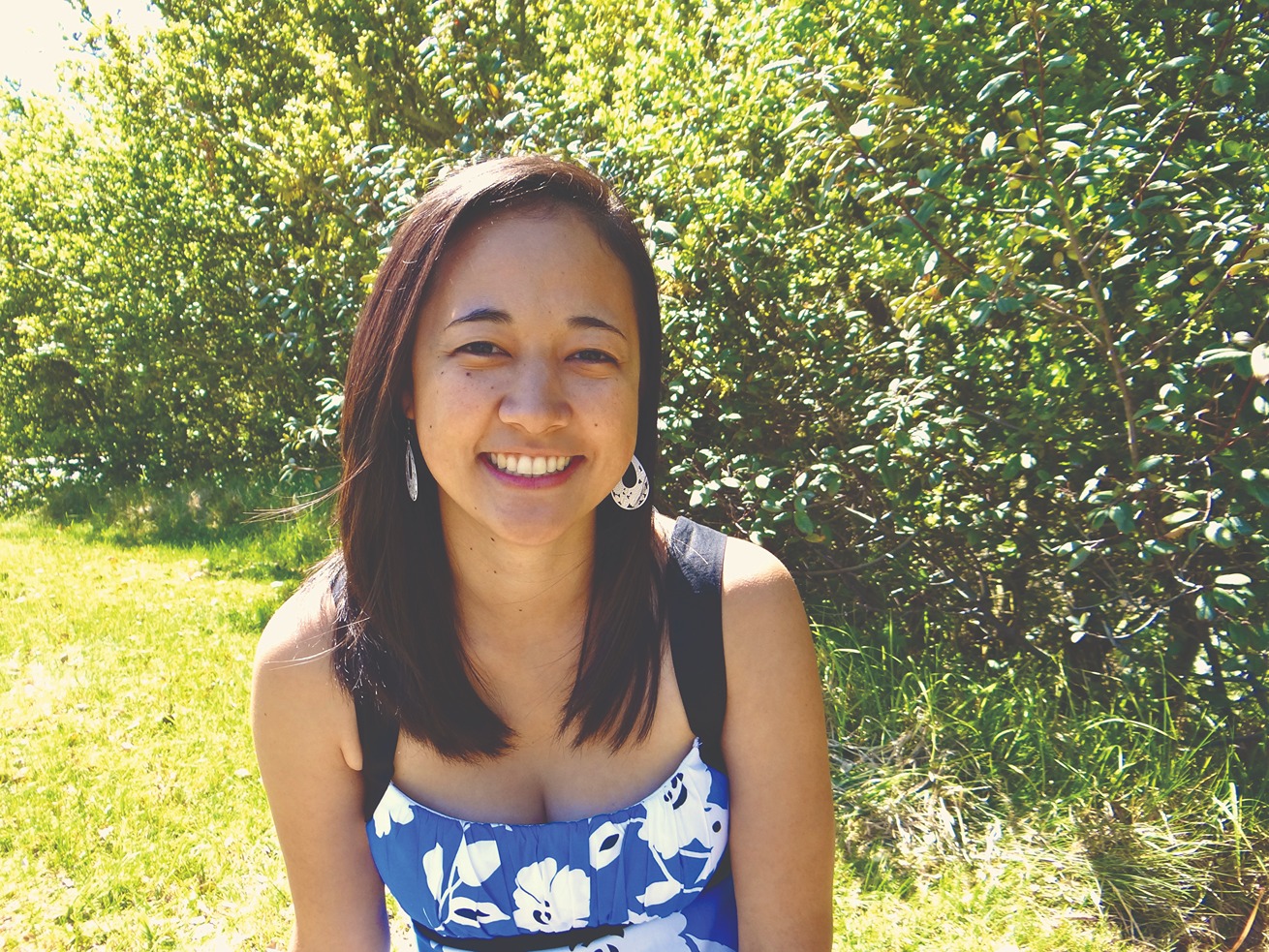
Melissa Powell (B.A., Psychology) returned to her alma mater in May to be the featured alumna speaker at the year-end celebration of the Undergraduate Research Opportunities Center. The former UROC and McNair scholar is pursuing a doctorate in STEM education at the University of California, Irvine. Earlier this year, Melissa received a $96,000 fellowship from the National Science Foundation’s Graduate Research Fellowship Program. Her doctoral research examines how teaching tactics influence student learning, academic motivation and interest in higher education among underrepresented populations.
2014
Ed Carapezza (B.A., Cinematic Arts and Technology) created the National Music Sanctuary, which produces high-quality video recordings of musicians for promotional purposes. More than a dozen musicians, including Greg Brown, have responded to invitations to perform on camera. Ed and his production company, Dangerbag, often partner with CSUMB faculty, staff and students on the recordings, while the acoustically perfect Music Hall has been a frequent venue. He hopes the project eventually will turn a profit; until then, he continues working as a carpenter. To watch videos and learn more, visit sharedvisionfilms.com.
DJ Escobar (B.A., Visual and Public Art) proposed to his girlfriend, Abby Williams (B.A., Human Communication ’05, M.A., Education ’13), during commencement 2014 ceremonies. (She said yes!) He then drove across the country to New York State, where he is pursuing a master’s degree in higher education at Syracuse University. He also is working as a residence hall director at Onondaga Community College in Syracuse. He and Abby plan to get married after he finishes graduate school in summer 2016.
Sean LaTour (B.A., Liberal Studies) is following up on his senior capstone project with efforts to create a scholastic skate league in Northern California middle and high schools. He has been working to build support among skaters, schools, sponsors and the National Scholastic Skate League, based in Southern California. The Sacramento Sheriff’s Community Impact Program gave him $3,000 to conduct a summer program that takes inner-city kids to skate parks around Northern California.
Published Feb. 2, 2019
Alumna earns education doctorate, heads to Harvard
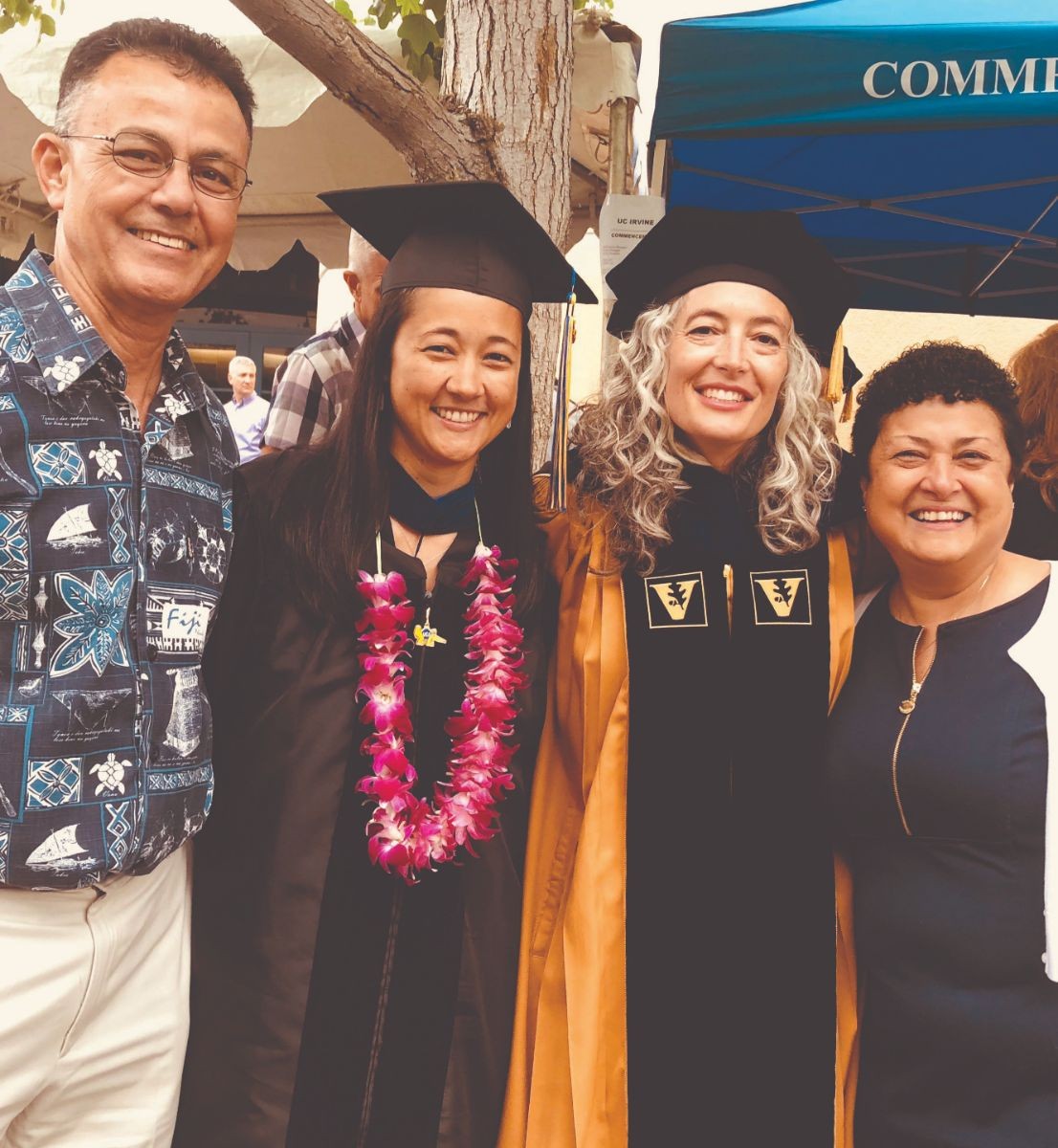
Melissa (Powell) Callaghan (B.S., Psychology, 2013) finished her doctorate degree in education from UC Irvine and started a postdoctoral fellowship at Harvard University.
While at CSUMB, Callaghan was a McNair and Undergraduate Research Opportunities Center Scholar. Mentored by CSUMB psychology professor Jennifer Dyer-Seymour, Callaghan conducted undergraduate research at CSUMB, UCLA and Stanford University on a range of subjects including how children use sarcasm to bully or defend against bullying, how young adults’ decisions are affected by their cultural values, and how children use private speech to persist through challenging tasks.
In her first year as a doctoral student in the School of Education at UC Irvine, Callaghan received a prestigious $138,000 National Science Foundation Graduate Research Fellowship. She also served in a leadership position with UC Irvine’s Diverse Educational Community and Doctoral Experience (DECADE) program to ensure that incoming education graduates received guidance to successfully progress through the doctoral program.
In her fellowship at Harvard, Callaghan will be on the ground floor of a $30 million literacy initiative to “Reach Every Reader” supported by Priscilla Chan and Mark Zuckerberg, co-founders of the Chan Zuckerberg Initiative. Harvard will partner with the Massachusetts Institute of Technology and Florida State University to use a unique combination of cutting-edge education, neuroscience research, and learning technologies to ensure every child is reading at grade level by the end of the third grade, through individualized assessment and interventions.
Callaghan will be working with digital learning tool developers and educational assessment teams to design digital literacy tools, improve design features that align with children’s learning abilities, and assess effectiveness.
2018
Blake Stocker (B.S., Business Administration) took on a leadership role the summer after graduation while working for CSUMB University Affairs. He led two student assistants during a summer-long visual content refresh project for the university and concurrently launched his own photography business. Blake has most recently earned his Concrete Field Testing Technician Grade 1 certification and Nuclear Gauge Reading Certification. Both certifications will support him in his current role working as a Field Technician at Kleinfelder, an architecture, engineering and science consulting firm in Salinas.
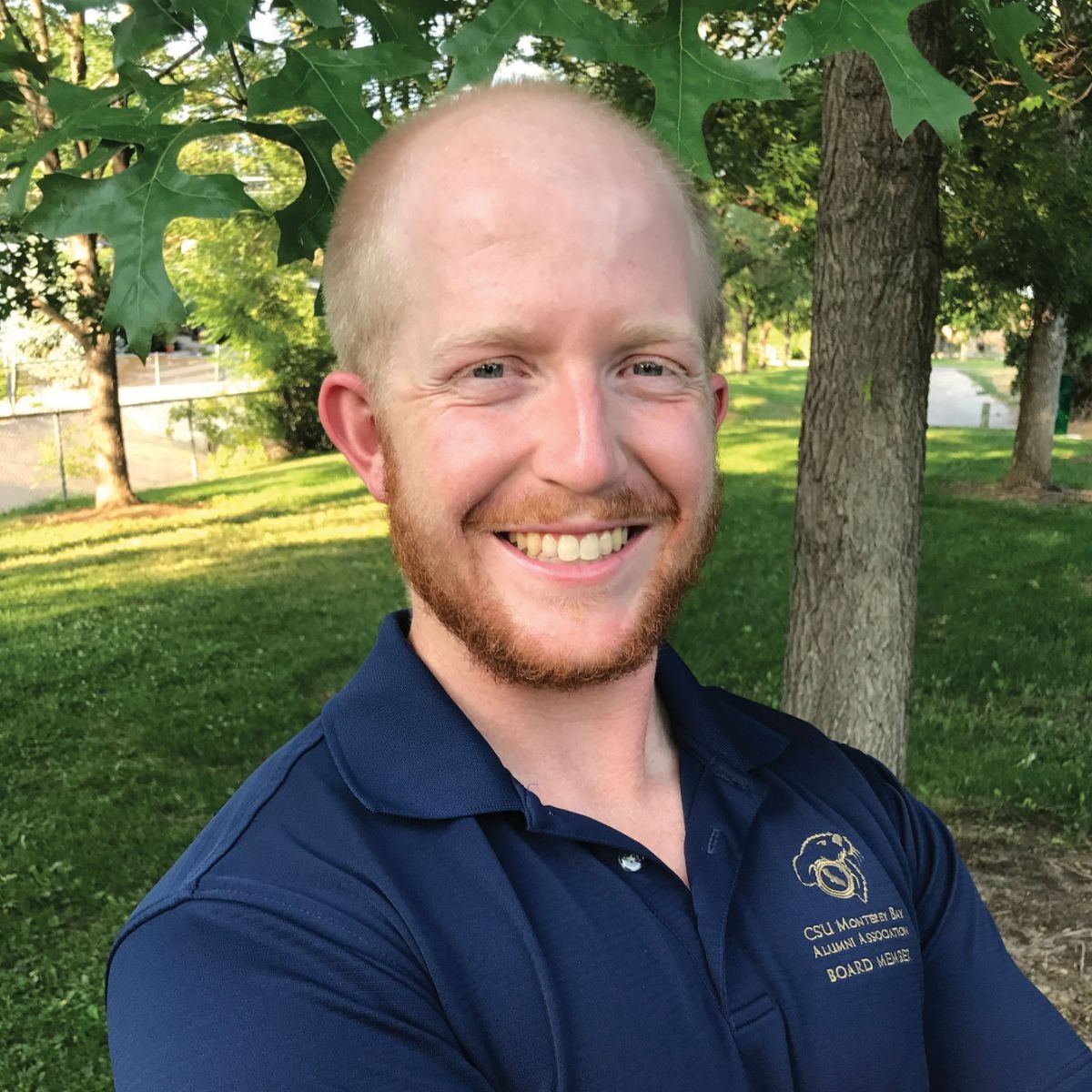
2016
Brent Taylor (B.S., Business Administration) currently resides in Denver, Colo., working as the Grants and Contracts Administrator at the University of Denver. Although he lives in Colorado, Brent continues to serve the CSUMB community in his role as the Financial Officer for the CSUMB Alumni Association Board of Directors.
Cristina Hernandez (B.S., Mathematics) traveled Europe for more than a month after graduation. She then returned to her hometown of San Diego to embark upon San Diego State’s single subject teaching credential program. She successfully completed the program in 2017 with a credential in mathematics, and is now in her second year of teaching math at a San Diego high school. She is also assistant coach for the high school’s cross country and track teams.
2015
Sarah Boos (B.A., Human Communication) leads many facets of CSUMB’s alumni relations efforts in her current role as CSUMB’s Annual Giving and Alumni Relations Coordinator. Prior to working for CSUMB, Sarah spent two years as Marketing and Development Coordinator for the Monterey Jazz Festival. Sarah is an active member of the Monterey community, where she has served on the Arts Council for Monterey County Board of Directors since June 2017.

Sarah Davis (B.S., Biology) graduated from CSUMB with a concentration in molecular biology and then went on to complete her Master’s of Science in Medical Health Science at Touro University California, where she is now in her second year of medical school. She actively participates in diabetes outreach and volunteers treating patients in the Vallejo community using osteopathic manipulative medicine. She plans to specialize in Family Medicine and return home to the Monterey Bay area to practice after she becomes a physician.
2012
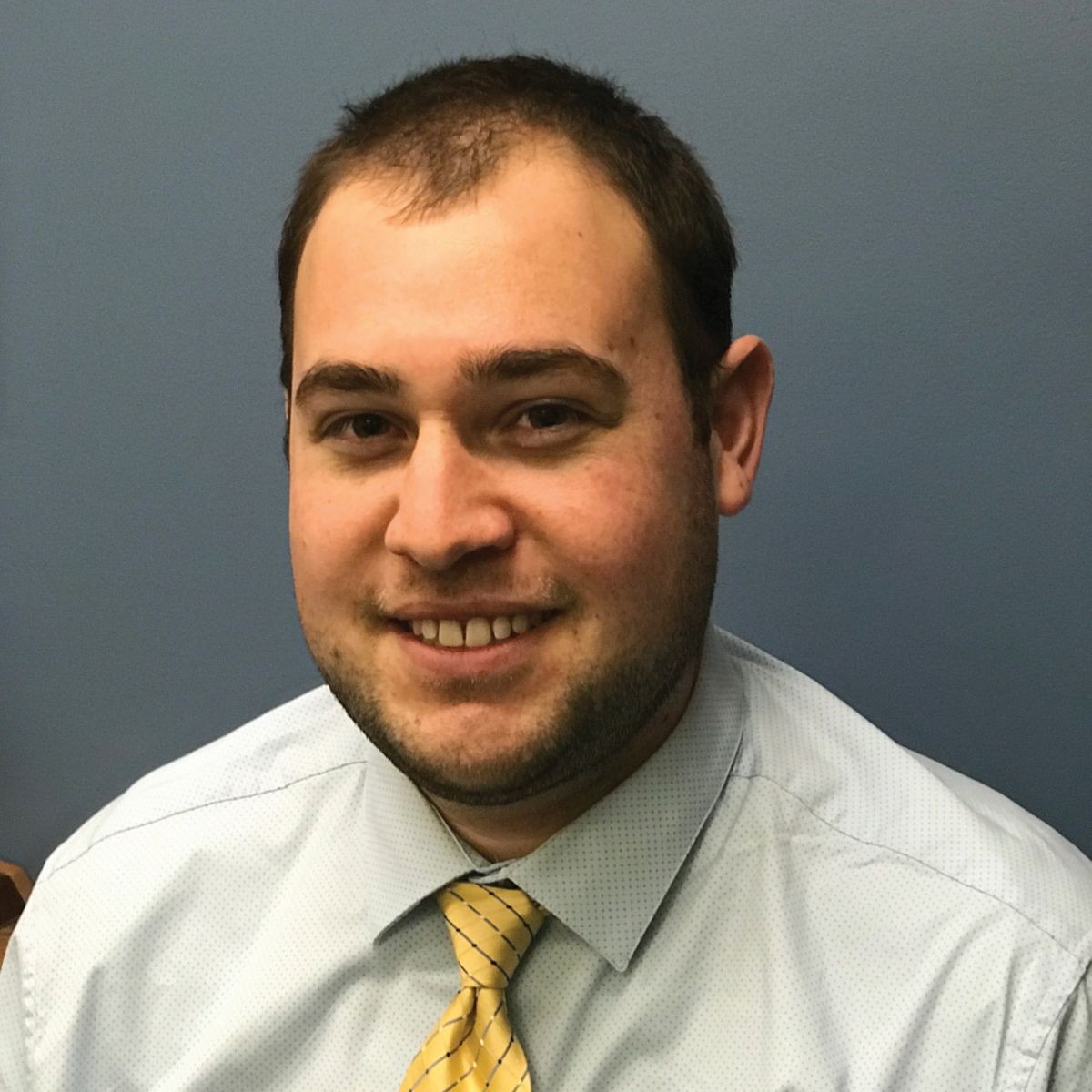
Steven Macias (B.S., Business Administration) serves as Chief of Staff and Programs for The Panetta Institute for Public Policy. In 2011 he began employment as Executive Administrator for the Oldtown Salinas Association, where he worked to redevelop the downtown Salinas area. That same year, he was hired by Mesa del Sol Vineyards to implement social media strategies. In 2013 he became an office assistant for the City of Monterey, and shortly after was hired by Smith Micro Software Inc. to help expand the company’s social media and online presence. He joined the Panetta Institute in 2015 and previously worked as office manager and program coordinator.
Juliana Gonzales (B.A., Psychology) earned a master’s degree in social work with a concentration in mental health from Washington University in St. Louis, Mo., in 2014. She lived in St. Louis for four years after graduating and became a licensed clinical social worker. She recently relocated to San Diego to be close to family and works for Family Healthcare Centers of San Diego.
2007
Jaqui Hope (B.A., Human Communication) currently serves as the Visual and Performing Arts Coordinator for Monterey Peninsula Unified School District. She creates, upgrades and manages the visual and performing arts at 20 elementary, middle and high schools around the county.
2005
Christian Cazares (B.A., Teledramatic Arts & Technology) is a reporter at NBC10/Telemundo62 in Philadelphia. He has won a total of eight Emmy Awards for his individual work, including three he received most recently in October from the Mid-Atlantic chapter of the National Association of Television Arts and Science (NATAS). His station’s news teams took home 11 awards. The Telemundo 62 team won Best Newscast in their region, which was especially meaningful to them because they beat their sister station NBC 10, after launching only five years ago. Christian says he owes his success to CSUMB.
1998
R.V. Pettit (B.A., Liberal Studies) currently teaches Economics and Social Studies at Gilbert Classical Academy High School in Gilbert, Ariz., ranked the 20th best high school in the nation by U.S. News & World Report. Pettit also coaches football, basketball and baseball. He recently completed a Master of Arts in Educational Leadership.
Aubrey Madrigal (B.A., Human Communication) works for the Monterey County Business Council and the Monterey County Film Commission. “Two organizations that have their hearts in Monterey County, helping people and businesses to live and fourish,” she wrote. “I love it!”
Vanessa (Henry) Gonzales (B.A., Humanities and Communication) is employed as an administrative support coordinator for the CSUMB Department of Social Work. She was previously employed for five years in the financial services industry. Gonzales says she is elated to be on campus again and excited to be involved with the master of social work program and see it and the university grow!
Louis Martin (B.A., Humanities and Communication) wrote and self-published a book called “The True Believers” in 2017 about cultism in traditional martial arts. The book was successful enough for him to quit his job and start writing full time. He now owns his own website and has published a second book.
2006
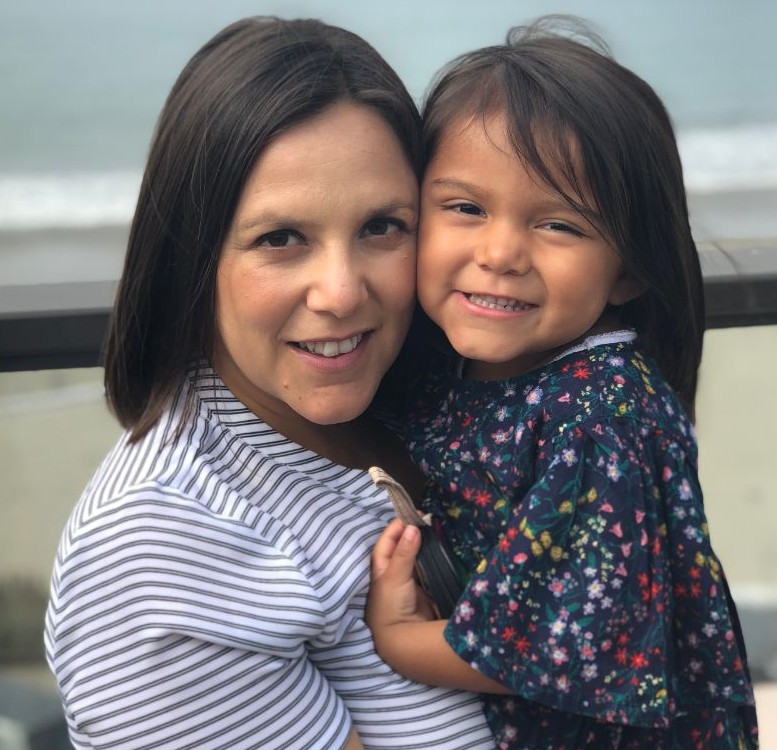
Blanca Melchor (B.A., Human Communication) worked with CSUMB TRiO Upward Bound after graduation, helping low-income students from the tri-county area pursue higher education. She earned a master’s degree in counselor education from San Jose State University and recently started a new job at Gavilan College in Gilroy, California, as a non-credit counselor in continuing education. She serves primary English learners and adult students working towards their high-school equivalency diploma. She’s been married for six years and has a child, Ximena, age 4.
Savannah (Armstrong) Prince (B.S., Earth Systems Science and Policy) has been teaching middle school science for 12 years and is currently employed by the Imperial Unified School District in Imperial, California. She earned a master’s degree in cross-cultural teaching and published a children’s book, “Manny the Mola,” that she wrote as part of her senior capstone project. In her personal life, Prince is married with two daughters and volunteers as their Girl Scout troop leader and swim team coach.
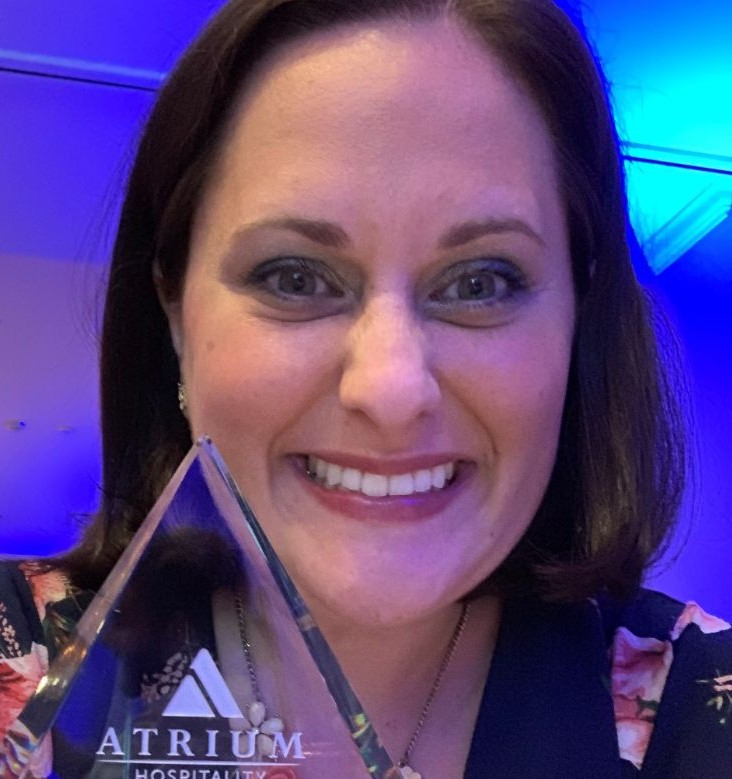
Melody Rico (B.S., Earth Systems Science and Policy) is the Event Sales Manager at Embassy Suites by Hilton, Monterey Bay. She was honored with a Platinum Club Member Award from Atrium Hospitality, which manages 82 hotels. She reached her sales goals for the past three years and was one of 33 sales managers out of 300 who were rewarded with a trip to Florida to celebrate their accomplishments.
2005
Rey Anthony M. Osoteo (Teaching Credential, Mathematics) is a literacy specialist at the John Steinbeck Library in Salinas.
2004
Daniel E. Prescod (B.A., Humanities & Communications) recently became counsel of business and legal affairs at Levity Live Production in Los Angeles. He handles production-related matters for various television shows and The Improv comedy clubs.
2003
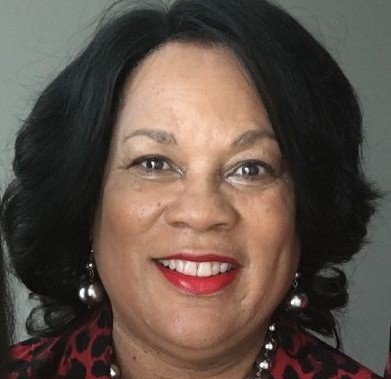
Princess Pope (B.A., Social and Behavioral Science; M.A., Education, 2005) recently became Community Relations Director for Monterey County Housing Advocates, which strives to reduce the shortage of affordable housing units available to students, seniors, veterans, low-income and the homeless. As an undergraduate at CSUMB, Pops served on the Associated Students as a Multicultural Senator. As a graduate student, she served as CSUMB Upper Division Academic Senator, and was honored to be the first African American student named a Sally Casanova Scholar. Pope is an educational advocate and community organizer. For the past 19 years she has served on the executive committee of the Monterey County NAACP as Education Chair and College Scholarship Coordinator. For five years she volunteered on the board of directors of the Village Project as secretary. In Summer 2019 she completed a nine-day intensive, transformational leadership training with the United Way of Monterey County (UWMC). She supervised CSUMB Service Learning Students and has volunteered on community and educational boards, including for Monterey Peninsula College and Monterey Peninsula Unified School District. In her personal life, Pope has been married to Ray Pope — UWMC 2019 Lifetime of Service Award Winner — for 43 years. They have six children and six grandchildren.
Bobby Quiñonez (B.S., Earth Systems Science and Policy) was promoted to the position of College Administrative Analyst in November 2017, and is completing his 15th year as a CSUMB employee. He is serving a second term as president of the CSUMB Alumni Association during the CSUMB’s 25th Anniversary and excited that his wife of 14 years, Amber (Bowles) Quiñonez (B.A., Humanities and Communication, 2002), has joined the board this term.
2002
Kate (Ammerman) White (B.A., Social and Behavioral Sciences) has earned a doctorate degree in education and is employed as director of continuing education at California State University, East Bay.
1999
Shawn De Haven (B.A., World Language and Cultures) went to Japan in 2011 and earned a master’s degree in comparative culture. He also married, had two boys, and started working as a teacher at universities in the cities of Tokyo and Chiba. He currently teaches at the International University of Health and Welfare, a medical university in Narita, Japan.

Christina McGovern (B.A., Liberal Studies and Teaching Credential) has been an educator for 22 years, teaching all levels from elementary to post-graduate students aspiring to become teachers. She recently moved back to the Monterey area and is employed by the North Monterey County Unified School District as a middle school English and social science teacher. She is also working with the Youth Cinema Project, which connects arts integration in education with her passion for theater. She has worked with The Western Stage theater company in Salinas for more than 20 years.
Phillip Pletcher (B.A., Teledramatic Arts and Technology) recently became lead agent in technical support for Capital Insurance Group, where he’s been employed for 24 years. He was recently widowed after serving as primary caregiver for his partner for more than 18 years. He is writing again after a 16-year hiatus. He won first prize in the early 2000s in the Rhode Island Institute Screenplay Contest.
Share news of your activities and achievements! Go to csumb.edu/alumni, select News, then Submit a Class Note.
Snapshot — Fulfilling Our Vision for Growth

Published Feb. 2, 2019 - Edited Feb. 21, 2021
After a rainy week, blue skies and sunshine provided the backdrop for this photo taken in December of the Academic III building under construction. Yellow housewrap, a synthetic material which provides a weather-resistant protective barrier, covered the exterior of the building, and roofing materials stacked on top awaited installation.
Construction is on schedule for the $40 million, 48,000-square-foot building, the future home of the College of Arts, Humanities and Social Sciences. Major construction began in October 2017, and completion is expected in time for the start of fall semester 2019. The new building is located on Divarty Street next to the Business and Information Technology Building. It will feature an art gallery, outdoor amphitheater, specialized language and cinematic arts instructional space, a 200-seat film screening and lecture hall, and indoor and outdoor gathering and gallery areas. It has been designed to meet LEED (Leadership in Energy and Environmental Design) Gold standards.
Major construction started over the summer on the Otter Student Union, the 72,000-square-foot, $55 million building that will provide a new hub for campus activity. Three times the size of the current Student Center building next door, it will house meeting rooms, lounges, a university bookstore, student government and organization space, and administrative and support offices. In recent months, construction teams completed site preparation work including the removal of soil for the split-level design of the building, poured concrete foundations and installed key exterior utility lines. Structural steel beams and columns come next. The building is designed to meet LEED Silver certification requirements, and is scheduled for completion in 2020.
For more information about these projects and others, visit Campus Planning and Development online.