

2019 Fall/Winter Archive
"Monterey Bay," Fall/Winter 2019
This archive preserves previously published materials that document stories, initiatives and community impact over time. Content reflects the context, priorities and perspectives at the time of publication.
Materials in this archive are provided for reference purposes only and may not reflect current programs, policies or organizational updates.
Explore the collection to gain insight into past work, evolving priorities and the broader impact of these efforts over time.
Contents
25 for the First 25: Honoring the Past
California State University, Monterey Bay (CSUMB) grew out of Fort Ord, a decommissioned U.S. Army base with a rich history going back to 1917. Throughout the ’50s, ’60s and ’70s, Fort Ord was a major location for basic training, reaching its heyday during the Vietnam War. Celebrities such as Jerry Garcia and Clint Eastwood completed boot camp here. In all, more than 1.5 million men and women received basic training at Fort Ord.
– From the CSUMB History written in 2004 by George Joyce and Lori Wood

Published Dec. 20, 2019
Fort Ord closed in the summer of 1993, and one year later, California State University, Monterey Bay (CSUMB) was officially recognized as the 21st campus in the California State University (CSU) system. Richard E. “Hank” Hendrickson, then Executive Dean of CSUMB, signed the deed for the land on Aug. 29, 1994.
Since that day, the growth and development of CSUMB has continued across academic programs and infrastructure alike, with the demolition of nearly 300 former Army structures and near constant construction. In Fall 2019, CSUMB completed the Academic III building, the new home of the College of Arts, Humanities and Social Sciences. In 2020, the new Otter Student Union will open to serve as the hub of campus activity. These buildings will allow for increased enrollment and further development of innovative academic programs.
Enrollment at CSUMB has grown from 650 full-time students in our first year to more than 7,000 in 2019, with enrollment slated to expand to 12,500 over the next decade. The university is producing responsible citizens and creative leaders for the global 21st century and is poised to continue growing as a dynamic institution of higher learning. Yet CSUMB also remains a steward of place with a commitment to service, just as Fort Ord was for 77 years.
CSUMB’s Founding Vision Statement adopted on Sept. 27, 1994, established the university’s core values and inspired its development. (Read the statement online at csumb.edu/vision) As we approached our 25th anniversary, the campus community came together in November 2017 to re-engage our vision statement and develop a new strategic plan to guide us into the future. The next issue of the university magazine to be published in the spring will feature more information about the new strategic plan.
Earlier this year, CSUMB’s Founding President Peter Smith reflected on our first 25 years: “CSUMB has become a truly wonderful and important example of what public higher education can be. And I know that growth towards even greater innovation, diversity and excellence will continue.”
– Sophia Huang McKenzie and Noah Rappahahn
In celebration of our 25th anniversary, CSUMB is recognizing a company, a foundation and 23 individuals and couples for helping to make the university what it is today. This is not a comprehensive list by any means — innumerable others have fueled our growth and contributed to our progress — but 25 among the many who deserve our thanks. To read Part 1 of 6 in "25 for the First 25: Honoring Our Past," go to " Visionaries."
25 for the First 25: Visionaries
At his 2013 investiture, CSUMB President Eduardo M. Ochoa applauded the leaders whose bold vision and steadfast work paved the way for the university: “(They) saw a base closure with potentially devastating economic impact as an opportunity to turn ‘swords into plowshares,’ and to lay a cornerstone for a new path of economic, social, and cultural flourishing for Monterey County and the Central Coast region.”
By Sophia Huang McKenzie
Published Dec. 20, 2019
Leon Panetta
U.S. Secretary of Defense
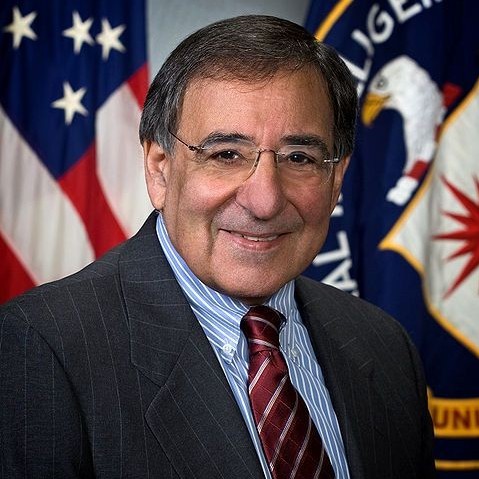
He rose to the heights of power in Washington, D.C., and the world, but Leon Panetta always remembered where he came from. At CSUMB in 2013 for a retirement event celebrating his 50 years of public service, Panetta said: “I’ve never forgotten one thing … Washington is where I work, but this is my home.”
Born and raised in the Monterey Bay area, Panetta was first elected to political office in 1976. He represented the region for 16 years in Congress before ultimately becoming Secretary of Defense in 2011.
When the Army announced plans to close Fort Ord in 1991, suggestions for its reuse ran the gamut from the mundane (office buildings) to “an amusement park on the scale of Disneyland,” the San Francisco Chronicle reported.
Then Congressman Panetta led a community task force that issued a 600-page strategy report for Fort Ord in May 1992 that proposed developing a new California State University (CSU) campus. That set the stage for all that followed.
“Fort Ord represented 25 percent of our local economy. It was a challenge … to develop a reuse plan that really would not only restore our economy but also fit with what the Central Coast is all about,” Panetta recalled in Monterey County Weekly in April 2019.
“Having CSU Monterey Bay continue to develop as a large campus in the CSU system has been one of the more rewarding aspects of what happened, because we really did in many ways convert swords into plowshares.”
Sam Farr
U.S. Congressman
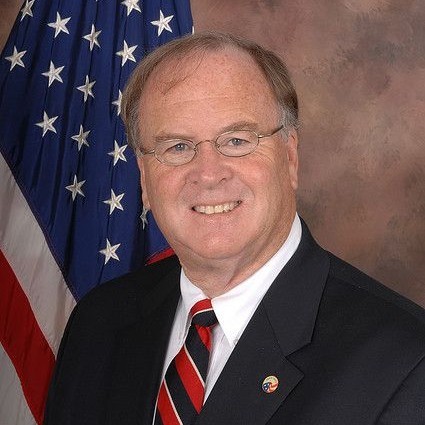
A family tragedy led to Sam Farr’s pivotal role in the founding of CSUMB. In the 1960s Farr was a Peace Corps volunteer in an impoverished area in Colombia. During a visit from family, his younger sister was thrown from a horse and died because of inadequate medical care.
“It was this very personal experience that gave me my sense of purpose. I knew I wanted to fight in the War on Poverty and create access to education, healthcare and housing,” Farr said in the keynote speech at CSUMB’s 2017 Commencement.
After hearing about Fort Ord’s closure, then state Assemblyman Farr envisioned transforming the military base into a university. Farr had observed a cycle of poverty among Salinas Valley farming communities similar to Colombia’s. He believed a local gateway to higher education would help break it.
Many rejected and fought his idea, including military and city officials. Undaunted, Farr ran for U.S. Congress in 1993 and won. He then worked tirelessly to establish CSUMB.
“One of the proudest moments of my career was being able to take a vision of higher education in California, and get a new local university placed right here on the sand dunes of Fort Ord,” he said. “Did we win the War on Poverty? No, but we’re making a difference.”
Henry Mello
State Senator
Watsonville native Henry Mello represented Monterey, Santa Cruz and San Benito counties for 22 years. In September 1991, when founding a university at Fort Ord was only an inkling of an idea, Mello invited CSU Chancellor Barry Munitz and other higher ed officials to come see the closing base.
Just weeks after, the CSU Board of Trustees voted to explore the possibilities at Fort Ord, according to a report published by The California Higher Education Policy Center. Less than a year later, the CSU decided to establish a new university.
Mello, who died in 2004, frequently had more bills signed into law than any other senator, according to The Online Archive of California. Among them was Senate Bill 899, which created the Fort Ord Reuse Authority (FORA) and contained language allowing the federal government to directly convey land to the CSU. The first parcel transferred in July 1994, and the campus eventually received nearly 1,400 acres.
Congressman Sam Farr told Monterey Bay magazine in 2017, “If Mello had not introduced a bill to create FORA, and that language had not been included, most likely CSUMB would not exist today.”
Barry Munitz
California State University Chancellor
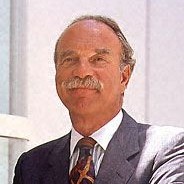
In the early weeks of his new job as chancellor of the largest four-year university system in the nation, Barry Munitz was presented with what he described as “a single, inspired idea”: convert a closing military base into a university.
It had never been done before, but that didn’t dissuade Munitz. Chancellor from 1991 to 1998, he saw an opportunity to meet statewide future enrollment demands while facing budget cuts during an economic downturn.
The product of a free education at Brooklyn College in New York, Munitz understood the critical role of higher education in society.
"Like many Cal State students, I came from an immigrant background, and Brooklyn College was the only place I could go for an education. It was my only prayer for socioeconomic mobility,” he told the New York Times in August 1991.
“This is a campus with unlimited potential,” Munitz wrote in CSUMB’s Founding Year Catalog. “All who are associated with The California State University are energized by its possibilities and inspired by the path it is forging as it begins its historic journey.”
In celebration of our 25th anniversary, CSUMB is recognizing a company, a foundation and 23 individuals and couples for helping to make the university what it is today. This story is Part 1 of 6 in "25 for the First 25: Honoring Our Past." Go to "Presidents" to read Part 2.
25 for the First 25: Presidents
At 25 years old, Cal State Monterey Bay is one of the youngest universities in the CSU system and has had just three presidents. All brought a wealth of experience and proven leadership ability to the unique challenges of building and guiding a new university. All accomplished vital goals and advanced the university’s role as a catalyst for educational, cultural and economic development in the region. Each has earned their place in CSUMB’s history.
By Sophia Huang McKenzie
Published Dec. 20, 2019
Peter Smith
1994 to 2005
CSUMB’s founding president arrived in 1994 ready to build a 21st-century university from the ground up. Peter Smith was already a seasoned politician and an education innovator. He had an insider’s experience and an outsider’s perspective.
“He was the right man for the right job. He came with particularly unique credentials,” U.S. Congressman Sam Farr told the Monterey County Weekly in 2005. “To get Peter was key, because he had been a member of Congress and had credibility in Washington. (And) he was a professional educator and administrator.”
In the 1970s Smith helped establish the Community College of Vermont and became its founding president. In the 1980s Smith shifted to politics, serving as a state senator, lieutenant governor and then a U.S. congressman for the state of Vermont. He returned to education in the 1990s as a dean at George Washington University and head of a federal commission studying college education finance.
In CSUMB’s Founding Year Catalog, Smith described the university as a “pioneering effort” and “truly a work in progress.”
“As you see our commitment to educate purposeful and humane lifelong learners through using institutional and community resources, you will realize this is no ordinary place,” he said. “You are not here simply to be taught, but to teach and learn actively as well.”
For ten years from 1995 to 2005, Smith guided CSUMB through all stages of accreditation, and student enrollment increased from 650 to 4,000. The university became known for its outcomes-based curriculum, a strong science and technology program, its focus on first-generation college students, and its commitment to service learning.
Dianne F. Harrison
2006 to 2012
Dianne F. Harrison took the helm as CSUMB’s second president with ambitious plans for growth. She announced goals to accelerate student enrollment, embark on an extensive building program, strengthen community partnerships, and increase private fundraising.
She possessed nearly 30 years of experience as faculty and a top administrator at Florida State University, a campus with 40,000 students. Within months of her arrival, CSUMB broke ground on two major construction projects: a baseball/softball complex and the $64 million Tanimura & Antle Family Memorial Library. Phase two of campus housing and the demolition of more than 100 old army buildings was also on the agenda.
“I plan to act as boldly as I can to move us forward as opportunities arise, to generate positive energy and enthusiasm for this university,” Harrison said in her first State of the University address in September 2006.
CSUMB needed Harrison’s optimism in a period of financial insecurity. During her six years as president, the state slashed millions in funding during an economic recession. Harrison still managed to increase enrollment by 50 percent and the number of staff and faculty by 20 percent. She also expanded undergraduate and graduate degrees from 22 to 31, including a new nursing baccalaureate program.
The Salinas Californian in August 2011 lauded Harrison for “being smart and staying nimble” in trying times. She earned a reputation for building strong relationships with public and private organizations, as well as for her commitment to students, academic excellence and strategic leadership.
Eduardo M. Ochoa
2012 to 2022
Like many students at CSUMB, President Eduardo M. Ochoa’s parents came to the United States seeking the American Dream for their children. They immigrated from Buenos Aires, Argentina, when Ochoa was a teen.
“We always stand on the shoulders of our forefathers,” Ochoa told the Monterey County Weekly in 2013. “My parents came here to give us a better life, and I’m reaping the benefits. I hope to share that with my kids and other immigrant kids just beginning the climb.”
Ochoa earned a master’s degree in nuclear science and engineering and a Ph.D. in economics and worked as a professor, dean and provost at multiple California universities. In 2010 the Obama Administration appointed him U.S. assistant secretary for post secondary education.
Ochoa became president of CSUMB in 2012 and focused on the role of the university as a steward of the community. He told The Chronicle of Higher Education in 2018: “At CSUMB we take responsibility for advancing our region socially, economically and culturally … We have a strong mission of social equity and social justice and providing access (to education) for underserved communities.”
In 2014 Ochoa founded Bright Futures Educational Partnership, a collaborative initiative involving education, business and community leaders, to improve “cradle-to-career” educational outcomes in the region. Doing so would have the greatest impact by sending positive ripple effects through multiple aspects of life, including poverty, health, crime and the local economy, he said.
Furthering innovation has been another hallmark of Ochoa’s presidency. In 2015 the state bestowed two Awards for Innovation in Higher Education to CSUMB totaling $8 million. The programs honored were CSin3 — a collaboration with Hartnell College that allows students to earn a computer science degree in three years — and a developmental math course called Math Huge.
“For CSUMB, the context for innovation is in looking for ways to do what we do better, more efficiently and effectively. This is something that has been part of the DNA of the campus since its inception,” Ochoa said.
Student enrollment and graduation rates have hit new highs under Ochoa’s leadership. The university expanded to three commencement ceremonies in 2018 and graduated a record 2,348 students in May 2019. Ochoa began his eighth year as president in August 2019.
In celebration of our 25th anniversary, CSUMB is recognizing a company, a foundation and 23 individuals and couples for helping to make the university what it is today. This story is Part 2 of 6 in "25 for the First 25: Honoring Our Past." Go to to read Part 3.
Still Moving Forward — We've Come a Long Way
By Liz MacDonald
Published on Dec. 20, 2019
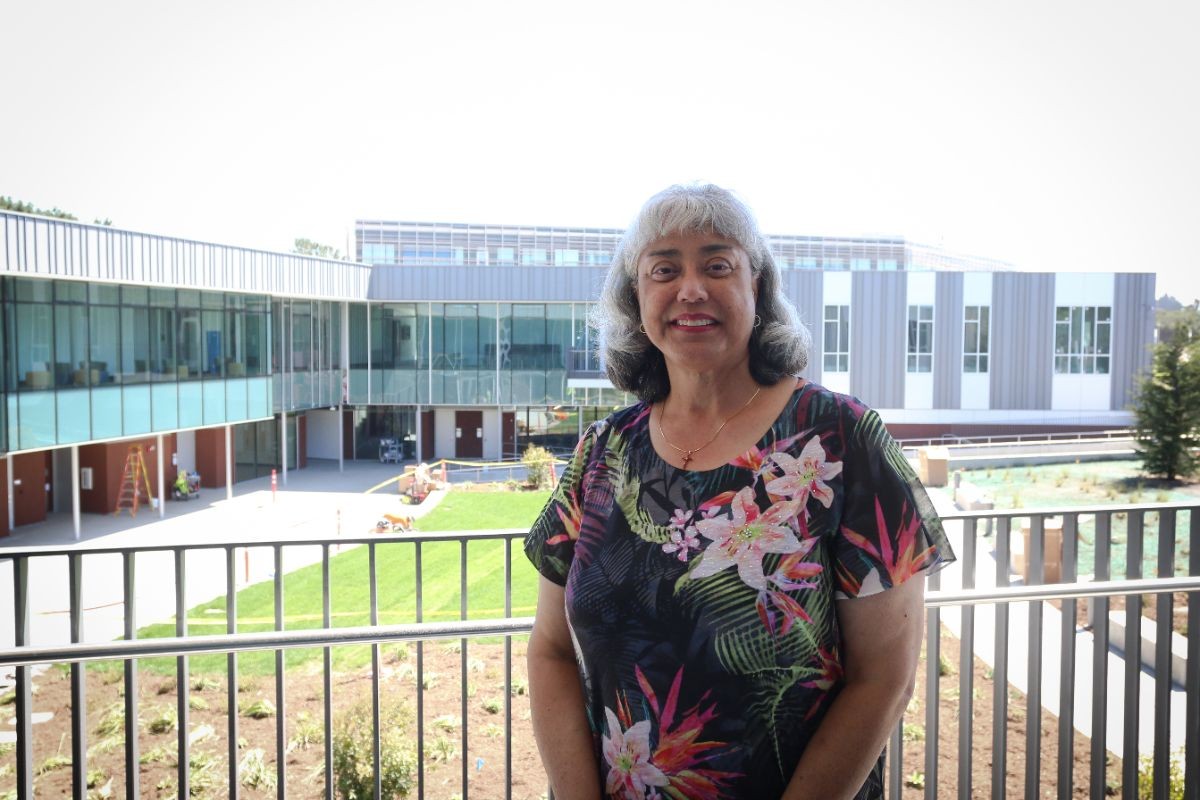
“Furniture and chairs don’t show up by themselves,” said Reyola Carlisle, the university’s longest-time employee — now a senior contracts analyst in Finance — and the woman responsible for most of the chairs that students, staff and faculty sit in arriving on campus.
Carlisle started at the university almost 27 years ago, before CSUMB even was CSUMB. She was hired to do secretarial and clerical work for Richard E. “Hank” Hendrickson, Fort Ord’s former garrison commander and the man charged with overseeing the transition from military base to university. (Hendrickson was named executive dean and later vice president for Administration and Finance.)
For 12 years prior, she’d worked as a civilian employee in public affairs for the Department of the Army at Fort Ord. When the base was selected to close, she saw the writing on the wall. She wanted to remain in Monterey-Salinas area to raise her son, so she responded to a newspaper ad for a secretary in what became CSUMB’s planning and development office.
A title didn’t describe what we did. We did everything, including putting furniture and chairs together."— Reyola Carlisle
On her first day, she showed up at the office suite on Hilby Avenue in Seaside to find a woman screwing together her desk extension — Maria Pantoja, Hank’s second-in-command. Carlisle coming on board marked the third person hired, and another set of hands to make sure the soon-to-be university had what it needed to open a new campus.
A title didn’t describe what we did,” Carlisle said. “We did everything, including putting furniture and chairs together.
The small team did much more. They ensured the institution got funding, and oversaw the renovation and retrofitting of military buildings into university classrooms and residence halls. Two years later when students first arrived, Carlisle was part of the small cadre of employees greeting them with information and helping to register them for classes.
“I never envisioned having problems finding parking,” she said, laughing. “But here we are with 7,500 plus students.”
Carlisle grew along with the university, her initial clerical role evolving into new positions as she — and the university — figured out what needed to be done and did it. In her years with the Administration and Finance department, Carlisle focused on public works, infrastructure and facilities.
“You don’t see the procurement folks in the background,” she said.
She ran contracts for old buildings to come down and new buildings to rise up, working with everyone from architects and engineers to janitorial service providers. As she worked behind the scenes, she also had a front-row seat for the transformation of the campus.
“Our whole focus was to build the campus and keep it moving forward,” she said.
In addition to her job, Carlisle took advantage of the CSU’s employee fee waiver program to take classes.
Our whole focus was to build the campus and keep it moving forward."— Reyola Carlisle
“I love the student-to-teacher ratio, the time the faculty takes to sit down and explain things in everyday terms. It’s amazing what they do to help the students succeed,” she said.
She only stopped taking classes three years ago when her grandson, Rocco, was born.
“When I became a grandma, I had to readjust the priorities in life.”
Now, Rocco also has a baby sister, Capriana. Carlisle still attends Capstone presentations, however.
“I learn so much when the students present their Capstones,” she said. “I loved going to school here. Who knows, maybe when [the grandchildren] are old enough, they will want to come here to school.”
Looking back, Carlisle fondly recalls the sense of community from those early days.
“We had lots of get-togethers, potlucks and events all the time. We even had a bowling team in the early years. Everybody knew everybody,” she said. “I grew up here; this is my home.”
Even when reflecting, Carlisle can’t help but look to the future: “It’s been a long time coming, but we’re about to get a new student union. Our master plan calls for bigger spaces for sporting events and a new recreation center is on the horizon. The feasibility study for a new science building is about to get underway.
“We’ve come a long way,” she said. “And it’s still moving forward.”
Student Leader — Shaping a Better Future
By Liz MacDonald
Published on Dec. 20, 2019
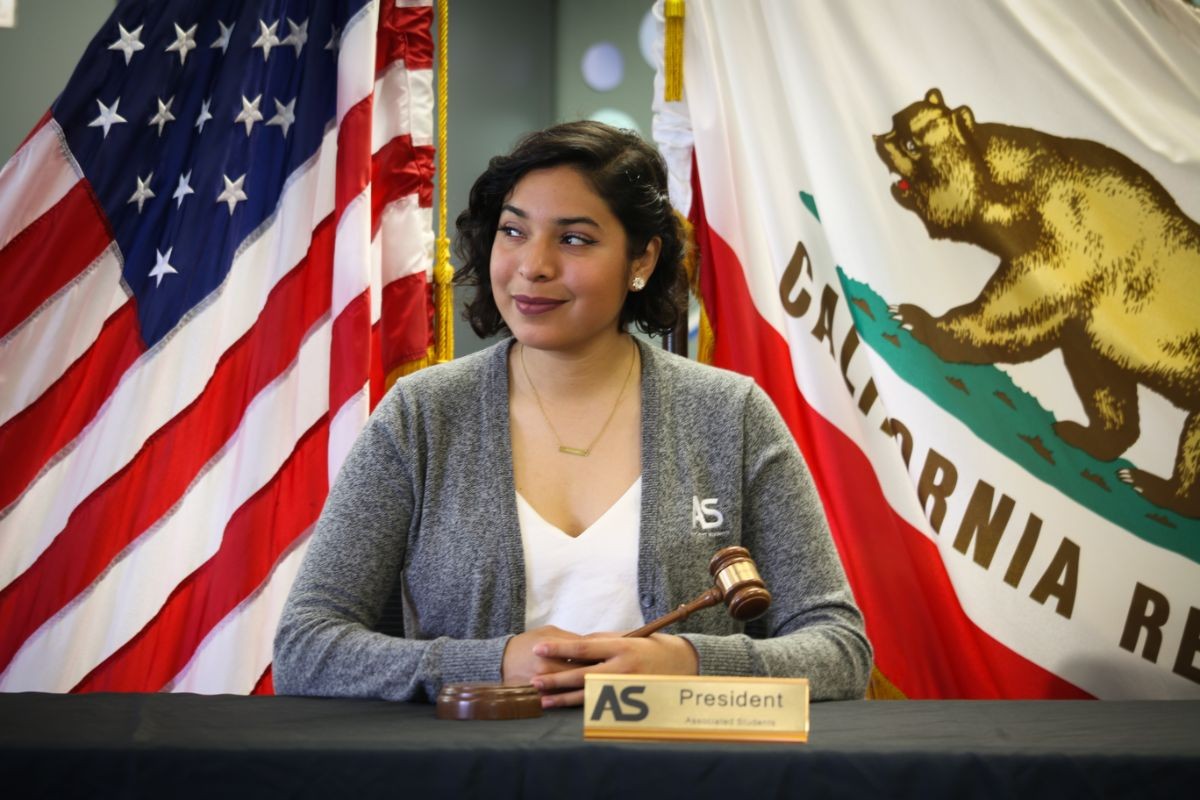
Ana Gonzalez, CSUMB’s new Associated Students(AS) president, never thought college was a possibility growing up. She grew up in a town in Mexico, just south of San Diego, in a family where no one had earned a college degree before. Her mother, however, dreamed of her two daughters being educated and living in the United States.
“My mom is the biggest reason I’m here today. Growing up with a single parent, I thought how can I make her dream of being in the U.S. my dream?” Gonzalez said. “I make her happy having accomplished all this, and it’s made me really happy.”
From the seventh grade on, Gonzalez would wake up at 5 a.m. to accompany her sister across the border to attend school in San Diego. During her junior year of high school, she took a trip to visit colleges across California. The group’s last stop was at CSUMB, and Ana was captivated by a beautiful pink-orange sunset over the campus.
“It’s a cheesy story, but I looked up and knew it was the right school for me,” she said.
At first, Gonzalez worried about the financial burden it would place on her family to attend college so far away from home. “My sister really pushed me to go far and give myself the opportunity to be away from the border,” she said. “To allow myself to actually have the education I deserve.”
My sister really pushed me to go far and give myself the opportunity to be away from the border. To allow myself to actually have the education I deserve."— Ana Gonzalez, AS President
Gonzalez has made the most of the opportunity. She will graduate this spring with a degree in environmental studies and a minor in Chicanx studies. She’s discovered a passion for environmental community leadership, a pursuit that came into focus for her during her service learning placement with the Watershed Instituteand Regeneración: Pajaro Valley Climate Action.
“I had the opportunity to work with farm workers and talk about how our communities are being more impacted by climate change, and what we can do about it,” said Gonzalez.
In June, Gonzalez presented at the Next Earth conference on some of the complexities she’s faced as a first-generation Chicana working within the environmental movement.
She discussed times when she felt like an insider or an outsider: “I’ve felt like an outsider with my family. It’s difficult because of the opportunities and privilege I have versus my family in Mexico. Reusing or thinking about where trash goes is not a priority when you may go days without water or worry about your next paycheck.
When I have the opportunity to talk about the environment with other students, I feel good. They are willing to listen and think about my perspective.”— Ana Gonzalez, AS President
“I feel like an insider just being at CSUMB and in leadership positions on campus. When I have the opportunity to talk about the environment with other students, I feel good. They are willing to listen and think about my perspective.”
Her peers clearly value Gonzalez’ approach, since they voted for her to represent them as AS president. She aims to use her platform to lobby for financial aid in Sacramento, to research the possibilities for sustainability programs called for in the campus master plan, and to initiate conversations about a Dream Center for DACA (Deferred Action for Childhood Arrivals) students.
After she graduates, Gonzalez plans to apply for a fellowship in the State Capital, and then take some time to travel and decide on her long-term goals. She’s interested in serving in the Peace Corps and continuing her studies in a master’s degree program.
Whatever path Gonzalez takes, her Undergraduate Research Opportunities Center(UROC) mentor, Professor Tori Derr, sums it up nicely: “Ana is playing an active role in shaping a more sustainable future.”
Coming Full Circle
CSUMB Women’s Disc Golf Bring Home National Championships

An unlikely powerhouse
There they are, smiling and holding the national championship trophy.
Traci Alger, Mikaela Bogdan, Bayli Miller and Jenn Schopfer just got done blitzing the field by 35 strokes for the women’s championship in the 2016 National Collegiate Disc Golf Championships held in North Augusta, South Carolina.
It’s a good story, sure. But what makes it even better is all those people not pictured, people like Mary Ann Ebner, Merle Witvoet, Scott Keasey, Steve Bonar, Greg Pool and, of course, “Steady” Ed Headrick, “The Father of Disc Golf.” They all played a part in making Cal State Monterey Bay an unlikely powerhouse in this growing sport.
Ebner was the recreation program coordinator for the Wellness Recreation and Sport Institute in the early days of the campus.
“Everyone had an idea, which was great. There was so much energy around opening up programs to serve students,” said Ebner.
A perfect fit
Among those with big ideas were Keasey and Bonar, students in the Institute for Management and International Entrepreneurship, who shared a love of disc golf.
They often drove to Delaveaga in Santa Cruz to play there.
“I think we started talking about it on one of those drives. What if we put a disc golf course on CSUMB’s campus?” Keasey said. Ebner liked the idea, and learned more about it from Witvoet, an early disc golf advocate.
“Merle had a lot of knowledge of the game to share with me. It didn’t take much to sell me on it, it was a perfect fit. It wasn’t going to disrupt the natural environment,” Ebner said.
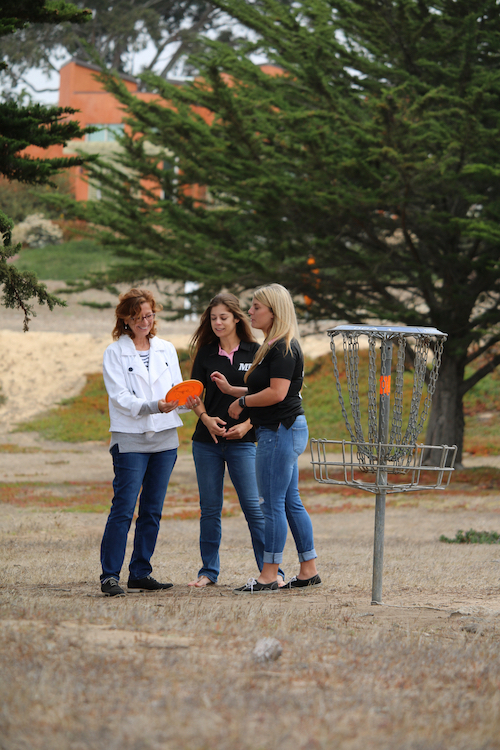
“We were talking to Mary Ann about putting a course in,” said Witvoet, who teaches a class in disc golf and coaches the CSUMB men’s and women’s teams. “And then the two students came along – Keasey and Bonar – and said ‘we’re putting a course in, are you with us?’ I said sure.”
The right time
Pool, now the web services lead in technology support services, signed on as advisor to the program and helped it get established.
“We came in at the right time with an idea that would bring students out of the dorm and create more activity in the heart of campus,” Keasey said.
Disc golf – as opposed to its more famous cousin “ball golf” – does not require manicured fairways and greens. The courses often wind through natural areas, marked by pads where players “tee off” and baskets where the discs eventually end up.
As such, it was well-suited to many areas on and around the new campus. But money was short, and even the low- expense sport of disc golf is not a no-expense sport.
However, Bonar and Keasey discovered something interesting. Just up the road – in Watsonville, in fact – was Headrick, who designed the modern Frisbee, invented the basket used in disc golf and designed more than 200 courses.
“Ed was super-generous to us,” Keasey said. Headrick helped design the CSUMB Cypress Course, located along Inter-Garrison across from the University Police Department, and provided much of the material, to be paid back by revenues from disc sales.
Building a reputation
Over the years, CSUMB continued to build a reputation in the sport. The men’s team became a consistent contender in national tournaments. And, two years ago, the women’s team made the trip to the nationals as well.
Mikaela Bogdan was part of that team.
She had played a little disc golf in high school and liked it. “It is a good thing to do when you are hanging out with your friends, because it is a pretty relaxed sport. Nobody is yelling at you to be somewhere. So when I got here I saw there was a class, I said I guess I will try that.”
She ended up joining the women’s team.
“It took me a while to even decide to go to the nationals the first year,” she said. “I said I am terrible, why would I want to go? But it is a great experience, you get to see what it is like to be in the tournament. So I went (to the 2015 tournament), and it was a lot of fun, and our women’s team ended up winning. So that was cool.”
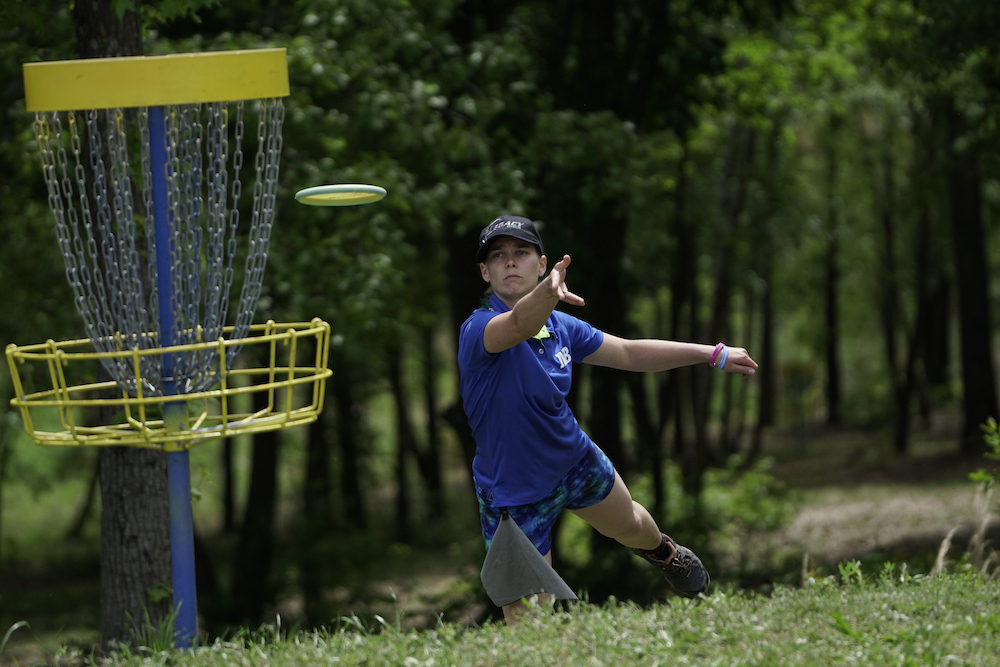
Cool, indeed. The CSUMB women won by one stroke over Oregon, and returned in the spring of 2016 to defend their title in emphatic fashion. Bogdan was CSUMB’s top individual finisher in 2016, taking 4th place.
Over the years, a second disc golf course has been built on campus – the Oaks course located off General Jim Moore Boulevard. And last year, a dozen volunteers, mostly from CSUMB, helped create a nine-hole disc golf course at Los Arboles Middle School in Marina.
Men’s and women’s disc golf are club sports at CSUMB, supported by the university’s Sports Club Council and fundraising efforts.
“It is great to see how far it has all come,” Keasey said. “CSUMB is a known entity in disc golf. People in the sport know teams come to compete. I have a ton of pride in them for what they have accomplished.”
A growing sport
Steady Ed passed away in 2002. At his request, his ashes were molded into a limited edition set of flying discs. His son Daniel told Sports Illustrated: “He said he wanted to end up in a Frisbee that accidentally lands on someone’s roof.”
So now, when you call the Disc Golf Association, which was founded by Headrick, and ask for the general manager, who do you get?
Scott Keasey, of course.
He worked in the Bay Area for a while after graduation, but was happy for the opportunity to come back south and work to promote this growing sport.
“It is low-impact, low-cost. The courses fit well into places you might not be able to do other things. Most of the courses are free; families can play together,” said Keasey, who said participation in the sport is growing every year.
Steady Ed would be proud.
Former military officer who closed Fort Ord now a CSUMB professor
By Noah Rappahahn
Published on Dec. 20, 2019
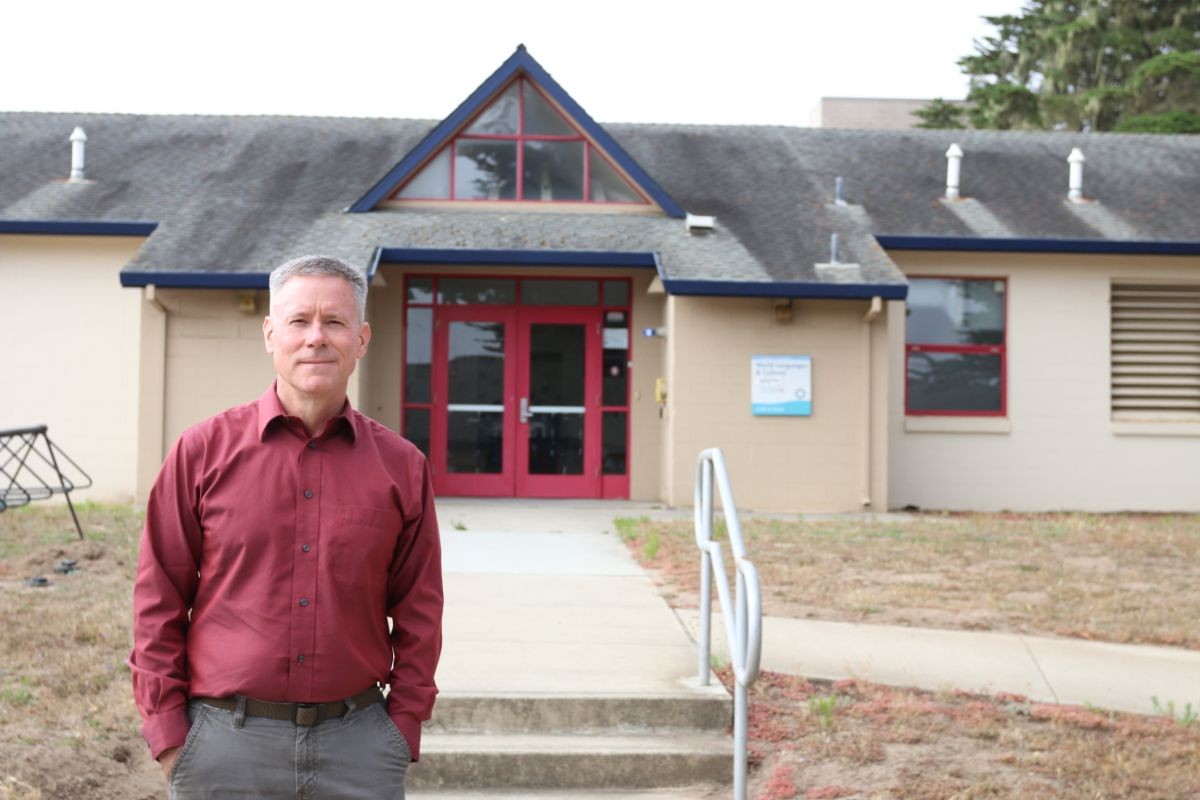
Assistant Professor John Olson first arrived at the soon-to-be California State University, Monterey Bay (CSUMB) campus in the summer of 1991 as a U.S. Army Captain, at a time when the “campus” had a much different purpose.
For much of the 20th century, Fort Ord military base served as a classroom for soldiers who attended class in the field and conducted “research” in foreign nations across the world. With shorter hair and equipped with the tools to fight and win our nation’s wars, the “pupils” of this era arose before dawn and spent their days and nights training in the dense foliage now known as Fort Ord National Monument.
Olson has had the unique privilege of leading both the young soldiers stationed at Fort Ord in the early 1990s and teaching CSUMB students in the Department of Applied Environmental Sciencein 2019. While the curriculum has changed significantly over the subsequent 25 years, the land that was once Fort Ord remains a place to learn for the eager young minds whose impact will have a global significance.
From 1991-93, Capt. Olson served in various roles with the U.S. Army’s 4th Battalion, 17th Infantry, 7th Infantry Division. He was battalion logistics officer when he learned that Fort Ord would be deactivated. The news came as a surprise to Olson, as he was already in the midst of supervising the units’ move to Fort Lewis in Tacoma, Washington.
As the battalion logistics officer, my mission changed from move everything, to turn everything in. I knew it was a very large operation to make everything disappear within six months’ time.”— Assistant Professor John Olson
“The original plan was for 7th Infantry Division not to go away, but to move to Fort Lewis. We were in the middle of packing up to move to Fort Lewis when I was informed that we were deactivating,” he said. “As the battalion logistics officer, my mission changed from move everything, to turn everything in. I knew it was a very large operation to make everything disappear within six months’ time.”
Preparing Fort Ord to be deactivated was a tedious and time-consuming operation, especially from a logistics standpoint, but there were some perks to being on such a short timeline. The Army’s Moral, Welfare and Recreation (MWR) program, for example, provides service-members and their families with recreational community activities to help contribute to their retention, readiness and emotional well-being. In this case, the MWR had a 12-month budget but only six months’ time.
“One of the most entertaining parts about closing down Fort Ord was the excess MWR fund. MWR used the funds to buy tee times at Pebble Beach and gave them away to the soldiers. A lot of young soldiers were able to play Pebble Beach who otherwise would have never had that opportunity. I’ll never forget that.”
It was not all fun and games for Olson, however, who was ultimately responsible for ensuring that every last piece of gear was submitted back into the Army’s logistics system for redistribution across the country. Once this mission was complete, it was Olson who physically locked the doors on the last buildings owned by the Army on Fort Ord; buildings that would eventually become CSUMB’s student services buildings.
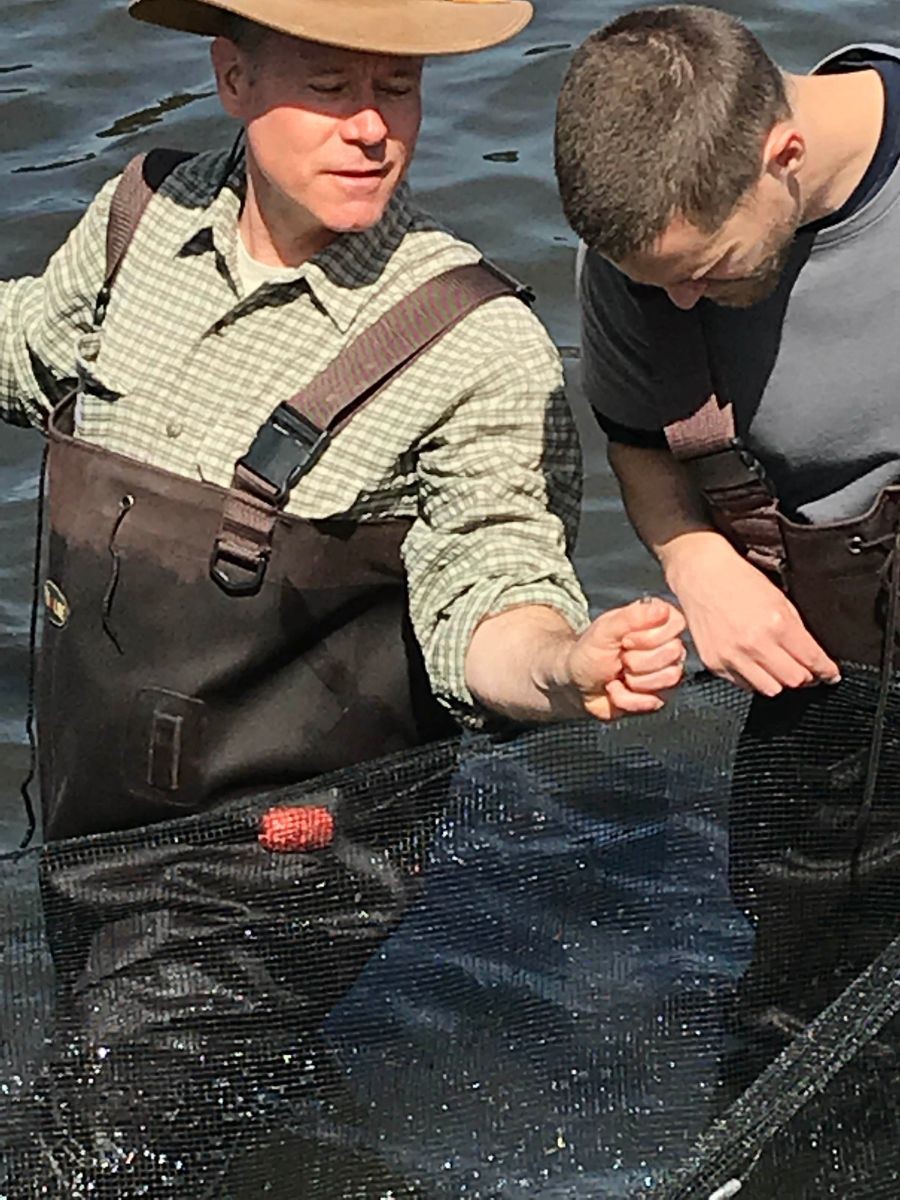
Olson left the military shortly after Fort Ord’s closure in 1993 and changed careers, becoming a renowned freshwater scientist. He studies how rivers, lakes and streams are influenced by their watersheds.
His knowledge improved river health and management across the nation, first in the Southeastern United States while earning his master’s in Environmental Science from Columbus State University in 2002, and later in the Great Basin, Rocky Mountains and the Desert Southwest, while earning his doctorate from Utah State University in 2012. It wasn’t until 2015 that Olson considered returning to the place he once knew as Fort Ord.
“I never really thought specifically about returning to CSUMB, but I did know that it had been created and existed. We drove through here in the early 2000s just to see what was still here, and we were amazed to see that some of our old buildings were still standing. I acknowledged CSUMB as a possibility, but there were several reasons I thought that it would never actually happen.”
In December 2015, Olson was a researcher at the Desert Research Institute in Las Vegas. While visiting San Francisco for a conference, he was on a ferry when he noticed three different people had emailed him regarding a job posting at CSUMB.
“I was very happy at the Desert Research Institute and was planning on staying there for the rest of my life. But when I saw the job posting specific to freshwater ecology with large emphasis on spatial analysis I thought, ‘That’s sort of my thing, I should probably apply for this!’ ”
Olson landed the interview and received parking instructions from CSUMB’s Human Resources. The instructions directed him to a parking lot outside of building 58 – the same parking lot where he once parked as Capt. John Olson more than 20 years prior.
“When I arrived, I pulled into that same exact parking lot where I used to park 25 years before. It was just completely surreal. It was all the same, but all completely different at the same time.”
Olson officially returned to CSUMB for the spring semester of 2017, nearly 24 years after he locked the doors to Fort Ord in 1993. He has since mentored eight graduate students and 16 undergraduate students on various freshwater ecology research projects.
I am still doing a lot of the same basic things, just with a different purpose. I give a team a goal, and a challenge to achieve while helping them understand how what they are doing fits into the broader context. I get to explain how their actions will affect the greater good.”— Assistant Professor John Olson
One project in particular stands out. It is funded by the Department of Defense (DOD) and studies environmental DNA at several military installations on California’s Central Coast.
Olson and his student researchers have measured environmental DNA at over 100 sites across Vandenberg Airforce Base, Camp Hunter Liggett, Camp Roberts, Camp San Luis Obispo and Los Padres National Forest. The research results will be used to design better conservation strategies both for DOD and non-DOD lands.
“I had about 20 students out collecting data across all these locations. The students really had the full experience, driving remote roads, getting stuck, fording rivers and accessing beautiful and remote places that most people don’t ever get the chance to see,” Olson said.
“We can identify these places where the highest conservation value exists and better protect them. It is very valuable, applicable and important research that we are doing.”
Although his professional mission has changed significantly over 25 years, Olson has observed some similarities between the leadership values in his role as a military officer and as a faculty member at CSUMB.
“I was really surprised by how many of my military leadership skills transferred over to teaching. I was never really taught how to teach, but I would always hear other professors referring to a term called ‘scaffolding.’ I finally figured out that was the same concept we used in the military called ‘crawl, walk, run.’ It’s the same exact concept, so I found that those skills really translated well from military officer to faculty.”
“I am still doing a lot of the same basic things, just with a different purpose. I give a team a goal, and a challenge to achieve while helping them understand how what they are doing fits into the broader context. I get to explain how their actions will affect the greater good.”
Over the last 25 years, CSUMB has undergone its own scaffolding process and successfully transformed a former military base into a nationally-recognized, comprehensive university that prepares students to be innovative leaders and thriving citizens. Olson’s personal story seems to mirror it all, and take it even one step further.
“It’s really full circle for me. I was stationed here in the Army, and now I am here conducting research with CSUMB students; research that is being funded and used by the DOD. It’s just amazing how this has all come together.”
Bringing Civics to Life
By Liz MacDonald
Published Dec. 20, 2019
What does it mean to be a good person?
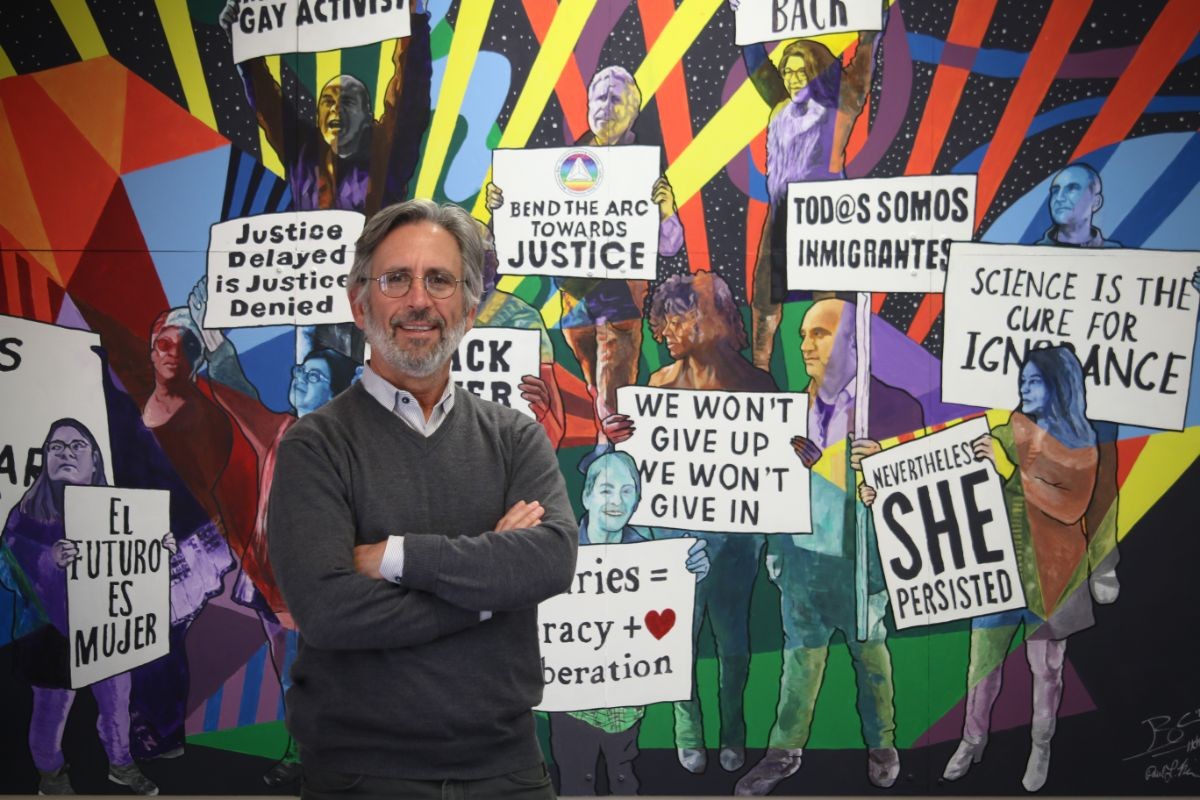
That question is at the heart of Service Learning Institute Director Seth Pollack’s scholarly career.
“We’re trying to teach students to be morally-grounded, thoughtful and compassionate,” Pollack said. “It’s not just a bunch of hours to meet a requirement, and it isn’t just a component that can be added on where students apply what they’ve learned in a community setting.”
Pollack believes that service learning has the potential to transform academia. For more than two decades, he’s led the program that represents the national — and international— standard for socially-responsible and civically-engaged learning In higher education. He’s also taught the practice across the European Union and in South Africa over the course of two Fulbright fellowships.
Service learning has been part of CSUMB since its inception. “There was a nice synergy between the emergence of a national funding stream for service learning and the founding of the university,” Pollack said.
We’re trying to teach students to be morally-grounded, thoughtful and compassionate. It’s not just a bunch of hours to meet a requirement, and it isn’t just a component that can be added on where students apply what they’ve learned in a community setting.”— Seth Pollack, Service Learning Institute director
CSUMB received the first-ever grant from the Corporation for National & Community Service, a federal agency founded in 1993 to promote service and volunteerism in higher education, as well as in K-12 education across the country. The agency was looking for pilot programs, and the new university had the opportunity to do things differently from the start.
At the time, Pollack was completing his doctorate at Stanford. He became acquainted with the program and its founding director, Marian Penn, while coordinating a Fund for the Improvement of Postsecondary Education (FIPSE) grant for service learning programs across CSUMB, Stanford, Mills College and Portland State University. In 1997, two years after the university got its start, he joined the Service Learning Institute as its first faculty director.
CSUMB’s program stands out among universities for multiple reasons. Not only is it required of every graduate, it’s structured as a faculty-led academic department with curricular content. It’s an essential part of the education with clearly-defined objectives centered on teaching students about civic involvement, social justice and inequality, Pollack said.
The structure has proven highly successful. CSUMB is the only institution to be recognized twice as the leading university service learning program in the nation by the President’s Higher Education Community Service Honor Roll, receiving the inaugural award in 2006 and then another in 2010.
But seeing the actual impact on individual lives and communities is more meaningful to Pollack. At this point, CSUMB graduates have leadership roles in many area nonprofits, agencies and schools where current service learners are being placed.
“I’ll be out in the community describing how the program works to a new school or nonprofit, and the person I’m talking to will say, ‘Oh, I was a service learner.’ I’m finding over and over that our partners are our former students,” said Pollack. “We’ve created a virtuous cycle.”
That makes maintaining the relationships the program needs to work a little bit easier, although Pollack admits running a program the scale of CSUMB’s is challenging.
Each semester, we’ve got 1,700 students in more than 60 classes working with 200 partners. For our program to be real, relevant and meaningful, humans need to know each other.”— Seth Pollack
“Each semester, we’ve got 1,700 students in more than 60 classes working with 200 partners. For our program to be real, relevant and meaningful, humans need to know each other,” he said. “It takes immense time and energy to manage, build and maintain.”
Fortunately, Pollack has the support of faculty across the institution who are equally interested in transforming their scholarship into community-based research.
Biology professor Henrik Kibak and his pre-med students are a great example. They’re speaking to East Salinas residents about their healthcare challenges to better understand the factors that contribute to inadequate and inequitable medical care. In the future, when Kibak’s students are medical care providers, they’ll be equipped with both the conceptual knowledge and practical skills to contribute to improved equality and access to healthcare for their patients.
More than 20 years in, Pollack’s passion remains high, and the service learning program continues to evolve. Last year, the lower-division courses were reimagined to better align with the CSU’s general education requirement for civics.
“We have the opportunity to do transformative work to bring civics to life, make it not something you memorize but something you participate in,” Pollack said. “Now it will be around real world things that matter, and students will find their voices in the process. This could become a model for the state of California.”
Winning Ways
By Liz MacDonald
Published on Dec. 20, 2019
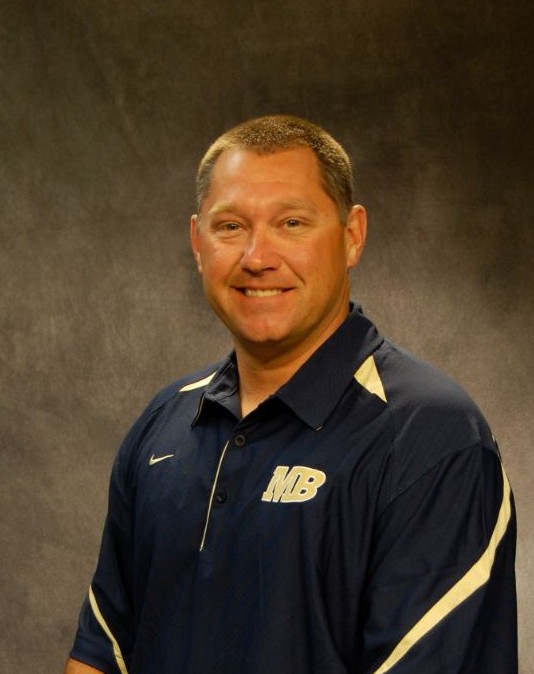
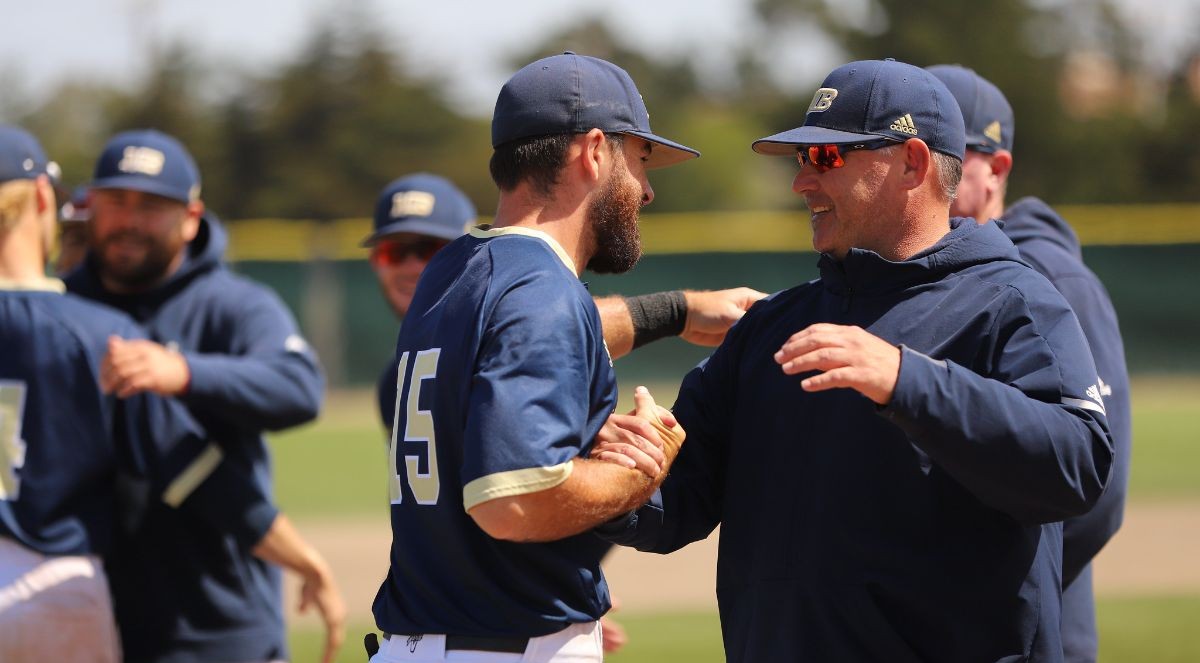
On four occasions, the graduating seniors on the CSUMB baseball team have missed the university’s commencement ceremony. And their head coach, Walt White, is hoping it happens again next May.
“We have our own special graduation at a hotel on the road,” White said. The students don their caps and gowns, someone streams “Pomp and Circumstance” on the stereo, and diplomas are handed out as family proudly looks on.
“When we have graduation in a hotel, it means we did really well athletically,” White said. It means the team is in postseason competition.
Since White joined the coaching staff in 2010, hotel graduation ceremonies have become a more regular occurrence. The year prior to his becoming head coach, the Otters had suffered a season with 41 losses and just eight wins. But White arrived determined to bring a change in attitude to his players.
“I believed in our players,” he said. “If you treat people the right way and earn their respect, they’ll give you everything they’ve got. I wanted to get the most out of those kids.”
In just one season under his leadership, the team made Otter baseball history. They went 21-28 that year, breaking the school record for total wins, winning percentage and conference wins.
I believed in our players. If you treat people the right way and earn their respect, they’ll give you everything they’ve got.”— Coach Walt White
“That was the most important season we’ve ever had,” White said. “That team changed the perception of our program. Once you start developing that culture, it gets passed down from class to class. Ultimately, it keeps building your program.”
In 2013, just three season’s into White’s tenure, the Otters claimed their first California Collegiate Athletic Association (CCAA) regular season title and made their first postseason appearance. White was named Coach of the Year by the National Collegiate Baseball Writers Association (NCWBA) West Region and CCAA.
Prior to the Otters, White spent 15 seasons as the associate head coach at Sonoma State, his alma mater. Before moving into coaching, White spent nearly a decade playing in the minor leagues with the Arizona Diamondbacks AAA affiliate team and in the Florida Marlins organization.
“There are a lot of good players who aren’t great coaches, but having the experience makes me more relatable,” White said.
He had his eye on the program at CSUMB from the beginning. “I wanted the position when I first heard about it.” White said. “I knew it could be something special down the road, and I wanted to build the program.”
I want a kid to be 100-percent committed this is the best place for them. I would rather lose a recruit because they found a better fit, than chase someone and have them not be fully sure.”— Coach Walt White
White looks for the same sense of connection when he’s recruiting players.
“I want a kid to be 100-percent committed this is the best place for them,” he said. “I would rather lose a recruit because they found a better fit, than chase someone and have them not be fully sure.”
A large part of what makes CSUMB the right fit comes down to embracing the total student experience. White takes his players’ academic performance seriously and expects them to be involved on campus and in the community.
“It’s about developing the person as well as the player,” White said.
With a solid program in place, White hopes more of the local community will come enjoy watching the team compete. Thanks to funding from the Monterey Peninsula Foundation, the baseball facilities have seen several upgrades in recent years, including new lighting which allowed the Otters to play their first night games at home.
“It’s only getting better as we go,” White said. “I’m proud of what we’ve accomplished and proud to be part of a university that is continually pushing forward. I can’t wait to see what we become in five, 10, 15 years.”
Creating Community
By Joey Perotti
Published Dec. 20, 2019
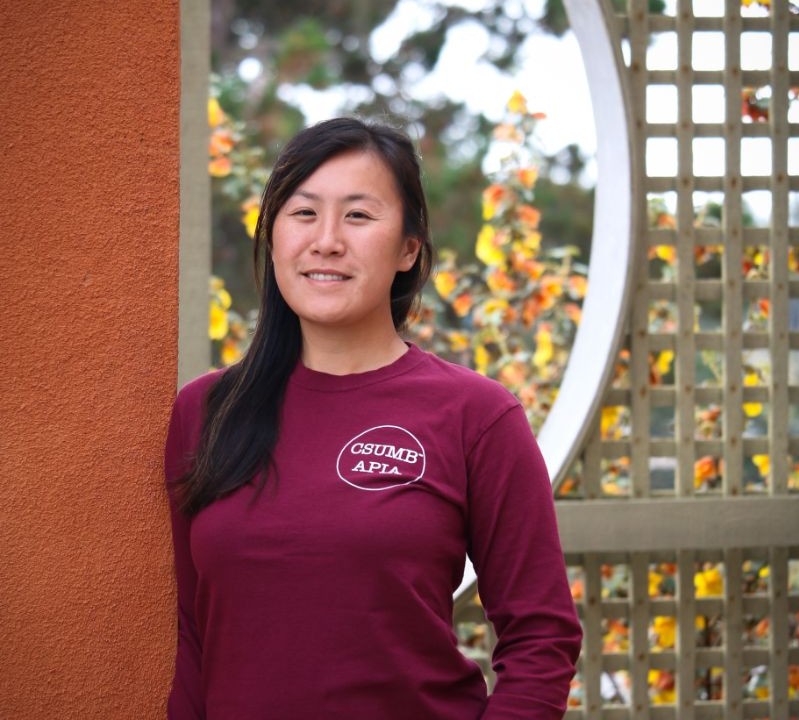
Growing up in San Francisco’s Chinatown, Aileen San was not prepared for the relatively small Asian community at California State University, Monterey Bay.
“The environment I grew up in, I was surrounded by Asians pretty much all the time. All the public schools I went to were majority Asian, and then coming here it was very much a culture shock for me,” San explained. “That motivated me to find that sense of community on campus and try to get as involved as I possibly could and find that community and that family.”
San, who graduated last May with a bachelor’s degree in marine science, found that community within the Asian Pacific Islander Association (APIA) at CSUMB. She was an active member throughout college and served as president last academic year.
San first learned about APIA at Otter Showcase, CSUMB’s annual student organization fair, and began attending meetings occasionally, she said. After APIA Week in the spring semester — when the group hosts multiple social and educational events — San’s attendance picked up. Then she decided to serve in a leadership role as treasurer.
One of the bigger accomplishments is that we’ve had students who don’t identify as Asian or Pacific Islander join our club, find a sense of community, and also be heavily involved as board members.”— Aileen San, APIA president
“I felt like taking on a leadership position would give me that shove to become even more involved and find a deeper sense of community on campus,” she said.
San ultimately became APIA president her senior year. Under San’s direction, APIA was recognized as the first winner of the new Affinity Organization of the Year award.
“Organizations in this category focus on the cultural richness of their community. This award is given to the Inter-Club Council organization that has gone above and beyond to create a community on campus for individuals to find their home away from home,” said Dan Burfeind, coordinator of student organizations, leadership development and assessment.
“When I stepped up as president, one of the bigger obstacles for us as a club was general member retention, making sure we had general members coming to our meetings consistently,” San explained.
On the flip side, “one of the bigger accomplishments is that we’ve had students who don’t identify as Asian or Pacific Islander join our club, find a sense of community, and also be heavily involved as board members.”
These eight identity-based graduations enliven CSUMB's as well as the Otter Student Union's mission to support, validate, and amplify a diverse student body.”— Bianca Zamora, Cross Cultural coordinator
In fact, 2019 was the most active year yet for CSUMB’s eight Affinity groups for students from historically underrepresented backgrounds: Asian and Pacific Islander, Black, Chicanx/Latinx, Native American, Students with Disabilities, Rainbow (LGBTQ+), Undoc-U (Undocumented) and Veteran Students.
More participants than ever attended the Affinity Graduation Ceremonies held for these groups, and 80 percent of the students were the first in their families to graduate from college, according to Bianca Zamora, Cross Cultural coordinator.
“These eight identity-based graduations enliven CSUMB's as well as the Otter Student Union's mission to support, validate, and amplify a diverse student body,” Zamora explained.
“As underrepresented student populations have historically been excluded from institutions of higher education, these student populations and their communities are reshaping their narratives, claiming their brilliance, celebrating their identities, and paving pathways for future students,” Zamora said.
For San, APIA also gave her the chance to grow into the leader she is today.
“I remember before I stepped into a leadership position, it just felt really intimidating because I had no prior experience. I’ve learned a lot about leadership and working with other people,” San said.
“It’s helped me a lot with interpersonal skills as well as intrapersonal skills. Dealing with stress. Dealing with issues within the organization. But also learning to be the bigger person and stepping up and making that first move to resolve your issues.”
Reflecting on APIA’s future, San said, “It provided a sense of family on this campus for me, and I hope it does the same thing for future students as well.”
New Building for Liberal Arts
Published on Dec. 20, 2019
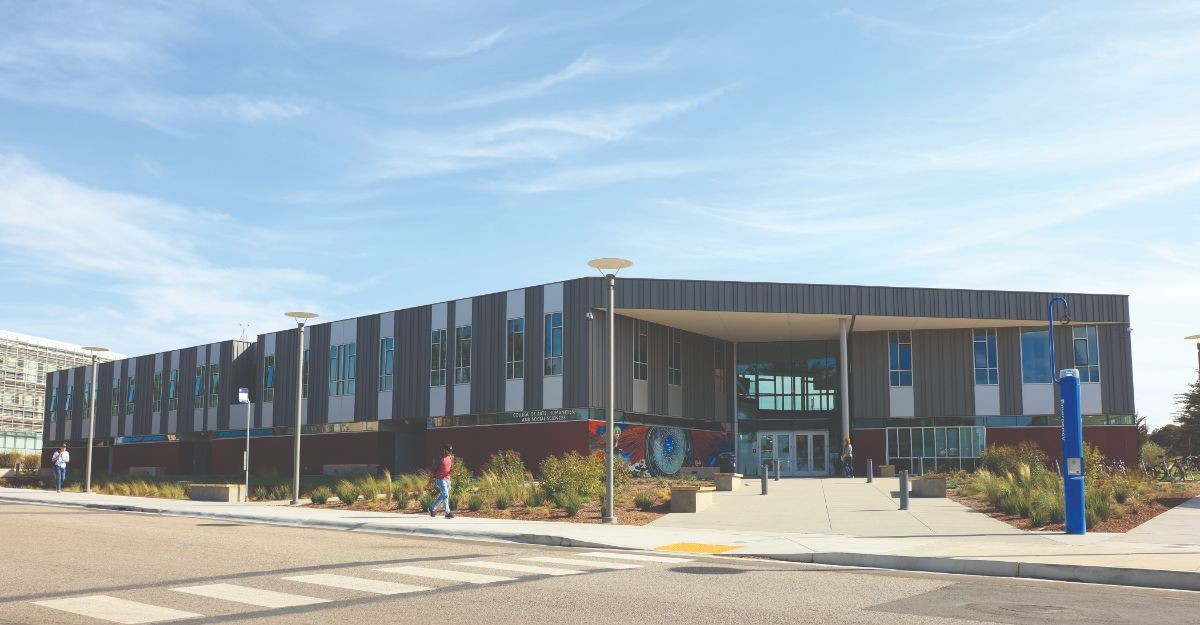
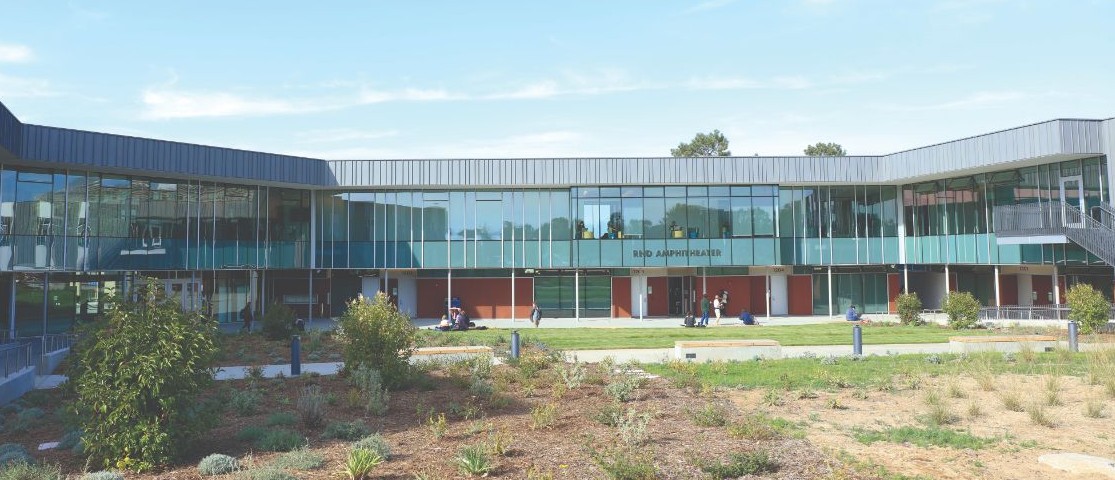
Achieving another milestone in our comprehensive master plan, CSUMB officially opened the doors to the new home of the College of Arts, Humanities, and Social Sciences (CAHSS) with a ribbon cutting ceremony on Oct. 11, 2019.
With the new building, we have redoubled our dedication to faculty, staff, students and our community partners in a signature space that invites innovation and collaboration."— CAHSS Dean Ilene Feinman
“(The building) was designed to function as the heart of the College of Arts, Humanities, and Social Sciences, and it’s set up in such a way that the shared spaces are built to engage visitors and become the hub of the college,” CAHSS Dean Ilene Feinman said.
The $40 million, 48,000-square-foot CAHSS building is located on Divarty Street next to the Gambord Business and Information Technology Building. Built to meet LEED (Leadership in Energy and Environmental Design) Gold standards, it features an art gallery, amphitheater, and a 200-seat film screening and lecture hall.
“With the new building, we have redoubled our dedication to faculty, staff, students and our community partners in a signature space that invites innovation and collaboration.”
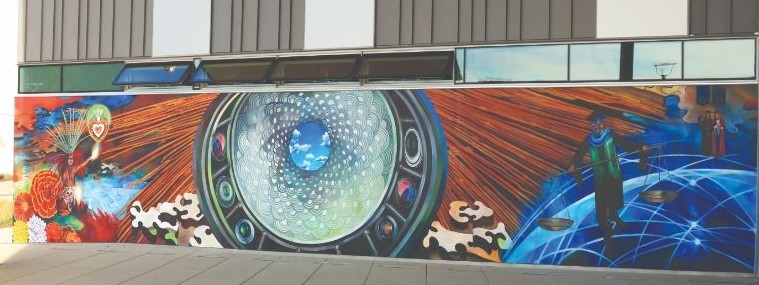
The mural “Skylight: Transmission of Knowledge/Windows to Justice” painted by CSUMB Professor Emerita Johanna Poethig graces the main entrance of the building. University Corporation and Roxana “Rocky” Ruth Earley Keland, a member of the first graduating class of the Visual and Public Art (VPA) department, provided major funding for the mural.
Keland, an unwavering supporter of VPA, died on March 3, 2019. To honor her memory, the building’s VPA Art Gallery opened with “Quintessence,” an exhibit of photographs representing her final body of work.
The building’s RND Amphitheater is named for donor Robert Nathan Danziger. His gift supported a new CSUMB and Monterey Jazz Festival partnership launched in March 2018 to provide a series of jazz education activities.
Visionary Beginnings
By Joey Perotti
Published Dec. 20, 2019
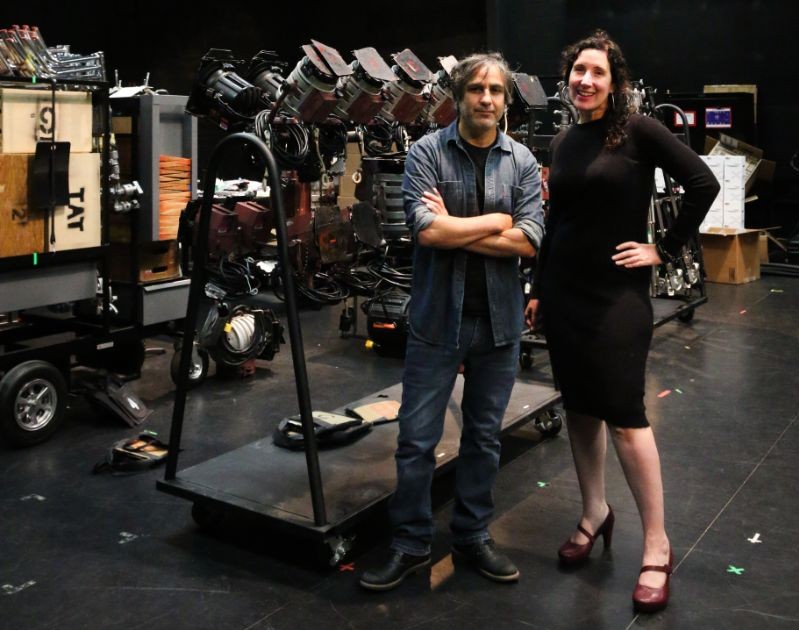
Before there was Cinematic Arts & Technology (CART), there was Teledramatic Arts & Technology (TAT). The department began with the inception of California State University, Monterey Bay and has grown and evolved with the university over the past 25 years. CSUMB was billed as “the 21st CSU for the 21st Century,” and Luis Valdez, the famed playwright and film director, created the TAT department with an eye towards the future.
CSUMB President Peter Smith and Provost Steve Arvizu first contacted Valdez and approached him with, “How would you like to come and create a theater department?” explained Phil Esparza, Media Production Specialist and Operations Manager of CSUMB’s World Theater.
“And Luis responded, ‘Well… That’s kind of old hat.’ Because remember, this was in the ‘90s — ‘93, ‘94 — and he already saw the writing on the wall, anticipating the digital revolution as it exists today.”
That foresight led to the naming of the department.
(Luis Valdez) coined the term ‘Teledramatic Arts & Technology,’” Esparza said. “It was the fusion of theatre, film, television, radio, multimedia, cyberspace.”— Phil Esparza
“(Valdez) coined the term ‘Teledramatic Arts & Technology,’” Esparza said. “It was the fusion of theatre, film, television, radio, multimedia, cyberspace.”
The focus on overlapping curriculums was “something new that would be an educational and experiential platform for our students so that they would be at the forefront of these new opportunities and applications, not only theoretical but practical.”
Esparza helped Valdez launch his vision at CSUMB. He previously worked with Valdez in the early days of the world famous El Teatro Campesino (Farmworkers Theater). Valdez started Teatro in 1965 to dramatize the farm workers’ plight and support Cesar Chavez’s United Farm Workers labor union.
In those early days, they were not just building the TAT department from the ground up, but an entire university.
“When we took over the facilities here, it was all the old buildings. And it was going to take a number of years to make them habitable. Hardly any resources. Coming from my Teatro background, creating something out of nothing, I would scavenge around the limited budgets to see what we could put together,” Esparza said.
“It was all improvisation. I had a pickup that we were using to move stuff around, because there were no vehicles that we had access to. So I got the first service parking sticker. We were just doing it. That excitement, no holds barred, it was pretty grass-roots.”
Beyond his technical savvy, Esparza also helped teach a lot of those early classes, with many of them being “team-taught.”
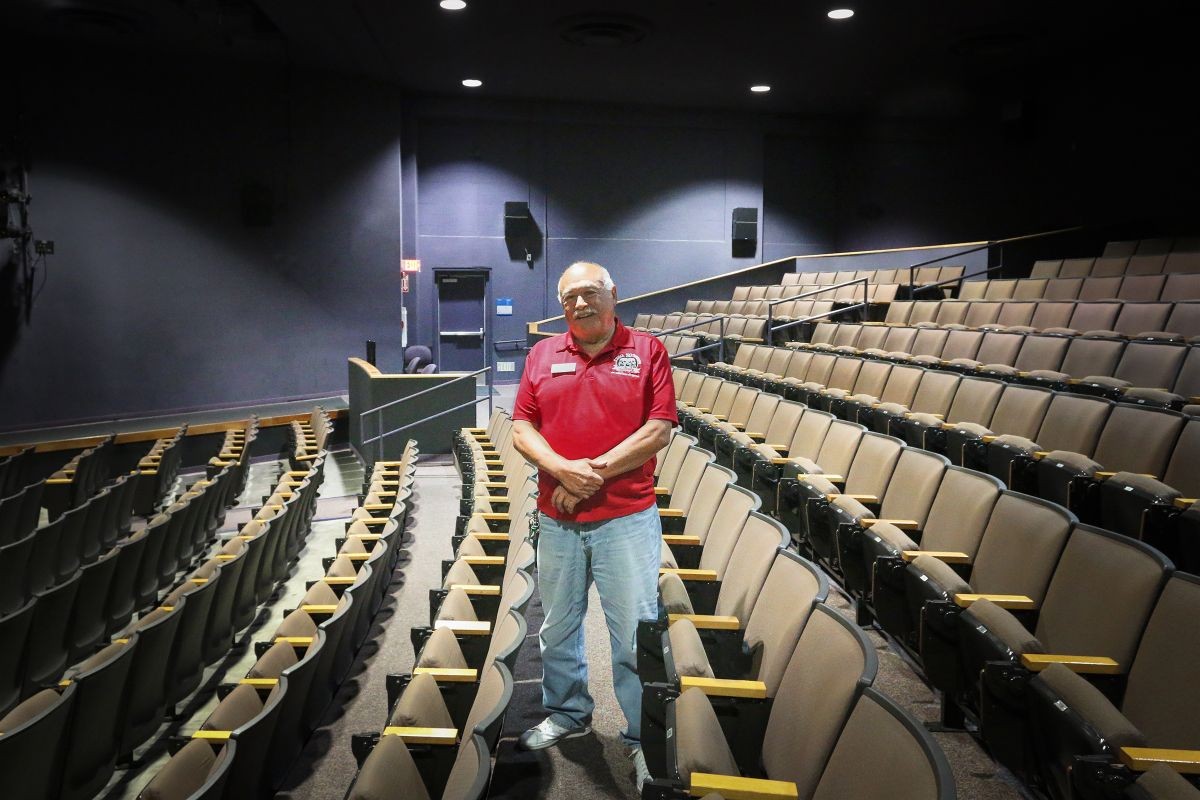
As the university expanded over the years, the department went through growing pains. After a string of department chairs, Enid Baxter Ryce, currently director of CSUMB Salinas Center for Arts and Culture, took over the position in April of 2009.
Ryce said she came during a time of great change. Theater had moved to the Music and Performing Arts department, and digital media, performance art and radio were being de-emphasized in the curriculum. Traditional broadcast television was being phased out.
“The changes in technology happened soon after: videotape went away, radio changed, podcasting became important, single-camera cinema dominated television. It was an exciting time of rebuilding and responding to what the professional needs of our students would be,” Ryce said. “During my time as chair, we weathered not only seismic shifts in technology, but also the Great Recession. Yet, we were still able to grow, thrive and innovate.”
Luis Camara, current chair of Cinematic Arts since 2017, came to CSUMB in 2009. “When I found the Monterey Bay campus, it just seemed like it was in a great location for making films,” says Camara. “It had a very intriguing and interesting student population, and a very coherent mission statement that I agreed with.”
In the 10 years he’s been on campus, Camara has seen the department change and evolve.
“We changed our name from Teledramatic Arts & Technology to Cinematic Arts & Technology, which signifies something of an ideological change for the department and how it sees itself and what it sees itself doing,” Camara explained.
“During my time as chair, we weathered not only seismic shifts in technology, but also the Great Recession. Yet, we were still able to grow, thrive and innovate.”— Enid Baxter Ryce
The name change was a point of contention for some, but TAT “wasn’t helping people understand what our department was about,” Camara said. “When the department was formed, it still had more of an adherence to radio and the dramatic arts and theatre, so the word ‘teledramatic’ was more all-encompassing.”
The student population has become much more diverse since, so the department responded by growing its production curriculum, offering new classes.
“We’ve also expanded our film studies classes to include classes on queer cinema, documentary history, and horror film. The department has broadened its scope and it has also, I think, improved the way we deliver our production curriculum. But it’s a department that’s in a constant state of change,” Camara said.
The challenge to stay technologically relevant is equaled only by the challenge of staying culturally relevant.
“How do we connect and become relevant to our community at large in the Monterey Bay area?” Camara asked. “That’s a really important thing. That’s one of our biggest challenges but also one of our biggest accomplishments, if not our biggest accomplishment. I think we’re a department that has deep ties to the community, that has done work that is relevant to the culture of the community — not just in Monterey Bay, but at large with spearheading events.”
He cited as examples: the department’s partnership with the Philip Glass Center for the Arts, Science, and the Environment to help run its annual Days & Nights Festival, and a military veteran’s history project involving students.
As the campus continues to grow, so does Cinematic Arts & Technology. With the completion of the Academic III building, all of the CART offices will be centralized for the first time in the university’s history.
“I think that can only strengthen the sense of community within the department,” Camara said. “I can’t predict what’s going to happen in the future, all I know is we’re in a good place right now to respond to the needs of our student population because of the support we have received, both in purchasing new equipment and the new building.”
Reflecting on the department, Esparza smiled.
“Biggest accomplishment? Basic creation. We brought it into being. It was the first one, I believe in the country, that fused this new technology with the old disciplines. Just the fact that it happened and it had its imprint. (Valdez) is a visionary, and his basic concept … was right on.”
President's Letter
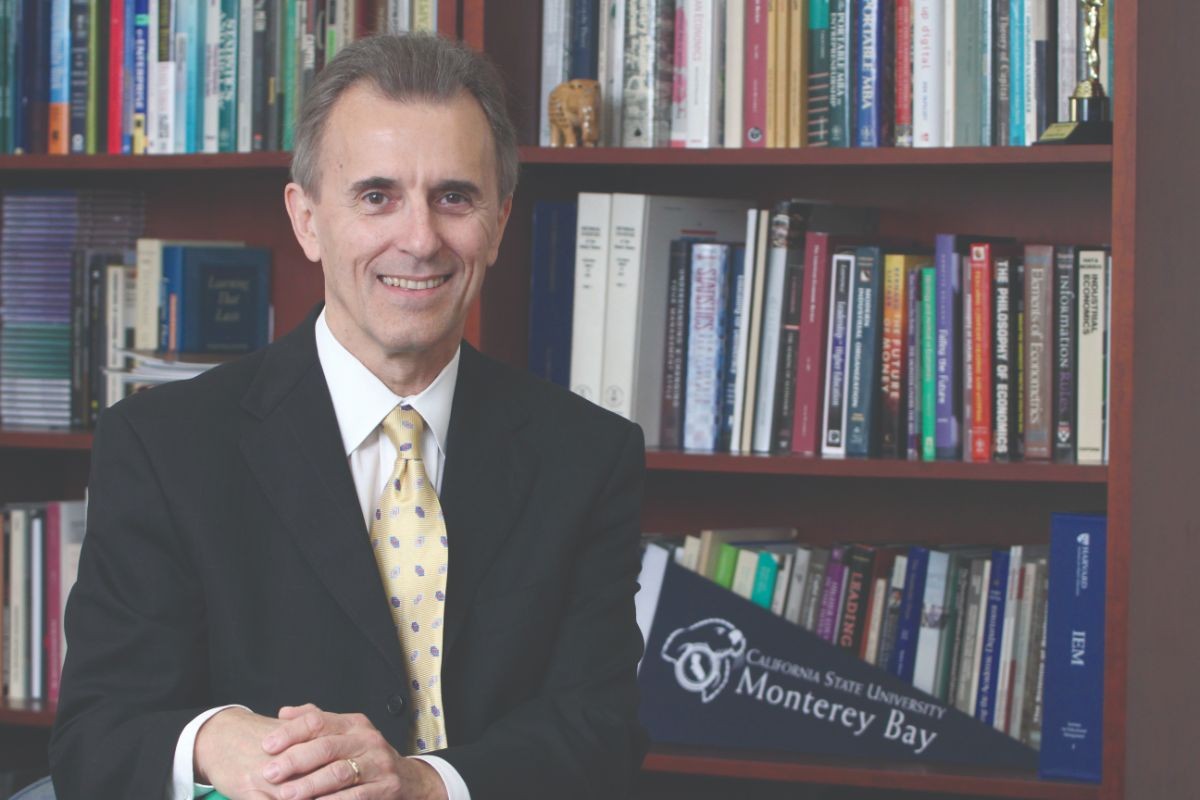
Published Dec. 20, 2019
In the early 1990s, Monterey County’s leaders faced an economic crisis with the closing of Fort Ord. They turned that crisis into an opportunity by enabling the founding of a new university.
This academic year, we are celebrating the 25th anniversary of the founding of Cal State Monterey Bay. Created in 1994, CSUMB owes its existence to the political leaders, community visionaries and education pioneers who helped launch our university.
The story of our founding provides an important reminder of what people can accomplish when united in a common cause, of what a fledgling institution can accomplish when it fully accepts a challenge to meet an ambitious deadline.
For the first year of its existence, CSUMB was not only hiring its faculty and staff, admitting its first group of students, and coming up with an innovative new curriculum, it was also transforming an abandoned military base into a college campus.
Many elements of the founding story of CSUMB continue to drive our efforts today.
We are committed to serving the communities that helped create us. We provide educational opportunities for the underserved populations of our region. We are working with a wide range of groups to make sure more of our region’s students are able to pursue a higher education, while collaborating with local community colleges to educate more teachers for area schools. We are creating academic majors, such as our recently launched physician assistant program, to address specific local needs.
The spirit of innovation that marked our founding is fundamental in so much of what we do. We continue to tap into the can-do spirit that marked our beginnings as a university.
When President Bill Clinton spoke at our dedication ceremony in 1995, he said: “There is nothing that we have to do at the national level as a people that we cannot do if we follow the directions that you have laid out here: common sense; common ground; higher ground. … Think about what we have in common. Think about possibilities, not problems. Believe in the future.”
As demonstrated in this edition of the magazine – we celebrate our 25th anniversary, and the future of CSUMB has never looked brighter.
Sincerely,
Eduardo M. Ochoa, President
News Briefs
Published Dec. 20, 2019
Otter Athletics inducts inaugural Hall of Fame members
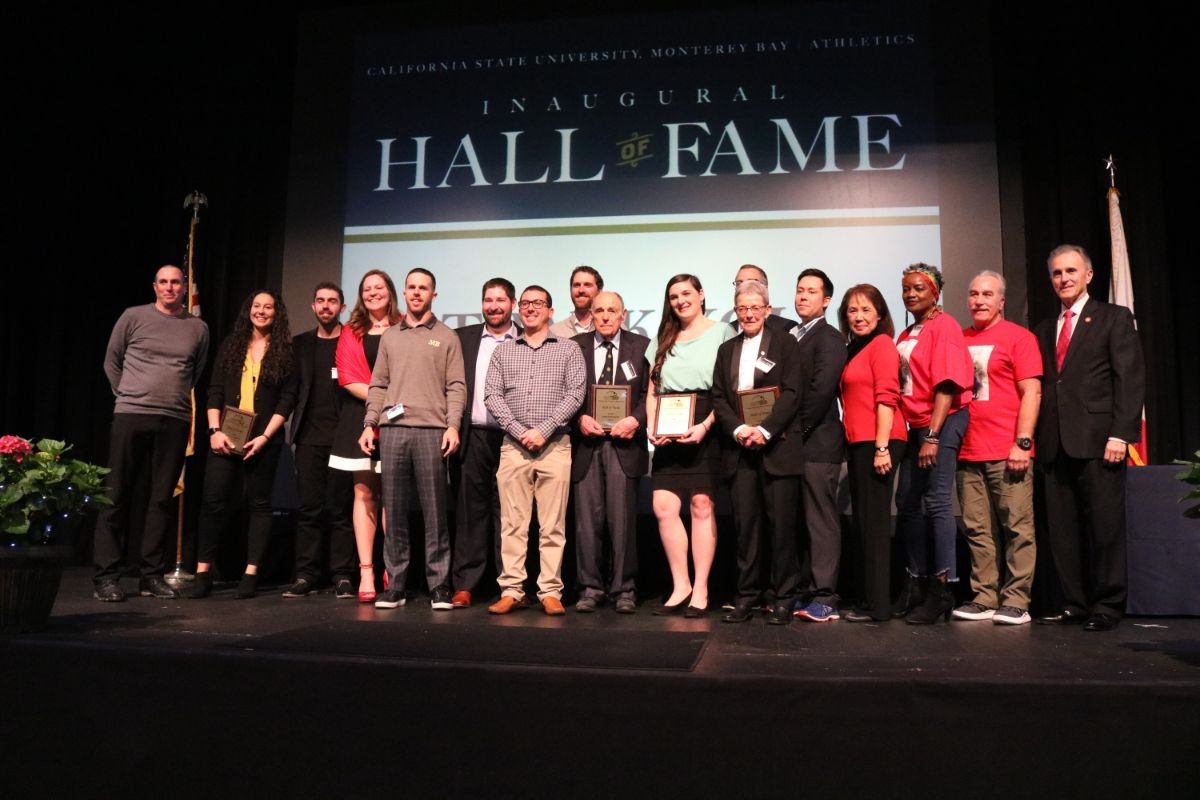
California State University, Monterey Bay, announced its inaugural Athletics Hall of Fame class this year. The first honorees — including eight student-athletes, two coaches and one national championship team — were inducted on Feb. 16, 2019, at the University Center.
“Our Hall of Fame allows us to recognize individuals who have shaped our identity and contributed significantly to the growth of our university and athletics programs,” Director of Athletics Kirby Garry said. “(We) look forward to building on this new tradition in future years.”
In alphabetical order, the inductees were: Dana Andrews – Women’s Basketball (2006-09), all–time leading scorer; Bobbi Bonace – Administrator/Coach (1996-2007), first director of intercollegiate athletics; Cicillia Chudivan – Women’s Golf (2007-10), All-American, all-time winningest golfer; Rheann Fall – Volleyball (2008-11), All-American, career kills leader; Brian Haggett – Baseball (2012-13), first Academic All-American; Bob Johnson – Community supporter, passionate backer of Otter Athletics and CSUMB; Devougn Lamont – Men’s Basketball (2005-06), first player to average 20 points per game; Chealsea (Laning) Brown – Water Polo (2005-08), career record holder for goals and points; Ashlee Trotter – Softball (2006–09), captain of first California Collegiate Athletic Association (CCAA) championship team; Bill Trumbo – Administrator/Coach (2000-06), led CSUMB to NCAA Division II membership; Erik Uppman – Cross Country (1998-2001), captain of first conference championship team (California Pacific Conference); Team of Distinction – 2011 Men’s Golf Team, CSUMB’s first national championship team.
CSUMB launches innovative Responsible Business MBA
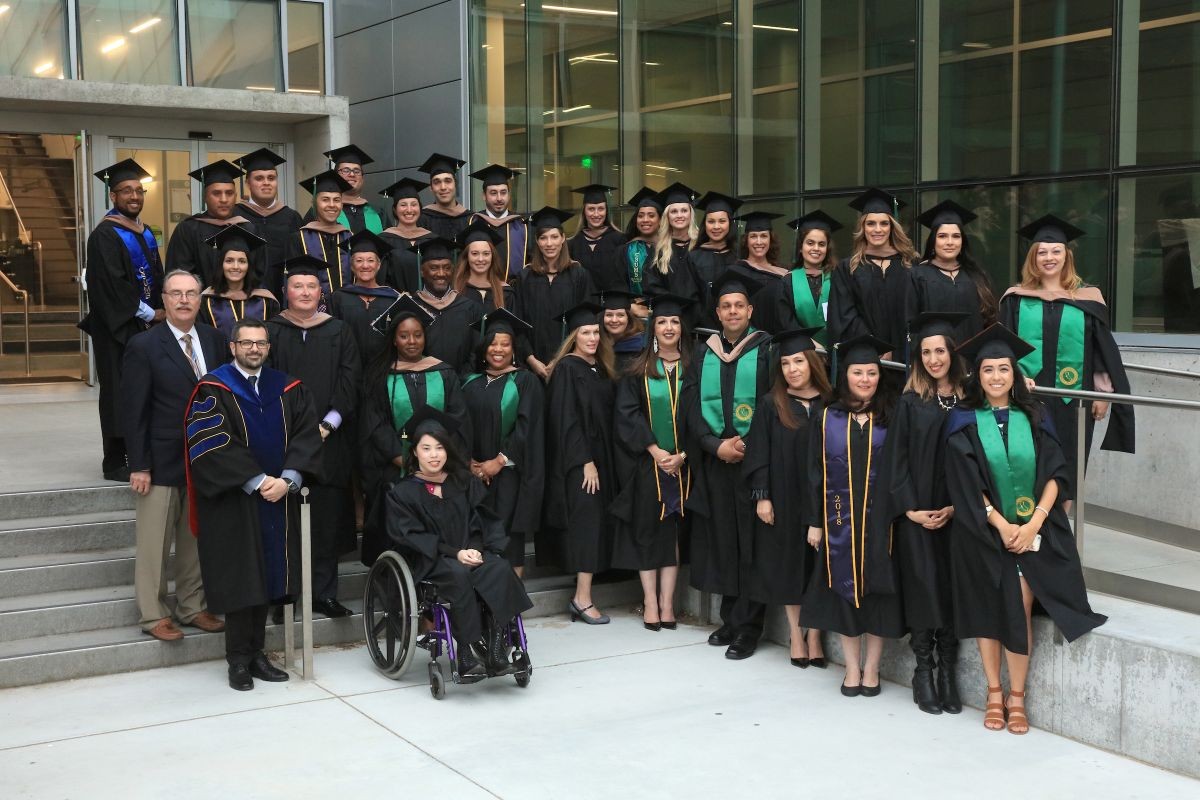
The College of Business at CSUMB launched the world’s first Responsible Business Master of Business Administration (MBA) degree program in fall 2019. The entirely new curriculum is designed around the theme of “Innovation, Responsibility, Impact,” with a quintuple bottom line adding “Ethics” and “Equity” to the traditional triple bottom line of “People, Planet, Profit.”
“We’re emphasizing critical systems thinking, continuous improvement, integrated communications, and creative problem solving — in an expanded quintuple bottom line context — to develop the Responsible Business mindset and toolkit,” Dean Shyam Kamath said.
Responsible Business goes beyond the triple bottom line to educate business leaders to develop and transform organizations into 21st-century business models. The quintuple bottom line enables businesses to achieve financial success while taking care of valuable human and environmental resources, Kamath said.
With busy working professionals and executives in mind, the program is 100% online to offer maximum flexibility. The curriculum consists of 38 units delivered in sequence across 14 individual courses. The online MBA degree can be earned in as few as 18 months. “The faculty have thoughtfully created a unique education experience,” said Nicolas Dahan, program director. “It builds on the university’s tradition of concern for community, ethical leadership, social justice, and environmental stewardship.”
Go online to mba.csumb.edu to learn more.
WASC grants accreditation for 10 more years
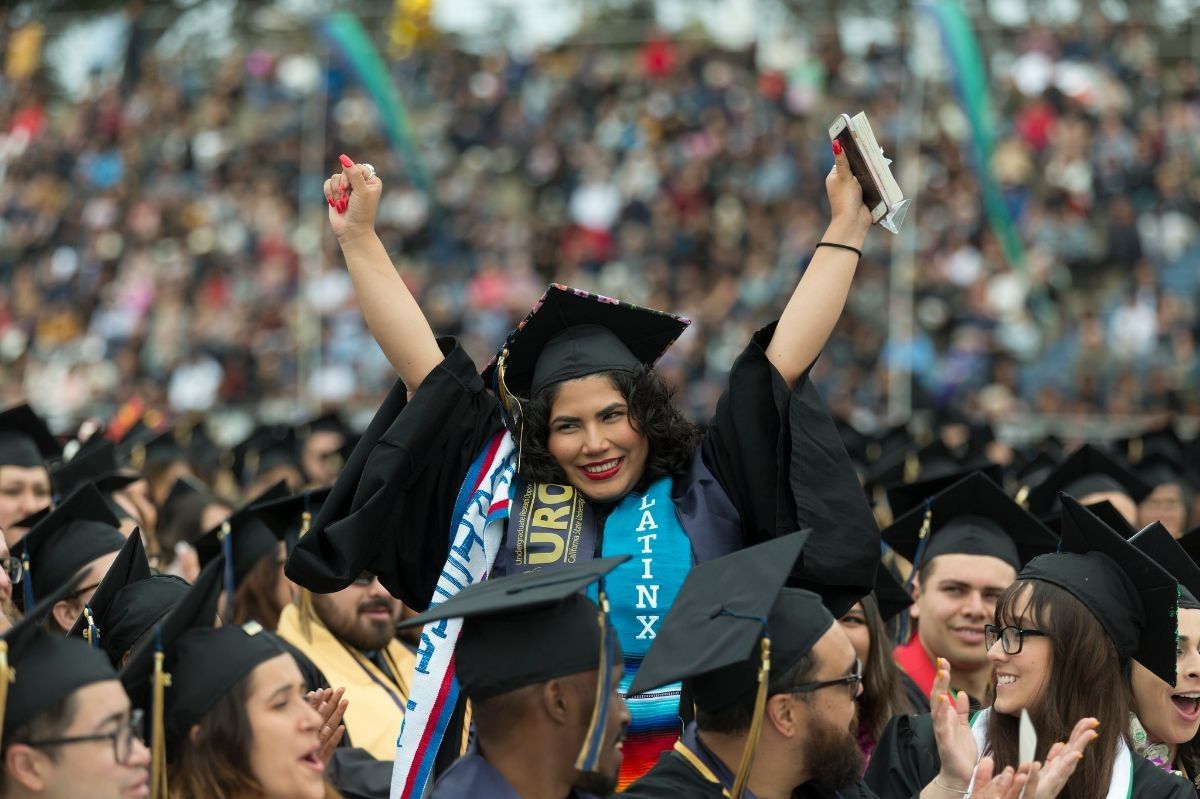
California State University, Monterey Bay (CSUMB) achieved reaffirmation of its accreditation from the Western Association of Schools and Colleges (WASC) in July 2019. The reaffirmation is for 10 years, the longest achievable period of accreditation.
The WASC Senior College and University Commission (WSCUC) commended CSUMB in a number of areas, particularly the increase in graduation rates since 2011. A recent Chronicle of Higher Education publication recognized CSUMB as one of three public universities in the U.S. with the greatest improvements in graduation rates. The Commission also praised the university for its commitment to the whole student, a culture of innovation and strong regional stewardship.
“I would like to thank all the many faculty, staff and administrators who made this achievement possible through their on-going and lasting commitment to reflection and improvement which was visible throughout the Institutional Report submitted to WSCUC as part of the reaccreditation effort,” President Eduardo M. Ochoa said.
Accreditation aids institutions in developing and sustaining effective educational programs and assures the educational community, the general public, and other organizations that an accredited institution has met high standards of quality and effectiveness.
CSUMB professor, researchers decode white shark genome
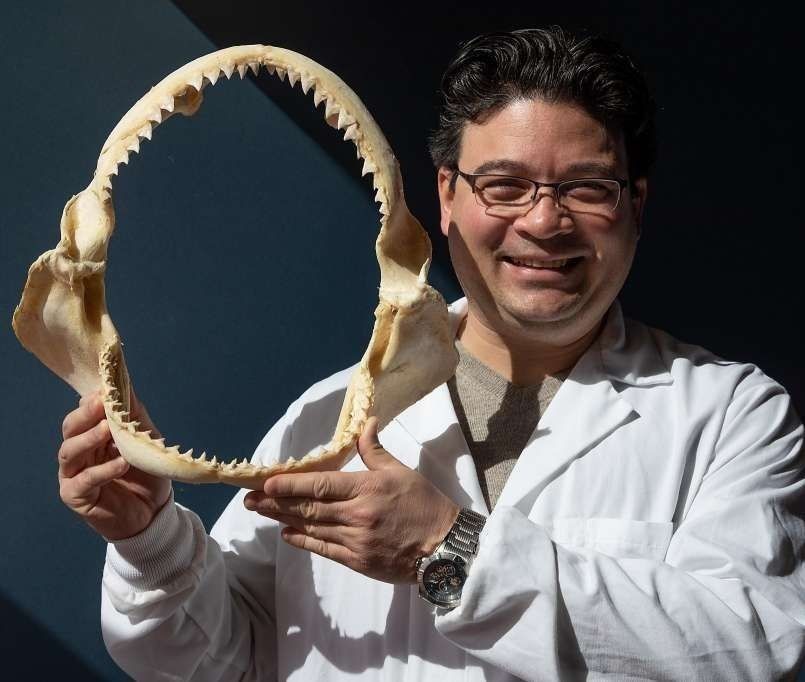
Assistant Professor Nate Jue with the School of Natural Sciences at Cal State Monterey Bay collaborated with an international team of researchers to decode the entire genome of the white shark. The results of their study were announced in March 2019 and marked a major scientific breakthrough which could assist in cancer prevention in humans.
The findings were published in the scientific journal “Proceedings of the National Academy of Sciences.” Through comparisons with other species, genetic adaptations in the white sharks can help scientists better understand how important processes like the repair of damaged DNA may function in other organisms including humans.
The researchers discovered unique blood-clotting and cancer-protection genes within the white shark genome. Further studies may assist medical researchers in their efforts to prevent cancer, treat age-related ailments and heal injuries in humans.
In addition, researchers were shocked to discover the size of the white shark genome measured approximately one-and-a-half times the size of the human genetic code. Decoding the white shark genome may also assist with the conservation of this often feared, yet vulnerable species by providing information about white shark population dynamics.
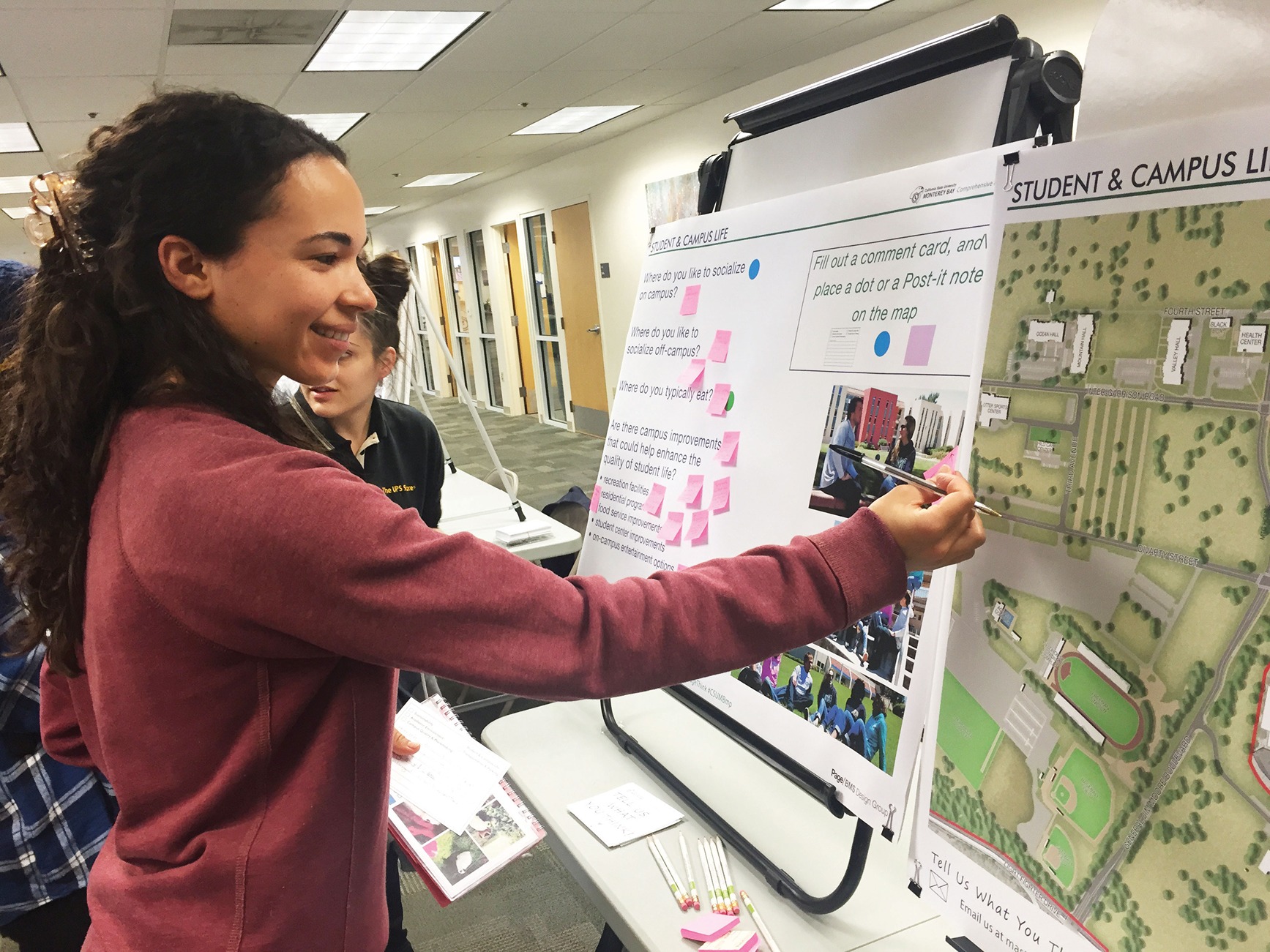
Since the university opened in 1995, the campus has grown from 650 students in repurposed buildings on a former Army base to a 21st century institution for teaching, research and innovation.
To accommodate the expected growth to 12,000 students by 2024, the campus master plan is being updated. The master plan provides a road map for growth and renewal of the campus. It includes academic needs such as classrooms and labs; student and residential life, such as a student union, recreation center and housing; infrastructure; sustainability; transportation; and connections with neighboring communities. The draft is expected to be completed by the end of the year.
After a series of meetings with campus groups to start the process, it became clear that there is an interest in making the campus more pedestrian- and bike-friendly.
Page/BMS Design Group of San Francisco has been hired to lead the process.
Marina, university team up on student housing project
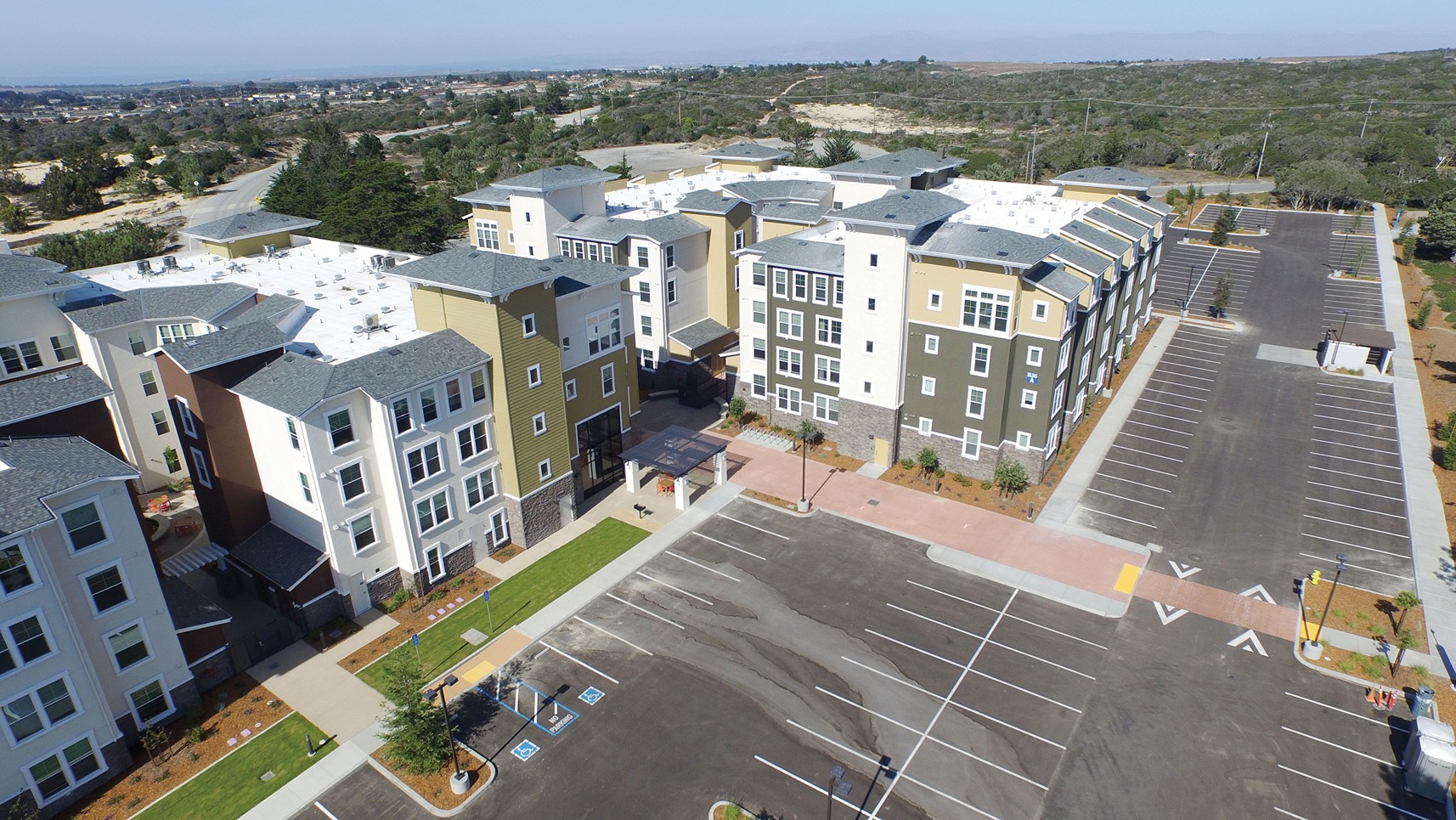
It’s about as far as you can get from dormitory life. The Promontory, a student housing complex just north of campus in Marina, opened in August. It’s the first new housing to come online since 2004. The project consists of three 150,000-square-foot, four-story buildings, with a total of 174 units and 579 beds. All units — which range from one to four bedrooms —come with a microwave, stove/range, dishwasher and washer and dryer.
The development has plenty of perks that have proven popular with students: a two-level fitness center, a game room with pool table, study rooms, a cyber café with kitchen, and a theater. Each of the buildings has an interior courtyard.
The project was built to LEED silver standards. It is the first joint housing venture between the city of Marina and CSUMB.
CSUMB acquires National Steinbeck Center

California State University, Monterey Bay and the National Steinbeck Center have completed a deal that will bring the university to the city of Salinas.
Under terms of the deal, negotiated among the university, the Steinbeck Center and the city of Salinas, CSUMB’s corporation purchased the building for $3 million. In addition, CSUMB paid the city $100,000 for the land beneath the building.
The Steinbeck Center will remain as a tenant, with an 80-year lease.
“This is our front door to Salinas and we’re going to use this as a way to connect to the community and respond to their needs,” said CSUMB President Eduardo Ochoa.
The University Corporation at Monterey Bay is a non-profit 501(c)(3) auxiliary organization that operates as the business arm of the university. It provides direct support for a number of university programs and activities.
The university is considering how to use the space. Possibilities include cultural and educational programming and outreach by staff members from CSUMB’s admissions and financial aid offices. In addition, the space will continue to be available as a resource for the community.
“We are planning on engaging the campus and our partners in Salinas in discussions of how we might best advance the mission of the university and meet community needs,” said CSUMB Provost Bonnie Irwin.
Art donations bring campus to life

Walk into the library and look around. Many of the walls have color and character thanks to the multiple pieces of beautiful art that decorate the walls. These pieces, along with pieces displayed throughout campus, are made possible by the University Art Committee – and more is on the way.
The University Art Committee, comprised of Holly Ochoa, administrators, faculty, staff and students, is a recommending body to the President that facilitates the acquisition and placement of donated art throughout campus. Many pieces are possible thanks to the generosity of an anonymous donor.
The artists represented among the works that CSUMB has been gifted include Eleen Auvil (the copper panel piece at the library stairwell), Susan Manchester, Barry Masteller, Amy Ellingson, Chris Winfield, Charles Eckart, Lucas Bloc, Cynthia Ona Innis, Susan Parker, Rick Arnitz, and Jamie Brunson. In the library reference area, the Cornwell mural is displayed on loan from the Monterey Museum of Art.
In addition, a three piece work by Vern Trindade, recently exhibited at the Triton Museum in San Jose, will be mounted in the near future at the library. For more information or to inquire about making art donations, contact the committee chair, Ilene Feinman, dean of the College of Arts, Humanities and Social Sciences, at ifeinman@csumb.edu.
Published Feb. 2, 2019
Salinas Center for Arts & Culture celebrates one-year anniversary
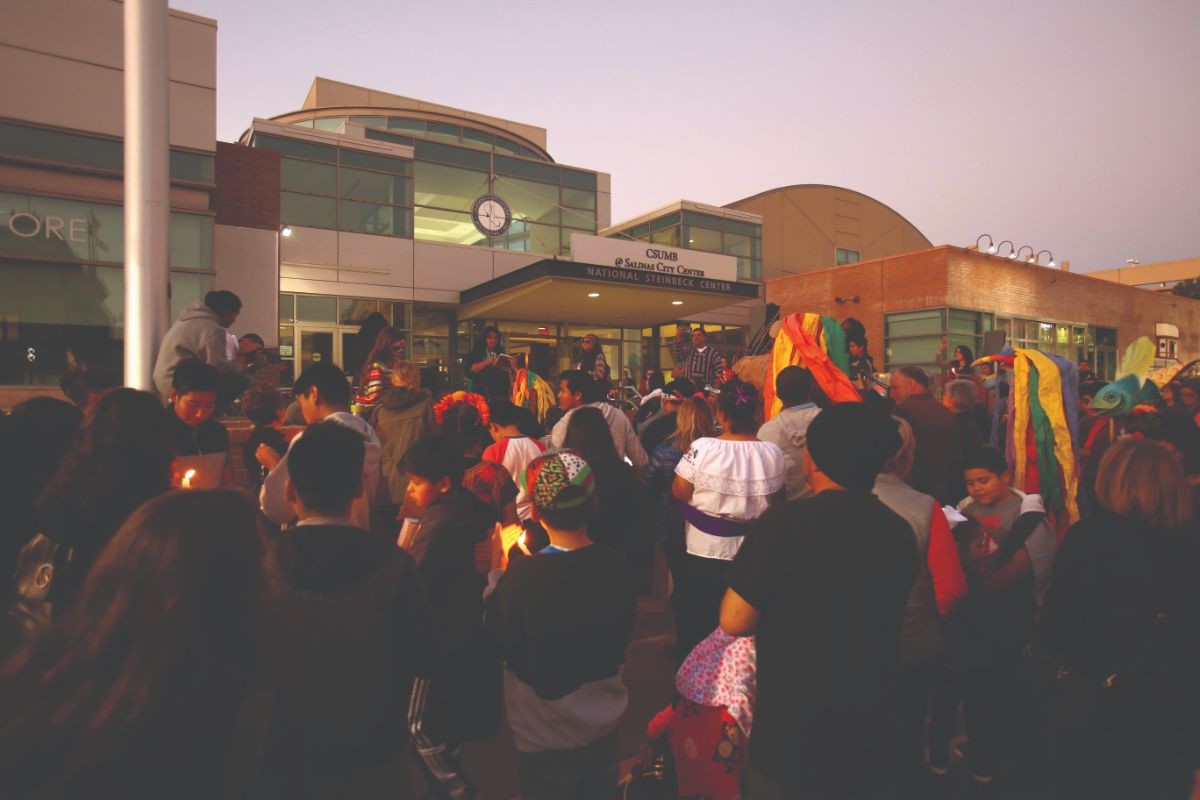
California State University, Monterey Bay’s Salinas Center For Arts and Culture officially celebrated its first anniversary with a series of Dias de Muertos events on Friday, Nov. 2, 2018. The center is housed within CSUMB @ Salinas City Center and strives to create a community of artists and a culture of activism in Salinas.
Over the past 12 months, the center has hosted a wide range of events, all free and open to the public, to include monthly First Friday events. Along with community-centered events encouraging local residents to visit, the center has held countless exhibitions featuring artwork from local artists and CSUMB students.
The center serves as a pivotal piece in extending CSUMB’s impact into the Salinas community and upholding the mission and vision of CSUMB. Hosting open community events is in keeping with CSUMB’s role as a community resource, providing forums for provocative discussions that can impact thought and action on issues important to our community.
Director Enid Ryce said the center serves as a boon for students as well, with “opportunities to create exhibitions, work in collaboration with community partners, and be in conversation with national figures in arts and humanities.”
Grant supports continued growth of Teacher Pathway Program
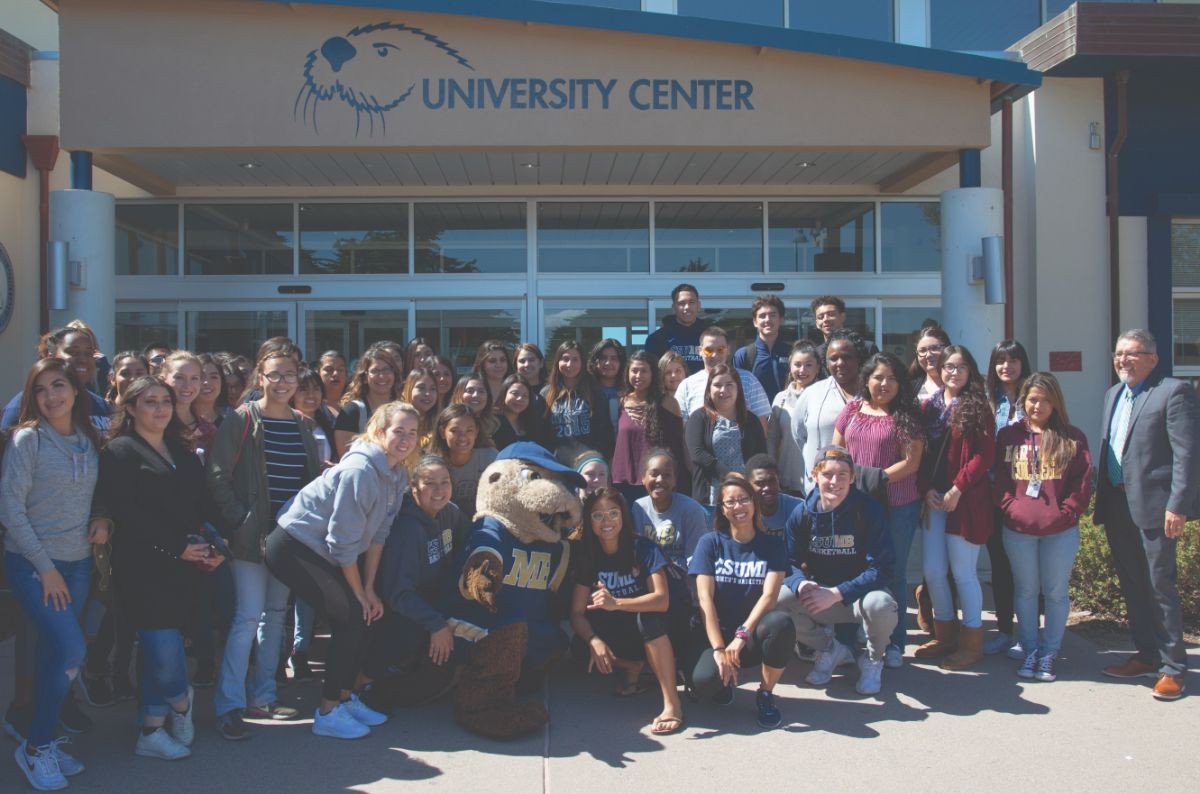
Hartnell College and California State University, Monterey Bay’s joint Teacher Pathway Program received a $335,000 grant from The Claire Giannini Fund last Fall that will help ensure the program’s continued growth and success. The program prepares fully-qualified elementary and special education teachers for Monterey County communities, with an eye towards sustainability.
The first cohort of the program, which began in fall 2016, has entered its third year. Students have achieved an 86 percent graduation rate — a much higher graduation rate than students enrolled in a traditional program — and earned their associate’s degree for transfer in two years. The first cohort is now working to earn their bachelor’s degrees in liberal studies and teaching credentials at CSUMB.
The Teacher Pathway Program is a collaborative “grow-our-own” solution to addressing the regional teacher shortage, said CSUMB College of Education Dean Jose Luis Alvarado.
The unique partnership, along with the streamlined program design, reduces the time it takes to transfer, thereby reducing costs to the participants.
The success of the program has resulted in expansion to new locations in South Monterey County and Salinas, and an enrollment increase of 80 percent with 28, 38 and 42 students in each cohort over the last three years.
Congressman Panetta introduces bill supporting veteran students
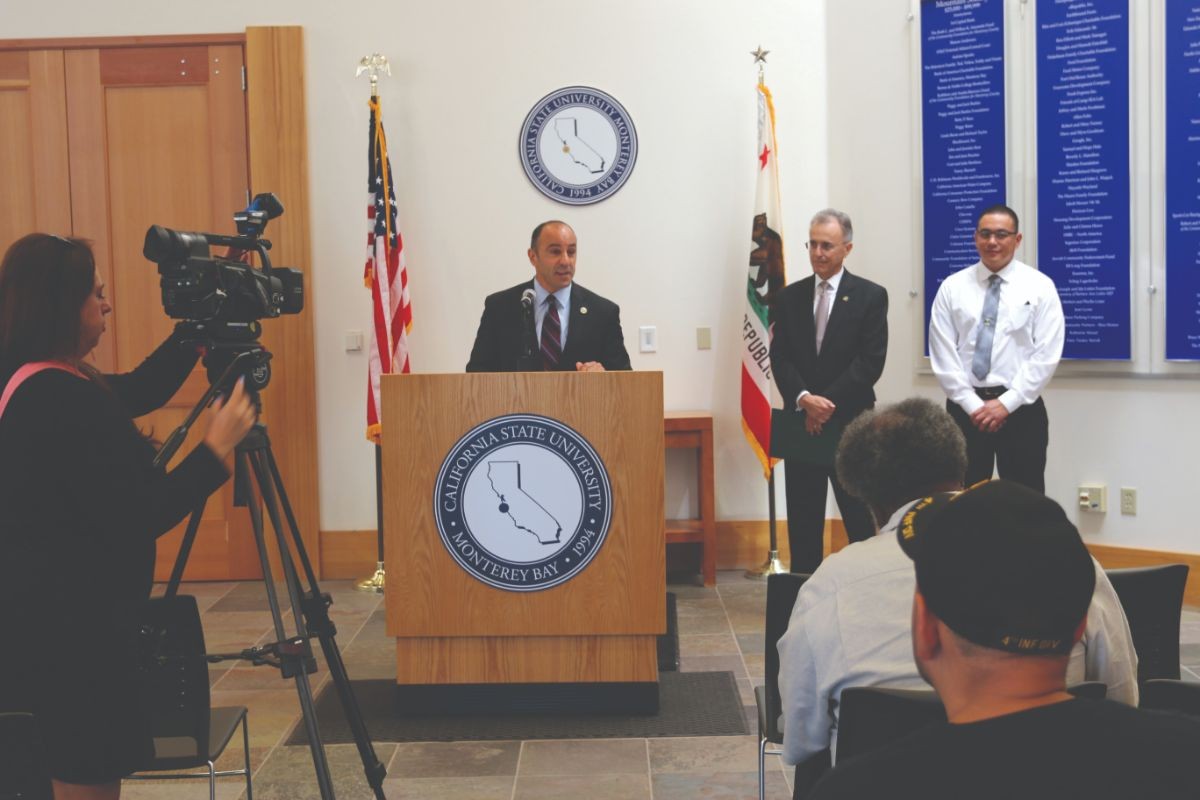
Congressman Jimmy Panetta, D-Carmel Valley, introduced the Veterans Resource Center Act during a press conference last fall at CSUMB. The legislation would authorize the Department of Veterans Affairs to provide federal grants to public universities to establish, maintain, and provide services at Veterans Resource Centers on campuses. It also incentivizes priority registration for veteran and military-connected students.
The legislation, co-sponsored by Nebraska Congressman Don Bacon, empowers universities to establish support centers modeled after the proven success of the California State University system’s Veteran Success Centers. CSUMB currently has more than 50 veteran students and a Veteran Student Services center that provides information on campus resources, veteran benefits, veteran service organizations, and social and study opportunities.
“Federal tuition support under the Post-9/11 G.I. Bill expires after three years, pressuring veteran students to complete their degrees early,” Panetta said.
“This bill will help our veterans choose classes that fit their personal needs, allowing them to graduate on time, while simultaneously providing them social and educational support. While these support resources are utilized throughout the California State University system, including here at home at CSUMB, I look forward to expanding this service to universities and veterans across the country.”
CSUMB business students attend West Point ethics conference
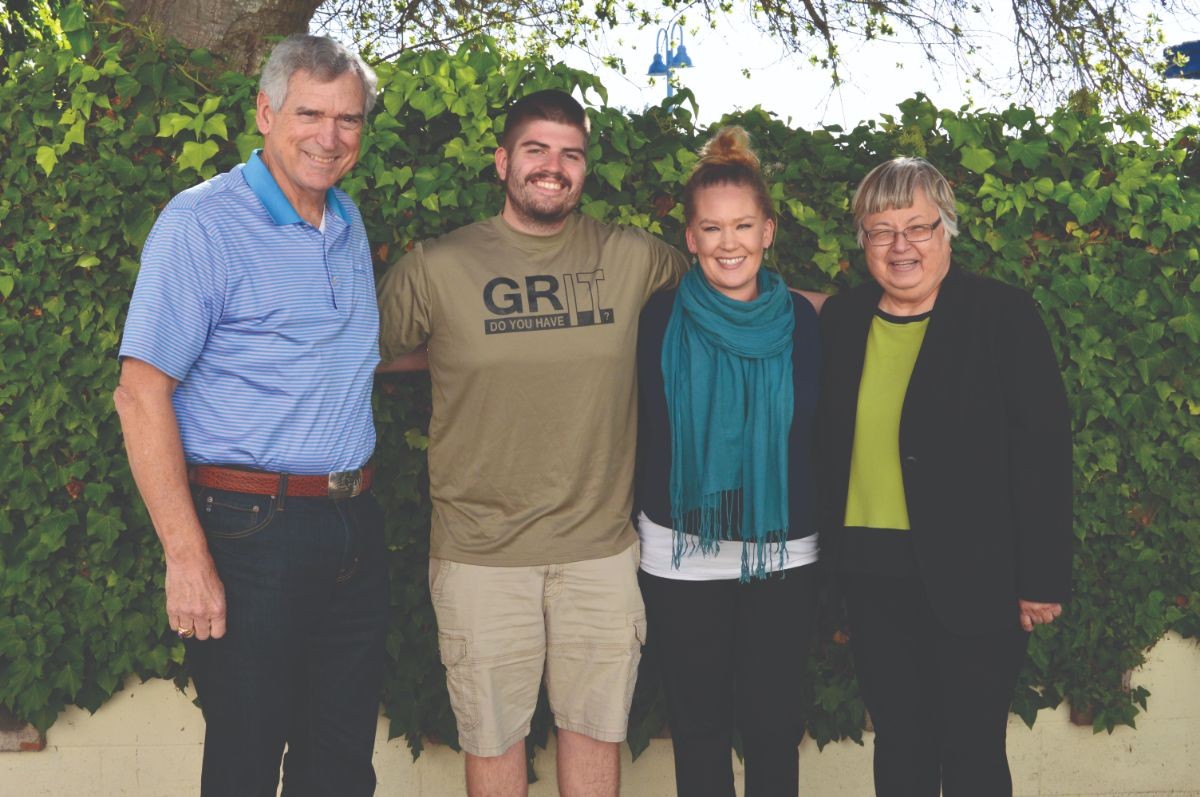
Two CSUMB College of Business students participated in the 34th annual National Conference on Ethics in America (NCEA) at the United States Military Academy (USMA) in West Point, N.Y, in October. The two-day conference is part of the USMA Cadet Character Education Program, and outstanding civilian students from universities across the country are invited to attend.
Brandon Baughn, a business administration and marketing major, and Alice Oaks, who is studying business administration and accounting, were able to attend thanks to the generous support of a sponsor.
This year’s conference theme was “Grit: The Unyielding Determination to Prevail.” It aimed to inspire and challenge attendees to overcome obstacles to achieve their goals, as well as find innovative solutions for pressing problems.
Keynote speaker Shilo Harris, a retired U.S. Army Cavalry Scout, survived devastating injuries after his armored vehicle was struck by an improvised explosive device (IED) in Iraq. Other speakers included Karl Meltzer, an ultramarathon record holder; Capt. Shaye Haver, the first female Army Ranger; and Adrianne Haslet, the Boston Marathon bombing survivor who won ballroom dance competitions and ran Boston twice after losing a leg.
Applications soar for fall enrollment
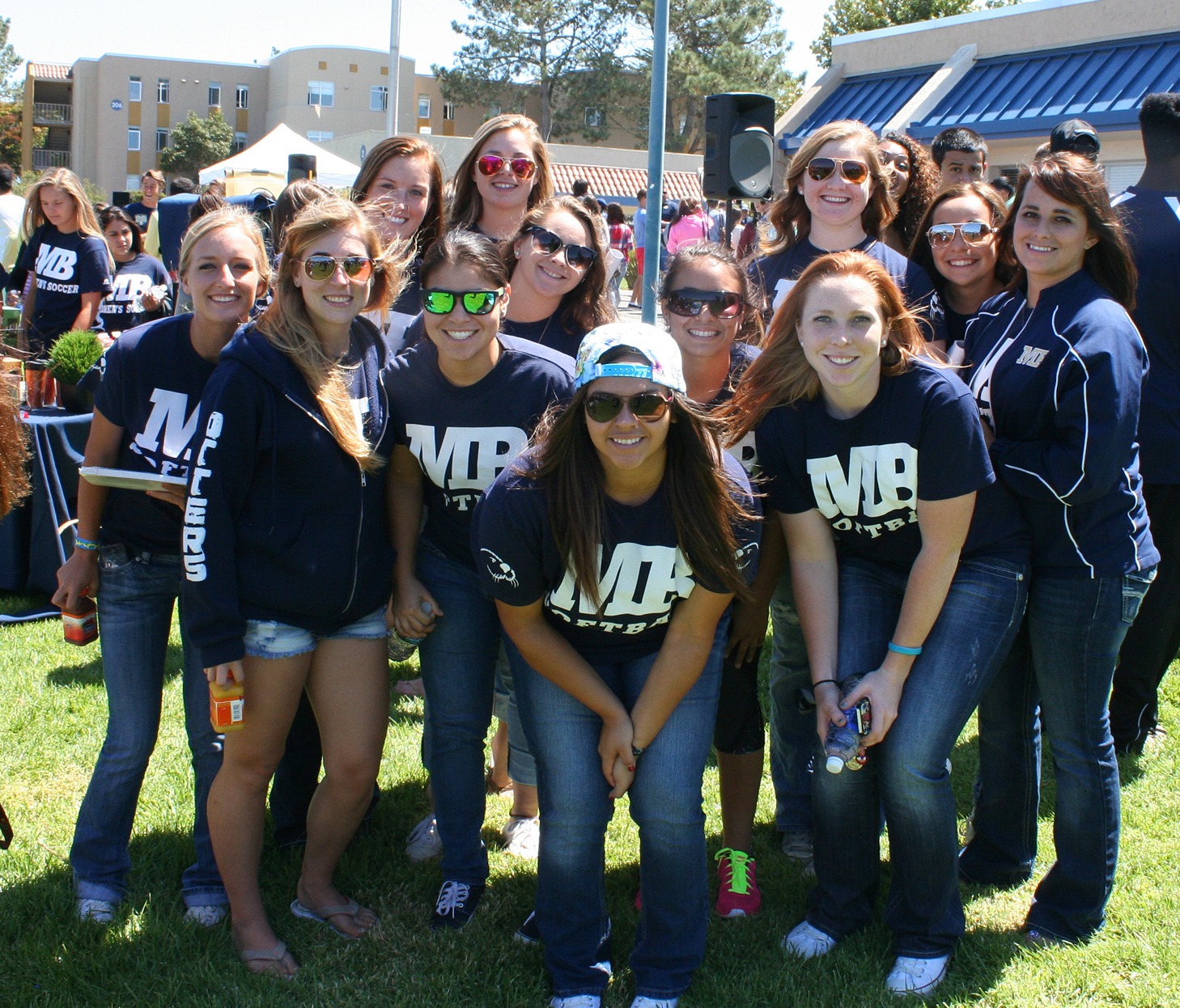
A record number of students applied to attend Cal State Monterey Bay for the Fall 2016 semester.
The university received 16,208 freshmen applications by the Nov. 30 deadline to apply. That’s up almost 5 percent from the previous year. The number of transfer students applying to attend CSUMB increased 15 percent to 4,124.
“We are slowing our enrollment growth to match available resources for Fall 2016,” said Dr. Ronnie Higgs, vice president for student affairs and enrollment services. “We anticipate the enrollment to be just under 7,000 students.”
The entire California State University system received a record number of applications for Fall, with more than 830,000 submitted by prospective students, marking a 4.8 percent increase and more than 40,000 applications over last year’s total.
“CSUMB is a first-choice institution,” Dr. Higgs said. “Students from the region, California and beyond know that CSUMB will prepare them for success.”
CSUMB expands its presence in Salinas
Cal State Monterey Bay has leased the main building vacated by last year’s closure of Heald College in Salinas and will begin offering classes in that facility later this year.
The lease, which went into effect Feb. 1, is for a 25,000-square-foot building located on North Main Street off Alvin Drive. The building includes 11 classrooms, several of which can serve as labs, and a number of offices. The facility will be known as CSUMB @ North Salinas.
“Leasing the building previously occupied by Heald College will allow us to increase our outreach and our course offerings to Salinas and the Salinas Valley,” said CSUMB President Eduardo Ochoa. “With the space crunch on our main campus, and the need to expand higher education opportunities in Salinas, this seemed to provide an ideal opportunity.”
The building has been vacant since April 2015, when the for-profit college’s parent company, Corinthian Colleges, Inc., closed its remaining campuses.
CSUMB first established a presence in Salinas last year, when the University Corporation purchased the National Steinbeck Center’s building in Oldtown.
Renovations are continuing on the building, to be known as CSUMB @ Salinas City Center. The National Steinbeck Center remains the name of the non-profit organization that manages the Steinbeck museum, which continues to occupy about half of the downtown structure.
$1 million grant creates data science program

Starting next fall, CSU Monterey will train students in the field of biomedical data science, thanks to a $1 million grant from the National Institutes of Health.
Biomedical data science is the application of statistics and computer science to biomedical problems. It has hundreds of applications, from tracking disease outbreaks to providing personalized medical care.
CSUMB will partner with UC Santa Cruz’s Center for Big Data in Translational Genomics over the five-year project.
“The emphasis for the program is really on the students and on preparing them for careers,” said Dr. Judith Canner, a CSUMB statistics professor and the principle investigator on the grant. The funding will enable CSUMB to create data science classes, train faculty, and fund student research - one of CSUMB’s strengths.
CSUMB professors will develop interdisciplinary coursework in data science, using classes offered at UCSC as a model. “UCSC is serving as a mentor institution,” Dr. Canner said. “They have a lot of courses and programs in this area, and we are just in the beginning stages of development.”
The ultimate goal of the grant is to enhance diversity in biomedical data science by opening up opportunities for CSUMB students who might not otherwise have access to such advanced training.
Students help with one city’s sustainability efforts
CSUMB has partnered with the city of Salinas as part of the Sustainable City Year Program. Dr. Dan Fernandez, professor of Science and Environmental Policy, is coordinating the effort.
The Sustainable City Year Program (SCYP) is a one-year partnership between the campus and an interested city partner. Regional cities often have projects that have some element of sustainability (mixed-use development, water conservation, improved signage, and increased access to bike or walkways, etc.) that they would like to undertake, but lack sufficient staff time or resources.
Through the program, CSUMB students have the opportunity to work on real-world problems, while the city benefits from the university’s expertise as it provides fresh perspectives on familiar issues.
Last fall, CSUMB completed its first semester of running this program. Three classes worked with Salinas on projects related to road design for West Alisal Street, analyzing the wealth of GIS data the city collects related to parking and infrastructure, and looking at parent-child interactions within public spaces. More classes are working with the city this semester.
Through this program, CSUMB has become a member of the Educational Partnerships for Innovation in Communities Network, including more than two dozen institutions across the country. CSUMB is the second school in the state of California to initiate this program.

When graduates cross the stage at commencement next May, they will join not only the Class of 2015, but also The Class of 3 Million – three million graduates of the California State University system.
It’s one of the largest alumni networks in the world.
To mark this milestone, 2015 graduates as well as alumni from all 23 CSU campuses are invited to “sign” The Class of 3 Million Yearbook. The online yearbook is a way for CSU alums to connect and build relationships with one another.
Everyone who signs the yearbook will be entered to win one of three $10,000 scholarships for a current or future student. All 2015 grads will receive Class of 3 Million silicone wristbands in time for commencement ceremonies.
Sign the yearbook at Classof3Million.calstate.edu.
Professor, grad student work to protect Big Sur River
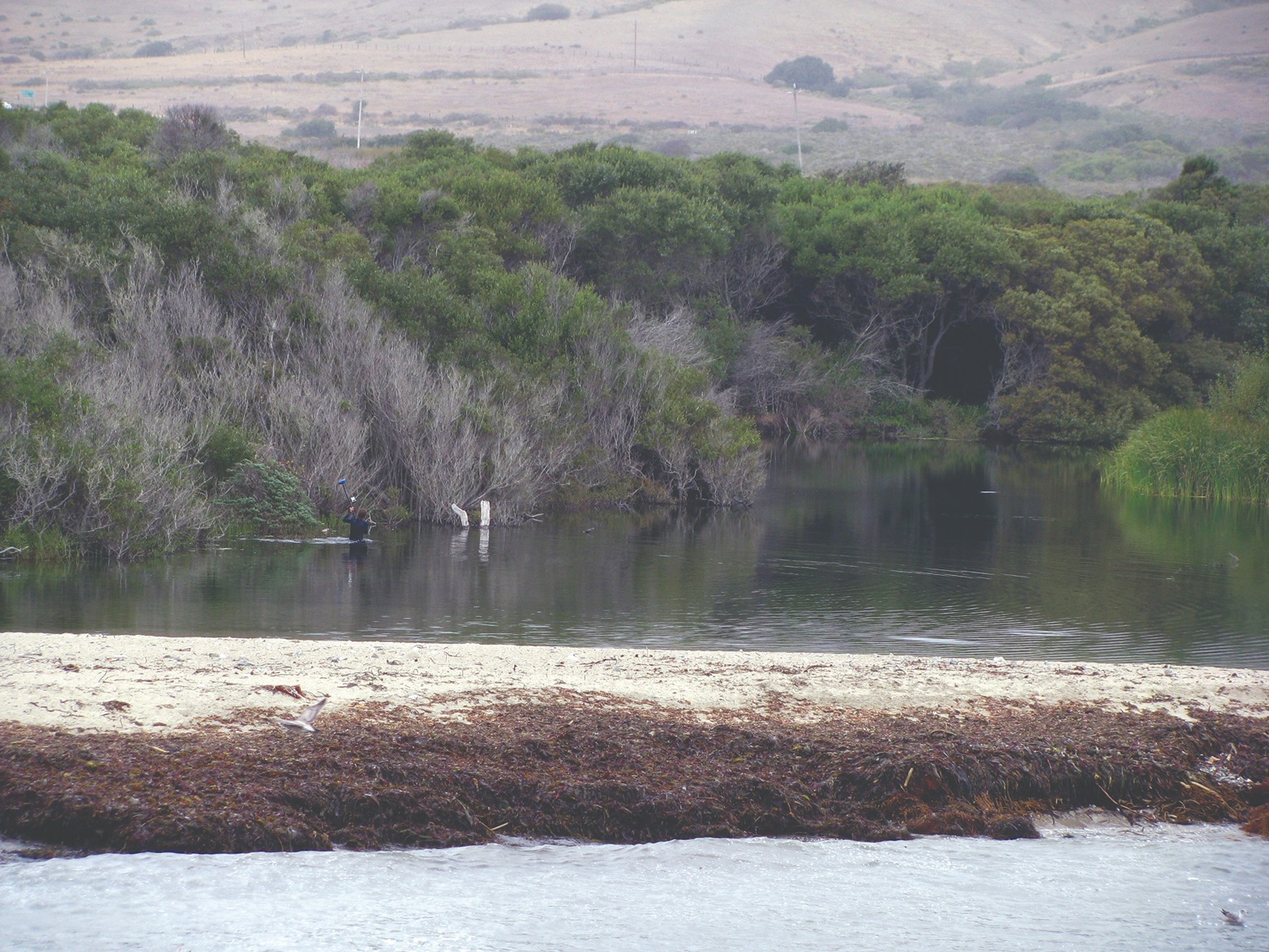
Cal State Monterey Bay Professor Doug Smith and graduate student Sam Phillips are collaborating with federal and state resource agencies to develop the Big Sur River Watershed Management Plan. The plan summarizes the environmental condition of the watershed and details the steps that residents and resource managers can take to sustain the local salmon population.
The Big Sur River and other ecologically critical streams and wetlands are constantly threatened by human activities that alter how water flows over and through the landscape. Urbanization and agricultural impacts are the leading cause of declining salmon populations along California’s Central Coast. While some impacts are inevitable, they can be markedly reduced or avoided through thoughtful and well-considered planning.
Resource managers can use the Big Sur management plan to apply for state and federal funding to make improvements that will help this important species thrive far into the future. Phillips used a wide range of cutting-edge tools in the project. The internship experience helped him land a position as a Fish Habitat Specialist with Eco Logical Research, Inc.
Study could yield changes in fishing behavior
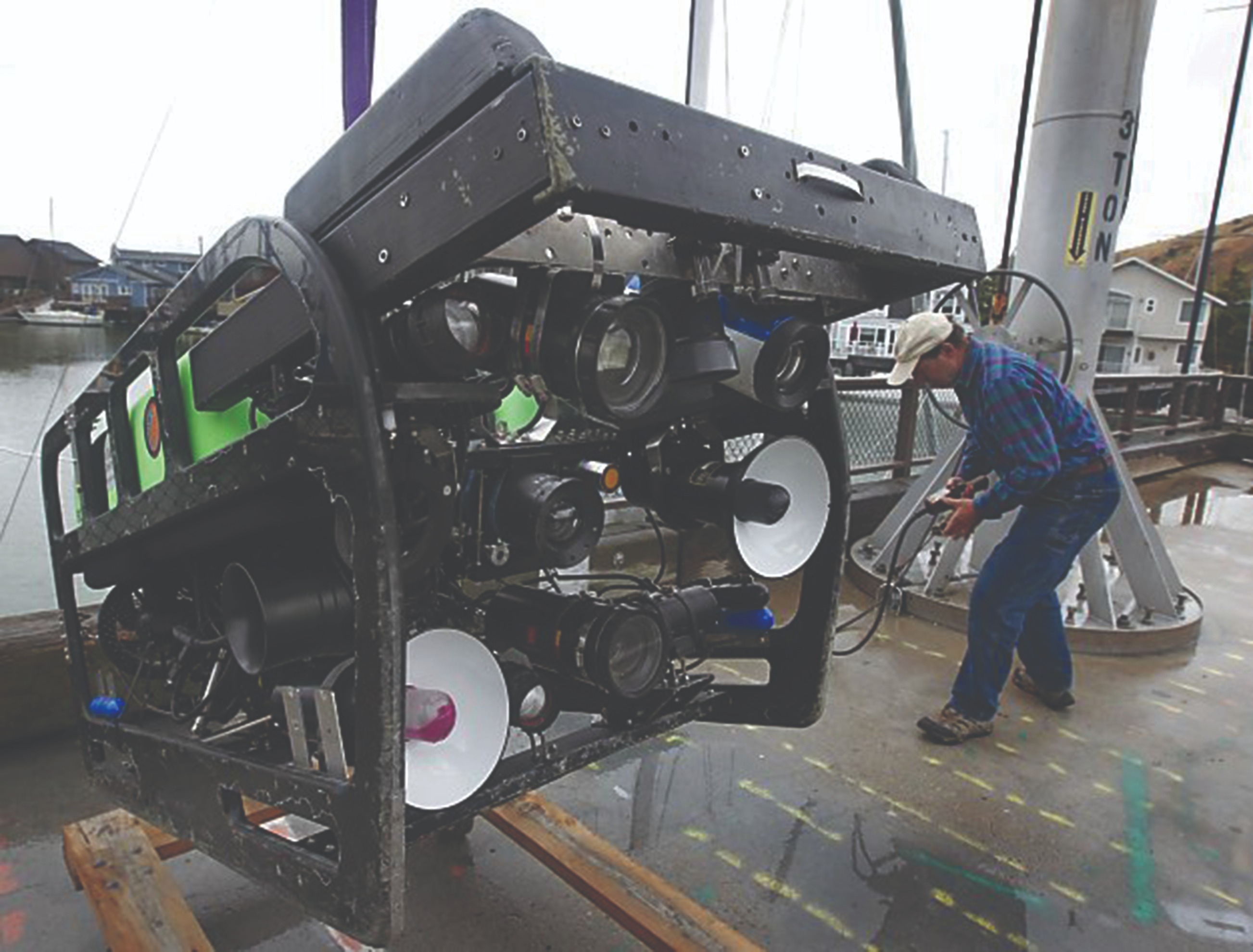
With a $320,000 grant from the National Oceanic and Atmospheric Administration and help from several partners, Professor James Lindholm will study how the impact of traditional trawling on the seafloor may be reduced by using modified gear.
In traditional bottom trawling, large nets are dragged across the seafloor, altering fish habitats that occur there. Dr. Lindholm’s study will compare the impacts of traditional gear to newly modified gear that significantly reduces contact with the seafloor.
The project will start next summer off Half Moon Bay. “We hope the study will yield insights that result in changes in fishing behavior,” Dr. Lindholm said.The project is a collaborative effort among CSUMB, the Environmental Defense Fund, the Monterey Bay National Marine Sanctuary and fisherman Giovanni Pennisi.
Catch CSUMB on tv

In partnership with KCBA Fox 35, the university is producing a weekly television program, “Campus to Community.” It’s part of CSUMB’s commitment to serving as a catalyst for positive change – through education, outreach and public service.
The show highlights speakers and issues of interest to the Central Coast. Students, alumni, faculty and staff are involved in the production of the program. Some installments feature one speaker, others are a magazine format with short segments highlighting various programs and professors.
The hour-long show started in early October and airs every Sunday at 8 a.m.
KCBA can be found on channel 3 on Comcast and on channel 35.1 on the campus cable system.
Cinematic Arts Professor Luis Camara pens successful film screenplay
Luis Camara has added another accomplishment to an impressive cinematic career. This year, the longtime CSUMB Cinematic Arts professor wrote a screenplay for a comedy that became a box office success in Mexico.
The film “Me estás matando Susana,” (you’re killing me Susana) is based on a novel by the prominent Mexican author José Agustin. It stars Gael Garcia Bernal and Verónica Echegui and opened on 600 screens in Mexico, coming in 7th at the box office on opening week. Reviews have been positive, with major newspapers such as El Norte, Reforma and Exelsior praising the film and screenplay.
In a video review, critics for El Norte called Camara’s screenplay “a solid script” and that the “well executed film” captures “the essence of the Mexican Onda literary movement, while actualizing it to the present day.”
Originally from Mexico City, Camara is a graduate of the American Film Institute. He has directed the award-winning short films “Endgame” and “Ex Voto,” and the feature films “Steel Trap” and “Silencio,” winner of the best feature award at the Los Angeles Fear and Fantasy Film Festival and best cinematography award at the Queens International Film Festival.
CSUMB students, local researchers to benefit from NOAA Grant

CSUMB is one of six universities across the nation that will benefit from a new five-year, $15.5-million National Oceanic and Atmospheric Administration (NOAA) Center for Coastal and Marine Ecosystems. NOAA has approved a total of $3 million to be awarded this year for the first phase of the new NOAA Cooperative Science Center.
“With CSUMB’s portion of the funding, we will be able to support between six and eight students per year on our campus,” said CSUMB School of Natural Sciences Associate Professor Corey Garza.
Graduate students will be eligible for two years of funding; including a yearly stipend of $20,000 and the full cost of tuition. Graduate students also receive a $10,000 scholarship to support research and summer funding up to $5,000 to support research activities at a NOAA facility.
Undergraduates funded through the center will receive one year of stipend support up to $12,000 and a research account of $1,000. Faculty who mentor students through the center will have access to funding to support the purchase of supplies and non-capital equipment for their respective groups. Access to NOAA vessel time and post-doctoral funding will also be available.
Research topics include: fisheries, eco-forecasting, terrestrial impacts on coastal systems, climate change, ocean acidification and ocean engineering.
Bachelor of Science in Nursing program at CSUMB receives CCNE accreditation
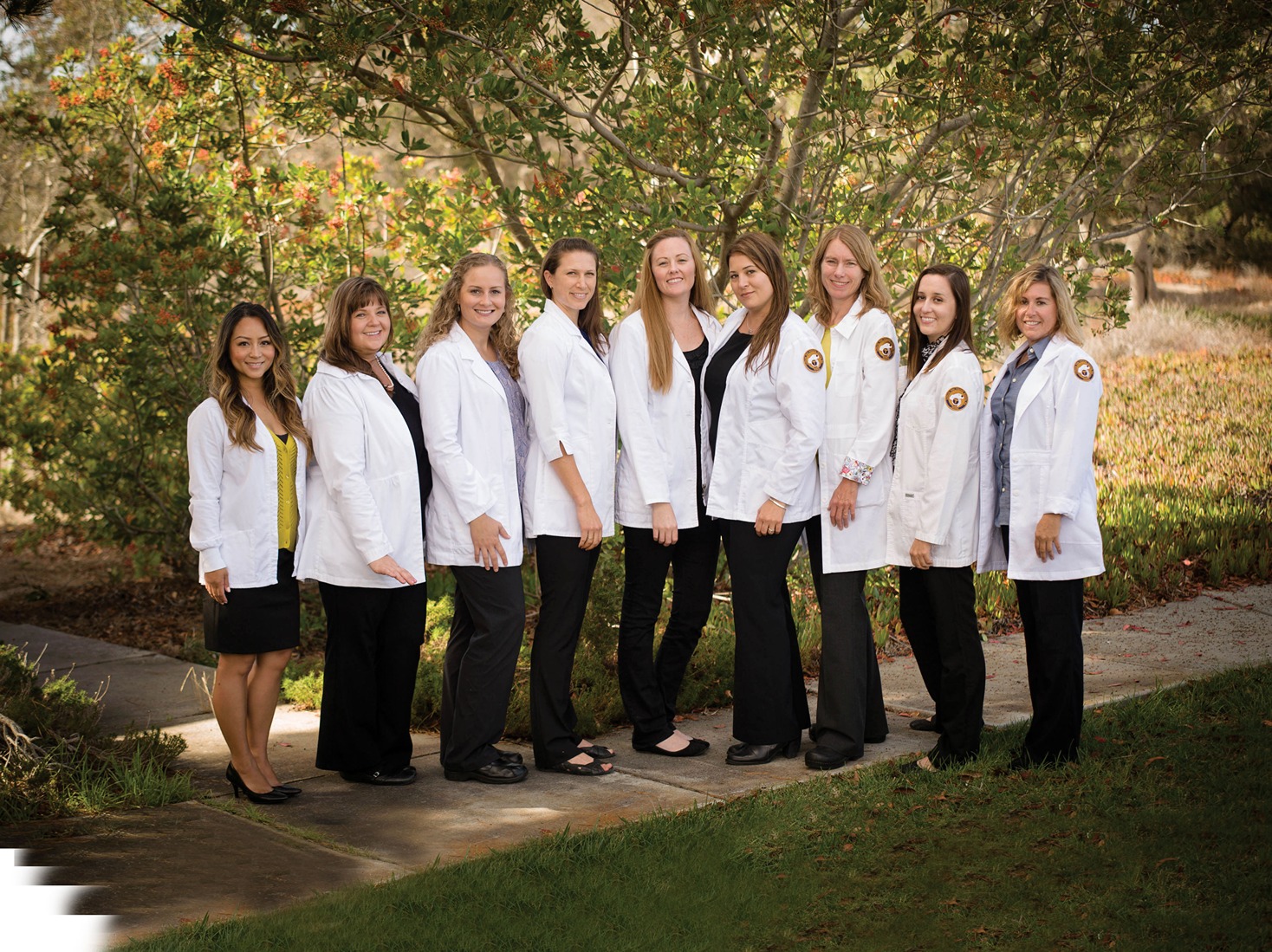
CSU Monterey Bay’s Bachelor of Science in Nursing (BSN) is now the only Commission on Collegiate Nursing Education (CCNE) accredited program in the tri-county region.
Bachelor-prepared registered nurses (RNs) advance the nursing profession and qualify RNs for advanced professional career opportunities in a wider array of healthcare settings.
“BSN graduates are prepared with an increased knowledge of the theoretical practice of nursing and in turn are able to provide a broader spectrum of healthcare to our community,” said CSUMB Department of Nursing Director, Savitri Singh-Carlson, who has a doctorate in nursing. “This program will help address a critical healthcare gap in the region by increasing the number of bachelor-prepared RNs.”
While there is no direct entry BSN program at CSUMB, partnerships and pathway programs with local community colleges facilitate a seamless transition from associate degree in nursing (ADN) and RN programs to the CSUMB BSN program. By earning a BSN, RNs are also prepared to pursue a master of science in nursing (MSN).
According to Singh-Carlson, the CSUMB Department of Nursing hopes to submit a proposal for a MSN degree in 2017 with hopes that the degree could be offered in 2018.
CSUMB Science and Environmental Policy is now the School of Natural Sciences

The CSUMB Science and Environmental Policy Division has a new identity. The division has changed its name to the School of Natural Sciences (SNS), and will continue to be a part of the College of Science, together with the School of Computing & Design and the Mathematics & Statistics Department.
The SNS is the home for an array of academic degree programs, research laboratories, and community outreach programs. All SNS programs provide outstanding opportunities for over 1,300 students to learn how to use interdisciplinary science, technology and communication skills to serve community needs.
The SNS places a heavy emphasis on preparing students for rewarding careers and more advanced academic study in fields related to environmental resource assessment, management, and policy. The faculty provides particular strengths in marine and terrestrial biology and ecology, watershed science, marine science, molecular biology and genetics, environmental education, and advanced technologies for geospatial data collection, analysis and visualization.
Enid Baxter Ryce’s Film Recognized

CSUMB professor and experimental filmmaker Enid Baxter Ryce had her Fort Ord feature film “A Land for War” highlighted in March by The Library of Congress’s Veterans History Project in Washington D.C.
The film was also screened, along with a collection of her students’ documentaries in “Fort Ord: A Sense of Place,” at the National Gallery of Art as a part of the D.C. Environmental Film Festival.
In “A Land for War,” Ryce documents the lands and ruins of the historic Fort Ord and portrays the impact of the military base on the terrain and people. The film’s original musical score is by CSUMB Music Instructor Lanier Sammons.
The student film program, “Fort Ord: A Sense of Place,” is a compilation of the university students’ documentary and experimental shorts focused on the ecology, community and history of the base. The films also feature oral histories collected for the Library of Congress Veterans History Project.
Congress created the Veterans History Project in 2000 to collect, preserve and make accessible the first-hand remembrances of America’s war veterans from WWI through current conflicts, so that future generations may hear directly from veterans and understand the realities of war.
Student Supports Immigrants with Scholarship Program

Daisy Leon Melendrez, a CSUMB service learning student leader, has been selected as a Principal Community Scholar for her community project to provide information to immigrant communities about their constitutional rights.
Melendrez is among 20 college students from Iowa and California selected for the first class of the new program.
The project addresses fears and anxieties of those in immigrant communities about impending changes to immigration policy. The recipients were selected by Principal, Iowa Campus Compact and California Campus Compact after being nominated by faculty or staff from their college or university. They underwent a rigorous review process.
Melendrez is a collaborative health & human services major. She has been the liaison to the Central Coast Citizenship Project in East Salinas.
“We are excited that Daisy has been selected as a Principal Community Scholar for her community project to provide information to immigrant communities about their constitutional rights,” said Pamela Motoike, professor at the CSUMB Service Learning Institute and program adviser.
CSUMB Signs Partnership with Universidad de León, Spain
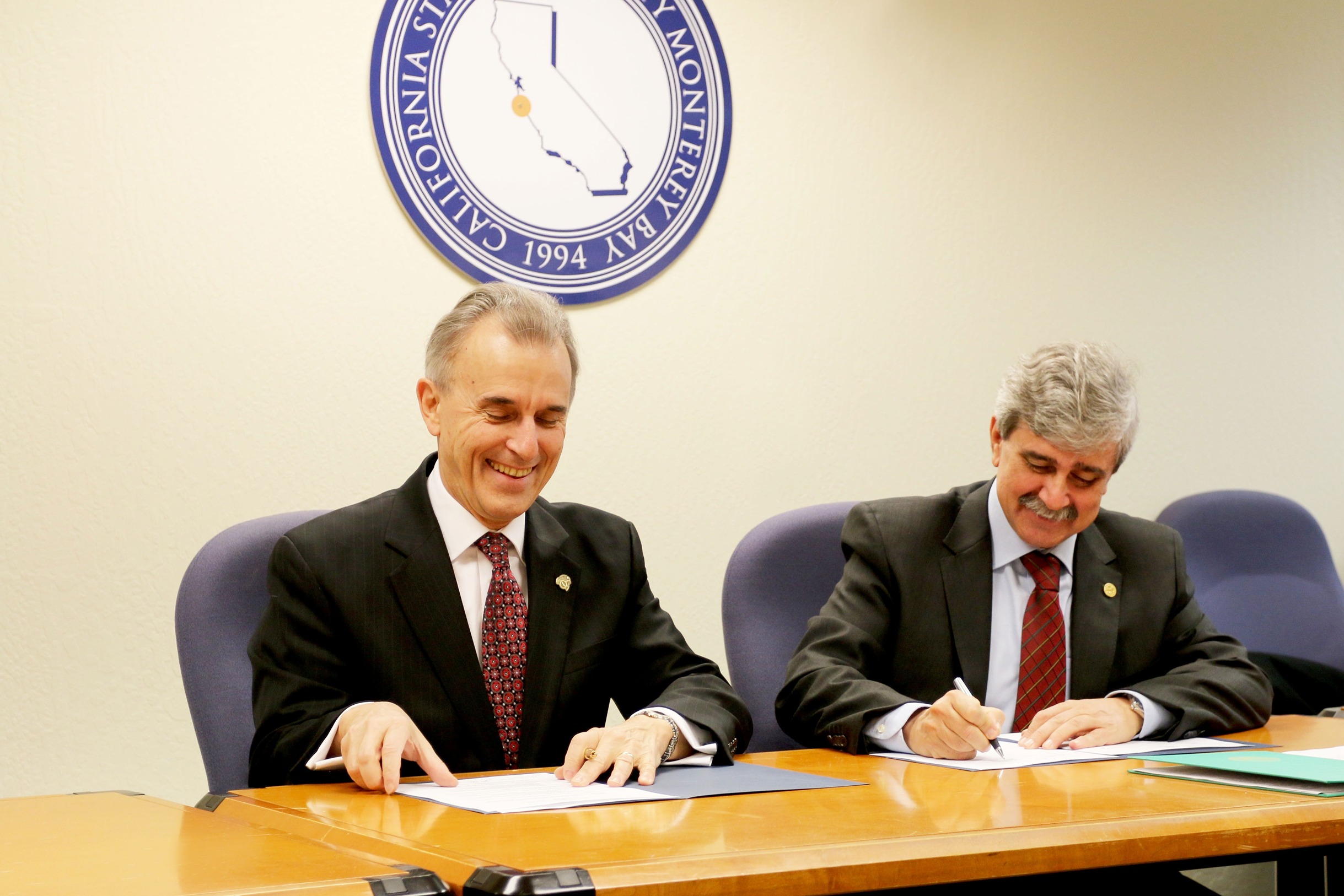
California State University Monterey Bay and Universidad de León, Spain signed a memorandum of understanding recently, creating an international partnership that opens great possibilities for exchange of students, professors and educational resources.
Universidad de León delegates President Juan Francisco Garcia Marin, Professor Oscar Fernandez and Professor Eduardo Compadre toured the CSUMB campus, and met with students, faculty and staff for an official welcoming and signing ceremony to commemorate the new international partnership between the two universities.
The new alliance will allow the exchange of undergraduate students between both universities during certain academic periods. In addition, the alliance will facilitate the opportunity to help each other learn a second language, study a new culture through personal interaction and share best teaching practices in a variety of subject areas.
CSUMB Renovates Veterans Resource Center
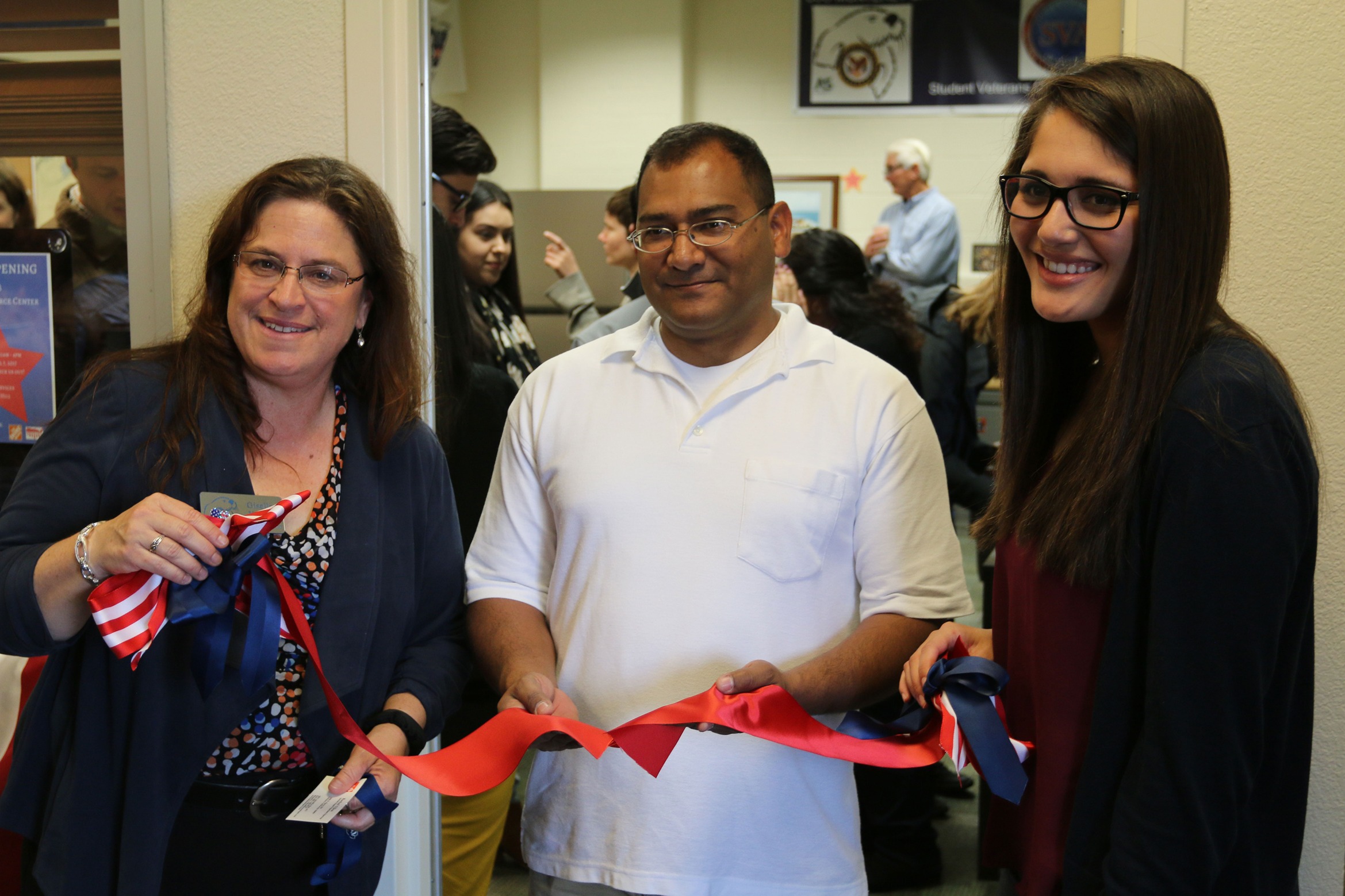
CSUMB recently celebrated the renovation of its Veterans Resource Center, thanks to a generous donation of $6,000 by The Home Depot Foundation (THDF).
The renovations, which include new carpeting and furnishings, were received from THDF in partnership with the Student Veterans of America (SVA). The new and improved Veterans Resource Center offers an inviting atmosphere, allowing veterans to seek assistance with benefits, gain access to support services and build social support networks to motivate each other to stay in college.
“The veteran students on campus finally have a fully furnished space where they can study, relax and connect with each other when not in class,” said CSUMB Veteran Services Coordinator Giselle Young.
CSUMB Student Veterans Organization President, business major and Army veteran Gilbert Bernabe says the Veterans Resource Center has become a home away from home. He utilizes the center more now than during his first semester. “That is all thanks to the work of Giselle, and the sponsors, for making the resource center feel welcoming,” said Bernabe.
“We were very lucky to have received the generous financial support from The Home Depot Foundation,” said Young.