

Festival of Languages, Cultures, and Ideas (FLCI)
The Festival of Languages, Cultures, and Ideas brings together all the members of the CSUMB community to celebrate our connections in a global world and emphasize the value of cultural diversity.
Prior FLCI events by year
Interpreting Book Talk with Dr. Judy Cortes
Introduction to Educational Interpreting and Translation Book Showcase by Dr. Judy Cortes
We invite you to attend the final event of the 7th Annual Festival of Languages, Cultures, and Ideas (Spring 2025) as Dr. Judy Cortes presents an overview of school interpreting and translation with practical applications and skill development for those working as interpreters or using the services of an interpreter. Judy will be discussing her recently published book entitled Introduction to Educational Interpreting and Translation. www.cultureandlanguage.net
This event will be hosted online via Zoom from 4:00pm - 5:00pm on Thursday April 17th. Zoom Link will be available after your RSVP submission as well as on the Google Calendar event linked below.
Presenter and author Dr. Judy Cortes grew up in Uruguay and began working as a field placement coordinator in the Teacher Education Department at CSUMB in 1995. She holds master’s degrees from UCLA and San Jose State, and a PhD in Hispanic Languages and Cultures from UCLA. Cortes is a certified Spanish court interpreter and has been interpreting in legal, educational, and medical settings for a number of years.
This event, co-sponsored by the American Association of Teachers of Spanish and Portuguese AATSP Northern California Chapter and the California Language Teachers' Association (CLTA), is part of CSUMB's School of World Languages and Cultures annual Festival of Languages, Cultures, and Ideas.
Latinx Life Writing book talk with co-editors and authors
- Dr. Christine Fernández, Special Assistant to the Dean, CAHSS and Associate Professor of Latin American Literature-Culture at Cal State Monterey Bay, CA
- Dr. María Villaseñor, Associate Dean of Liberal Arts at Sierra College, CA
- Dr. Ana Roncero-Bellido, Assistant Professor, English Studies and Co-Director Women's and Gender Studies Minor at Lewis University, IL
- Dr. Tomas F Summers Sandoval, Jr., Associate Professor of History and Chicana/o Latina/o Studies at Pomona College, CA
FLCI: WLC Spotlight on Global Competence and Study Abroad Photo Contest
Please join the Department of World Languages and Cultures for a reception to recognize community engagement in language internalization and cultural immersion.
The event began at 6:00 pm, Tuesday, April 8, 2025, with a reception to mark the WLC study abroad photo contest in the CAHSS Gallery, followed by remarks in the CAHSS 1401 screening room at 7:00 pm. Attendees will recognize campus community members’ participation in study abroad experiences, demonstrated excellence in language proficiency, and engagement in cultural immersion experiences. Participants and winners of the Study Abroad Photo Contest will be celebrated.
Refreshments will be served in the Amphitheater.
FLCI 2024 Speaker Series
The 2024 FLCI Speakers Series events were recorded and are available for viewing.
View Madoka Hammine, Ph.D., "What about intersectionality? An Experience of Language Reclamation in the Ryukyus (Okinawa, Japan)”
View the 2024 FLCI and AATSP presentation by Adolfo González and Anne Fountain, Ph.D., "Indigenous America in our Community and in the Spanish Classroom."
FLCI–Indigenous America in our Community and in the Spanish Classroom
WLC, in conjunction with American Association of Teachers of Spanish & Portuguese (AATSP) Northern California Chapter, welcomes special guest speakers, Adolfo González and Anne Fountain, Ph.D. who will discuss Indigenous America in our Community and in the Spanish Classroom at the Sixth Annual Festival of Languages, Cultures, and Ideas on Thursday, April 11, 2024 from 4:00pm - 5:30pm in the Tanimura & Antle Family Memorial Library, Room 1188 and on Zoom. Presentations will be in English and Spanish.
Adolfo González, CSU Monterey Bay Alumni
The Life of Adolfo Gonzalez: A Story of Tenacity
As an indigenous Zapotec child from Oaxaca, Mexico, I dreamed of obtaining a good education and breaking the cycle of poverty in my family. After many years of fighting and suffering, I made the difficult decision to emigrate to the United States, where I worked in agriculture, in the fields of Salinas, California. Here, I learned English as a third language at the Salinas Adult School, obtained my high school diploma, and later studied Spanish at CSUMB, where I graduated with honors.
Anne Fountain, Ph.D, Professor Emerita at San José State University
Indigenous America in the Spanish Language Classroom
Indigenous populations from the American continent belong to its future. Indigenous communities today (Zapotec Aymara, Mapuche, Mayan, speakers of Quechua, and many more) that are descendants of the first settlers of the hemisphere play an important role in many countries including the United States. It is essential that we value their contributions.
FLCI 2024 Speaker: Indigenous languages in the Ryukyu Islands
Abbreviated Abstract
The silencing of Indigenous languages has been part of assimilative efforts to suppress Indigenous cultures and deny Indigenous knowledge. Colonial and postcolonial language policies have resulted in many people feeling a loss of self-worth and pride. This talk focuses on analyzing current language reclamation and revitalization efforts in different islands in the Ryukyus, an archipelago to the south-west of Japan.
Bio
An Associate Professor for the Faculty of International Studies in Meio University, Japan, Dr. Hammine earned her Ph.D. at the University of Lapland in Finland, where she researched minoritized (endangered) language education in two contexts of Indigenous languages in Finland and in Japan. Dr. Hammine is also a member of Ryukyuan Heritage Language Society, works in the content management section for GCLR (Global Coalition for Language Rights) and serves as a member of the General Council for Endangered Language Project.
Full Abstract
The silencing of Indigenous languages has been part of assimilative efforts to suppress Indigenous cultures and deny Indigenous knowledge. Colonial and postcolonial language policies have resulted in many people feeling a loss of self-worth and pride. Reclaiming Indigenous languages is thus an important means towards combating colonial and postcolonial legacies, and is thus in principle a decolonising activity.
The Ryukyu Islands are an archipelago to the south-west of Japan. The Ryukyuan language family consists of at least five distinct languages (Amamian, Uchinaaguchi/Okinawan, Miyakoan, Yaeyaman, Dunan/Yonaguni). Linguists have documented different varieties of Ryukyuan and none of these Ryukyuan languages have been officially standardized. Due to an assimilation program by Japanese government following annexation of Ryukyu Kingdom to Japan in the late 19th century in the name of ‘national unity’ as well as subsequent interiorization of Japanese identity by Ryukyuan people.
In epistemologies of the global North (which include Western and mainstream Japanese approaches), multilingualism, especially in minoritised languages, is frequently seen as a problem. This presentation seeks to turn this perception round, echoing the framework of Ruiz (1984) in moving from a problem-oriented view of multilingual practices towards viewing language reclamation as a right, and the ability to speak Indigenous languages as a resource that can benefit speakers and their communities. Currently there have been movements and efforts to standardize, revitalize, and reclaim these languages both in informal and formal regional educational contexts and new speakers of these languages are emerging. In this presentation, I focus on analyzing current language reclamation and revitalization efforts in different islands in the Ryukyus. I seek to answer questions: how can we encourage equitable relationships, Indigenous empowerment, intergenerational and gender justice? How can we put the Indigenous knowledge, Indigenous participants, and Indigenous researchers at the centre?
2023 Theme: Local and Transnational Communities: Building the Future Together in a Globalized World
View recordings from the 2023 Festival!
See photos from Day 1 and Day 2!
2023 Events
Thursday, March 9, 2023
Fábrika T-shirt Screen Printing Workshop - 'free T-Shirt'
Keynote: Steven Pifer, Russia's War on Ukraine
Cultural Tabling and Performances on the Main Quad
Ana Luengo, Remembering the Spanish Civil War: The Culture as a Challenge
Writing en español: A Reading and Conversation with 3 Authors
Asian American Pacific Islander (AAPI) Panel Discussion
Friday, March 10, 2023
Japanese Tea Ceremony
Music & Performances at World Theater
Shorinryu Karate Kata with Daniela Setka
MPA and WLC Music Sessions
Cuarteto León (Cuban Music Group)
Watsonville Taiko & Shinsho-Mugen Daiko
Acknowledgments
The School of World Languages and Cultures extends our appreciation for the partnership and interdisciplinary engagement from across the campus, including: College of Arts, Humanities, and Social Sciences (CAHSS); Computing and Design (CD); Humanities and Communication (HCOM); International Programs (IP); Music and Performing Arts (MPA); Social, Behavioral, and Global Studies (SBGS); Visual and Public Art (VPA); the World Theater; the Office of Community and Belonging; the Student Disability and Accessibility Center; and CSUMB Special Events Funding.
Keynote: Russia's War on Ukraine: Background, Course and Implications with Ambassador Steven Pifer
Keynote: Russia's War on Ukraine: Background, Course and Implications
Russia's latest invasion of Ukraine has now entered its second year. This talk will examine the background to the war and the factors that led to the Kremlin's decision to launch an all-out assault on Kyiv. It will also cover the different phases of the conflict over the past year and address implications, including how the fighting has affected issues of national identity and culture within Ukraine.
Bio
Steven Pifer is an affiliate of Stanford's Center for International Security and Cooperation as well as a non-resident senior fellow with the Brookings Institution. His interests are nuclear arms control, Ukraine, Russia and European security.
A retired Foreign Service officer, Pifer’s more than 25 years with the State Department included assignments as deputy assistant secretary of state with responsibilities for Russia and Ukraine, ambassador to Ukraine, and special assistant to the president and senior director for Russia, Ukraine and Eurasia on the National Security Council. He also served at the U.S. embassies in Warsaw, Moscow and London.
Faculty facilitator Dr. David Vila Diéguez
Fábrika T-shirt Screen Printing Workshop
The VPA-lead screen printing workshop features a 2023-themed image created by CSUMB's Mya Densley printed on a takeaway T-shirt at VPA Building 70, Thursday from 9-11 am. The first 100 people get to print a free T-shirt to take home.
Our t-shirt design contest winner is Mya Densley, who describes herself as: "a transfer student projected to graduate in the Spring 2023 term with my BA in Visual and Public Art and my BS in Marine Science. In marine science I focused much of my collegiate experience in biophysical oceanography, and finished my capstone project in Fall of 2022. In VPA, I am in the Spring 2023 cohort, and I frequently explore the interconnectedness and coexistence of beauty in science and accuracy in art. Collaboration, intersection, and community are pinnacles of my work and that is why I am ecstatic that my design was chosen to be a part of the Festival of Languages Cultures and Ideas 2023."
WLC and VPA congratulate Mya and share our appreciation for all students who developed and submitted designs for the contest!
Faculty Facilitator Dio Mendoza
Cultural Tabling & Performances
Multiple CSUMB Student Clubs will table on the Main Quad, Thursday, from 12:00-2 and will feature a performance by the Monterey Bay Lion Dance Team! Student groups will include M.E.Ch.A. de CSUMB, Spanish Club, Native American Students United (CSUMB), Asian and Pacific Islander Association Club, Anime Club, and Japan Club. They will share information about their events and activities alongside multiple campus organizations including the International Programs Office, Otter CrossCultural Center (OC3), and the Undocu-Success Support Program. Some clubs will provide performances.
The Monterey Bay Lion Dance Team is a non-profit organization based in Monterey County since the 1990’s to bring education, diversity and awareness of the history of lion dance and Chinese culture.
Lion dance is an art form based in ancient Chinese culture and other Asian countries which uses various martial art movements to mimic animals. Usually, it is performed to celebrate festivals, bring good luck, ward off evil spirits, etc. The dancing symbolizes power, wisdom, and superiority, brings prosperity and good luck, brings a festive atmosphere, and brings happiness.
Typically, the performance acts out a story that reflects overcoming adversity, also historical stories such as great battles. The performers become the body of the lion: the front is the limbs, the one behind is the back and hind legs, and sometimes the costume extends to the shoes. The lion head is usually oversized and dragon-like, like many stone lions in China. During their long development, the lion dances are divided into two styles: southern and northern.
Remembering the Spanish Civil War: The Culture as a Challenge
Before World War II, Spain served Germany and Italy as the experimental ground to test their weapons and repressive methods. After three years of the Civil War (1936-1939) between supporters of the democratic government and fascists, the dictatorship of Francisco Franco (1939-1975) was brutally imposed on the whole country. In Spain, the memory of both the Civil War and the fascist dictatorship is still alive. In addition to cultural artifacts to commemorate it, two laws have been written to regulate how to remember that past and how to repair the damage. However, Professor Luengo contends that, despite some progress in the social and political arenas, these laws are insufficient because they serve to maintain an ideology of continuity with the dictatorship itself. In her presentation, Professor Ana Luengo will talk about how both media and laws can serve as either an impulse or an obstacle to reaching a truly democratic historical justice.
3-4 pm in the World Theater
Ana Luengo is an Associate Professor of Spanish at San Francisco State University. She received her doctorate at the University of Hamburg, Germany, with a thesis on the collective memory of the Spanish Civil War in the contemporary narrative, which she later published in book form as La encrucijada de la memoria with Edition Tranvia in 2004. The book was re-edited in 2012. She has also co-edited four volumes, the latest being Perpetrators and Democratic Memory in Spain a monograph issue for Hispanic Issues Online (2017). She has written numerous articles and book chapters about subjects such as representations of violence, historical memory, crime fiction, and LBTQ+ cultures in Spain and in Latin America.
This Spring she will publish her second book monograph, The Archeology of the Spanish Essentialism: Genealogies, Legacies, and Laws, with Editorial Comares in Spain.
Professor Luengo produces the podcast #RadioAnemocoria with Professor Daniel Ares, from San Diego State University, where they interview authors of essays on Iberian Studies. She also collaborates on the digital media Contexto y Acción (ctxt.es) and Fronterad.
She is also the author of a children's book, Lucas tiene superpoderes, in Edicions Bellaterra.
Faculty facilitator: David Vila Diéguez
Writing en español:
A Reading and Conversation with authors Kadiri Vaquer Fernández, Christina van der Plas, and Marcos Pico Rentería
It is no secret Spanish language in the United States has flourished and has made an impact in every sense of our lives. Literature is not exempt from such impact. Three authors and academics are part of that writing en español renaissance: three authors, three genres: essay, poetry, and narrative. There will be a reading in Spanish and English from the authors and a commentary and conversation about reading, writing, and the experience of publishing as an author writing Spanish literature in the United States.
Kadiri Vaquer Fernández is a Puerto Rican poet, translator and educator living in the Monterey Bay area. She holds a BA in Interdisciplinary Studies from the University of Puerto Rico, Río Piedras, an MFA in Creative Writing in Spanish from NYU, and a Ph.D. in Spanish and Portuguese from Vanderbilt University. She has published two collections of poetry, Andamiaje and Ritos de pasaje, and she translated the anthology Literary Works by 10 Dominican Women. She is currently working on a memoir in poetic prose. As an educator, Kadiri has taught Spanish, creative writing, Caribbean and Latin American literature, and courses on gender, feminism, and queer studies. Her poetry and research have been included in anthologies, literary magazines and academic journals in Puerto Rico, Spain, and the U.S.
Marcos Pico Rentería, Ph.D. (Mexico, 1981). Assistant Professor of Spanish at Defense Language Institute. He is a professor, researcher, and author. His research focuses on Latin American literature, short stories, poetry, and literary essays of the second half of the 20th and 21st centuries. One of his interests includes the Mexican literary group Crack and the beginning of essays by Jorge Volpi. He was editor of Nueve Délficos. Essays on Lezama (2014) was published by Verbum (Madrid), where he cataloged several articles and translations about Cuban neo-baroque author José Lezama Lima. Recently his collection of short stories, Mosh Pit (2022), was published by Aduana Vieja (Valencia), and a US edition will appear under Sudaquia Editores (New York). Several of his short stories, interviews, articles, and poems have appeared in multiple literary and academic journals. He is the editor and founder of the multi-language literary journal Contrapuntos.
Christina Soto van der Plas is a practicing psychotherapist at Ohana, focusing on the Latino community. She has a Ph.D. in romance studies from Cornell University. She has published several articles and essays on Latin American literature in national and international journals. She writes non-fiction and essays for the magazine Tierra Adentro on a regular basis. Her nonfiction book, Curaçao: costa de cemento pueblo de prisión (2019), won the National Prize for Young Chronicle in Mexico. Her book A Poetics of Transliterature in Latin America is forthcoming. She recently edited The Marx through Lacan Vocabulary (Routledge, 2022).
Faculty facilitator: Dr. Carolyn González
AAPI Panel Discussion
Thursday 5:30-6:30
Speakers
Jason Agpaoa is an active member of the Filipino American National Historical Society (FANHS) – Monterey Bay Chapter, the Salinas Valley Ethnic Studies Conference, and the Coalition for Asian Justice. He is a Guest Experience Representative at the Monterey Bay Aquarium (Monterey, Ca); Special Events Supervisor at The Tech Interactive (San Jose, Ca); and advisor for the Filipino American Youth Club of the Filipino Community of Salinas Valley. He received his B.A. in Kinesiology at San Francisco State University and is enrolled at San Francisco State University in the M.A. in Asian American Studies. Jason’s long-term objectives are to implement an Ethnic Studies Museum Education program at the future site of the Salinas Chinatown Museum and Cultural Center.
Annamarie Dominno-Cailles is the Senior Advisor at the Student Disability and Accessibility Center (SDAC), an office within the Health and Wellness Services department at CSUMB. SDAC supports CSUMB students with disabilities through the promotion of empowerment, wellness, and full integration into campus life and the campus community. Anna's work is driven by the perspectives that disability identity is just one of the many overlapping, intersecting facets of diversity, and that accessibility is the guiding principle toward inclusion for all. Anna is a proud Monterey County local, whose family has deep roots working in Salinas Valley agriculture over four generations.
Dr. Phương Nguyễn is Associate Professor of US History and Chair of the School of Humanities and Communication. He was born in Vietnam in 1975, but grew up on the Monterey Peninsula. His courses on Asian American History, California at the Crossroads, Histories of Democracy, and Multicultural History are informed by his passion for social justice, multiracial community-building across boundaries, and learning from the past. He is the author of Becoming Refugee American: The Politics of Rescue in Little Saigon (2017, University of Illinois Press).
Larry Oda is the current National President of the Japanese American Citizens League and is Chairman-Emeritus of the National Japanese American Memorial Foundation Board of Directors. He was born in a Justice Department Internment Camp in Crystal City Texas during World War II. He was raised in Monterey, California and attended college in Fresno, California. He was hired to be the vehicle and equipment manager for the City of Salinas, California and his responsibilities grew to oversee the remaining four major maintenance activities; Facilities, Streets, Wastewater, and Parks, and to act as a City Administrative Hearing Officer. He retired from the City as the Public Works Maintenance Superintendent.
He currently serves as a Trustee of the Big Sur Land Trust and a member of the Board of Directors of the Community Foundation for Monterey County.
Dr. Eric Tao is a full Professor of Computer Science at CSUMB for over 20 years. He is the founding director of the Institute for Innovation and Economic Development at CSUMB. In 2021, he co-founded Coalition for Asian Justice in Monterey Bay. He is passionate about innovation, technology, and global economics and regularly speaks in international forums on these subjects. Dr. Tao obtained his bachelor's degree from Taiwan and his Ph.D. from the University of California, Irvine.
Dr. Angie Ngọc Trần was born and raised in Vietnam, from which she escaped by boat at seventeen, settling in southern California. After obtaining a doctorate in political economy at the University of Southern California, she joined the CSU Monterey Bay faculty for over 26 years and counting! She has researched and published on transnational labor migration and resistance in Vietnam and Malaysia. Her ongoing co-authored study with Dr. Lorenzo Covarrubias, entitled “H-2A Mexican Agricultural Guestworkers: Navigating opportunities and risks in California and improving quality of life in Mexico,” aims toward future comparative studies on global labor migration patterns, empowerment and resistance. Her 2022 book, Ethnic Dissent and Empowerment: Economic Migration between Vietnam and Malaysia, integrates ethnicity, class, gender, religion, cultural resources of five different ethnic groups in Vietnam. She co-founded Coalition for Asian Justice and is active in local and transnational movements for labor and social justice causes.
Faculty panel facilitator Dr. Shigeko Sekine
Japanese Tea Ceremony
Tomoko Ogaki, Urasenke First Degree Instructor, Lecturer of Japanese, CSUMB
Hideko Russell, Urasenke First Degree Instructor, Associate Professor of Translation and Interpretation, MIIS
Anne Oda, Urasenke First Degree Instructor
Junko Matsuda
Arlene Ichien
About Tea Ceremony
The word 'Chado,' also known as chanoyu, means "the way of tea" and is a spiritual and aesthetic discipline for refinement of the self. Known in Japanese as a "do," a 'way,' it centers on the activity of the host and guests spending a mutually heartwarming time together over a bowl of matcha tea. The host aims to serve the guest a bowl of tea, and the guest responds with thankfulness. It also infers that the time shared together can never be repeated.
The tea was introduced into Japan from China in the eighth century, it was at first used as a medicine. In the sixteenth century, the form of Chado that is practiced today was established by the tea master Sen no Rikyu. The ceremony was developed under the influence of Zen Buddhism, the aim of which is to purify the soul by becoming one with nature. The true spirit of the tea ceremony encompasses the feeling of harmony, respect, purity and tranquility.
Seating is limited. Please be sure to register and arrive on time in order to participate. 20 participants will gather around tables to observe and participate in the tea ceremony. Others can observe from a distance. The ceremony will take 45 minutes to complete and will give you time to enjoy the pleasant atmosphere and tranquility of the traditional Japanese tea ceremony. Take the time to enjoy the tea and Japanese sweets and relax with this rare cultural experience.
Faculty facilitator Dr. Yoshiko Saito-Abbott
Okinawan Martial Arts History and Performance
Daniela Setka is a second degree black belt in Shorin-ryu karate and has been studying for about thirteen years under Senseis Jim and Kathy Ernest. The little dojo in Dixon, California is a branch dojo of Ryukyukan, a Shorin-ryu karate organization based in Okinawa, Japan. She has competed in tournaments throughout California and in Okinawa and now teaches at her dojo. She is also a marine science major and Japanese language and culture minor at CSU- Monterey Bay.
Daniela Setka: Okinawan Martial Arts History and Performance
Learn about one of the indigenous styles of karate to the Okinawan islands, formerly known as the Ryukyu kingdom. Shorin-ryu has hundreds of years of history within each move and Daniela will explore this history in a quick presentation. Along with a performance of three katas, sets of moves put together in order to practice karate.
The three katas:
- Naihanchi Shodan
- Passai dai
- Hamahiga no nunchaku
Faculty facilitator Dr. Shigeko Sekine
MPA and WLC Music Sessions
Enjoy musical performances from talented musicians in the College of Arts, Humanities and Social Sciences. Students from the Music and Performing Arts program at CSUMB will start this session from 5-6 pm. We'll hear short sets from:
- Celine Lee, Andy Avila, Kevin Grether, Eloy Salas, and Marcia Vandervinne
- Roxanne Ortiz
- Tristan Gianelli
Following those groups, please enjoy a set with Ali Luna, Miguel Efraim Leyva Camacho and David Vila Diéguez.
Faculty facilitator Mr. Gus Leonard
Cuarteto León (Cuban music)
Cuarteto León is comprised of Ali Luna, Russel Rodríguez, David Vila Diéguez, and Charlie Montoya.
Watsonville Taiko Group and Shinsho-Mugen Daiko
A Quiet Greeting in Colors
Event Description
Wildflowers of every color vibrate and sway pleasantly in a warm spring breeze as it crosses the field. Occasionally a stronger, more mischievous wind tousles the blossoms hither and thither as it whispers in the air. The flowers don't seem to mind. In fact, despite their fragility, they move the earth with all their might to greet the new season. The hidden strength is echoed in our sound as we greet the new spring. Watsonville Taiko Group and Monterey's Shinsho Mugen Daiko are here to celebrate the resilience and strength of nature through the vibrations of our drums.
Bio
Watsonville Taiko Group, founded by Jim Hooker in September 1991, is a group of people who study Japanese drumming. Ikuyo Conant, Artistic Director since 1992, set the goal of drumming for the students to cultivate positive energy and express themselves through drumming. Watsonville Taiko Group creates a Taiko drumming community for performers and supporters alike. We stress "Folk Art" because it values people's participation with others in order to keep traditions alive. Important cultural values and social meanings are found in the context of full participation and understanding of cultural traditions. By creating a community and working together, members learn that each person is valued as an essential member of the community.
Shinsho-Mugen Daiko was founded in 1999 by Watsonville Taiko's artistic director, Ikuyo Conant. Shinsho means “celestial bodies” and Mugen means “source of dreams.” The group introduces a contemporary style of taiko with movements and powerful sounds.
Faculty Facilitator Dr. Shigeko Sekine
Spring 2022 Theme: Voices Together: Reuniting and Rebuilding Communities
View Recordings
View recordings from many of the 2022 FLCI presentations and musical performances.
2022 Schedule
Thursday, March 17, 2022
Fábrika T-shirt Screen Printing Workshop - 'free T-Shirt'
Cultural Tabling & Performances
Maya Chinchilla, Storytelling & Poetry
Meleia Simon-Reynolds, Community-Driven Archiving
Asian American and Pacific Islander (AAPI) Panel Discussion
Dr. Russell Rodríguez, Fandango y Convivencia
Friday, March 18, 2022
Dr. Kris Knisely, Gender Justice & Language Education
Japanese Tea Ceremony
Music at World Theater Program
Akina Miyata & Bobby Phillips, Jazz Performance
MPA and WLC Music Sessions
Watsonville Taiko & Shinsho-Mugen Daiko
Acknowledgments
The School of World Languages and Cultures extends our appreciation for the partnership and interdisciplinary engagement from across the campus, including: College of Arts, Humanities, and Social Sciences (CAHSS); Computing and Design (CD); Humanities and Communication (HCOM); International Programs (IP); Music and Performing Arts (MPA); Social, Behavioral, and Global Studies (SBGS); Visual and Public Art (VPA); the World Theater; and CSUMB Special Events Funding.
Fábrika T-shirt Screen Printing Workshop
The VPA-sponsored screen printing workshop featured a 2022-themed image printed on a takeaway T-shirt at VPA Building 70, Thursday from 10-12. The first 100 people get to print a free T-shirt to take home.
Cultural Tabling & Performances
Multiple CSUMB Student Clubs tabled on the Main Quad, Thursday, from 11:30-2. Groups included M.E.Ch.A. de CSUMB, Spanish Club, Native American Students United (CSUMB), Asian and Pacific Islander Association Club, Anime Club, and Japan Club. They shared information about their events and activities alongside multiple campus organizations including the International Programs Office, Otter CrossCultural Center (OC3), and the Undocu-Success Support Program. Some clubs provided performances.
Unicorn Medicine: Tender Hearts in Troubled Times
Maya Chinchilla
Event Description
A storytelling and poetry event with Q & A
Bio
Maya Chinchilla, author of “The Cha Cha Files: A Chapina Poética,” is a writer, educator and media maker. She teaches as a lecturer in Chicana/o Latino/a/x Studies, creative writing, English and LGBTQ studies. Drawing on a tradition of truth-telling and poking fun at the wounds we carry, Maya's writing and performance explores themes of historical memory, family, tenderness, sexuality, and alternative futures. She is also the editor of the forthcoming “CentroMariconadas,” an anthology of queer and trans Central American writing, and has been working on some pandemic projects including: co-hosting three seasons of a women of color-centered sci-fi podcast; writing and producing the show "Central American Unicorns in Space;" hosting a new arts and culture interview show called Live and Queer for QCC; taking online Puerto Rican Bomba classes and conducting online writing coaching sessions for creatives and writers alike.
Faculty facilitator Dr. Carolyn González
Community-Driven Archiving: The Watsonville is in the Heart Initiative
Meleia Simon-Reynolds
Event Description
Watsonville is in the Heart (WIITH) is a community-driven public history initiative to preserve and uplift stories of Filipino migration and labor in the greater Pajaro Valley of California’s Central Coast. The initiative documents the plight, struggles, vitality, and resilience of the manong generation of Filipino migrants who first settled in the Pajaro Valley in the early twentieth century. The project is spearheaded by Dioscoro "Roy" Respino Recio, Jr., the founder of the Filipino American heritage organization, The Tobera Project, in partnership with the University of California, Santa Cruz (UCSC). The digital archive project emerged from the WIITH community-university partnership. It includes oral histories, family photographs, family heirlooms, letters and correspondences, and newspaper clippings. The digital archive site officially launches on April 9, 2022. In the “Community-Driven Archiving” presentation, WIITH Digital Archive Co-Director Meleia Simon-Reynolds, will provide an overview of the local histories that are preserved in the archive. She will also discuss the WIITH team’s process for building an accessible digital archive and the values and ethical considerations that inform WIITH’s community-driven research methodologies. These include: forming strong relationships, privileging community perspectives, and promoting community agency and ownership.
Bio
Meleia Simon-Reynolds is a Ph.D. candidate in History at University of California, Santa Cruz. Her research examines photographs taken of and by Filipinx communities in Hawai‘i and the Pajaro Valley region during the twentieth century to uncover how Filipinx migrants and their families used and continue to use image-making and collecting practices as an alternative, subversive tactic as they navigated transpacific migration, racialized dependent labor, violence, and (neo)colonialism. Meleia began working with the Watsonville is the Heart (WIITH) community-driven research initiative in January 2021. Alongside Christina Ayson Plank, Meleia is the Co-Director of the WIITH digital archive project.
Faculty facilitator Dr. Dustin Wright
AAPI Panel Discussion
Voices Together: Reuniting and Rebuilding Communities
Thursday 4-5, Zoom
Event Description
Please join us for a stimulating conversation about the enormous increase in Asian hate crimes across the country and beyond. The COVID-19 pandemic has caused an alarming escalation of hate crimes against the Asian American and Pacific Islander (AAPI) communities. Anti-Asian hate crimes increased 339% nationwide in 2021 and there was a staggering 567% increase in San Francisco. These incidents of hate include violence, harassment, discrimination, shunning, and child bullying against Asian Americans and Pacific Islanders in the U.S. Today’s panel consists of two members from the local community and two CSUMB faculty members who will discuss the history of the AAPI communities in the Monterey area, what activities they have been involved with, and what we can do to end the violence and hate against people of AAPI heritage.
Speakers
Jason Agpaoa, Filipino National Historical Society, Asian Cultural Experience in Salinas
Larry Oda (JACL), Past National President of the Japanese American Citizens League, Buddhist Churches of America National Board
Eric Tao, Ph.D., Professor of Computer Science and Innovation, CSUMB
Angie Tran, Ph.D., Professor, School of Social, Behavioral & Global Studies, CSUMB
Bios
Jason Galinato Agpaoa is a museum enthusiast and board member for Asian Cultural Experience (ACE), general member for Filipino American National Historical Society (FANHS), Monterey Bay Chapter, and advisor for the Filipino American Youth Club of the Filipino Community of Salinas Valley. Inspired by his experiences as an Asian American Studies student at San Francisco State University and a decade of museum experience in the Bay Area and Central Coast, his dream is to practice and implement an Ethnic Studies Museum Education program at the future site of the Salinas Chinatown Museum and Cultural Center.
Larry Oda was born in a Justice Department Internment Camp in Crystal City, Texas during World War II and lives in Monterey. He went to Monterey City Schools and earned his BA and MA from California State University, Fresno. Larry was National President of the Japanese American Citizens League and is Chair Emeritus of the National Japanese American Memorial Foundation.
Dr. Eric Tao is a full Professor of Computer Science at CSUMB for over 20 years. He is the founding director of the Institute for Innovation and Economic Development at CSUMB. In 2021, he co-founded Coalition for Asian Justice in Monterey Bay. He is passionate about innovation, technology, and global economics and regularly speaks in international forums on these subjects. Dr. Tao obtained his bachelor's degree from Taiwan and his Ph.D. from the University of California, Irvine.
CSUMB Professor Angie Ngọc Trần teaches political economy. Her latest book, Ethnic Dissent and Empowerment: Economic Migration between Vietnam and Malaysia, integrates ethnicity, class, gender, religion, and cultural resources with worker resistance and empowerment. Her ongoing research interests are on Mexican H2A agricultural guestworkers, and Vietnamese domestic workers in Saudi Arabia.
Faculty facilitator Dr. Shigeko Sekine
Fandango y Convivencia: A Participatory Engagement in Music Making
Russell Rodríguez
Event Description
Jarocho music of Southern Veracruz has been evident within communities of California as early on as the 1940s. Eduardo “Lalo” Guerrero recorded with the Trio Imperial the son jarocho, El Balajú in the late 1940s. Since then various groups and musicians provided communities throughout the state with wonderful presentations and performances of jarocho music. In 1989, however, when the Grupo Mono Blanco visited the Bay Area, a new proposal of the son jarocho was shared, in which the idea of “participatory” engagement through this expression superseded the common manner of “presentational performance” (Turino 2008). This new approach was based in the longtime practice of the fandango, a gathering in which music, song (poetry), and dance are centered within a larger social activity that participants in these gatherings framed as a convivencia (convivial interaction). I argue that the fandango celebrations ultimately lead to other types of interactive engagements between musicians, dancers and artists (recordings, concerts, workshops), but more importantly, reveal an affirmation and strengthening of community through a consciousness of shared history, mutual aid, cultural promotion, as well as political action.
Bio
Russell C. Rodríguez is an Assistant Professor of Music at UCSC. He has contributed chapters to various anthologies on Latina/o expressive culture and co-authored an article with George Lipsitz, “Turning Hegemony On its Head: The Insurgent Knowledge of Américo Paredes,” in the Journal of American Folklore. Rodríguez has worked as a curator for the Smithsonian Center for Folklife and Cultural Heritage annual American Festival, co-curating the “Latino Music Program” in 2004. In 2005 he co-produced the Smithsonian Folkways Recordings CD compilation Rolas de Aztlán: Songs of the Chicano Movement that featured the unsung Chicana/o musical artists and groups of the 1970s.
Faculty facilitator Dr. David Vila Dieguez
Gender justice and language education
Dr. Kris Knisely
Gender justice and language education: Toward a more equitable and robust engagement with trans knowledges and linguistic practices
Event Description
Language teaching and learning can be a site of expansive possibilities for identity (re)construction, despite the ways that gendered impossibilities and invisibilities have often been allowed to persist. In the context of scant attention to gender in the curriculum, textbooks, research, and pedagogy of language classrooms, this talk offers trans-affirming queer inquiry-based pedagogies as one path toward more critical, equitable, and gender-just language pedagogies.
Bio
Kris Aric Knisely (Ph.D., Emory University) is Assistant Professor of French and Intercultural Competence as well as affiliated faculty in both SLAT and TSRC at the University of Arizona. Knisely's research broadly considers gender and sexuality in language teaching and learning and, in its most specific form, focuses on the linguistic and cultural practices of trans and nonbinary French language users, particularly as they can inform the articulation gender-just language pedagogies.
Faculty facilitator Dr. Rebecca Pozzi
Japanese Tea Ceremony
Tomoko Ogaki, Urasenke First Degree Instructor, Lecturer of Japanese, CSUMB
Hideko Russell, Urasenke First Degree Instructor, Associate Professor of Translation and Interpretation, MIIS
Anne Oda, Urasenke First Degree Instructor
About Tea Ceremony
The word 'Chado,' also known as chanoyu, means "the way of tea" and is a spiritual and aesthetic discipline for refinement of the self. Known in Japanese as a "do," a 'way,' it centers on the activity of the host and guests spending a mutually heartwarming time together over a bowl of matcha tea. The host aims to serve the guest a bowl of tea, and the guest responds with thankfulness. It also infers that the time shared together can never be repeated.
The tea was introduced into Japan from China in the eighth century, it was at first used as a medicine. In the sixteenth century, the form of Chado that is practiced today was established by the tea master Sen no Rikyu. The ceremony was developed under the influence of Zen Buddhism, the aim of which is to purify the soul by becoming one with nature. The true spirit of the tea ceremony encompasses the feeling of harmony, respect, purity and tranquility.
Seating is limited. Please be sure to register and arrive on time in order to participate. 20 participants will gather around tables to observe and participate in the tea ceremony. Others can observe from a distance. The ceremony will take 45 minutes to complete and will give you time to enjoy the pleasant atmosphere and tranquility of the traditional Japanese tea ceremony. Take the time to enjoy the tea and Japanese sweets and relax with this rare cultural experience.
Faculty facilitator Dr. Shigeko Sekine
Akina Miyata and Bobby Phillips – Spring Sakura Jazz and Japanese music performance
Bios
Akina Miyata - The “Queen of Jazz” from the Osaka/Kansai region – Akina Miyata is considered to be one of the tops in jazz vocals from Japan! Akina has performed in many of the jazz clubs in Japan and in the United States. Akina Miyata has attracted top musicians from around Japan and has been televised on numerous occasions on Japan’s NHK Television Station. Recently she has been on the stage of The Apollo Theater, Harlem Jazz Club Sugar Bar, the Village NuBlu, and Here in Monterey at the Lodge at Pebble Beach. Born in Wakayama Japan, Living in Monterey, CA.
Bobby Phillips - Bob began his love affair with the piano at the age of 7, and has been playing professionally since he was 17 years old. A consummate musician and without a doubt one of the finest performers on the Monterey Peninsula, Bob Phillips specializes in all styles of music ranging from swing and pop to classical and jazz, all performed with a mix of integrity and flair.
Faculty facilitator Dr. Shigeko Sekine
MPA and WLC Music Sessions
Enjoy musical performances from talented musicians in the College of Arts, Humanities and Social Sciences.
Faculty facilitator Dr. David Vila Dieguez
Watsonville Taiko Group and Shinsho-Mugen Daiko
Five Fortunes of the Plum Blossom
Event Description
In the frosty months of February and March, a wonderful phenomenon can be seen across Japan; plum blossoms, although fragile, endure the bitter cold to open their petals. As they flower, they're said to bring with them a five-fold fortune: longevity, wealth, health, virtue, and destiny.
Taking heart from this message, Watsonville Taiko and Shinsho Mugen Daiko want to share the strength of the plum blossom this spring with the community. Taiko is a traditional presence in many festivals welcoming the turning of the seasons, and we are seeking to mark the transition between our long-endured winter and this new, hopeful spring. Through Taiko drumming, we will shake off the torpor of the cold and breathe life into a new chapter of our lives.
Bio
Watsonville Taiko Group was founded by Jim Hooker in 1991 to spread the joy of traditional Japanese drumming to the Monterey Bay Area. Through a wide range of classes and performances, we offer the chance for people to become involved in both music and their communities. We emphasize 'folk art', which values people’s participation with others in order to keep traditions alive. Watsonville Taiko - http://www.watsonvilletaiko.org
Shinsho-Mugen Daiko was founded in 1999 by Watsonville Taiko's artistic director, Ikuyo Conant. Shinsho means “celestial bodies” and Mugen means “source of dreams.” The group introduces a contemporary style of taiko with movements and powerful sounds.
Faculty Facilitator Dr. Shigeko Sekine
John Tateishi
Book Talk - Redress: The Inside Story of the Successful Campaign for Japanese America Reparations, Thursday Mar. 11, 2021, 4:00pm - 5:00pm
John Tateishi was almost three years old when he and his family were forcibly removed from their home in Los Angeles and imprisoned at Manzanar, one of ten American-style concentration camps in which the entire Japanese American population was incarcerated during WWII. Mr. Tateishi launched the Japanese American Citizens League’s (JACL) redress campaign in 1978 and directed the public affairs and legislative strategies of the campaign until 1986, two years before the campaign ultimately culminated with the signing of the Civil Liberties Act. Ten years later, as the JACL’s National Director, he brought the JACL onto the national stage after 9/11 as an important national voice challenging the Bush administration’s policies that targeted Arab and Muslim communities and undermined the civil liberties of all Americans.
Faculty facilitator: Dr. Dustin Wright
Lucha Corpi, Confessions of a Book Burner
Bio: Lucha Corpi is a retired Adult Education teacher in the Oakland Unified School District. She is also the author of two collections of poetry (Spanish with English translations); two bilingual children's books; a novel; and five crime novels (English) featuring P.I. Gloria Damasco; a book of personal essays and family stories (English). She has been recognized with multiple awards/fellowships including the National Endowment for the Arts, Oakland Cultural Arts, PEN-Oakland, International Latino Books awards.
Faculty facilitator: Dr. Carolyn Gonzalez
Jennifer Leeman
Becoming Hispanic: Sociolinguistic perspectives on the classification of Latinxs in the US Census, Thursday, April 8, 3-4:00 pm (Zoom registration to follow)
Leeman has published on the racialization of Latinxs in the US; multilingualism in the built environment; language and race in censuses; identities and ideologies in heritage language education, and critical pedagogy in the teaching of Spanish. Recent publications include articles in the International Journal of the Sociology of Language, Latino Studies, and the Journal of Language, Identity & Education; as well the monograph Speaking Spanish in the US: The Sociopolitics of Language, co-authored with Janet Fuller (a Spanish language edition will be published by Multilingual Matters in 2021).
Leeman currently serves on the Executive Committee of the American Association of Applied Linguistics as well as the editorial boards of the journals Language Policy, Linguistic Landscape, Spanish as a Heritage Language, and Spanish in Context.
Bio: Jennifer Leeman is Professor of Spanish Linguistics at George Mason University, where her teaching and research focus on the sociopolitics of language, multilingualism, Spanish in the US, and the teaching of Spanish as a heritage language. Her work is interdisciplinary, and draws from the fields of Latinx studies, linguistic anthropology, and sociolinguistics as well as critical applied linguistics.
Faculty facilitator: Dr. Rebecca Pozzi
Walt Wolfram
Talking Black in America, Thursday, April 22, 3-5:00 pm (Zoom registration to follow)
About the film and filmmaker: Talking Black in America addresses African American English and language-based discrimination. We have invited the filmmaker, Dr. Walt Wolfram, to screen this film (1 hour), discuss it (30 minutes), and engage in a Q&A (30 minutes).
Bio: Dr. Wolfram is the William C. Friday Distinguished University Professor at North Carolina State University. He is a leader in the study of social and ethnic dialects, and has pioneered the study of urban African American English, supporting the legitimacy of African American English as a systematic language system.
Faculty facilitator: Dr. Rebecca Pozzi
Tozaburo Yanagiya
"The Art of Rakugo: Traditional Japanese Entertainment", Thursday, May 6, 2021, 3-4:00 pm (Zoom registration to follow)
Please join us for a rare opportunity to experience traditional Japanese Storytelling! Mr. Yanagiya will be offering a workshop on Rakugo gestures and techniques in English, followed by a performance of a famous Rakugo story in Japanese with English captioning. Rakugo is a form of traditional Japanese storytelling that is often performed as a comedy using two props; a fan and a hand cloth.
Bio: Tozaburo Yanagiya is an award-winning master of Rakugo, the 400-year-old tradition of Japanese comedic storytelling. He has performed Rakugo in English and Japanese all around the world to increase awareness and entertain through this lesser-known style of performance art. He is Visiting Associate Professor at the University of East Asia, Japan; and a member of the General Incorporated Association Rakugo Kyokai.
Faculty facilitator: Dr. Yoshiko Saito-Abbott
Mas Hashimoto
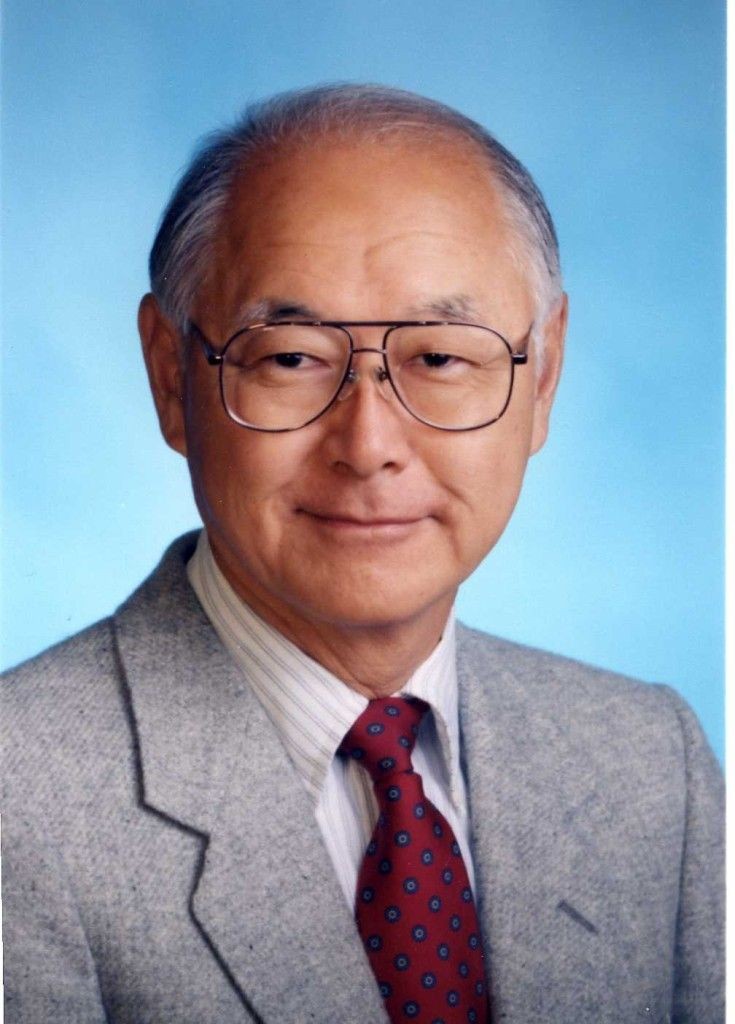
Racism and America's Concentration Camps, Thursday Feb. 25, 2021, 4:00pm - 5:00pm
Mas Hashimoto will compare how Japanese American incarceration during World War II and the massive discrimination of Muslims post 9-11 are both founded in hate and racism. Mas Hashimoto was a child when his family was taken from their Watsonville home in 1942. He was sent to a federal prisoner-of-war camp during World War II because of racism, war hysteria, and political leadership failure. Mas taught US History in the Pajaro Valley Unified School District until his retirement. He speaks to groups of students about the wartime experience of Japanese Americans during World War II to ensure that this injustice never repeats itself again.
Faculty facilitator: Dr. Dustin Wright
Celebrate Language, Culture & Ideas at the 2019 Festival
Film screenings, Dancing, Music, Presentations, and Art Making! March 29, 2019
- Tongues of Heaven: Film Screening & Discussion with Anita Chang (CSU East Bay)
- Presentations from Campus Cultural Organizations
- Spanish in the Professions: Dalia Magana (UC Merced) and Maria Riera Velasco (MIIS)
- Japan Club and Spanish Club Workshops
- Gambatte Kimashita: Flower Growers of the Salinas Valley: Film Screening and Panel Discussion
- Festival Tabling in the Quad
- Live Performances of Japanese Soran Bushi and Aztec Dancing
- VPA Presents Free T-shirt Screen Printing